Made a bad decision that worked out great? Then you just learned the wrong lesson. Here is how poker players think about it.
This is Thinking in Bets by Annie Duke, the professional poker player who shows why life is a game of incomplete information.
The Core Claim
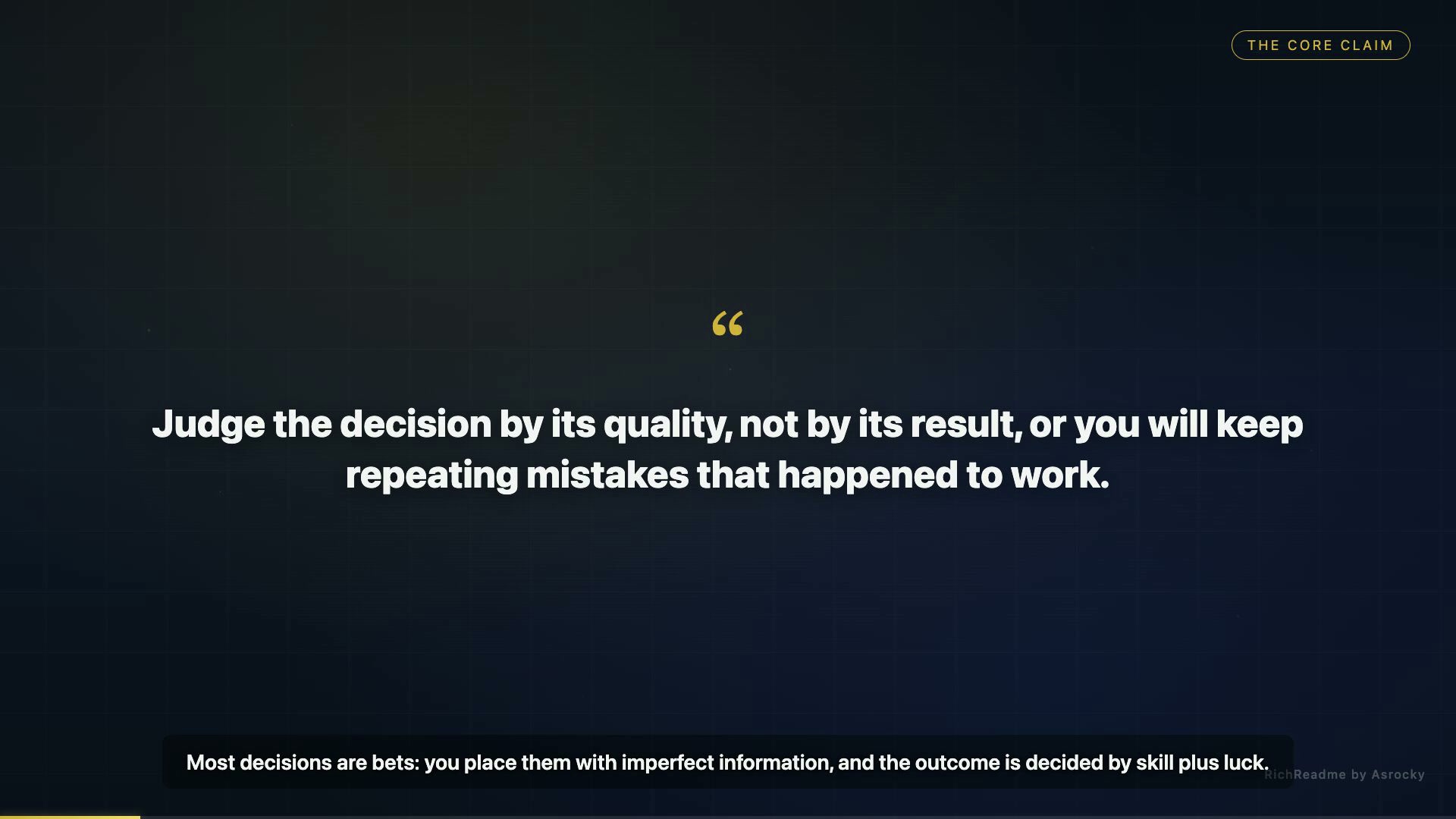
Duke's core claim is simple. Most decisions are bets: you place them with imperfect information, and the outcome is decided by skill plus luck. Judge the decision by its quality, not by its result, or you will keep repeating mistakes that happened to work.
Judge the Decision, Not the Result
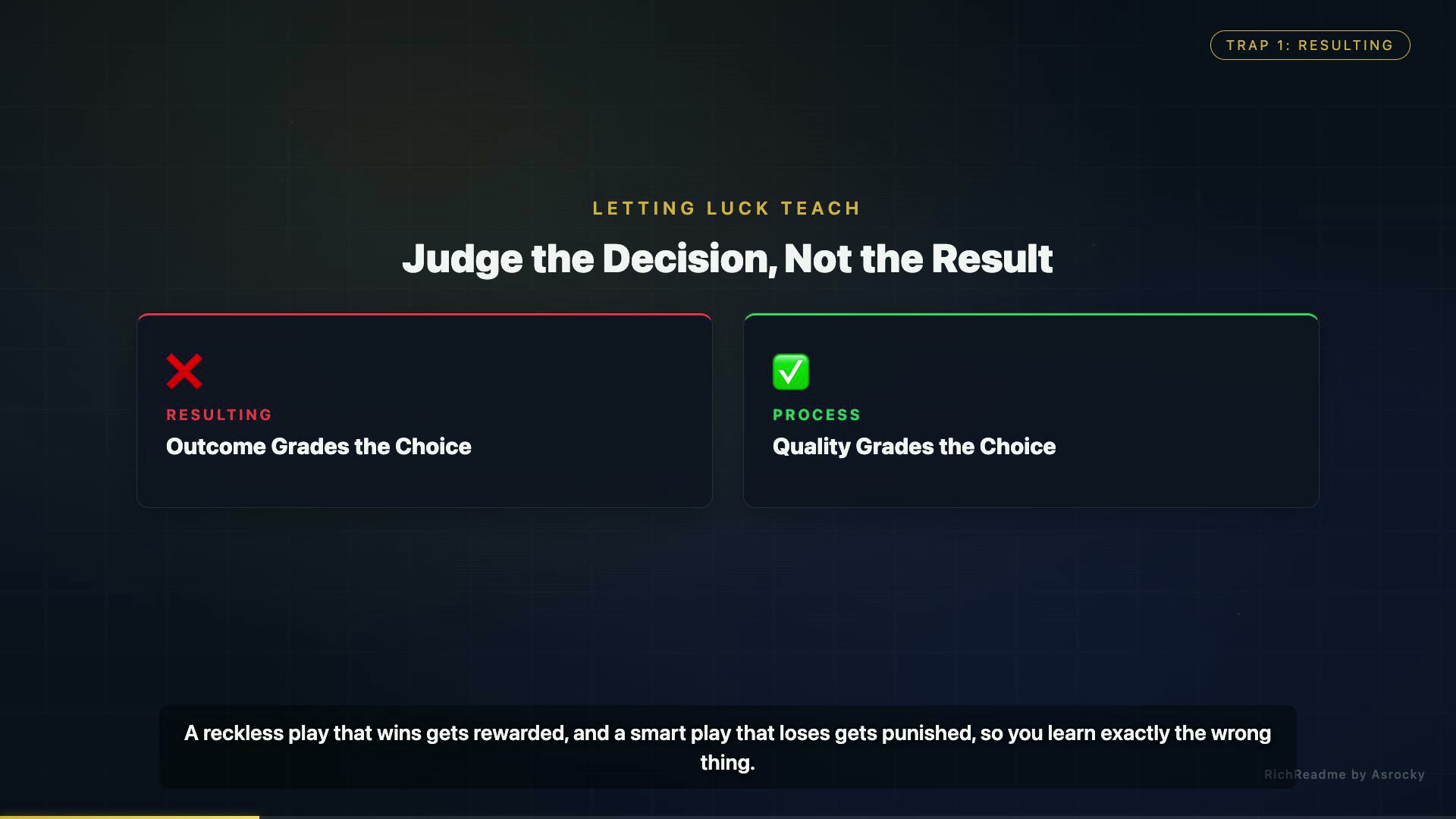
The first trap is resulting. When you judge a decision only by how it turned out, you let luck teach you the lesson instead of skill. A reckless play that wins gets rewarded, and a smart play that loses gets punished, so you learn exactly the wrong thing. Poker players know this intimately, because even the best hand loses twenty percent of the time.
Write It Down Before the Outcome
The second trap is hindsight bias. After the fact, everything looks obvious. Duke calls it the 20 20 hindsight illusion.
You remember your prediction as closer to the truth than it was, and you rewrite the story so the outcome feels inevitable. The fix is to record your thinking before the outcome arrives, so you cannot rewrite it afterward.
The Professional Flip
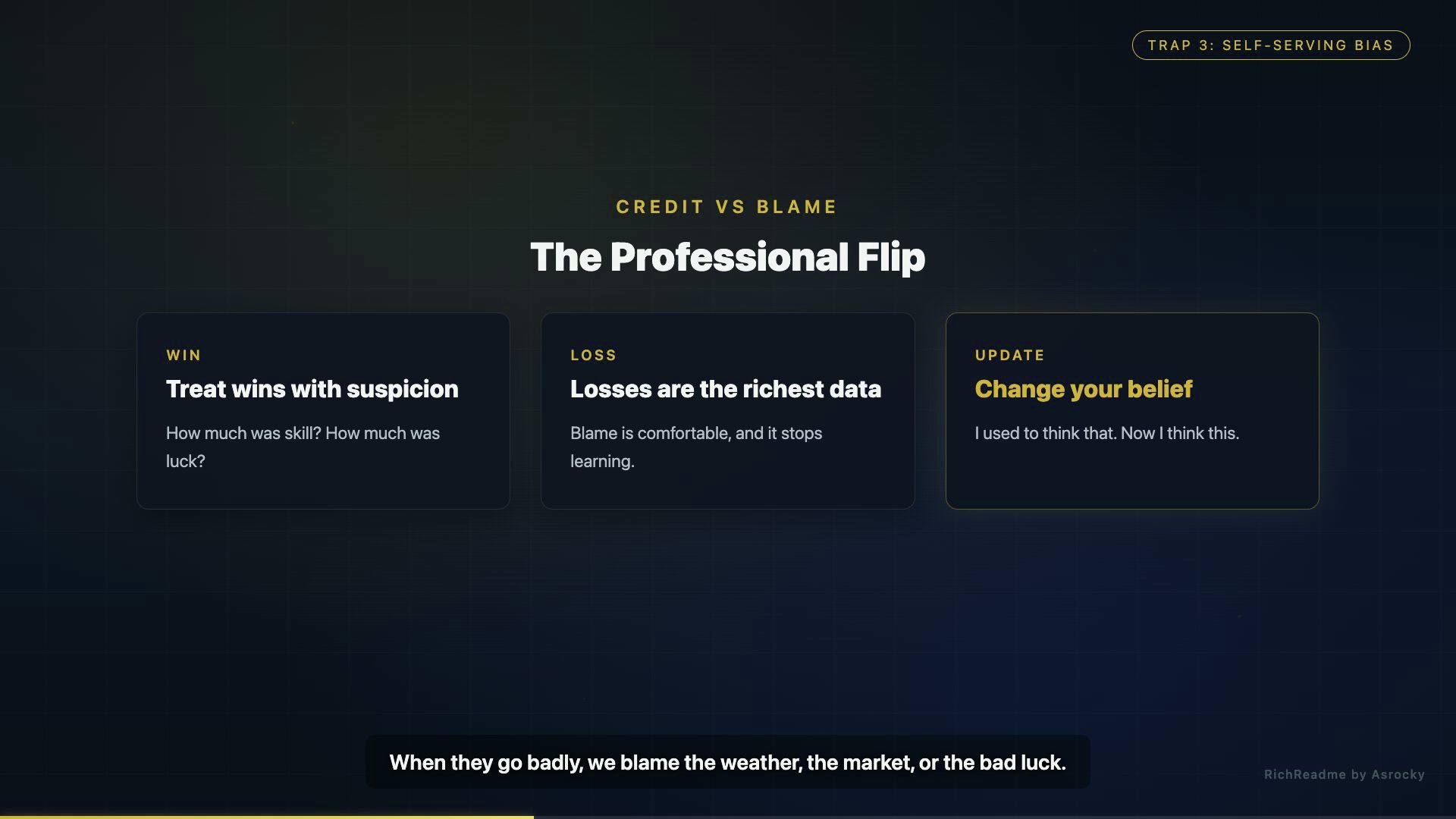
Then there is the self-serving bias. When things go well, we take the credit. When they go badly, we blame the weather, the market, or the bad luck.
It feels good, and it is the fastest way to stop learning. The professional move is the opposite: treat your wins with suspicion and your losses as the richest source of information.
The Bet
Here is where Duke introduces the bet. A bet is simply a decision where you state what you believe and put something on the line. When you make a prediction, you are betting. The skill is to calibrate your confidence: say what you think will happen and how sure you are, and then update when the world disagrees with you.
Think Clearly Together
The most powerful tool in the book is the truth-seeking group. Duke gathered a small circle of friends who agreed to help each other think clearly. The rules are simple.
Ask questions instead of making statements, encourage dissent, and separate fact from interpretation. In a truth-seeking group, being wrong is not a failure, it is the whole point, because every correction makes the group smarter.
A Practice That Compounds
Duke also gives a concrete practice: the decision journal. Before a big decision, write down the situation, what you believe, and why. Later, review what happened and whether your reasoning held up. The journal does not judge you by outcomes, it teaches you by process, and over time it reveals the patterns in how you actually think.
Mental Time Travel

Then comes the mental time travel. To avoid falling for the certainty of the present, Duke recommends imagining yourself ten minutes, ten months, and ten years from now, asking whether this decision will still matter. The further out you zoom, the clearer the real risks become, and the less the current panic distorts your thinking.
The final skill is updating your beliefs without ego. When new information arrives, treat your past self like a stranger you can disagree with. Duke says you should be willing to say, I used to think that, and now I think this, and the best poker players re-evaluate every single hand, including the ones they won.
The Pattern
So the pattern is simple. Life is not chess, it is poker. Separate the quality of the decision from the luck of the outcome, watch for resulting and hindsight, build a truth-seeking group, and keep a journal that grades your thinking, not your results. Do that, and luck stops being your teacher.