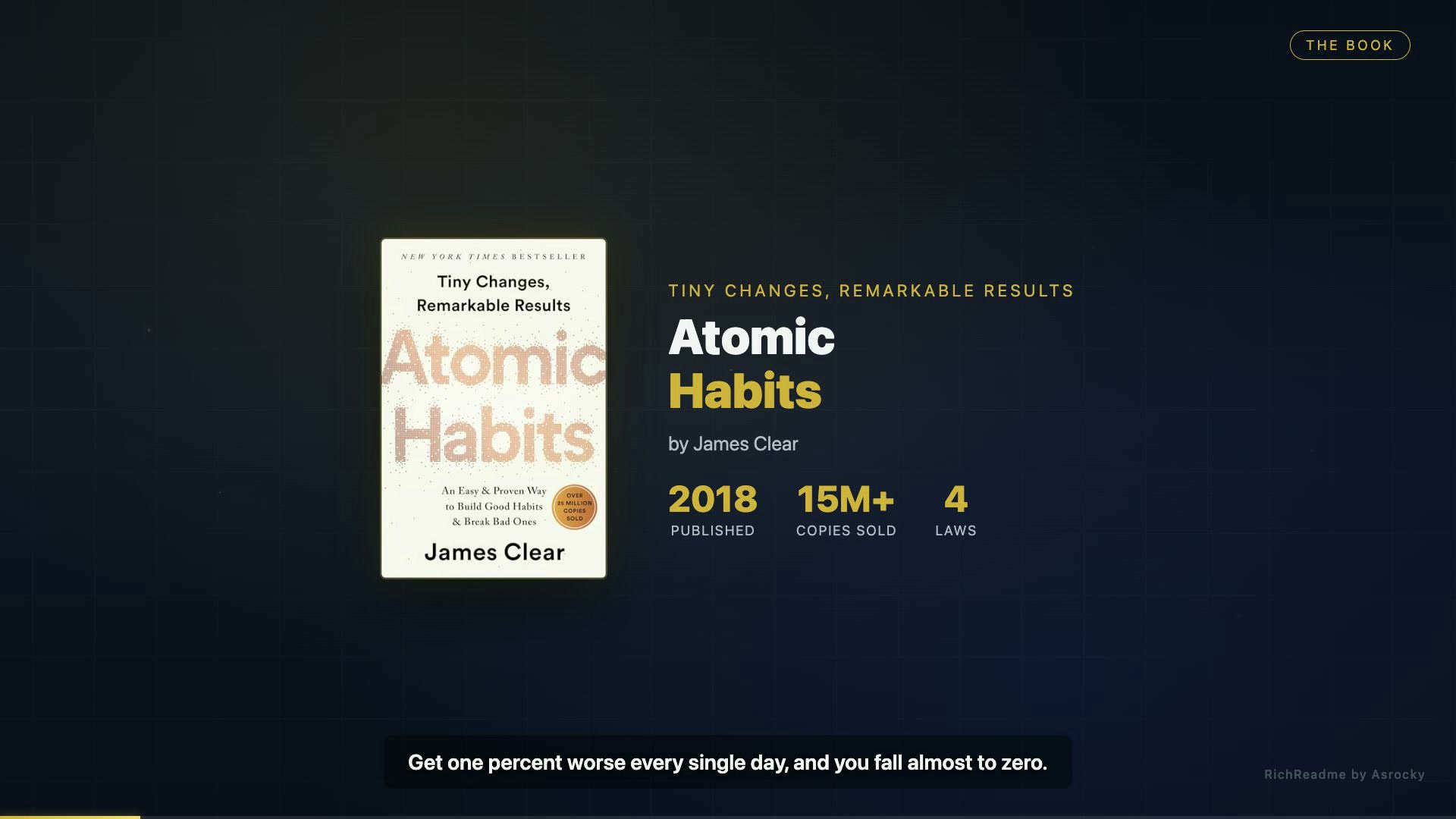
Want to change your life? The secret is not one big move. It's one percent better every single day. This is Atomic Habits by James Clear.
It has sold more than fifteen million copies. Here is how the one percent rule works. Here is the math that makes this book work. Get one percent better every single day, and after a year you are thirty-seven times better.
The Book
Get one percent worse every single day, and you fall almost to zero. Small changes feel like nothing on a Tuesday. But habits are the compound interest of self-improvement. The effect you see today is tiny.
The Math
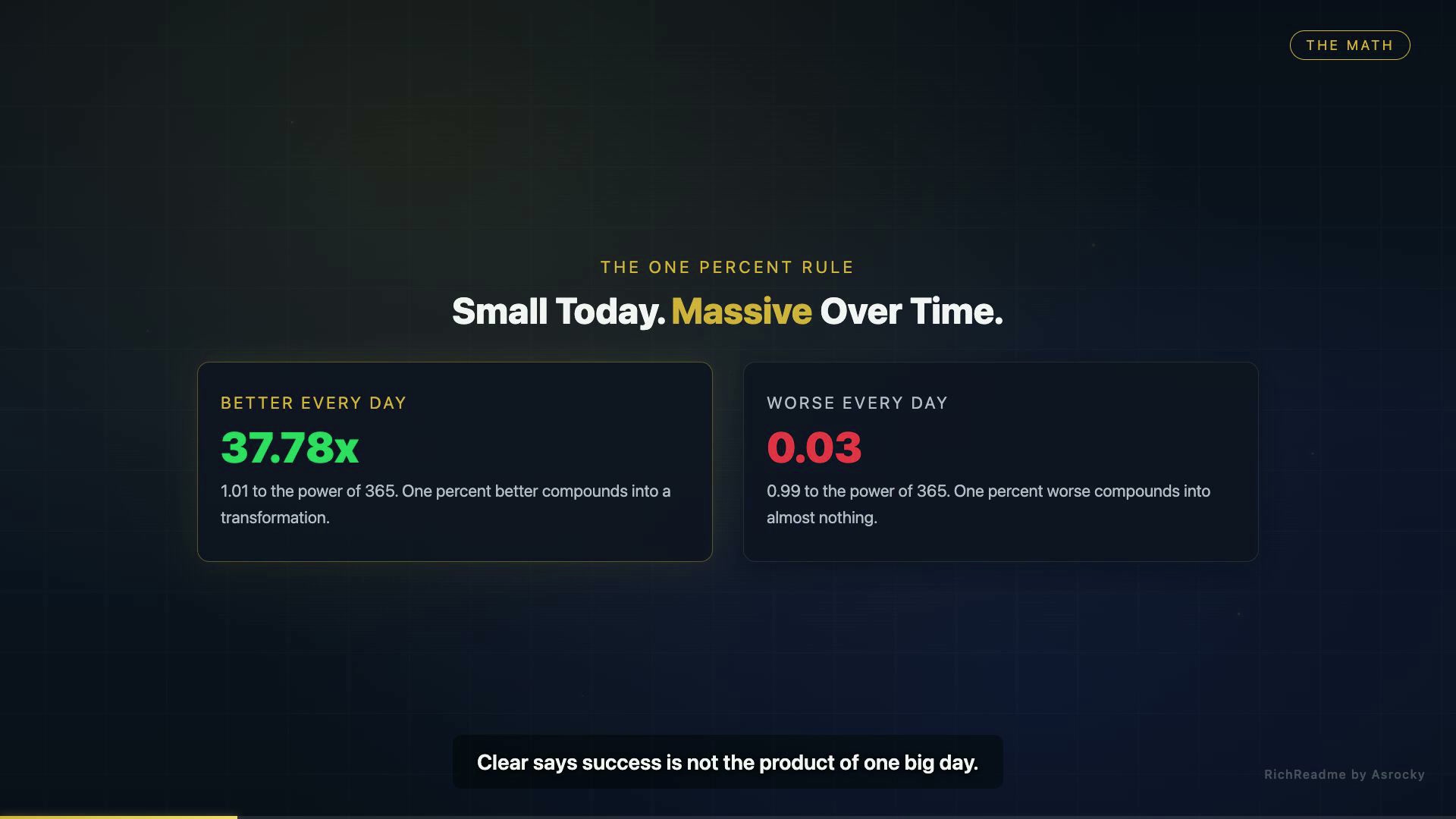
The effect you see after five years is huge. Clear says success is not the product of one big day. It is the product of daily habits.
Most people overestimate what they can do in one day. They underestimate what they can do in one year.
The System

We chase a huge transformation next Monday. Then we quit by Friday. Clear says do not aim at the goal. Aim at the system.
You do not rise to the level of your goals. You fall to the level of your systems. The deepest idea in the book is this. Every action you take is a vote for the type of person you want to become.
Identity
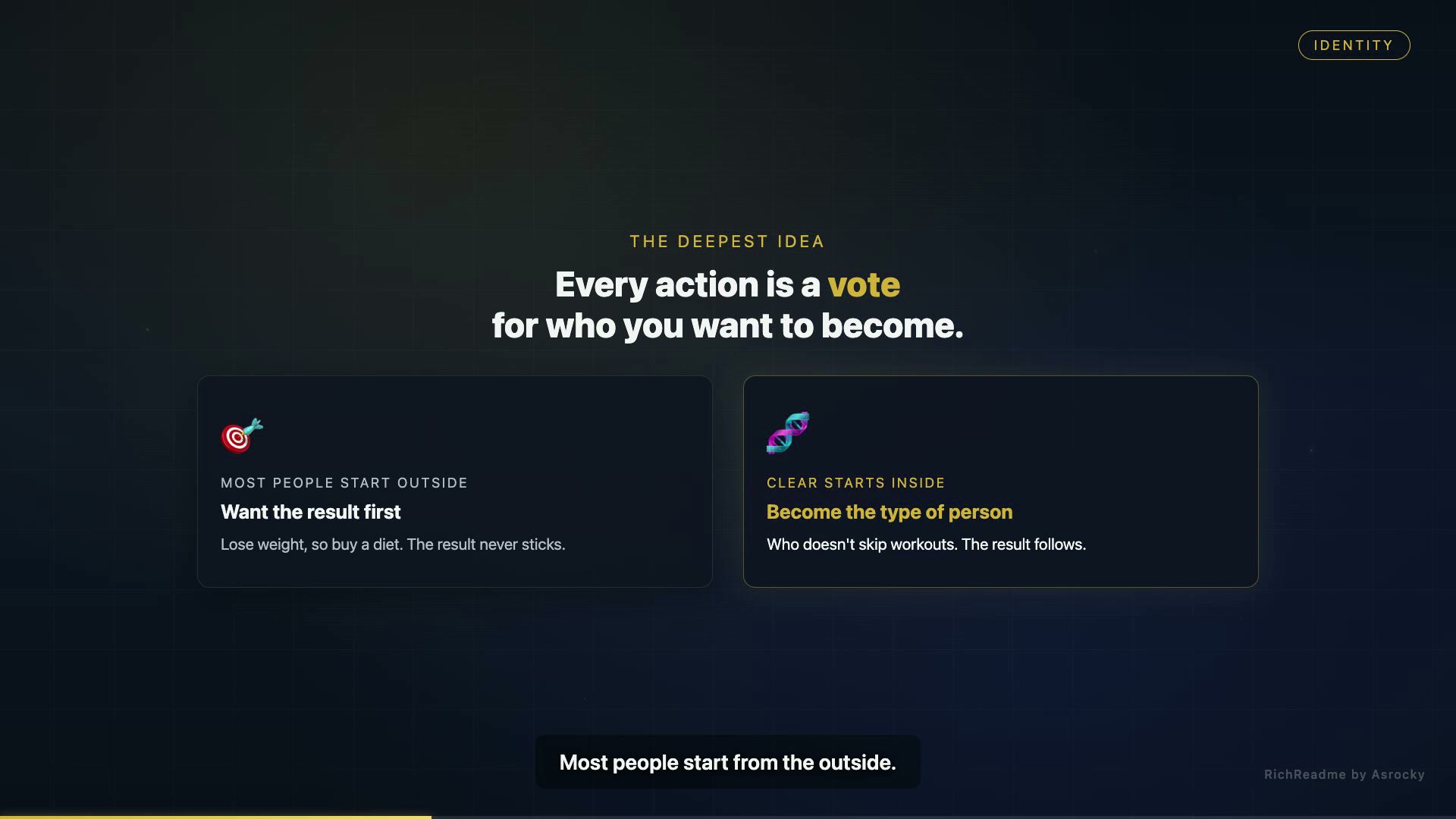
Not just a vote for a result. A vote for who you are. Most people start from the outside. They want to lose weight, so they buy a diet.
Clear says start from the inside. Become the type of person who does not skip workouts. The result follows from the identity.
The Vote
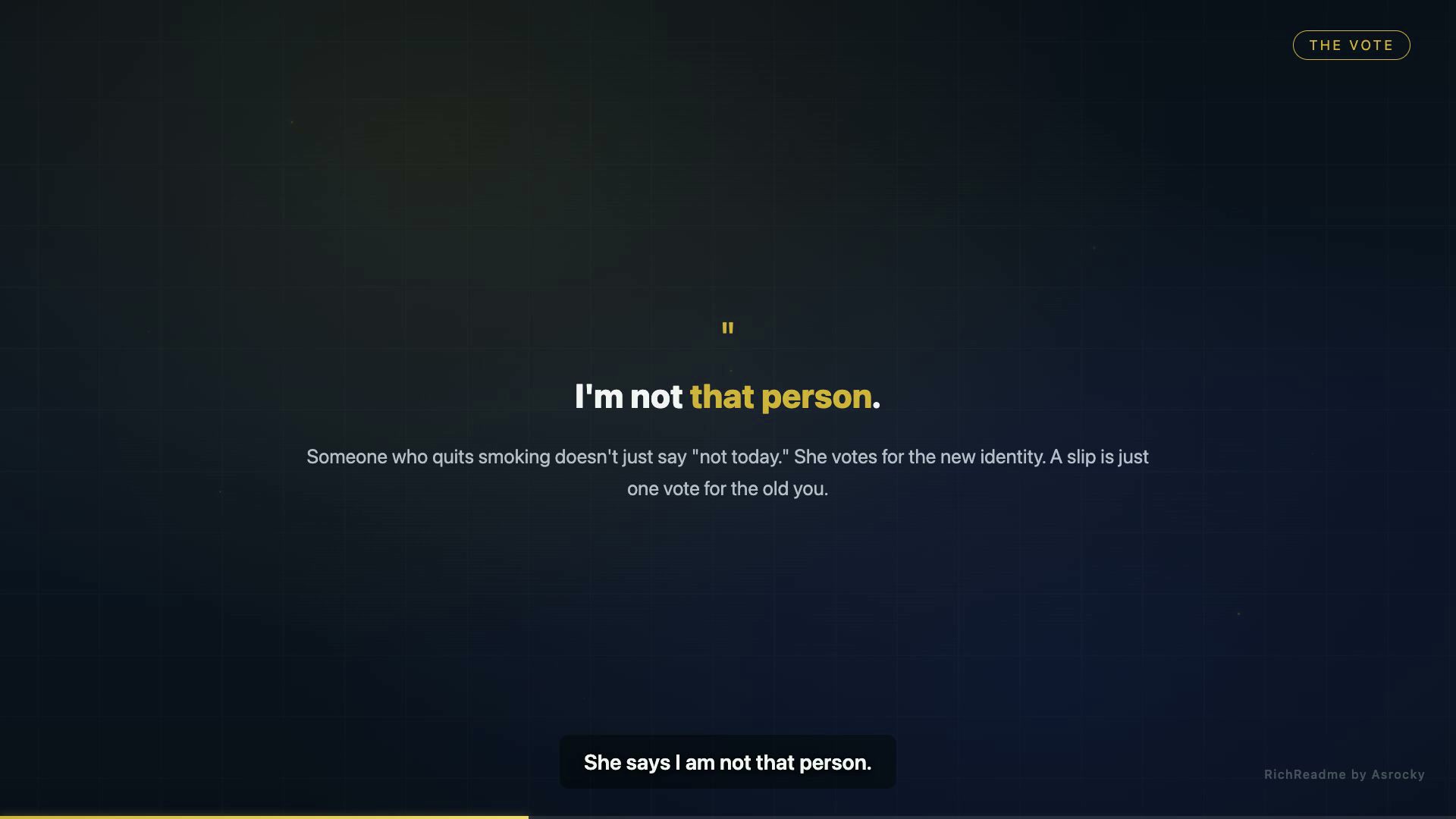
So someone who quits smoking does not just say I will not smoke right now. She says I am not that person. Every healthy choice reinforces the new identity.
A slip is just one vote for the old you. This is the real power of small habits. They do not just change your results.
The Loop
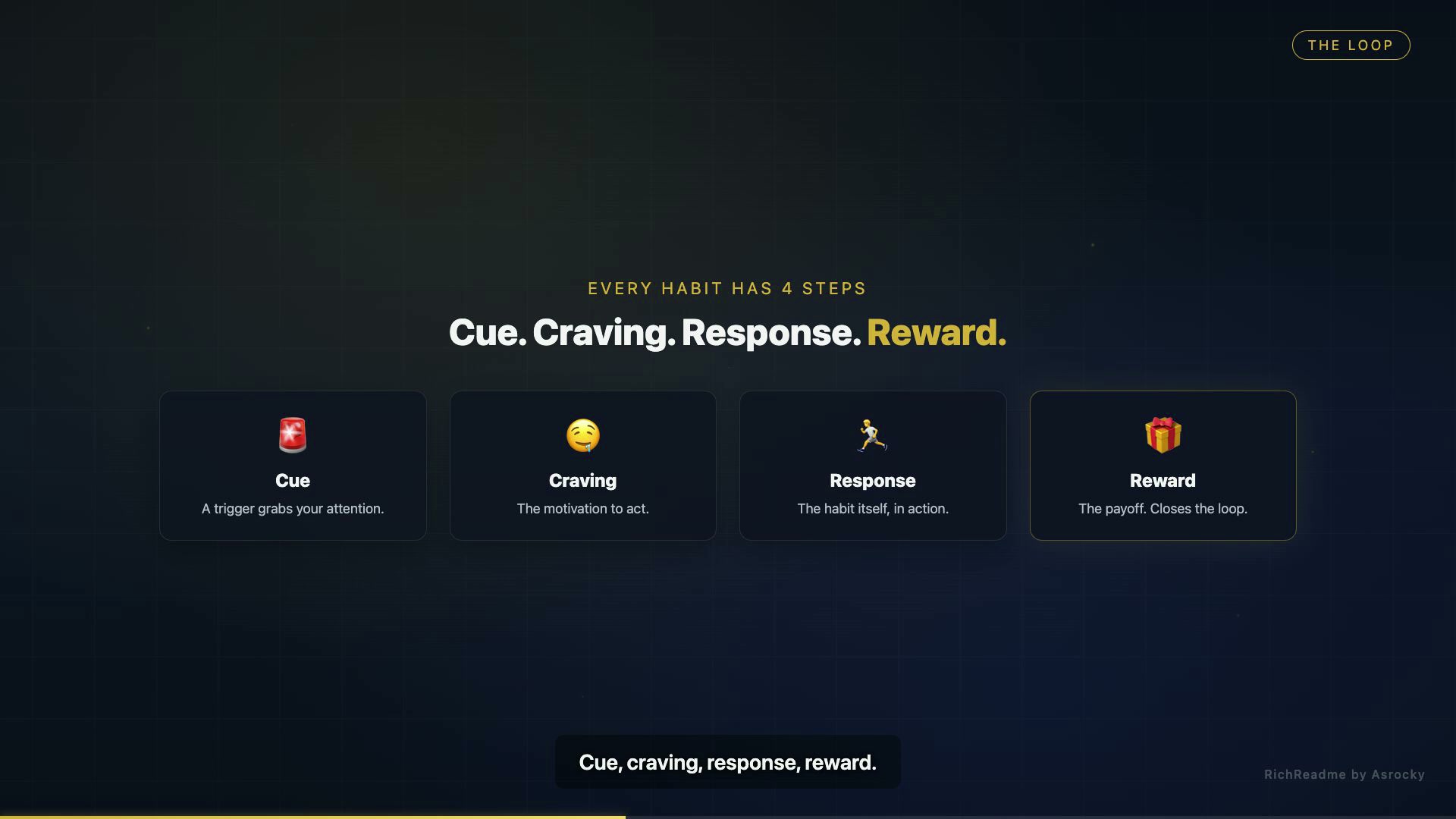
They change what you believe about yourself. Clear breaks every habit into four steps. Cue, craving, response, reward. First, a cue triggers your brain.
Then a craving motivates it. Then a response is the action. Then a reward closes the loop.
The First Law
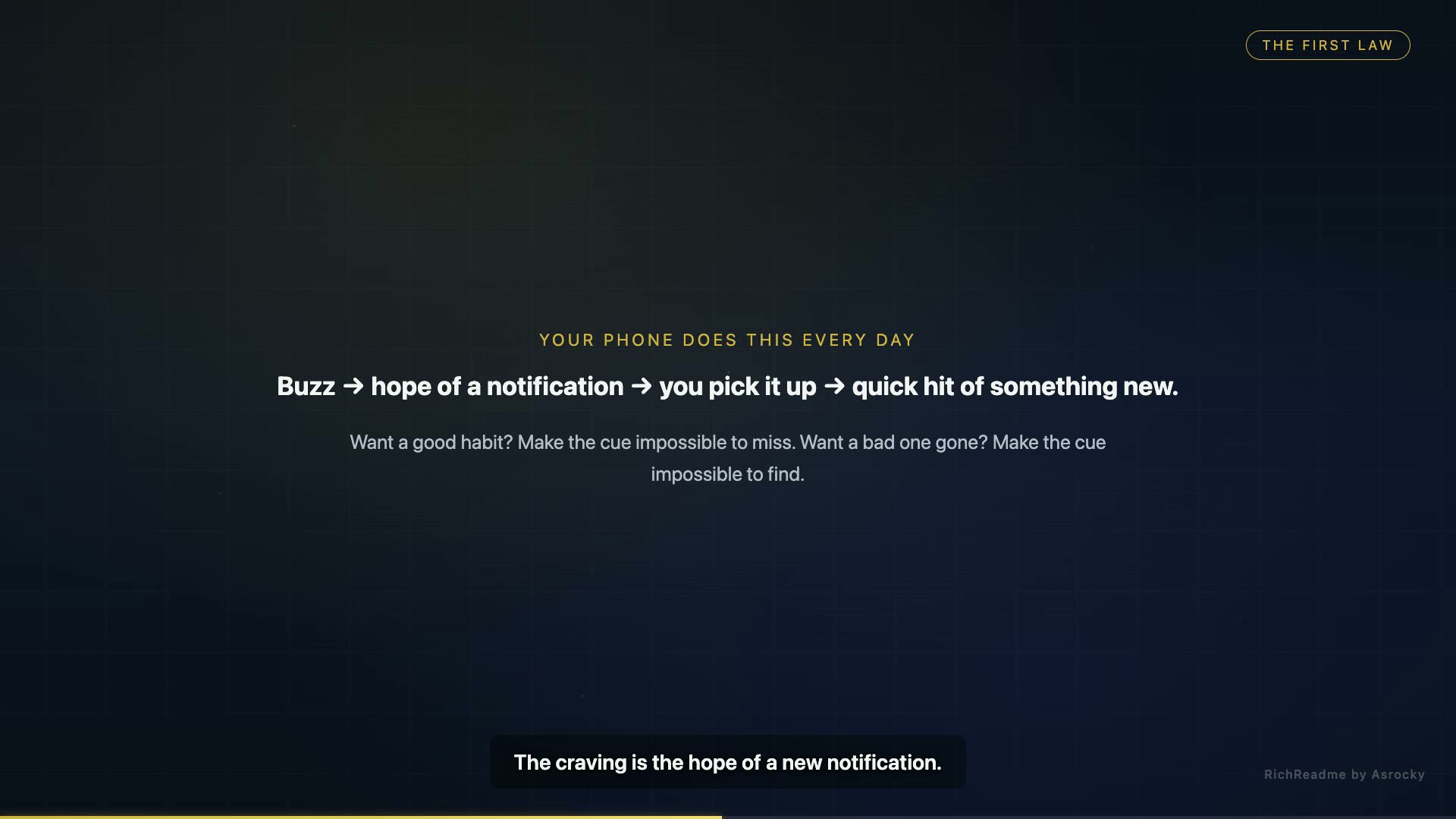
Think of checking your phone. The cue is the buzz. The craving is the hope of a new notification. The response is you pick it up.
The reward is a quick hit of something new. Run that loop a hundred times and it becomes automatic. Good habits loop the same way.
The 4 Laws
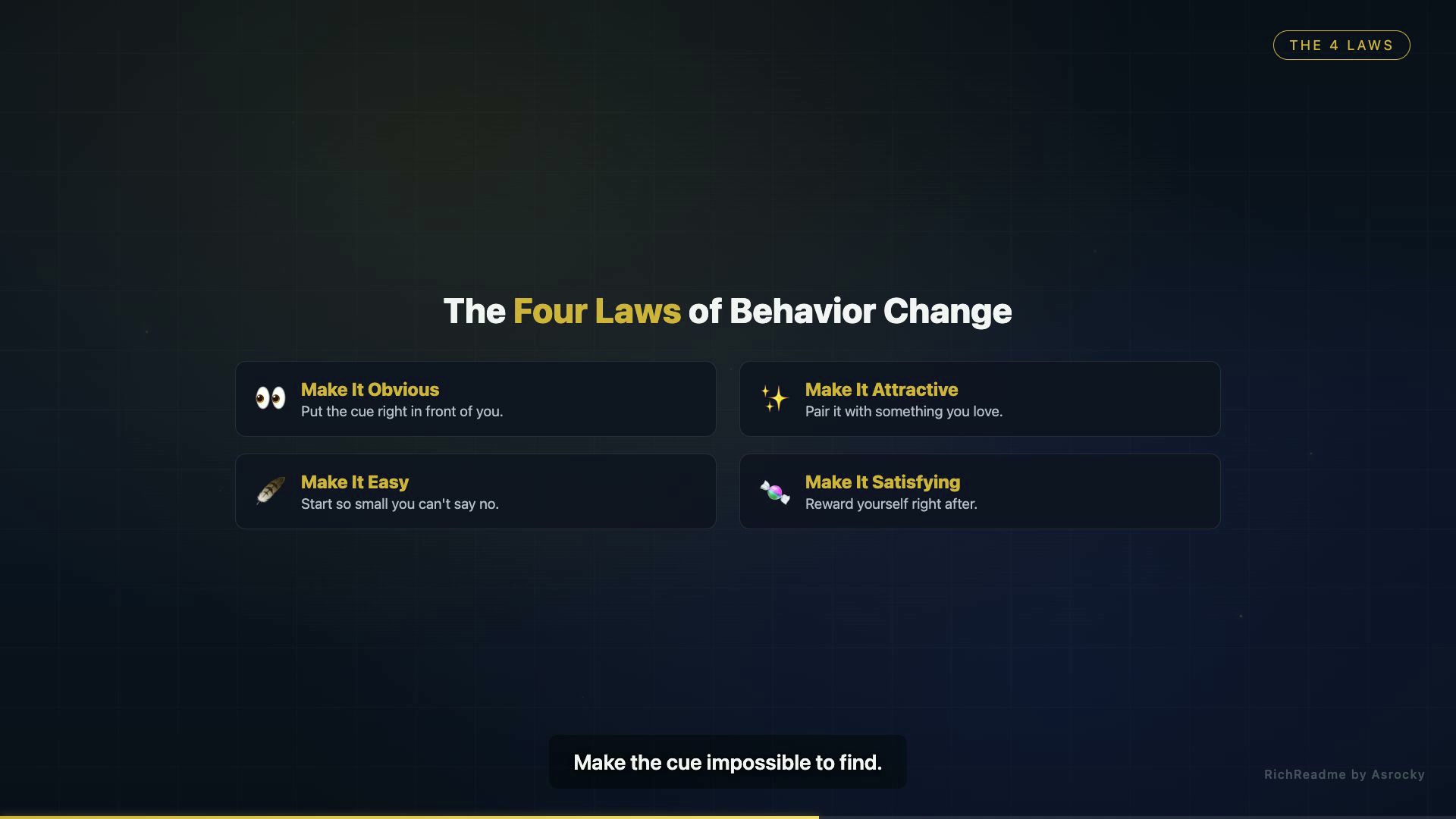
Want to build a habit? Make the cue impossible to miss. Want to break one? Make the cue impossible to find. That is the first law in action.
Clear wraps the whole system in four rules. Make it obvious. Make it attractive. Make it easy. Make it satisfying.
The Best Trick
For a good habit, lean into all four. For a bad one, reverse each one. Here is how they work in real life. Want to read more?
Leave the book on your pillow so the cue is obvious. Want to exercise? Put your shoes by the door so it is easy. Want to quit snacking?
The Plateau
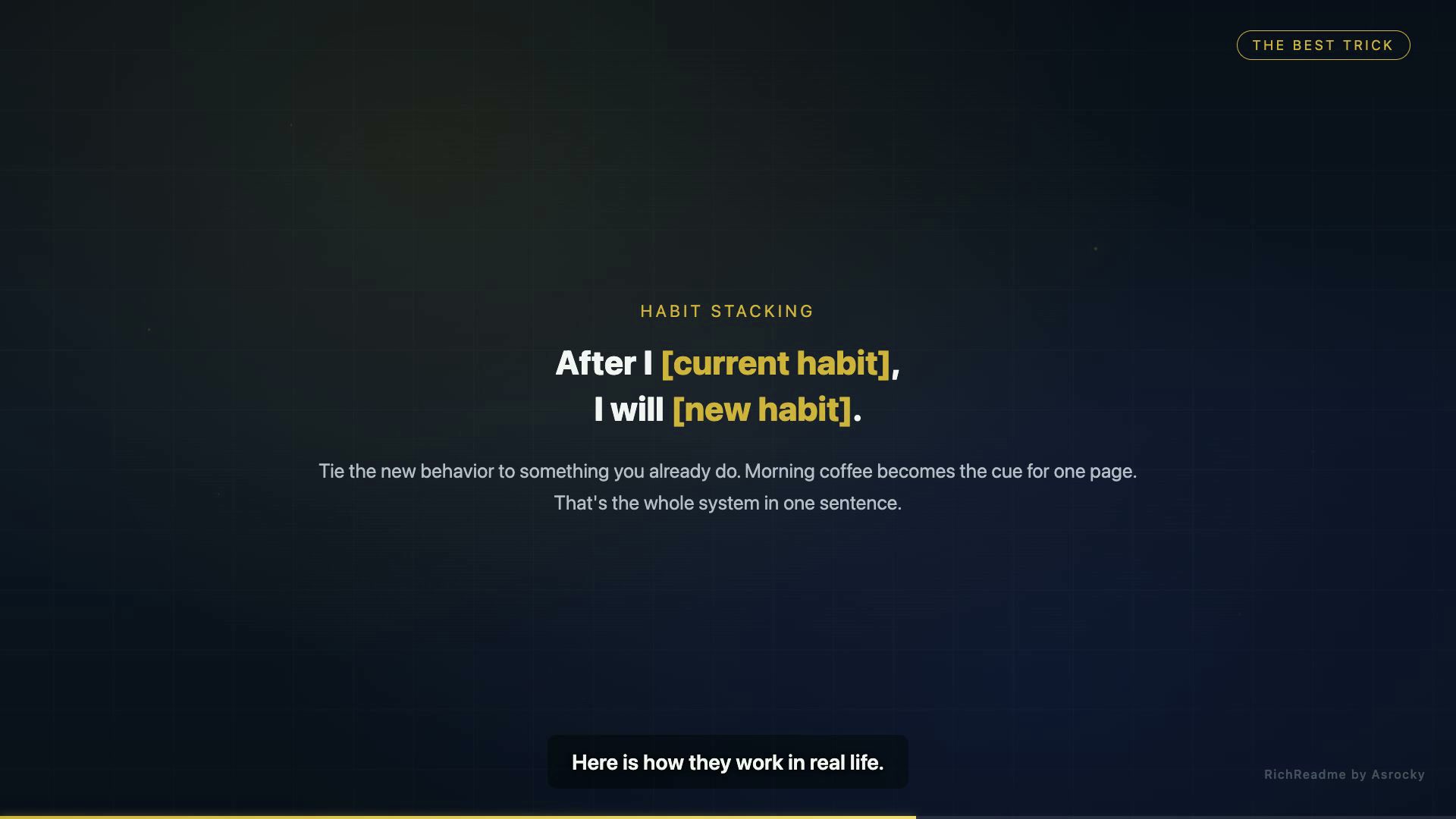
Put the chips out of sight so it is not attractive. Clear calls the best trick habit stacking. After I do my current habit, I will do the new habit.
Tie the new behavior to something you already do. Your morning coffee becomes the cue for one page. That is the whole system in one sentence.
Do This Week
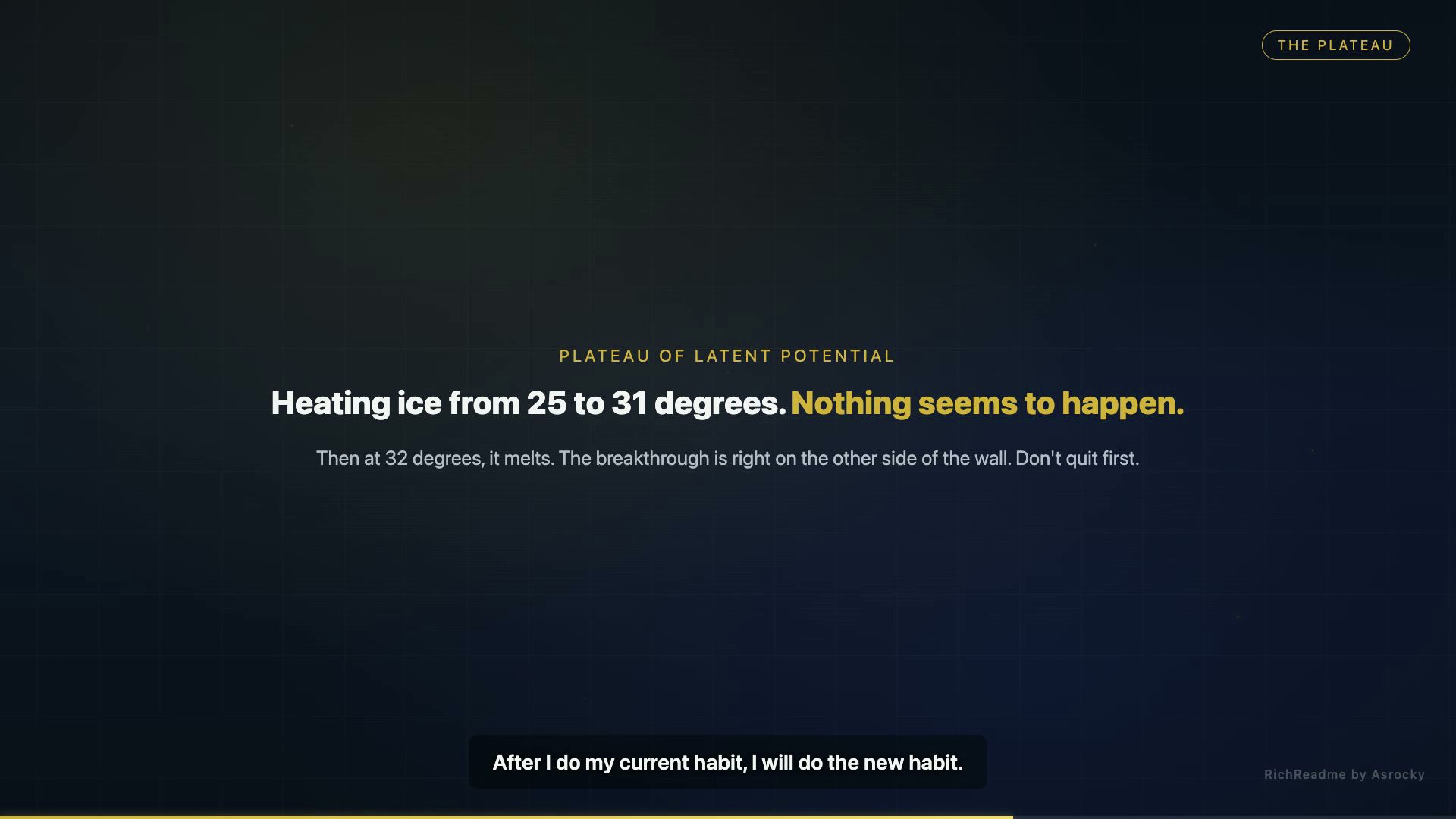
Here is the line that keeps people going. Clear calls it the Plateau of Latent Potential. People work hard for months, see no change, and quit.
They are heating an ice cube from twenty-five to thirty-one degrees. Nothing seems to happen. Then at thirty-two degrees, it melts.
Design It
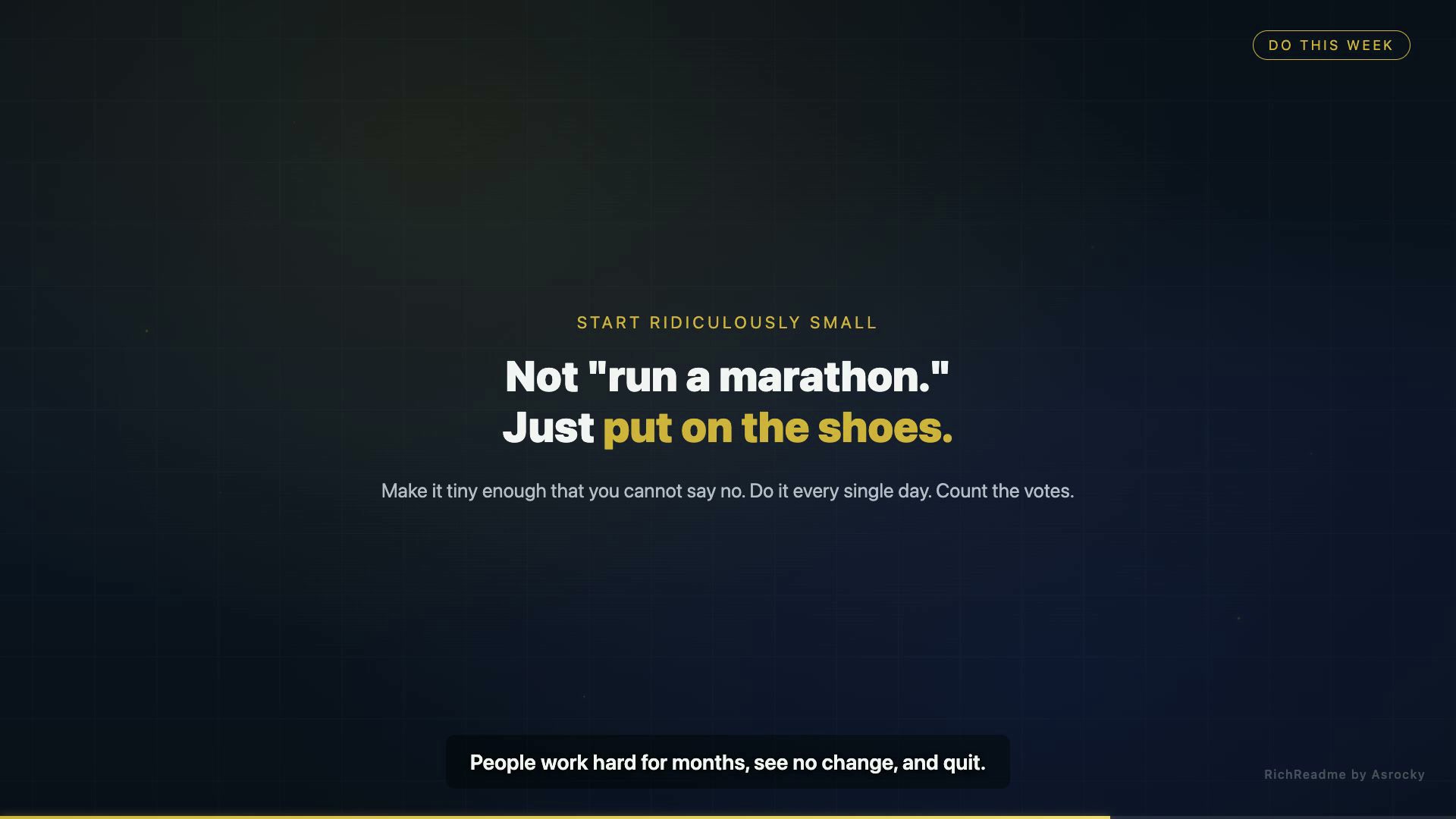
The breakthrough is right on the other side of the wall. So what do you do this week? Pick one habit. Make it tiny. Not run a marathon.
Just put on my running shoes. Small enough that you cannot say no. Do it every single day. Count the votes.
Remember This
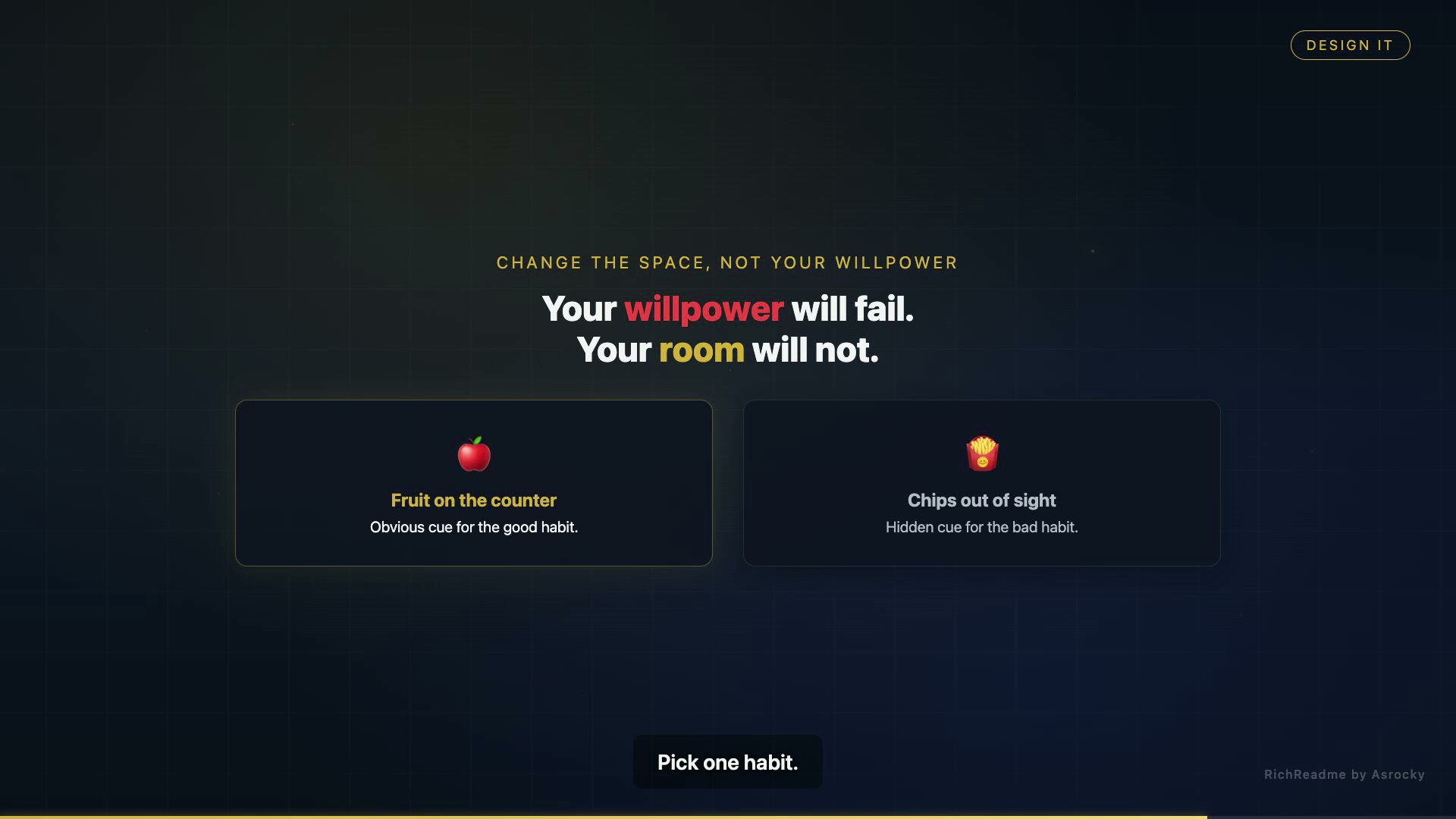
Next, design your space. Want to eat better? Put the fruit bowl on the counter. Hide the chips. Your willpower will fail.
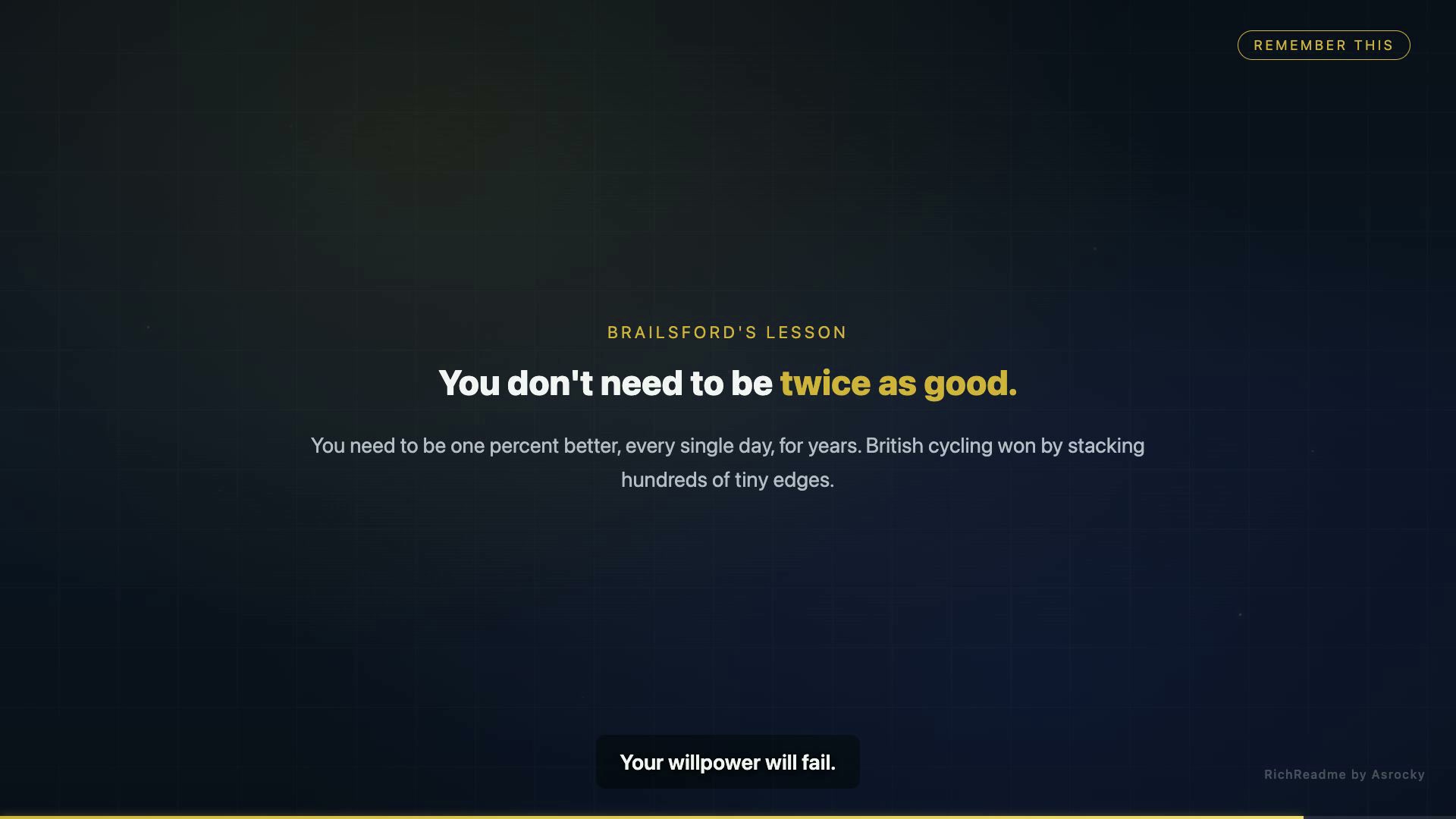
But a well-designed room will not. Change the space, and the habit follows. Remember Brailsford and the one percent. British cycling did not win by a miracle.
📖 Want the full book?
Get Atomic Habits on AmazonDisclosure: This post contains affiliate links. If you buy through them, I earn a small commission at no extra cost to you.