Two fathers. One had a PhD and died broke. The other dropped out of eighth grade and became rich.
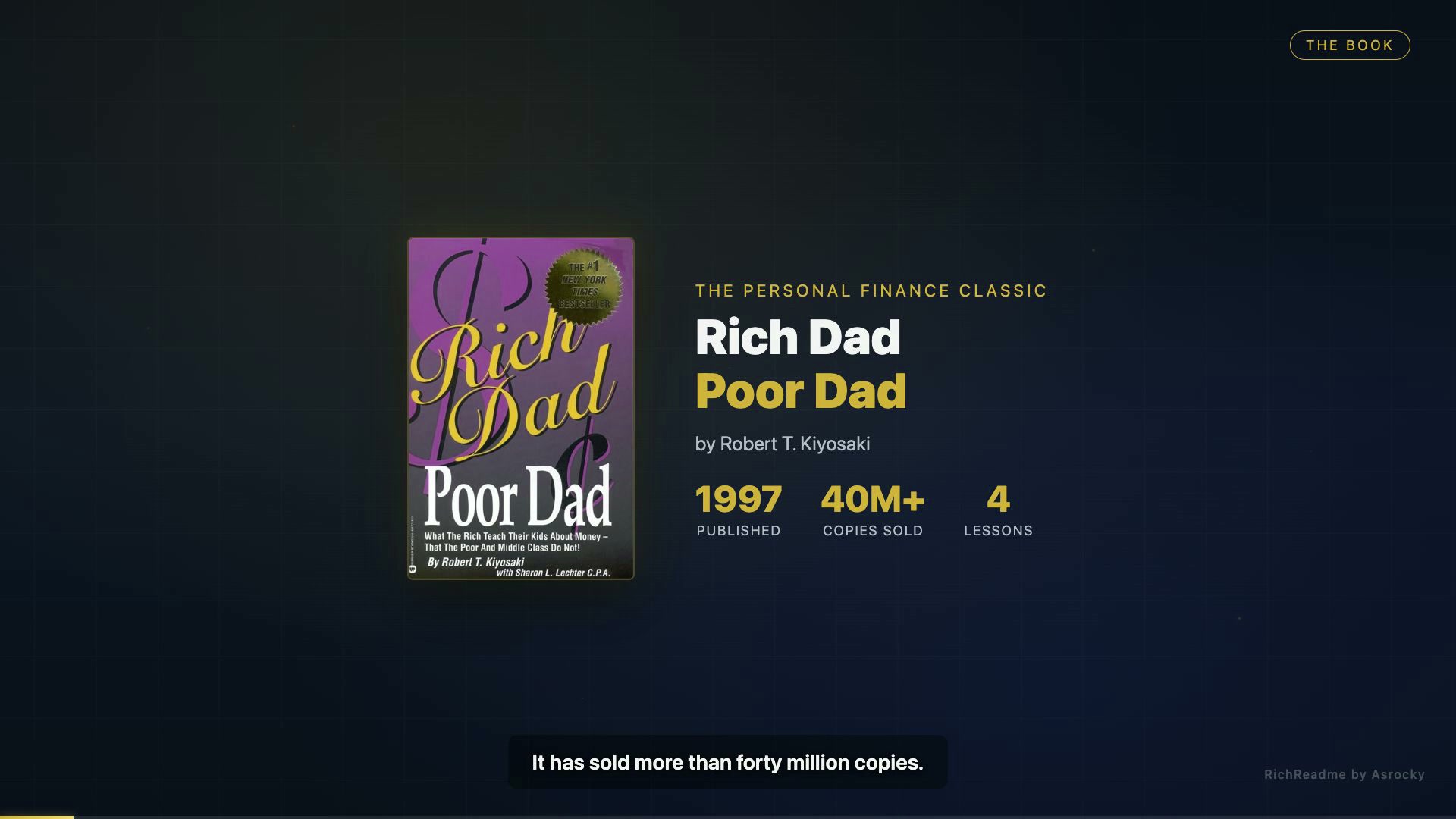
This is Rich Dad Poor Dad by Robert Kiyosaki. It has sold more than forty million copies. Today I will walk you through the four lessons that flipped how millions of people see money.
The Rich Don't Work for Money
Let's start with lesson number one. The rich don't work for money. The poor and middle class do. Most people wake up, go to work, pay the bills, and repeat it all next week. Kiyosaki calls this the Rat Race.
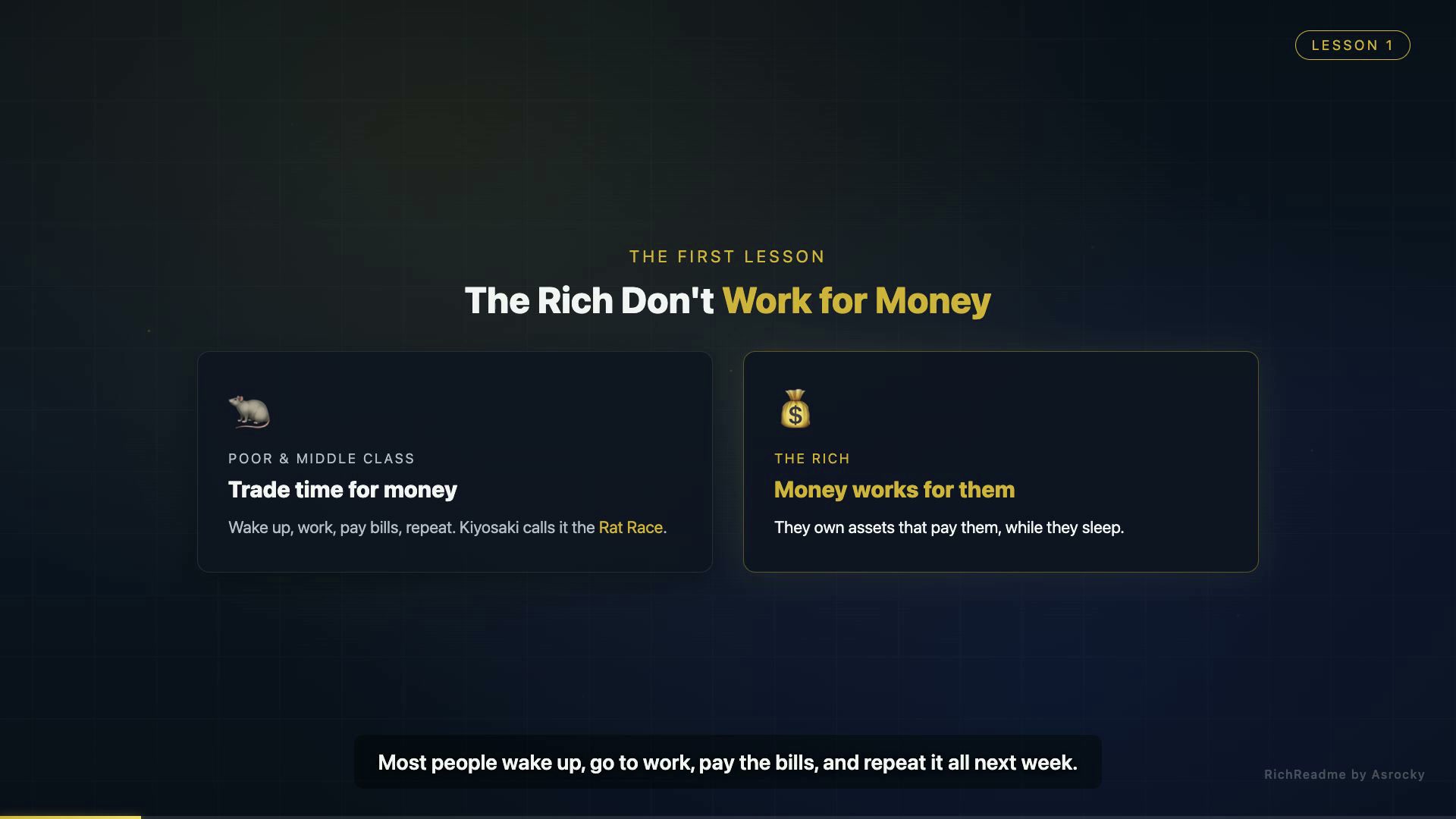
What keeps people on the wheel? Two feelings. Fear of not having money makes you work hard. Then desire kicks in. You get a raise, so you buy a nicer car, a bigger house. Now you need even more money. The fear shows up again.
Most people try to escape by earning more. But earning more never fixes it. Kiyosaki watched his educated dad get raise after raise, then spend every extra dollar. More money just meant a faster wheel.
Rich dad taught the other way. Stop trading your time for a paycheck. Start asking how to make money work for you. That one question is the whole game.

Assets vs. Liabilities
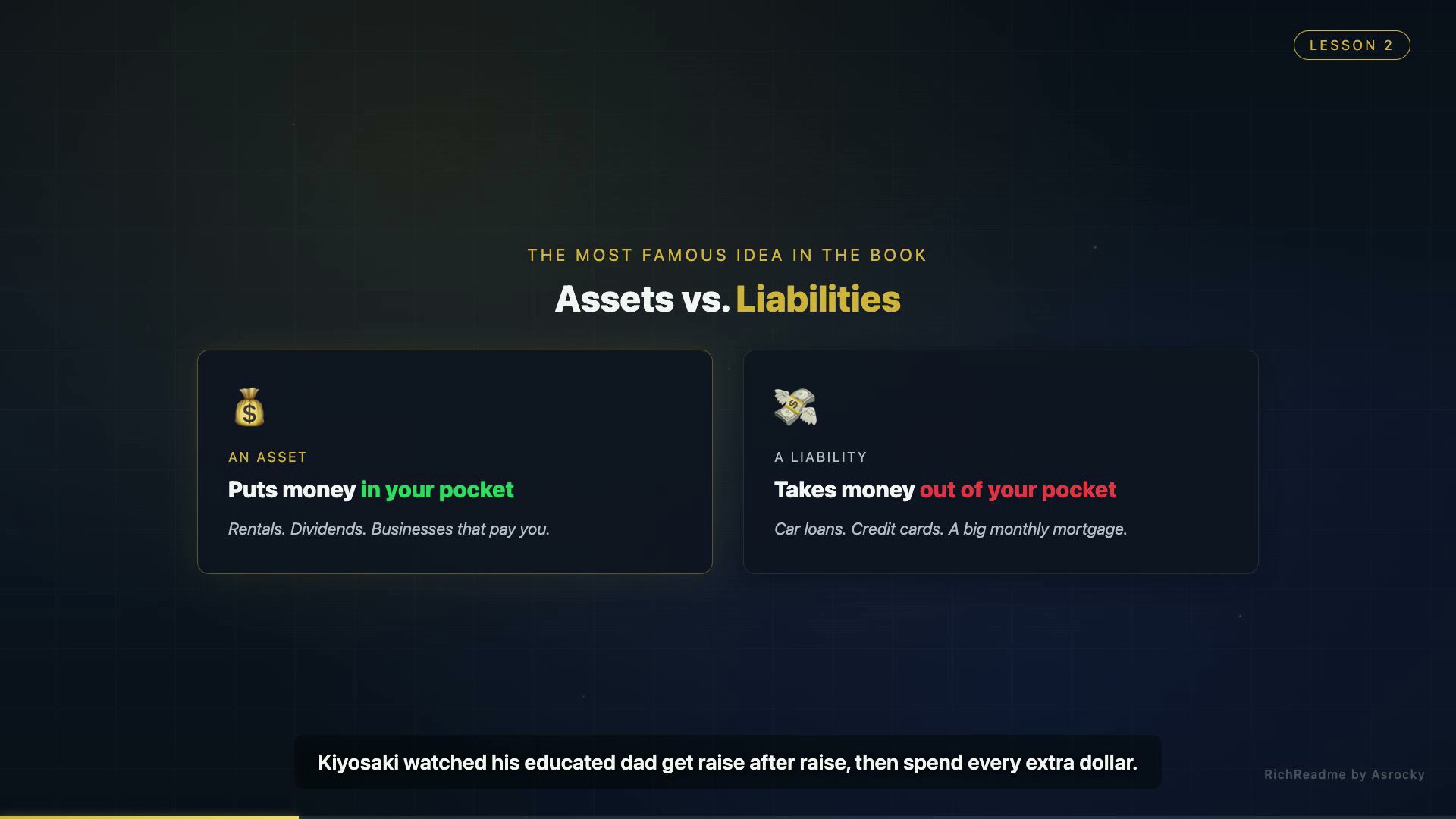
Lesson two is the most famous idea in the book. Know the difference between an asset and a liability. Rich dad's definition is simple. An asset puts money in your pocket. A liability takes money out.
Sounds obvious, right? Here's the twist. Most people think their house is their biggest asset. Rich dad disagreed. A house with a loan, taxes, and repairs costs you cash every month. It is not paying you. So it is a liability.
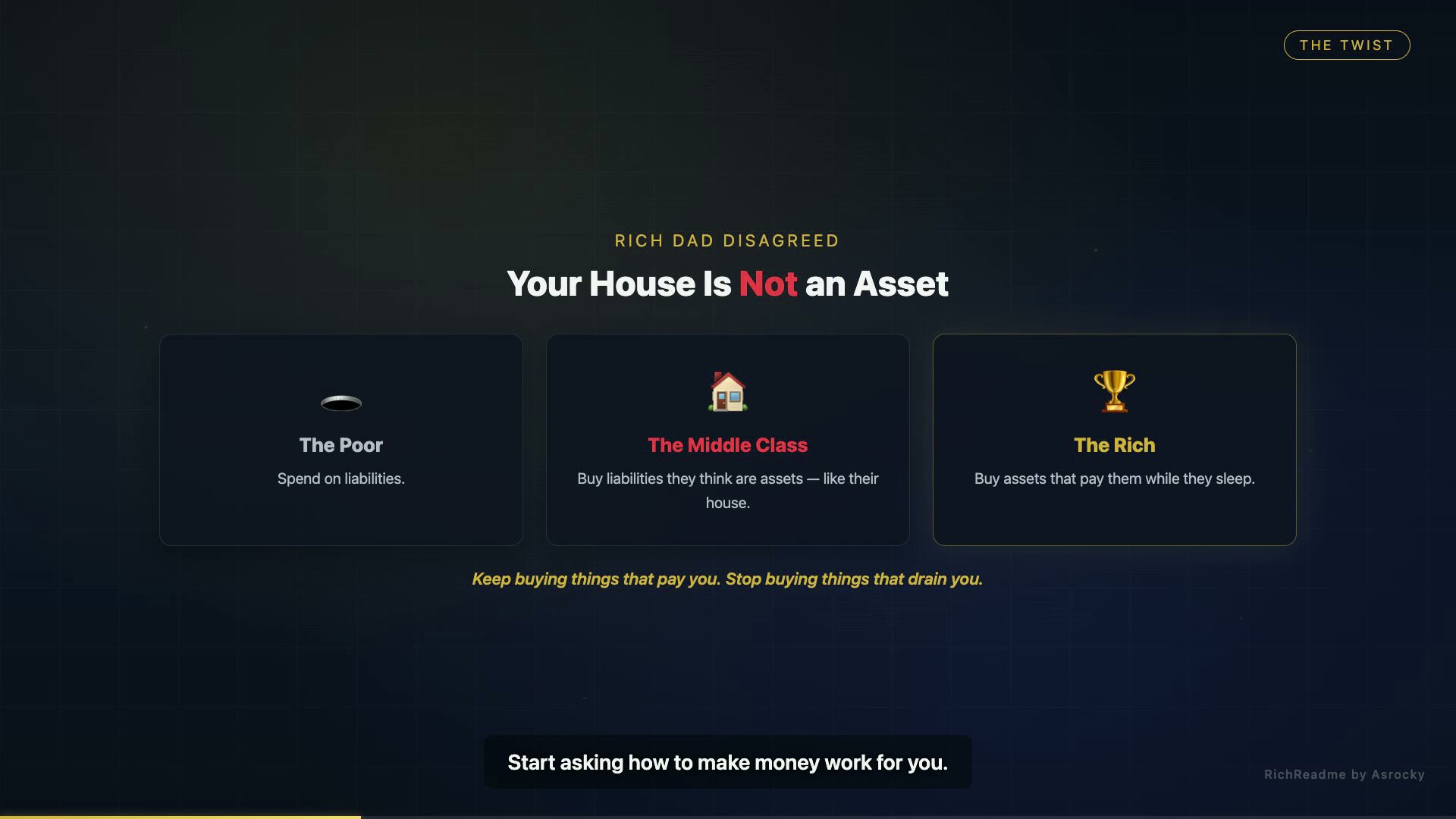
This flips everything. The poor spend only on liabilities. The middle class buys liabilities they think are assets. The rich spend their money buying assets. Rentals, dividends, businesses that pay you while you sleep.
So the path is clear. Keep buying things that pay you. Stop buying things that drain you. That is the whole strategy in one sentence.
Mind Your Own Business
Lesson three sounds almost blunt. Mind your own business. Kiyosaki does not mean quit your job tomorrow. He means keep working, but on the side, start building your asset column.
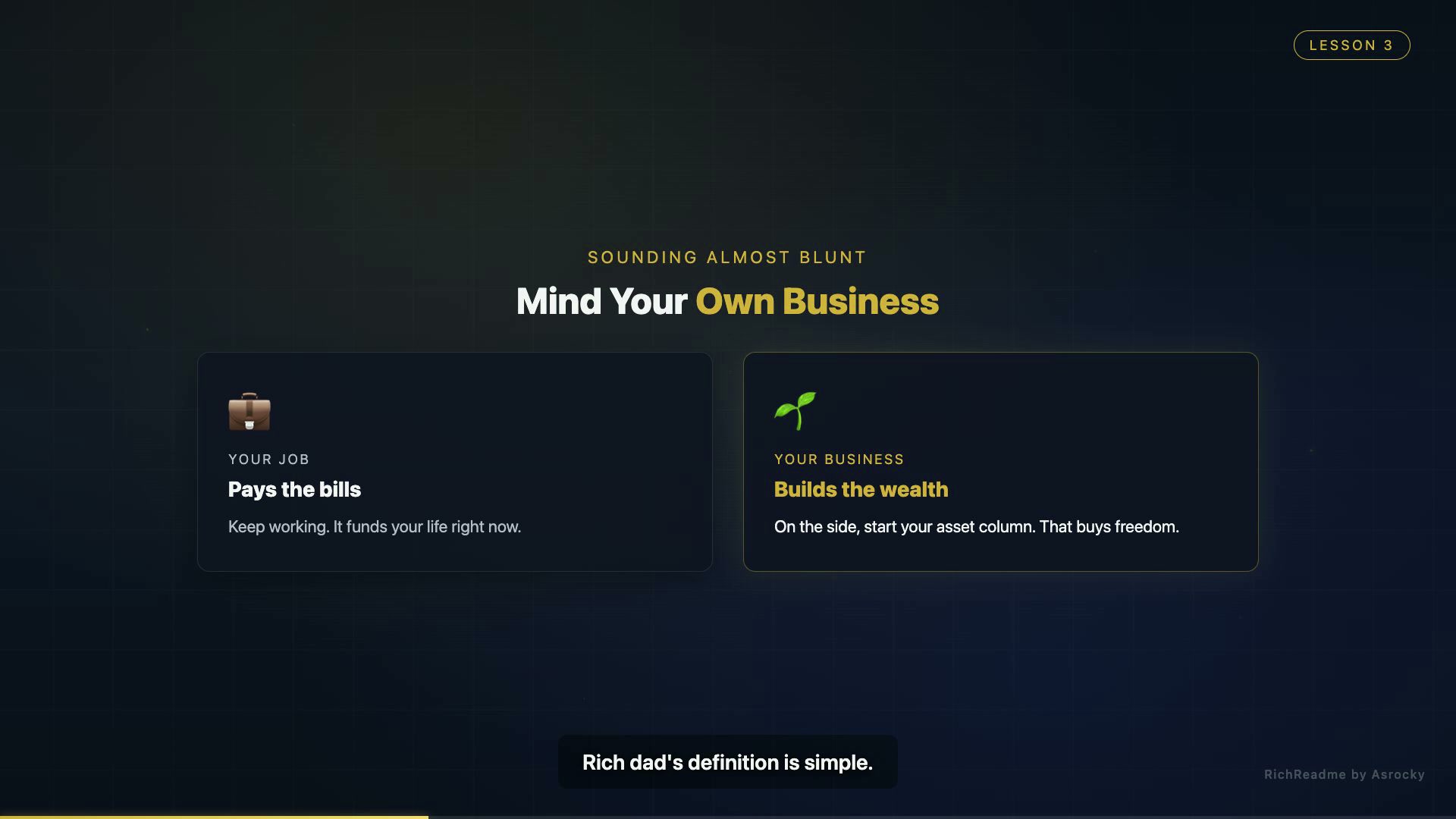
Your job pays the bills. Your business builds the wealth. A nurse can collect a salary and also own a rental unit. A sales rep can keep her paycheck and also build a side business. The job funds life. The assets buy freedom.
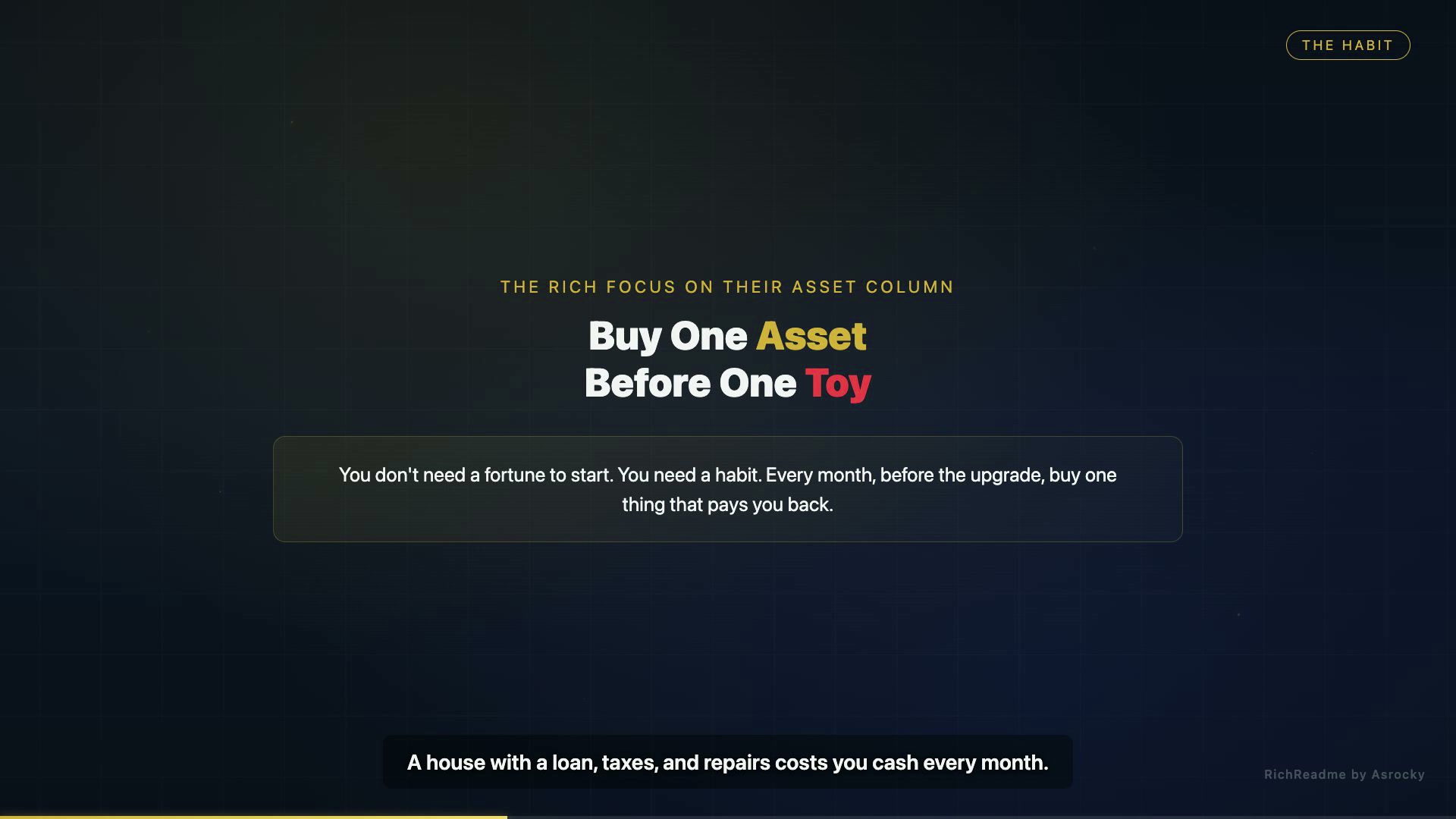
Rich dad said the rich focus on their asset column, while everyone else stares at their paycheck. Ask this each month. Did I buy any assets this month? If not, you are still working for someone else.
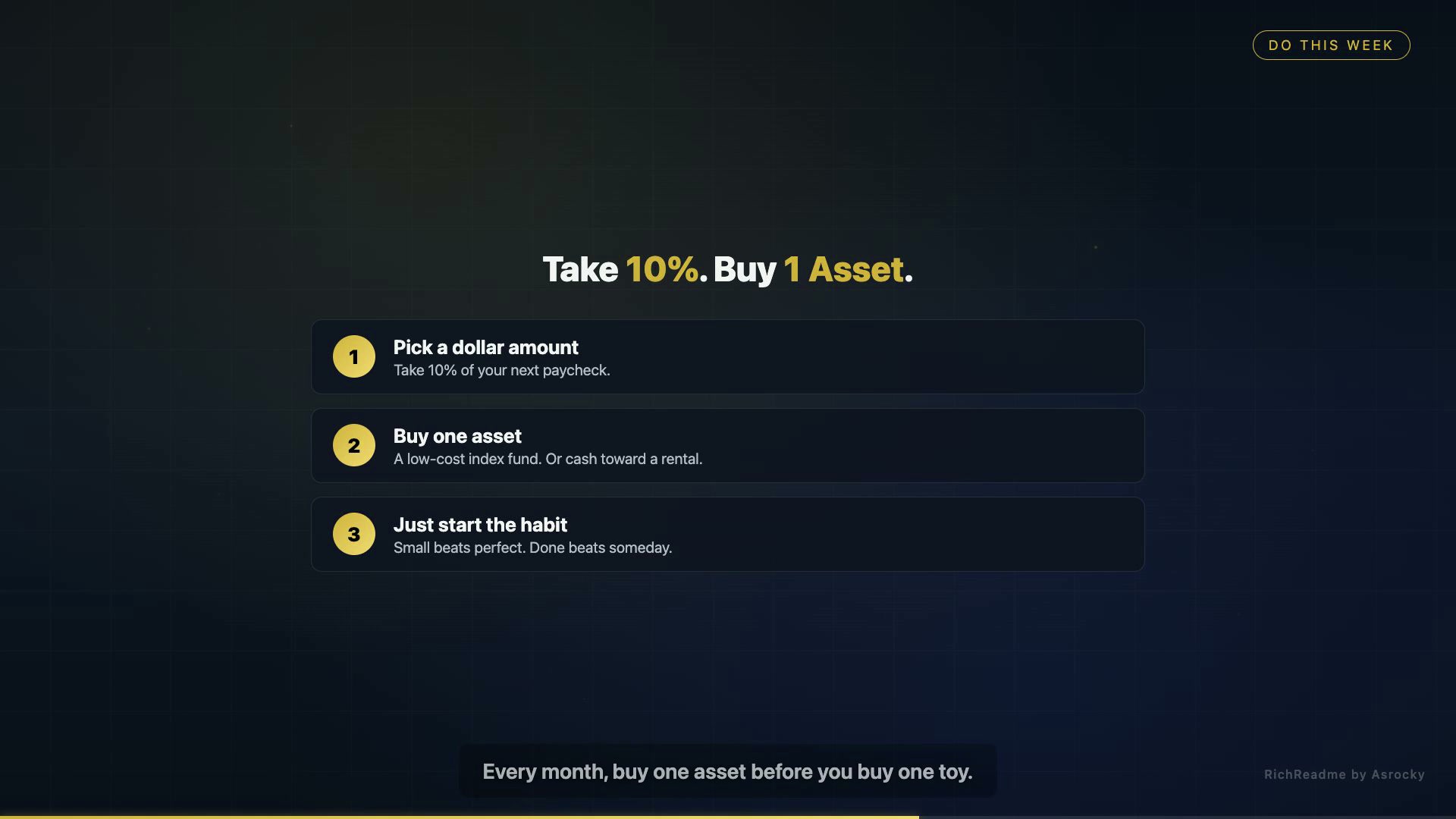
This is how regular people climb off the wheel. You do not need a fortune to start. You need a habit. Every month, buy one asset before you buy one toy.
Pay Yourself First
Lesson four is the boldest one. Pay yourself first. Most people do it backwards. They pay everyone else, then save whatever is left. Kiyosaki says take your savings first. Then let the pressure push you to find the cash for the rest.
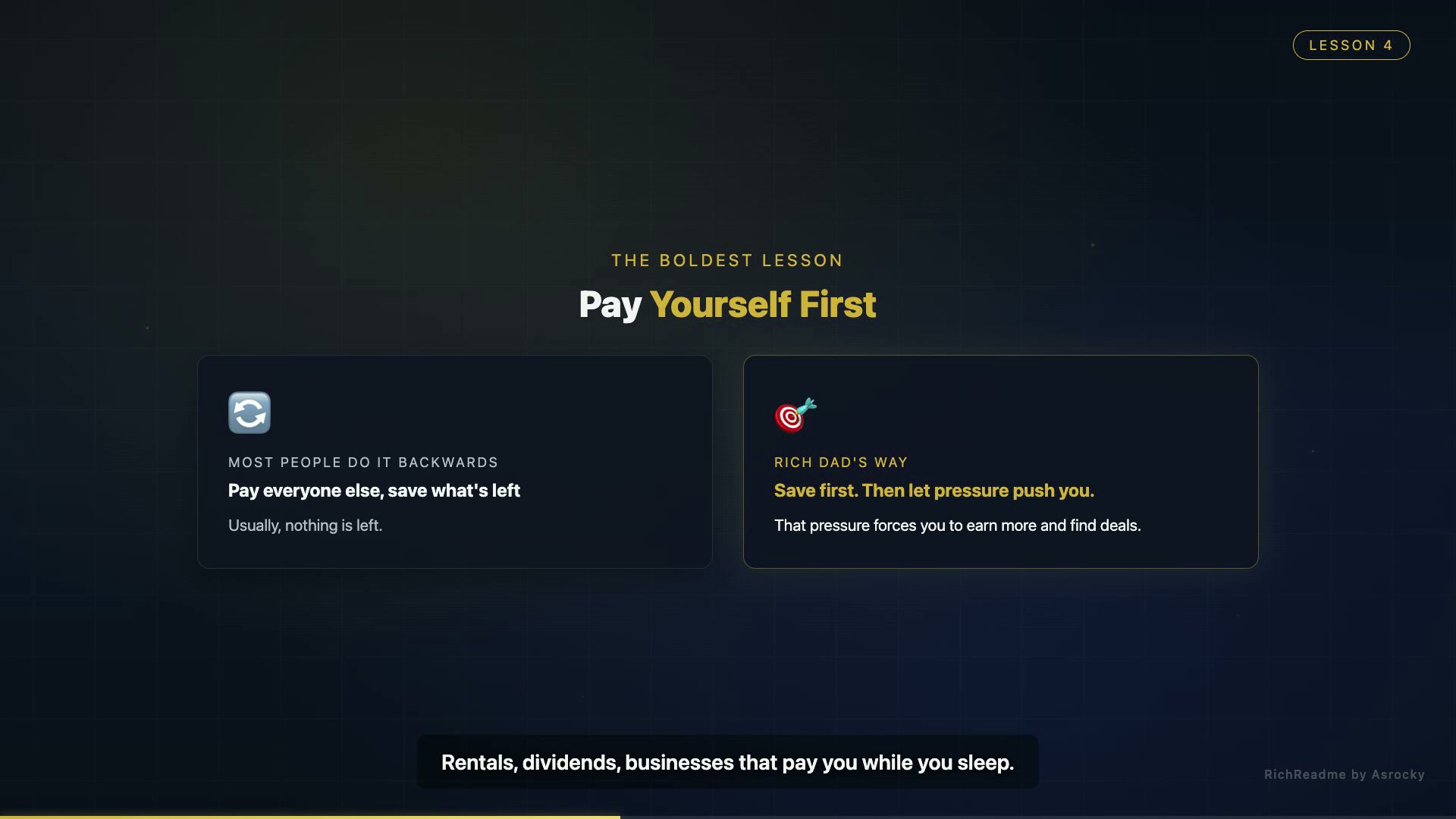
It feels risky. But that pressure is the teacher. It forces you to earn more, sell more, or find a deal. When there is no pressure, most people never build that muscle.
Rich dad also said the rich invent money. They do not wait for the perfect job or the perfect loan. They see a deal, they structure it, they make it happen. Most people wait for opportunity. The rich build it.
The Whole Book in One Sentence
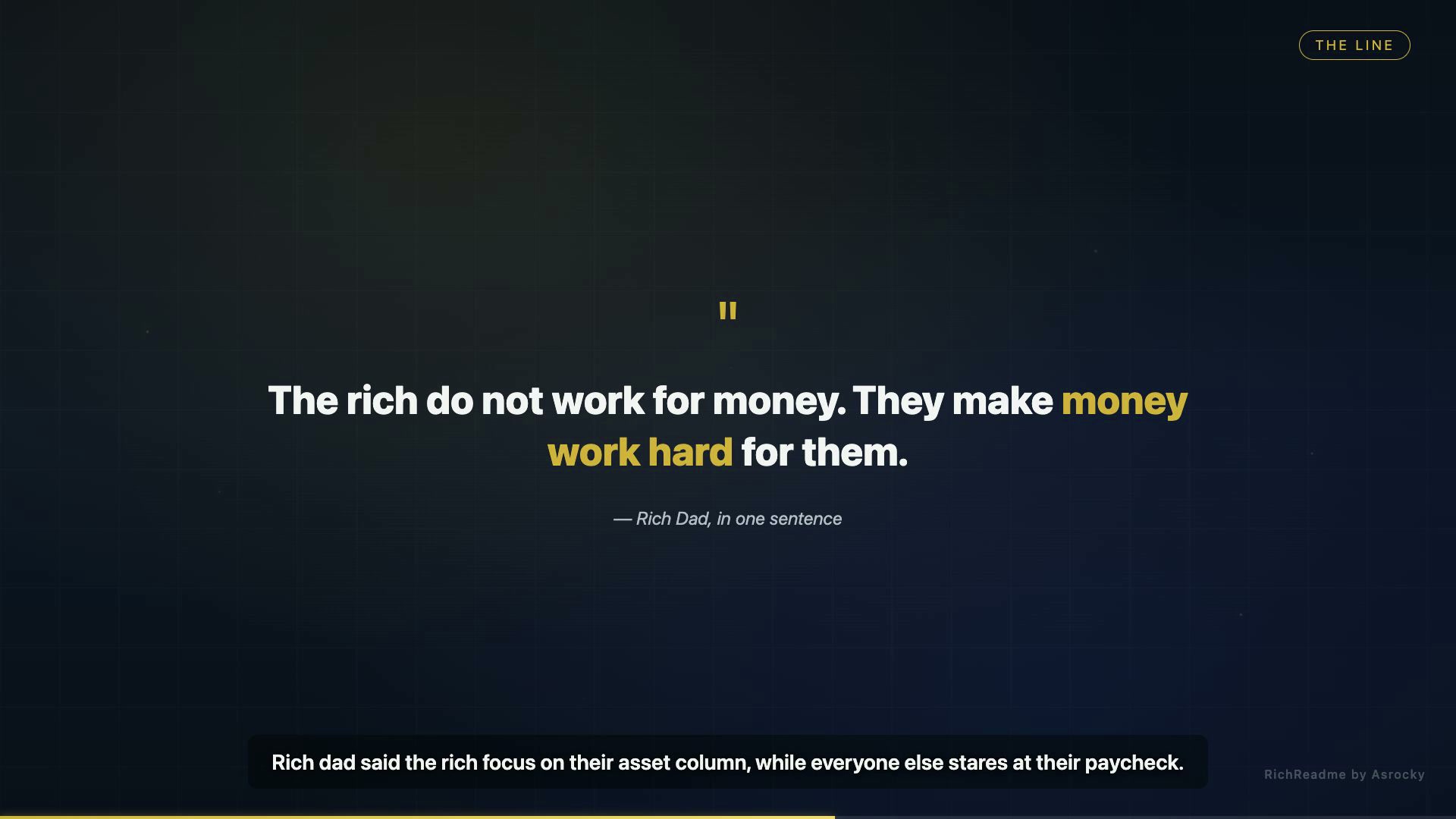
Here is the line that ties the book together. Rich dad said, "The rich do not work for money. They make money work hard for them." That is the whole book in one sentence.
What to Do This Week
So what do you do this week? Pick one dollar amount. Take ten percent of your next paycheck and buy one asset. It can be a low-cost index fund. It can be putting cash toward a rental. Just start the habit.
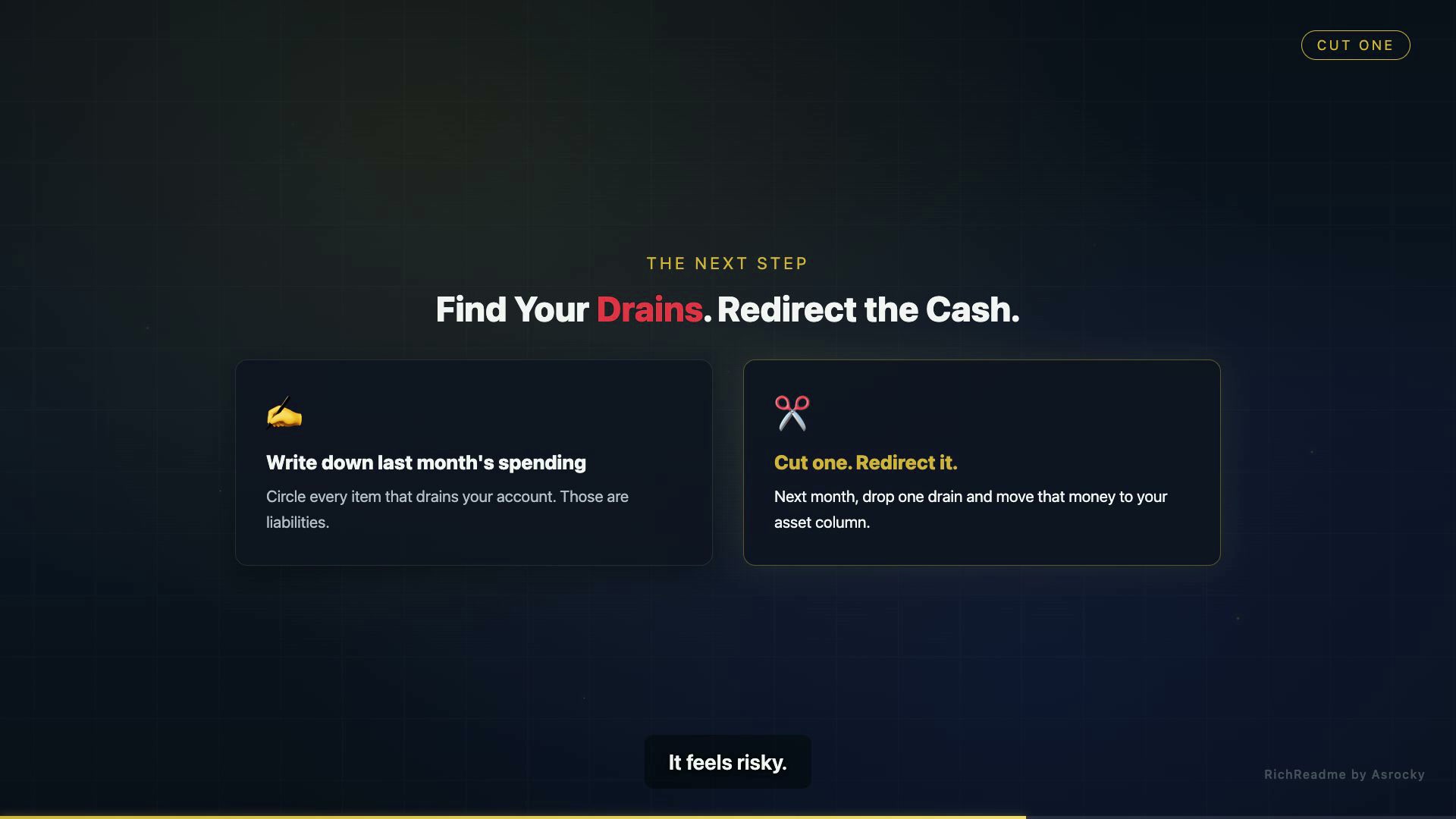
Next, write down every dollar you spent last month. Circle the items that drained you. Those are liabilities. Next month, cut one and redirect that money to an asset column.
Remember the Two Dads
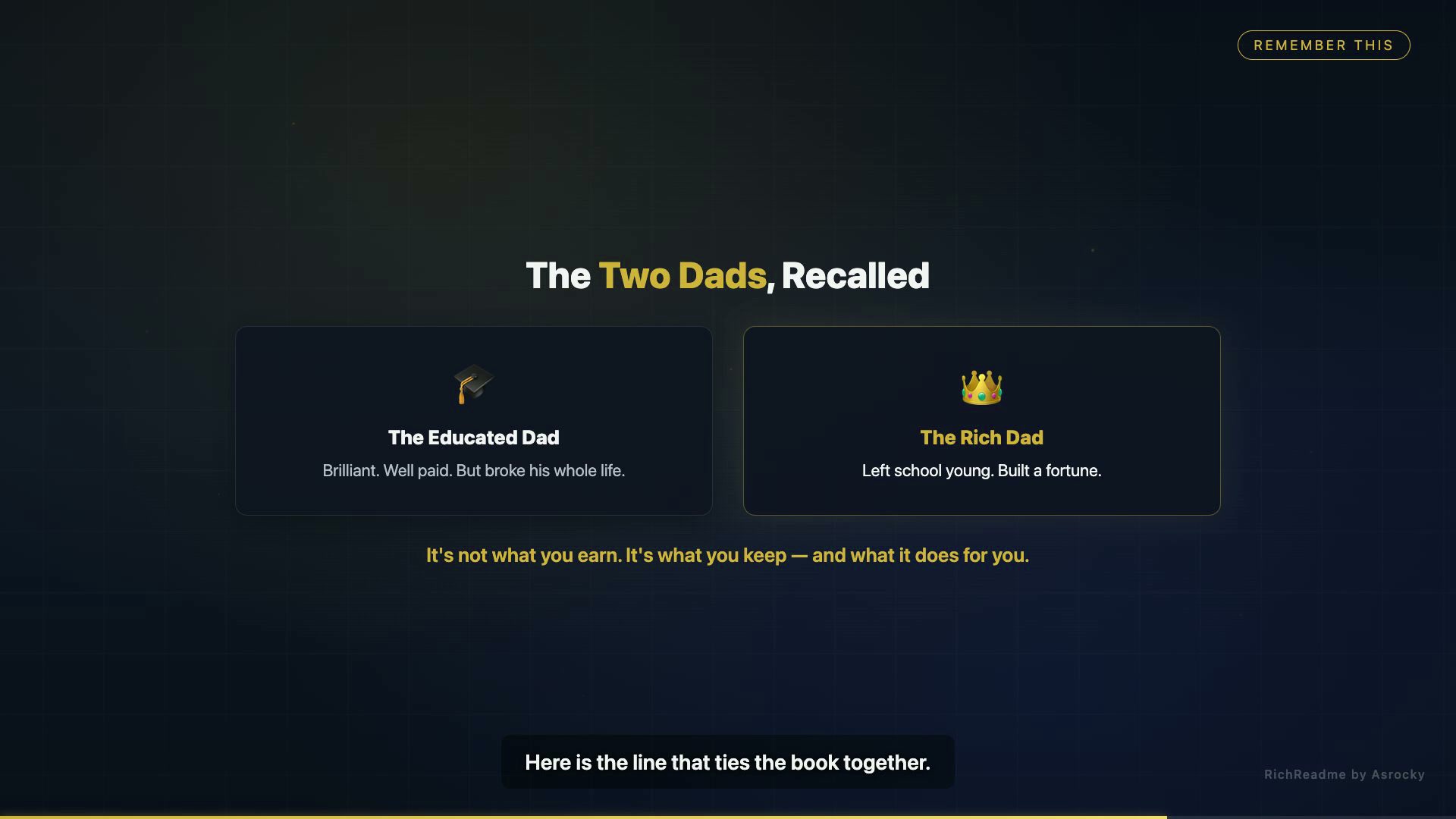
Remember the two dads. One was brilliant but poor. The other left school young and became rich. Money is not about how much you earn. It is about how much you keep, and what it does for you.
📖 Want the full book?
Get Rich Dad Poor Dad on AmazonDisclosure: This post contains affiliate links. If you buy through them, I earn a small commission at no extra cost to you.