What if getting rich was an exact science, with laws as certain as arithmetic? That is the bold claim of this century-old book.
This is The Science of Getting Rich, by Wallace D. Wattles, published in 1910. It is short, plain, and unusually confident. Wattles argues that there is a certain way of thinking and acting that reliably produces wealth, and that anyone who does things in this certain way gets rich, while those who do not, stay poor, no matter how hard they work.
You Have the Right to Be Rich
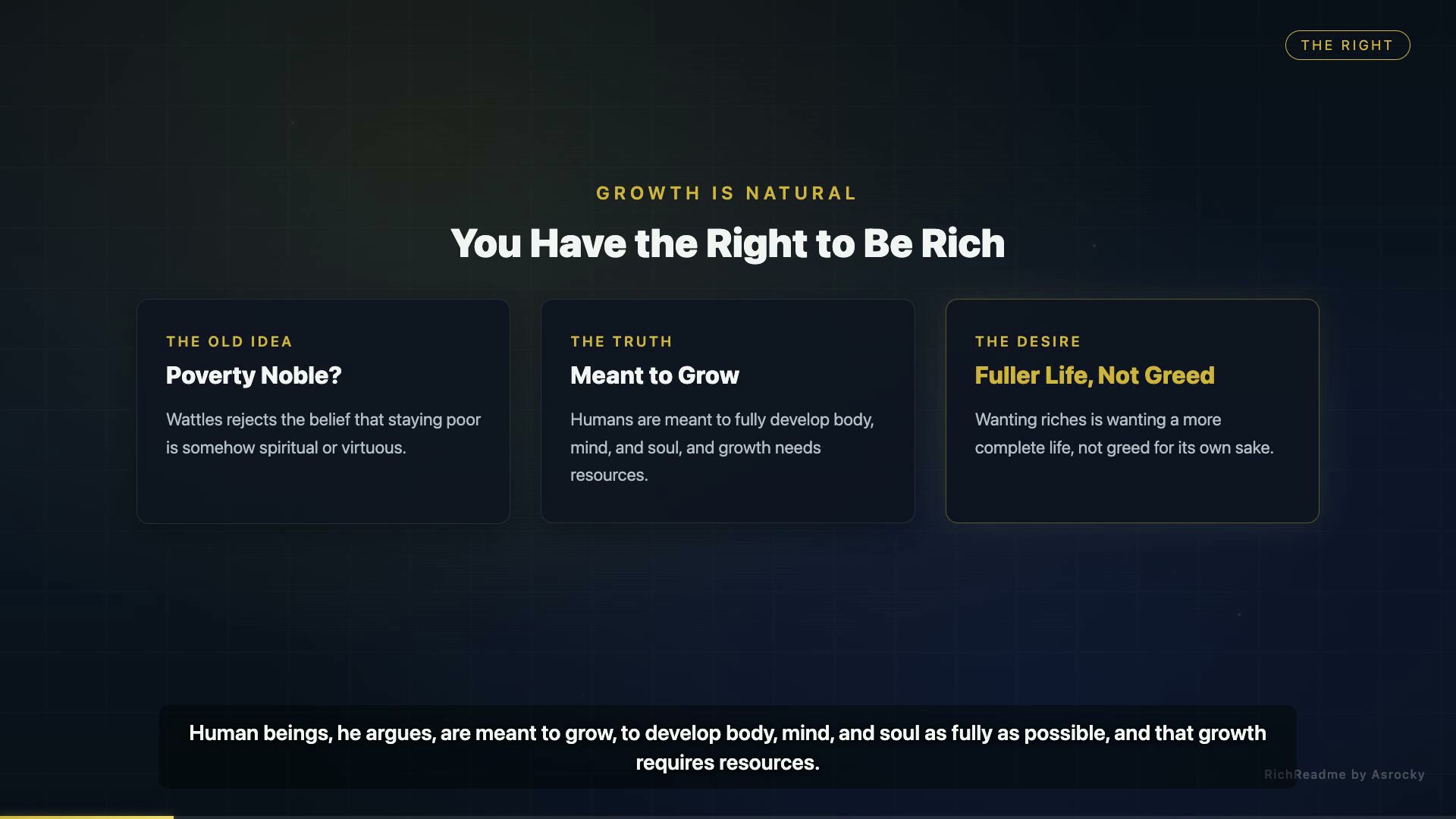
The book begins with what Wattles calls the right to be rich. He rejects the old idea that poverty is somehow noble or spiritual. Human beings, he argues, are meant to grow, to develop body, mind, and soul as fully as possible, and that growth requires resources. To desire riches is not greed.
It is the desire for a fuller, more complete life, and there is nothing wrong with that. The person who is content to remain poor, Wattles says, is not virtuous. They have simply stopped reaching for the life they are capable of.
Getting Rich Follows Laws
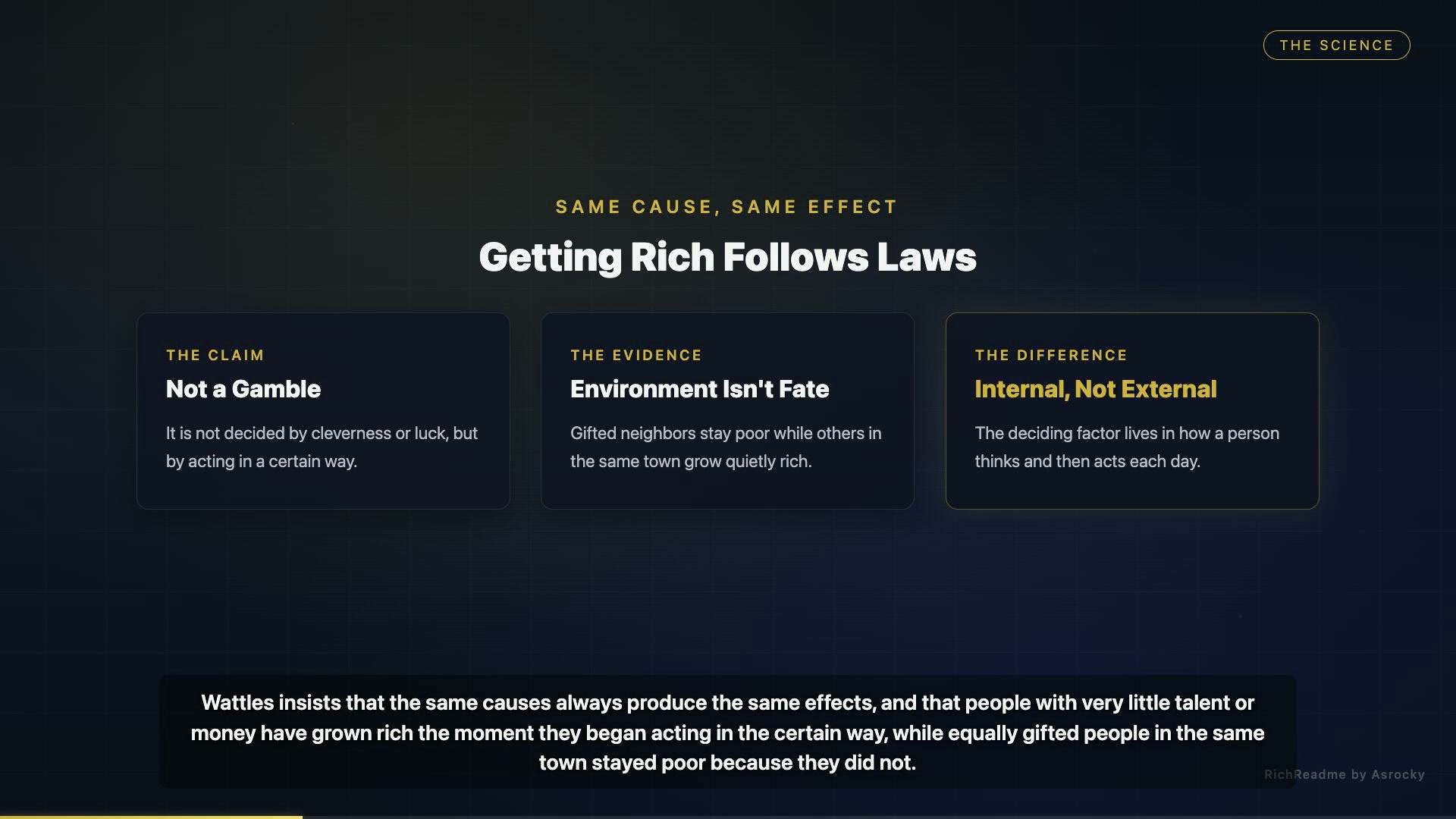
Next comes the central claim, that getting rich is a science. It is not a gamble decided by cleverness or circumstance. Wattles insists that the same causes always produce the same effects, and that people with very little talent or money have grown rich the moment they began acting in the certain way, while equally gifted people in the same town stayed poor because they did not.
Environment cannot be the deciding factor, he notes, or everyone in the same place would be equally wealthy. The difference is internal, in how a person thinks and acts.
Opportunity Is Not Monopolized
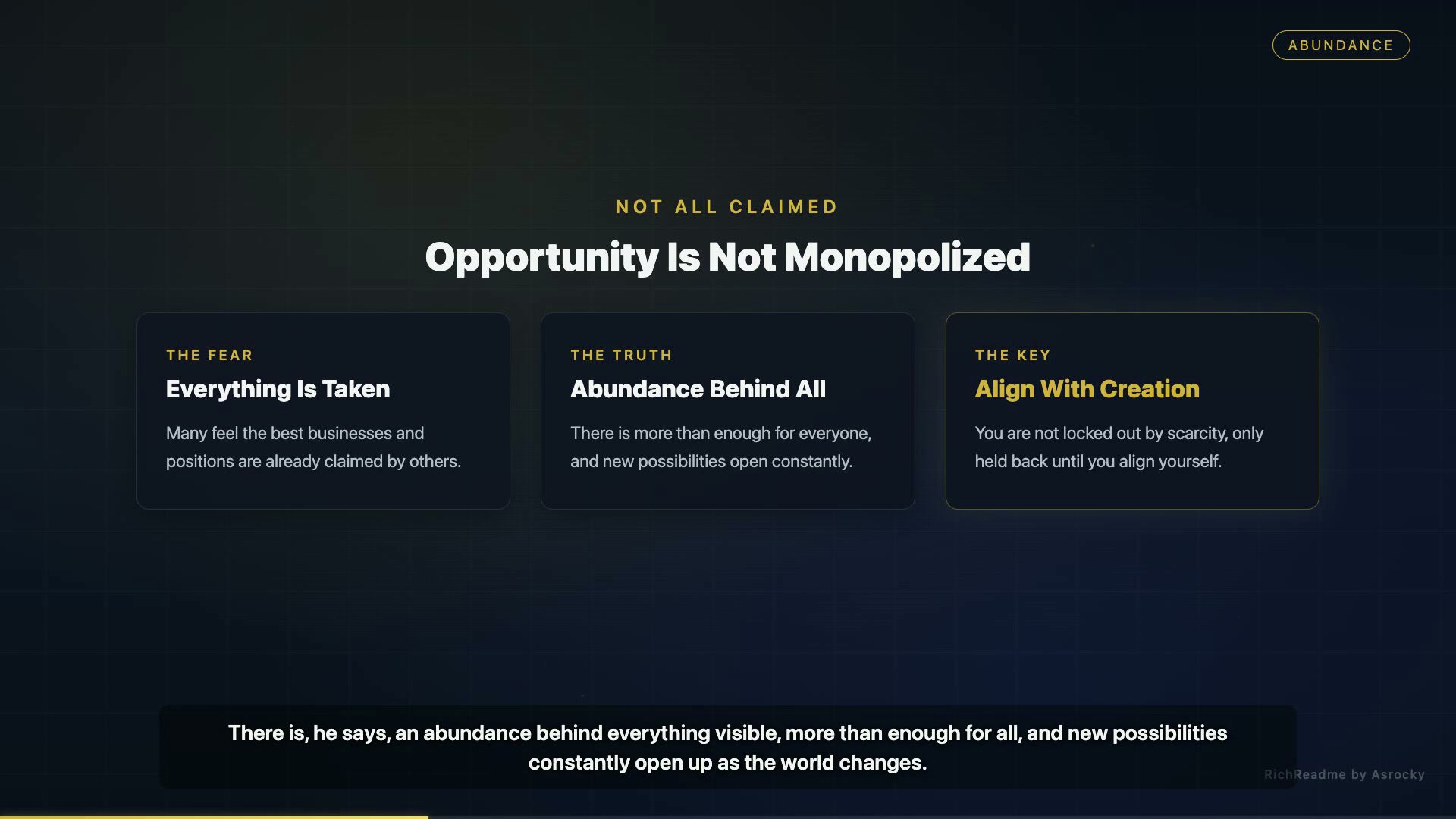
This leads to a reassuring idea, that opportunity is not monopolized. Many people feel that the world's wealth is already claimed, that the good businesses and the best positions are all taken by others. Wattles disagrees.
There is, he says, an abundance behind everything visible, more than enough for all, and new possibilities constantly open up as the world changes. You are not locked out by a shortage of opportunity. You are only held back until you learn how to align yourself with the force that creates it.
The Formless Thinking Substance
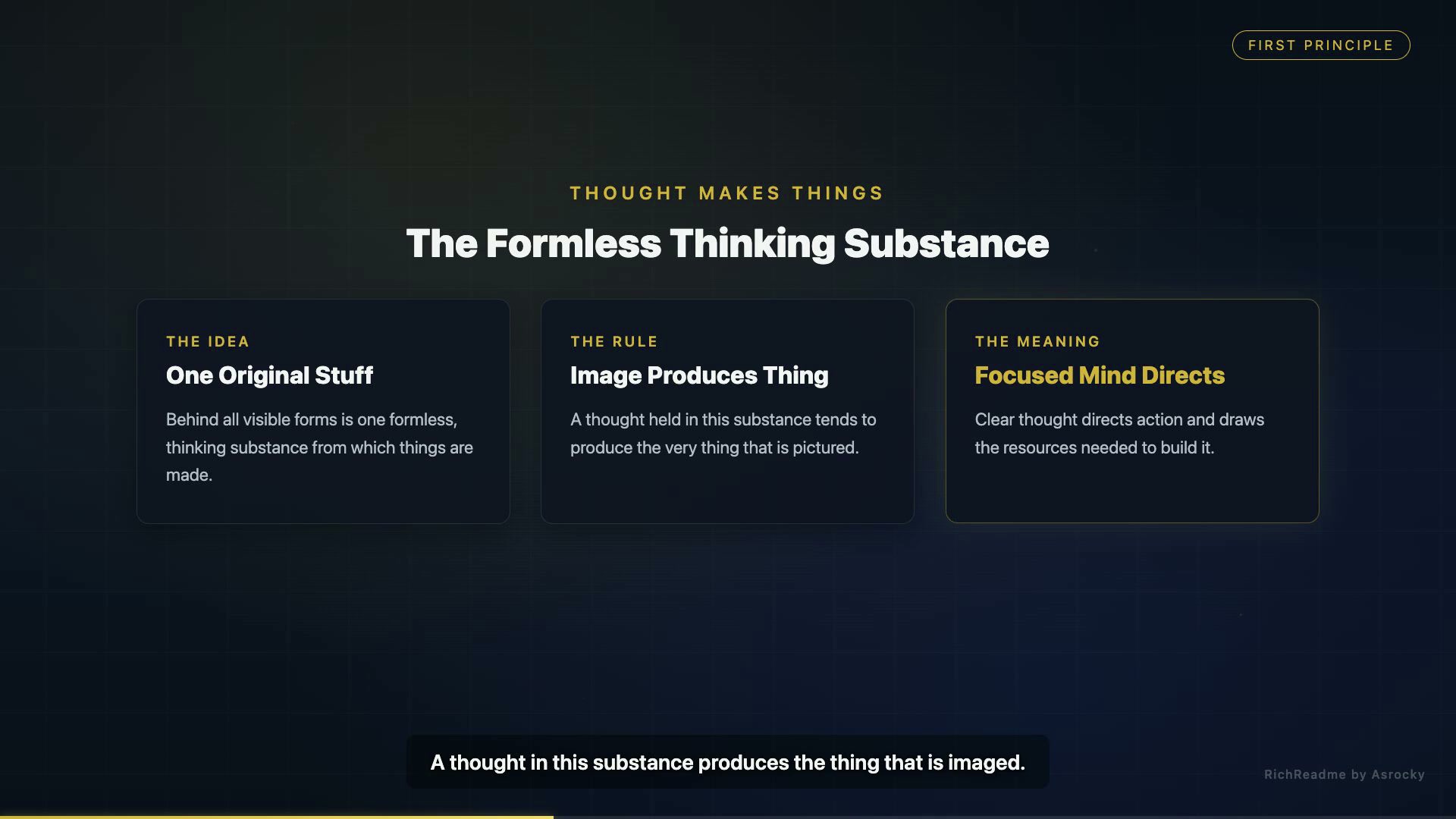
That force is explained in what Wattles calls the first principle. Behind all the forms we see, he argues, there is one original, formless substance, a kind of thinking stuff from which all things are made. A thought in this substance produces the thing that is imaged.
In other words, the universe responds to clear mental pictures. This is not magic. It is Wattles describing, in the language of his time, the power of focused thought to direct action and attract the resources needed to build what the mind has already clearly conceived.
Create, Do Not Compete

From this follows the book's most important moral distinction, get rich through creation, not competition. There are two ways to pursue wealth. One is to scramble for a limited pile, fighting others for a bigger slice, which breeds fear and resentment.
The other is the creative plane, where you bring new value into existence from the abundance around you, rather than taking it from someone else. Wattles insists that you can have everything you want without cheating anyone, because you are not dividing a fixed pie. You are making more.
Hold a Definite Picture

The creative process begins with a clear and definite vision. You must decide exactly what you want, see it in your mind as though it were already yours, and hold that picture steadily. Vague wishes produce vague results.
The sharper and more specific the image, the more it organizes your daily choices toward it. Wattles tells the reader to return to that vision often, to feel the reality of it, and never to speak or act as though the goal were uncertain or far away.
Gratitude Draws Good Near
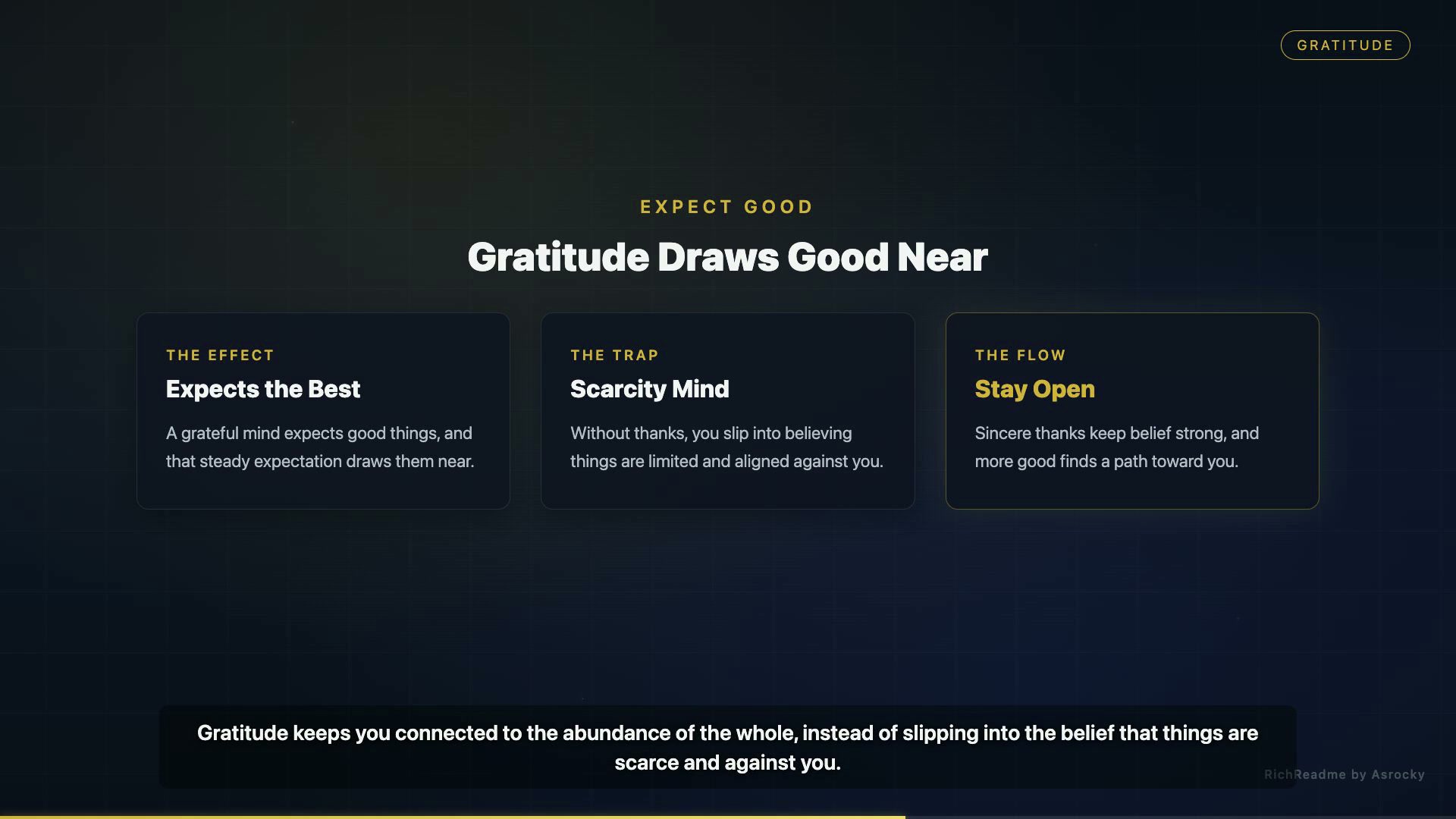
Holding the vision requires gratitude, and Wattles treats this as almost a law. The grateful mind, he says, expects good things, and expectation draws them near. Gratitude keeps you connected to the abundance of the whole, instead of slipping into the belief that things are scarce and against you. When you give sincere thanks for what you already have, and for what is on its way, your mind stays open, your belief stays strong, and more good seems to find a path toward you.
Use Will Only on Yourself
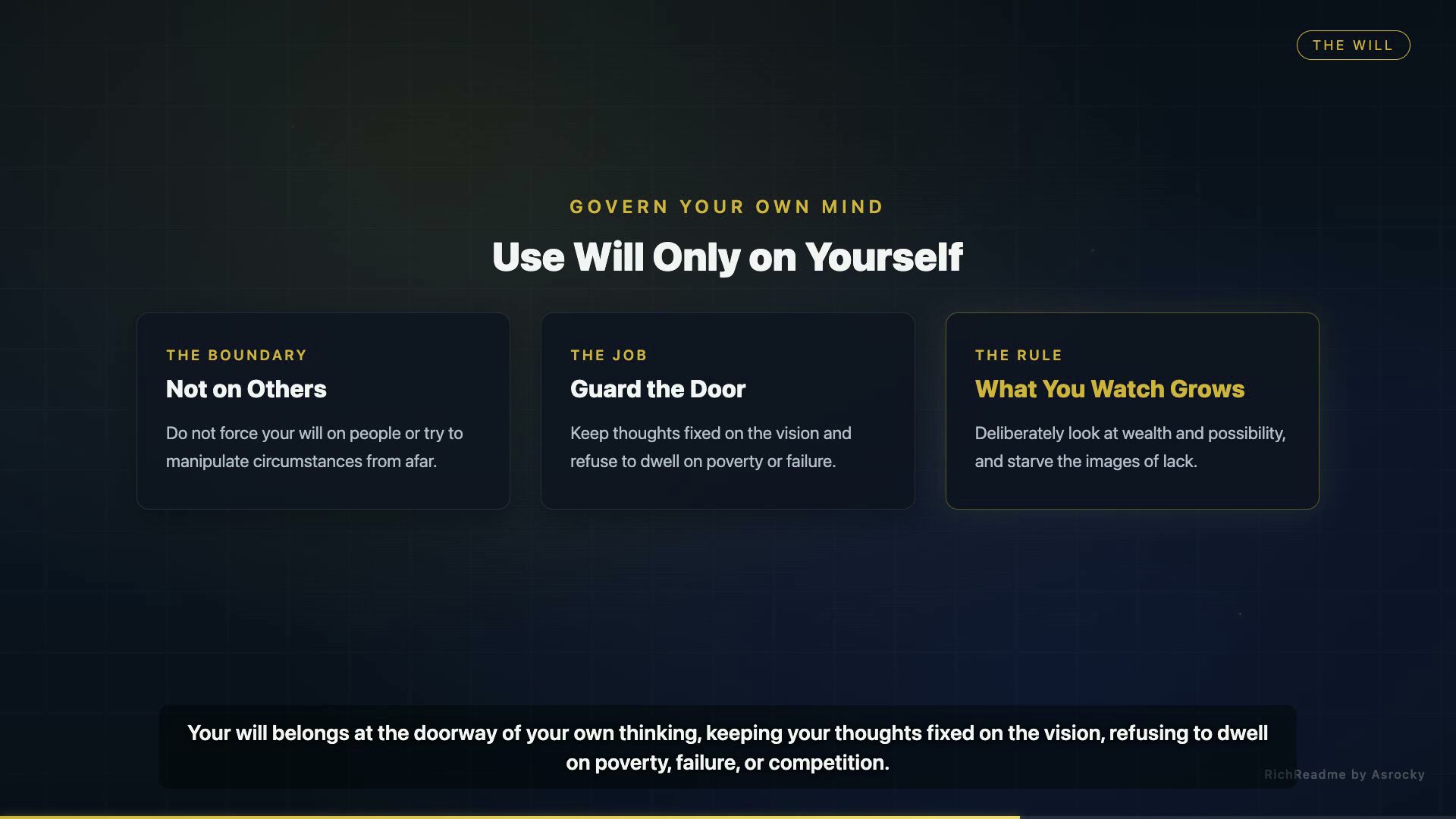
The will is used in a specific way, to govern your own mind and nothing more. Wattles does not advise forcing your will on other people or trying to manipulate circumstances from afar. Your will belongs at the doorway of your own thinking, keeping your thoughts fixed on the vision, refusing to dwell on poverty, failure, or competition. What you look at steadily grows in your life, so the disciplined person deliberately looks at wealth, growth, and possibility, and starves the mental images of lack.
Act in the Certain Way Today
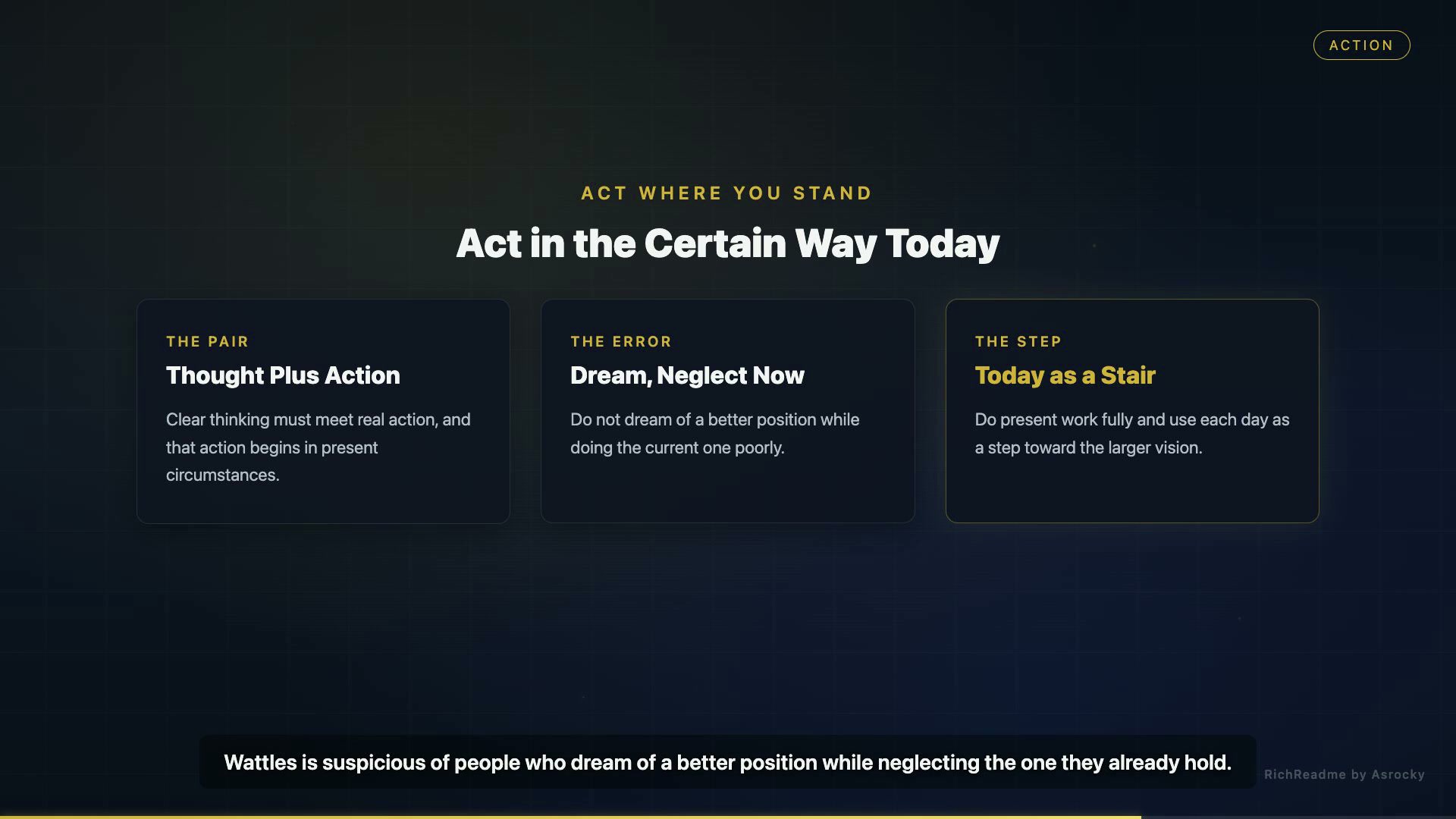
Thought alone, however, is not enough, which is why the book insists on acting in the certain way. You must combine clear thinking with action, and the action happens today, in your present circumstances, wherever you happen to stand. Wattles is suspicious of people who dream of a better position while neglecting the one they already hold. Do every present task to the full, act efficiently, make each action a success, and use each day as a step that carries you toward the larger vision instead of waiting for permission to begin.
Act Strongly, Give More Value

This connects to the idea of efficient action. Every action is either strong or weak, and a lifetime of weak actions leaves you behind, while strong actions compound. You cannot always act in the future you dream about, but you can act powerfully in the present, dealing with the people and tasks right in front of you. By doing today's work completely and with purpose, you make yourself the kind of person who can be trusted with greater things, and the path forward opens from there.
Finally, Wattles says that you should always give more in use value than you take in cash. Do not try to get something for nothing. Let every transaction leave the other person richer in life, and carry the quiet impression that you are advancing and helping them advance as well. Deal honestly, think greatly, act now, and the certain way does the rest.