Why do some people win while others keep losing? The difference is not talent. It is what they expect to happen next.
This is The Power of Positive Thinking by Norman Vincent Peale, the minister whose books sold over twenty million copies and shaped how millions of people think about faith, confidence, and success.
You Will Never Do What You Believe You Can't
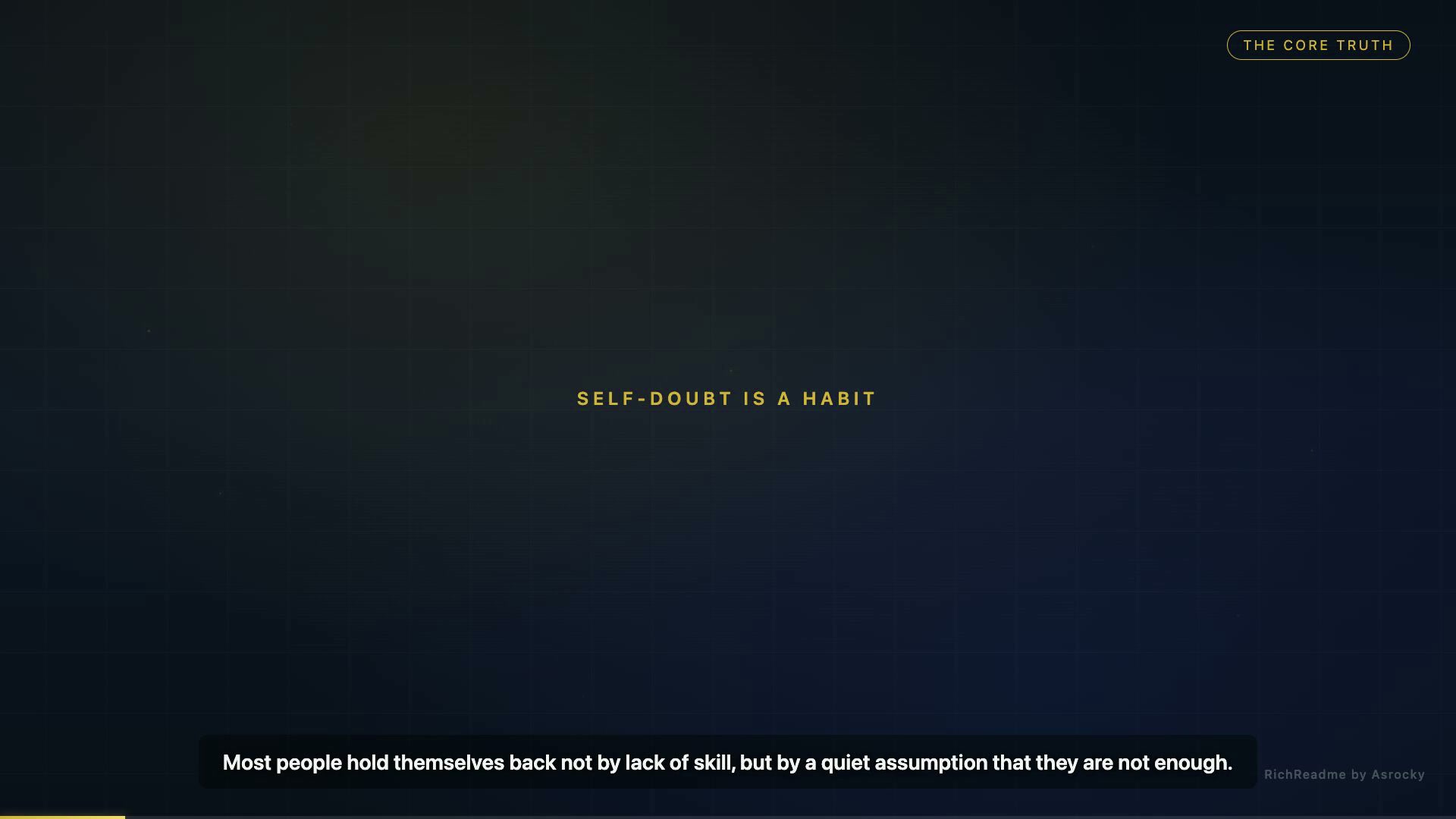
Peale starts with one brutal truth. You will never do what you believe you cannot do. Most people hold themselves back not by lack of skill, but by a quiet assumption that they are not enough.
Self-doubt is not a fact about you. It is a habit of thought, and habits can be changed.
Quiet Self-Respect, Not Arrogance
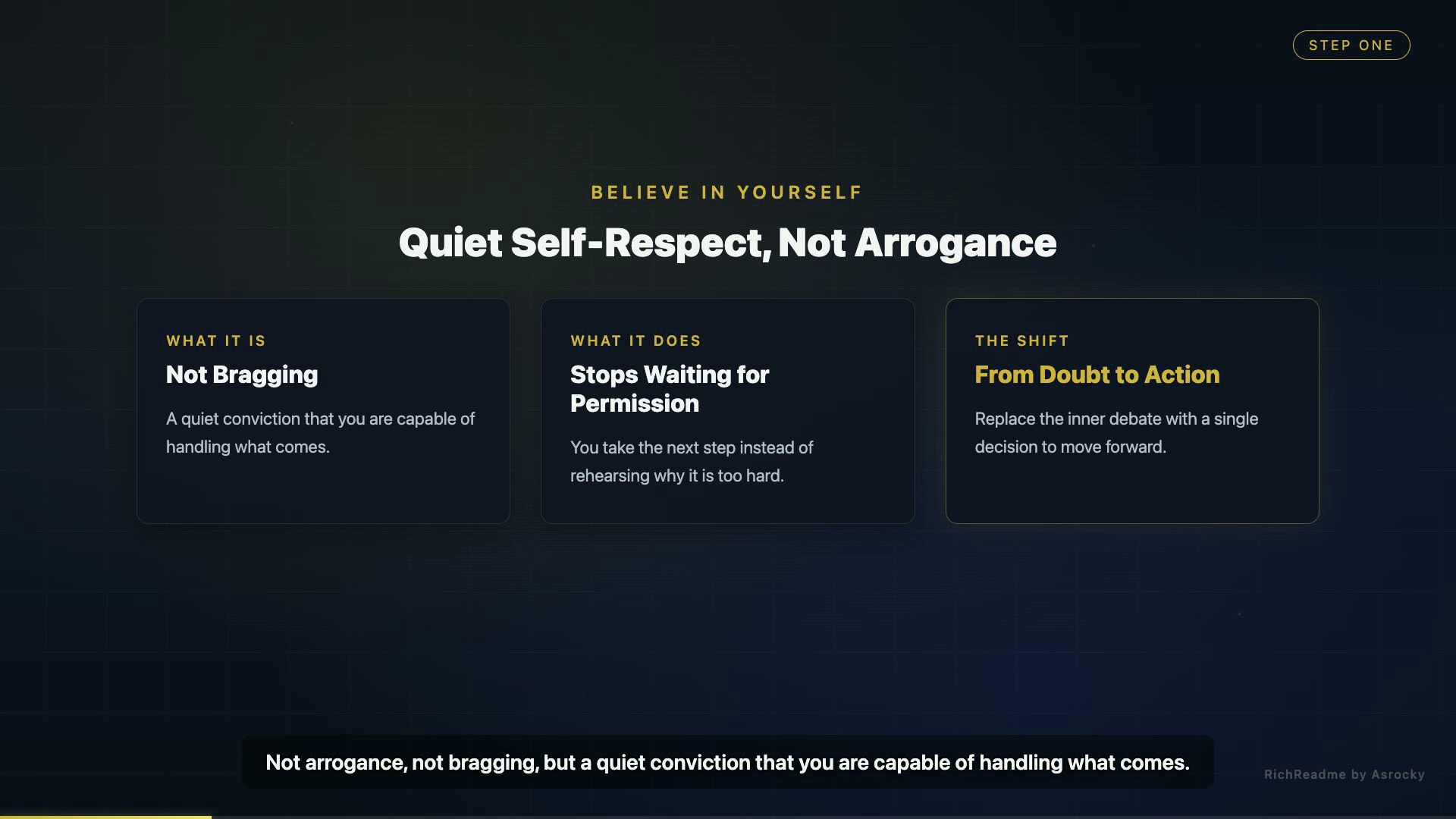
The first habit to break is the habit of disbelief. Peale says the starting point is simple self-respect. Not arrogance, not bragging, but a quiet conviction that you are capable of handling what comes.
When you believe in yourself, you stop waiting for permission. You take the next step instead of rehearsing why it is too hard.
The Practice
His most famous tool is what he calls expect the best and get it. This is not wishful thinking. It is a deliberate practice of holding a clear picture of the outcome you want, then acting as though it is already on its way. What you expect tends to show up, because expectation changes what you notice and what you are willing to try.
Interrupt the Anxiety Loop
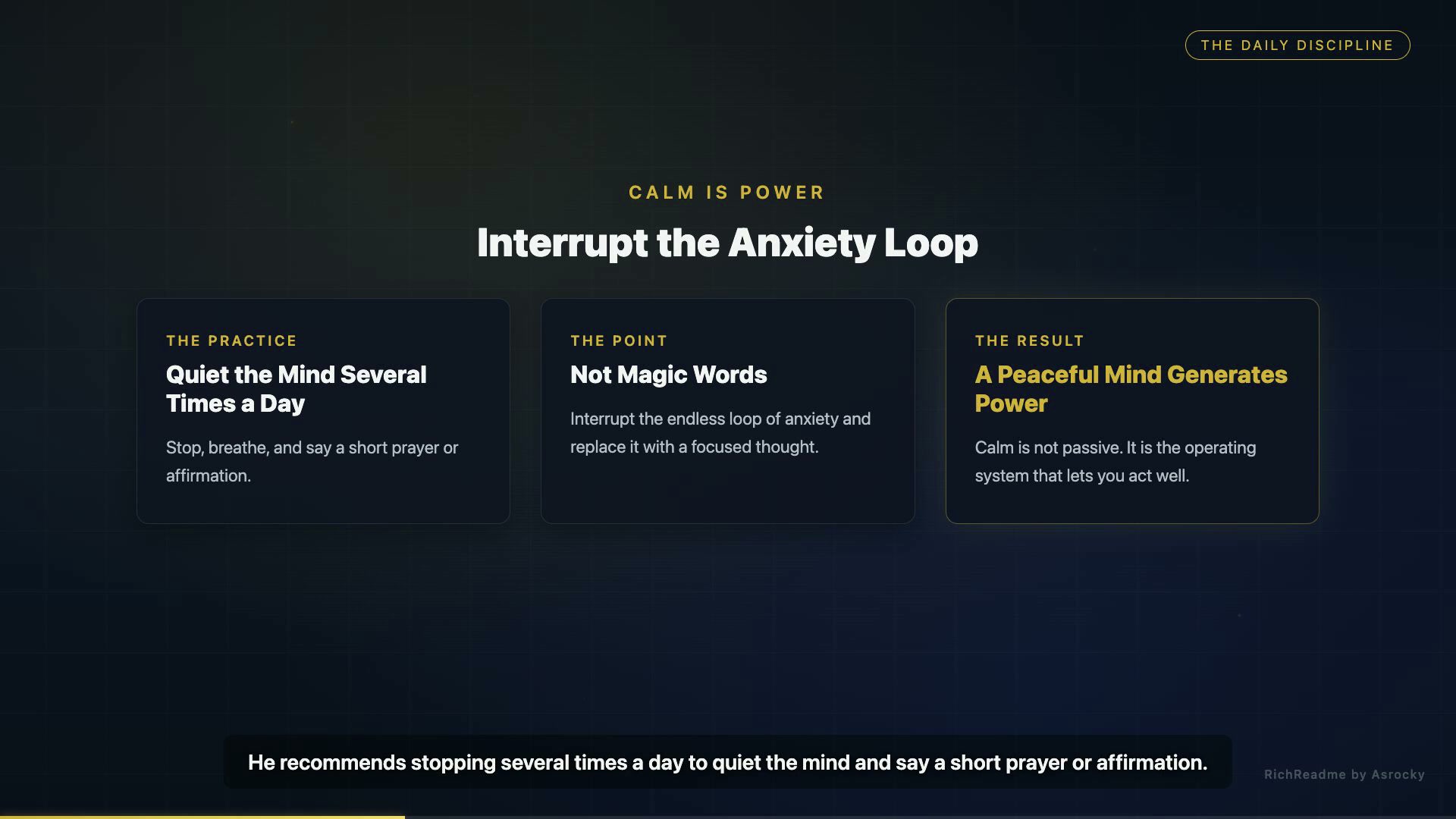
But positive thinking is not just smiling and waiting. Peale pairs it with a daily discipline. He recommends stopping several times a day to quiet the mind and say a short prayer or affirmation. The point is not magic words.
The point is to interrupt the endless loop of anxiety and replace it with a focused thought. Calm is not passive. A peaceful mind generates actual power.
How to Stop Worrying in Three Moves
That is why worry is so destructive. Worry is rehearsing failure in advance. It drains energy before the problem even arrives. Peale gives a practical method for breaking the worry habit.
Write the problem down. Ask what is the worst that can happen. Then accept that worst case and focus on improving it. Once you stop fearing the worst, you free up energy to solve the actual problem.
Let It Go
He is also honest about anger and resentment. Fuming at people does not hurt them. It poisons you.
Peale recommends a deliberate practice of forgiveness, not because the other person deserves it, but because carrying resentment is like drinking poison and waiting for the other person to die. Letting go is selfish in the best way. It gives your energy back.
A Calm Mind Heals Better
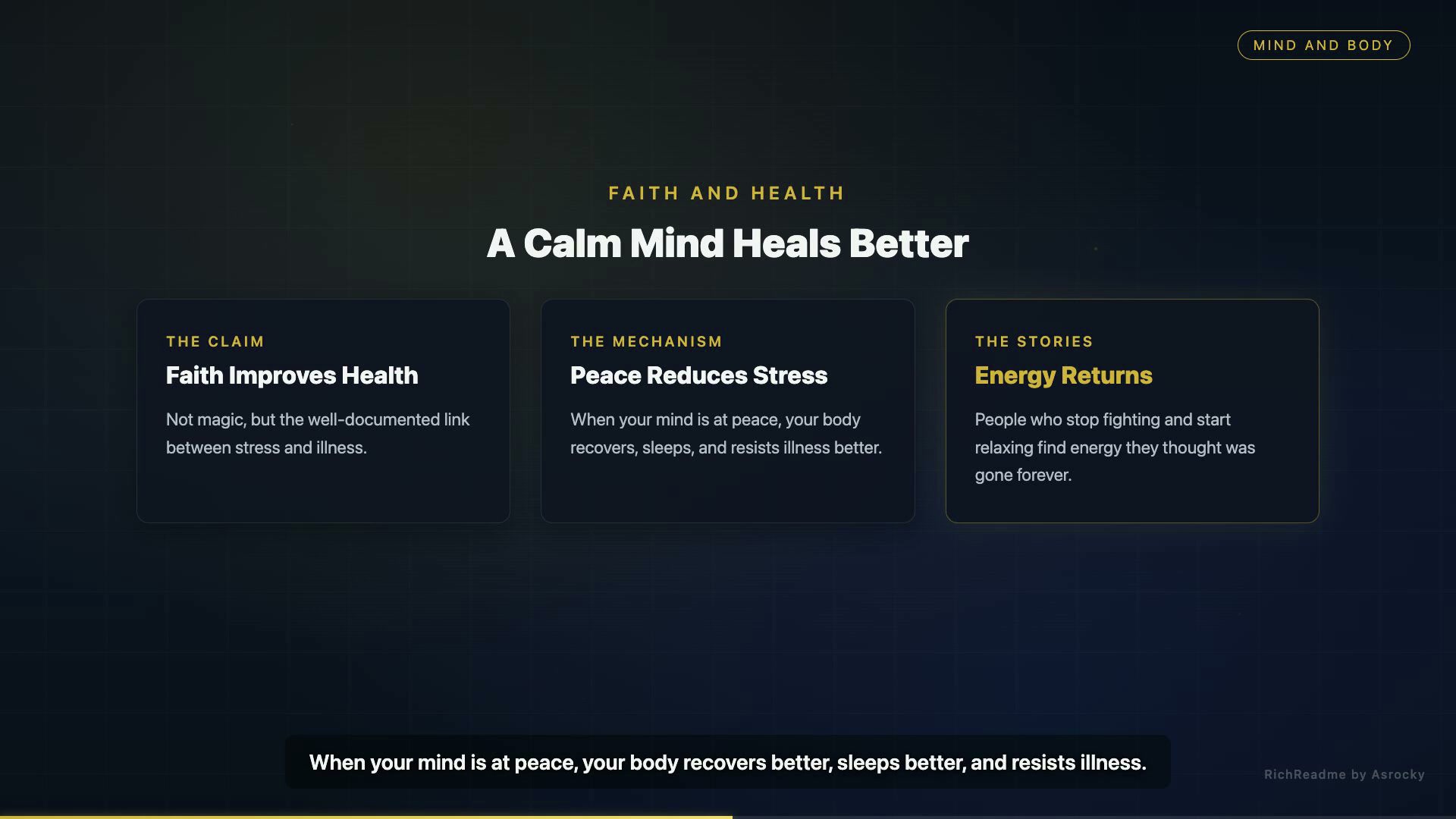
One of his most surprising claims is that faith can actually improve health. This is not about magic. It is about the well-documented connection between stress and illness.
When your mind is at peace, your body recovers better, sleeps better, and resists illness. Peale tells story after story of people who, once they stopped fighting and started relaxing, found energy they thought was gone forever.
You Are Building Ruts Every Day
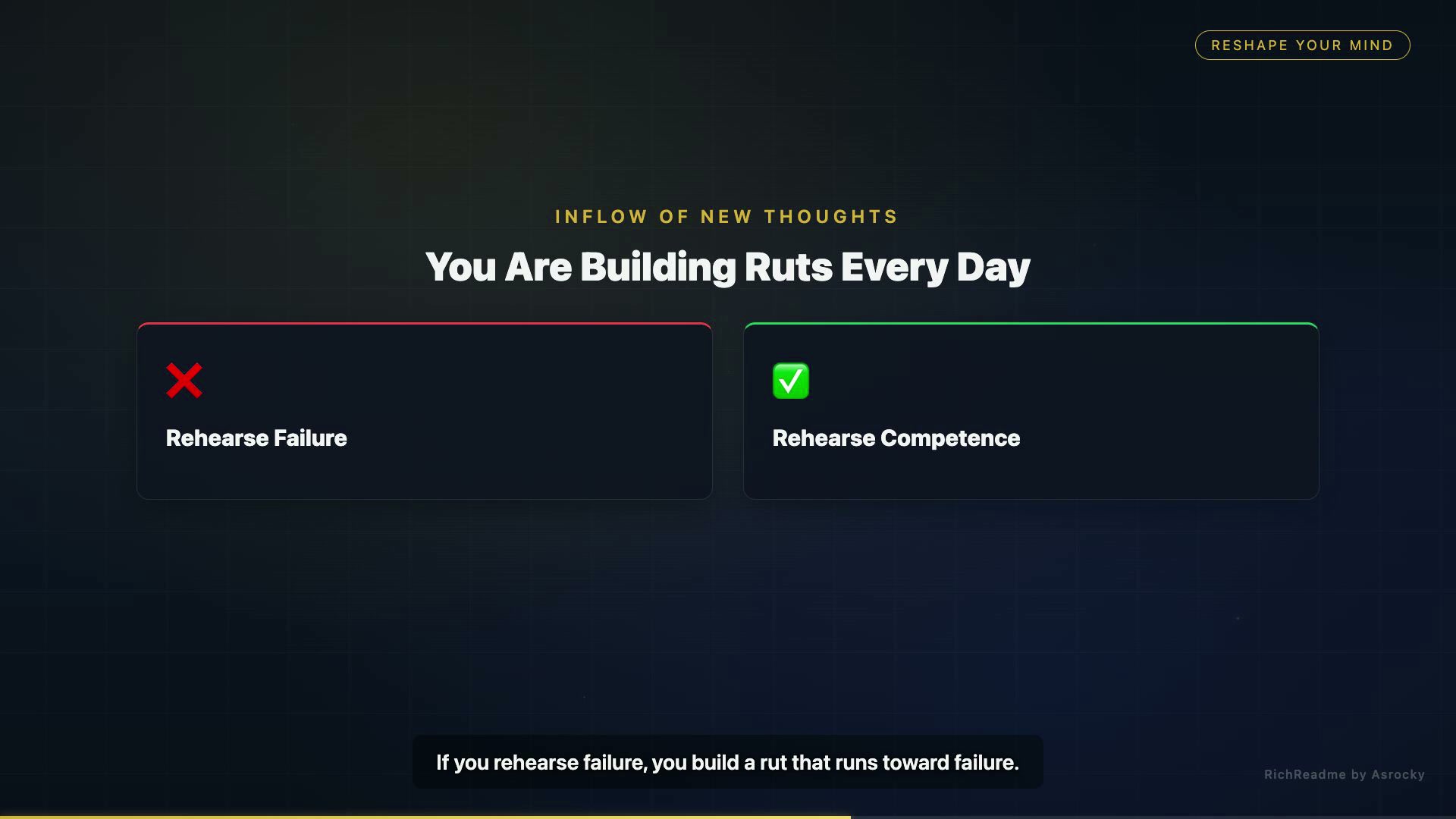
The mechanism he describes is what he calls inflow of new thoughts. Your mind is not fixed. Every thought you repeat reshapes the mental grooves you walk down.
If you rehearse failure, you build a rut that runs toward failure. If you rehearse competence and calm, you build a rut that runs toward action. The words you say to yourself in private are quietly building the person you become.
Tension Makes You Dumb
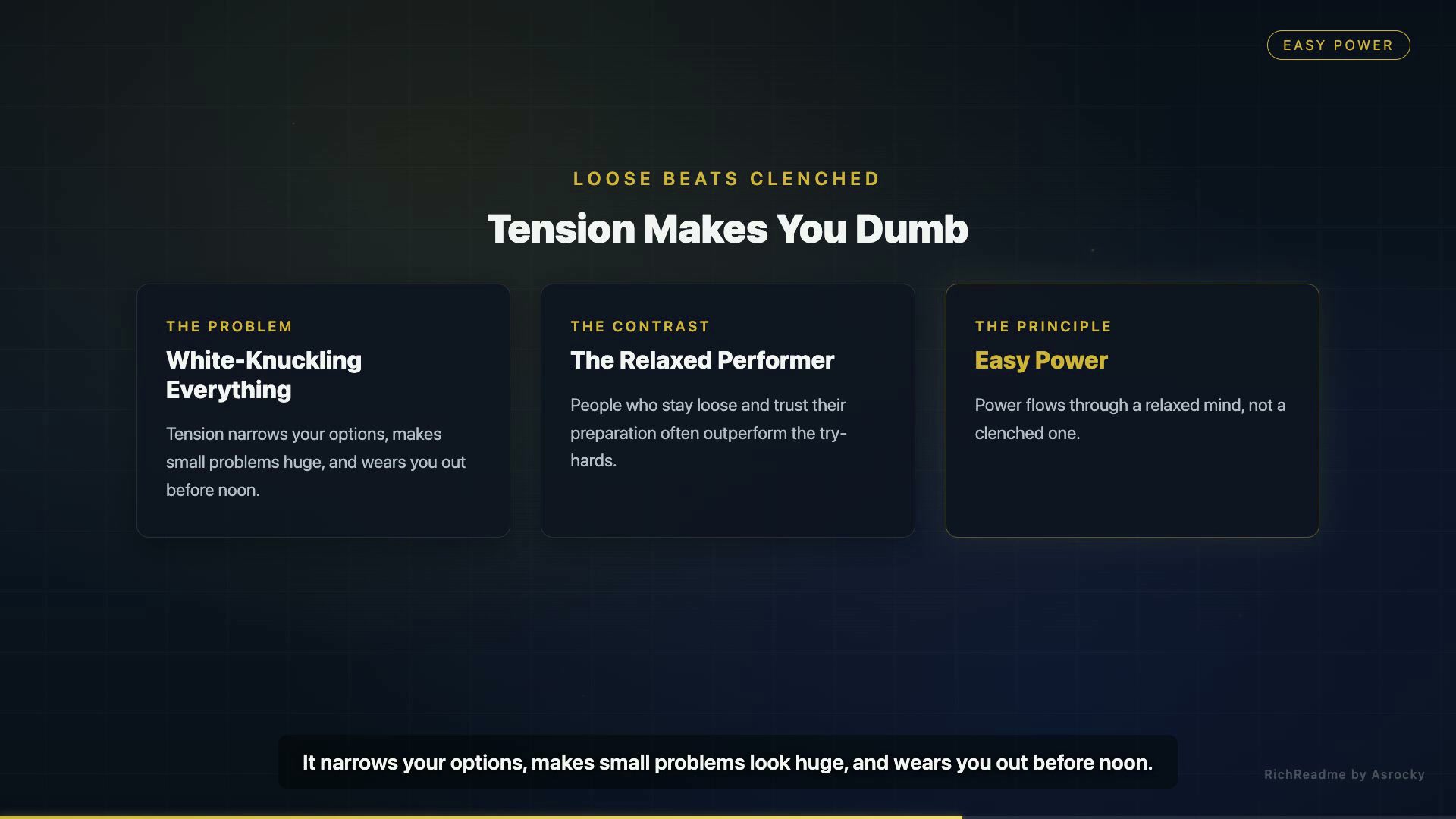
This is why relaxation matters so much. Peale says easy power comes from a relaxed mind, not a clenched one. Tension makes you dumb.
It narrows your options, makes small problems look huge, and wears you out before noon. People who try too hard, who white-knuckle every task, often underperform people who stay loose and trust their preparation.
Stop Needing Them to Like You
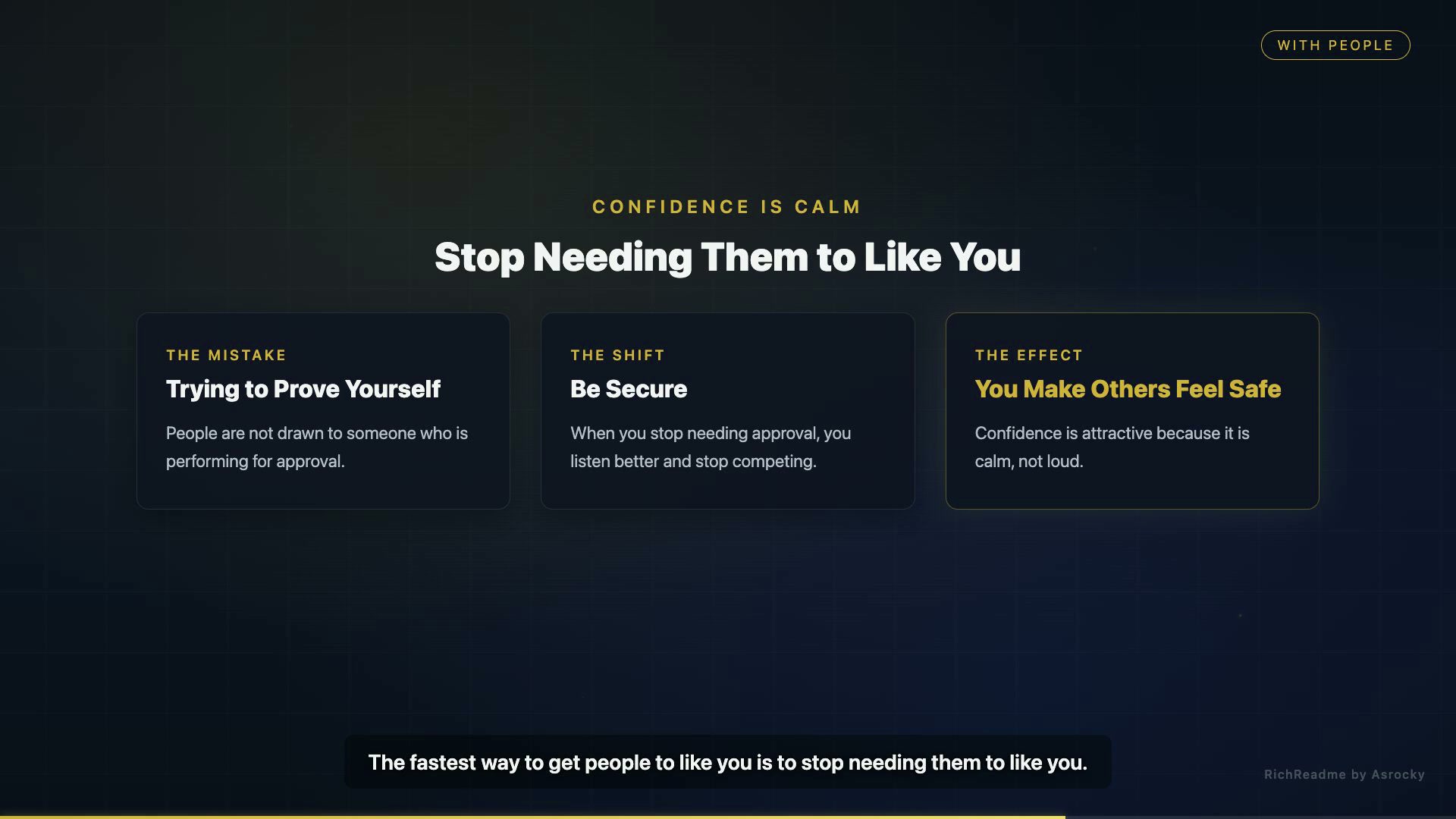
He also has practical advice for relationships. People are drawn to someone who is not trying to prove himself. The fastest way to get people to like you is to stop needing them to like you.
When you are secure, you listen better, you do not compete, and you make other people feel safe. Confidence is attractive because it is calm, not loud.
Not Denial
None of this means you ignore reality. Peale does not tell you to pretend problems do not exist. He tells you to stop giving the problem more mental energy than it deserves.
Size the problem up, do what you can, and refuse to let it occupy your mind after that. Worry is not a strategy. It is a tax you pay before you owe anything.
Anxious and Insecure Are Learned
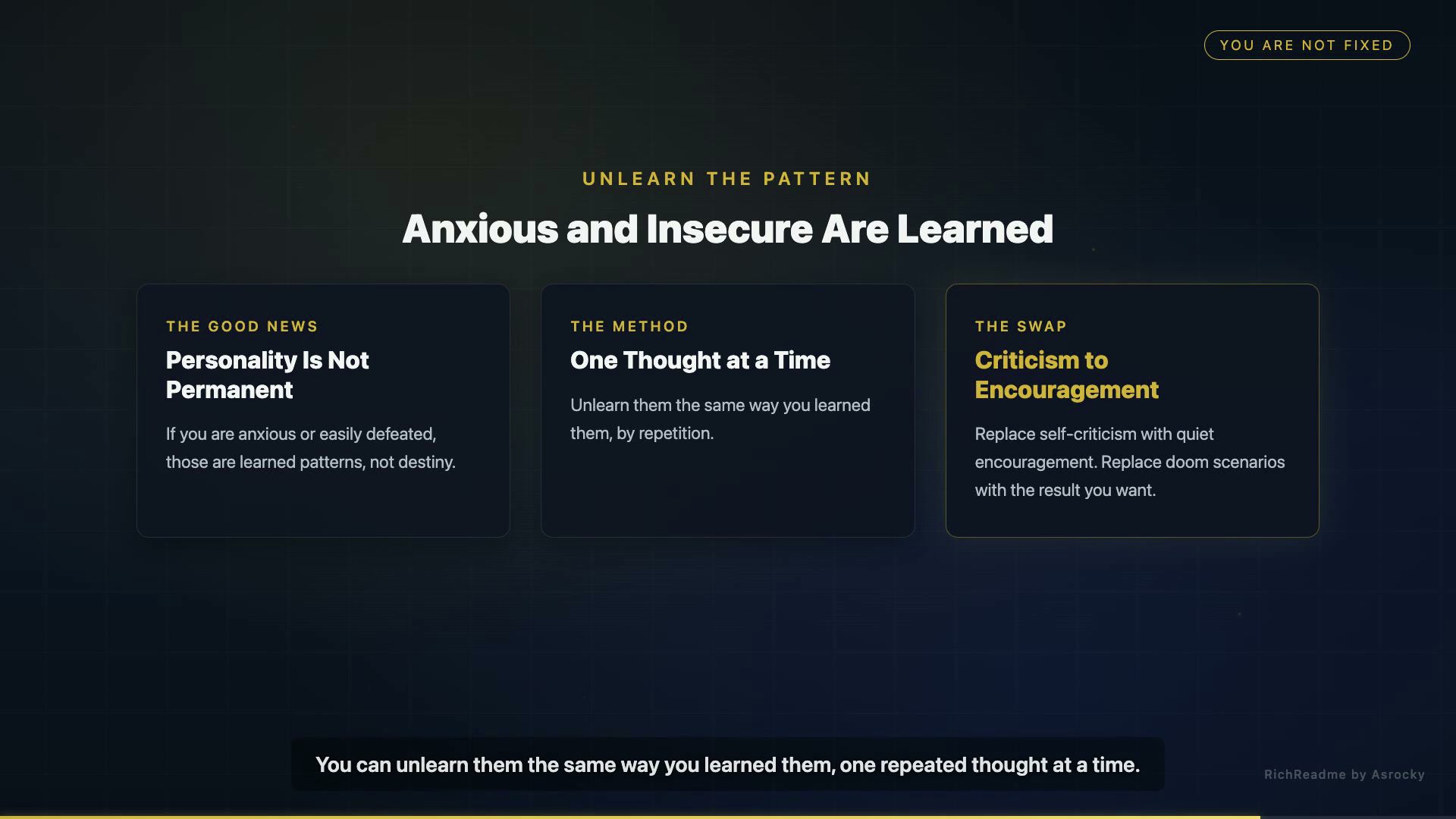
The deeper message is that you are not stuck with the personality you have. If you are anxious, insecure, or easily defeated, those are learned patterns. You can unlearn them the same way you learned them, one repeated thought at a time.
Replace self-criticism with quiet encouragement. Replace doom-scenario thinking with a clear picture of the result you want.
For People Carrying Real Burdens
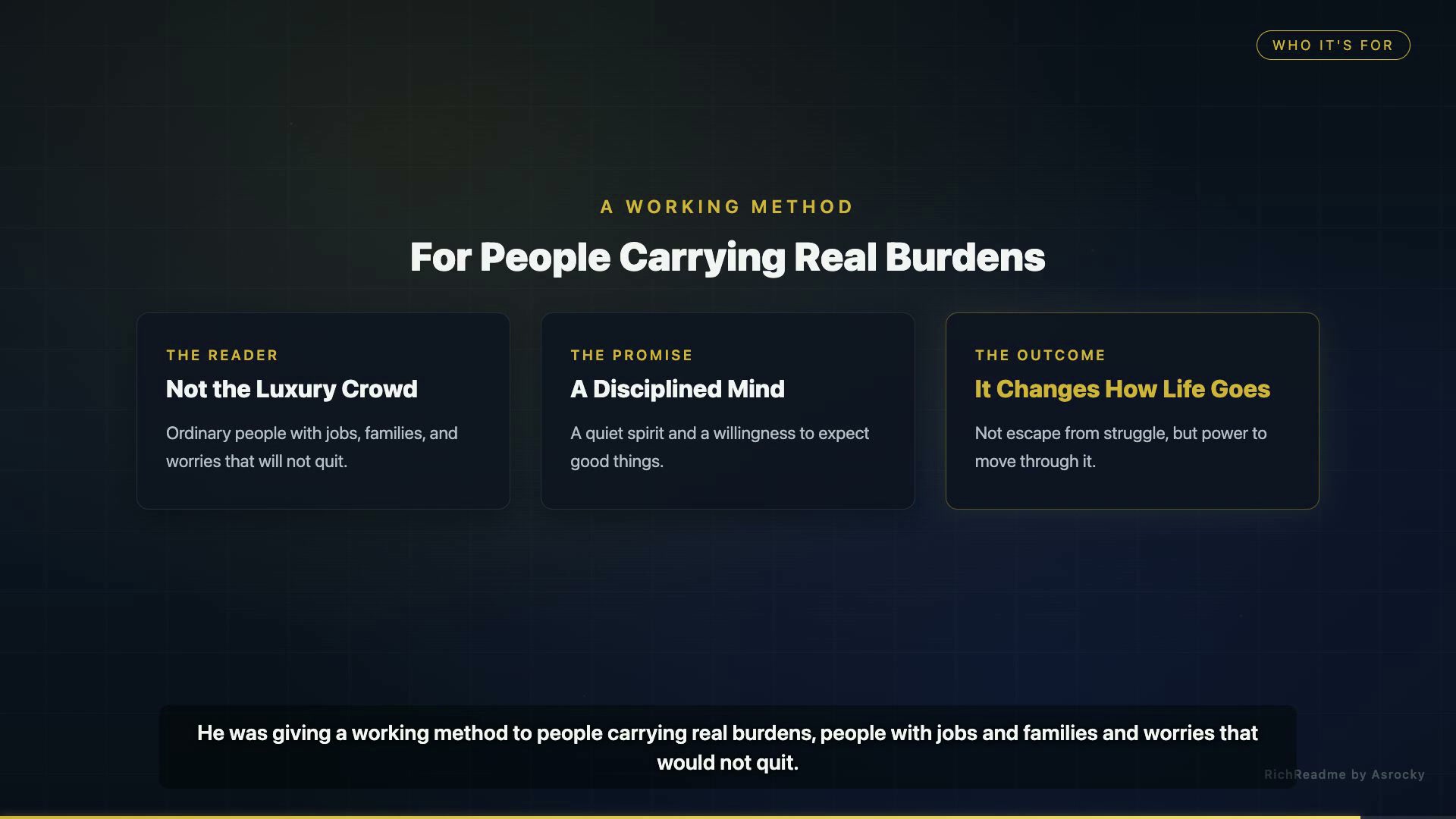
Peale wrote this book for ordinary people. He was not selling a luxury lifestyle. He was giving a working method to people carrying real burdens, people with jobs and families and worries that would not quit. His promise was simple: a disciplined mind, a quiet spirit, and a willingness to expect good things will change how your life goes.