Why do you do what you do? You think you choose. Your habits choose for you, automatically.
This is The Power of Habit by Charles Duhigg, the Pulitzer-winning reporter's guide to why habits exist and how to rewrite them. Once you see the loop, you can change almost anything about your life.
Every Habit Runs on the Same Three Steps
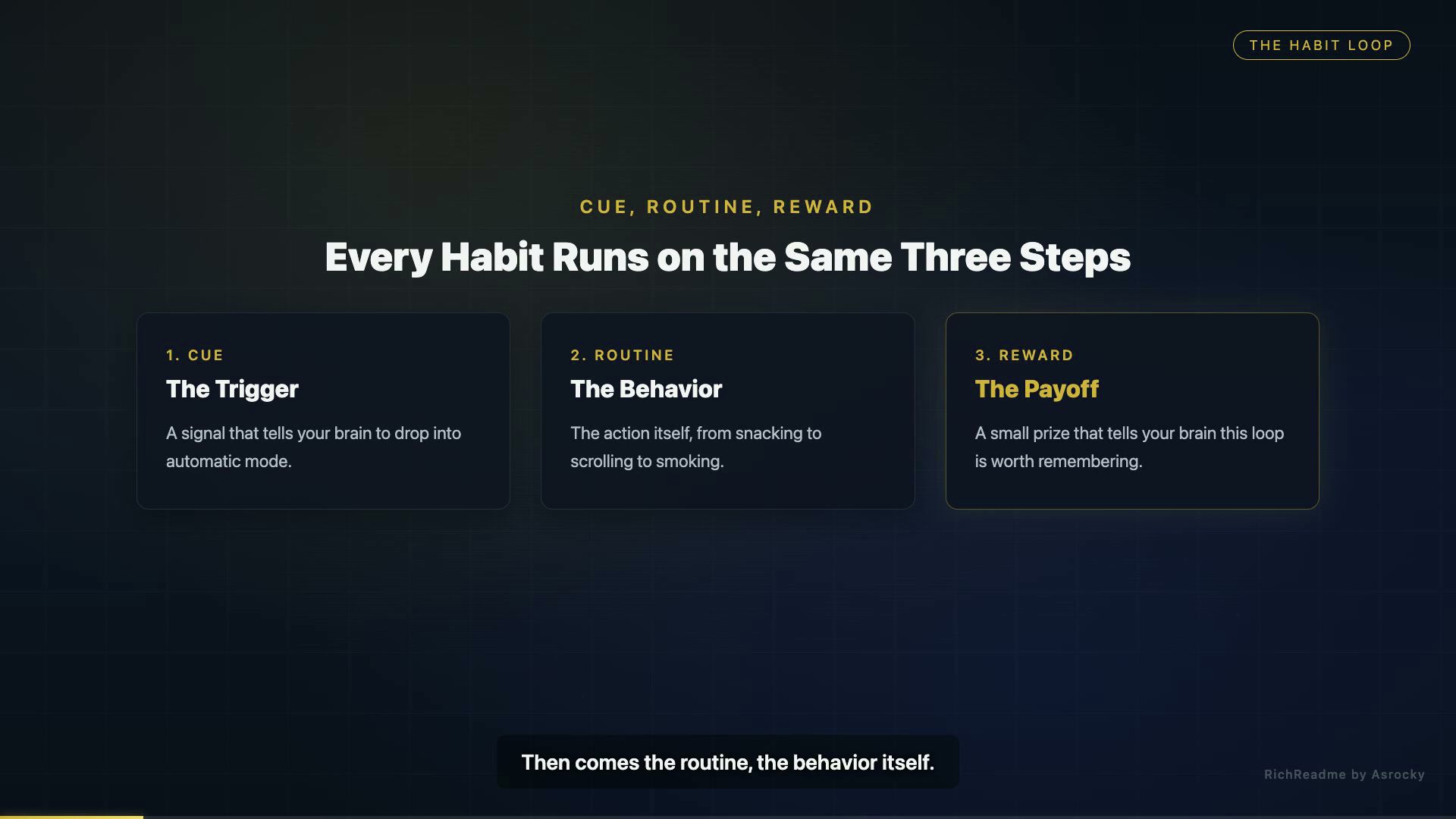
Every habit follows the same three-step loop. First comes a cue, a trigger that tells your brain to go into automatic mode. Then comes the routine, the behavior itself.
Finally comes a reward, which tells your brain whether this loop is worth remembering. Over and over, cue, routine, reward, until the path becomes grooved into your head.
Your Brain on Autopilot
The reason this matters is that habits save mental energy. Once a behavior becomes automatic, your brain stops fully deciding. That is why you can drive home and not remember the trip, or tie your shoes without thinking. It is useful, but it also means bad habits run on autopilot unless you notice them.
Cue + Reward Are Not Enough
The missing ingredient is craving. A cue and a reward alone are not enough. For a habit to stick, your brain has to start anticipating the reward, to feel a little pull or urge.
That craving is what spins the loop automatically. This is why a candy bar by the register is so hard to walk past once you have learned that sugar hit.
He Built a Habit Out of Nothing
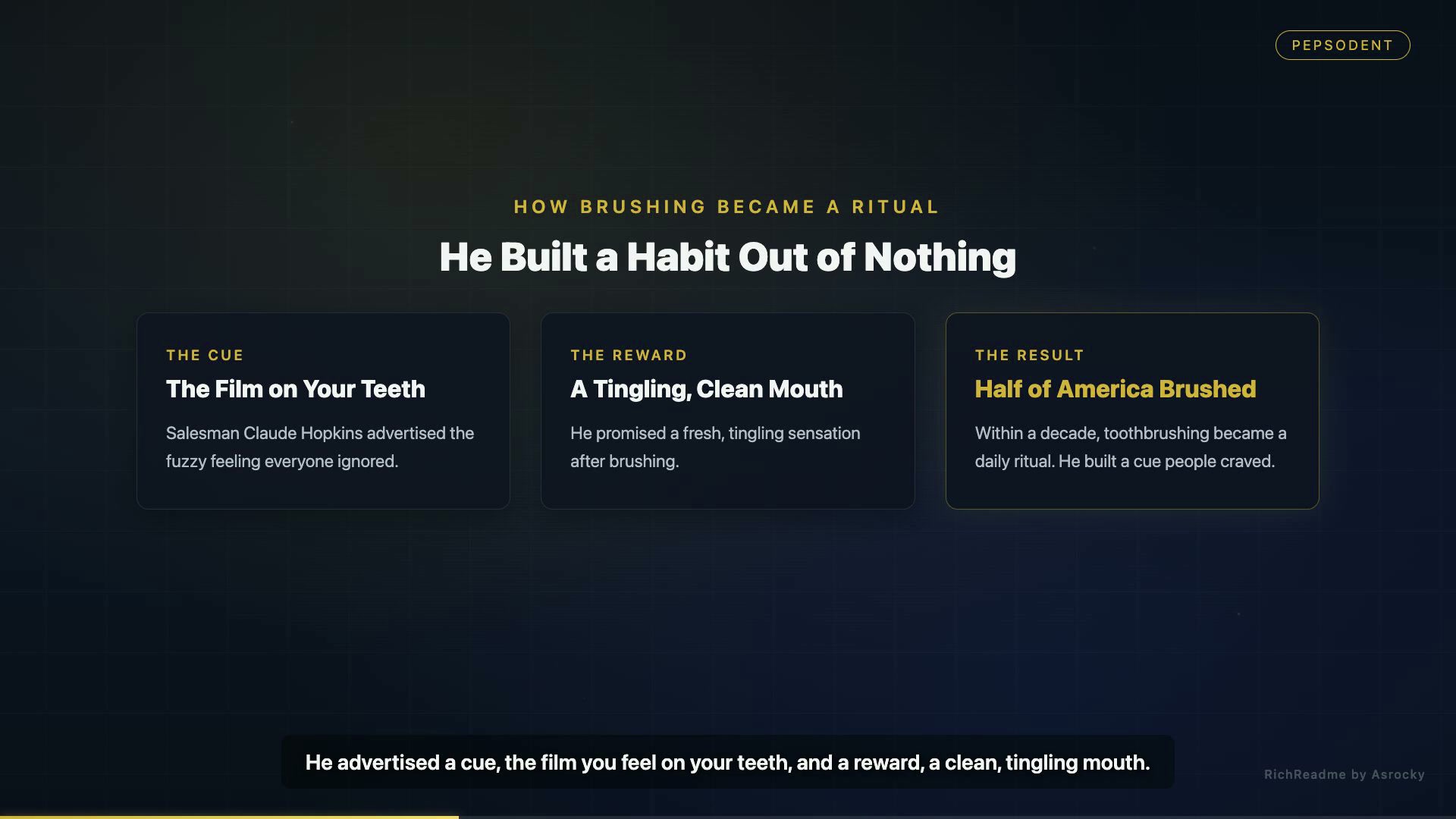
The book tells the story of Pepsodent. A salesman named Claude Hopkins decided everyone should brush their teeth. He advertised a cue, the film you feel on your teeth, and a reward, a clean, tingling mouth.
Within a decade, brushing teeth became an American ritual. He did not invent a need. He built a cue and a reward people craved.
They Added a Pleasure, Not a Problem
Febreze is the flip side. P&G launched it as a spray that killed bad smells, and it flopped, because most people cannot smell their own homes. The rescue was to add a nice scent and sell the spray as a small pleasure at the end of cleaning.
The cue was a tidy room, the reward was a fresh smell. Suddenly it became a billion-dollar product.
You Can't Erase a Habit. You Can Rewrite It.
Here is the good news. You cannot erase a bad habit, but you can rewrite it. Duhigg calls this the Golden Rule.
Keep the same cue and the same reward, but swap out the routine in the middle. A smoker cannot just will away the craving. If she keeps the cue and finds a new routine that delivers the same reward, like a short walk instead of a cigarette, the habit slowly changes.
Reroute the Urge
This is exactly how Alcoholics Anonymous works. It does not remove the craving to drink. It gives people the same cues, like stress or loneliness, and a new routine, like talking to a sponsor, that delivers the same relief.
The craving stays, but the behavior attached to it changes. You do not defeat the urge. You reroute it.
Don't Fix Your Whole Life at Once
The most powerful habits are what Duhigg calls keystone habits. These are small changes that ripple outward and remake everything around them. You do not fix your whole life at once.
You find the one habit that, when it moves, pulls other good habits along with it. One workout can lead to better sleep, better eating, and more focus, almost for free.
He Changed a Company With Safety
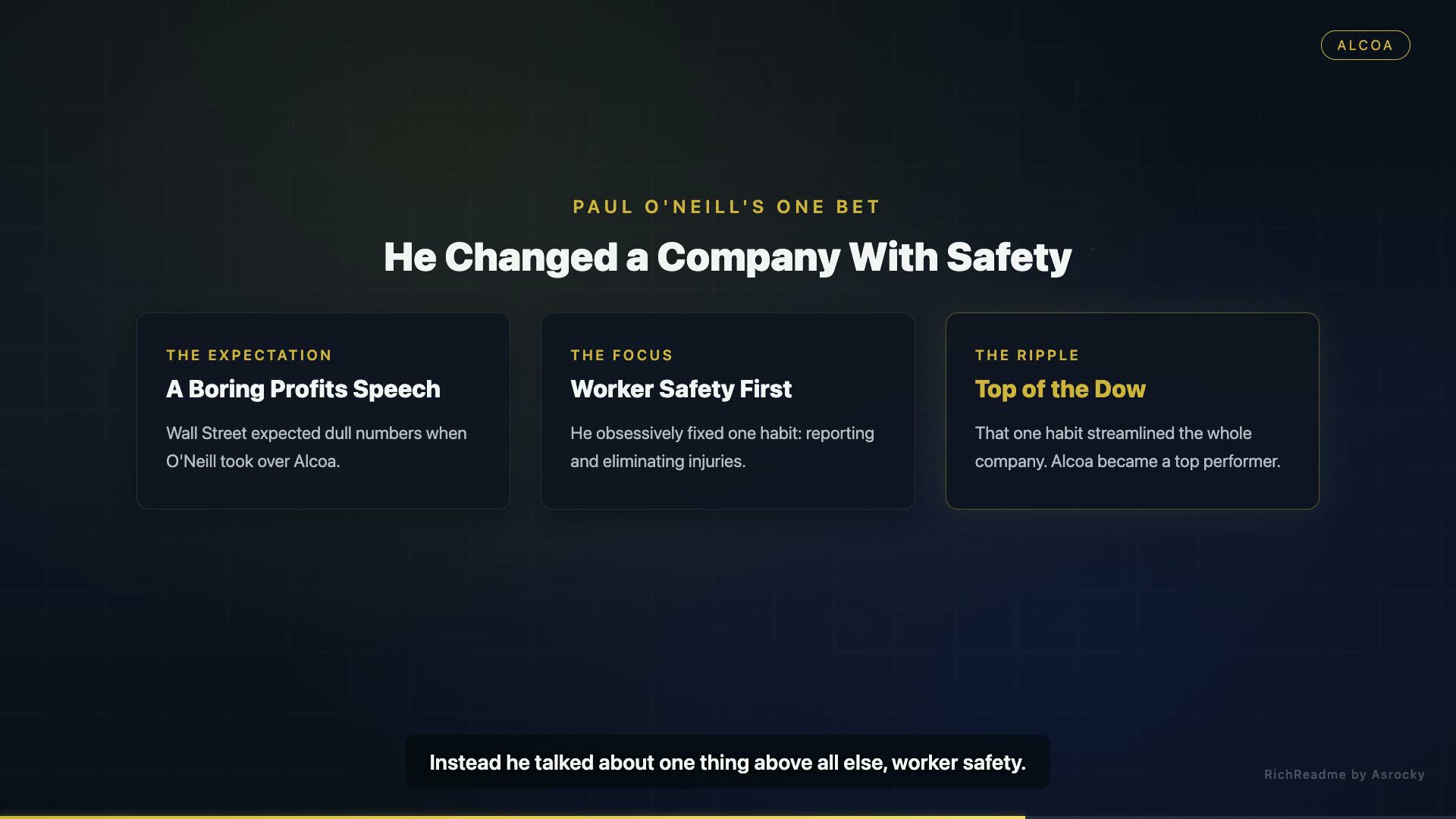
The best example is Paul O'Neill. When he took over the aluminum company Alcoa, everyone expected a boring speech about profits. Instead he talked about one thing above all else, worker safety.
By fixing a single keystone habit, one injury-free reporting system, he accidentally streamlined the whole company. Alcoa became the top performer in the Dow while injuries collapsed.
Discipline Can Be Trained
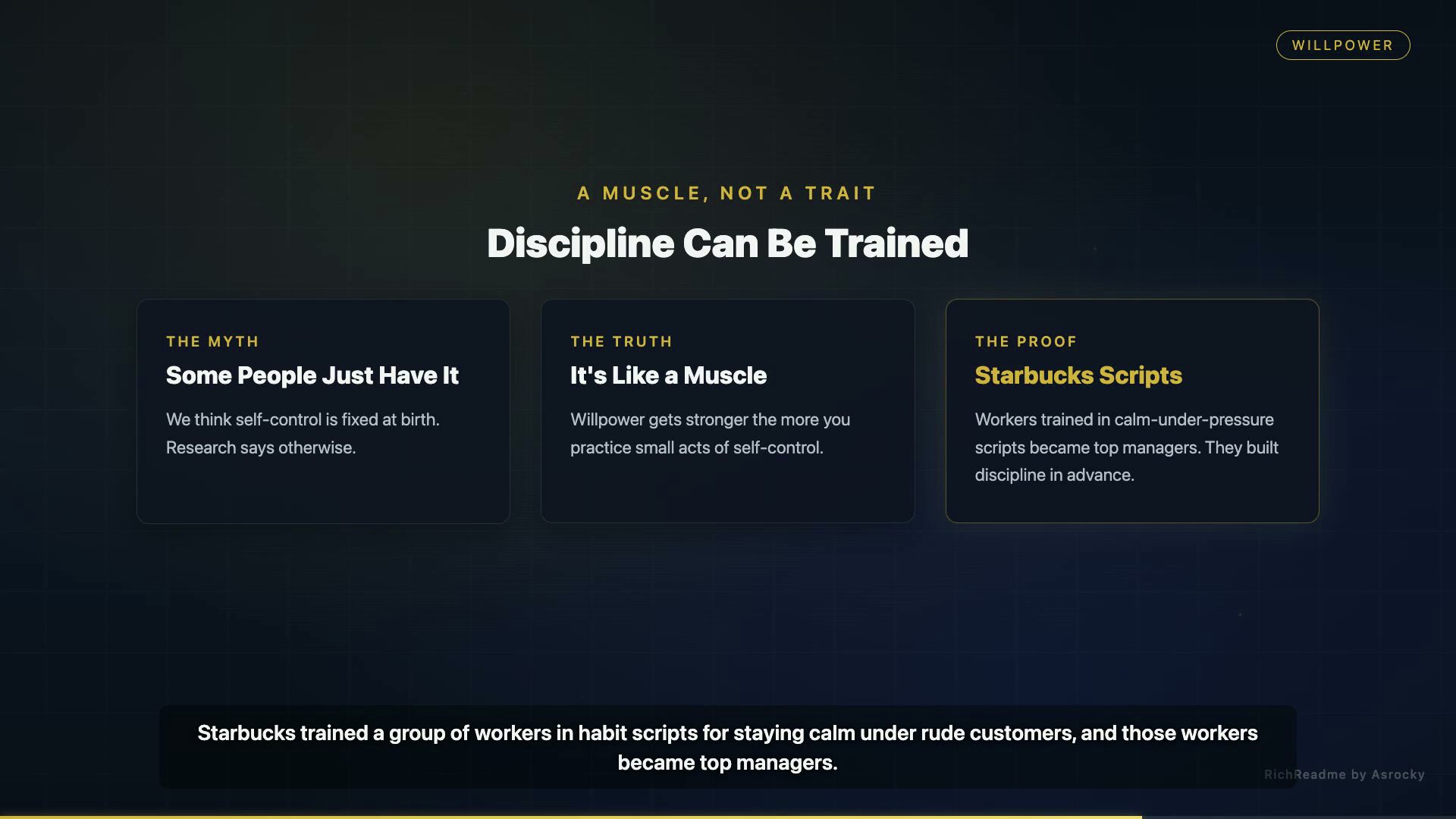
Willpower is another keystone. Studies show self-control is not a fixed trait. It is more like a muscle that gets stronger with use.
Starbucks trained a group of workers in habit scripts for staying calm under rude customers, and those workers became top managers. The people who succeed are not stronger-willed. They built willpower habits in advance.
Rewrite One Habit Today
So how do you actually change one? Start by noticing the loop. Pick one routine you want to fix and ask, what is my cue? What reward am I really chasing?
Then experiment with swaps. If your afternoon candy break is the habit, the cue might be boredom, and the reward might be a chance to stretch your legs. Test a new routine that satisfies the same urge.
The Whole Trick
Remember that craving is the engine. To keep a new habit alive, make the reward obvious and enjoyable. To break an old one, avoid the cue and substitute the reward.
Do not try to overhaul your life. Pick the keystone habit that unlocks the rest, and let the ripple do the work.