A guy skipped a corporate MBA job, taught himself business from books, and built a bestseller. His whole system fits on one page.
This is The Personal MBA, by Josh Kaufman. He worked at Procter and Gamble, where the jobs he wanted normally went to graduates of top business schools. Instead of taking on a hundred thousand dollars in debt, he read the core business books himself, built his own curriculum, and turned it into a book that has helped millions of people start and run companies.
His argument is simple. Business is not rocket science, and you do not need permission to learn it.
You Don't Need to Know It All
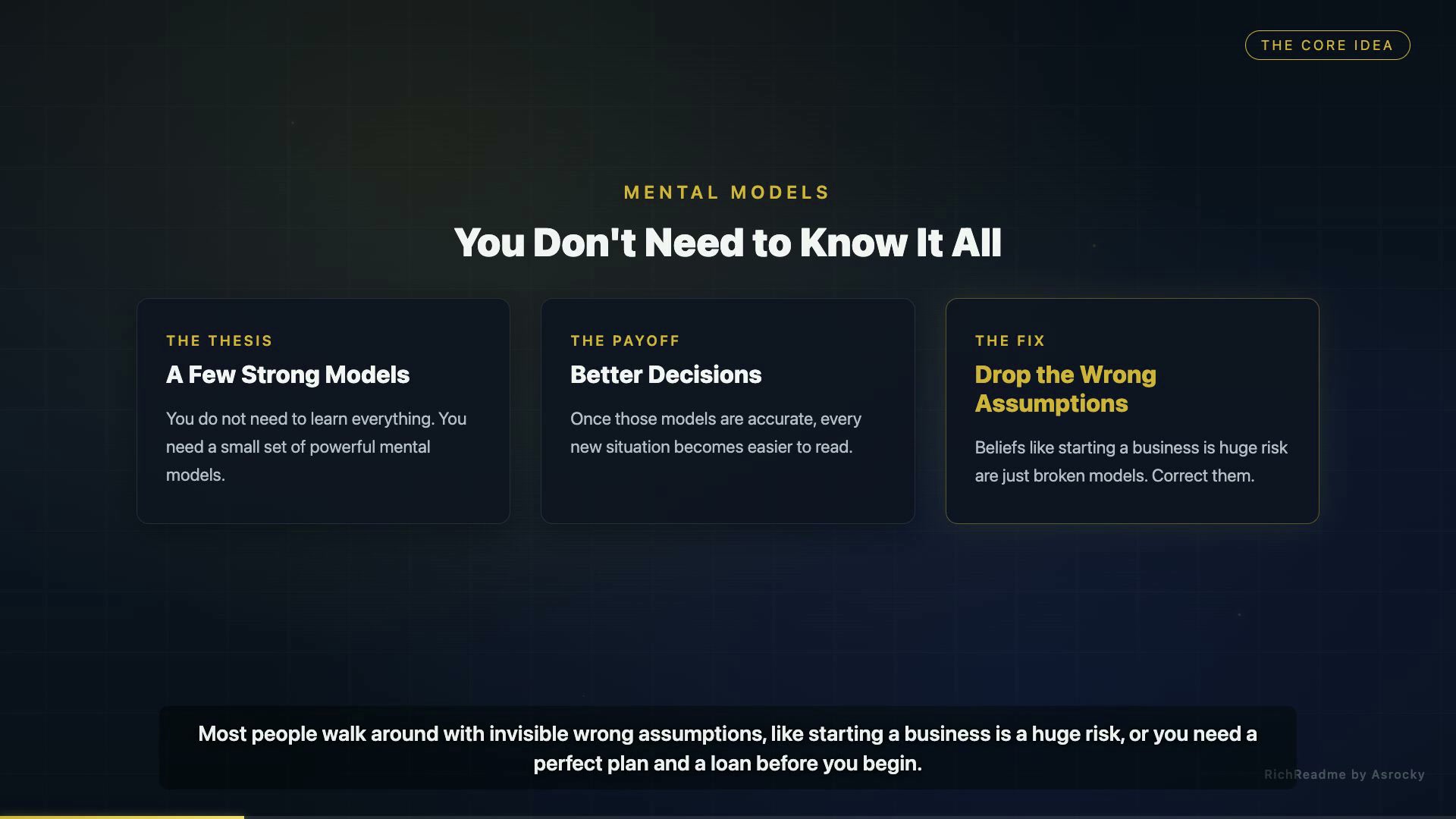
Kaufman's main idea is that you do not need to know everything. You need a small set of powerful mental models. Once those models are accurate, every new situation becomes easier to read.
Most people walk around with invisible wrong assumptions, like starting a business is a huge risk, or you need a perfect plan and a loan before you begin. Fix those few broken models, and the way you make decisions changes overnight.
What a Business Actually Is
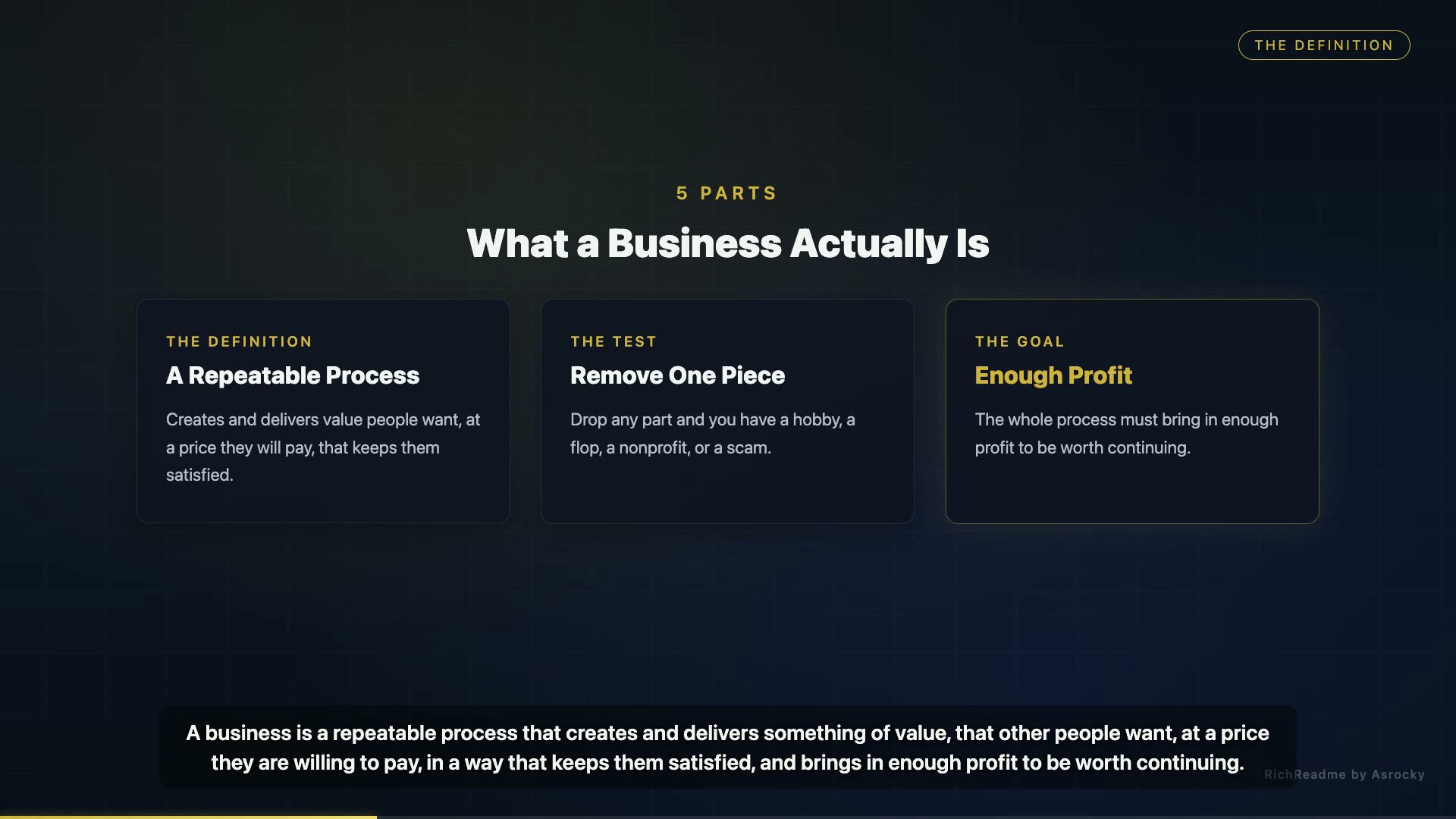
He then gives the shortest definition of a business you will ever find. A business is a repeatable process that creates and delivers something of value, that other people want, at a price they are willing to pay, in a way that keeps them satisfied, and brings in enough profit to be worth continuing. Take any one of those pieces away, and you do not have a business. You have a hobby, a flop, a nonprofit, or a scam.
Value Creation
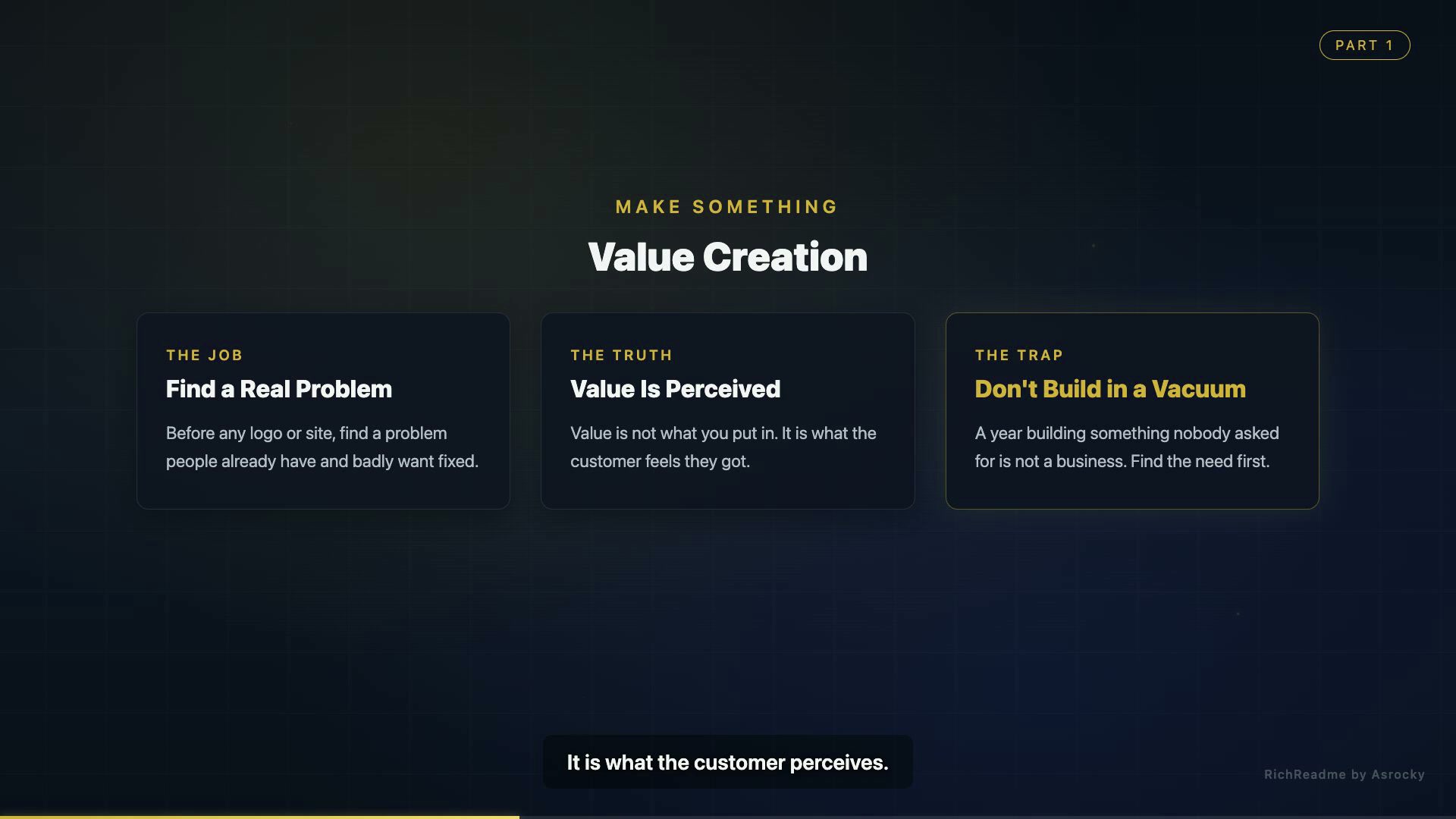
The first piece is value creation. Before any logo, website, or pitch, you have to find a real problem someone already has and badly wants fixed. Value is not what you put in. It is what the customer perceives.
You can spend a year building something nobody asked for, and that is not a business. The whole point is to discover an unmet need that is just becoming fixable, and fix it for a lot of people. That one step, done honestly, beats any clever marketing that comes after it.
Marketing
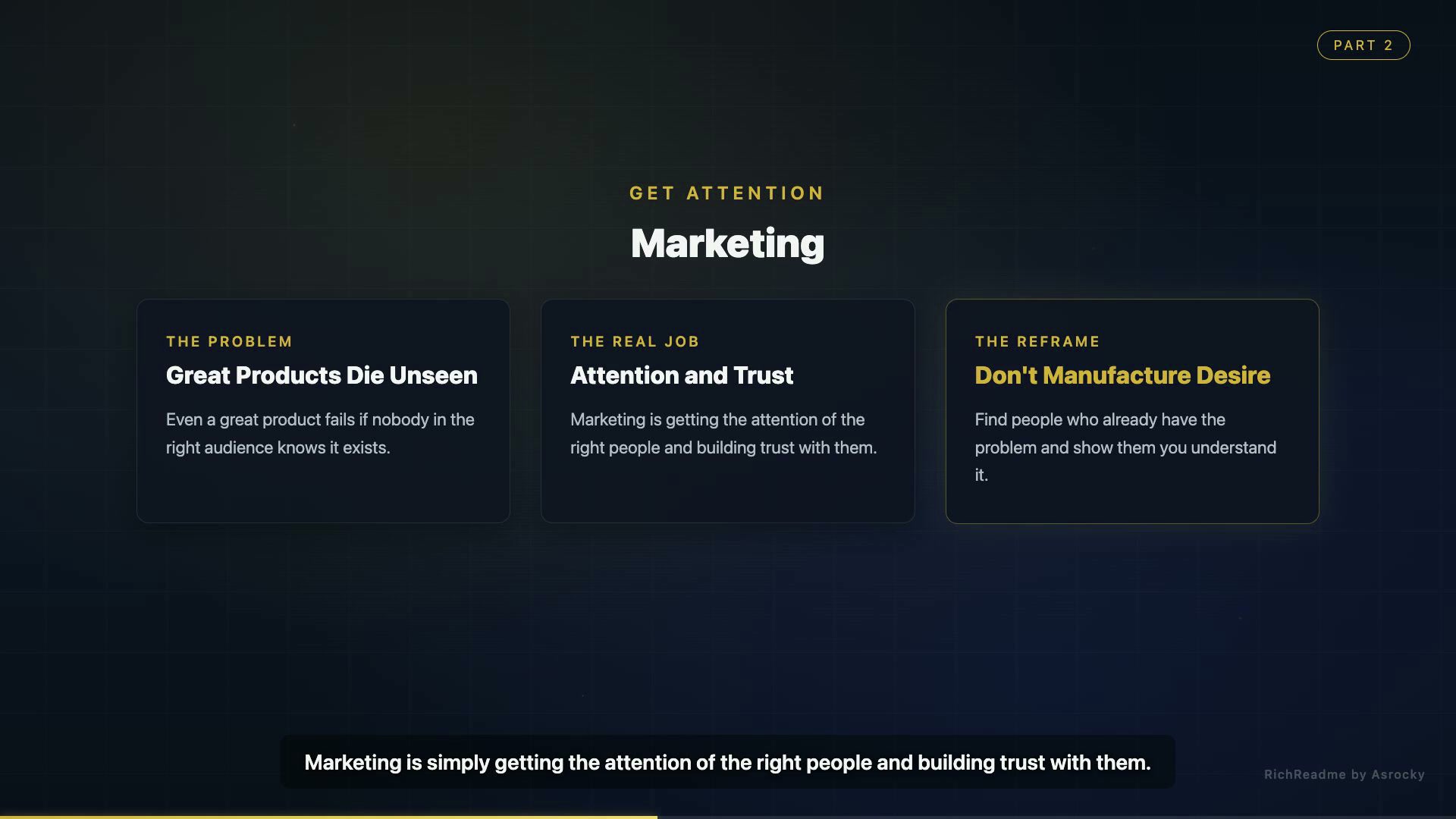
The second piece is marketing. Even a great product dies if nobody knows it exists. Marketing is simply getting the attention of the right people and building trust with them.
Kaufman says you are not persuading people to want things they do not. You are finding the people who already have the problem and showing them you understand it. Without attention, the best product in the world is invisible.
Sales
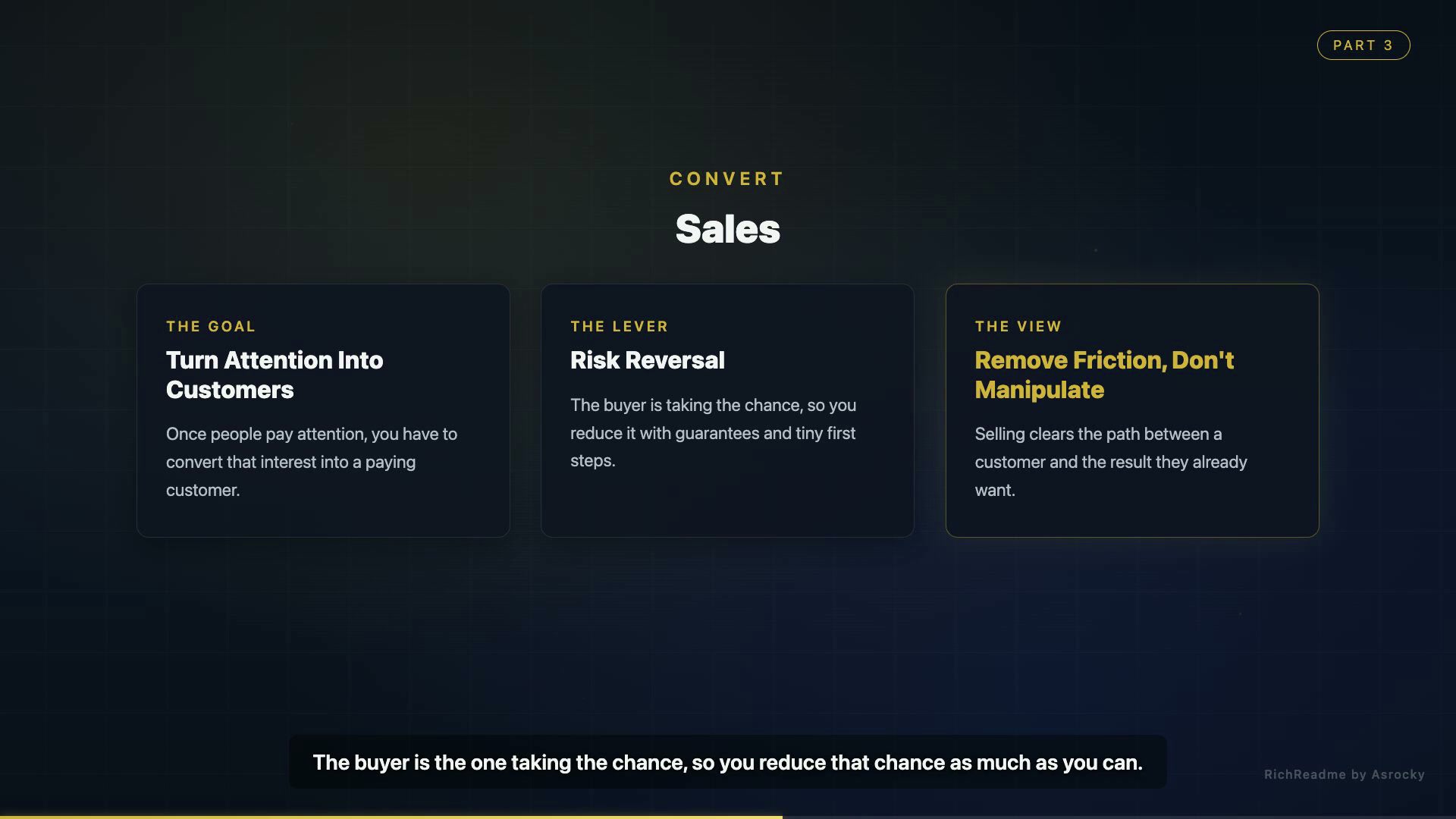
The third piece is sales. Once you have attention, you have to convert it into a paying customer. The core idea here is risk reversal. The buyer is the one taking the chance, so you reduce that chance as much as you can.
Offer a guarantee, make the first step tiny, and be honest about what the product does. Selling is not manipulation. It is removing the friction that stands between a customer and the result they want.
Value Delivery
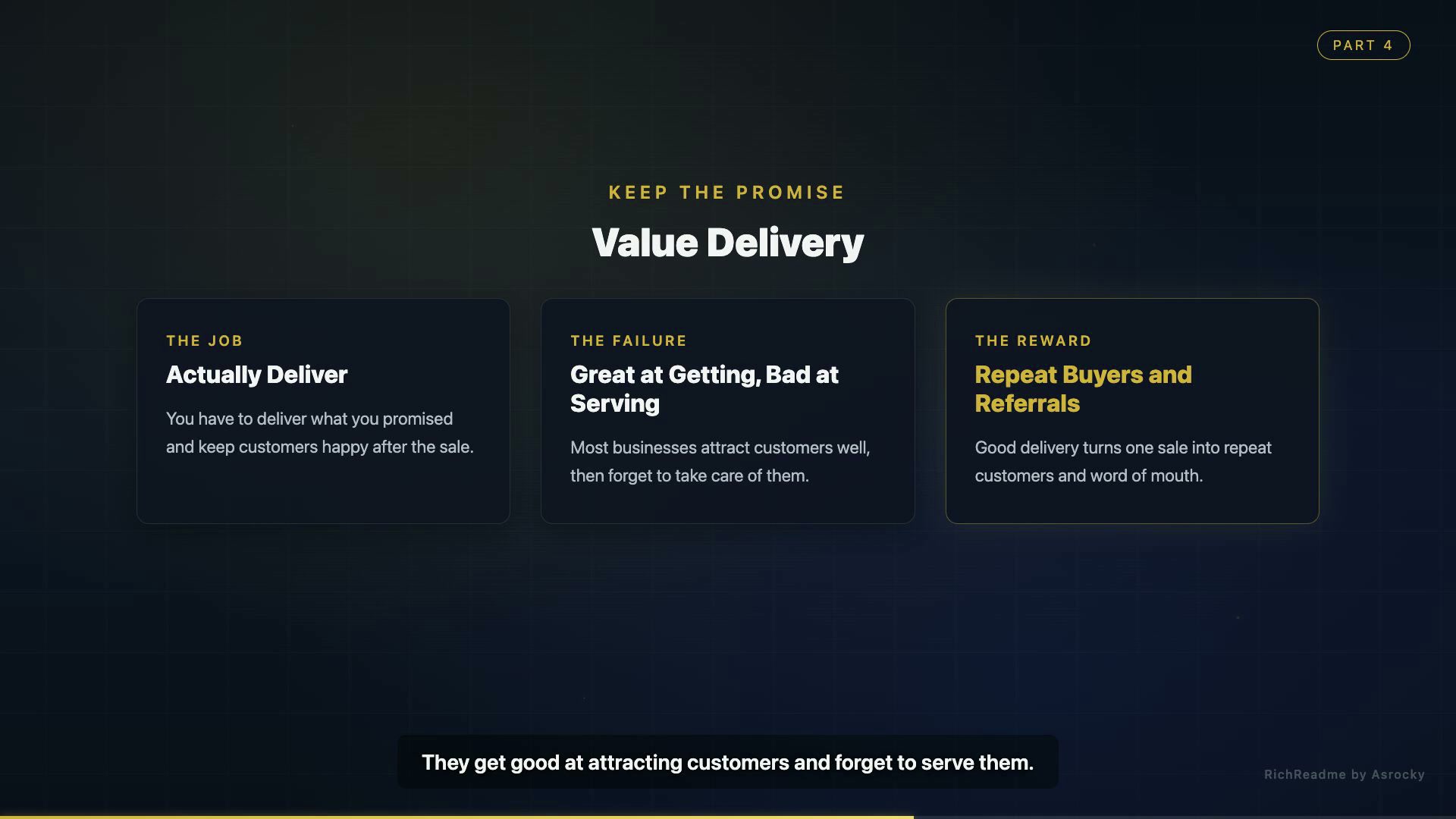
The fourth piece is value delivery. You have to actually deliver what you promised, and keep the customer happy after the sale. This is where most businesses quietly fail.
They get good at attracting customers and forget to serve them. Delivery is how you turn one sale into repeat buyers and referrals. If you do not deliver, the first three pieces just build you a faster way to lose your reputation.
Finance
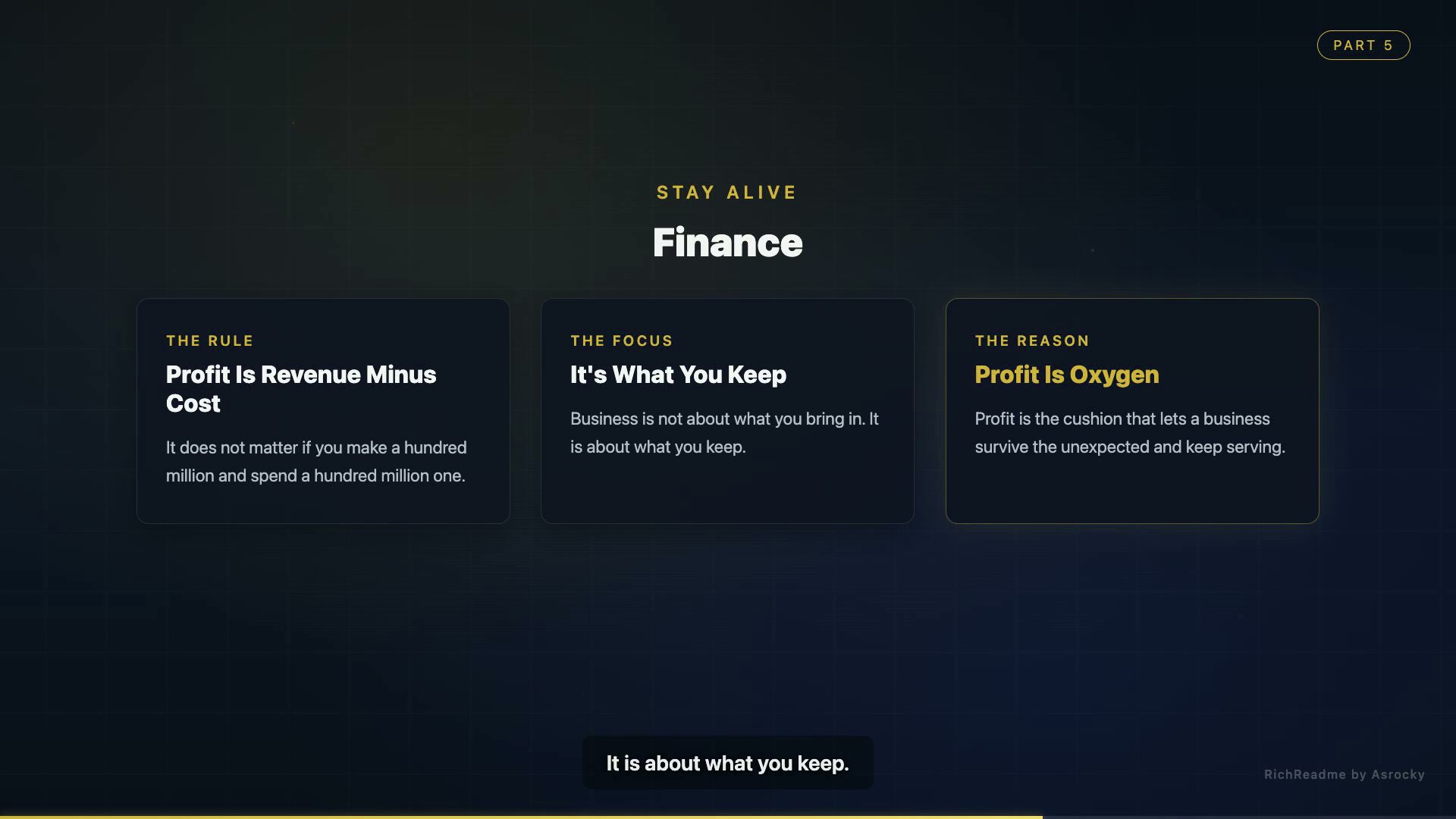
The fifth piece is finance. Kaufman quotes Scott Adams. It does not matter if you bring in a hundred million a year if you spend a hundred million and one. Business is not about what you make.
It is about what you keep. Profit is just revenue minus expenses, and nothing can operate at a loss forever. Profit is not greed. It is the oxygen that lets the business survive the unexpected and keep serving customers.
Find the Bottleneck
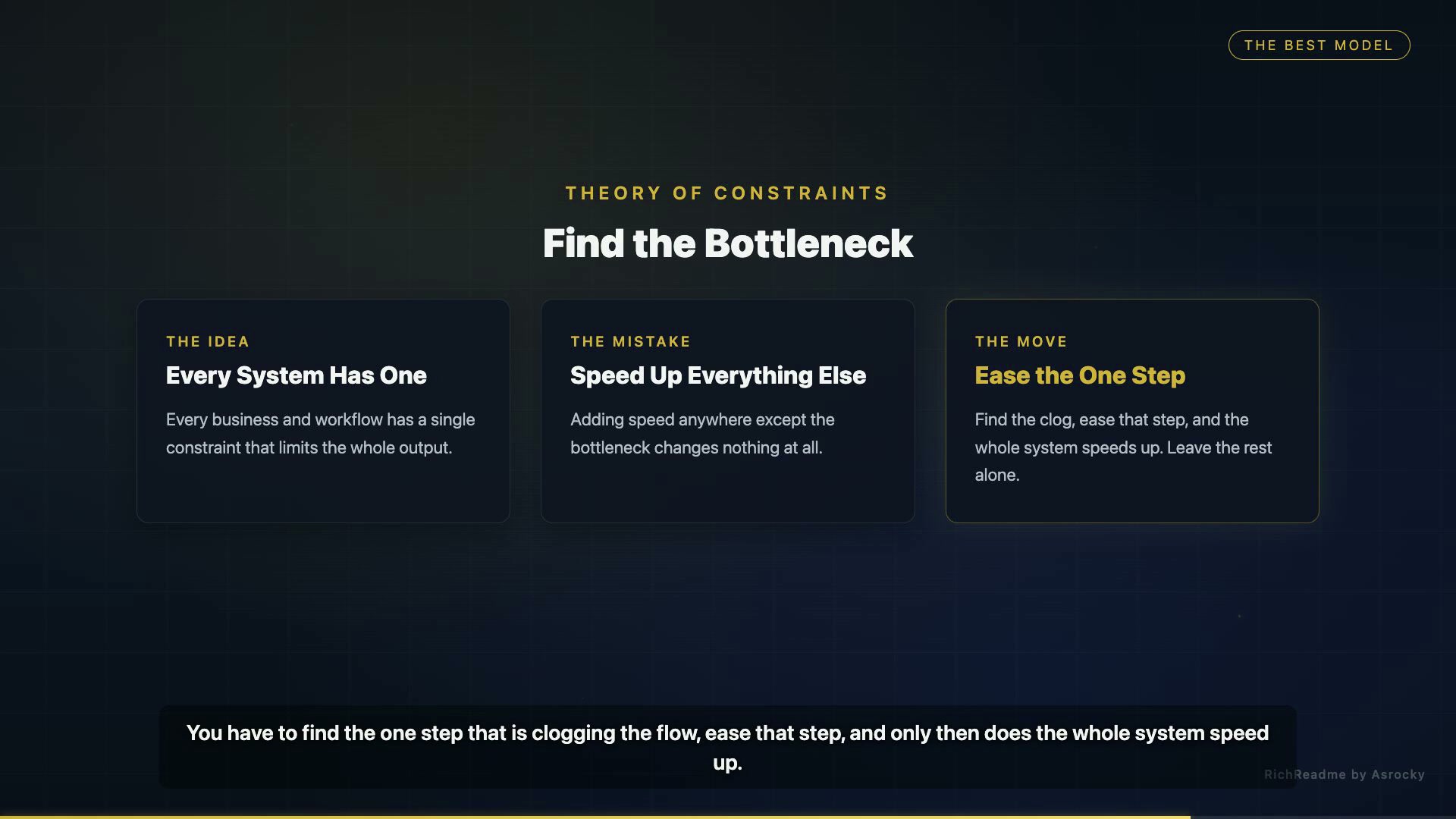
The most useful mental model in the whole book is the bottleneck. Every system, every business, every workflow has one constraint that limits the whole output. Adding speed everywhere except the bottleneck changes nothing. You have to find the one step that is clogging the flow, ease that step, and only then does the whole system speed up.
People try to improve everything at once. Kaufman says improve the constraint, and leave the rest alone. That single idea can save you years of busywork that goes nowhere.
See Where Any Business Is Stuck
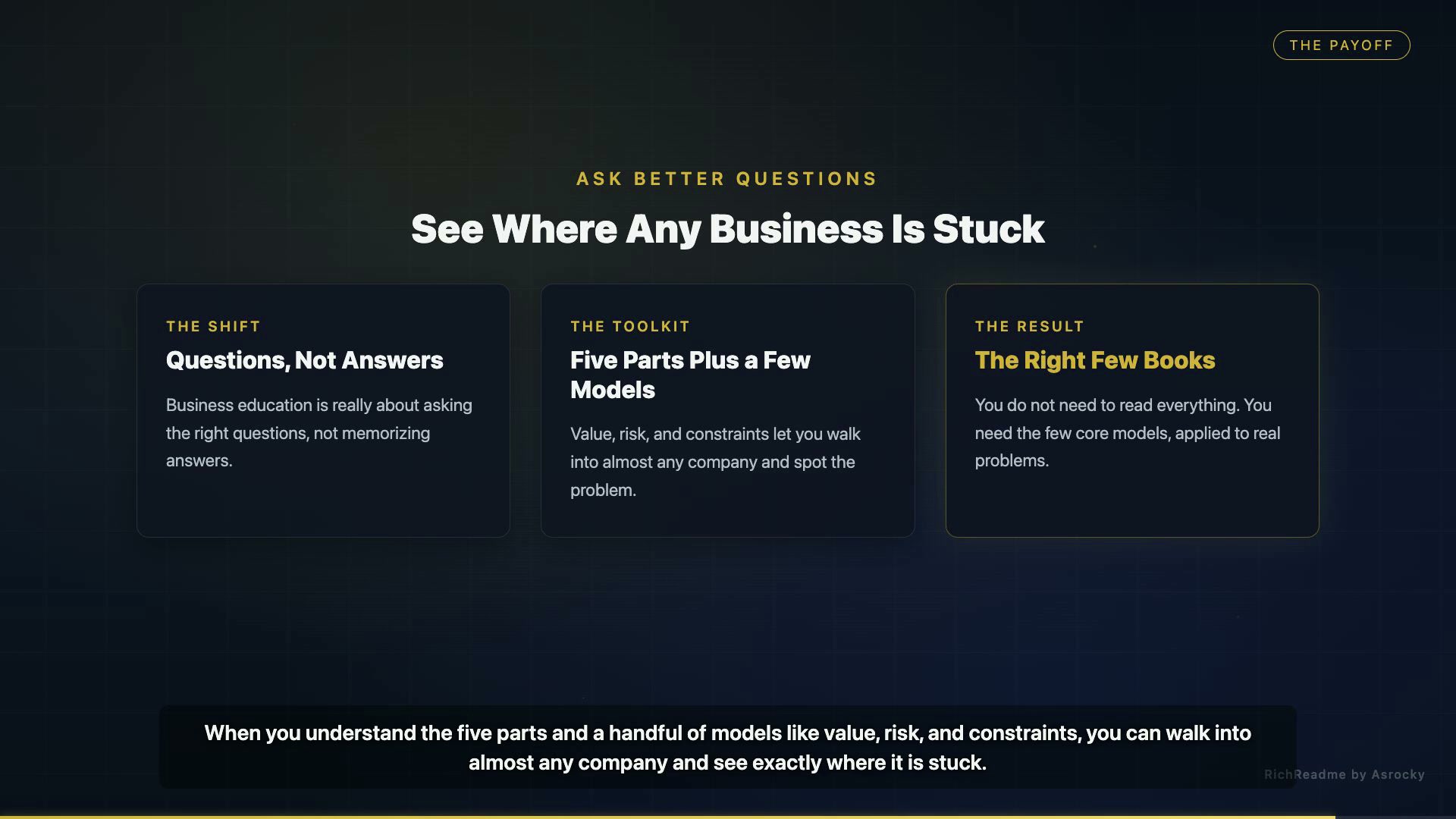
His deeper message is that business education is really about asking better questions, not memorizing more answers. When you understand the five parts and a handful of models like value, risk, and constraints, you can walk into almost any company and see exactly where it is stuck. You do not need to have read every book. You need the right few, applied to real problems.