A finance professor ran a simple formula for seventeen years. It beat the market by almost eighteen points a year. It only uses two numbers.
This is The Little Book That Still Beats the Market, by Joel Greenblatt. He is a hedge fund manager who turned eleven million into eight hundred and thirty million in twenty years, and he gave away his secret in a book that takes two hours to read. The secret is called the magic formula, and it is painfully simple once you see it.
Good Business, Bargain Price
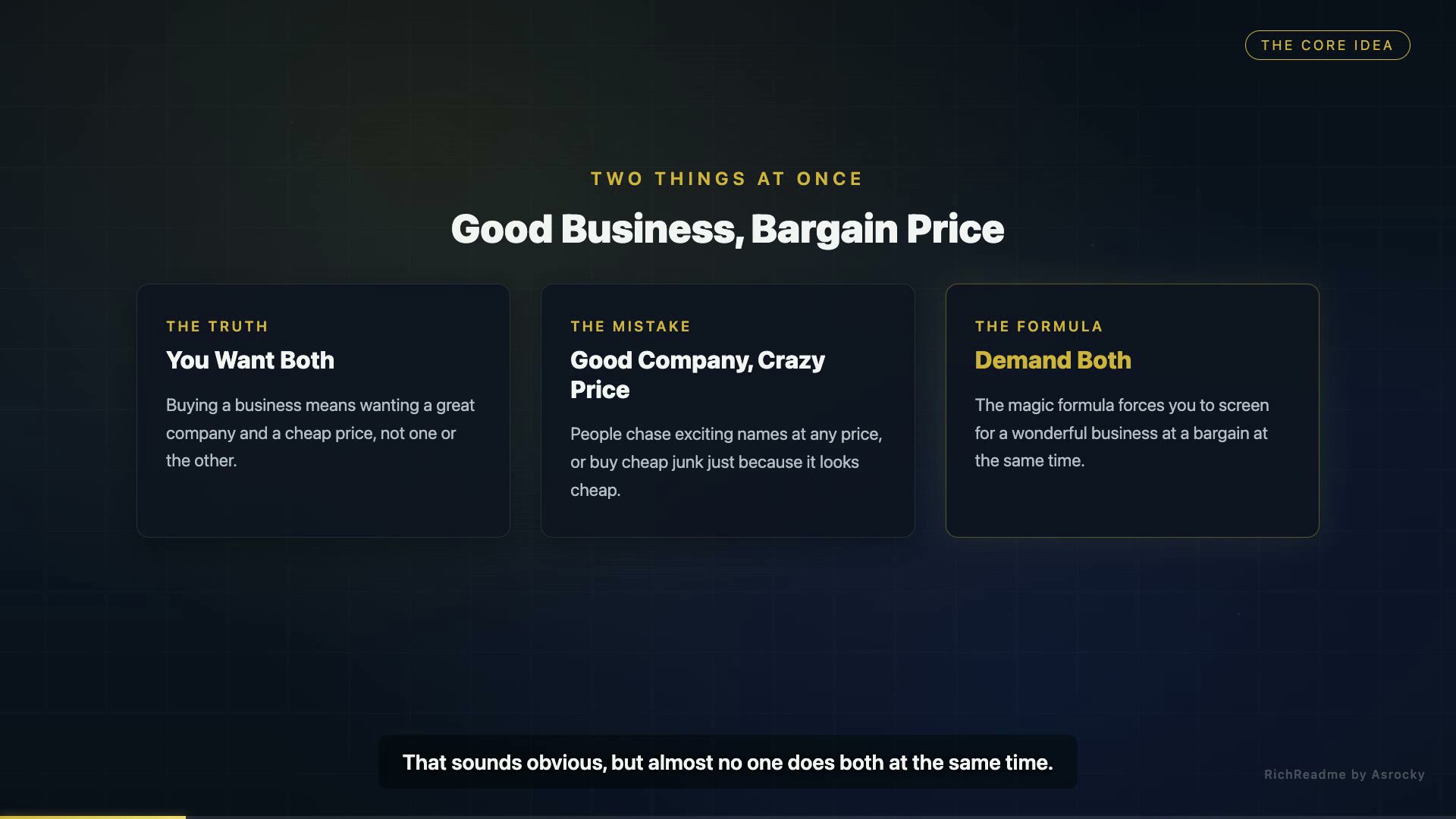
Greenblatt starts with one obvious truth. If you are buying a business, you want two things. You want a good business, and you want to buy it at a bargain price.
That sounds obvious, but almost no one does both at the same time. People chase exciting companies at crazy prices, or they buy cheap junk because it looks cheap. The magic formula forces you to demand both.
Earnings Yield
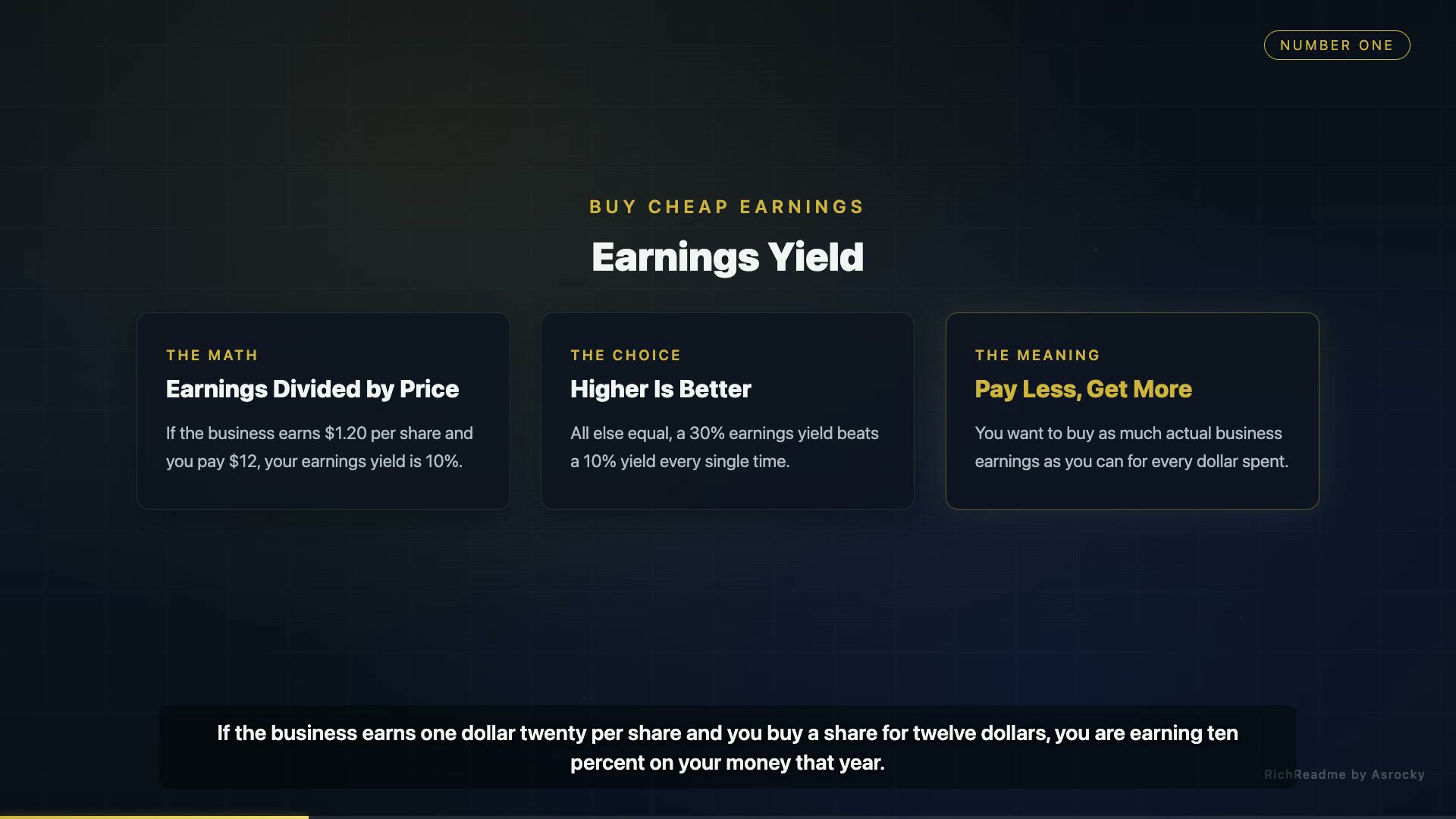
The first number is earnings yield. Greenblatt explains it through a story about Jason's Gum Shops. If the business earns one dollar twenty per share and you buy a share for twelve dollars, you are earning ten percent on your money that year. That is your earnings yield.
All else equal, a thirty percent earnings yield is better than a ten percent one. You would rather pay twelve dollars for three sixty in earnings than for one twenty. This is just buying cheap relative to the actual cash the business earns.
Return on Capital

The second number is return on capital. If it costs four hundred thousand dollars to build a new gum store, and that store earns two hundred thousand a year, the business is making a fifty percent return on the capital invested. That is an amazing business.
A competitor whose store costs the same four hundred thousand but earns only ten thousand is a twenty-five percent annual return, almost worse than a government bond. You would rather own the business that can reinvest its own money at fifty percent. That is what a high return on capital tells you.
Combine the Two Rankings

Now here is the formula. Greenblatt took every major public company, about thirty-five hundred of them, and ranked them twice. He ranked all companies from best to worst by return on capital. He ranked them again from best to worst by earnings yield.
Then he added the two rankings together. The companies with the lowest combined score were the ones that were both good businesses and cheap at the same time. He bought a basket of roughly thirty of them.
30% a Year vs 12%
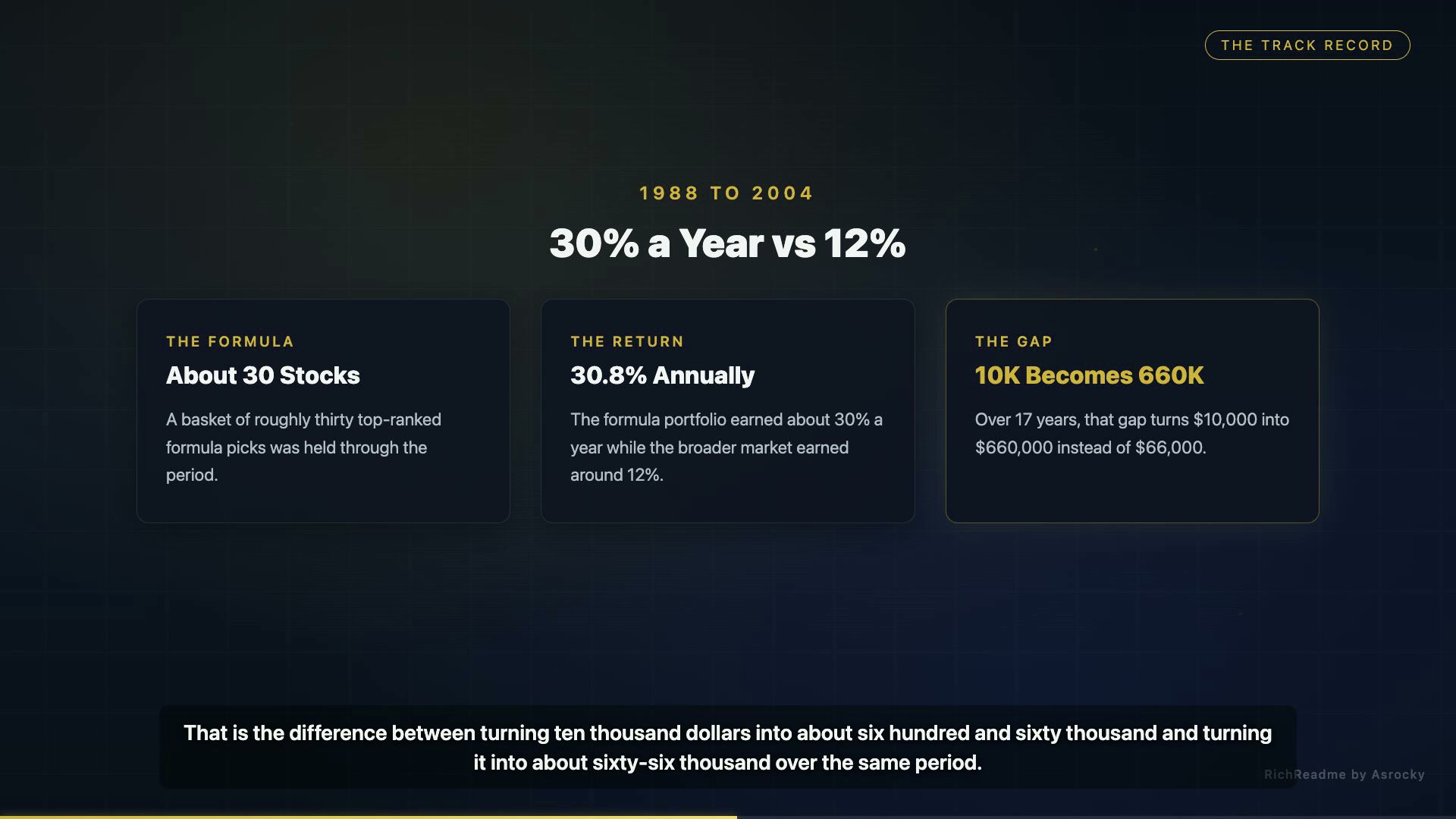
The result over seventeen years, from 1988 to 2004, was stunning. That simple portfolio returned about thirty percent a year, while the overall market returned around twelve. That is the difference between turning ten thousand dollars into about six hundred and sixty thousand and turning it into about sixty-six thousand over the same period.
Not because Greenblatt was a genius stock picker. Because two boring metrics, applied mechanically, beat Wall Street.
It Buys What Feels Bad
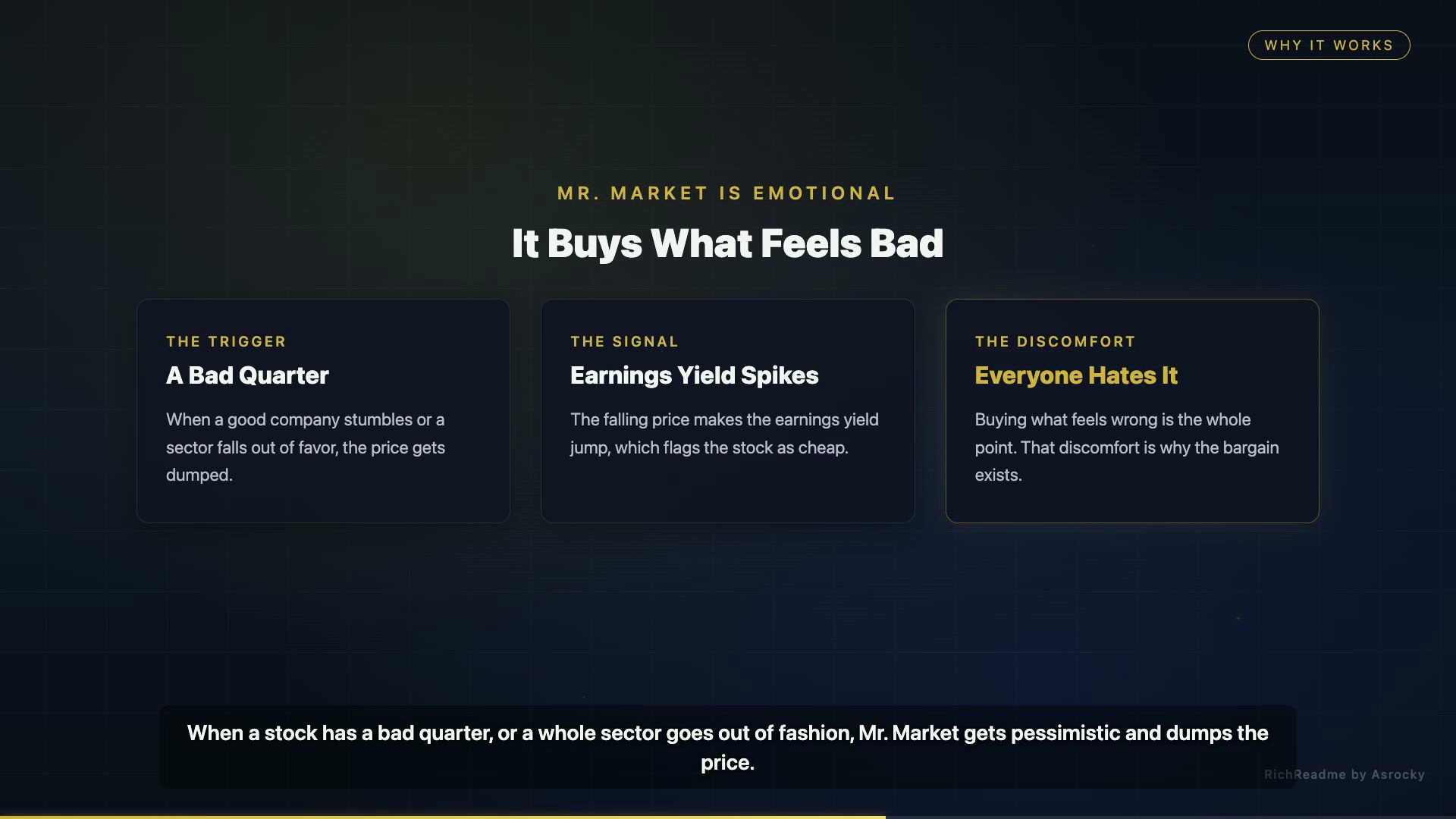
The reason it works is uncomfortable. The magic formula does not buy popular companies. It buys good companies that the market is temporarily ignoring. When a stock has a bad quarter, or a whole sector goes out of fashion, Mr. Market gets pessimistic and dumps the price. The earnings yield shoots up.
The formula flags it as cheap. But to you, buying it feels wrong. Everyone is telling you that company is in trouble. That is the point. The formula buys the companies that feel bad to own, which is exactly why they are cheap.
Discipline Is the Edge

This is why almost no one can actually use it. Greenblatt is honest that the formula can underperform the market for two or three years at a time. During those stretches, every expert on television will tell you the strategy is broken. Your friends will make fun of your portfolio.
You will be tempted to quit and switch to whatever is hot this year. But if you abandon the formula right before it snaps back, you guarantee you capture only the losing part. Discipline, not genius, is the edge.
Build 20-30 Stocks

The practical version is not complicated. Build a basket of twenty to thirty stocks that score well on both return on capital and earnings yield, spread across different industries. Hold them for about a year, sell the ones that have crossed the one-year mark, and replace them with new formula picks. Once a year is enough.
Rebalancing lets you harvest tax losses on the losers while keeping the winners running. You do not have to watch the market every day. You do not have to predict interest rates.
You Don't Need to Be a Genius

Greenblatt's deeper point is that trying to outsmart the market by predicting the future is a trap. Even experts are terrible at forecasting earnings years out. The magic formula works precisely because it does not predict.
It buys a whole basket of bargains, lets time sort it out, and relies on the mathematical truth that good companies bought at low prices tend to outperform over time. You give up the thrill of picking winners in exchange for boring, systematic, huge results.