Did you build something nobody wanted? Then you learned the hard way. There is a cheaper way to learn the same lesson.
This is The Lean Startup by Eric Ries, the manifesto that changed how startups are built. Ries watched most startups fail not because they built the wrong thing well, but because they built the wrong thing at all.
The Core Claim
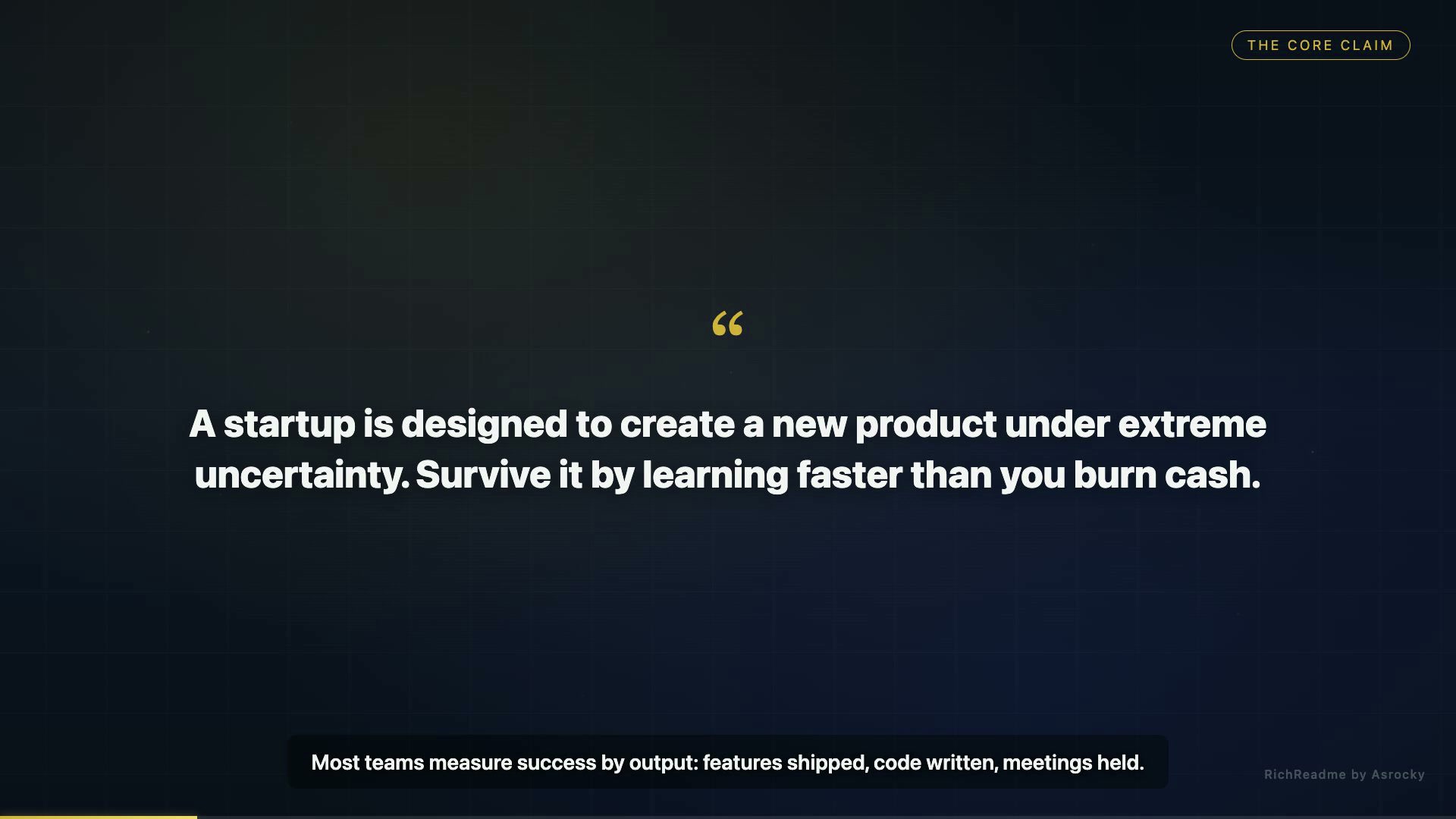
His core claim is simple. A startup is a human institution designed to create a new product under extreme uncertainty, and the way to survive that uncertainty is to learn faster than you burn cash. The first idea is validated learning.
Most teams measure success by output: features shipped, code written, meetings held. But the only metric that matters is whether you learned something real about what customers actually want. Progress in a startup is not building more, it is learning what works and what does not, and adjusting before the money runs out.
The Only Metric: Learning
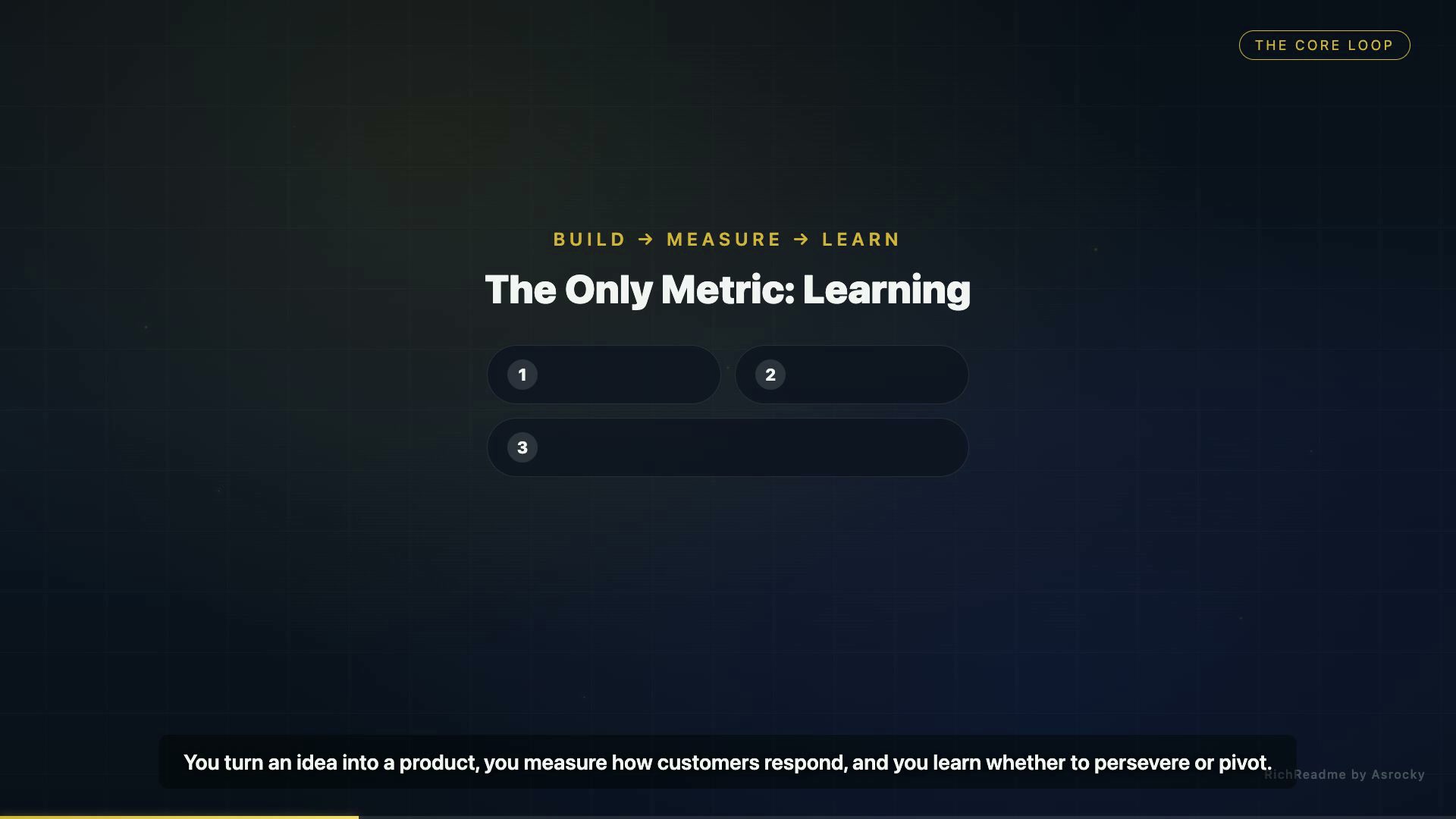
That is where the build measure learn loop comes in. You turn an idea into a product, you measure how customers respond, and you learn whether to persevere or pivot. The loop has one enemy: wasted time. So you must move through it as fast as possible, with the smallest product that can test your riskiest assumption.
Fastest Way Through the Loop
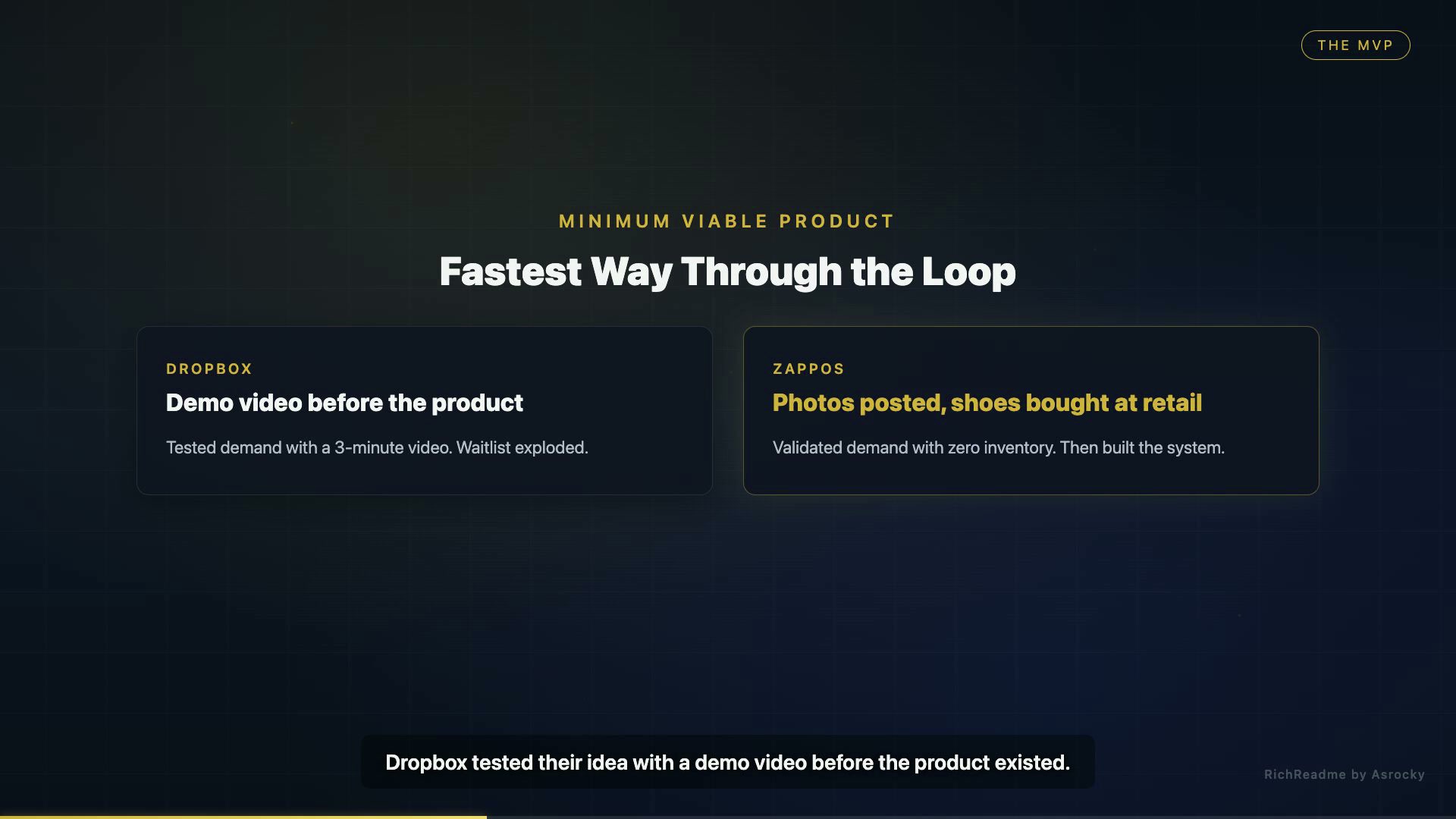
That smallest product is the MVP, the minimum viable product. It is not the smallest product you can imagine, it is the fastest way to get through the build measure learn loop. Dropbox tested their idea with a demo video before the product existed.
Zappos tested demand by posting shoe photos online and buying the shoes at retail. Neither wasted months on a perfect version of something nobody had asked for.
Numbers That Lie vs Numbers That Count
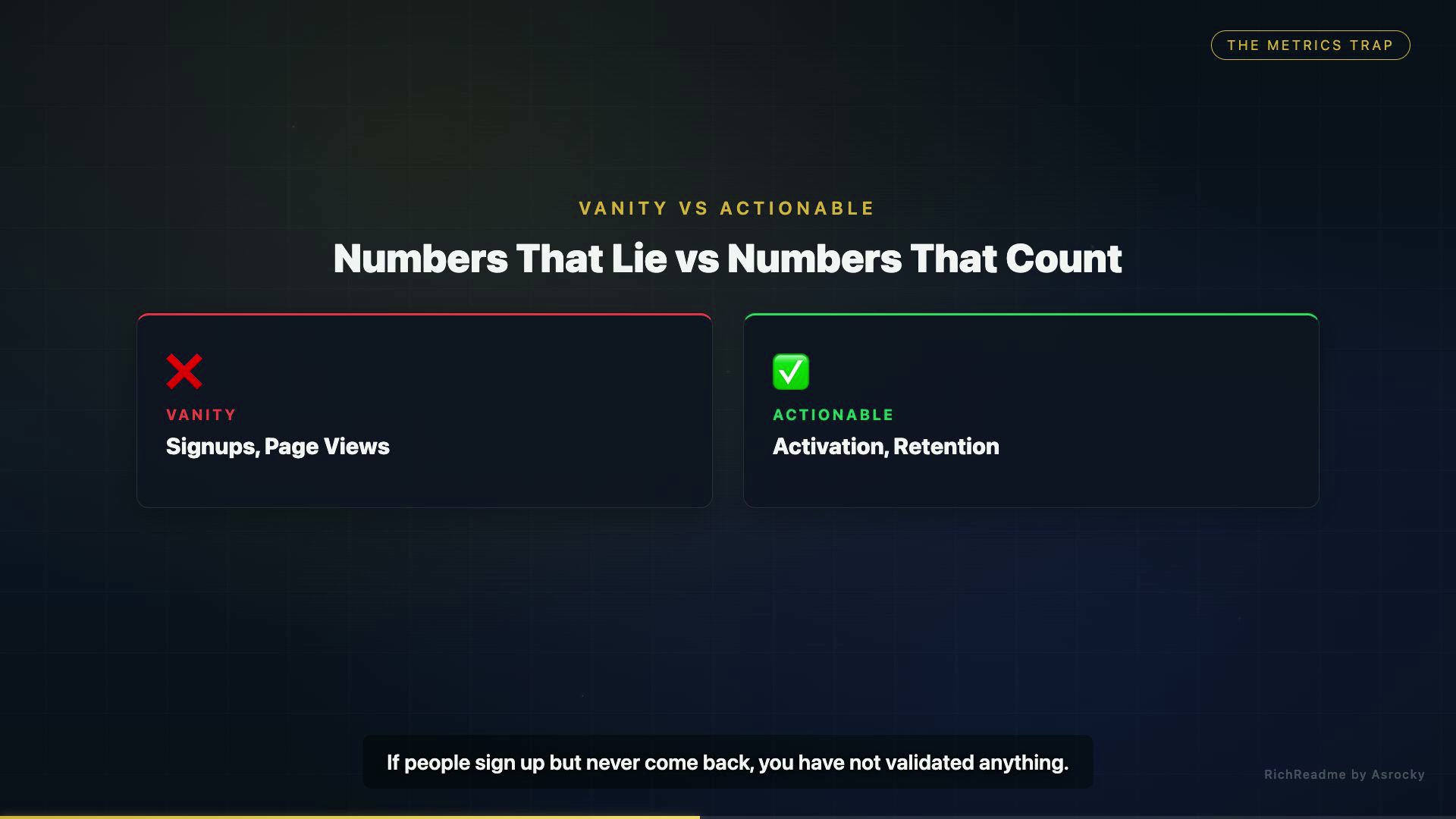
Here is the trap Ries warns about. Vanity metrics lie. Total signups, page views, and download counts can all grow while the business quietly dies. What matters is actionable metrics, especially cohort behavior and the pirate metrics: acquisition, activation, retention, revenue, and referral. If people sign up but never come back, you have not validated anything. You have just collected corpses.
To make the loop real, you split your metrics into two numbers: the leading indicator and the lagging indicator. The leading indicator is the behavior you can change this week, like activation rate. The lagging indicator is the outcome you want, like revenue. When the leading indicator moves and the lagging one follows, you have found a real lever. When they disconnect, your assumption is wrong.
A Pivot Is Not a Failure
The most important decision in a startup is the pivot. A pivot is not a failure, it is a structured correction of a failed hypothesis. Maybe you change the customer segment, the feature set, the platform, or the business model, while keeping what you learned.
Ries lists ten kinds of pivots, from zoom in to zoom out to the customer segment pivot. The point is to stay attached to learning, not to a particular plan.
Fix the System, Not the Symptom
To keep quality without slowing down, Ries borrows from Toyota. The five whys method digs into every problem until you find the root cause. When a bug appears, ask why five times, and fix the systemic cause, not just the symptom. The result is a culture that treats problems as opportunities to improve, not as occasions for blame.
The deeper enemy is a culture that celebrates activity over learning. Ries calls it the land of the living dead: startups with product, customers, and revenue, but no growth and no learning, grinding on forever. The fix is a constant cycle of small batches, frequent releases, and honest measurement, so every week tells you something you did not know last week.
The Pattern
So the pattern is simple. Treat every assumption as a test, not a belief. Build the smallest thing that tests it, measure real behavior, not vanity metrics, and pivot the moment the data says your plan is wrong.
The goal of a startup is not to execute a perfect vision. It is to find a sustainable business before the cash runs out.