You think you are rational. You are not. Every bad decision you ever made was run by an emotion you refused to notice.
This is The Laws of Human Nature, by Robert Greene. Greene spent decades studying why people repeat the same self-sabotaging patterns, and he boiled it down to eighteen laws that quietly run your behavior. The goal is not to become cold. It is to stop being a puppet of emotions, moods, and group pressure you cannot see.
Master Your Emotions
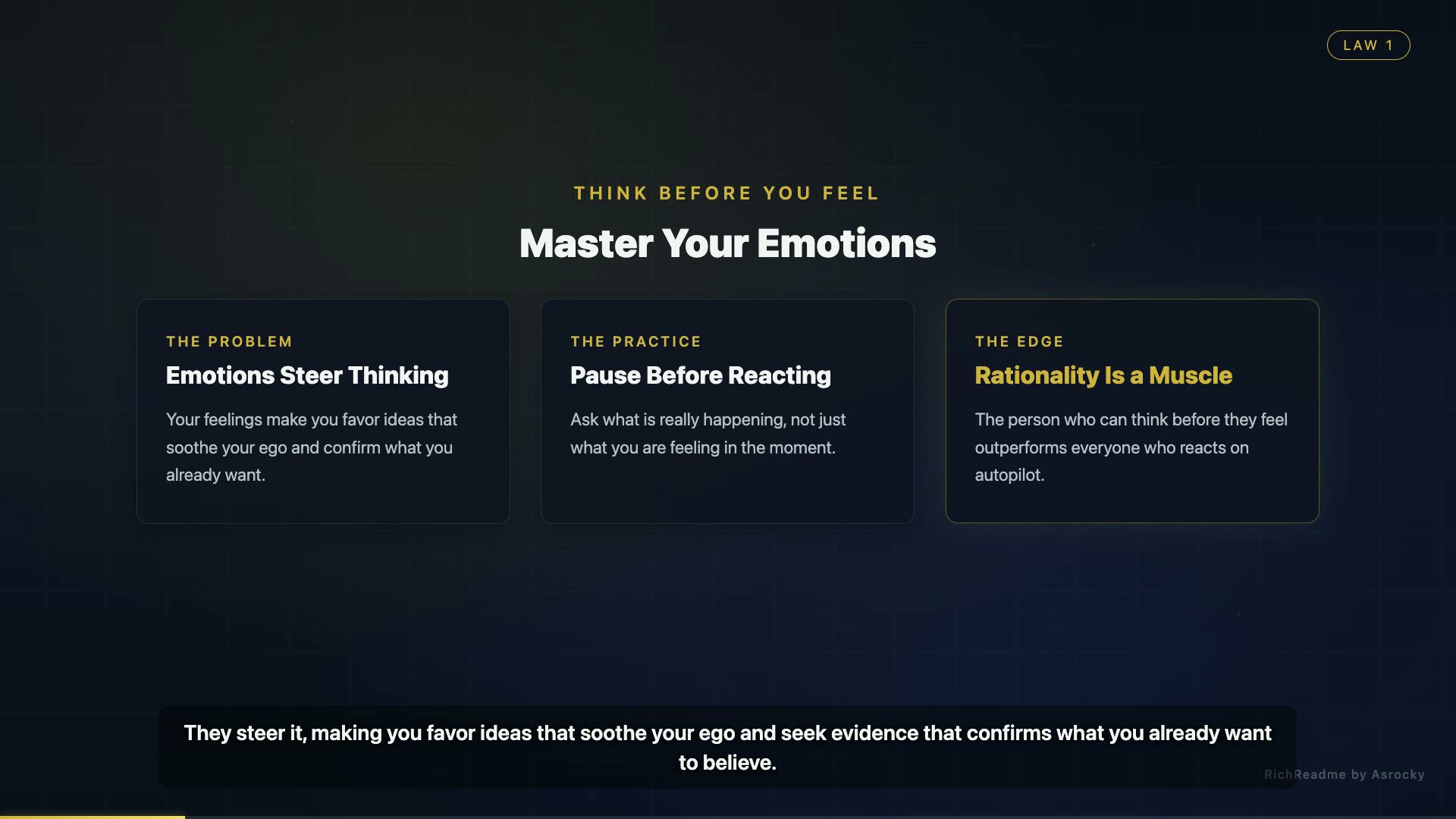
The first law is irrationality, and it is the master key. Greene says your emotions do not merely tint your thinking. They steer it, making you favor ideas that soothe your ego and seek evidence that confirms what you already want to believe.
Rationality is not something you are born with. It is a muscle you build by pausing before you react, asking what is really happening instead of what you are feeling. The person who can think before they feel has an enormous advantage over everyone around them.
Don't Outshine the Master
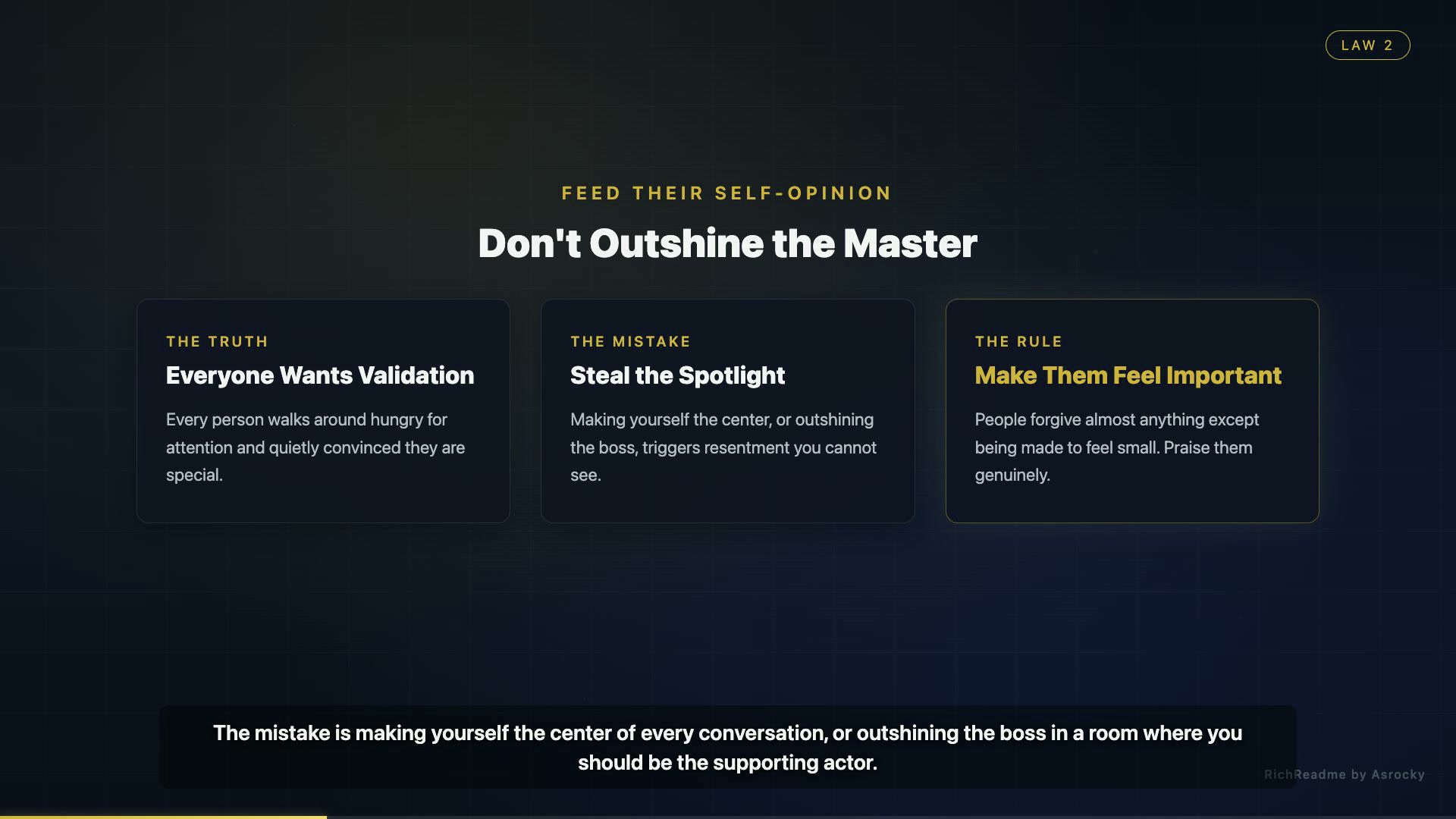
The second law is narcissism, but Greene means it more usefully than the insult. Every person walks around with an inflated sense of self-worth, and they are quietly hungry for validation and attention. The mistake is making yourself the center of every conversation, or outshining the boss in a room where you should be the supporting actor.
People will forgive almost anything except making them feel smaller. The practical rule is simple, make other people feel important, and they will adore you. Make them feel invisible, and they will quietly destroy you.
See Through the Performance

The third law is role-playing. Greene says almost no one shows you who they really are. People perform roles shaped by their childhood, their insecurities, and what they think they need to win approval.
When someone reacts strongly to you, that reaction is usually about their past wounds, not about you. If you take it personally, you become their puppet. Learn to watch behavior over time instead of trusting words, and you will start to see the mask slip.
Judge People by Their Habits

The fourth law is compulsive behavior, and it is how you judge real character. Greene warns that people can perform for an hour, an interview, or a first date, but they cannot perform for years. Look at how they treat waiters, how they handle small money, how they behave under stress, and whether they keep promises across months and years.
Character is not what someone says about themselves. It is the pattern of small repeated actions they never think you are watching.
Beware the Envious

The fifth law is envy, and it is the most hidden poison. People will never tell you they are envious. But Greene says you can spot it, effusive praise that feels off, subtle digs disguised as jokes, uneasiness when you succeed. Envy almost never comes from strangers.
It comes from friends and peers who see themselves as your equals. Once you succeed, stop broadcasting it. Draw attention away from yourself, because flaunting wins activates the envy in people who would otherwise help you.
Keep Your Inner Independence
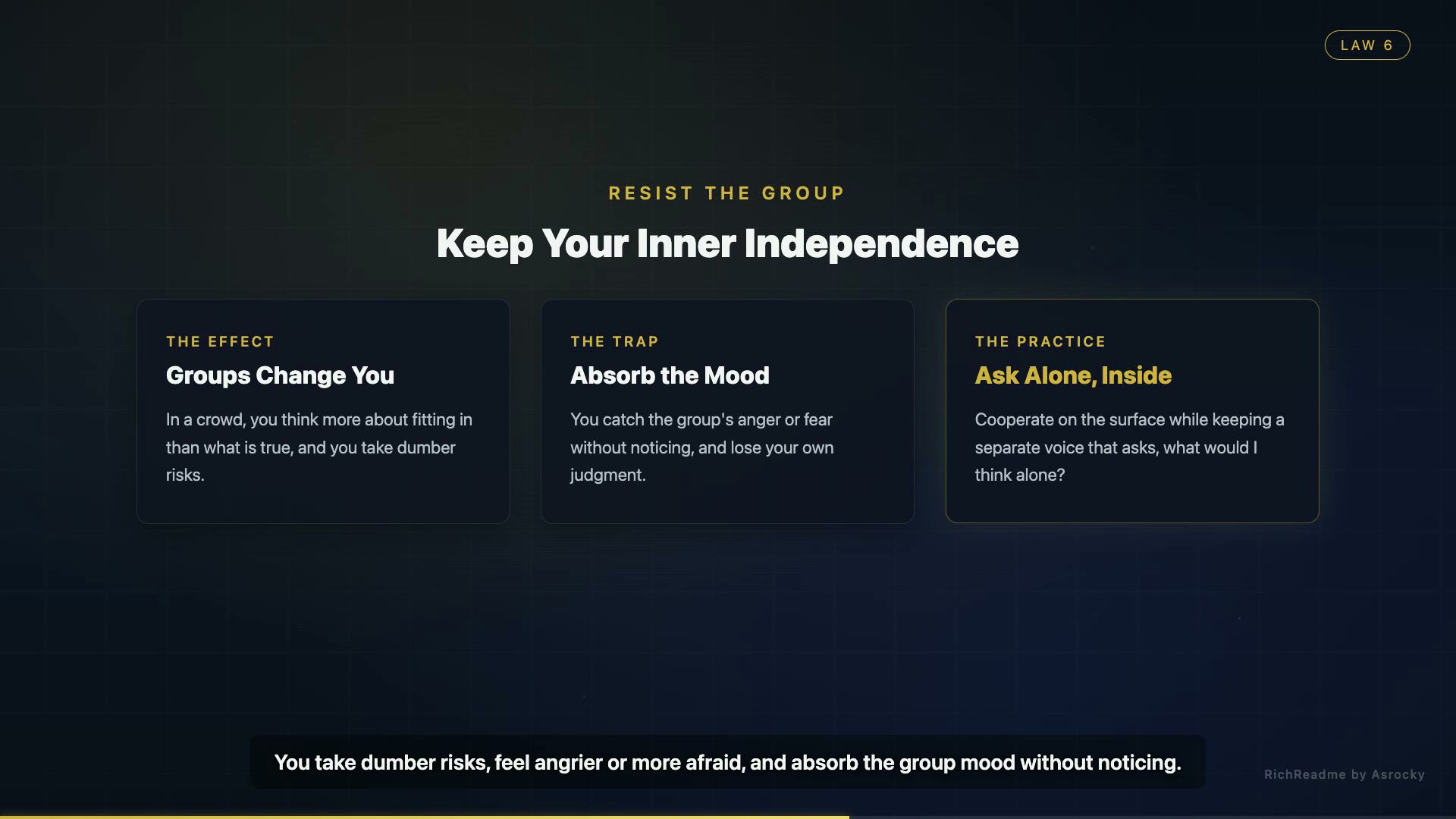
The sixth law is conformity, the pull of the group. Greene shows that the moment you join a crowd, you start to think differently, more concerned with fitting in than with what is true. You take dumber risks, feel angrier or more afraid, and absorb the group mood without noticing.
The solution is not to become a rebel. It is to develop a quiet inner independence. You can cooperate and fit in on the surface while keeping a separate voice that asks, what would I think if I were alone?
Stop Drifting by Mood

The seventh law is aimlessness. Most people drift through careers and relationships pulled by their moods and other people's opinions, never asking what they actually want. Greene says the cure is a sense of purpose, a calling chosen from your own tastes and inclinations, not your parents' expectations.
Once you have that North Star, your failures and doubts become training, not dead ends. Without it, you chase every new trend and wake up at forty wondering how you got there.
Decide from Ten Years Out
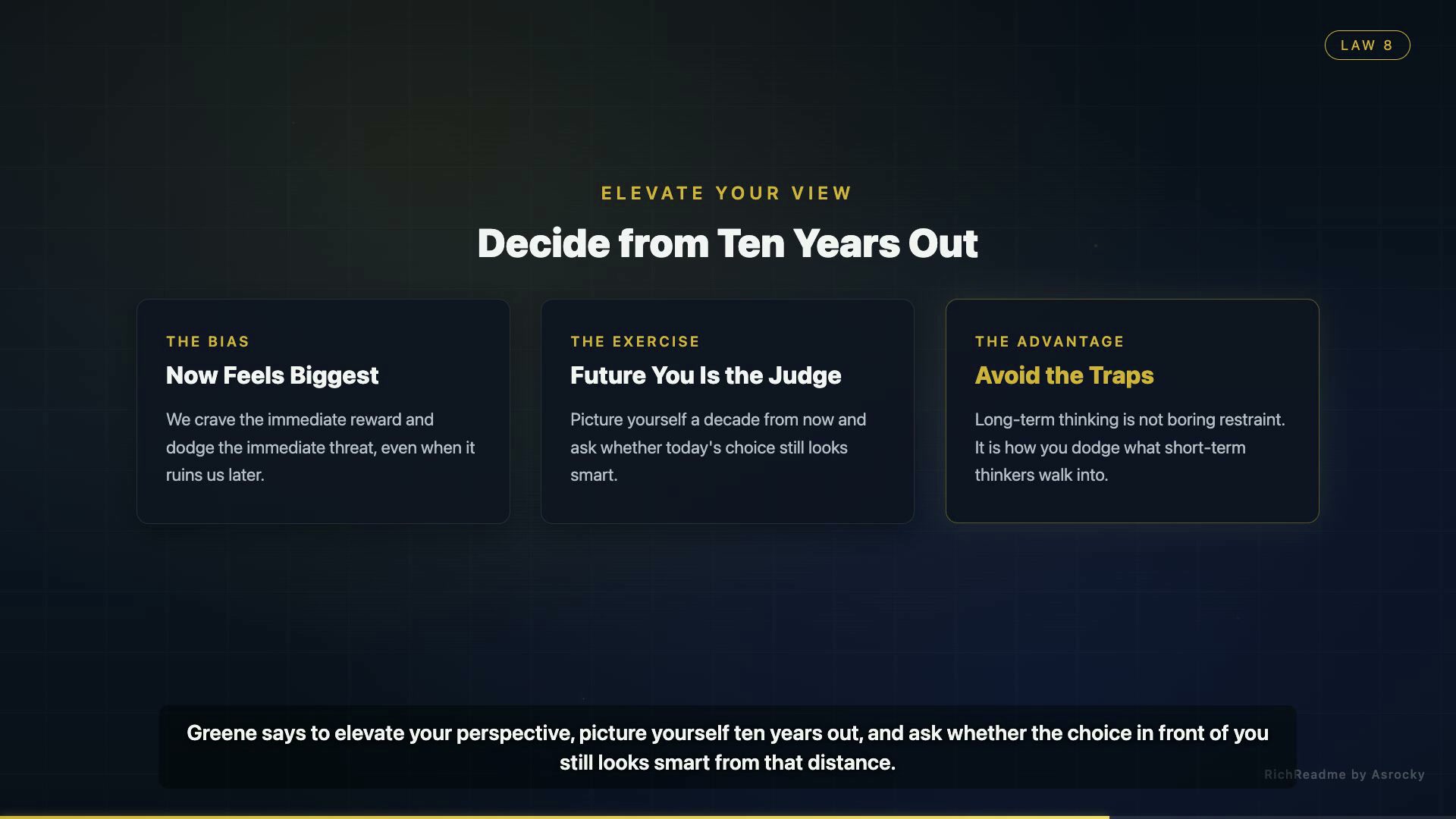
The eighth law is shortsightedness. We naturally focus on the immediate reward and the immediate threat, which is why we make decisions that feel great today and wreck us in five years. Greene says to elevate your perspective, picture yourself ten years out, and ask whether the choice in front of you still looks smart from that distance.
Long-term thinking is not boring restraint. It is how you avoid the traps that short-term thinkers walk straight into.
You Arrange Your Own Defeat

The ninth law is self-sabotage and defensiveness. Greene observes that many people arrange their own defeat, because staying in a familiar misery feels safer than risking an unfamiliar win. You defend your ego instead of learning, blame other people instead of changing, and repeat the story that protects you from responsibility. The way out is to notice when you are arguing for your own limitations, and to stop.
Remember You Will Die
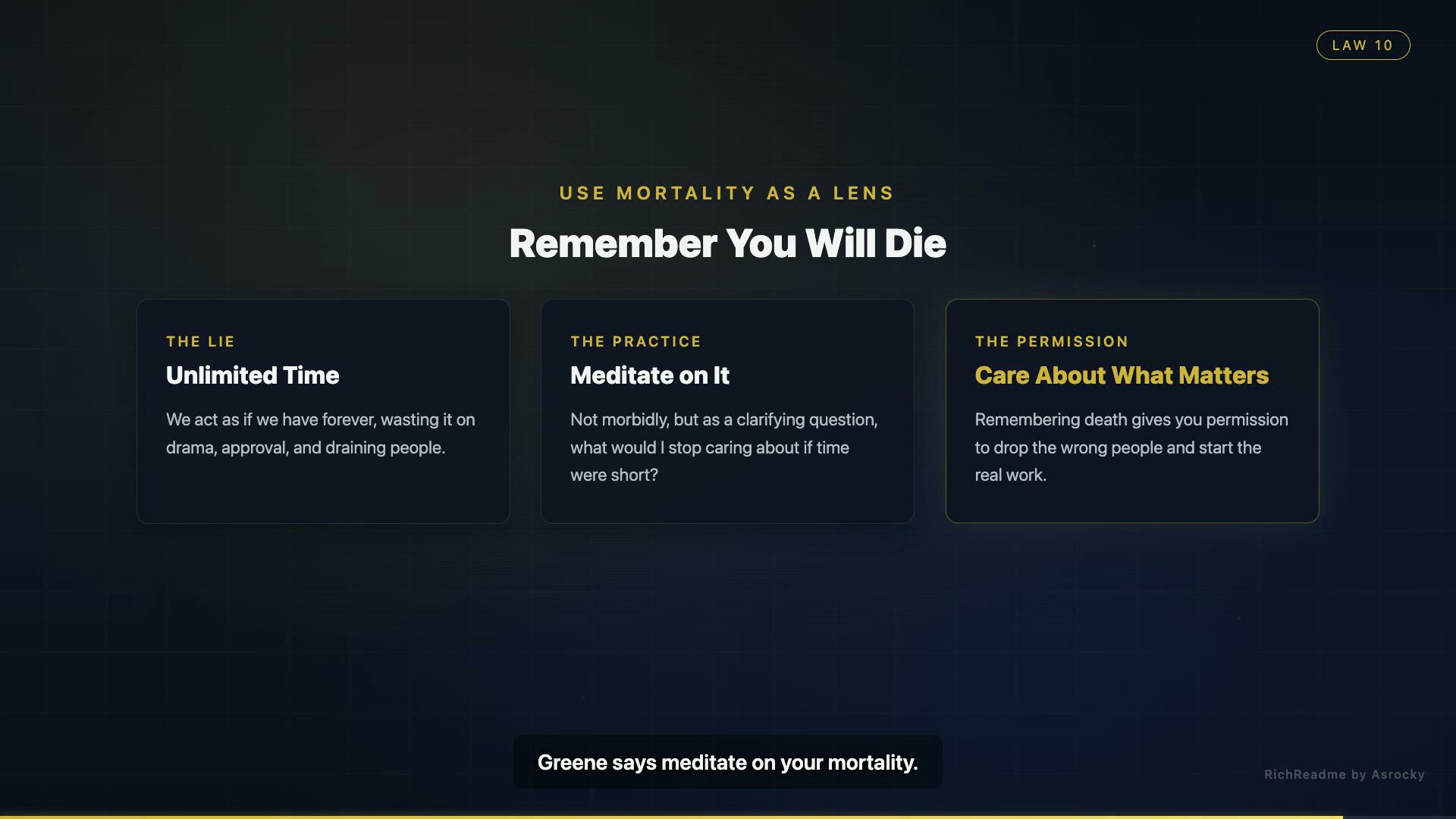
The tenth and final law is death denial. We spend our lives pretending we have unlimited time, which is why we waste it on drama, approval-seeking, and people who drain us. Greene says meditate on your mortality. Not in a morbid way, but as a clarifying lens.
If you knew how short this is, whose approval would you stop chasing? What work would you start? Death, remembered properly, gives you permission to care about the things that actually matter.