Most management books teach you how to win when everything is going well. Almost none teach you what to do when it all falls apart.
This is The Hard Thing About Hard Things, by Ben Horowitz. He cofounded Netscape, then built Loudcloud and Opsware through the dotcom crash, three painful layoffs, and a stock price that fell to thirty-five cents a share, before selling the company for over a billion dollars. Today he is one of the most respected venture capitalists in Silicon Valley.
The book is not a cheerful formula. It is his raw account of surviving the moments when the dream turns into a nightmare.
The Hard Things Are Unsexy

Horowitz starts by pointing out what management books leave out. The hard thing is not setting a bold goal. The hard thing is laying people off when you miss the goal. The hard thing is not hiring great people.
The hard thing is when those great people develop a sense of entitlement and start demanding unreasonable things. The hard thing is not drawing an org chart. The hard thing is getting people to actually communicate inside the box you just drew. The hard thing is waking up at three in the morning in a cold sweat.
There Is No Recipe
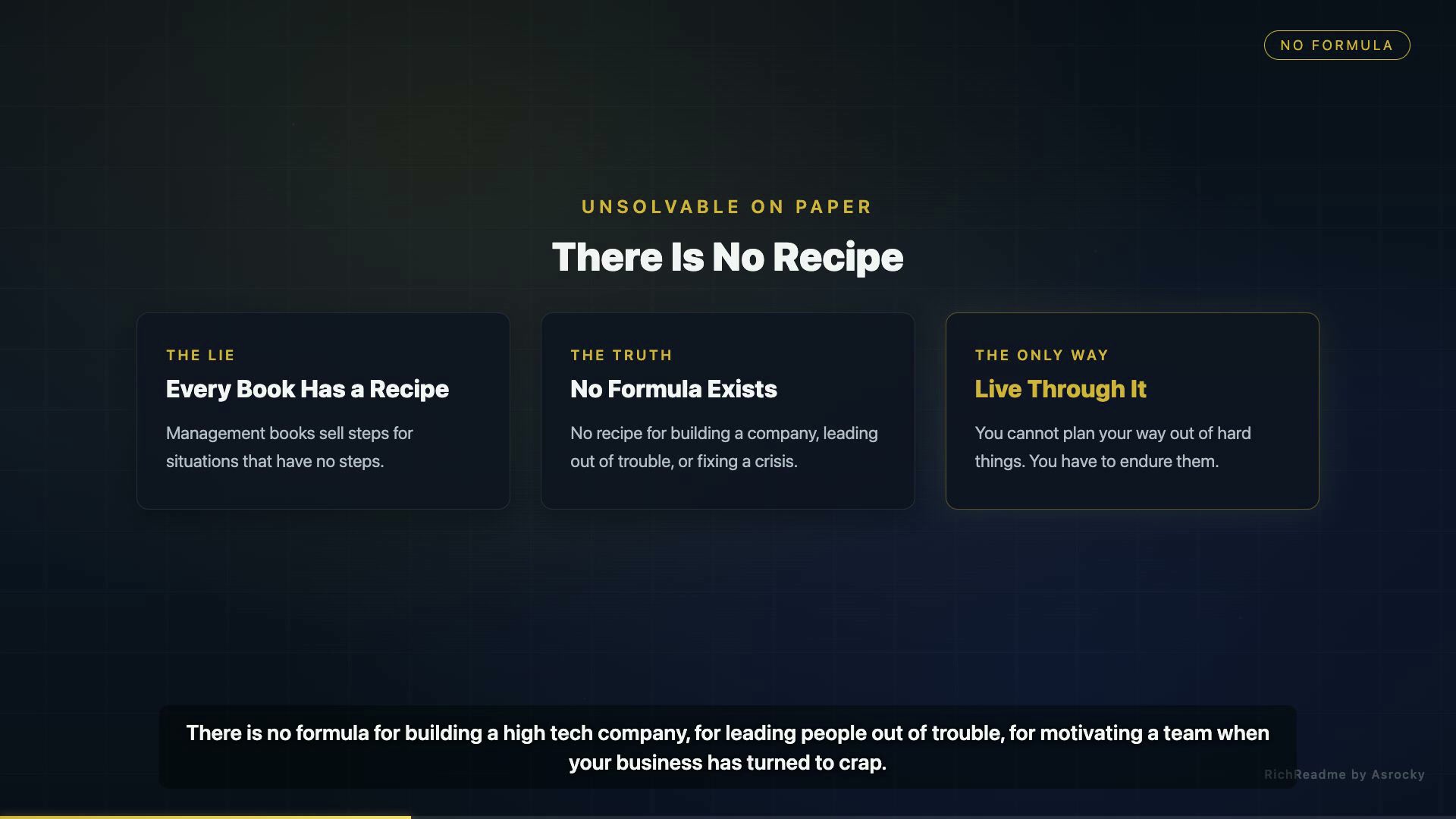
The reason the books fail is that there is no recipe. Horowitz is blunt. There is no formula for building a high tech company, for leading people out of trouble, for motivating a team when your business has turned to crap. Every management book sells you a recipe for a situation that has no recipe.
That is the hard thing about hard things. You cannot plan your way out of them. You have to live through them.
The Cold Sweat

When you are in it, Horowitz calls it the Struggle. The Struggle is when you wonder why you started the company at all. It is when people ask why you do not quit and you do not know the answer.
It is when your employees think you are lying and you suspect they may be right. It is when food loses its taste. It is when everyone thinks you are an idiot, but nobody can fire you.
The Cost
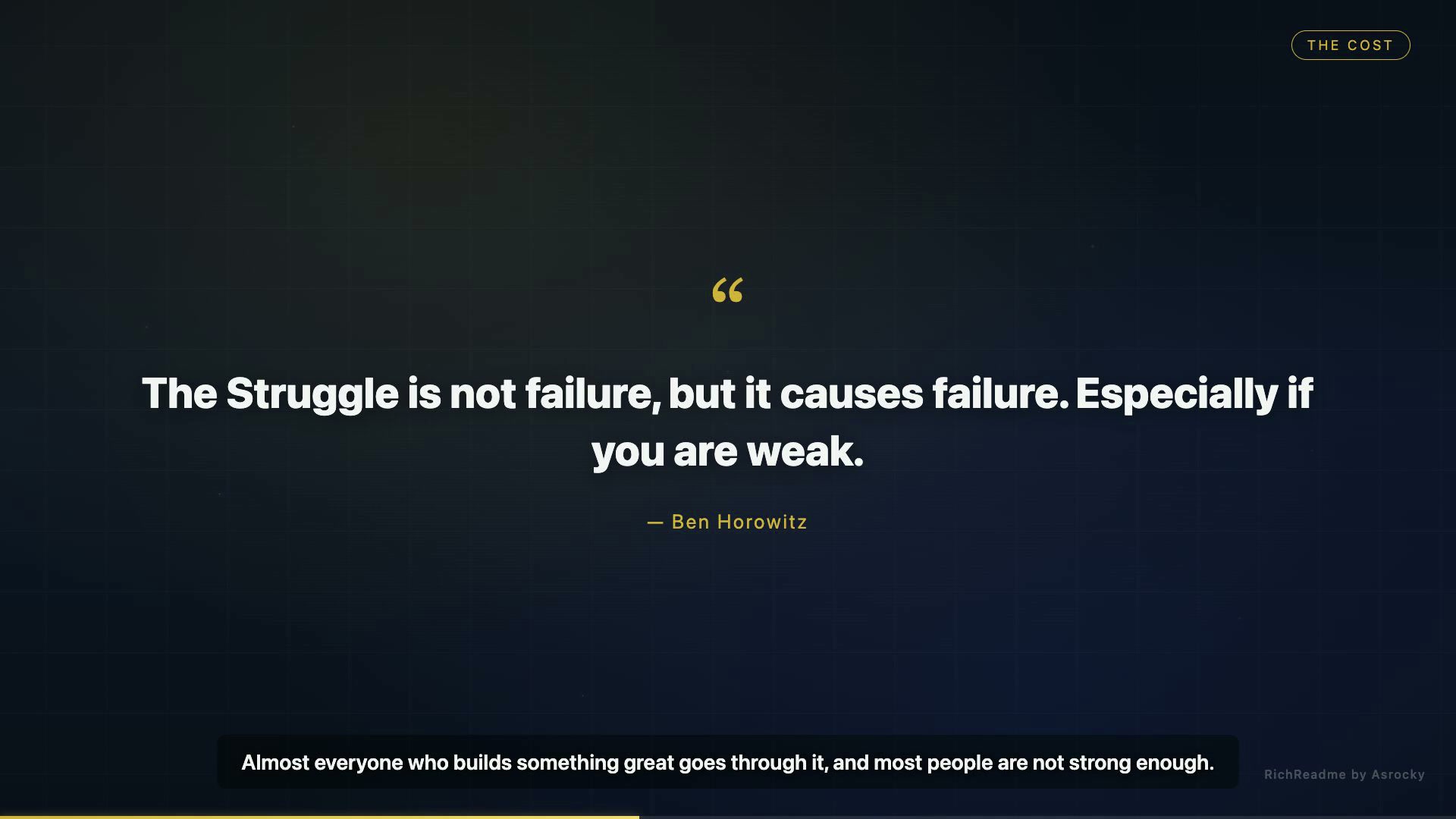
Horowitz does not romanticize it. The Struggle is not failure, but it causes failure. Especially if you are weak.
Almost everyone who builds something great goes through it, and most people are not strong enough. You may not make it. That is exactly why it is called the Struggle, and exactly why greatness comes from it.
Peacetime CEO vs Wartime CEO
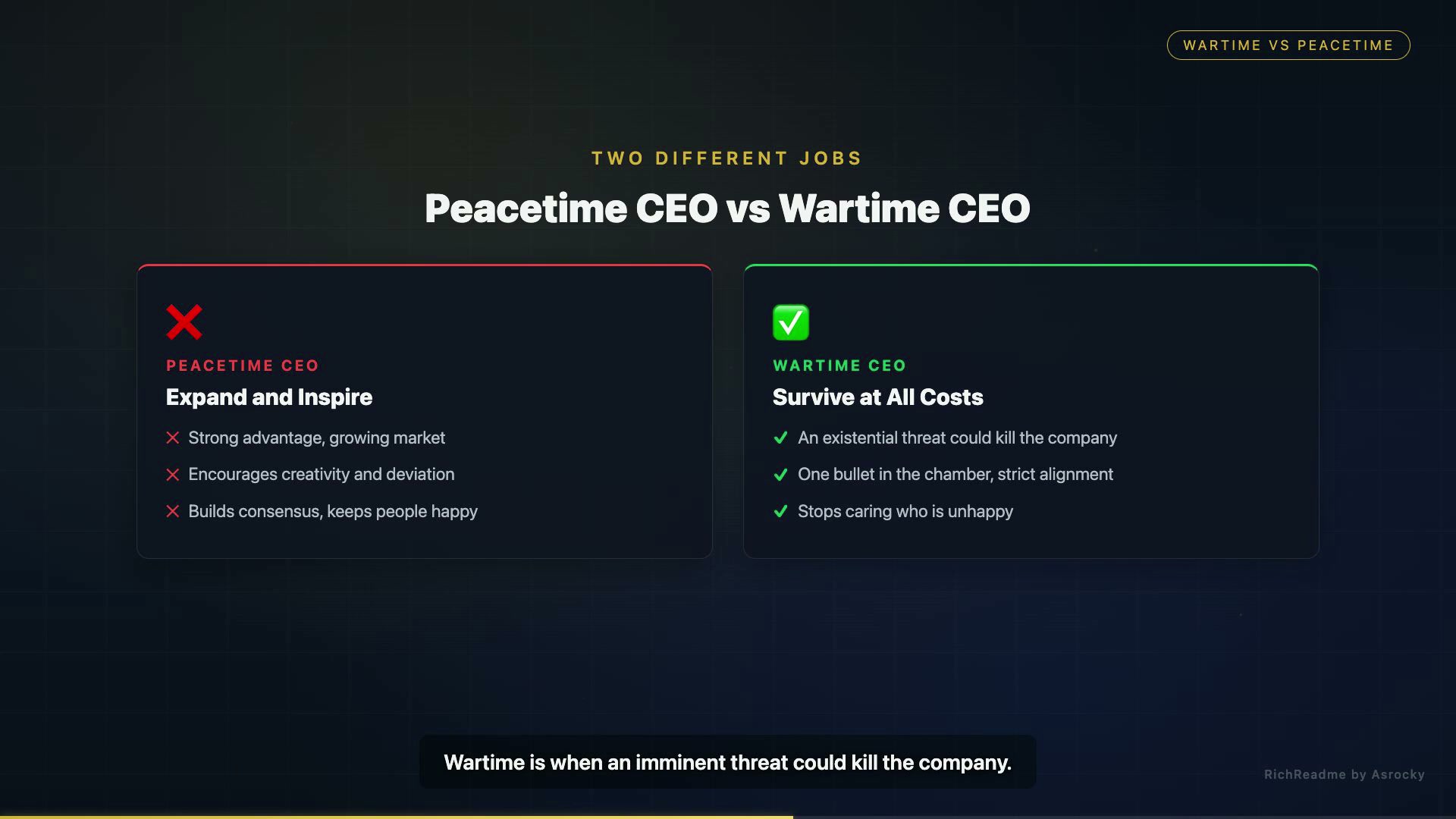
One of his most useful ideas is the difference between a peacetime CEO and a wartime CEO. Peacetime is when your company has a real advantage and the market is growing. In peacetime, you expand the market, encourage broad creativity, and tolerate deviations from the plan. Wartime is when an imminent threat could kill the company.
In wartime, you have one bullet in the chamber. You demand strict alignment to the mission, you care about small details that threaten survival, and you stop trying to make everyone happy. Most management books teach peacetime techniques. Horowitz says applying peacetime manners in wartime gets people killed.
There Is No Shortcut

When the pressure is on, founders go looking for a silver bullet. A new strategy, a magic hire, a killer product launch that fixes everything. Horowitz was once told by a board member that there are no silver bullets, only lead bullets. A lead bullet is not glamorous.
It is slow, unglamorous work done over and over, with no shortcut. When your back is against the wall, there is no clever trick. You just have to do the hard, boring, painful work, one problem at a time.
Layoffs Can Be Survived

Layoffs are the worst part, and Horowitz argues there is a right way to do them. Most companies that lay people off never recover, because the layoff shatters trust and the people who stay stop sacrificing. Horowitz went through three layoffs cutting four hundred people and still sold the company for a billion.
His rule is to be completely honest, give generous severance, and treat the people leaving with respect, so the people staying still believe the company can be trusted. A layoff done badly breaks the culture forever.
Keep Going Anyway
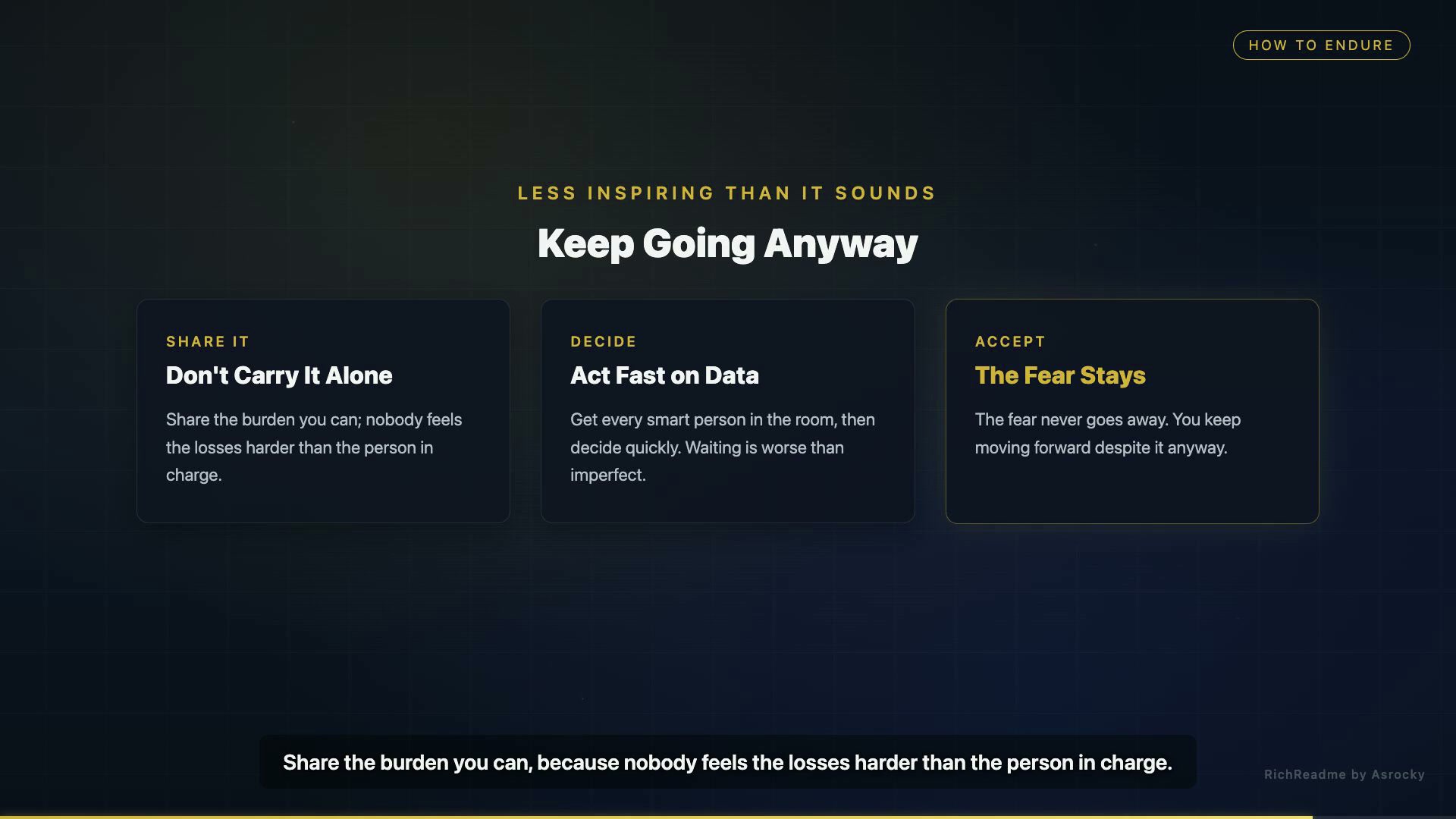
So how do you survive the Struggle? Horowitz offers a few rules that are less inspiring than they sound. Do not carry it all alone. Share the burden you can, because nobody feels the losses harder than the person in charge.
Get every smart person in the room on the problem, even the existential ones. Make the hard calls quickly once you have the data, because waiting in wartime is worse than deciding imperfectly. And accept that the fear does not go away. You keep going anyway.