She maxed out her first credit card at eighteen, defaulted, and ignored the collection calls. Then she got good with money, without deprivation.
This is The Financial Diet, by Chelsea Fagan. It is a total beginner's guide to getting good with money, written by someone who started from zero. The central idea is that saving money is not about torturing yourself. It is about deciding you love Future You as much as you love Today You.
Not a Train Wreck Is Not Good Enough
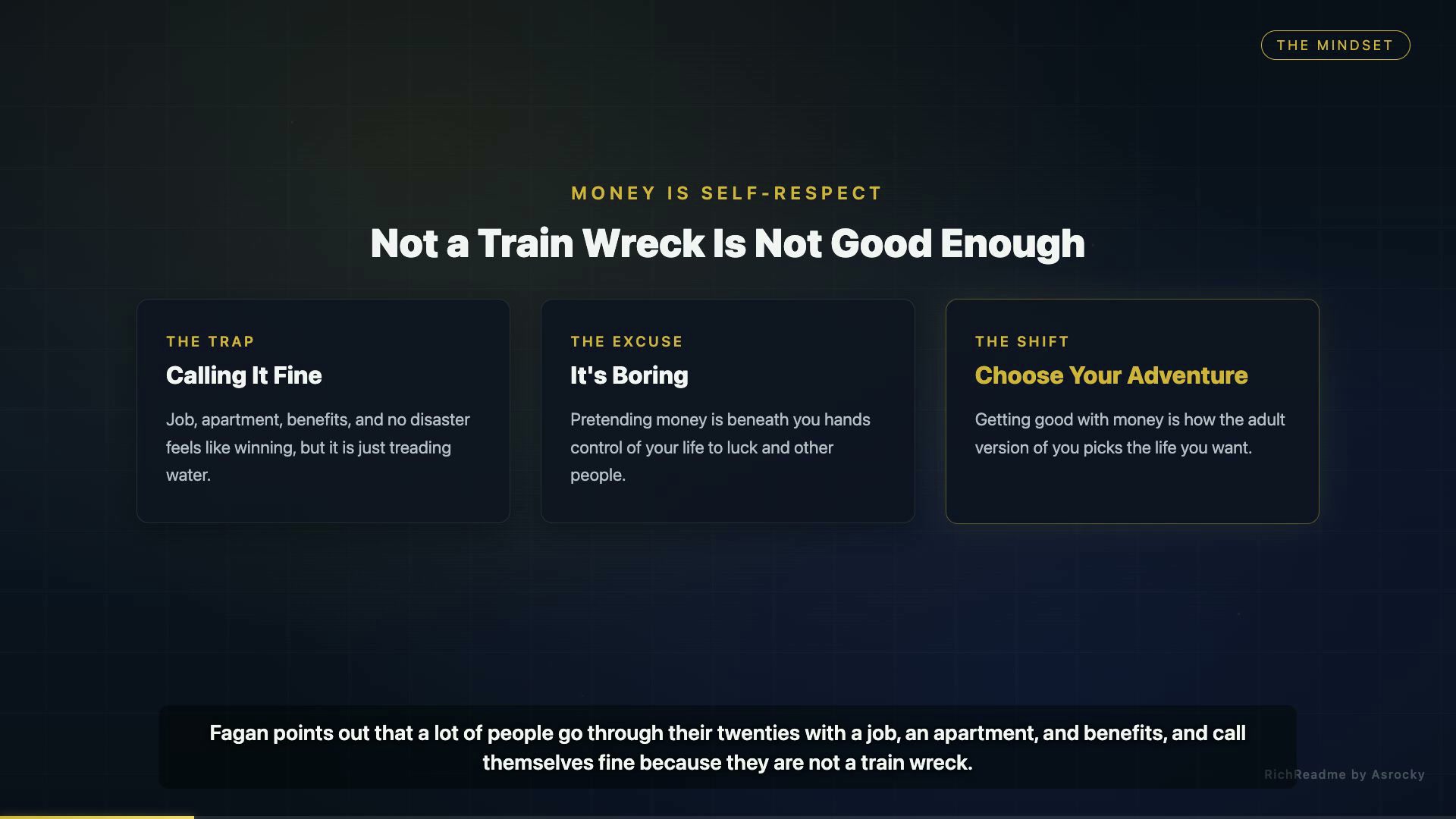
The first shift is giving a shit about money as an act of self-respect. Fagan points out that a lot of people go through their twenties with a job, an apartment, and benefits, and call themselves fine because they are not a train wreck. But not a disaster is not the same as being in control.
Pretending money is boring or beneath you is just a way of handing power over your life to luck and other people. Getting good with it is the adult version of choosing your own adventure.
Love Future You As Much As Today You

The core principle is that Future You is still you. Fagan used to picture her present self and her future self as two different people, so she happily pushed saving off onto some older, richer version of herself. Then she realized there is only one person.
Every dollar you spend today is a vote for who you will be tomorrow. A budget is not a list of things you cannot have. It is a way of making sure the person you become actually gets to keep the life you are building.
Three to Six Months of Expenses
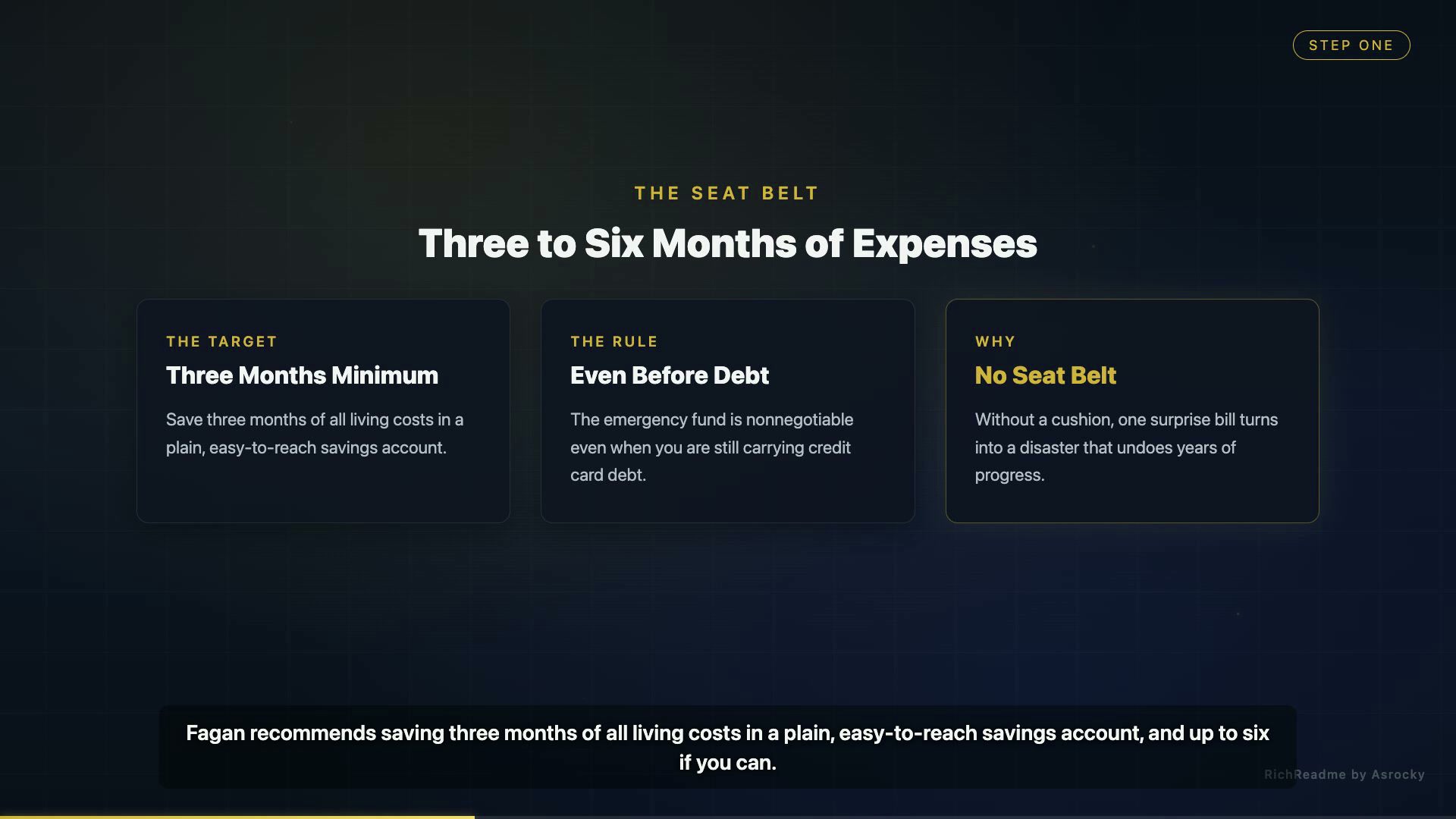
The first concrete move is building a real emergency fund, and it comes before almost everything else. Fagan recommends saving three months of all living costs in a plain, easy-to-reach savings account, and up to six if you can. She is blunt that this is nonnegotiable even if you are carrying debt.
Driving without a seat belt while you pay off the car is how one surprise bill turns into a disaster. Until that cushion exists, every other financial plan is fragile.
Move the Money Before You See It
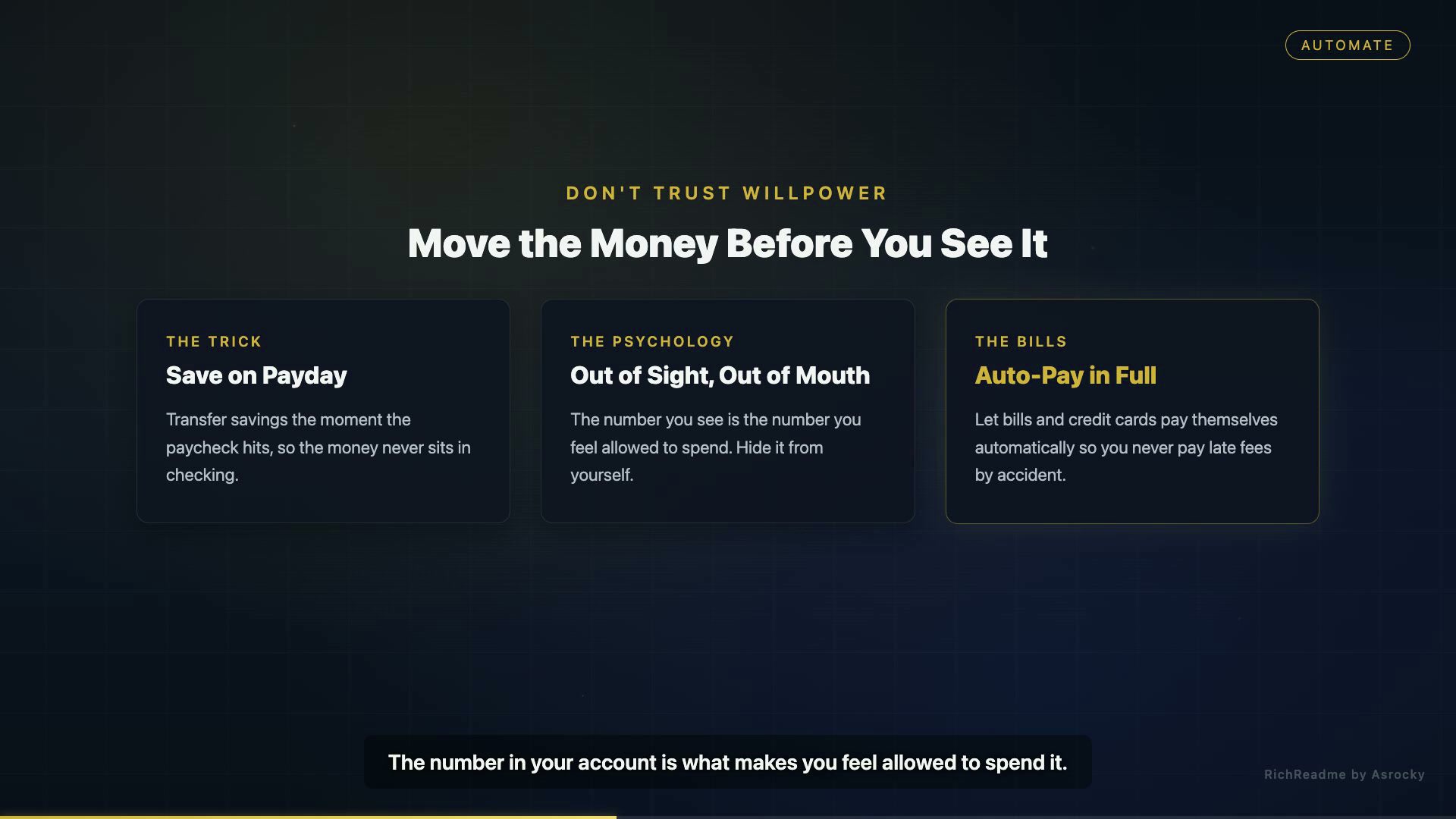
Once the cushion exists, you automate the rest. Fagan's key trick came from a friend who transfers her savings the moment the paycheck hits, so she never sees the money sitting in checking. The number in your account is what makes you feel allowed to spend it.
If savings happens automatically on payday, you stop negotiating with yourself every month. Auto-pay your credit cards in full on the same schedule, and the credit score stops being a source of anxiety.
The 50/30/20 Starting Point

You still need an actual budget, not just vibes. Fagan tells people to track all income and all expenses by hand for at least three months, using old bank and credit card statements. A simple starting framework is the 50, 30, 20 rule. Half of your income goes to fixed costs like rent and utilities.
Thirty percent goes to flexible lifestyle spending like food and going out. Twenty percent goes to savings. If your rent eats half your income or you are barely saving, the budget is telling you something about your lifestyle that you cannot unsee.
Run Your Cards Under 30%
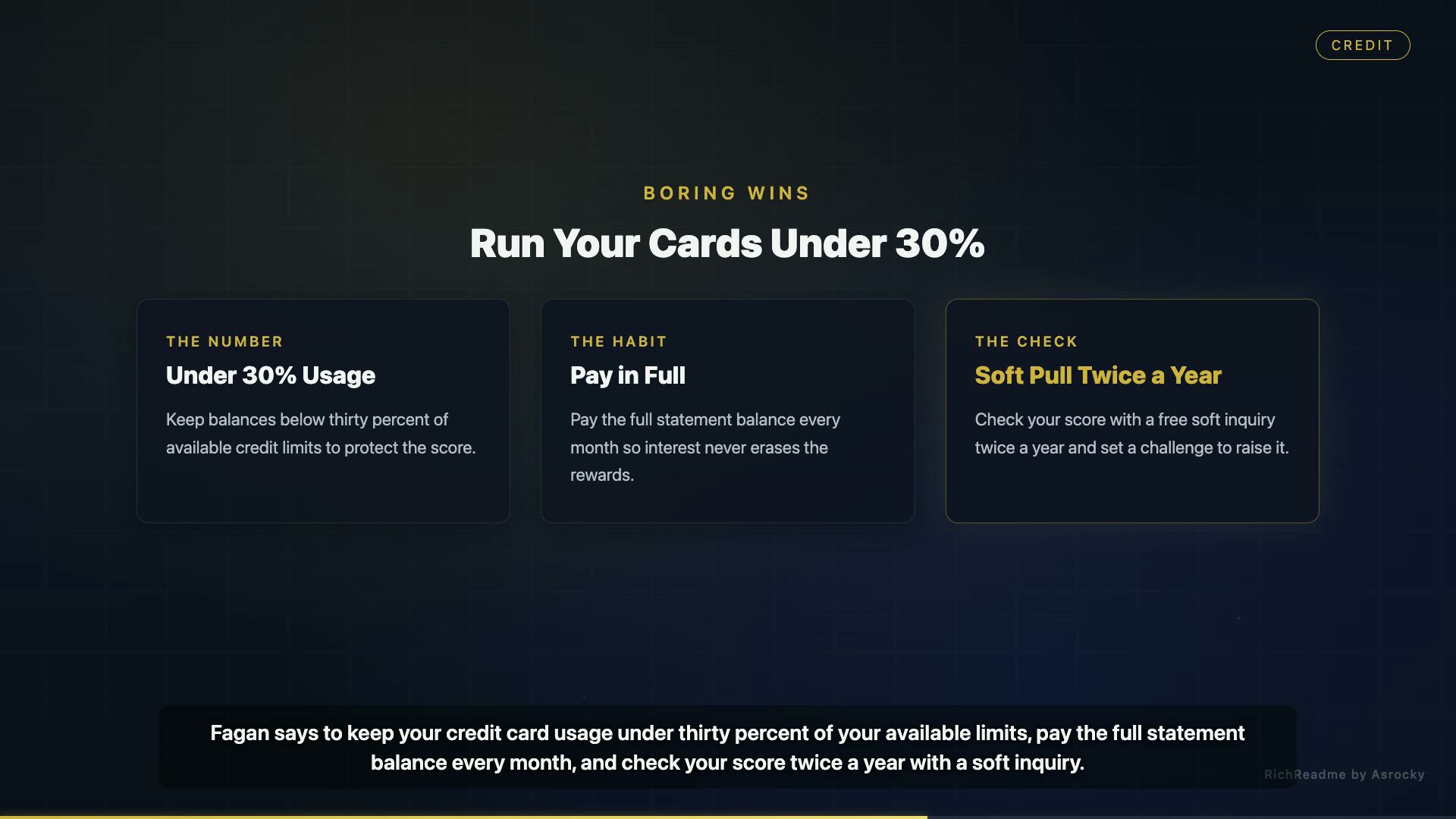
Your credit score is worth actively managing. Fagan says to keep your credit card usage under thirty percent of your available limits, pay the full statement balance every month, and check your score twice a year with a soft inquiry. If you can safely raise your limits, you widen that gap between what you use and what you owe, which helps the score. The boring part, on time, every time, is worth more than any trick.
Capture the Free Match
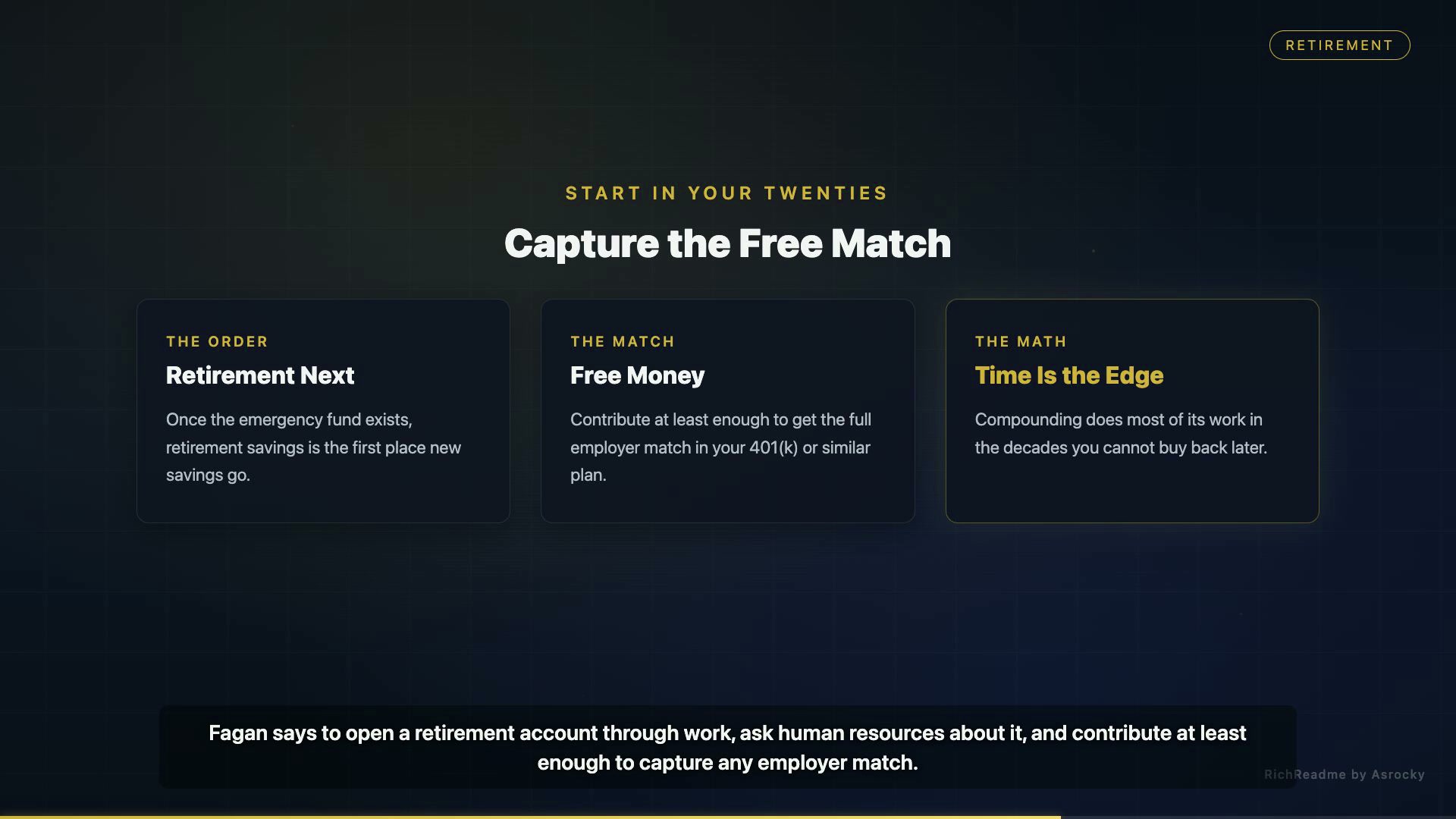
After the emergency fund, retirement is the next stop for savings, even when you are young. Fagan says to open a retirement account through work, ask human resources about it, and contribute at least enough to capture any employer match. That match is free money and the closest thing to a guaranteed return you will ever see.
The reason to start in your twenties is not that you are old. It is that compounding does most of its work in the decades you cannot get back later.
Always Keep a Side Hustle Warm
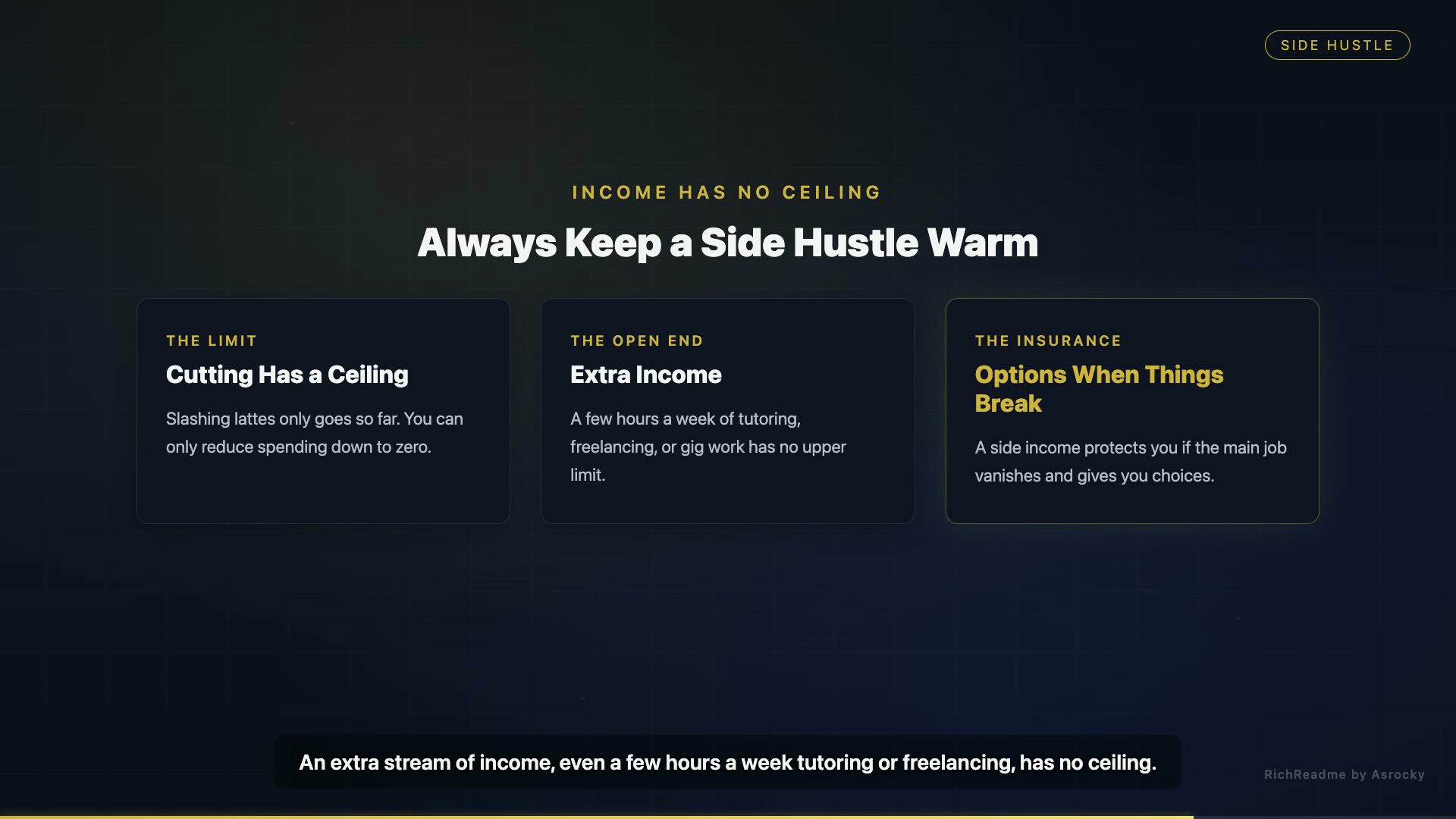
Fagan is also a believer in side income over pure austerity. Cutting every latte has a ceiling. An extra stream of income, even a few hours a week tutoring or freelancing, has no ceiling.
She says always keep at least one side hustle on the burner, whether it brings in a little or a lot. It protects you if the main job disappears, and it gives you options that pure saving cannot.
Stop Being Ashamed of Money

Finally, you cannot do this alone. Fagan stresses that money shame keeps people silent until a small problem becomes a crisis. You need friends, partners, and experts who will talk openly about salaries, budgets, and mistakes without judging you.
Surround yourself with people who make you better with money, and talk about it the way you would talk about fitness or health. Isolation is what turns a fixable budget into a ruined credit score.