Every dollar you save slowly loses value every year. That is not a bug. It is the entire point of the system.
This is The Fiat Standard by Saifedean Ammous, the sequel to his hit The Bitcoin Standard, and it is his full indictment of government-controlled money. Most people think of a currency as neutral plumbing for the economy. Ammous argues the opposite: what we use as money shapes our politics, our work, our family life, and even how free we are. To understand the modern world, he says, you have to understand how our money works.
Printed From Nothing, At Will
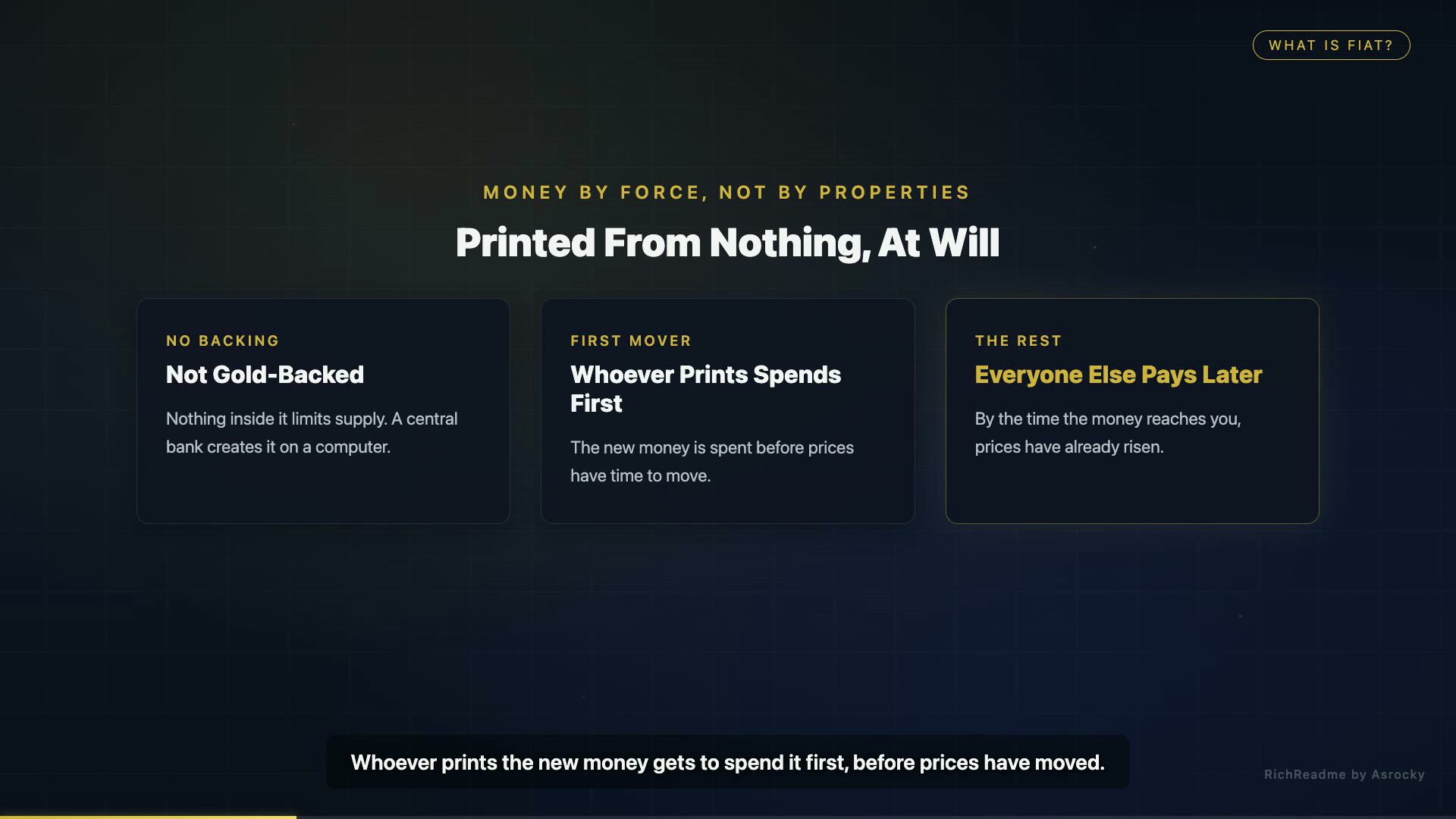
Fiat money is money declared valuable by law, not by anything inside it. It is not backed by gold or limited by any physical cost. A central bank can create it from nothing, on a computer, at will. That sounds convenient, but it changes who holds the power.
Whoever prints the new money gets to spend it first, before prices have moved. Everyone else pays for it later through higher prices. For centuries, good money had to be expensive to produce, like gold, which limited how much a ruler could cheat. Fiat throws that constraint away, and the people who control the printer gain enormous influence over everyone else.
The Hidden Tax
This is the hidden tax at the heart of the system. When a government spends more than it collects, it does not have to raise your taxes openly. It just creates new money and borrows it.
As that new money spreads through the economy, prices rise, and your paycheck and savings buy less. Ammous calls this inflation, and for him it is a transfer of wealth from savers and workers to the government and the banks closest to the money printer.
Government Exploded in Size
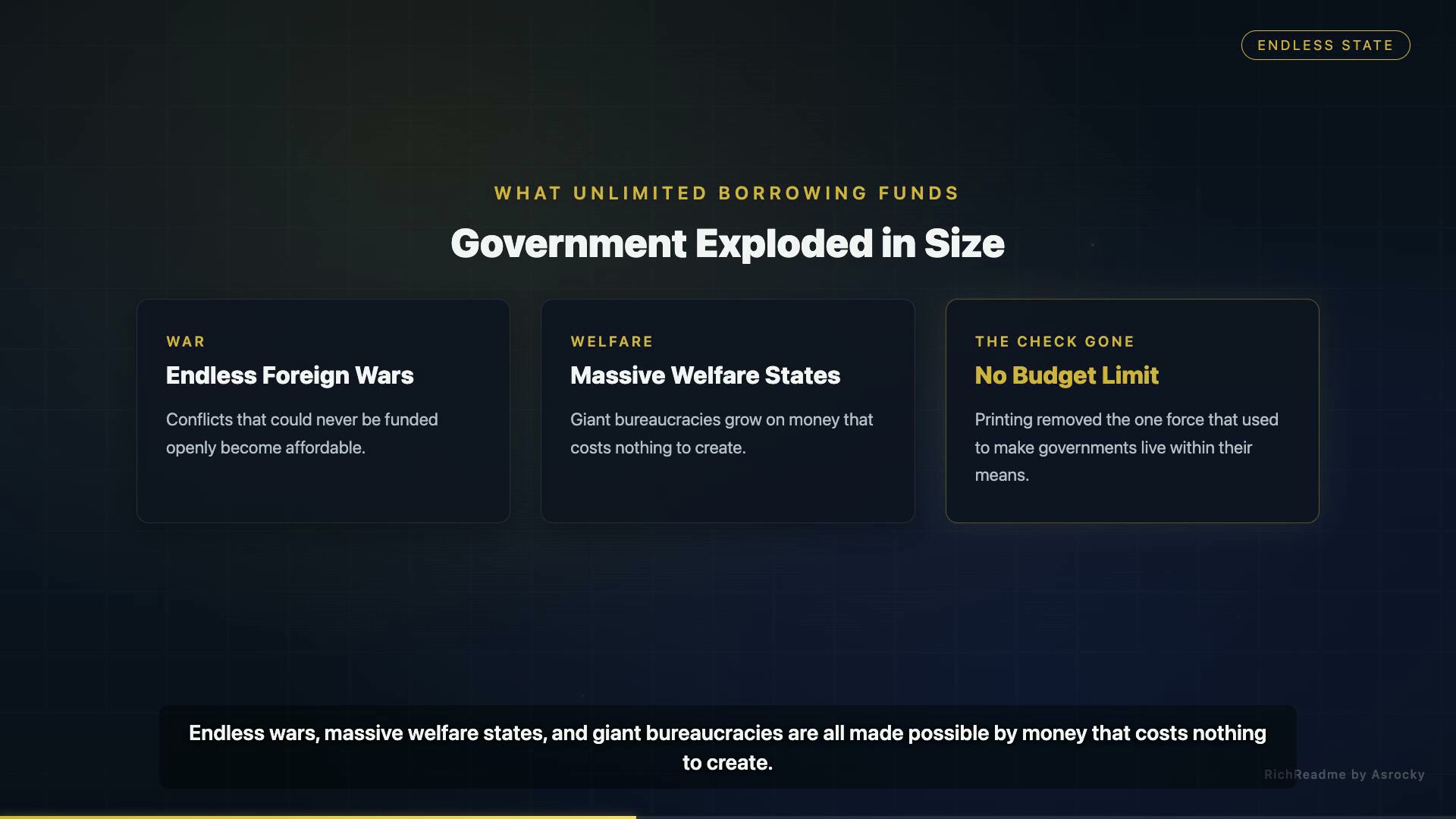
Because fiat lets governments borrow without limit, it also funds things they could never afford openly. Endless wars, massive welfare states, and giant bureaucracies are all made possible by money that costs nothing to create. Ammous argues this is why the twentieth century saw government explode in size. The ability to print money removed the one check that used to force governments to live within their means.
Malinvestment
Cheap new money also wrecks how we produce things. When interest rates are held far below where real savings would set them, businesses borrow for projects that would never make sense otherwise. Capital gets poured into fancy, unprofitable ventures, and for a while it feels like a boom. Then the malinvestment is exposed, and we get the crashes, recessions, and bailouts that policymakers never seem to connect to their own cheap money.
Compliant, Indebted Workers

Ammous goes even further into everyday life. He argues that dependent populations are easier to govern, so fiat-funded governments have reasons to keep people unhealthy, under-educated, and hooked on easy credit. Chronic illness, broken education, and stagnant careers are not accidents in his telling.
They are side effects of a system that needs compliant, indebted workers more than it needs free, productive ones. Cheap credit for cars, degrees, and homes locks people into monthly payments they can barely cover, which makes them afraid to rock the boat. Someone with no savings and a pile of bills will tolerate a lot before they risk their job.
The Training
School, to him, is the training ground. Years of rigid schedules, graded obedience, and standardized tests are designed not to build independent thinkers but to produce good employees who show up on time, follow instructions, and collect a paycheck. The goal is wage dependence, not self-reliance. People who expect a boss and a government check are far easier to manage than people who can support themselves.
The Escape
So what is the way out? Ammous says the old gold standard worked because it limited how much governments could inflate. Fiat removed that limit.
His answer is a new form of hard money that no government can print, take, or manipulate, built on rules rather than force. Whether or not you follow him all the way there, his core warning is clear: money you do not control will eventually be used against you.