A Harvard educated finance star was burning out, chasing returns, and quietly ruining himself. Then he paid two point five million dollars for a sandwich with Warren Buffett, and everything changed.
This is The Education of a Value Investor by Guy Spier. It is not a how to guide. It is a confession and a transformation, the story of how a Wall Street operator became a calm, principled, long term investor.
The Belly of the Beast
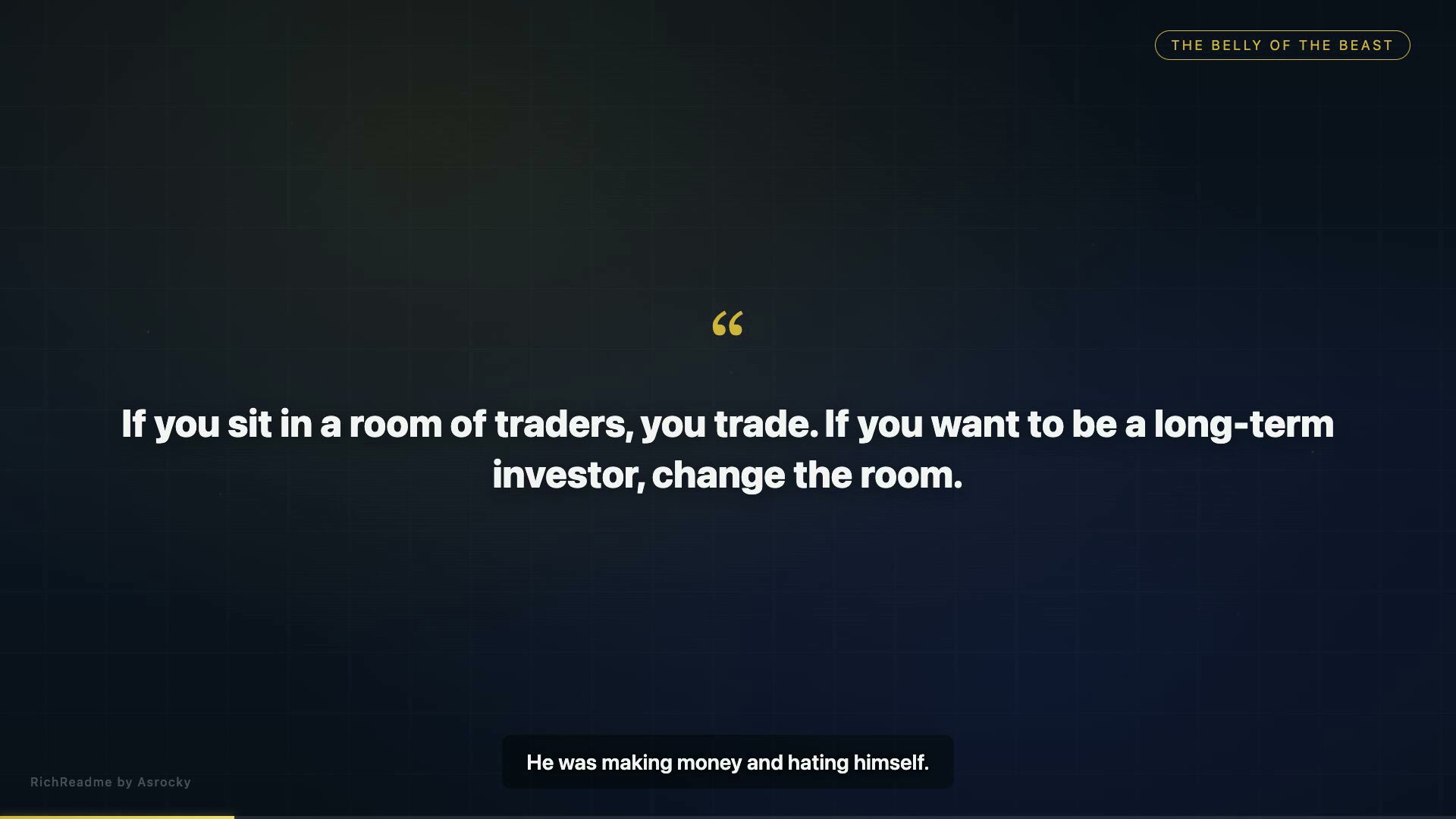
Spier starts in the belly of the beast, at a powerful hedge fund where the culture was toxic. Envy, status games, and short term greed were the real curriculum. He was making money and hating himself.
His first lesson is uncomfortable: the environment shapes the investor. If you sit in a room of traders, you trade. If you want to become a long term investor, you may need to change the room.
Lunch with Buffett
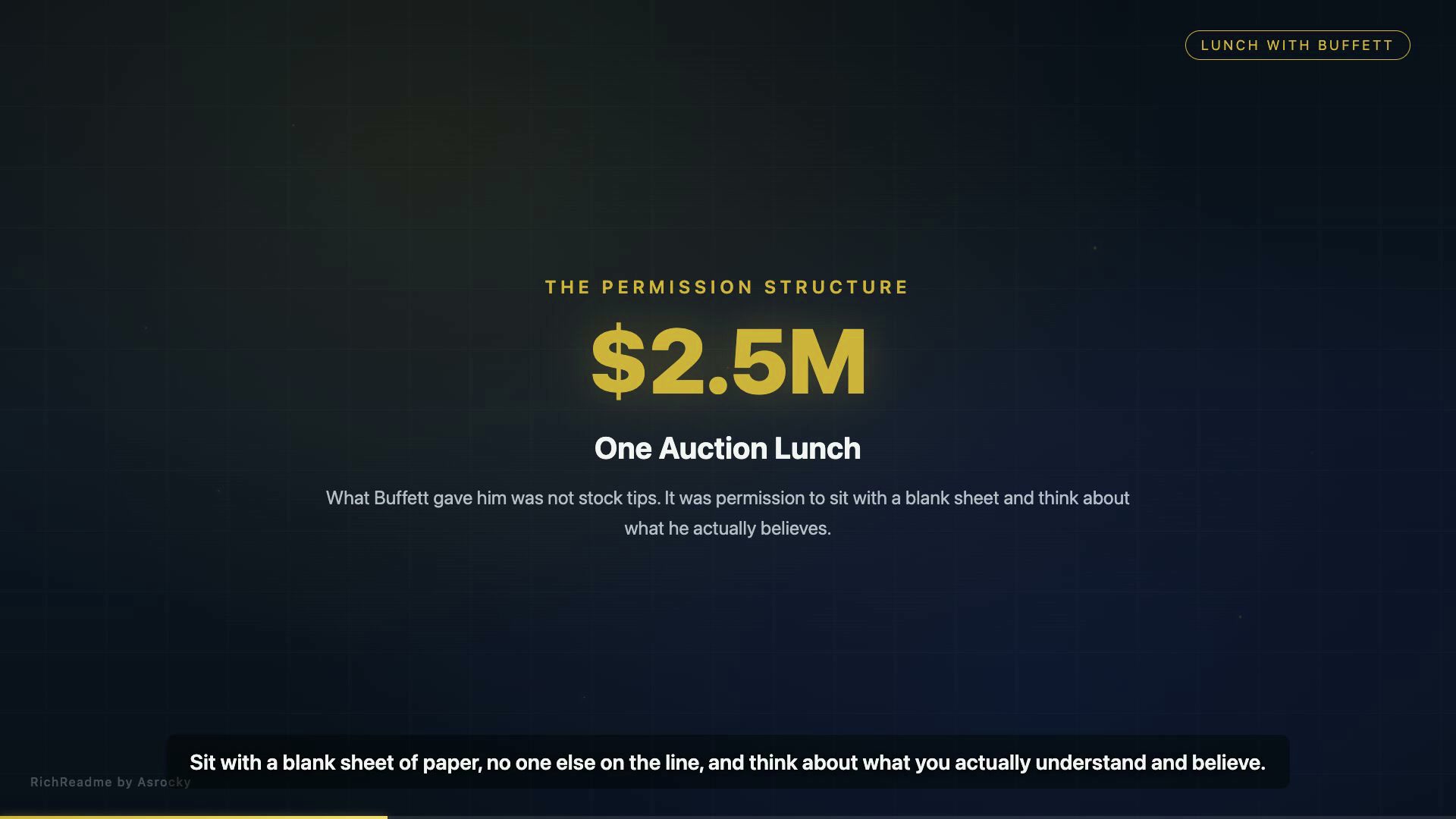
The turning point was lunch with Buffett, won at auction for two point five million dollars. What Buffett gave him was not stock tips, it was a permission structure. Sit with a blank sheet of paper, no one else on the line, and think about what you actually understand and believe. Buffett's other gift was moral: his lunch made Spier feel clean, and he decided he wanted to feel that way every day.
Rebuilding the Environment
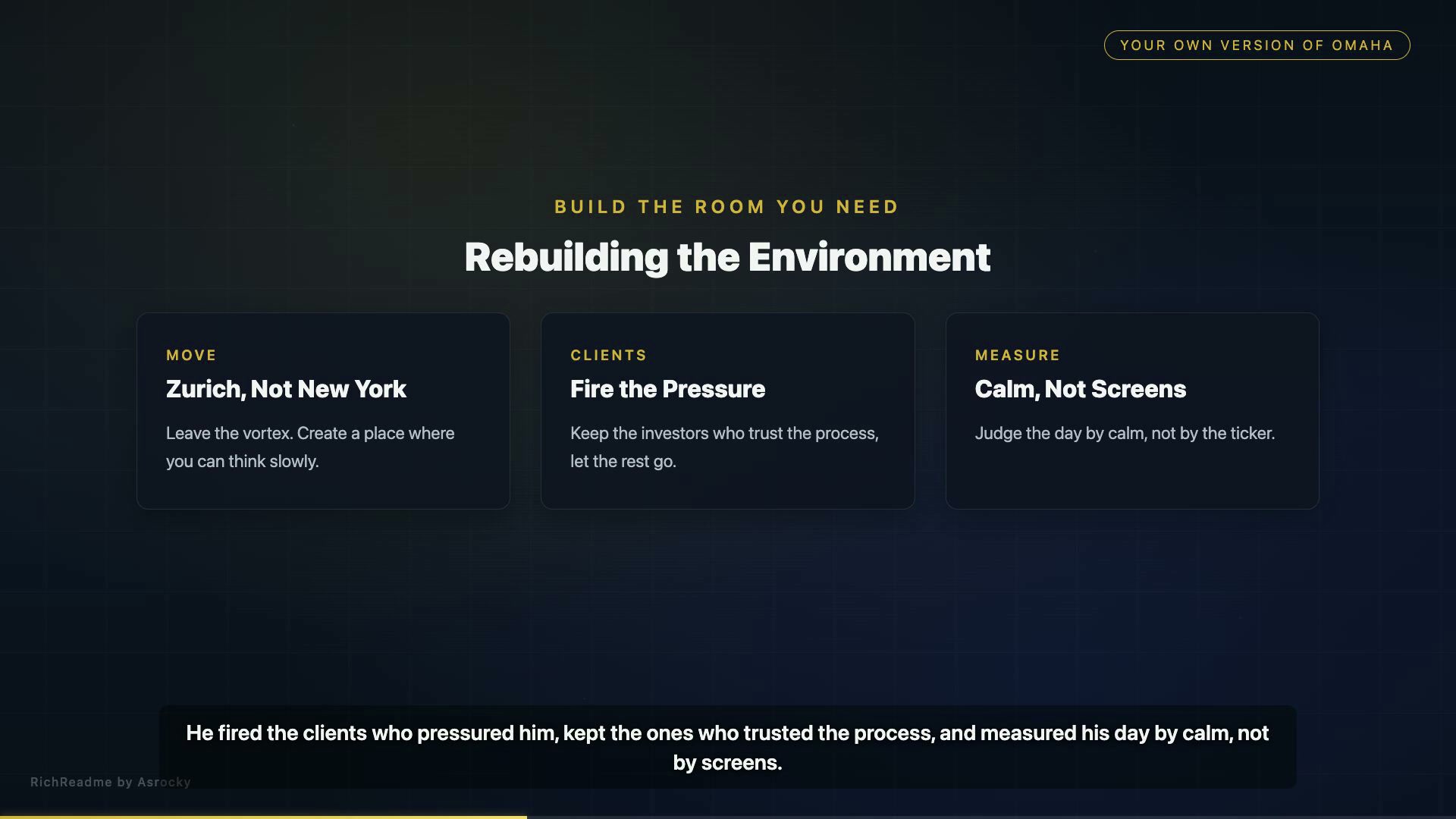
So Spier rebuilt his environment deliberately. He left New York, moved to Zurich, and built a firm where he could think slowly. He fired the clients who pressured him, kept the ones who trusted the process, and measured his day by calm, not by screens. He calls it creating his own version of Omaha, the place where you can actually think.
Clone the Master
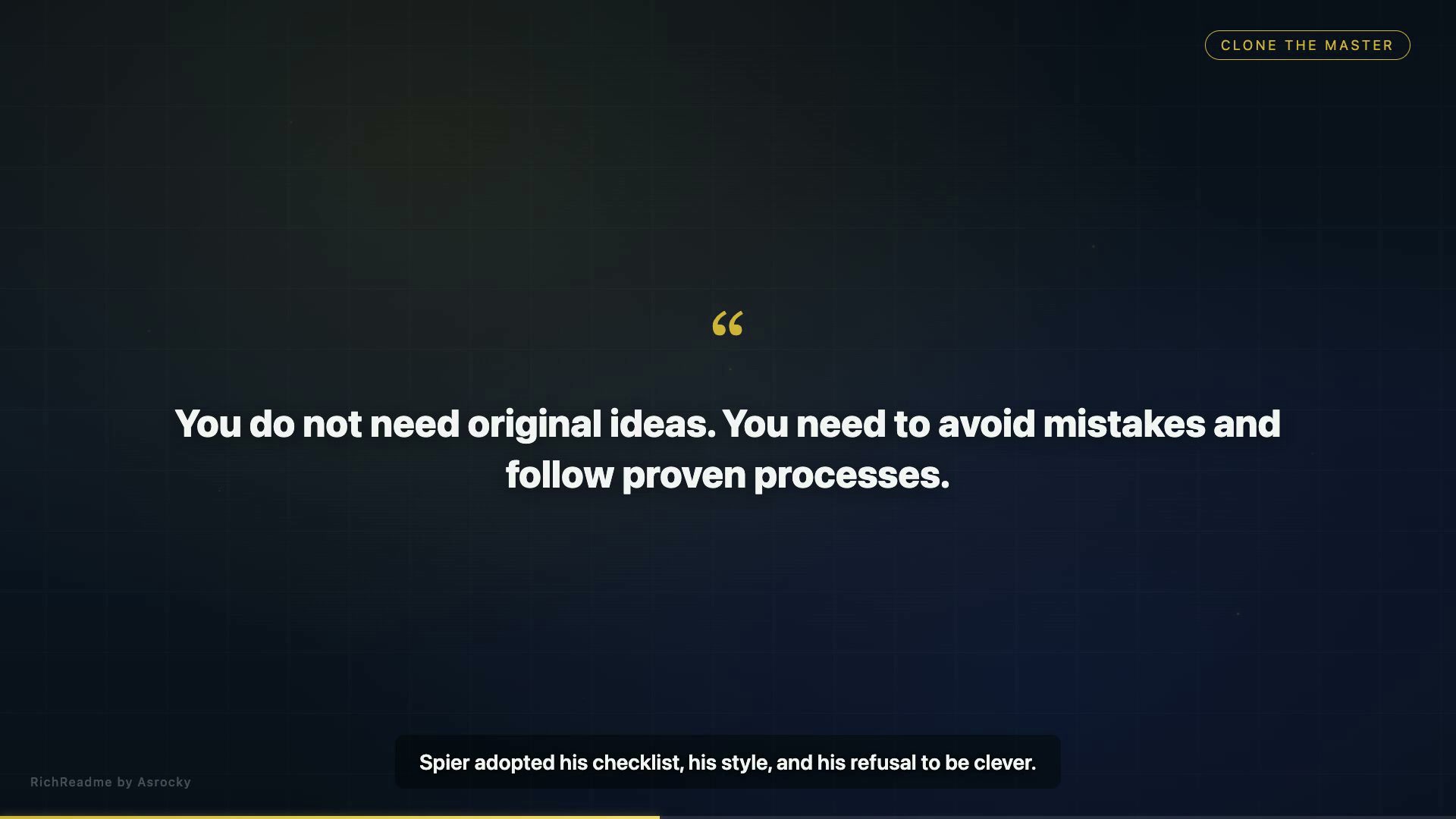
Then he did the thing most investors are too proud to do: he became a student of Mohnish Pabrai, the man famous for cloning Warren Buffett. Spier adopted his checklist, his style, and his refusal to be clever. The insight is humbling but freeing.
You do not need original ideas. You need to avoid mistakes and follow proven processes.
Run It Every Time
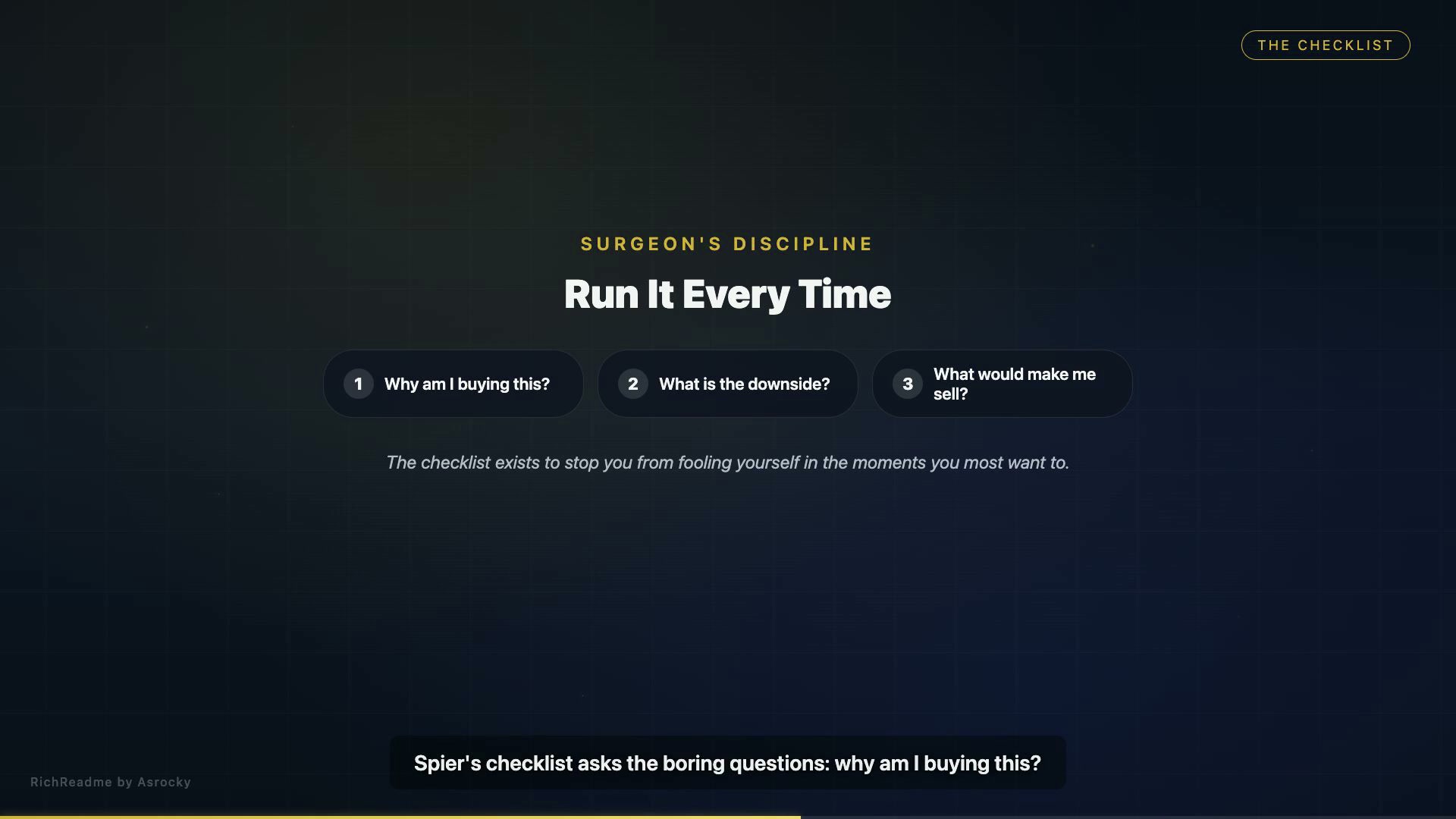
He built an investor's checklist modeled on a surgeon's, because surgeons work the same way. Before every operation they run the checklist, every time, no exceptions. Spier's checklist asks the boring questions: why am I buying this?
What is the downside? What would make me sell? The checklist exists to stop you from fooling yourself in the moments when you most want to.
Integrity Is the Moat
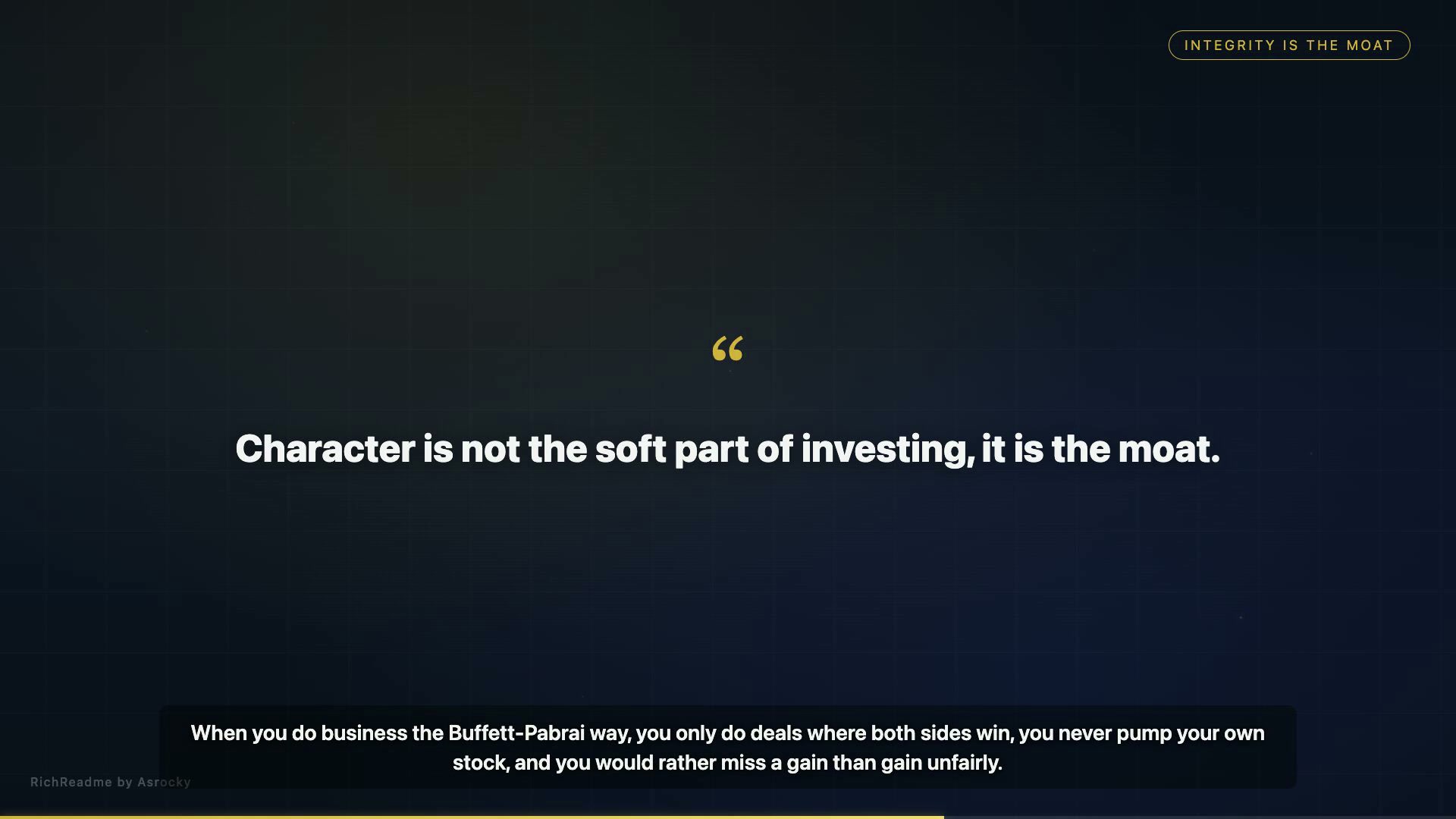
His deepest theme is integrity as an investment tool. When you do business the Buffett-Pabrai way, you only do deals where both sides win, you never pump your own stock, and you would rather miss a gain than gain unfairly. That reputation becomes an asset that compounds, because people want to deal with you. Character is not the soft part of investing, it is the moat.
The Mind Games
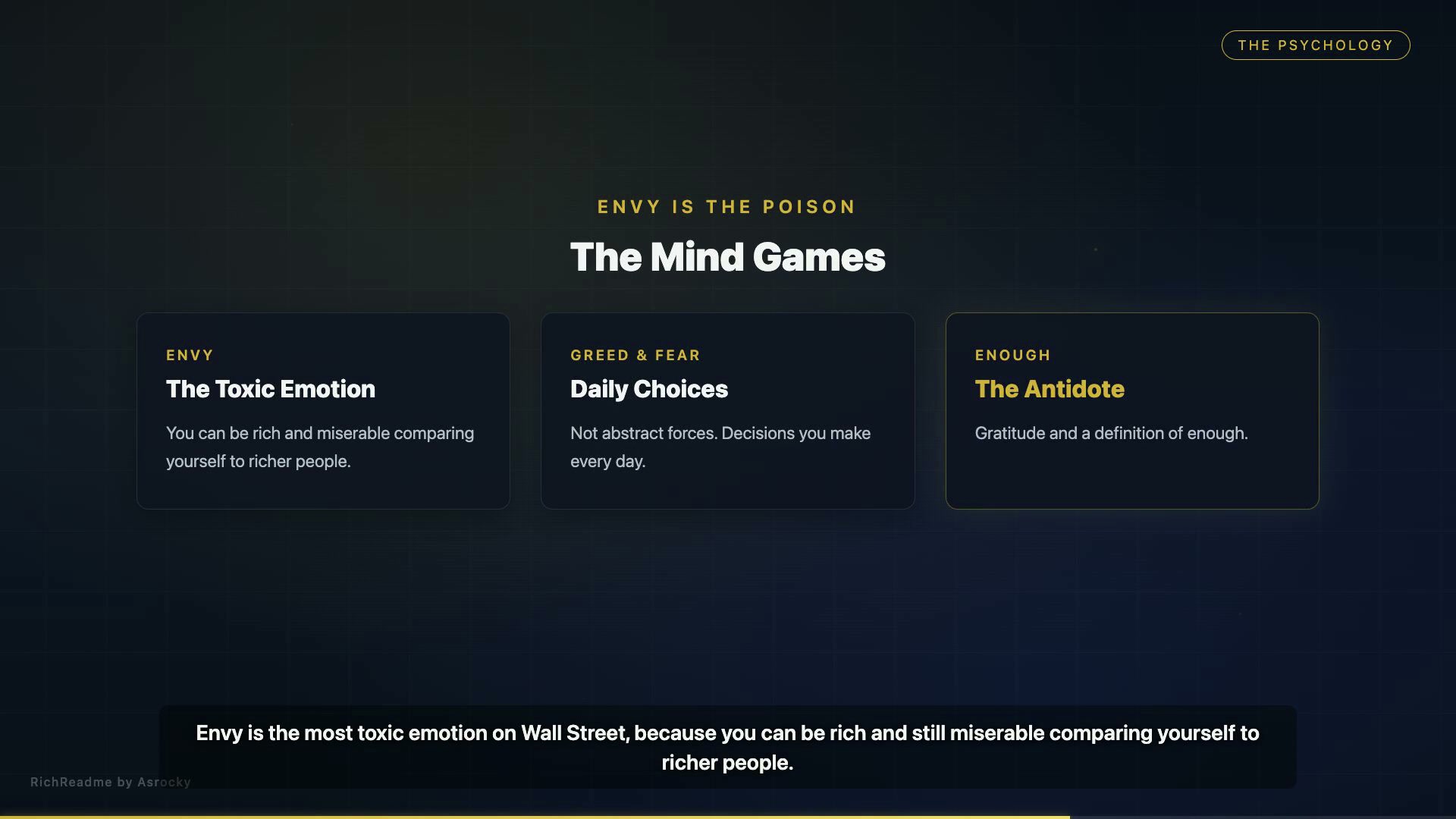
And he is brutally honest about psychology. Envy is the most toxic emotion on Wall Street, because you can be rich and still miserable comparing yourself to richer people. Greed and fear are not abstract forces, they are daily choices. The antidote is gratitude, and a definition of enough.
The Investor's Path
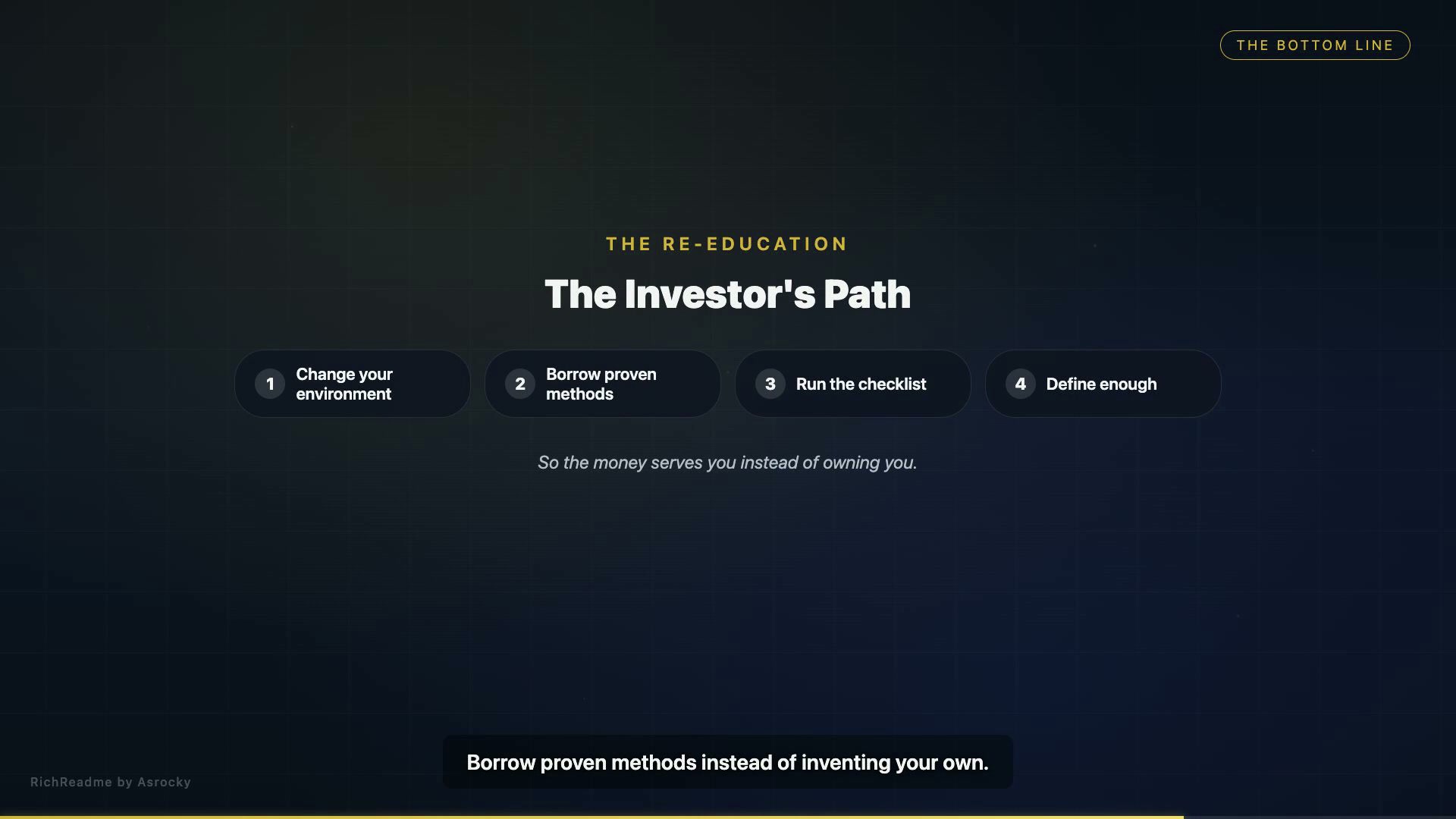
So the education is really a re education. Change your environment. Borrow proven methods instead of inventing your own.
Run a checklist so you cannot fool yourself. Build a reputation you can compound. And define enough so the money serves you instead of owning you.