Your business owns you? Most owners are trapped technicians. Build a company that runs without you.
This is The E-Myth Revisited by Michael Gerber, the classic that has helped millions of small business owners escape the trap they created. Gerber has worked with thousands of companies, and he argues that most small businesses do not fail for lack of talent or hard work. They fail because the owner is busy doing the work instead of building the business. The result is a company that cannot function without them, no matter how many hours they put in.
Free for About a Week
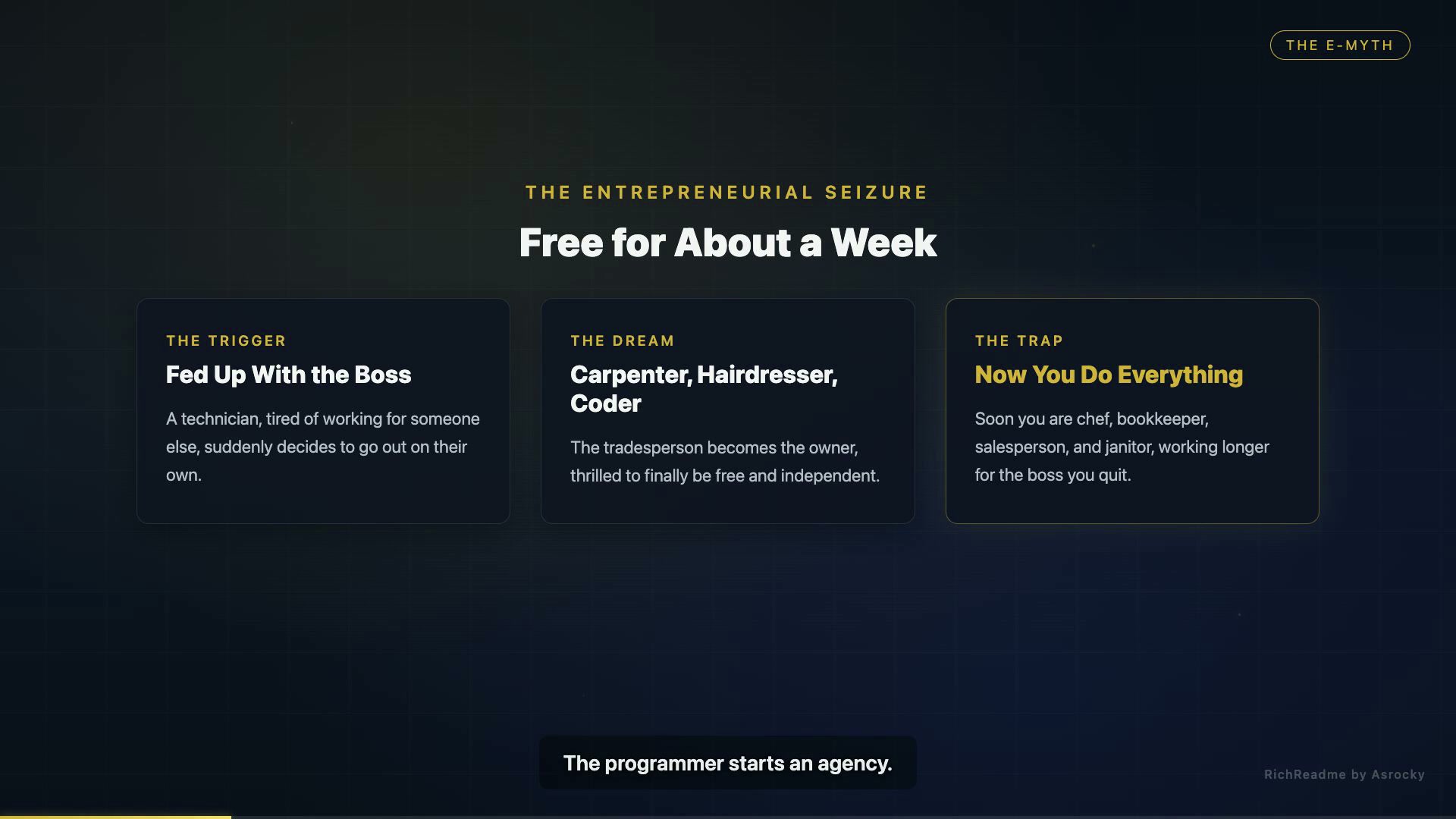
The core idea is the entrepreneurial seizure. A technician, fed up with working for a boss, suddenly decides to go out on their own. The carpenter becomes a contractor. The hairdresser opens a salon.
The programmer starts an agency. They are excited to be finally free. But that freedom lasts about a week. Suddenly the owner is the chef, the bookkeeper, the salesperson, and the janitor, all at once, working longer hours for the boss they just quit.
The Fatal Assumption
The fatal assumption they make is simple: if you understand the technical work, you understand the business that does that work. Gerber says this is false. The technical work and the business are two completely different things.
Knowing how to cut hair beautifully is not the same as knowing how to run a salon that runs without you. In fact, knowing the trade too well becomes a liability, because it makes you want to do the work yourself forever instead of building a system that does it.
Most Owners Are Stuck in One
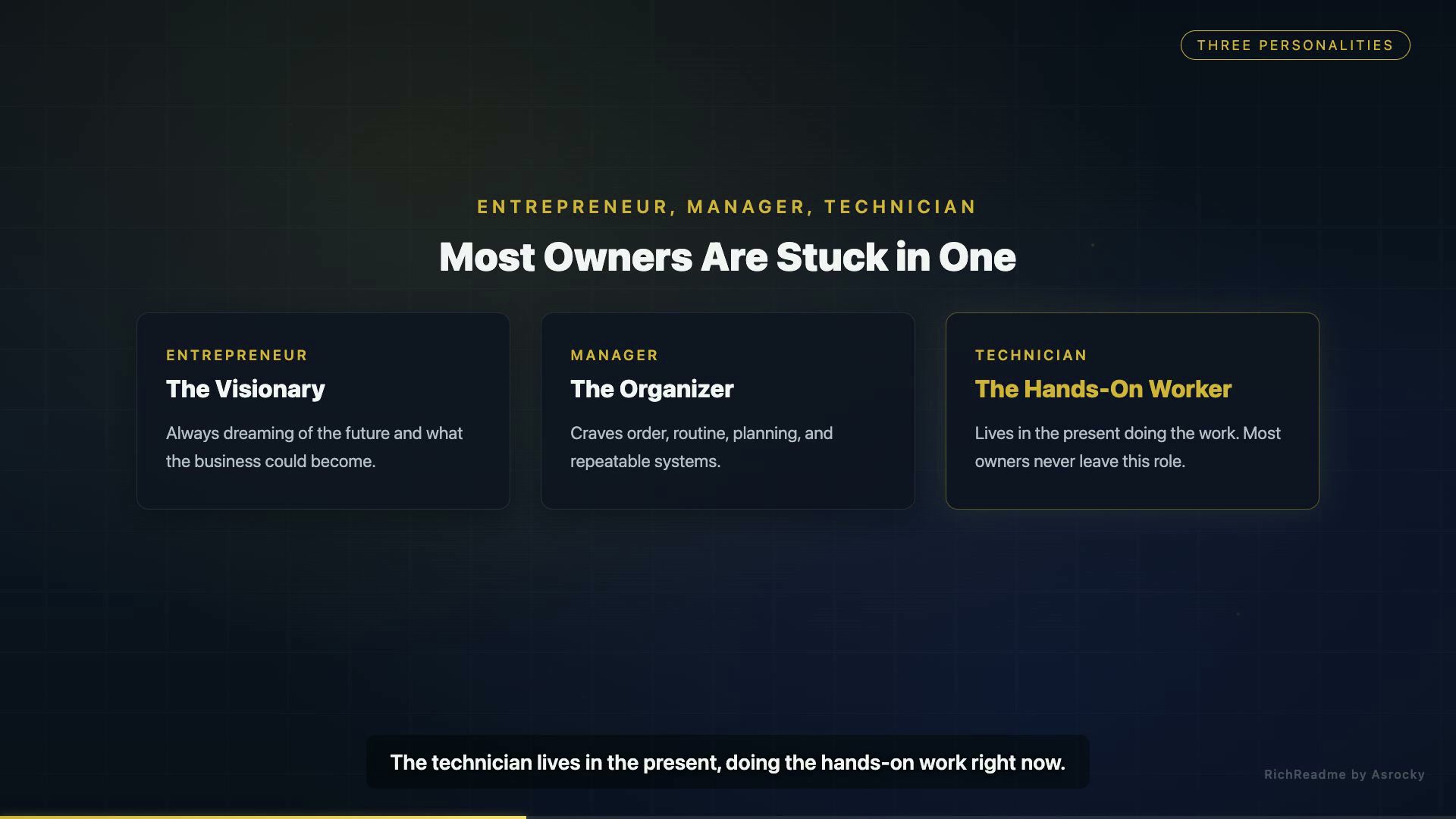
Inside every owner are three personalities. The entrepreneur is the visionary, always dreaming of the future and what could be. The manager craves order, routine, planning, and systems. The technician lives in the present, doing the hands-on work right now.
Most owners are stuck almost entirely in the technician. They work harder and harder inside the business, while the entrepreneur and the manager never show up. That imbalance is why so many small companies burn out their founders.
The Goal Is Maturity
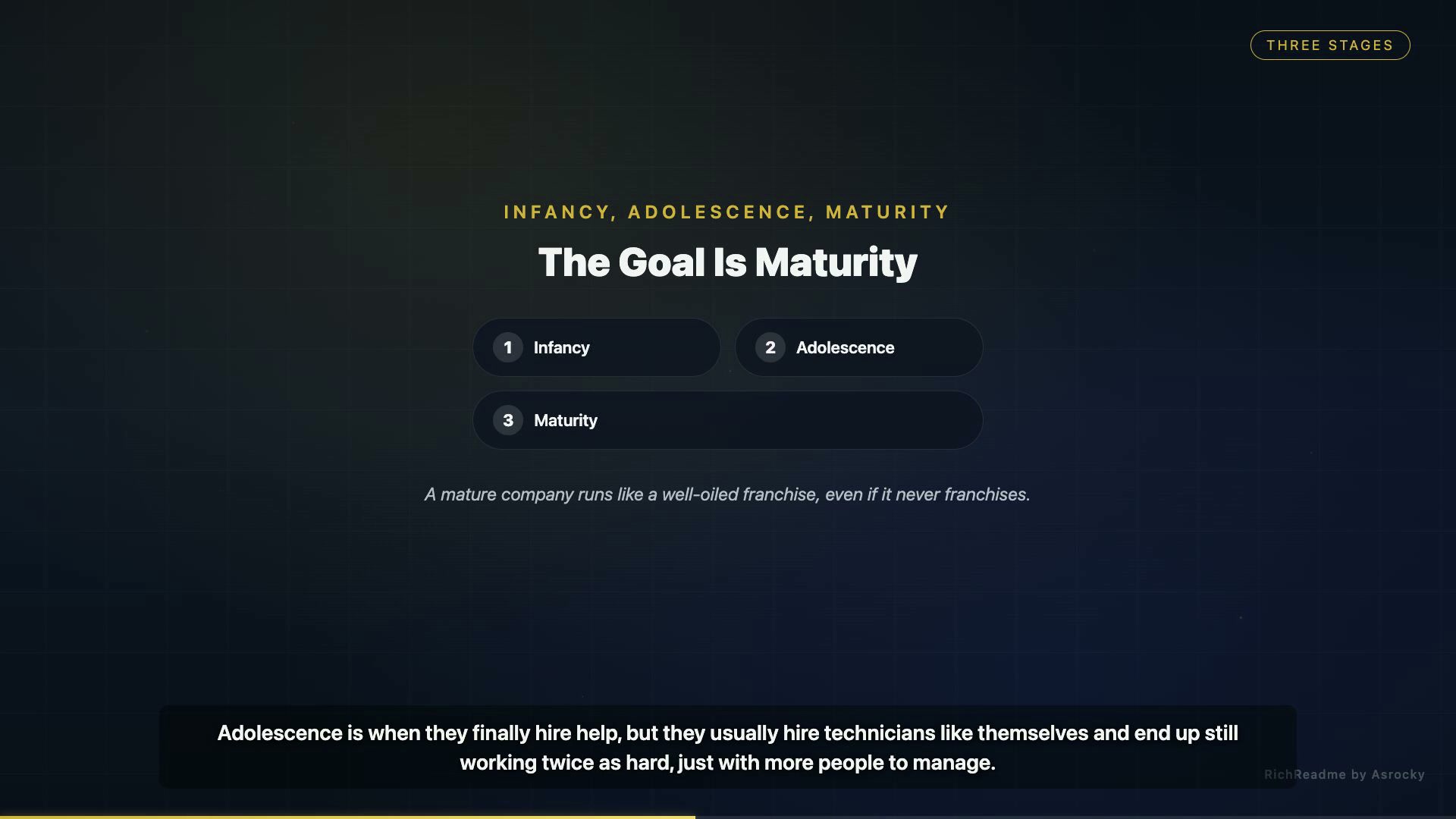
Every business passes through three stages. Infancy is when the technician does everything. If the owner gets sick or takes a day off, the business stops making money.
Adolescence is when they finally hire help, but they usually hire technicians like themselves and end up still working twice as hard, just with more people to manage. The real goal is maturity, where the owner works on the business rather than in it, with a balanced mix of all three personalities. A mature company runs like a well-oiled franchise, even if it never franchises a single unit.
Build It to Run Without You
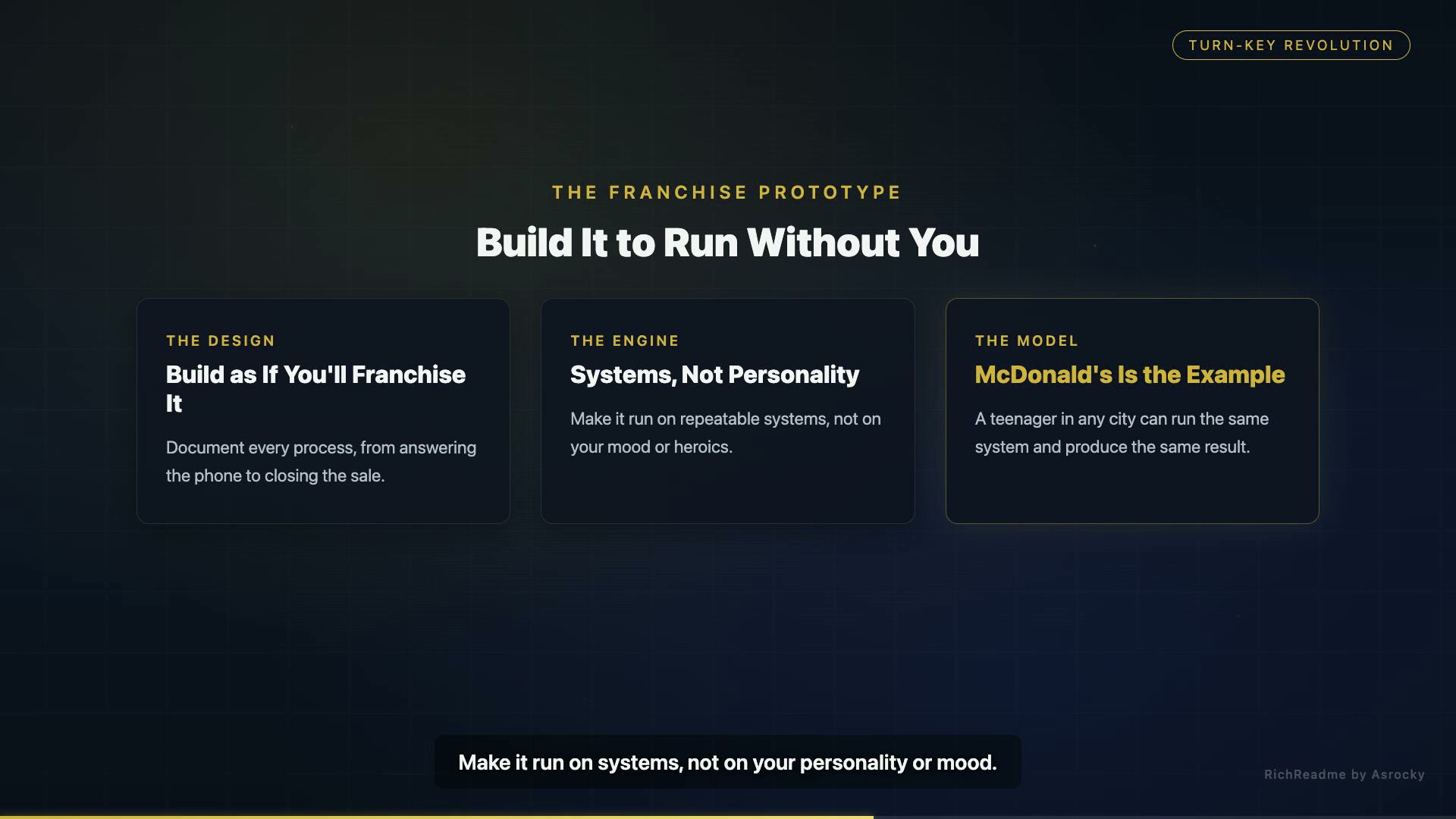
Gerber's prescription is the turn-key franchise prototype. Build your business as if you were going to franchise it and sell it to a stranger. Document every process, from answering the phone to closing a sale. Make it run on systems, not on your personality or mood.
Design it so it could survive and even thrive without you showing up. That is the difference between a job you bought and a company you actually own. McDonald's succeeded not because it makes the best burger, but because a teenager in any city can run the same system and produce the same result.
The Shift
The shift is powerful. Instead of being the best technician in the shop, you design the shop. You write clear systems for sales, operations, hiring, and customer service.
You make the business predictable and repeatable, so anyone you train can deliver the same result. Then it can grow without slowly killing you. A system, Gerber says, is the edge that allows an ordinary person to produce an extraordinary result consistently.
Primary Aim
He also insists you start with why, not how. Before writing a single system, define your primary aim: what do you really want your life to look like? Then build the business backward from that life, not forward from the task in front of you.
Most owners start with the work and end up with a life they never chose. Gerber warns that a business without a clear primary aim will simply grow until it consumes you, no matter how profitable it becomes.
Work On It, Not In It
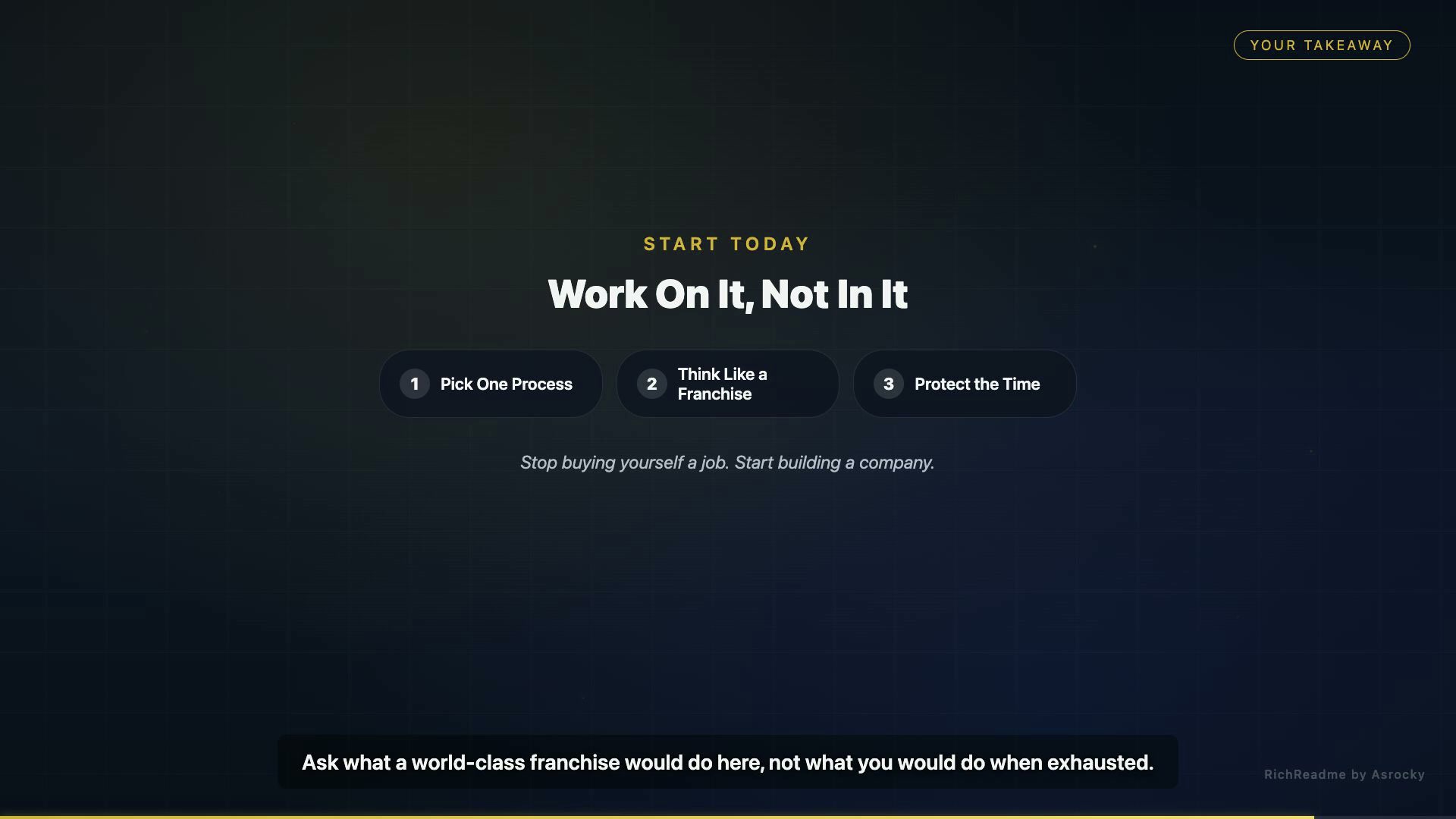
So how do you start? First, stop doing every technical task yourself. Pick one repeated process and write it down as a clear, repeatable system.
Ask what a world-class franchise would do here, not what you would do when exhausted. And protect a few hours every week to work on the business, even when the day-to-day work is screaming for you. Over time those hours compound into a company that no longer depends on your hands.