Born with charisma? Think again. It is not a gift. It is a skill, and anyone can learn it.
This is The Charisma Myth by Olivia Fox Cabane, the practical guide that breaks charisma down into learnable behaviors.
The Core Claim
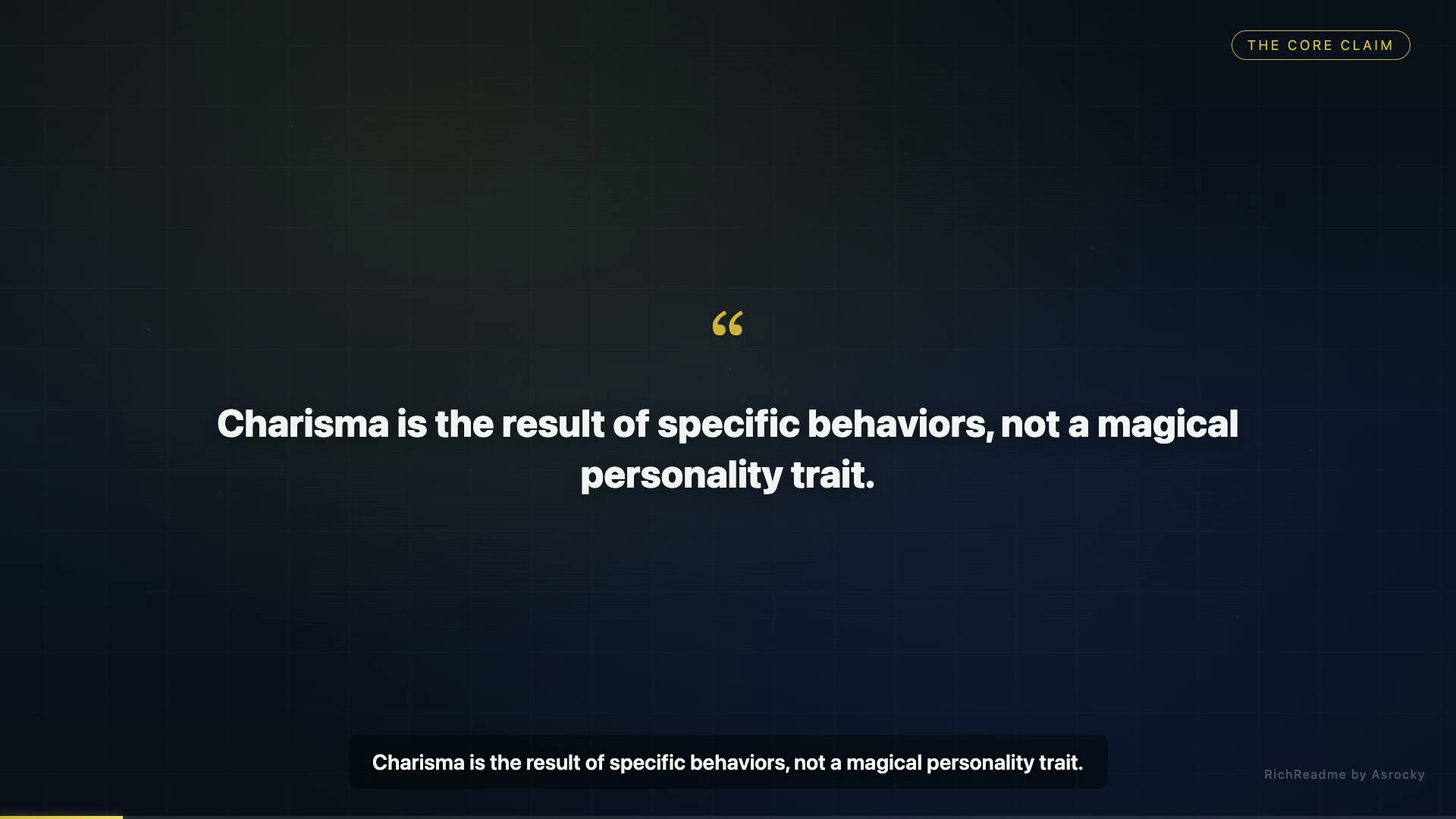
Cabane worked with executives, celebrities, and Silicon Valley founders, and her core claim is simple. Charisma is the result of specific behaviors, not a magical personality trait. Change the behaviors, and you change how people experience you.
The Eye-Color Trick
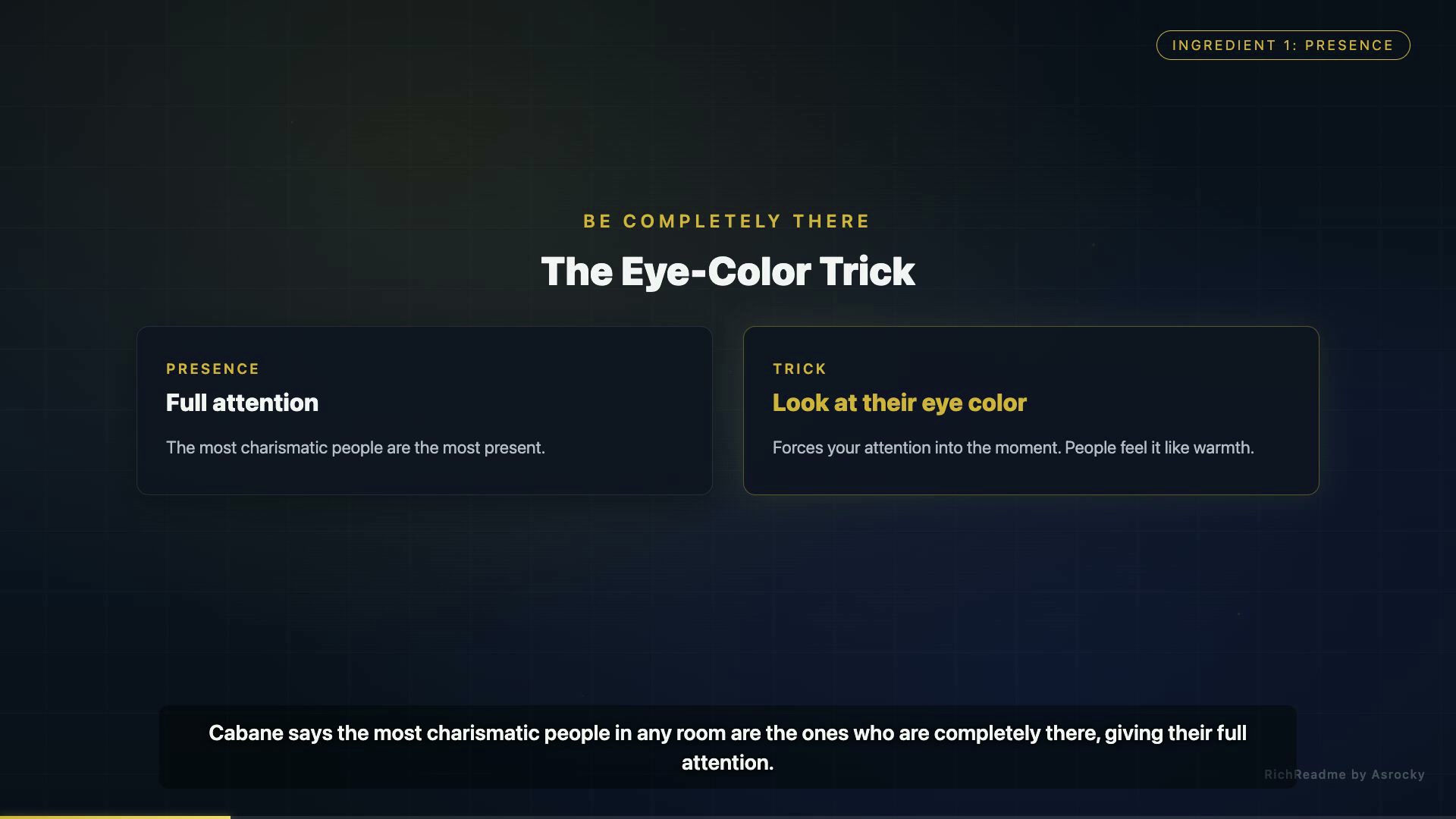
The first ingredient is presence. You cannot be charismatic while your mind is elsewhere. Cabane says the most charismatic people in any room are the ones who are completely there, giving their full attention.
One powerful trick is to look at someone's eye color for a few seconds when you meet them. It forces your attention into the moment, and people feel that attention like warmth.
Feel It Before You Show It
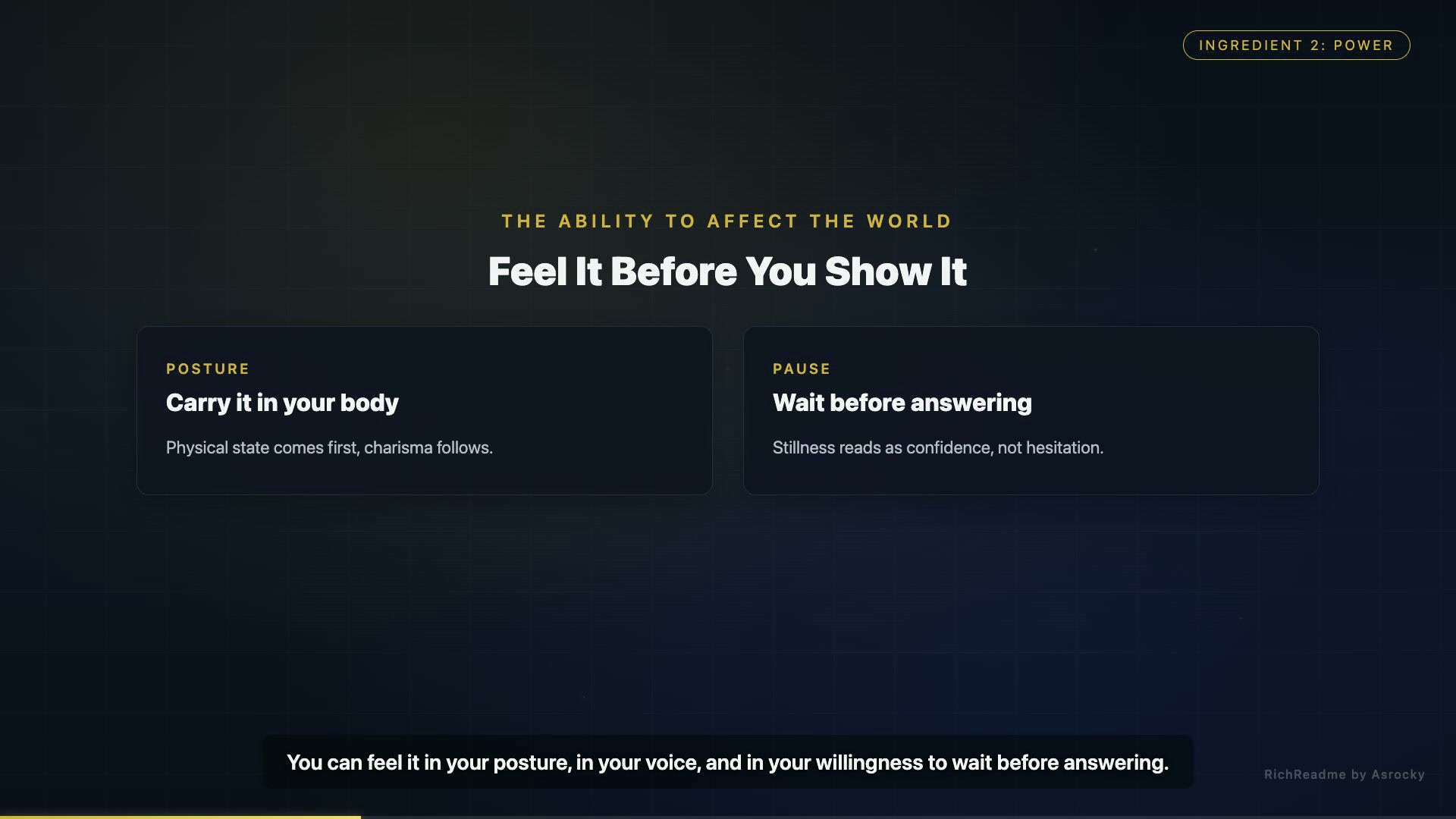
The second ingredient is power. Power is the ability to affect the world around you. You can feel it in your posture, in your voice, and in your willingness to wait before answering.
One of the fastest ways to feel powerful is to recall a time when you felt strong and confident, and let that memory change your body. The physical state comes first, and the charisma follows.
Ingredient 3: Warmth
The third ingredient is warmth. Warmth is not about being nice. It is about conveying that you like people and you wish them well.
Cabane's practical advice is to assume positive intent, and to give people the benefit of the doubt. When you genuinely care, it shows in micro-expressions that no amount of acting can fake, so the fastest route to warmth is actually feeling it.
Switch Between Them
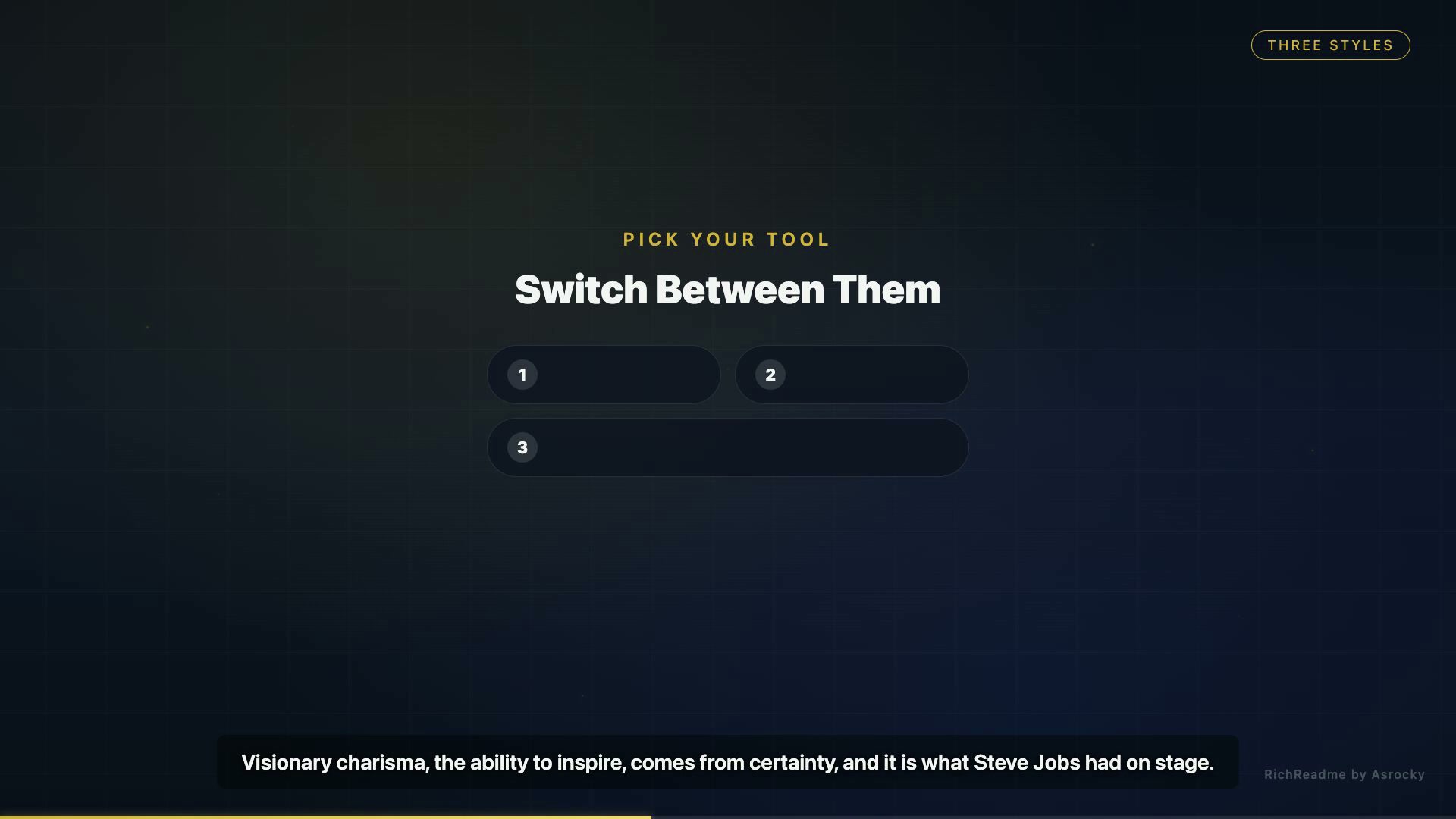
Now mix the ingredients and you get three styles. Focused charisma, the laser-like attention that makes people feel like the only person in the room, is the most powerful for everyday life. Visionary charisma, the ability to inspire, comes from certainty, and it is what Steve Jobs had on stage.
Kindness charisma is warmth alone, approachable and reassuring. And authority charisma is power alone, respected but distant. Each is a tool, and you can switch between them.
Strength Hides, Vulnerability Connects
Cabane's biggest surprise is vulnerability. We are trained to hide weakness, but well-placed vulnerability builds trust faster than strength does. Admitting a flaw, sharing a struggle, or asking for help signals safety, and it makes you more human.
The rule is simple: only expose vulnerability that is real, and only when it does not undermine your competence. A leader who admits a mistake is magnetic. A leader who cries about everything is not.
Calmness Reads as Confidence
One of her most useful techniques is lowering the stakes. When you enter a high-pressure situation, tell yourself it is not actually that important. Charismatic people treat big moments like casual conversations, and that calmness reads as confidence. You can also lower expectations in a room by acknowledging the elephant, naming the awkward thing out loud, which makes everyone relax.
The Inner Critic
There is also a mental skill: rewiring your inner critic. Charisma is destroyed by self-judgment, because harsh self-talk shows up in your face and voice. Cabane recommends replacing harsh self-criticism with compassion, treating yourself like you would treat a friend, because the way you feel about yourself is transmitted to everyone around you.
The Pattern
So the pattern is simple. Presence brings people into the moment with you. Power gives you the gravitas. Warmth makes you approachable. And vulnerability, used well, builds deep trust.
None of it depends on genetics. It depends on practice, and the practice compounds, because every successful interaction makes the next one easier. The myth is that some people have it and some do not. The truth is that charisma is a set of skills, and skills are learned. Start with presence tonight, add warmth tomorrow, and the people around you will start to feel the difference before you do.