What if you got paid every month while an asset paid itself off and grew around you? That is what a good rental property does.
This is The Book on Rental Property Investing, by Brandon Turner of BiggerPockets. Turner argues that rental real estate is one of the most reliable ways an ordinary person can build lasting wealth, not because it is glamorous, but because it quietly does several valuable things at the same time.
Four Wealth Generators at Once

A rental property has what Turner calls four wealth generators, and this is the core of why it works. First is cash flow, the money left in your pocket each month after every bill is paid. Second is appreciation, the slow rise in the property's value over the years. Third is the loan being paid down, because your tenant's rent is quietly paying off your mortgage for you.
Fourth is the tax benefits, which shelter much of that income. Most investments give you one of these. A good rental gives you all four at once.
Cash Flow Is King

Of the four, cash flow is king, and this is the rule that protects beginners. Some speculators buy a property hoping only that it will rise in price, which means they lose money every month while gambling on the future. Turner refuses that model.
He wants the property to pay you from day one, so that even if prices stall for years, you never have to sell in a panic. Positive cash flow turns a scary, leveraged asset into a calm, long term holding that survives every market.
You Make Money When You Buy

That leads to a second rule, you make your money when you buy. Most beginners assume the profit comes from waiting and hoping. In reality, the deal is won or lost at the purchase price.
Buy below what the property is genuinely worth, in an area people want to live, and the rest of the journey is forgiving. Overpay in a rush, and no amount of good management or rising rent can fully rescue you. Patience in finding the right deal matters more than cleverness afterward.
The Five Keys in Order

Turner organizes the whole process into five keys. The first is having a real plan, knowing what you want and how many properties it will take, instead of wandering. The second is assembling a team, because no one does this alone. The third is finding good deals.
The fourth is analyzing them accurately with real numbers. The fifth is managing them well, or hiring someone who will. Follow the five keys in order, and a beginner can avoid the mistakes that wipe out the impatient.
Nobody Does It Alone

The team deserves emphasis, because real estate is a team sport. You will likely work with an agent who understands investors, a lender, an inspector, an insurance person, a title or escrow officer, a handyman or contractor, and possibly a property manager and a tax advisor. A great team does not cost you money. It saves you from the expensive errors that come from guessing, and the best investors spend real effort finding experienced people who have already done what they are trying to do.
Look Beyond the Obvious Listings

Finding deals is where many people get stuck waiting for the perfect listing. The obvious properties on the market are priced for competition, so investors learn to look beyond them, through motivated sellers, wholesalers, tired landlords, probate situations, and simple marketing that lets owners find them. There are almost always good deals in any market. The difference is that serious investors treat finding them as an ongoing habit, not a single weekend of searching before giving up.
Analyze Without Emotion

Once you find a property, you have to analyze it coldly, and this is where simple rules help. You estimate the income, subtract every realistic expense, from taxes and insurance to maintenance and vacancies, and see what cash is truly left. Rules of thumb exist to quickly test a deal, but they never replace running the actual numbers for that exact property. The investors who fail here are usually the ones who undercounted expenses because they were emotionally attached and wanted the answer to be yes.
Sort the Money Early

Financing is the next hurdle, and there are more paths than beginners realize. There are conventional loans, loans backed by the government, house hacking where you live in one unit and rent the others, private money, and partnerships. The right choice depends on your savings, your income, and your plan, which is why financing should be understood early, before you fall in love with a property you cannot actually close on. Getting your finances in order first makes every later offer stronger.
Due Diligence Before Closing
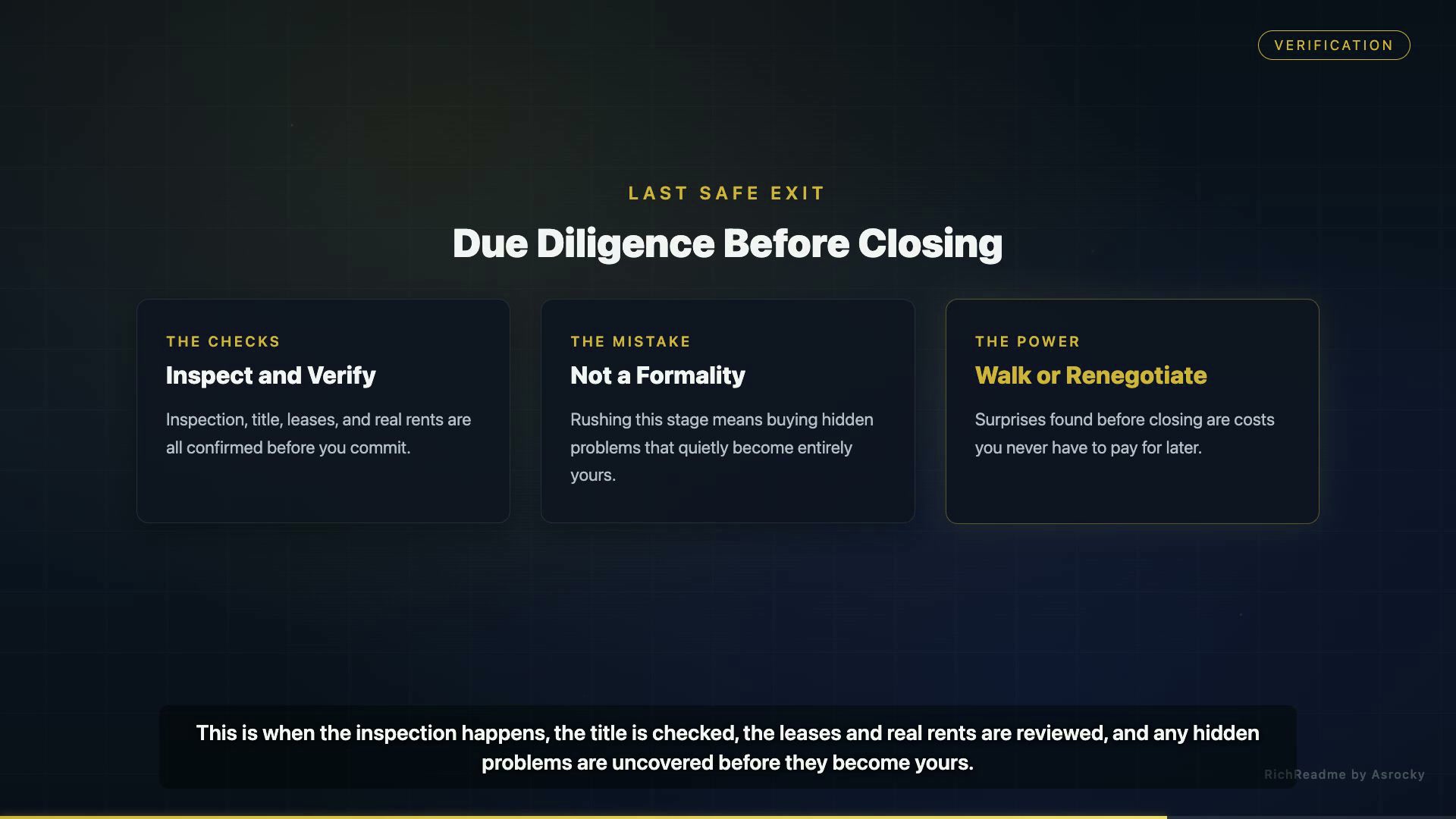
Then comes due diligence, the period between offer and closing where you verify everything. This is when the inspection happens, the title is checked, the leases and real rents are reviewed, and any hidden problems are uncovered before they become yours. Beginners sometimes treat this stage as a formality and rush through it, but it is your last chance to walk away or renegotiate. Every unpleasant surprise found before closing is a problem you do not have to pay for later.
Screen Tenants Like Your Money Depends on It

After closing, the long game is management, and the single most important skill is tenant screening. A reliable tenant who pays on time and treats the home well makes the whole business easy. A poorly chosen tenant can cost months of rent, damage, and stress.
This means verifying income, checking references and history, and applying the same fair standards to everyone. Beyond screening, good management is mostly boring and steady, quick repairs, clear leases, calm communication, and consistent systems that treat the property as a business, not a favor.