Every dollar you own is quietly shrinking. Since 1913 the dollar has lost over 95% of its purchasing power.
This is The Bitcoin Standard, by Saifedean Ammous. His argument is not that bitcoin is a get-rich-quick ticket. It is that money itself is a technology, and for five thousand years the best money was the one that hardest to make more of. Governments broke that system in 1971, and bitcoin, for the first time in history, rebuilt it in purely digital form, with no vault and no ruler.
Money Carries Value Through Time
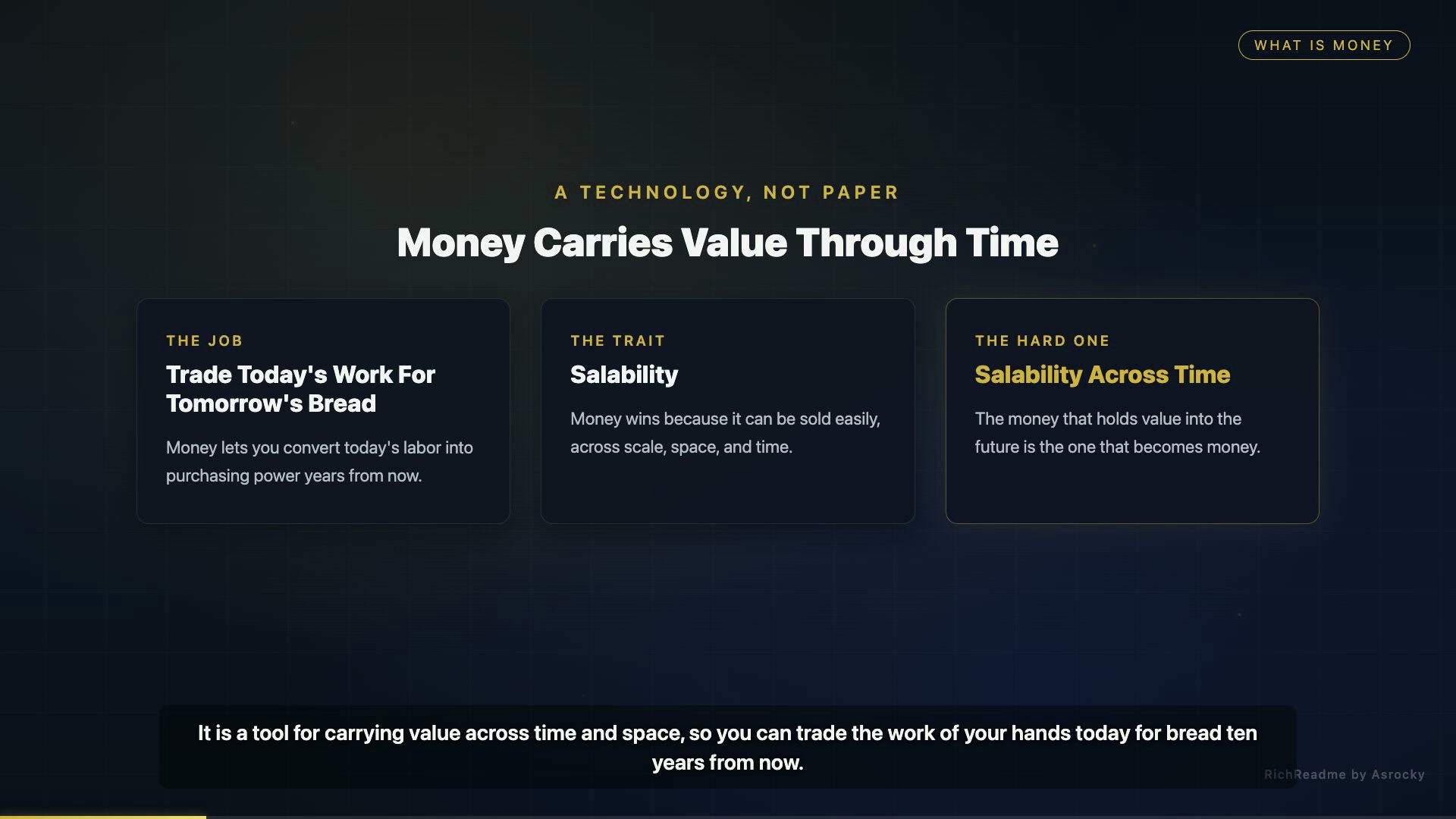
Start with what money actually is. Ammous says money is not paper or coins. It is a tool for carrying value across time and space, so you can trade the work of your hands today for bread ten years from now.
The property that separates money from other goods is salability, how easily it can be sold. And the hardest kind of salability, the kind that decides what becomes money, is salability across time, the ability to hold value for the future.
The Easy Money Trap
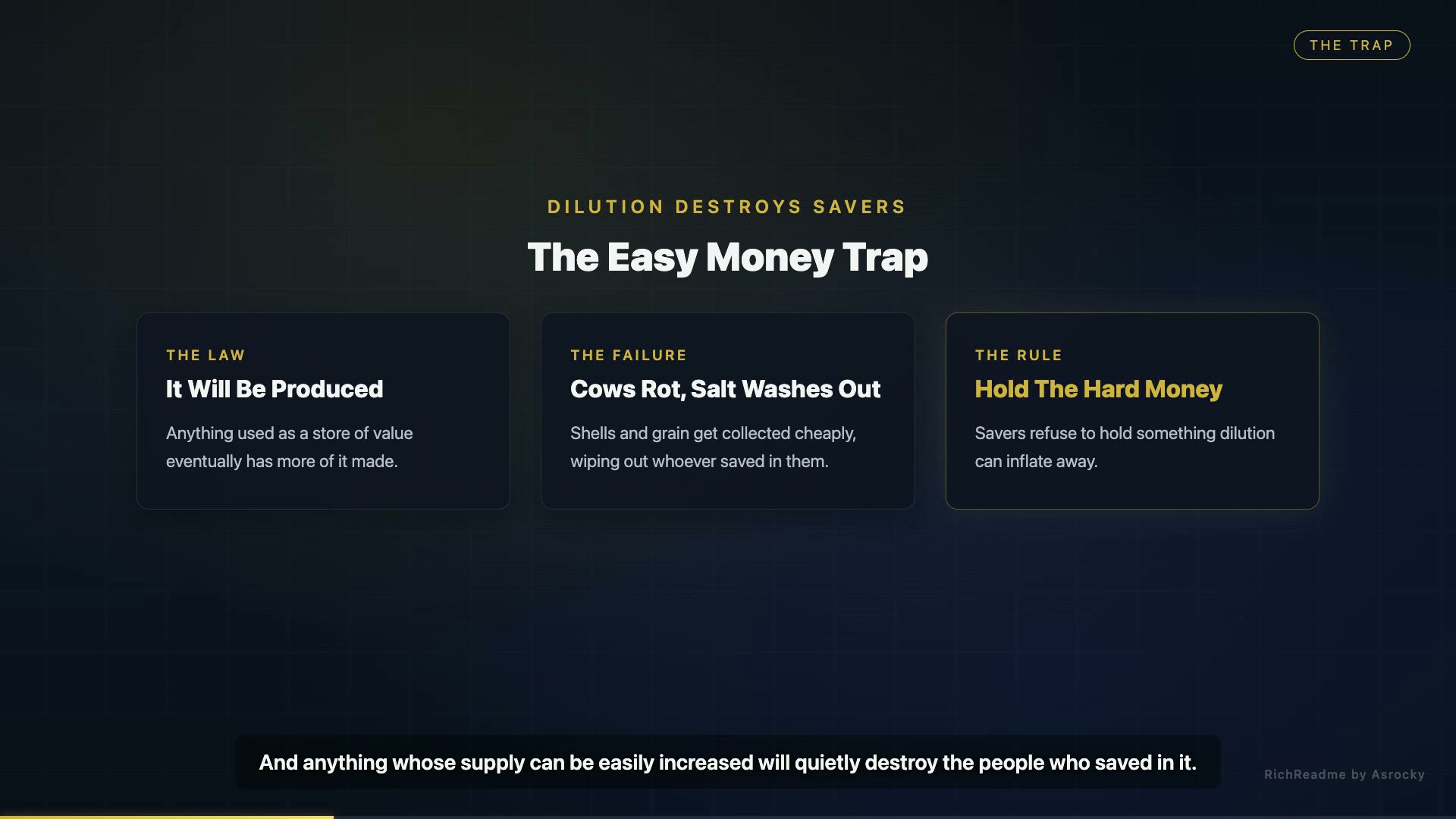
That is where the easy money trap comes in. Ammous states it as a cold law: anything that people use as a store of value will eventually have more of it produced. And anything whose supply can be easily increased will quietly destroy the people who saved in it. Cows rot.
Salt washes out. Shells get collected by the bag. The winning money throughout history was always the one you could not cheaply make more of, because savers refuse to hold something that dilution can inflate away.
Why Gold Won For Millennia

Gold won that contest for two thousand years, not by law but by its stock-to-flow ratio. The gold already above ground is many times the gold mined each year, so doubling the supply is physically impossible. You cannot counterfeit gold into oblivion.
This is why empires debased their coins secretly, shaving the edges and mixing in cheaper metal, rather than printing openly. Sound money was a check on government itself, and governments hated it.
The Day Money Broke
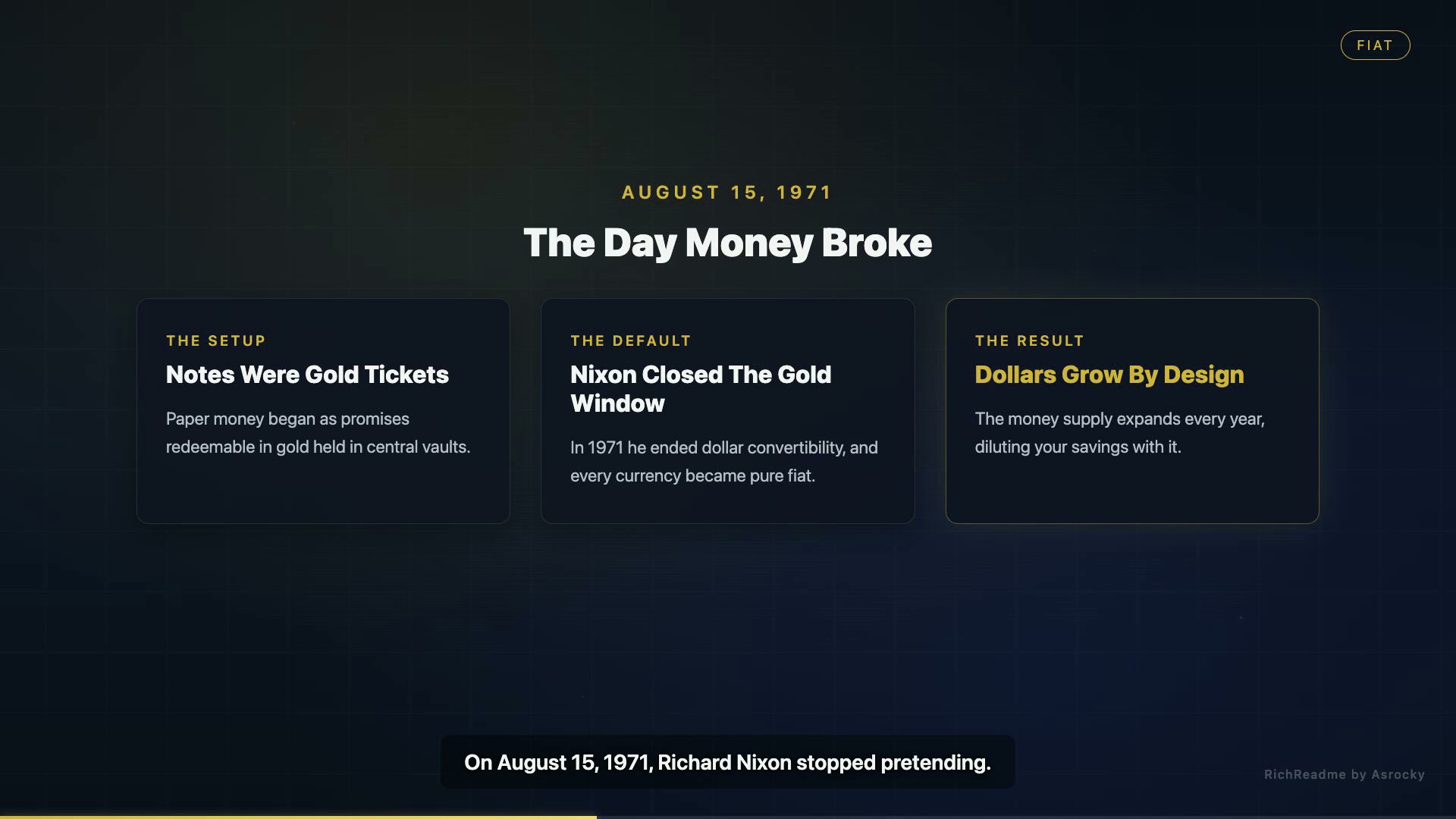
Then governments captured the money. Paper notes began as promises redeemable in gold, but once the gold sat in central bank vaults, the issuers found they could print more tickets than gold. On August 15, 1971, Richard Nixon stopped pretending.
He ended the dollar's convertibility to gold, and every major currency became pure fiat, backed by nothing but the tax authority of the state. Since then, the supply of dollars grows every year, by design, and your savings are diluted with it.
Inflation Raises Your Impatience
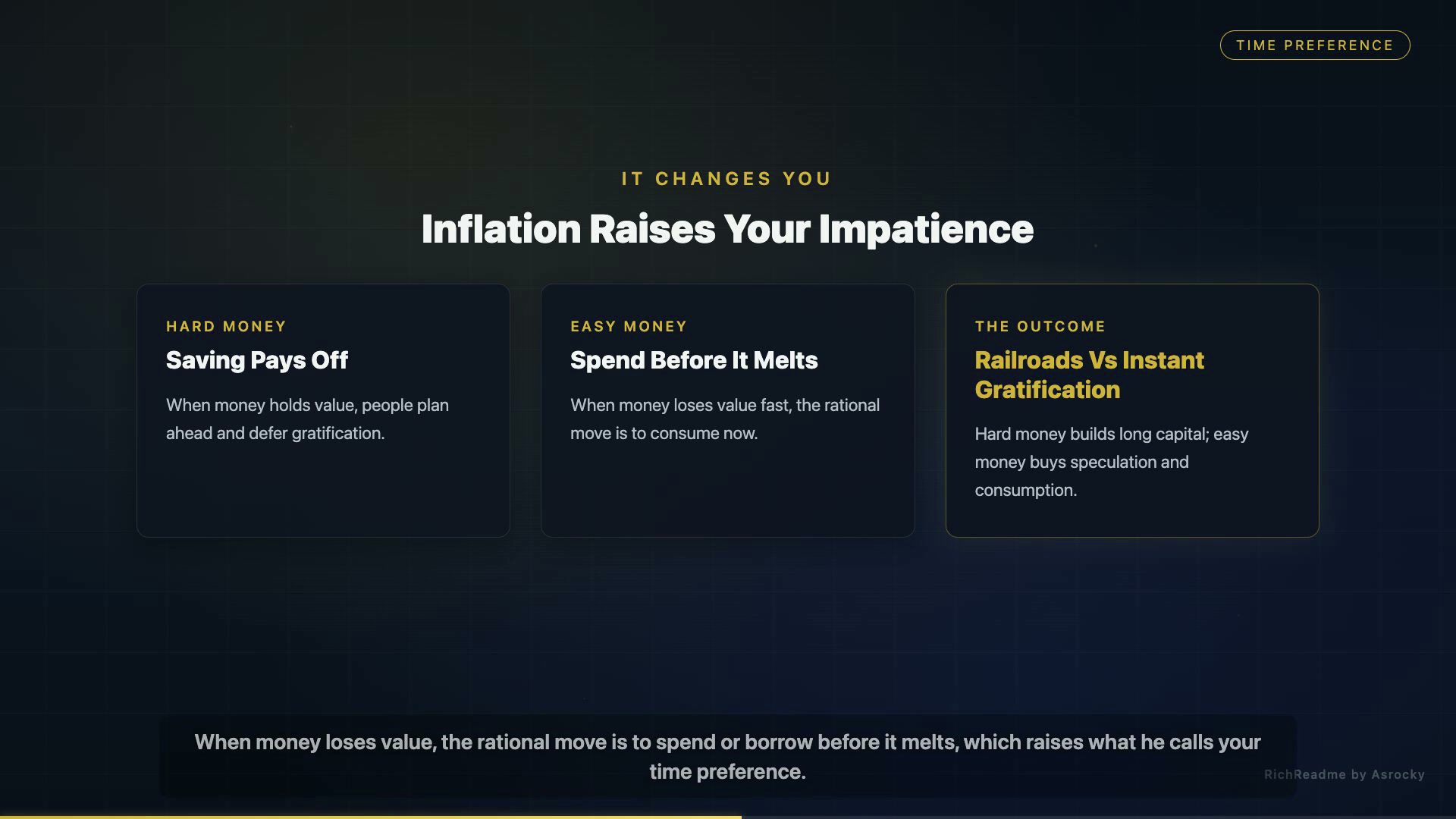
Ammous's deeper claim is that this does not merely steal your savings. It changes your character. When money holds its value, saving pays off, so people plan for the future, defer gratification, and build long-lived capital.
When money loses value, the rational move is to spend or borrow before it melts, which raises what he calls your time preference. An economy on hard money builds railroads and factories. An economy on easy money buys speculation, consumption, and instant gratification.
Central Banks Cause The Busts
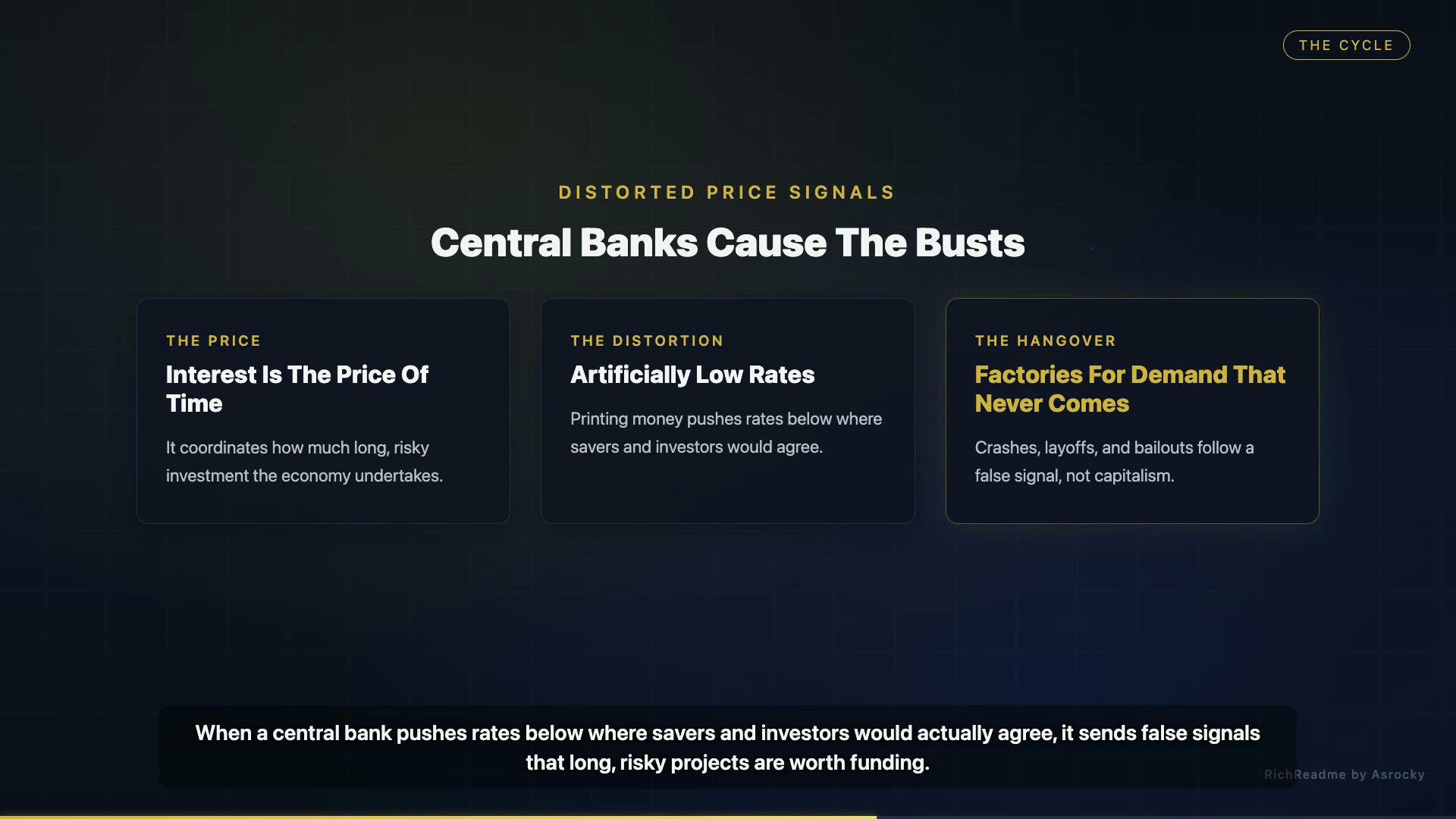
He also argues that interest rates are the price of time, and central banks have no business setting them. When a central bank pushes rates below where savers and investors would actually agree, it sends false signals that long, risky projects are worth funding. Businesses build factories for demand that never shows up.
The crash, the layoffs, and the bailouts that follow are not accidents of capitalism. They are the hangover from a distorted price signal.
Sound Money Limits Government
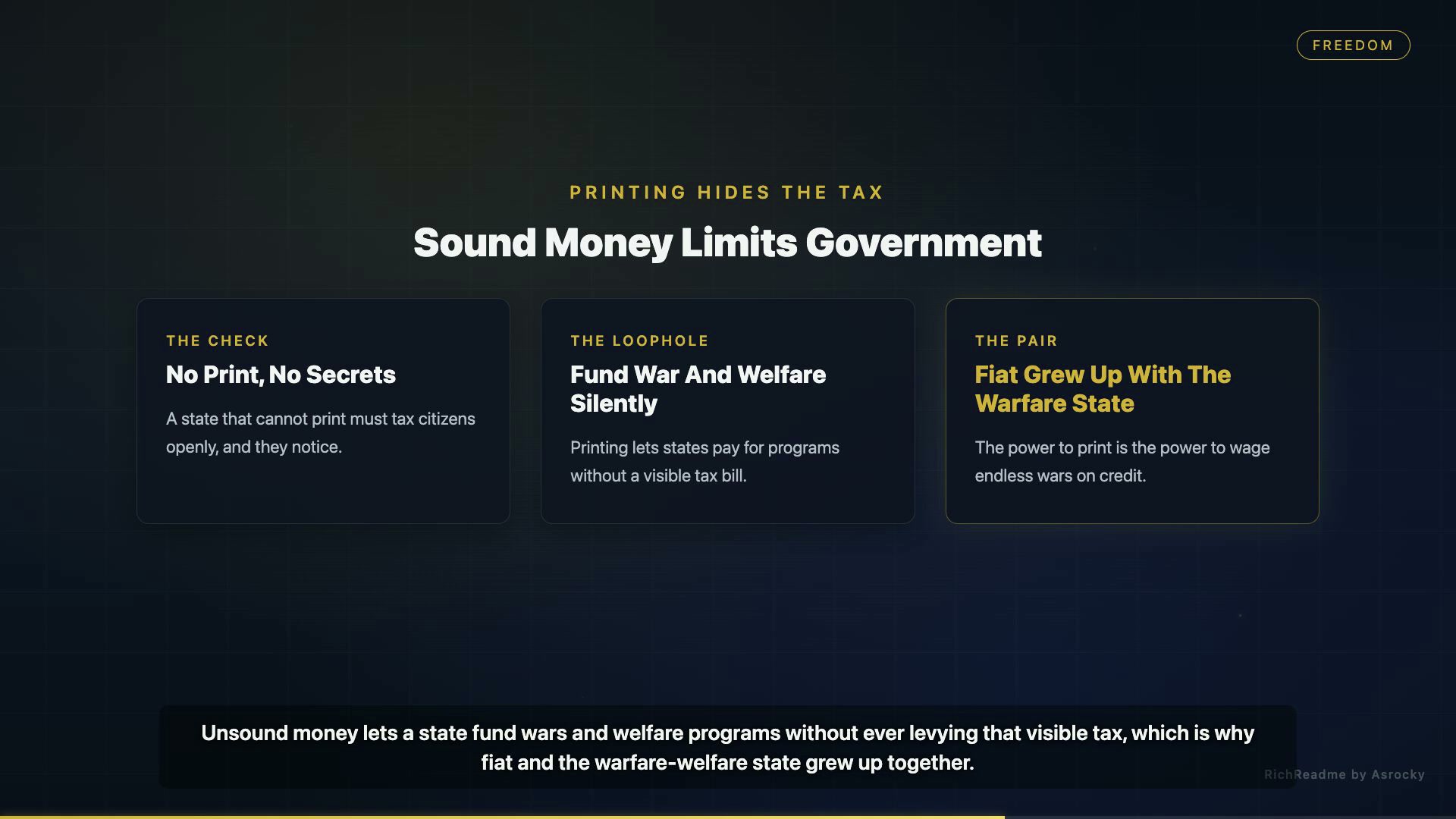
The political cost is just as high. Ammous shows that sound money limits government, because a state that cannot print must ask its citizens for taxes openly, and citizens notice. Unsound money lets a state fund wars and welfare programs without ever levying that visible tax, which is why fiat and the warfare-welfare state grew up together. The ability to print is the ability to wage endless wars and run perpetual deficits without paying the political price.
The 21 Million Cap
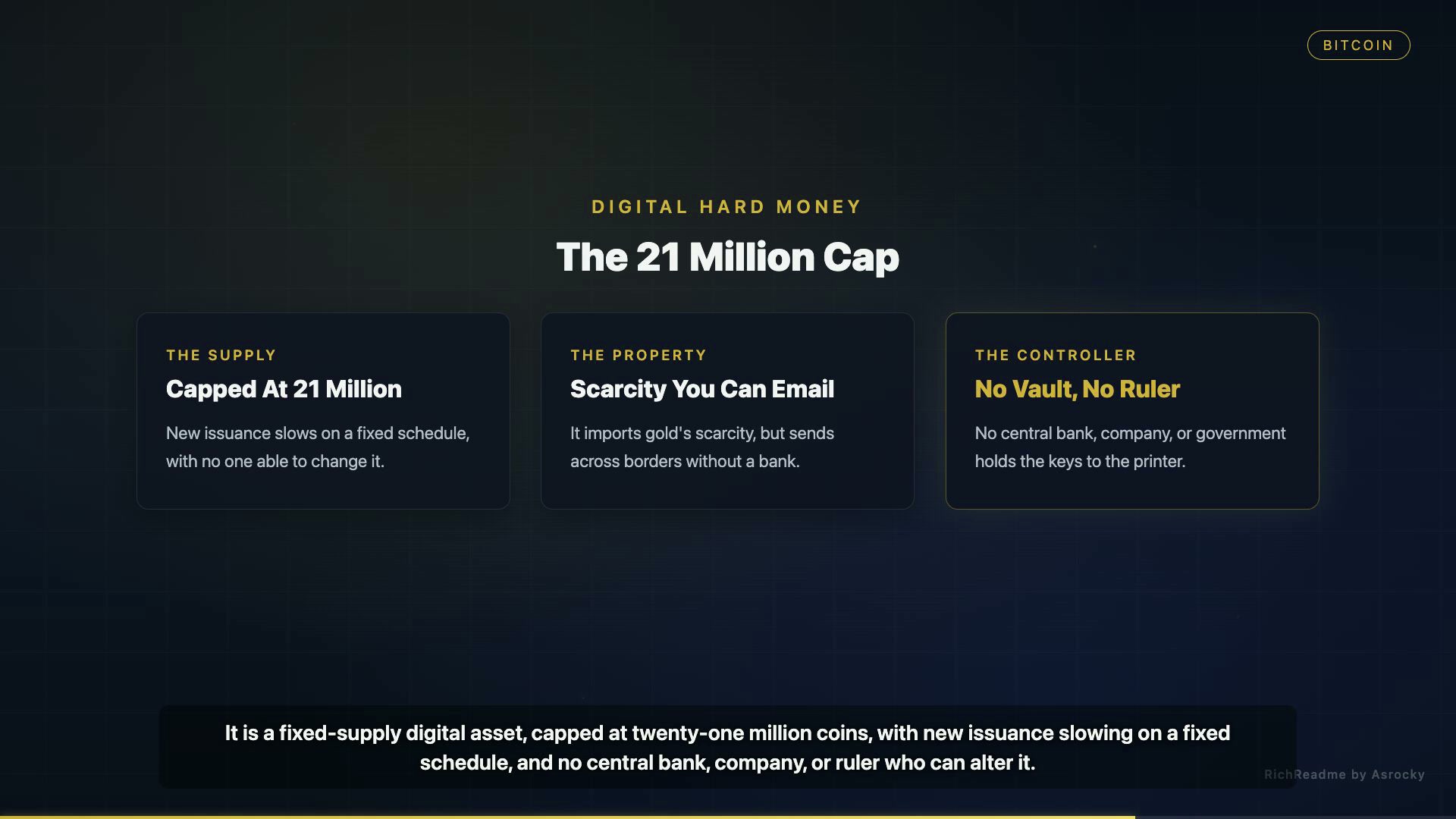
Bitcoin, he argues, fixes this at the protocol level. It is a fixed-supply digital asset, capped at twenty-one million coins, with new issuance slowing on a fixed schedule, and no central bank, company, or ruler who can alter it. It imports the one property gold had that fiat destroyed, scarcity across time, but adds the property gold lacked: you can send it across the world as easily as an email, without asking a bank or a border guard.
Store Of Value, Not A Stock
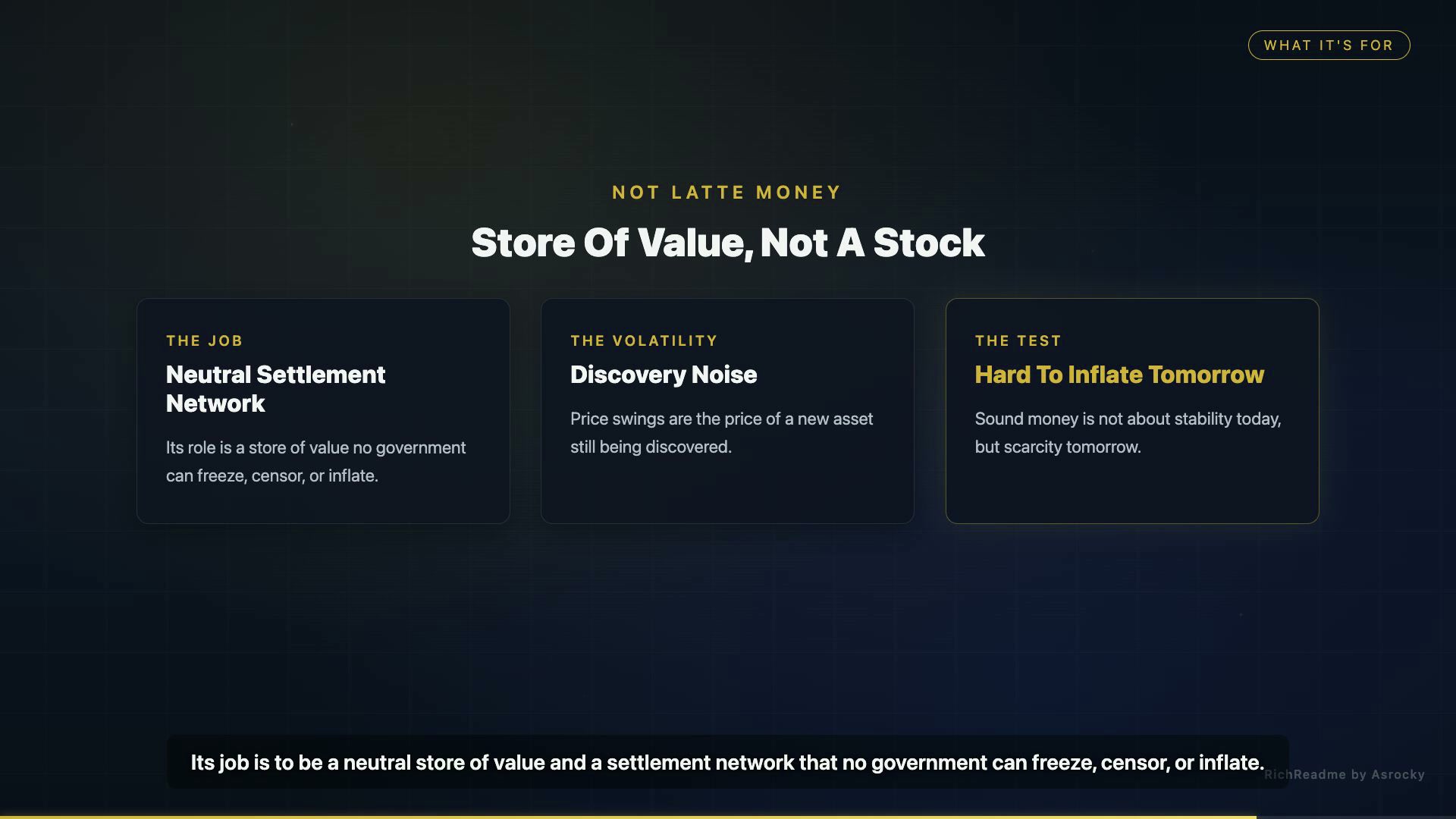
He is also clear about what it is not. It is not for spending lattes, and it is not a stock. Its job is to be a neutral store of value and a settlement network that no government can freeze, censor, or inflate.
Volatility is the price of a new asset still being discovered, not a flaw in the money. The test of sound money is not stability today. It is whether its supply remains hard to inflate tomorrow.
Which Money Will You Hold?

The book lands as a warning more than a promotion. If you understand that money is a technology of scarcity, and that the easiest money always destroys its savers, you stop asking whether bitcoin will go up. You start asking which money you want to hold when the printing accelerates again.