What if the market is always wrong? Everyone says it's efficient. One fund manager made billions betting against that idea.
This is The Alchemy of Finance by George Soros, the legendary investor who broke the Bank of England and ran the Quantum Fund for decades.
It's a Two-Way Loop
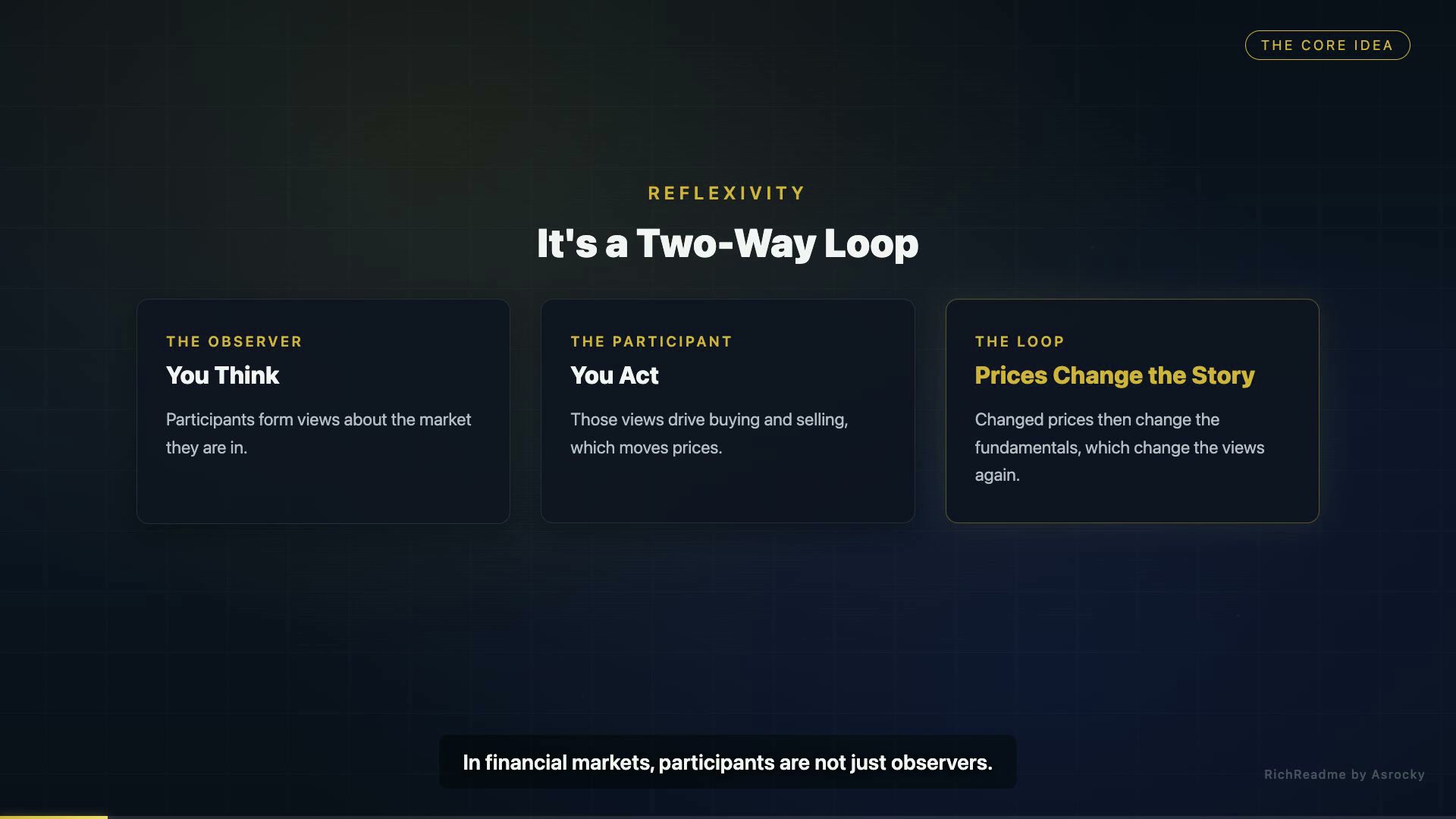
Soros starts with a simple but radical idea called reflexivity. In financial markets, participants are not just observers. They are participants.
Their thinking shapes the situation, and the situation shapes their thinking. It is a two-way feedback loop, not a one-way mirror.
Prices Don't Just Reflect Reality
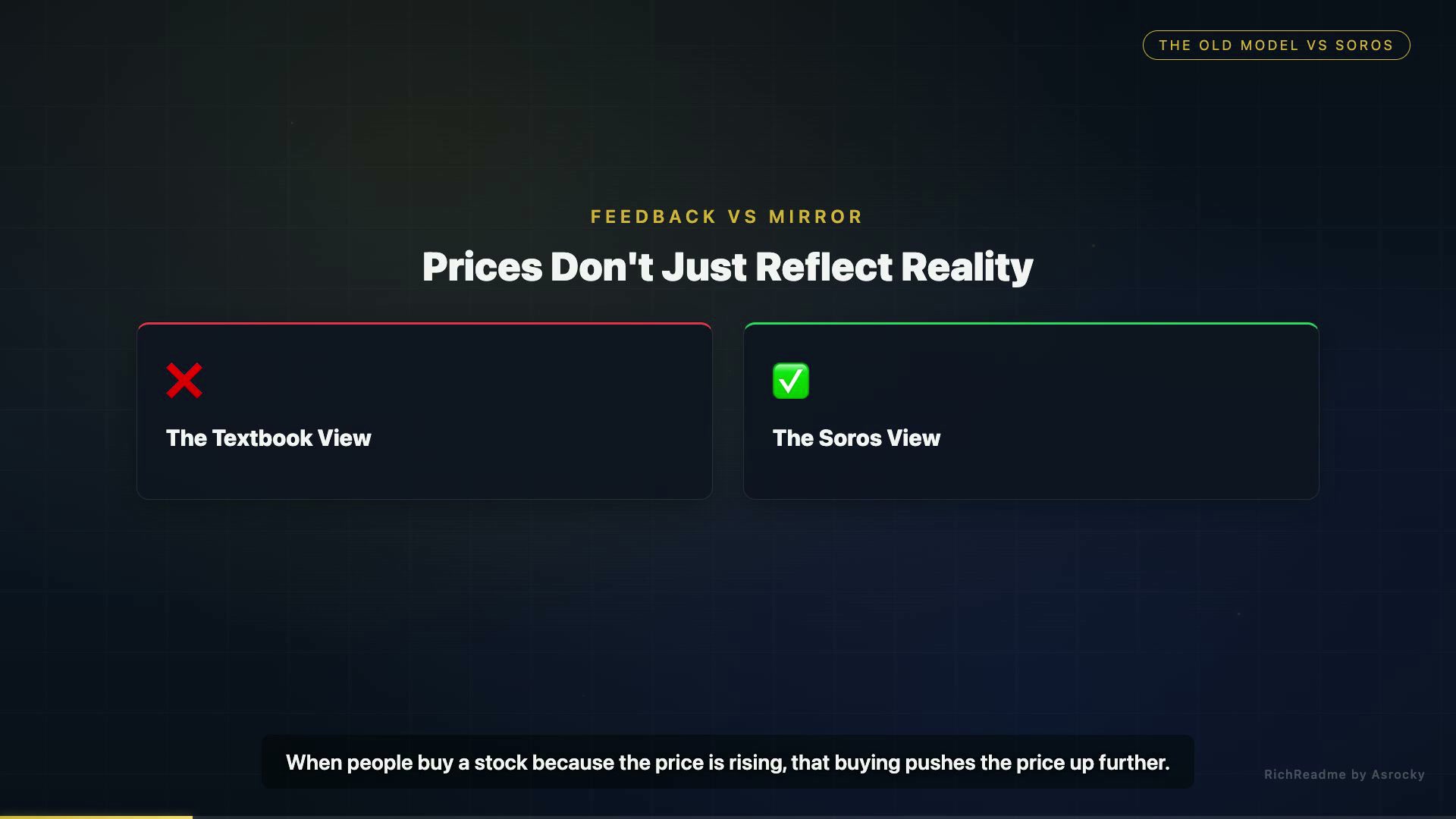
The old economic model says prices reflect underlying fundamentals. Soros says that is backwards. Prices influence fundamentals too.
When people buy a stock because the price is rising, that buying pushes the price up further. The rising price then makes the company look healthier, which justifies more buying. The bias becomes self-validating.
How a Bubble Builds Itself

That is how bubbles form. A prevailing bias starts small. It pushes prices away from fundamentals.
Instead of correcting itself, the trend attracts more followers. The self-reinforcing loop feeds on itself. Optimism drives prices up, rising prices drive fundamentals up, and better fundamentals drive prices even higher.
Self-Fulfilling Becomes Self-Defeating

But every boom carries the seeds of its own bust. Sooner or later, the gap between prices and reality becomes too wide. A single bad news event, a credit squeeze, or just exhaustion can tip the whole loop into reverse.
The bias flips from self-fulfilling to self-defeating. Selling drives prices down, falling prices damage fundamentals, and weaker fundamentals trigger more selling.
The Shape of Every Bubble
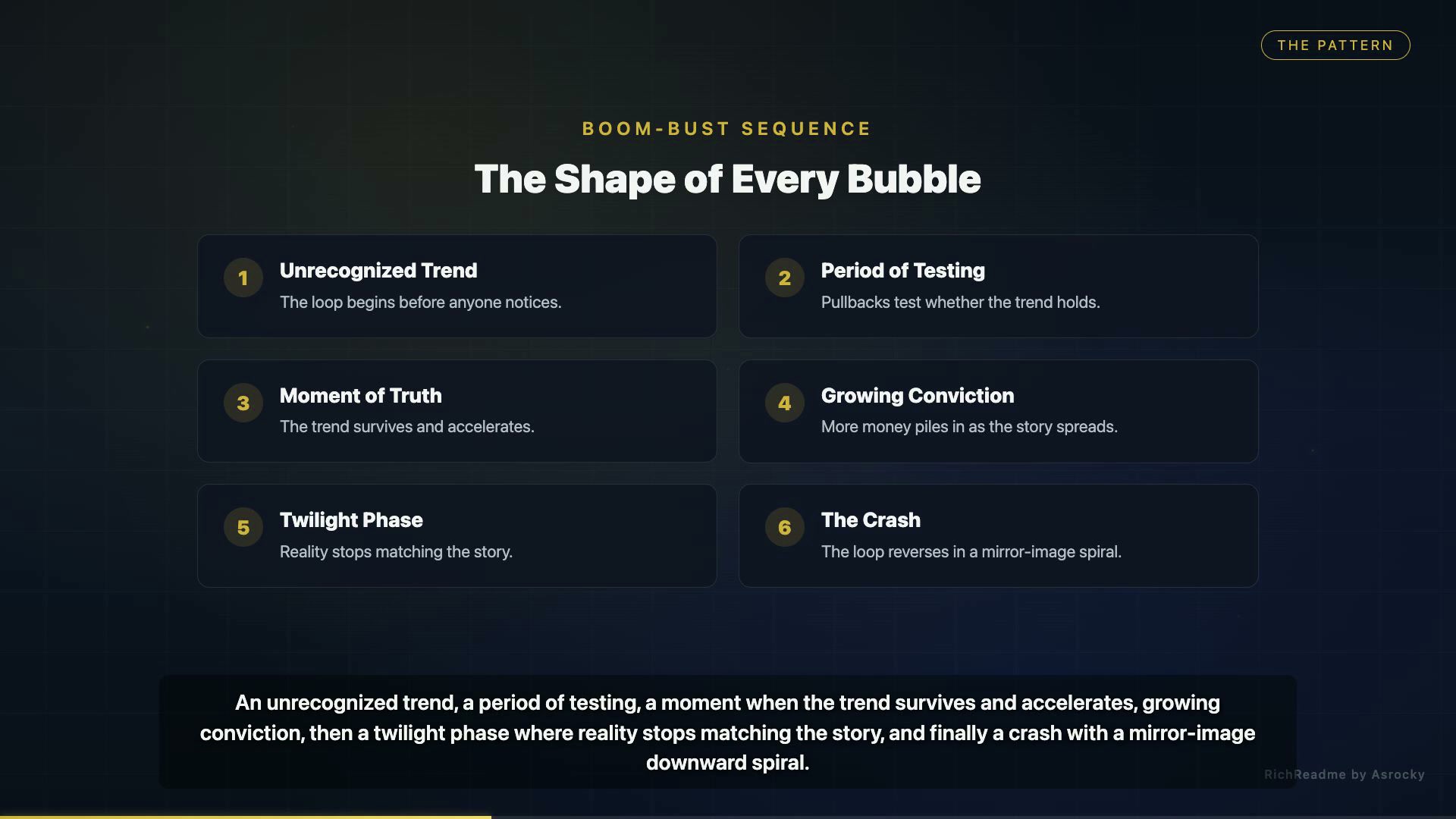
Soros calls this a boom-bust sequence. It is not random noise. It has a recognizable shape. An unrecognized trend, a period of testing, a moment when the trend survives and accelerates, growing conviction, then a twilight phase where reality stops matching the story, and finally a crash with a mirror-image downward spiral.
Markets Operate With a Built-In Bias

The key insight is that markets are always wrong. They operate with a built-in bias, bullish or bearish. Sometimes that bias is small and irrelevant.
Other times it is large enough to create a bubble. The trick is not to be right about fundamentals. The trick is to recognize when the prevailing bias is about to change.
Why Equilibrium Is a Fantasy
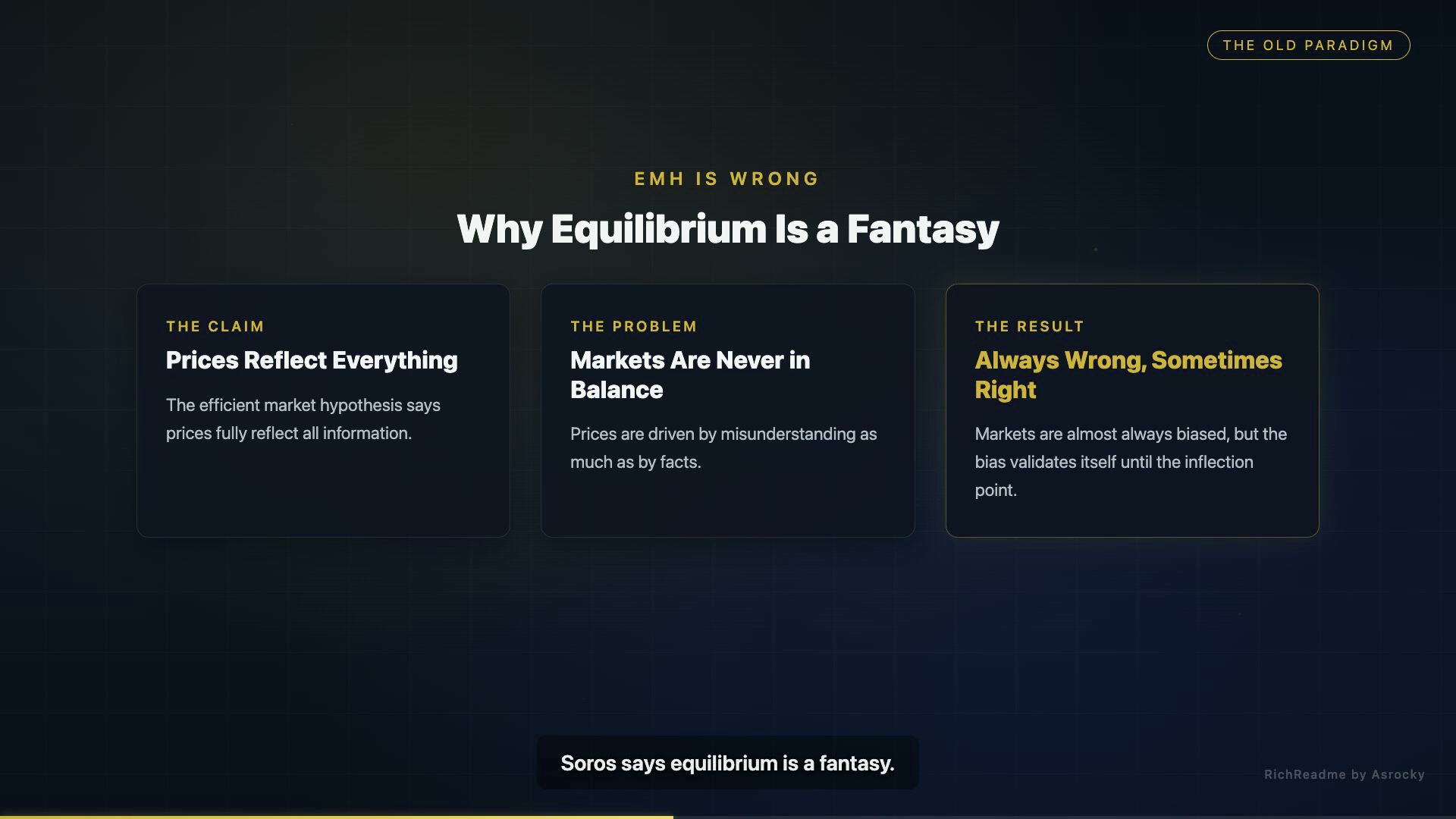
This directly attacks the efficient market hypothesis. That theory says prices fully reflect all available information and tend toward equilibrium. Soros says equilibrium is a fantasy.
Financial markets are never in balance. They are always in motion, and that motion is driven by misunderstanding as much as by facts.
Alchemy, Not Science

He calls his approach alchemy, not science. Physics can predict how planets move because the planets do not care what we think about them. But financial markets do care.
Participants' beliefs change the system itself. You cannot stand outside and measure. You are always part of the experiment.
The Future Changes As You Act
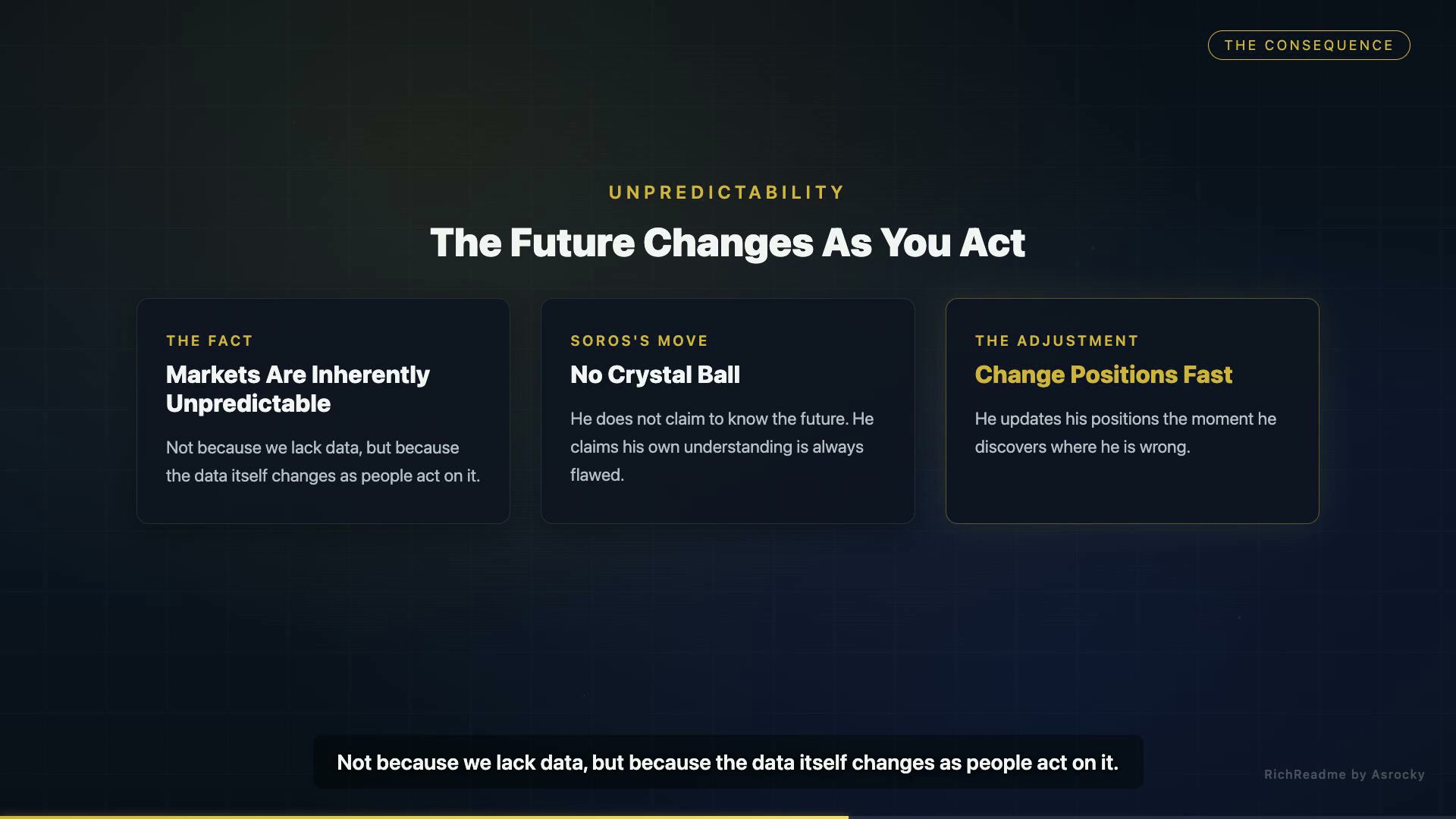
This human uncertainty principle has big consequences. It means markets are inherently unpredictable. Not because we lack data, but because the data itself changes as people act on it.
Soros does not claim to know the future. He claims to know that his own understanding is always flawed, and he adjusts his positions as he discovers where he is wrong.
Be Quick to Admit You're Wrong
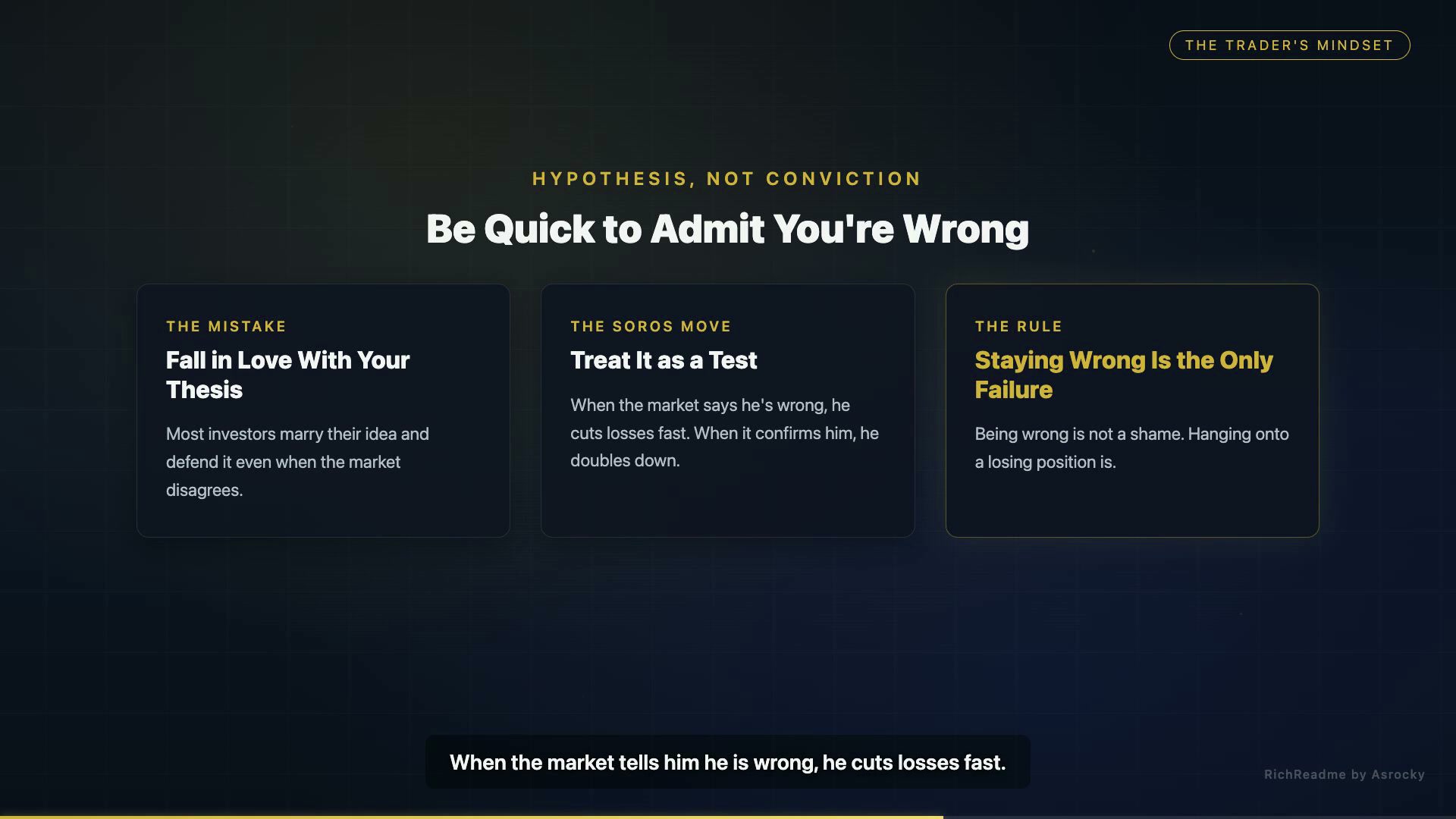
That humility is his edge. Most investors fall in love with their thesis. Soros treats his thesis as a hypothesis to be tested. When the market tells him he is wrong, he cuts losses fast.
When the market confirms his view, he doubles down. Being wrong is not a shame. Staying wrong is the only real failure.
A Self-Reinforcing Loop in Action
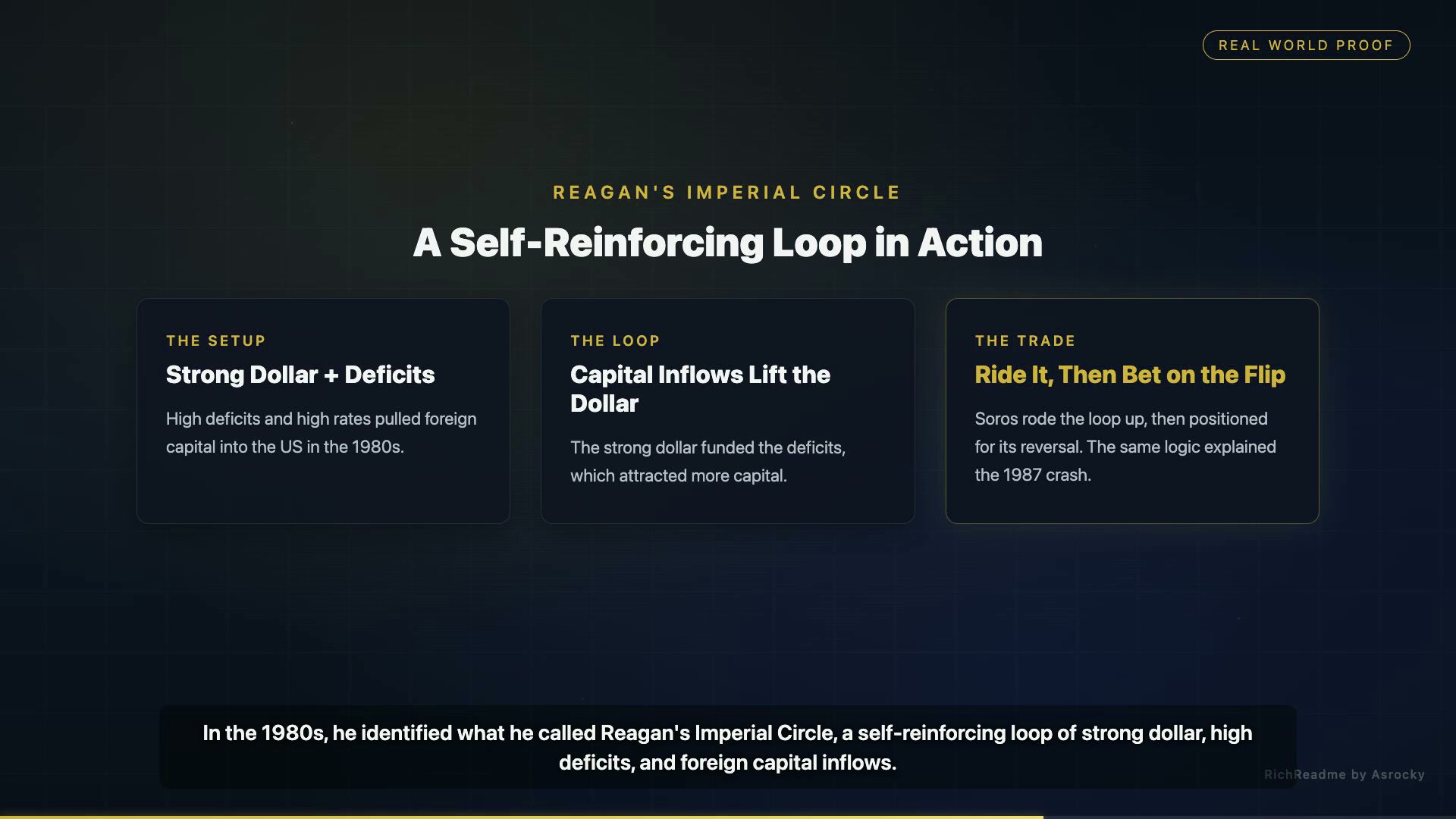
He applied this thinking to currencies, bonds, and international debt. In the 1980s, he identified what he called Reagan's Imperial Circle, a self-reinforcing loop of strong dollar, high deficits, and foreign capital inflows. He rode that loop up, then positioned for its reversal. The same reflexive logic explained the banking crisis of the 1980s and the stock market crash of 1987.
How to Trade Reflexively
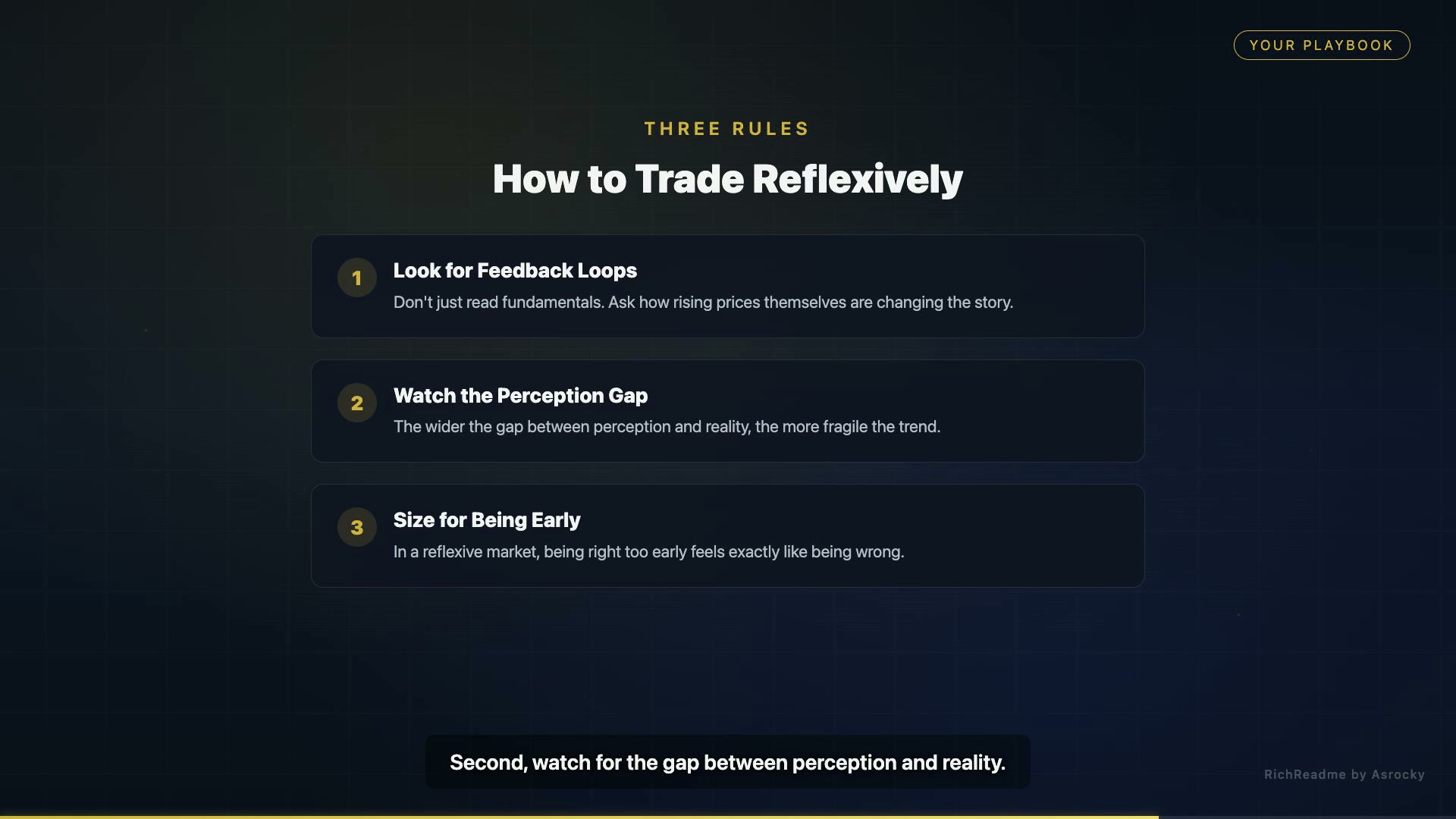
The practical takeaway for any investor is three things. First, look for feedback loops, not just fundamentals. Ask how rising prices themselves are changing the story. Second, watch for the gap between perception and reality.
The wider it gets, the more fragile the trend becomes. Third, size your positions so you can survive being early. In a reflexive market, being right too early is the same as being wrong.
Leave Markets Alone at Your Peril
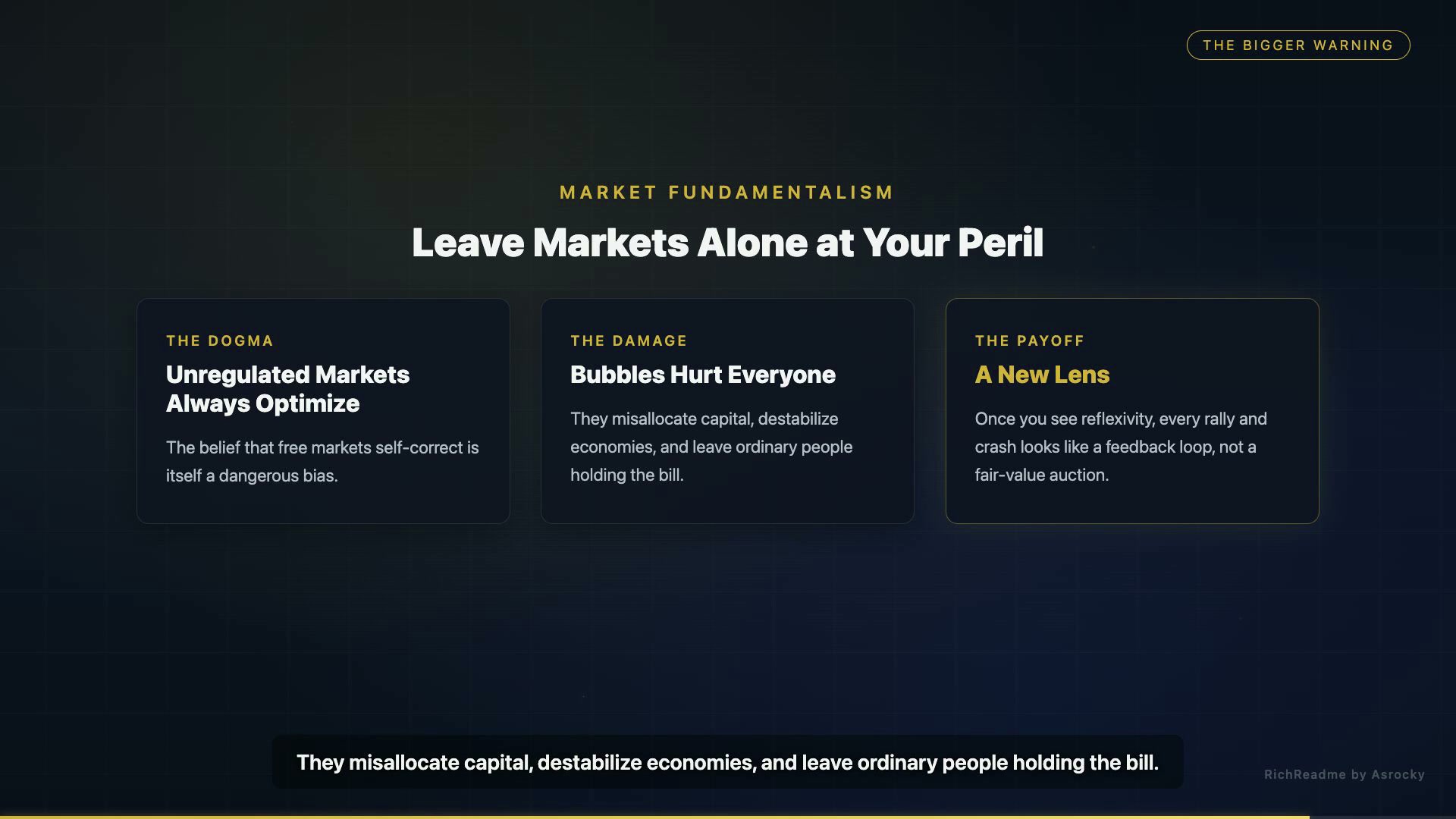
Soros also has a warning for society. If markets are not self-correcting, then leaving them entirely alone is dangerous. Market fundamentalism, the idea that unregulated markets always find the optimal outcome, is itself a dangerous bias. Bubbles do not just hurt investors. They misallocate capital, destabilize economies, and leave ordinary people holding the bill.
The Alchemy of Finance is not a trading manual. It will not give you stock picks. It will give you a new lens for seeing markets. Once you see reflexivity, you cannot unsee it. Every rally and crash starts to look like a feedback loop, and the people screaming about fair value look like they are missing the point.