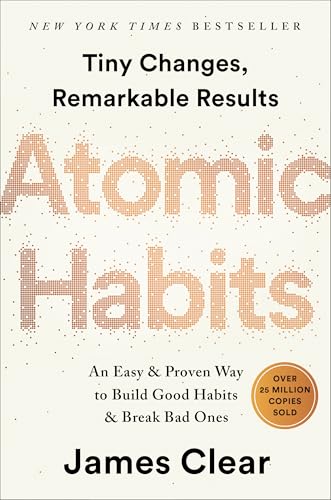
Self-help books come and go. This one has sold forty million copies for one reason. It actually works.
This is The 7 Habits of Highly Effective People by Stephen R. Covey. It is not a bag of tricks. It is a step-by-step ladder for moving from a life you react to, to one you design.
Three Levels of Growth
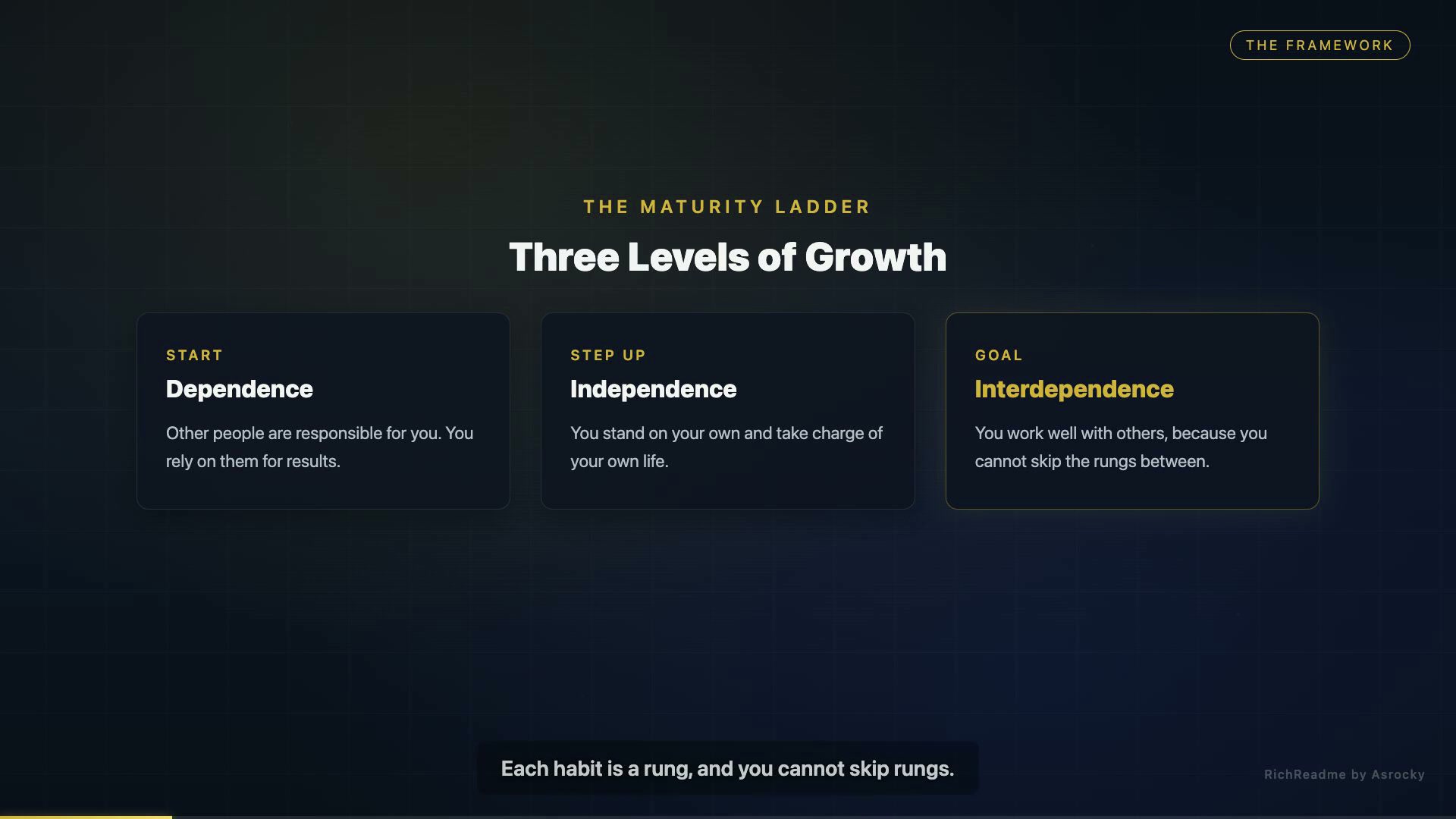
Covey maps growth as a ladder. You start as dependent, where other people are responsible for you. You move to independence, where you stand on your own. Then you reach interdependence, where you work well with others.
Each habit is a rung, and you cannot skip rungs. The first three build independence, the next three build teamwork, and the last one keeps the whole system running. Covey insists on this order. You cannot skip the foundation and expect the later habits to hold.
Be Proactive
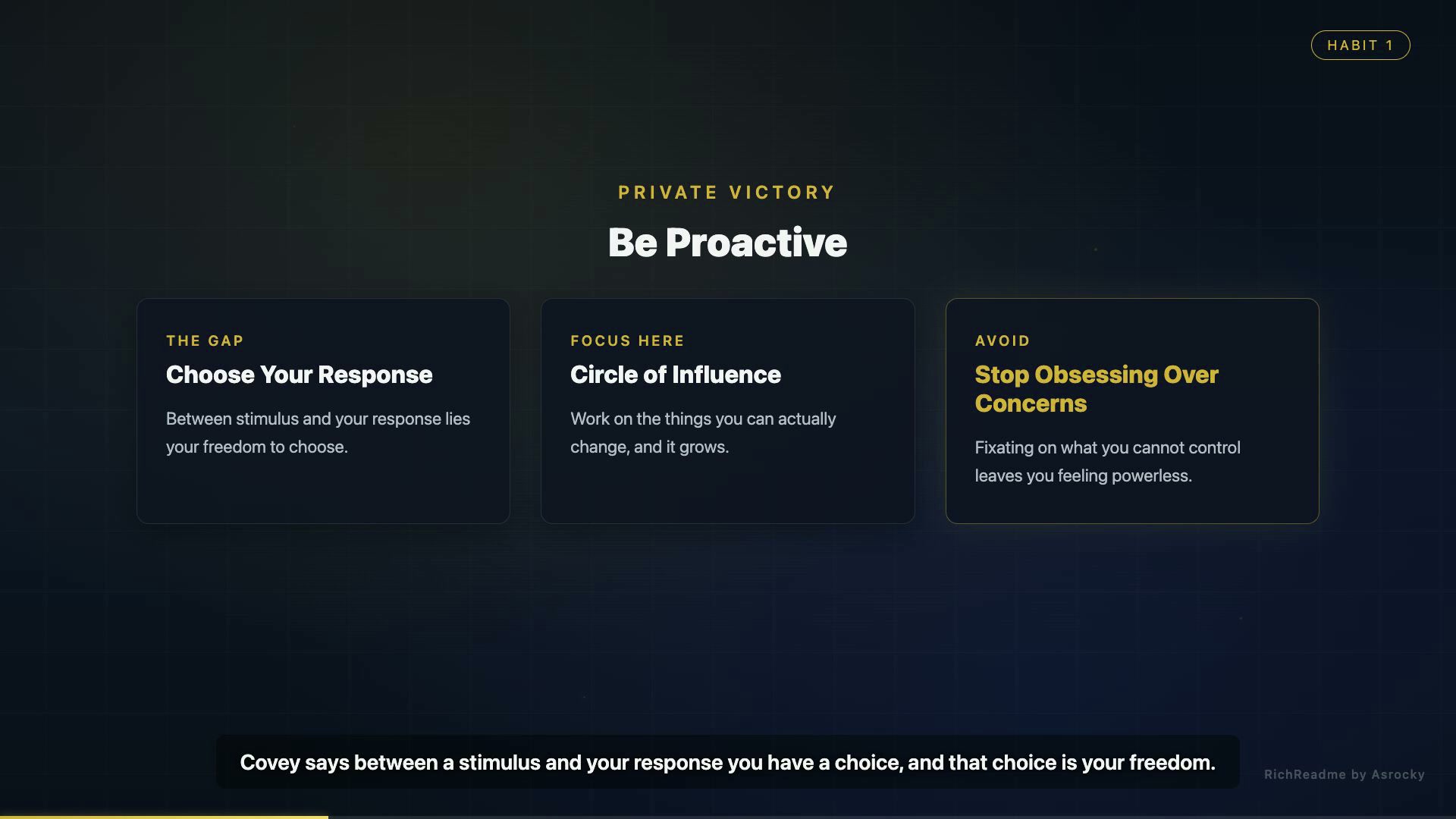
The first habit is be proactive. Most lives run on reaction. You blame your upbringing, your boss, the weather. Covey says between a stimulus and your response you have a choice, and that choice is your freedom.
Focus on your circle of influence, the things you can actually change, and it grows. Obsess over your circle of concern, the things you cannot, and you feel powerless. Proactive people speak in terms of what they can do, not what has been done to them.
Begin With the End in Mind
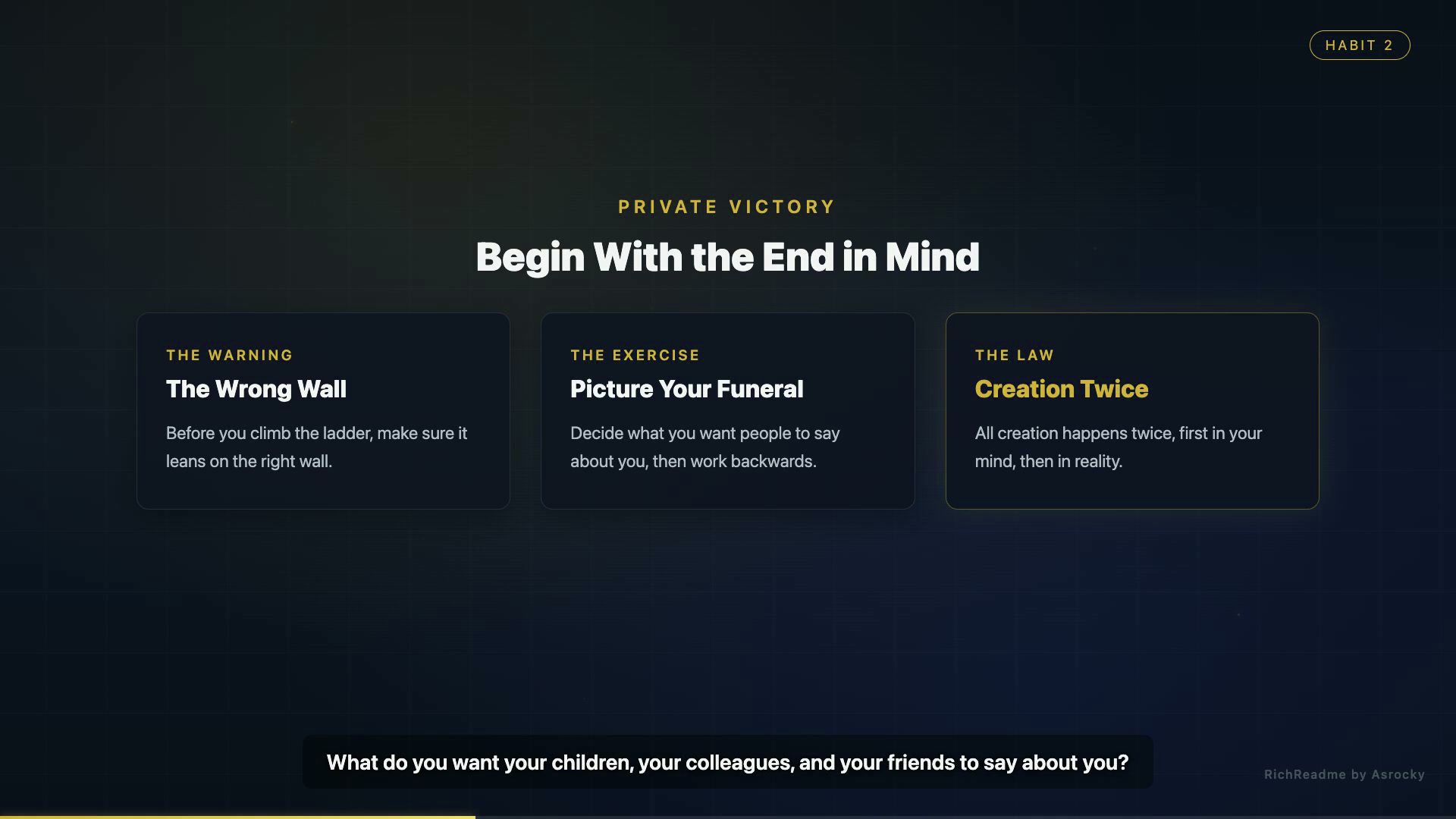
The second habit is begin with the end in mind. Before you climb the ladder, make sure it leans on the right wall. Covey asks you to picture your own funeral. What do you want your children, your colleagues, and your friends to say about you?
Work backwards from that moment. All real creation happens twice, first in your mind, then in reality. Without that clear destination, every rung you climb may be against the wrong wall.
Put First Things First
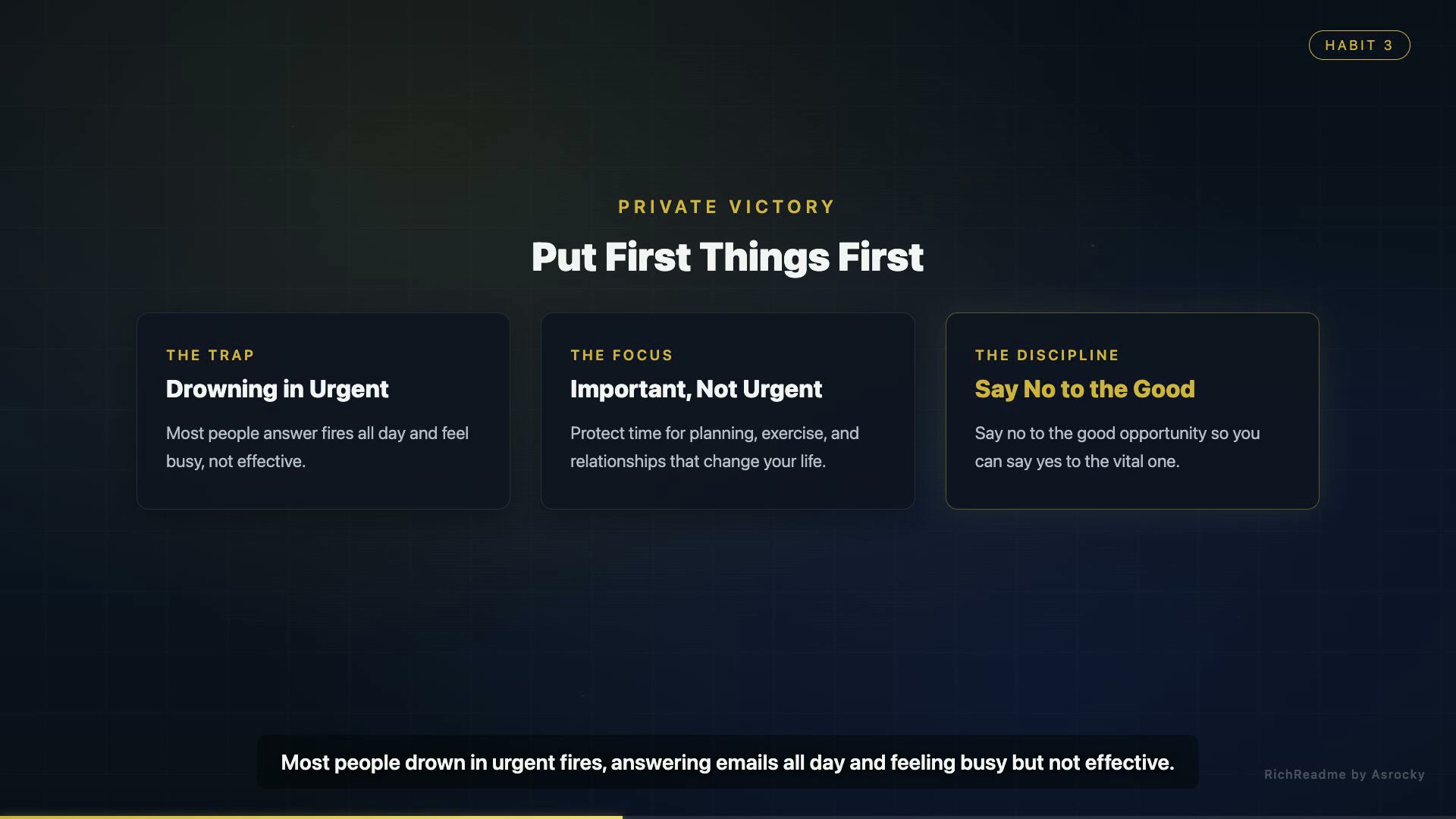
The third habit is put first things first. This is time management on purpose. Covey sorts tasks by urgent and important on a grid.
Most people drown in urgent fires, answering emails all day and feeling busy but not effective. The effective person protects real time for the important but not urgent work, the planning, the exercise, and the relationships that actually change their life. Say no to the good opportunity so you can say yes to the vital one.
Master Yourself First
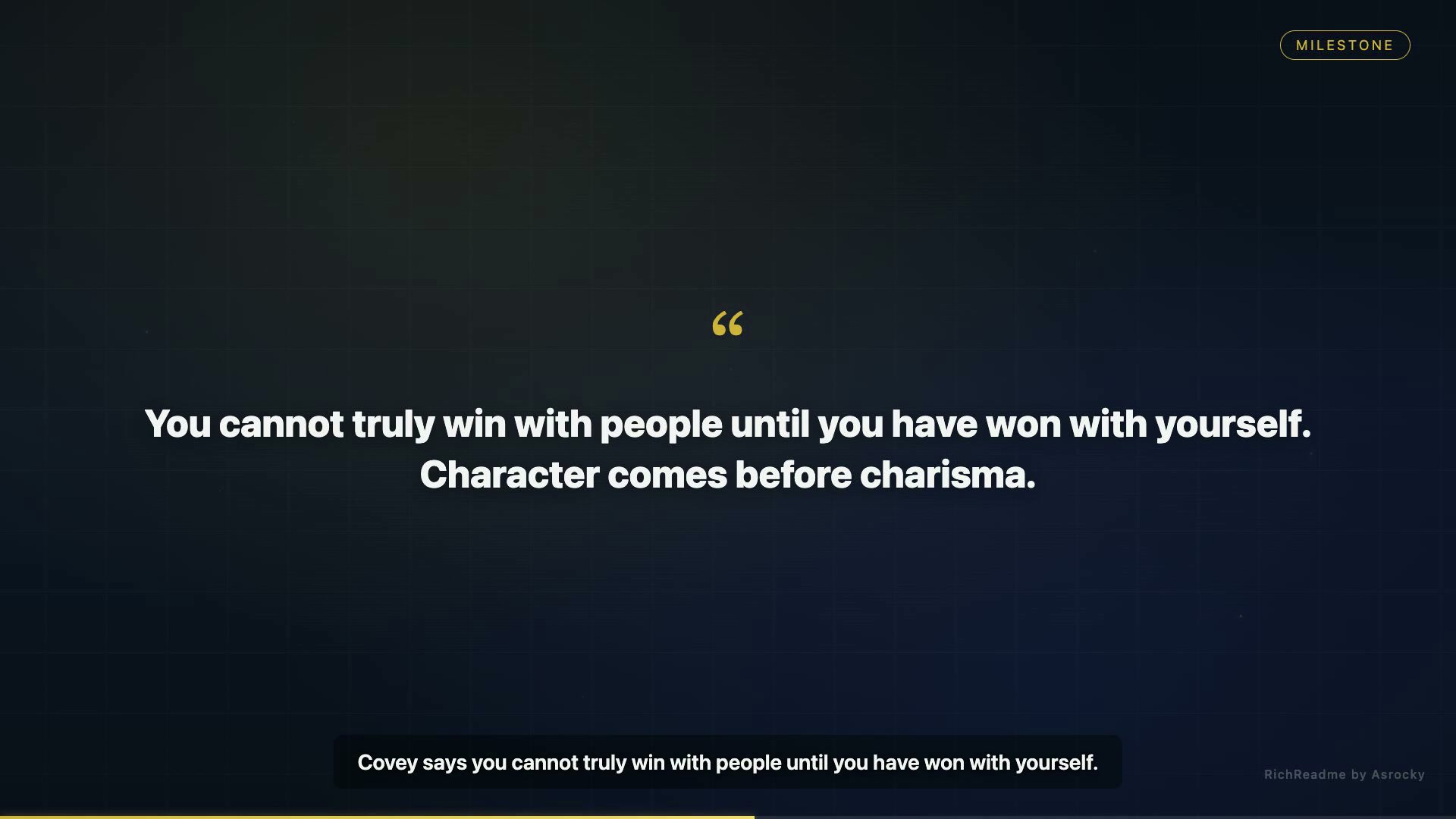
Those first three habits win the private victory. They take you from depending on others to being the master of yourself. Covey says you cannot truly win with people until you have won with yourself.
Character comes before charisma. Trying to fix relationships before you fix yourself is like building a house on sand.
Think Win-Win
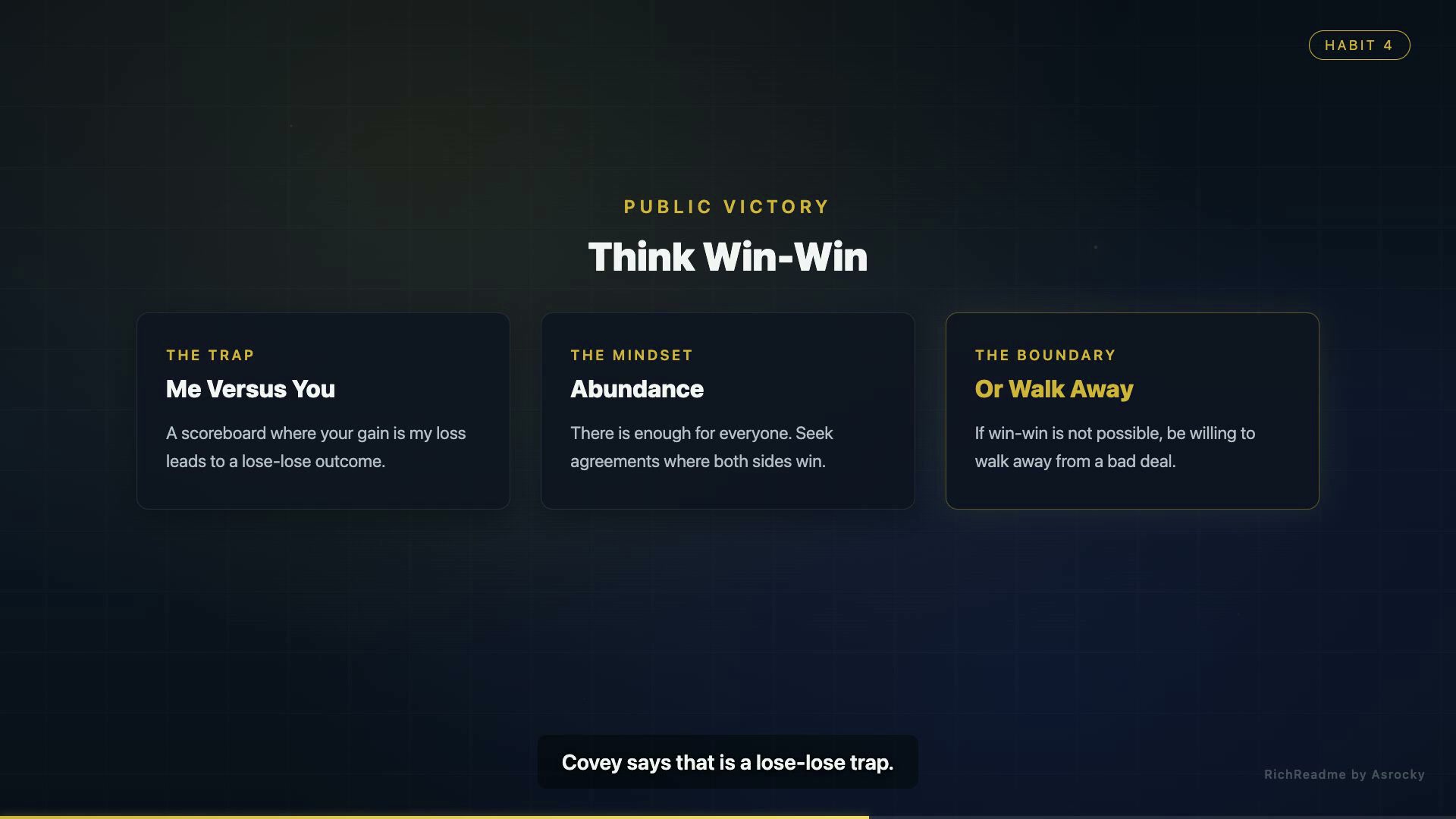
Then you move to public victory. The fourth habit is think win-win. Most dealings run on the scoreboard of me versus you, where your gain is my loss. Covey says that is a lose-lose trap.
An abundance mindset means there is enough for everyone. Look for agreements where both sides come out ahead. If a win-win is simply not possible, be willing to walk away rather than strike a bad deal.
Seek First to Understand
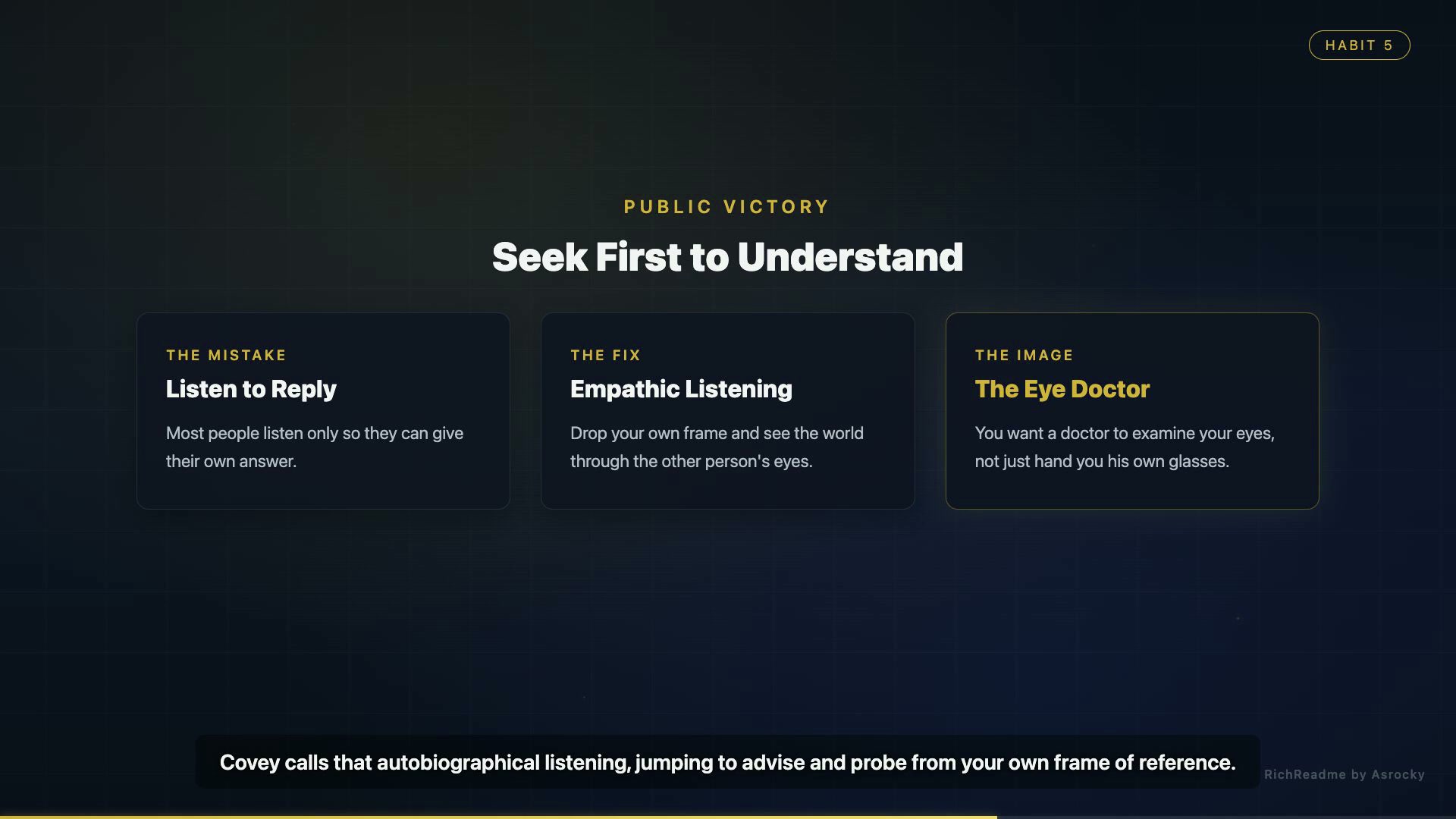
The fifth habit is seek first to understand, then to be understood. Most people listen just so they can reply. Covey calls that autobiographical listening, jumping to advise and probe from your own frame of reference.
Instead, listen empathically. He says it is the way you would want an eye doctor to examine your eyes for real, before handing over his own glasses and telling you to wear them.
Synergize
The sixth habit is synergize. Synergy means the whole is greater than the sum of its parts. When you genuinely respect other people's views, especially the ones that differ sharply from yours, something new appears in the room.
You create a result none of you could have built alone. It is the reward for mastering all the earlier habits.
Sharpen the Saw
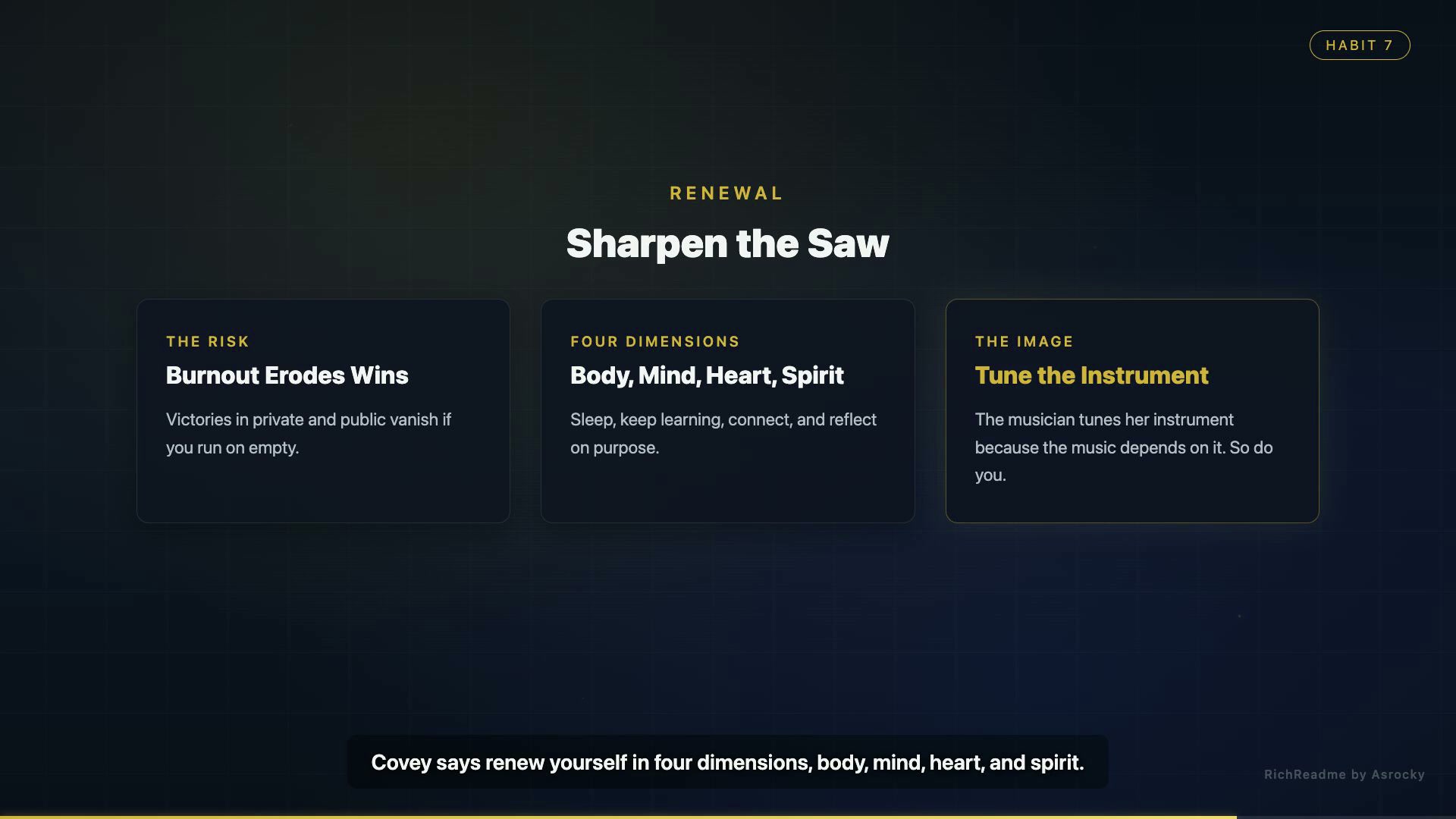
The seventh habit is sharpen the saw. You can win private and public victories, but burnout erodes them fast. Covey says renew yourself in four dimensions, body, mind, heart, and spirit.
Sleep, learn, connect, and reflect. A musician who spends hours tuning her instrument does it on purpose, because the music depends on it. So does your life.
Principle-Centered
Under it all, Covey says effectiveness is principle-centered, not personality-centered. You do not fake it with quick techniques or a pleasing image. You align yourself with timeless principles like honesty, effort, and respect, and the results follow.
The habits are not a quick fix. They are a way of living.