What if you could start a profitable business without a loan or much money? Ordinary people did it for under a hundred dollars.
This is The $100 Startup, by Chris Guillebeau. Guillebeau set out to study people who built real income from almost nothing, and he found a clear pattern hiding behind their stories. You do not need to be special. You need to understand a simple formula, and then act on it faster than feels comfortable.
You Already Own the Skills
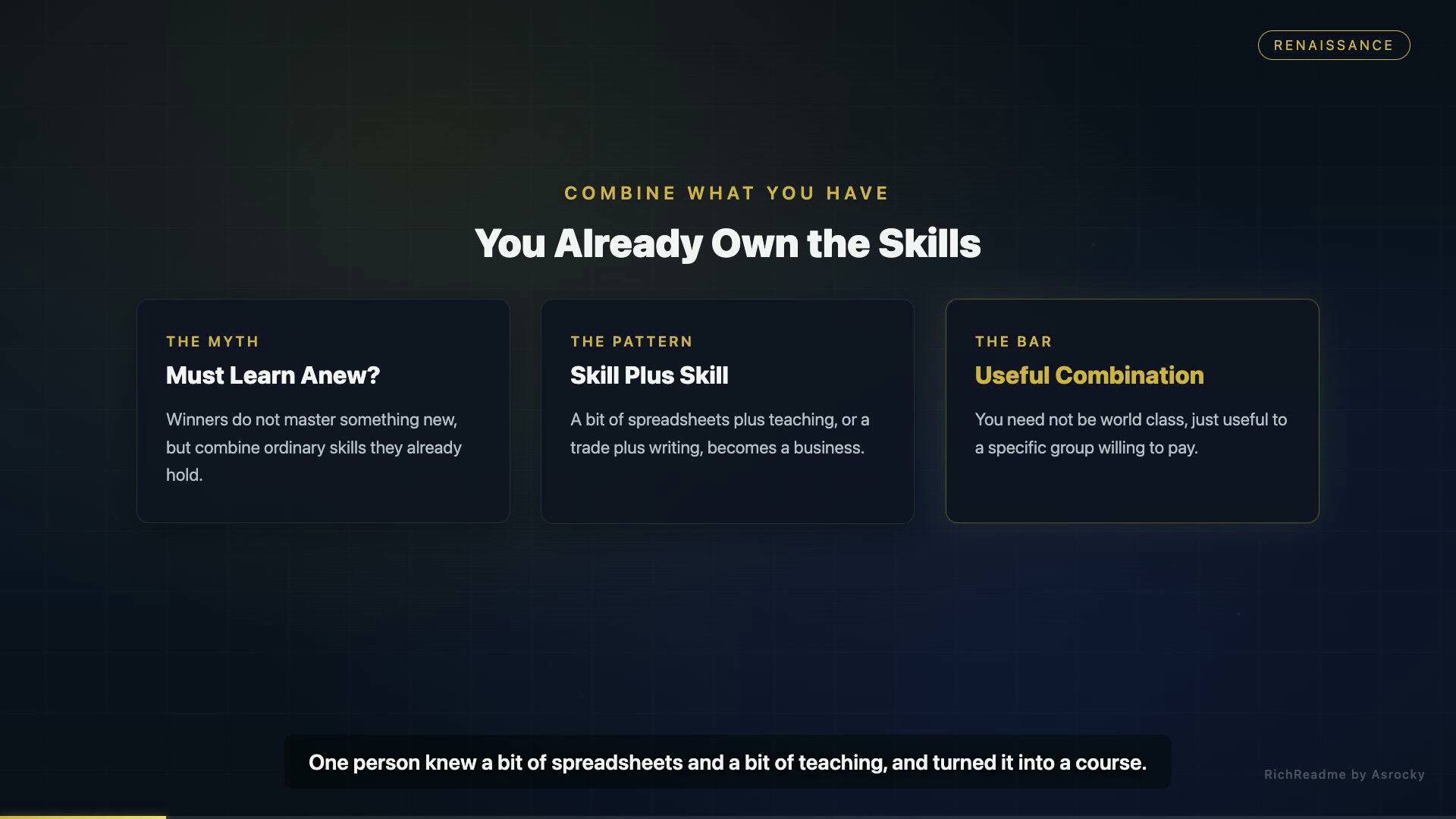
The first lesson is that you already have the skills you need. Guillebeau calls these renaissance businesses, because they are usually built by combining ordinary skills the founder already had, rather than learning something brand new. One person knew a bit of spreadsheets and a bit of teaching, and turned it into a course.
Another knew a trade and a bit of writing, and turned it into a service. You do not need to be world class at any one thing. You only need a useful combination that a specific group of people is willing to pay for.
Where Convergence Happens
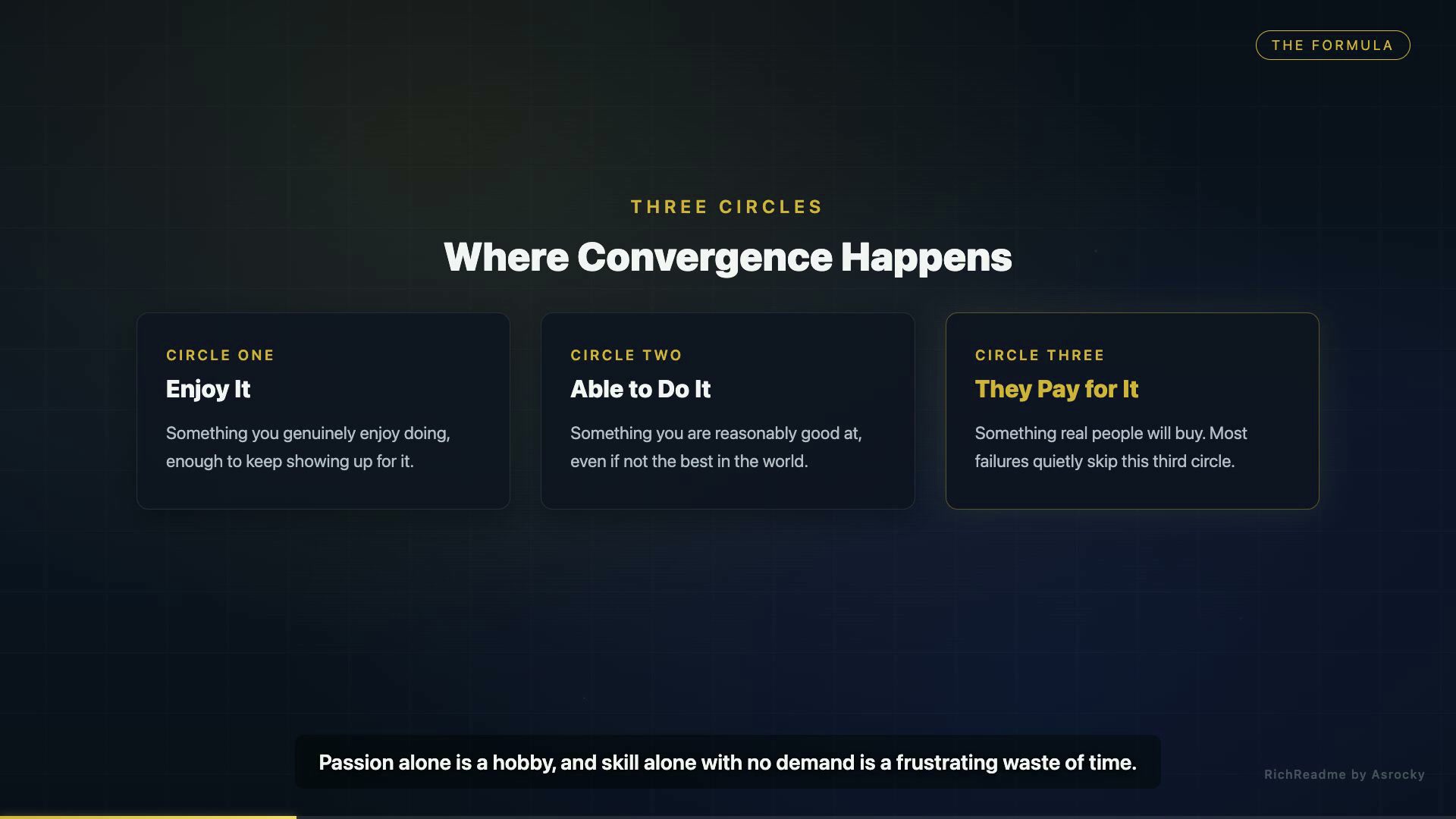
That points to the central formula, convergence. A micro business sits where three circles overlap, something you enjoy, something you are reasonably good at, and something other people will actually pay for. Passion alone is a hobby, and skill alone with no demand is a frustrating waste of time.
Most failed projects skip the third circle, building something the founder loved without ever checking whether anyone wanted to buy it. The winners start with a real problem and a person willing to pay, then bring their skills to it.
Give Them the Fish
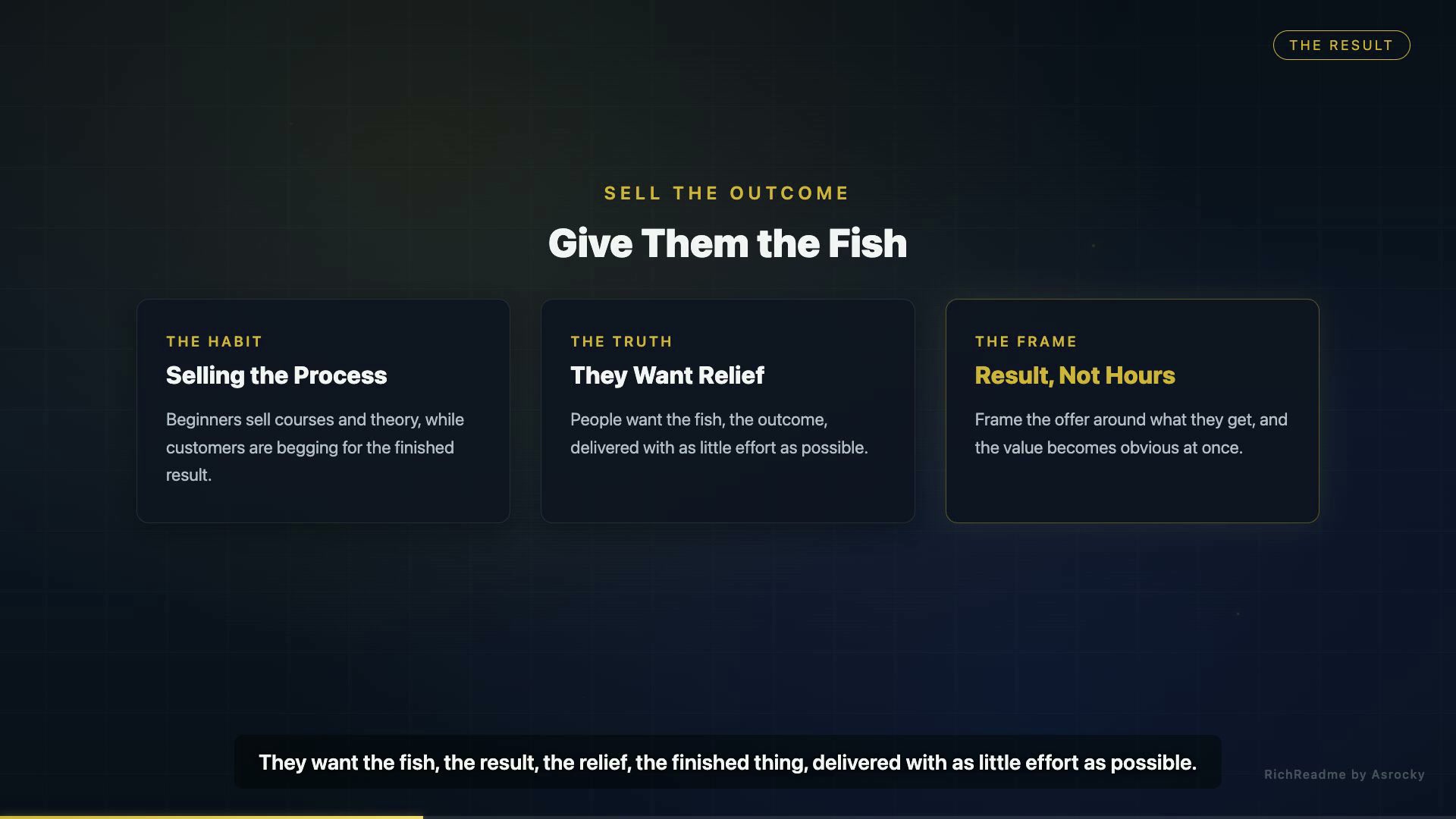
This leads to a blunt piece of advice, give them the fish. People do not primarily want to learn how to fish. They want the fish, the result, the relief, the finished thing, delivered with as little effort as possible.
Many beginners sell the process, the long course, the theory, when customers are quietly begging for the outcome. Frame your offer around the result they get, not the hours you put in, and suddenly the value becomes obvious.
Follow Your Passion, Maybe
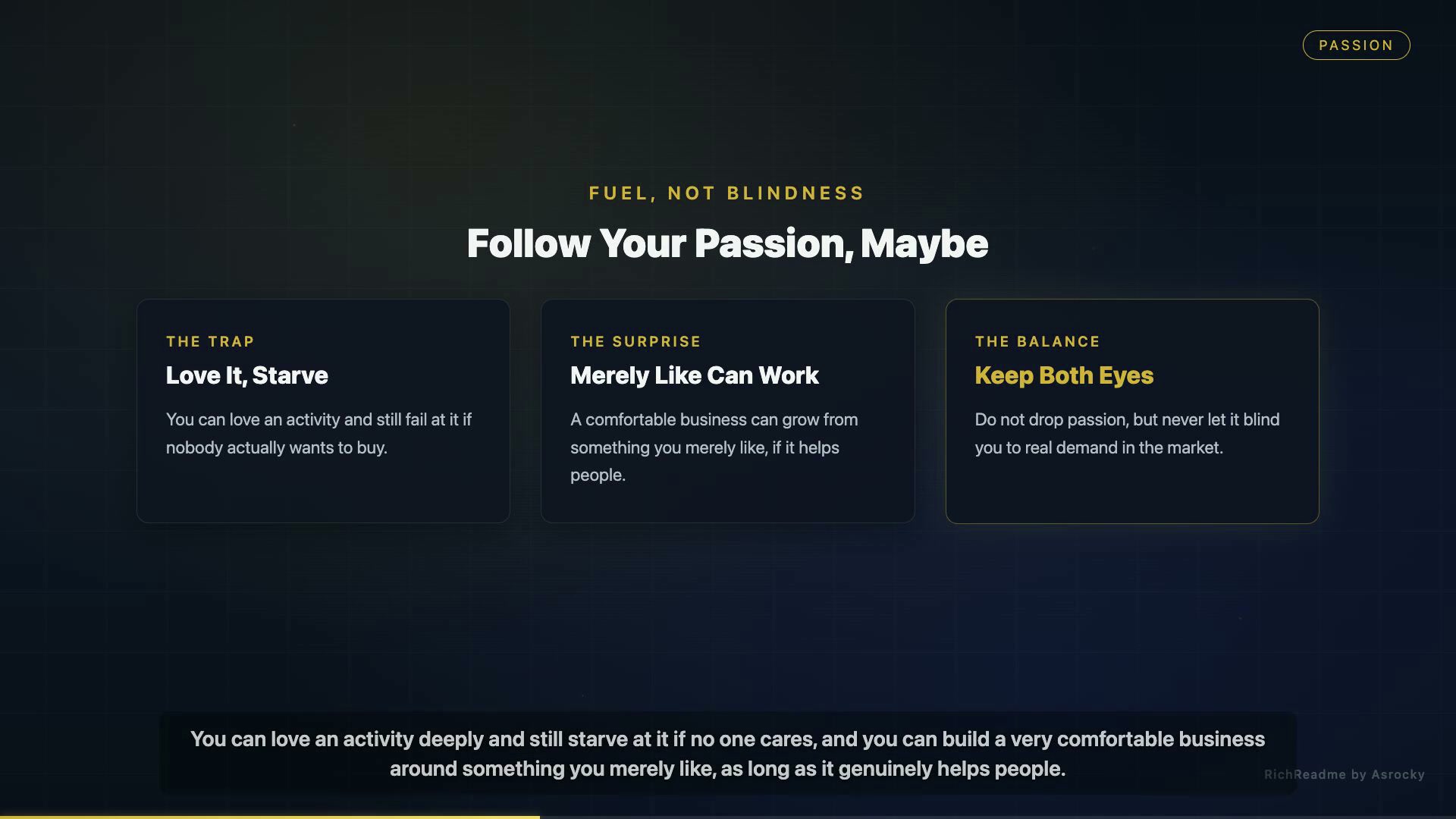
When people say follow your passion, Guillebeau adds a caution, follow your passion, maybe. Passion is a wonderful fuel, but it only becomes a business when it connects to what other people want. You can love an activity deeply and still starve at it if no one cares, and you can build a very comfortable business around something you merely like, as long as it genuinely helps people.
Do not abandon passion. Just refuse to let it blind you to demand.
The Freedom of Place
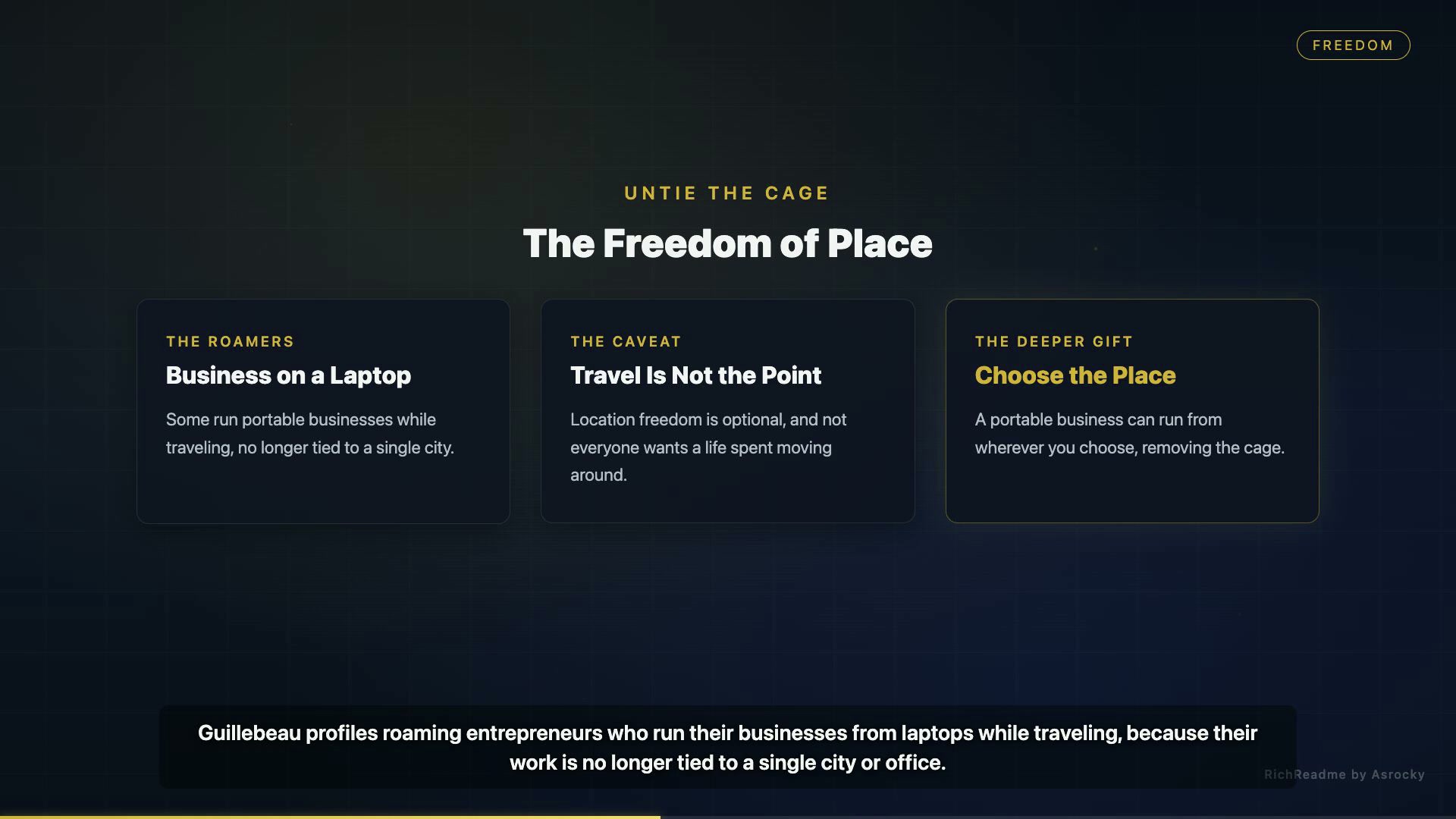
One of the biggest rewards on offer is freedom, including freedom of place. Guillebeau profiles roaming entrepreneurs who run their businesses from laptops while traveling, because their work is no longer tied to a single city or office. This is not for everyone, and travel is not the point. The deeper point is that a business built on a digital product or a portable skill can be run from wherever you choose, which quietly removes the cage that ties most people to a job they did not pick.
The One-Page Business Plan
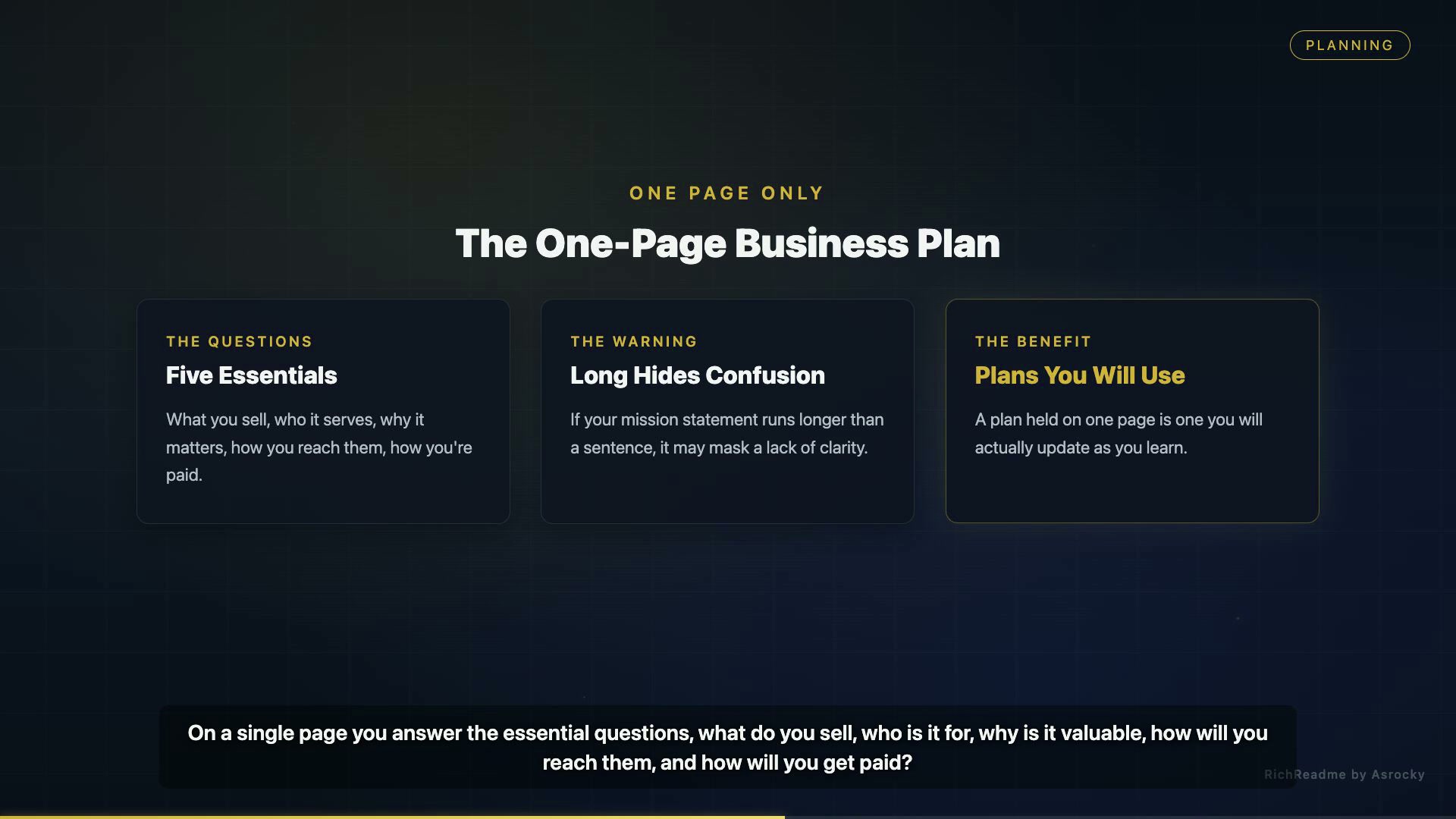
When it comes to planning, Guillebeau is suspicious of thick documents, which is why he swears by the one page business plan. On a single page you answer the essential questions, what do you sell, who is it for, why is it valuable, how will you reach them, and how will you get paid? If your mission statement is much longer than a sentence, it is probably hiding a lack of clarity. A plan you can hold on one page is a plan you will actually use and update as you learn.
An Offer They Can't Refuse
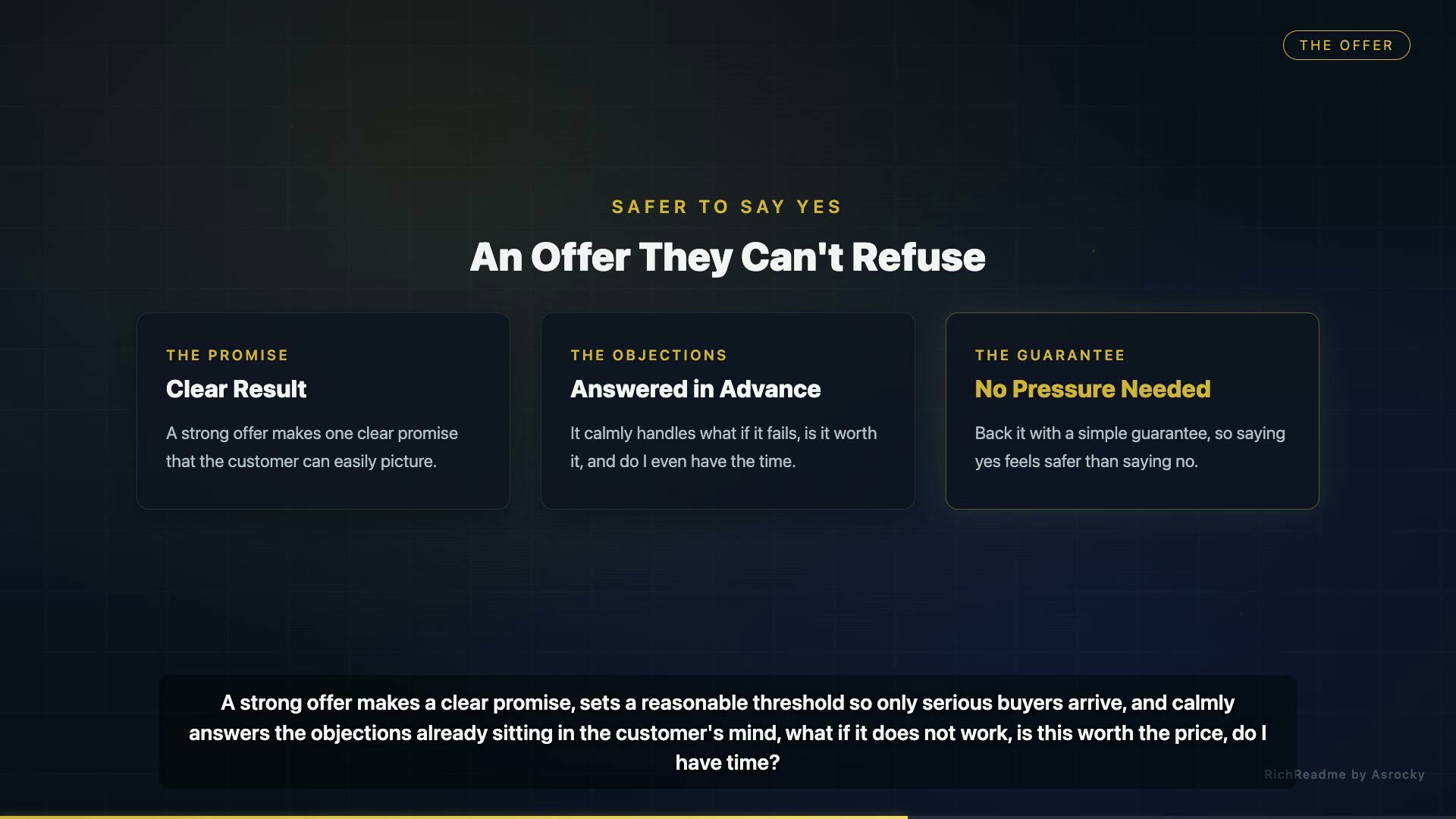
The offer itself deserves real attention, the offer you cannot refuse. A strong offer makes a clear promise, sets a reasonable threshold so only serious buyers arrive, and calmly answers the objections already sitting in the customer's mind, what if it does not work, is this worth the price, do I have time? You do not need high pressure tricks. You need an offer so clearly valuable, often backed by a simple guarantee, that saying yes feels safer than saying no.
Charge for the Value
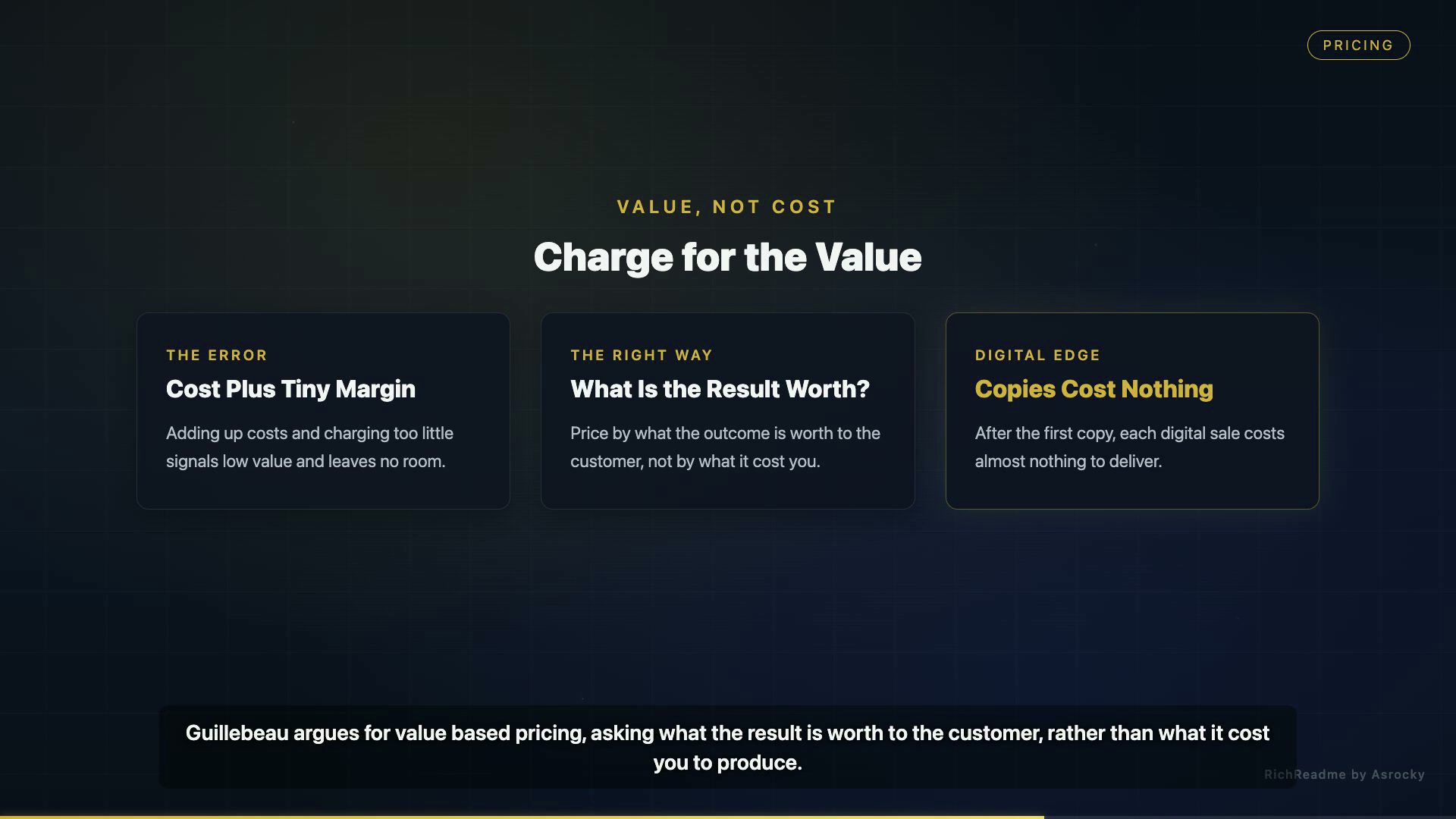
Pricing is where many beginners quietly lose money. They add up their costs, add a small margin, and charge too little, which signals low value and leaves no room to breathe. Guillebeau argues for value based pricing, asking what the result is worth to the customer, rather than what it cost you to produce.
Digital products make this especially powerful, because after the first copy, each additional sale costs almost nothing. Charge too little and you attract the most demanding customers. Charge fairly for real value and the business becomes sustainable.
Launch, the Missing Step
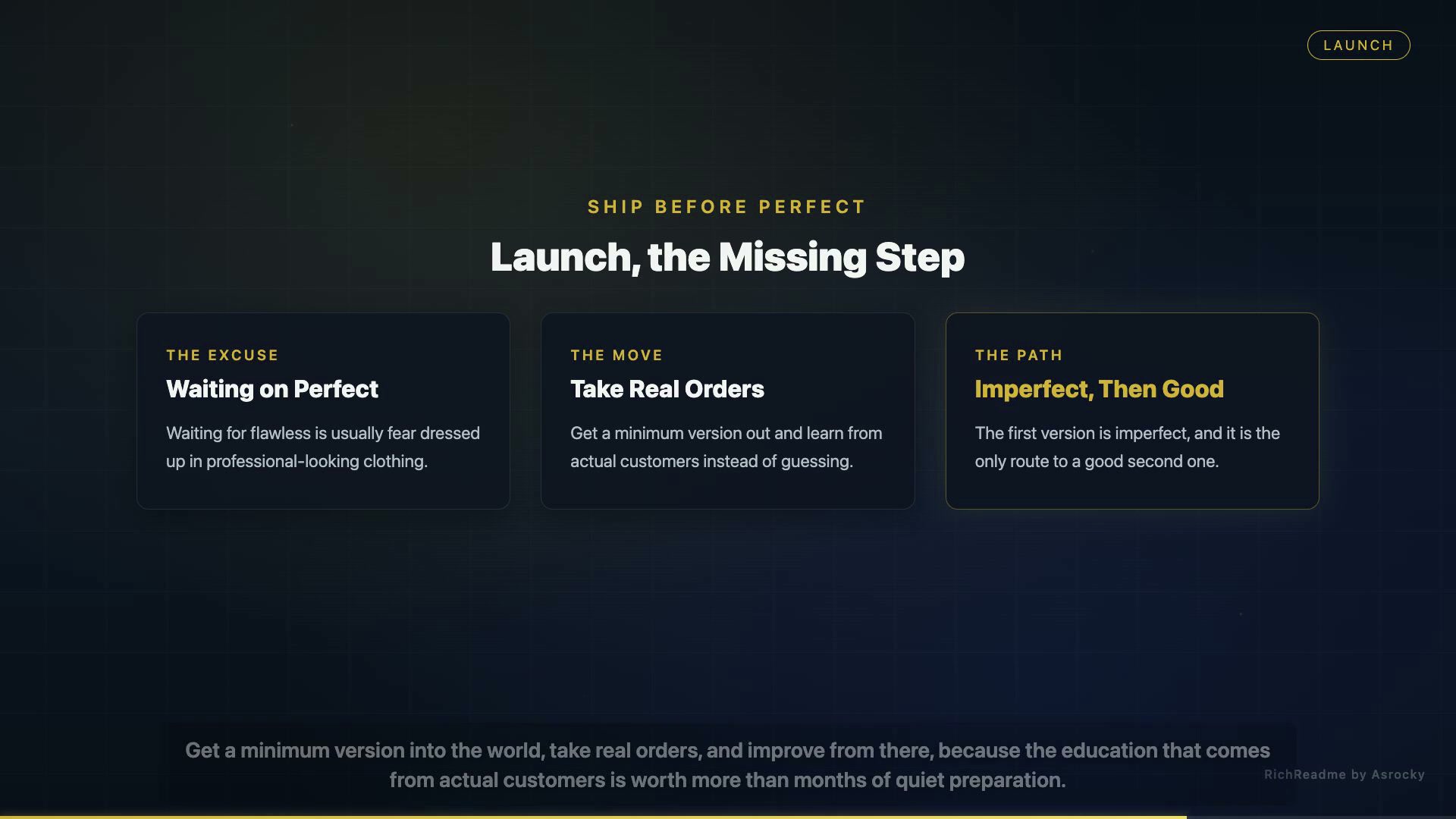
Then there is the step that separates the people who learn from the people who earn, launch. Guillebeau is relentless about this. You do not need everything to be perfect, and waiting for perfect is usually fear wearing a professional costume.
Get a minimum version into the world, take real orders, and improve from there, because the education that comes from actual customers is worth more than months of quiet preparation. The first version will be imperfect, and that is not only fine. It is the only way the second version gets good.
Franchise Yourself
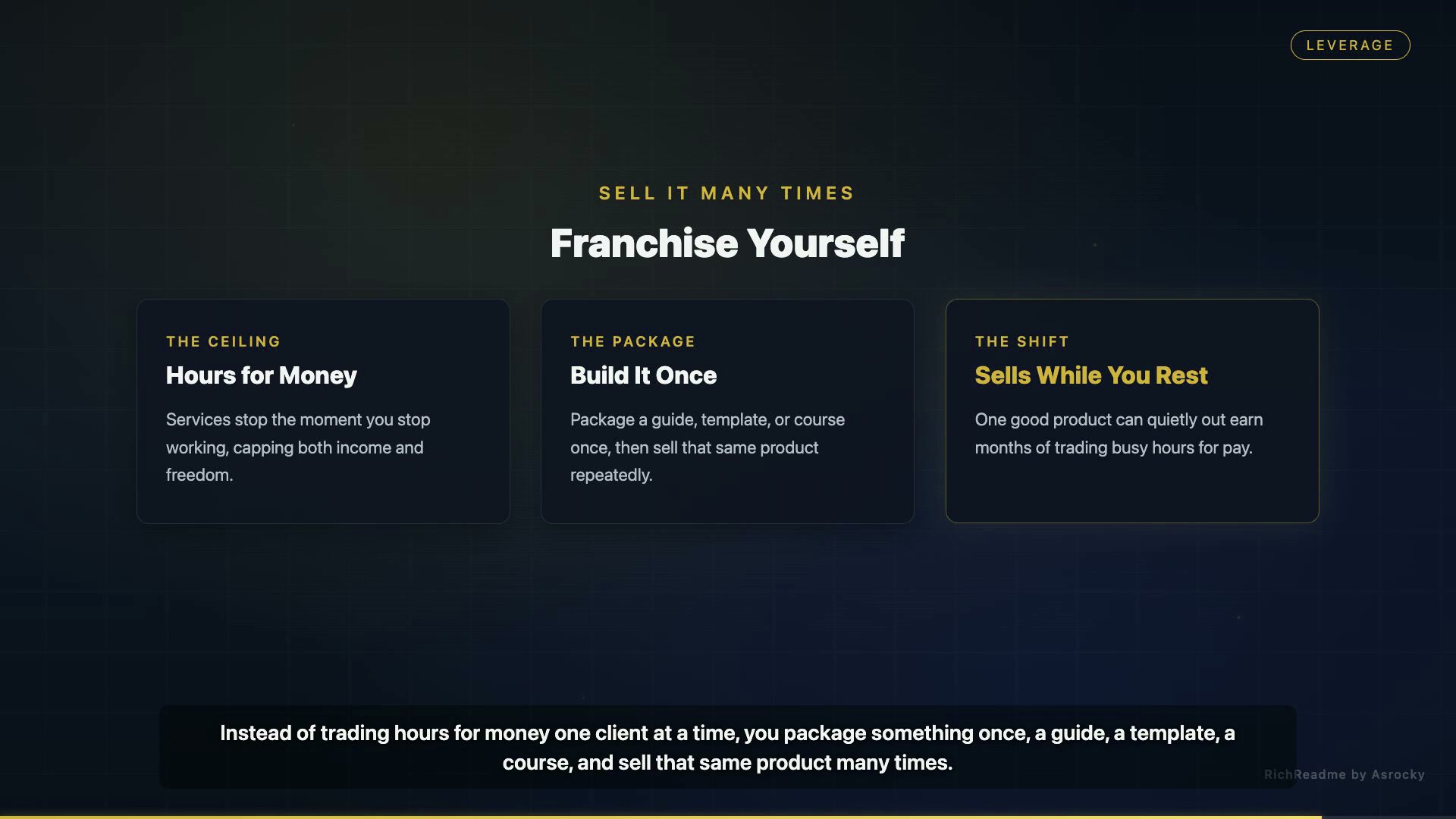
After launch, growth comes from hustling the old fashioned way, and from a smarter move, franchising yourself. Instead of trading hours for money one client at a time, you package something once, a guide, a template, a course, and sell that same product many times. This is the shift from a service that stops when you sleep to a product that can sell while you do not. Combined with honest marketing, showing your work, and treating early customers well, one good product can quietly out earn months of busy labor.