What if the tax rules rewarded you for doing what the government wants? Most people never read the manual and overpay their whole lives.
This is Tax-Free Wealth, by Tom Wheelwright, a certified public accountant and the longtime tax advisor to Robert Kiyosaki. His book has one bold claim, that anyone can legally and permanently reduce their taxes, once they understand what the tax law is actually designed to do.
Tax Law Is an Incentive Manual
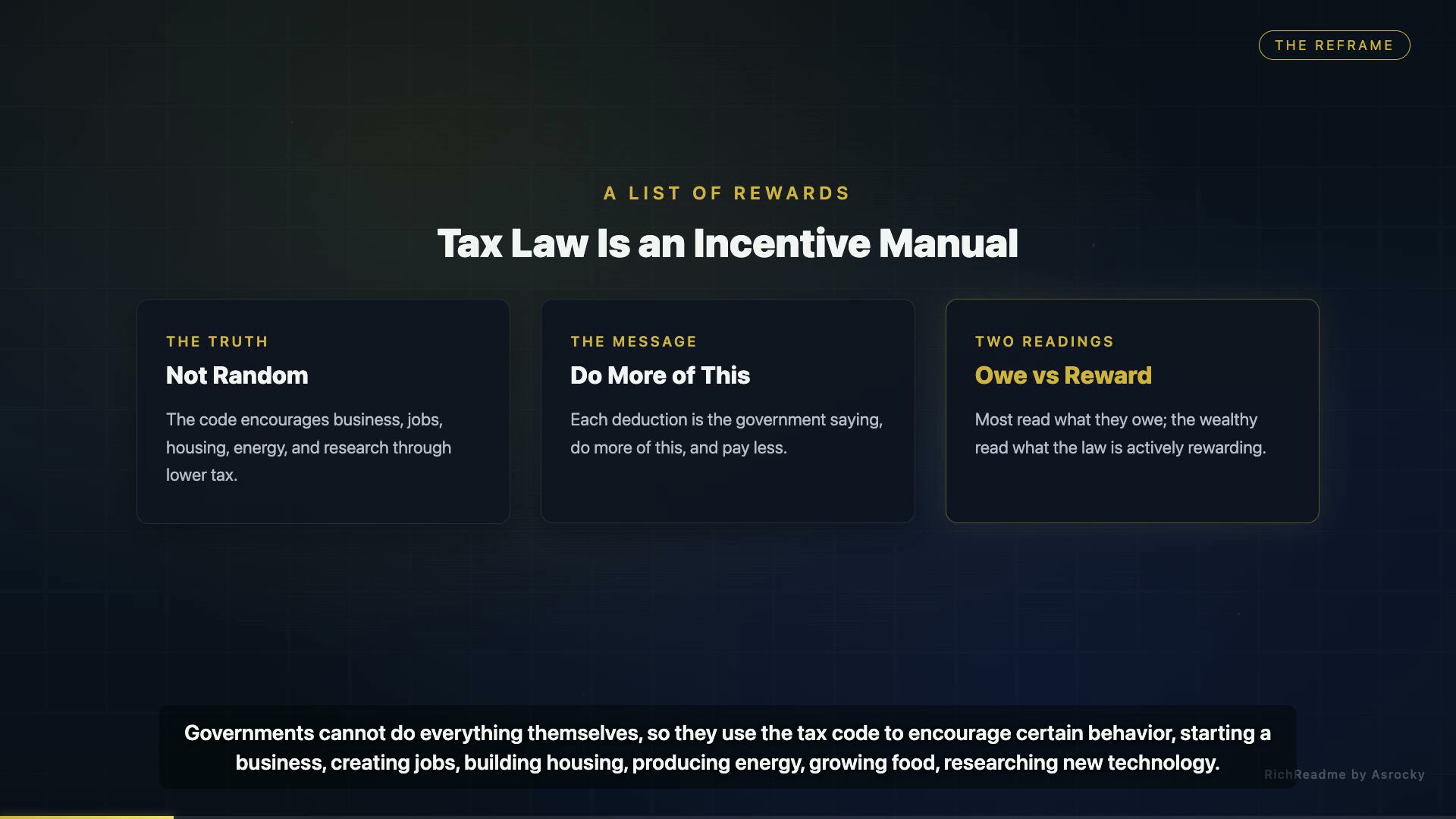
The first idea is the one that changes everything. The tax law is not a random burden. It is a written set of incentives. Governments cannot do everything themselves, so they use the tax code to encourage certain behavior, starting a business, creating jobs, building housing, producing energy, growing food, researching new technology.
Every deduction and credit is essentially the government saying, do more of this, and we will charge you less tax. Most people read the tax law as a list of what they owe. The wealthy read it as a list of what is being rewarded.
Avoidance Is Your Right

This raises an important distinction, between tax avoidance and tax evasion. Evasion is hiding income, lying on a return, or simply refusing to pay what you legally owe, and it is a crime. Avoidance is different. It is arranging your affairs, entirely within the law, so that you owe the smallest amount the rules allow.
You have every legal right to do this, and judges have said so for more than a century. The goal is never to cheat the system. The goal is to stop paying more than the system actually asks for, simply out of ignorance.
Employees Get the Least

So why do employees get almost none of these breaks? Because an employee earns a salary, and the tax is taken out before they ever touch it, with almost nothing to deduct. The tax law is written to reward the people taking risks and producing things, which means the biggest benefits flow to entrepreneurs and investors.
Wheelwright is blunt about this. If you only ever earn a paycheck as an employee, you are standing in the one spot in the economy where the tax code offers the least help. Change what you do, and the rules that apply to you change with it.
The Two Supreme Rules
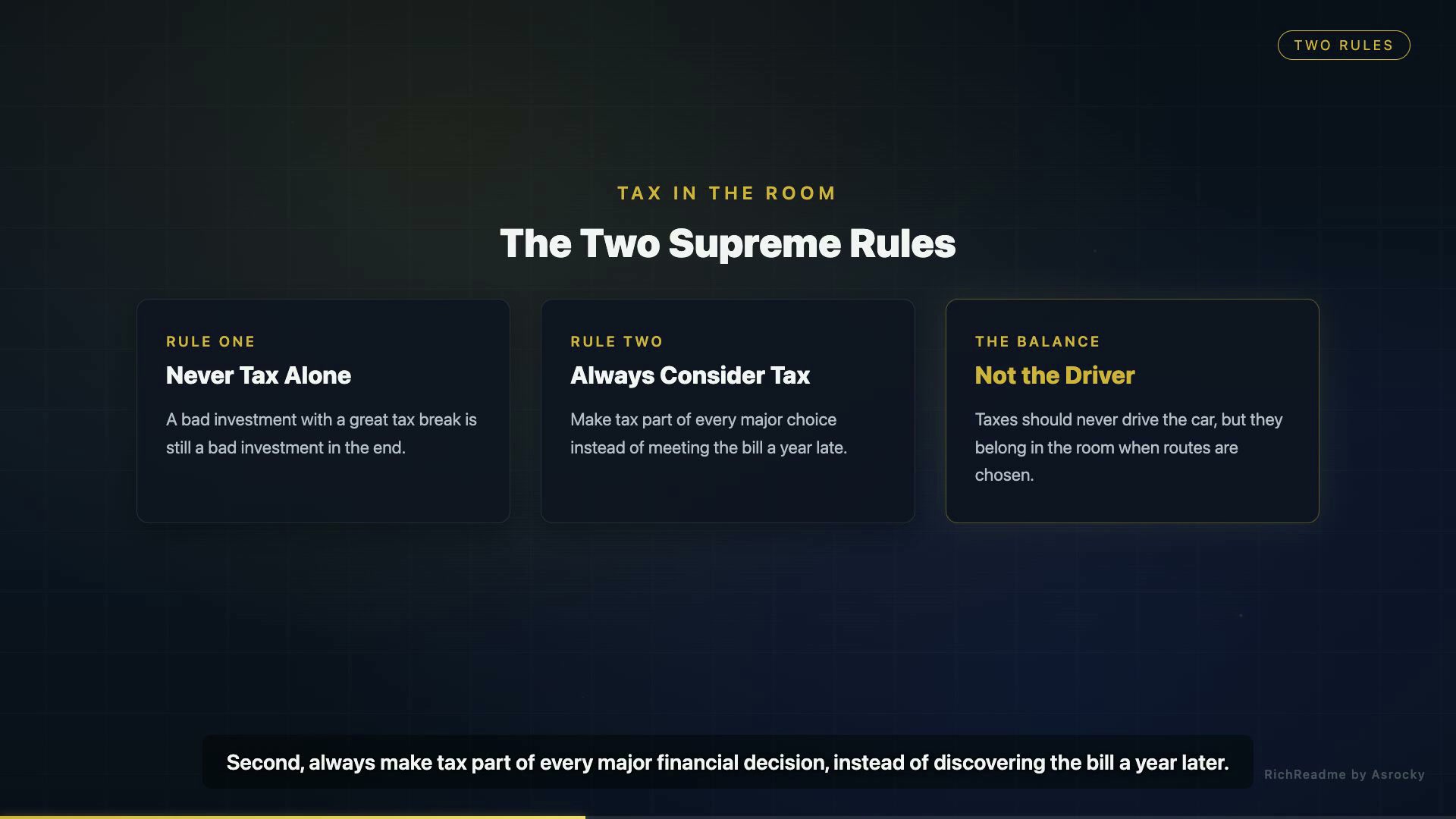
Wheelwright offers two rules that sit above all the rest. First, never make a decision purely for tax reasons, because a bad investment with a nice tax break is still a bad investment. Second, always make tax part of every major financial decision, instead of discovering the bill a year later.
Taxes should never drive the car, but they should always be in the room when the route is chosen. Most people do the opposite, ignoring taxes entirely until it is too late to do anything about them.
You Can Deduct Almost Anything

Once you run a business, a surprising world opens up, because you can deduct almost anything that genuinely relates to earning income. A meal with a client, a trip that combines business, a home office, equipment, education, software, all of these can become legitimate deductions when they serve the business. The key word is documentation and genuine business purpose.
The wealthy are not doing anything secret. They simply run their lives a little more like businesses, and keep the records that prove it.
Depreciation Is King

Then there is what Wheelwright calls the king of all deductions, depreciation. This is where real estate becomes especially powerful. Depreciation lets you deduct the gradual wear of a building over time, even while the property itself may be rising in value.
On paper, a profitable rental can show a loss that shelters other income, while in reality it is building equity and sending you cash each month. That is not a loophole someone slipped in. It is a benefit the government deliberately wrote into the law to encourage people to supply housing.
Earn Better-Taxed Income
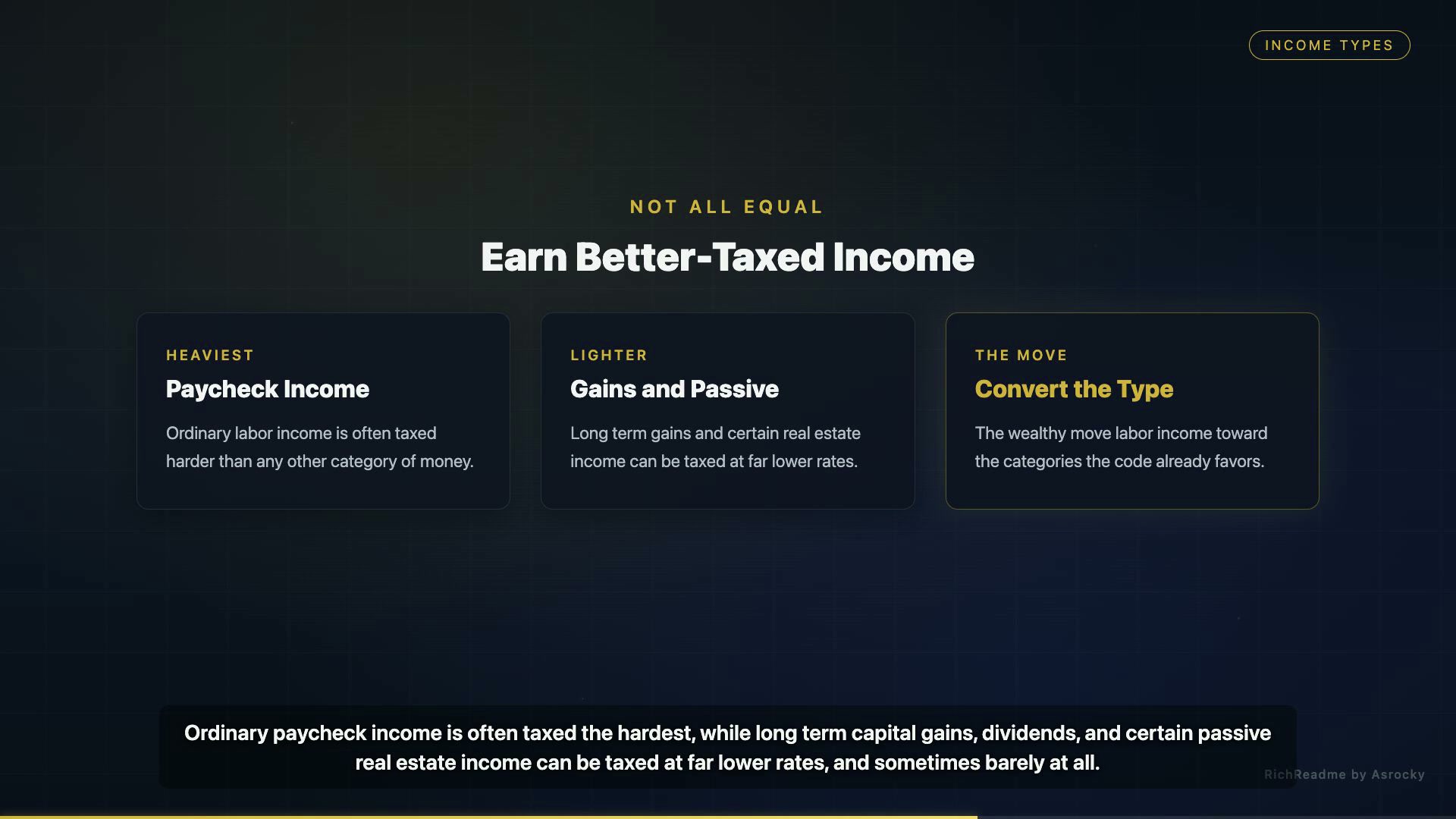
It also matters what kind of income you earn. Not all income is taxed the same. Ordinary paycheck income is often taxed the hardest, while long term capital gains, dividends, and certain passive real estate income can be taxed at far lower rates, and sometimes barely at all.
The wealthy spend a lot of effort converting heavily taxed labor income into lightly taxed investment income. They are not cheating. They are moving their money toward the categories the tax code already favors.
Credits, the Cream of the Crop

If deductions reduce the income that is taxed, credits are even more valuable, because they cut the tax bill itself, dollar for dollar. Governments use credits to directly fund the things they want most, from clean energy to research to hiring certain workers. Wheelwright calls credits the cream of the tax saving crop, and many people leave them unclaimed simply because they never knew they qualified.
A missed credit is not a small oversight. It is money the government was willing to hand you that you did not take.
Choose Your Entity Carefully

The structure around the income matters too, which is why the choice of entity is so important. Operating as a sole proprietor, a partnership, or various forms of corporation can produce very different tax results, depending on the business and the country. The right entity is not a status symbol. It is a legal wrapper chosen to protect your assets and lower your bill, and it should be chosen with professional advice rather than copied from a friend in a different line of work.
Build a Proactive Team

None of this works alone, which is why Wheelwright keeps returning to the team. You need a tax advisor who understands the law, asks you about your goals, and proactively shows you what is possible, instead of just filling in last year's forms. More than that, you need to keep learning yourself, because the very best tax breaks only go to people who know enough to ask for them. Your advisor can open doors, but you have to be willing to walk through them.