One adopted kid from a garage in Los Altos changed six industries, and he did it by refusing to accept the world as it was.
This is Steve Jobs, the exclusive biography by Walter Isaacson, based on more than forty interviews with Jobs himself. It is the story of the most creative entrepreneur of his generation, told without filters, the genius and the cruelty together.
The Abandonment Wound
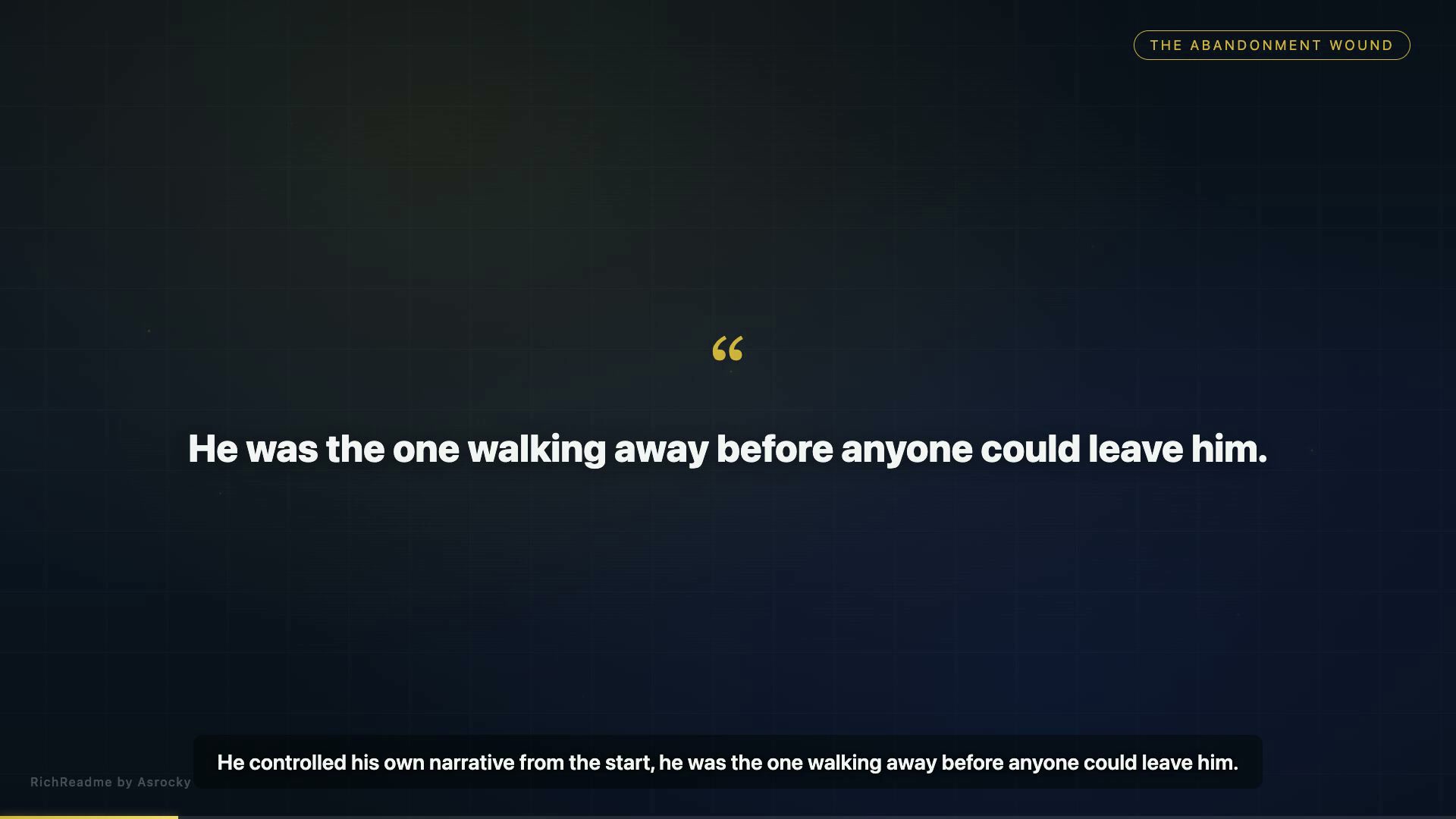
Jobs grew up adopted, and the wound of being abandoned shaped him. He controlled his own narrative from the start, he was the one walking away before anyone could leave him. That control became the engine of his whole life, the refusal to let anyone or anything be out of his control, for better and for worse.
What Shaped Him
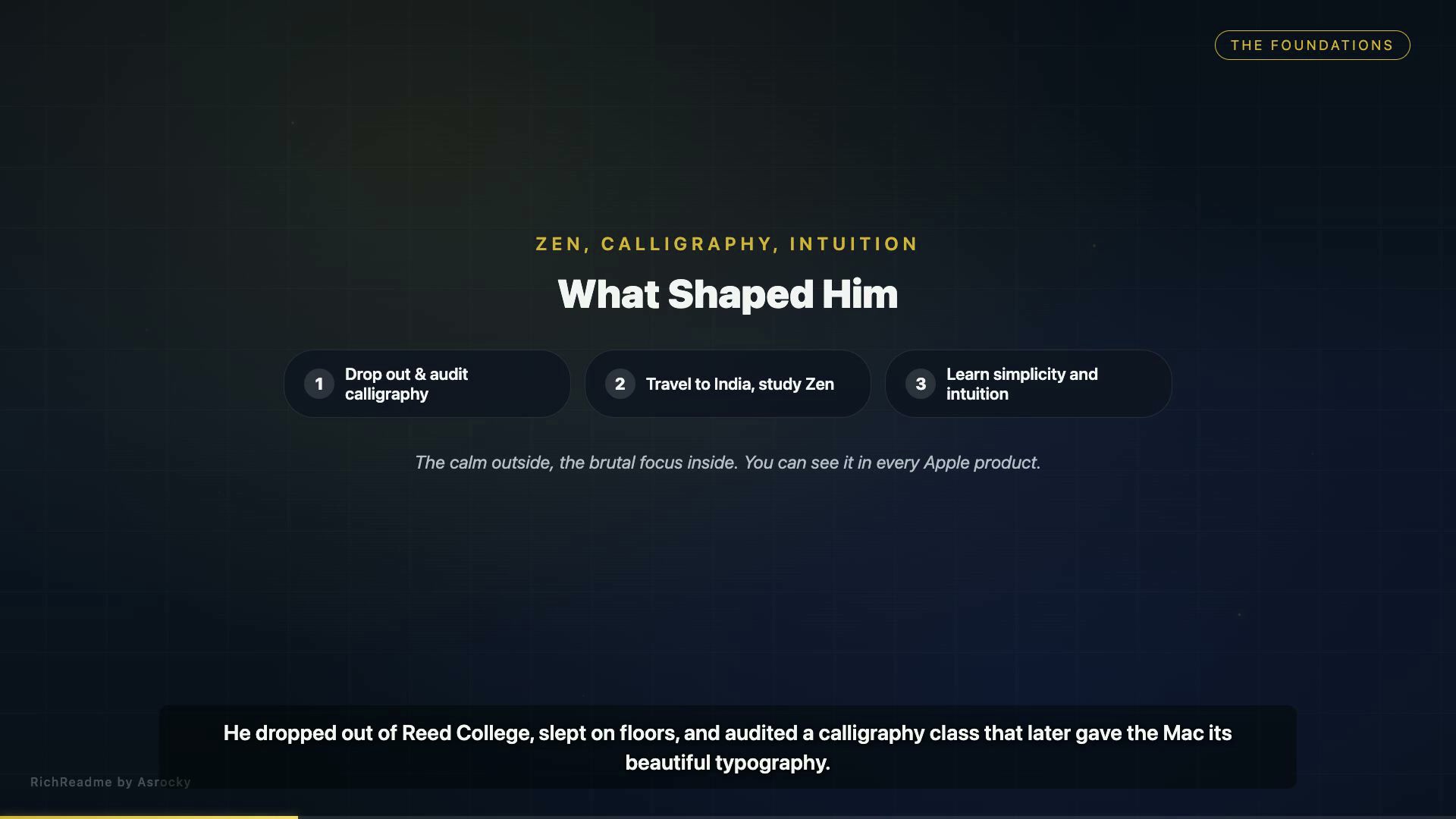
Before he built computers, he built himself. He dropped out of Reed College, slept on floors, and audited a calligraphy class that later gave the Mac its beautiful typography. He traveled to India, shaved his head, and studied Zen.
Buddhism taught him simplicity and intuition, and you can see it in every Apple product. The calm outside, the brutal focus inside.
The Reality Distortion Field
Then came the famous reality distortion field. He convinced people to do the impossible by refusing to accept the impossible. Deadlines that made no sense, features that seemed years away, he bent reality until it snapped into his version. It was manipulative, exhausting, and at the same time, it was how he willed the Mac into existence.
The Price of Greatness
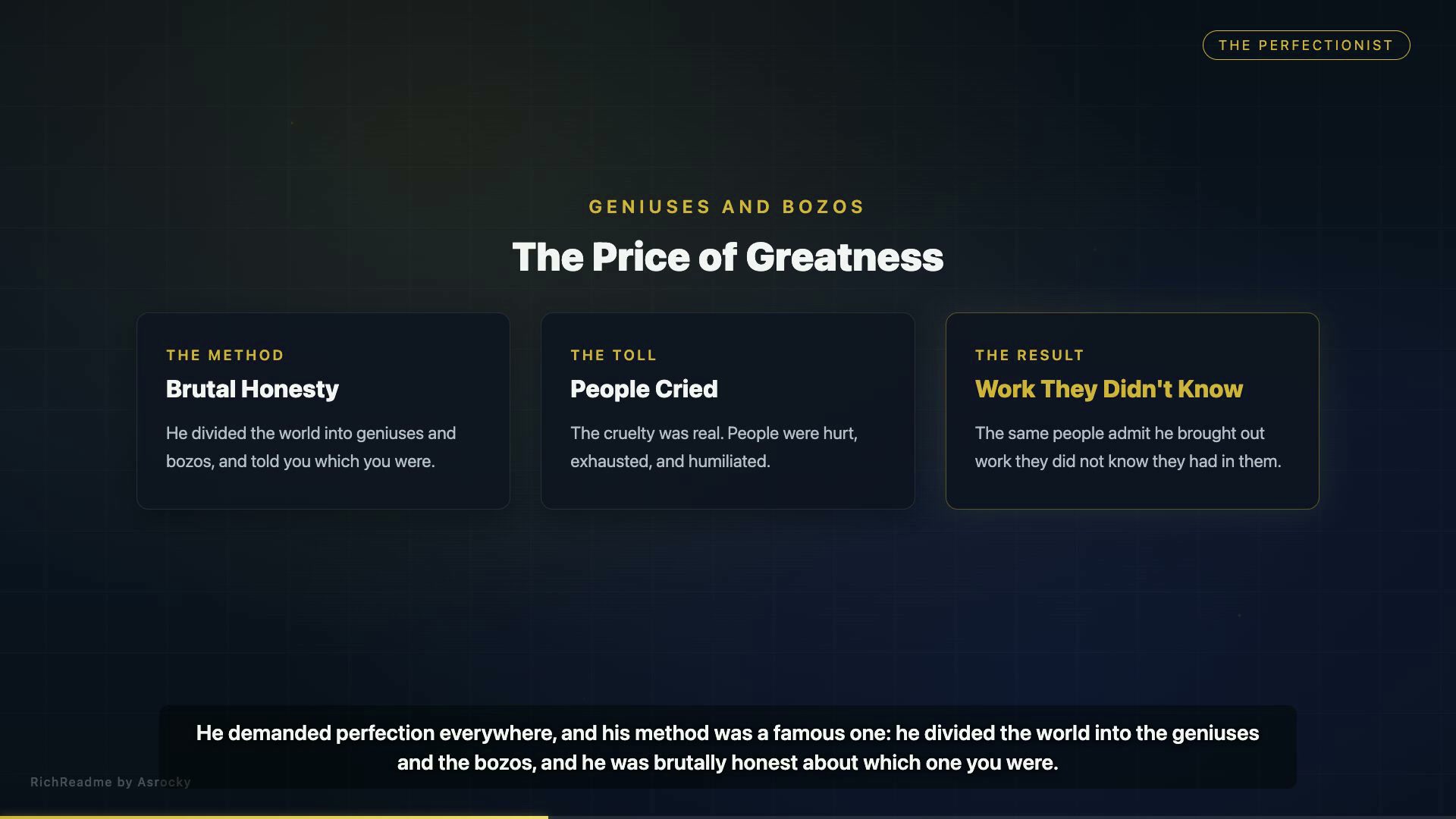
He demanded perfection everywhere, and his method was a famous one: he divided the world into the geniuses and the bozos, and he was brutally honest about which one you were. People cried in his office. But the same people admit he brought out work they did not know they had in them. The cruelty and the greatness were the same force.
The Fall and the Return

Then the story turns. In 1985, the board he helped build fired him from his own company. It was the most public humiliation of his life.
And it freed him. He started NeXT, bought a tiny graphics studio from George Lucas, renamed it Pixar, and turned it into the animation company that made Toy Story.
The Product Line

When Apple was dying in 1997, it bought NeXT and brought him home. He killed most of the product line, and then he did what he did best: he focused. One desktop, one laptop. The iMac saved the company.
The iPod reinvented music. The iPhone reinvented the phone. And the iPhone was not an accident, it was the result of asking one question: what do we hate about our phones, and what would the perfect one feel like?
The Design Philosophy
His design philosophy never changed. Simplify. Remove the extra button.
Make it so obvious your grandmother can use it. Jobs believed that technology alone was not enough, it had to intersect with the humanities, with art, with emotion. That intersection is why Apple products feel the way they do.
The Final Chapter
The last chapter is the most human. When he was diagnosed with pancreatic cancer, he refused surgery at first, searching for alternatives, and the delay likely cost him years. He faced death the way he faced everything, on his own terms.
And at the end, his reflections were not about products. They were about his family, and about the people he loved but sometimes failed.
What He Leaves Us
So what is the lesson of Steve Jobs? That focus and taste and intensity can move the world. That the same fire that makes a genius can burn the people around him. And that the products we remember are the ones built at the intersection of technology and humanity, by someone who refused to compromise.