Every company on the planet knows what it does. Almost none can explain why they do it.
This is Start With Why, by Simon Sinek. He is a leadership expert who noticed that a tiny handful of leaders and companies, no matter the industry, achieve something the rest cannot. They inspire real loyalty.
People buy from them not because the product is slightly better, but because they believe what the company believes. Sinek calls the pattern behind it the Golden Circle, and once you see it, every great brand story suddenly makes sense.
Why, How, What
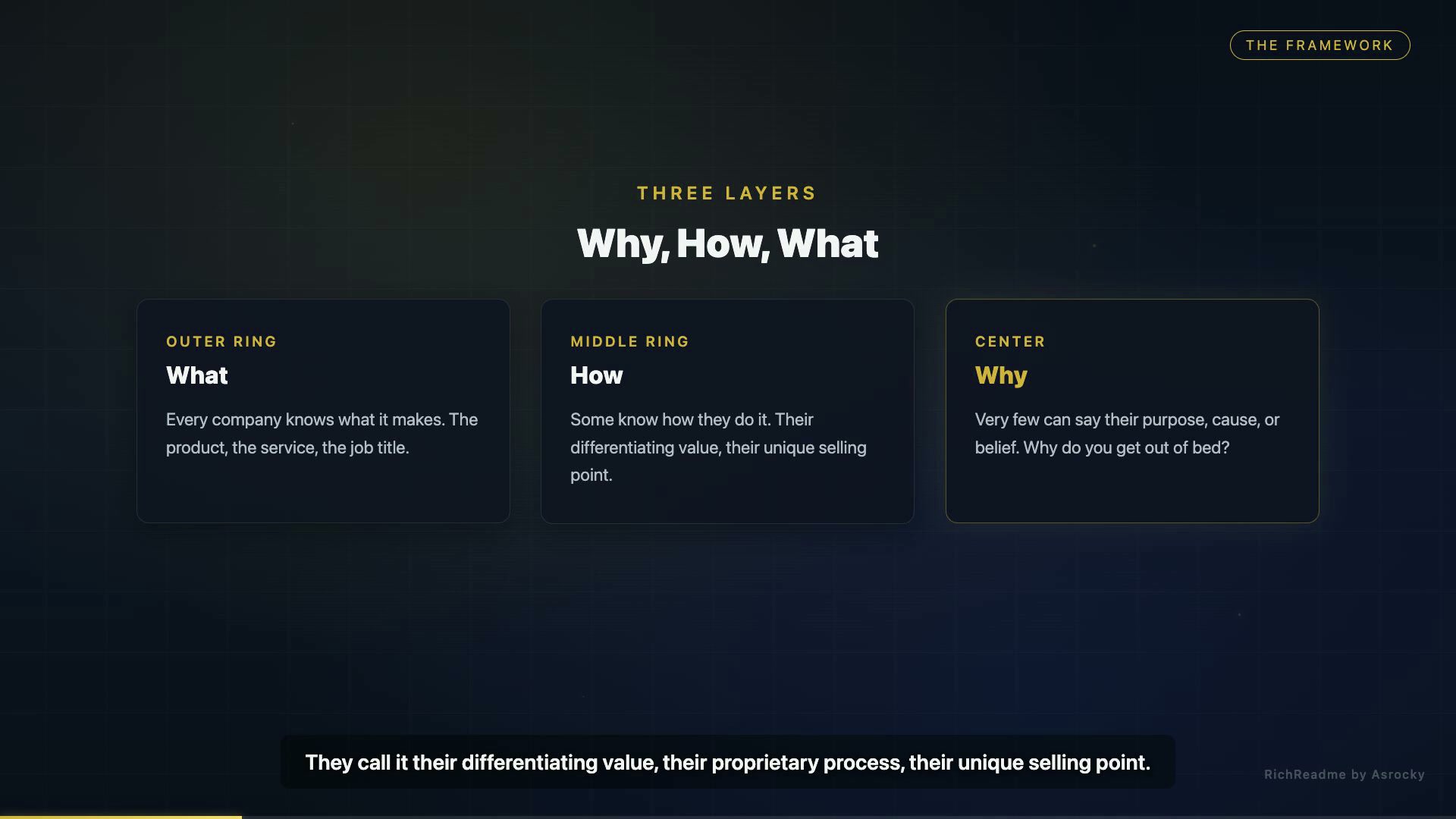
The Golden Circle has three layers. On the outside is What. Every single company knows what it makes. That is the product, the service, the job title. One layer in is How. Some companies know how they do what they do. They call it their differentiating value, their proprietary process, their unique selling point.
At the very center is Why. Very few people can clearly say why they do what they do. Sinek is careful here. Why is not to make money. That is a result. Why is your purpose, your cause, your belief. Why do you get out of bed in the morning, and why should anyone care?
What, Then How, Then Buy
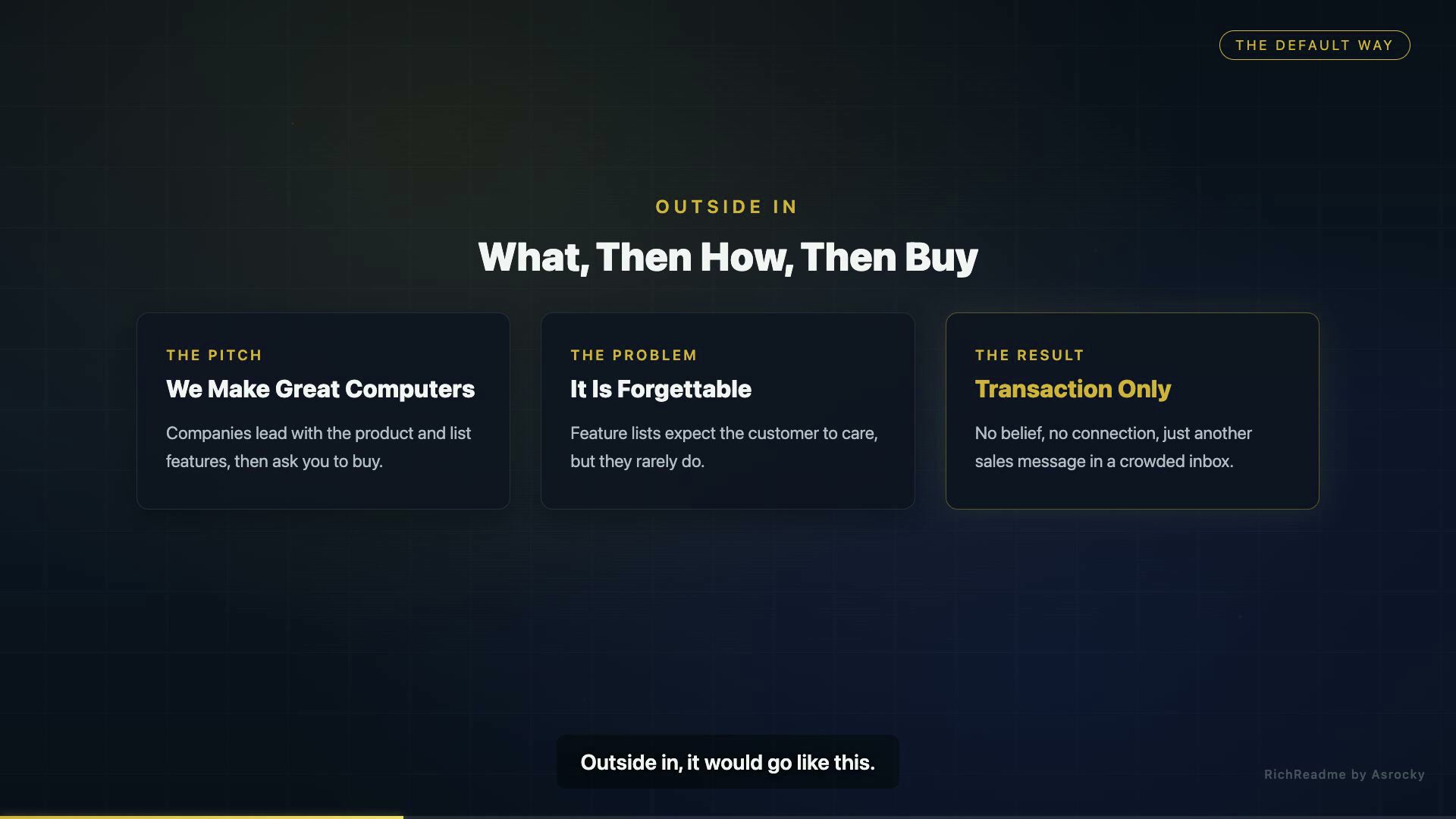
Most organizations communicate from the outside in. They start with What, then How, then a call to action. Sinek rewrites a typical Apple pitch to show how dull that sounds. Outside in, it would go like this. We make great computers.
They are beautifully designed, simple to use, and user friendly. Wanna buy one? That is how almost every company talks, and it is almost completely forgettable. It lists features and expects you to care.
Start With the Belief
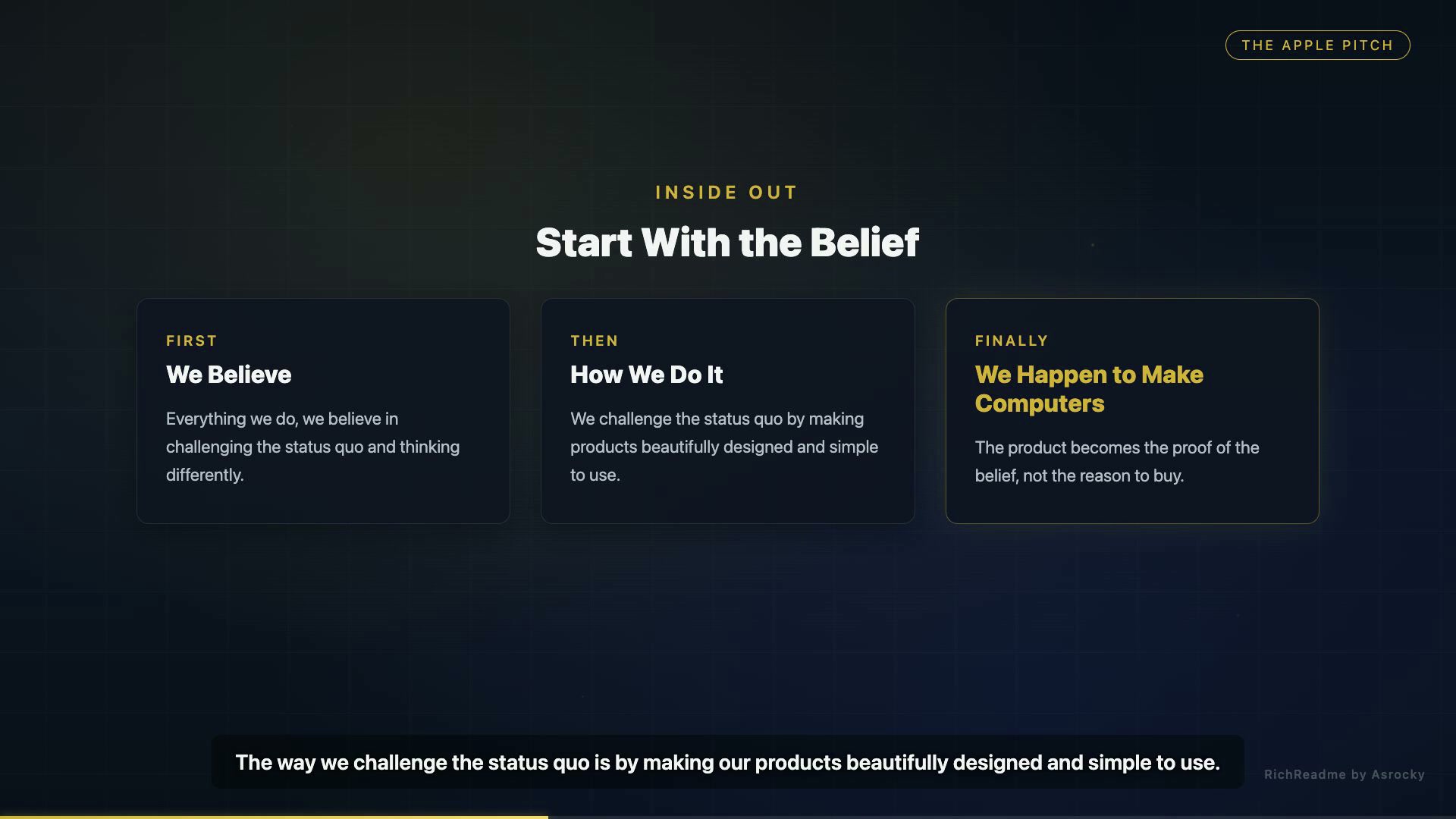
Now hear the pitch the way Apple actually tells it. Everything we do, we believe in challenging the status quo. We believe in thinking differently. The way we challenge the status quo is by making our products beautifully designed and simple to use. And we happen to make great computers.
Wanna buy one? Sinek points out that nothing factual changed. The same computers, the same features. The only difference is the order. It starts with a belief, and the products become the proof of that belief.
The Thesis
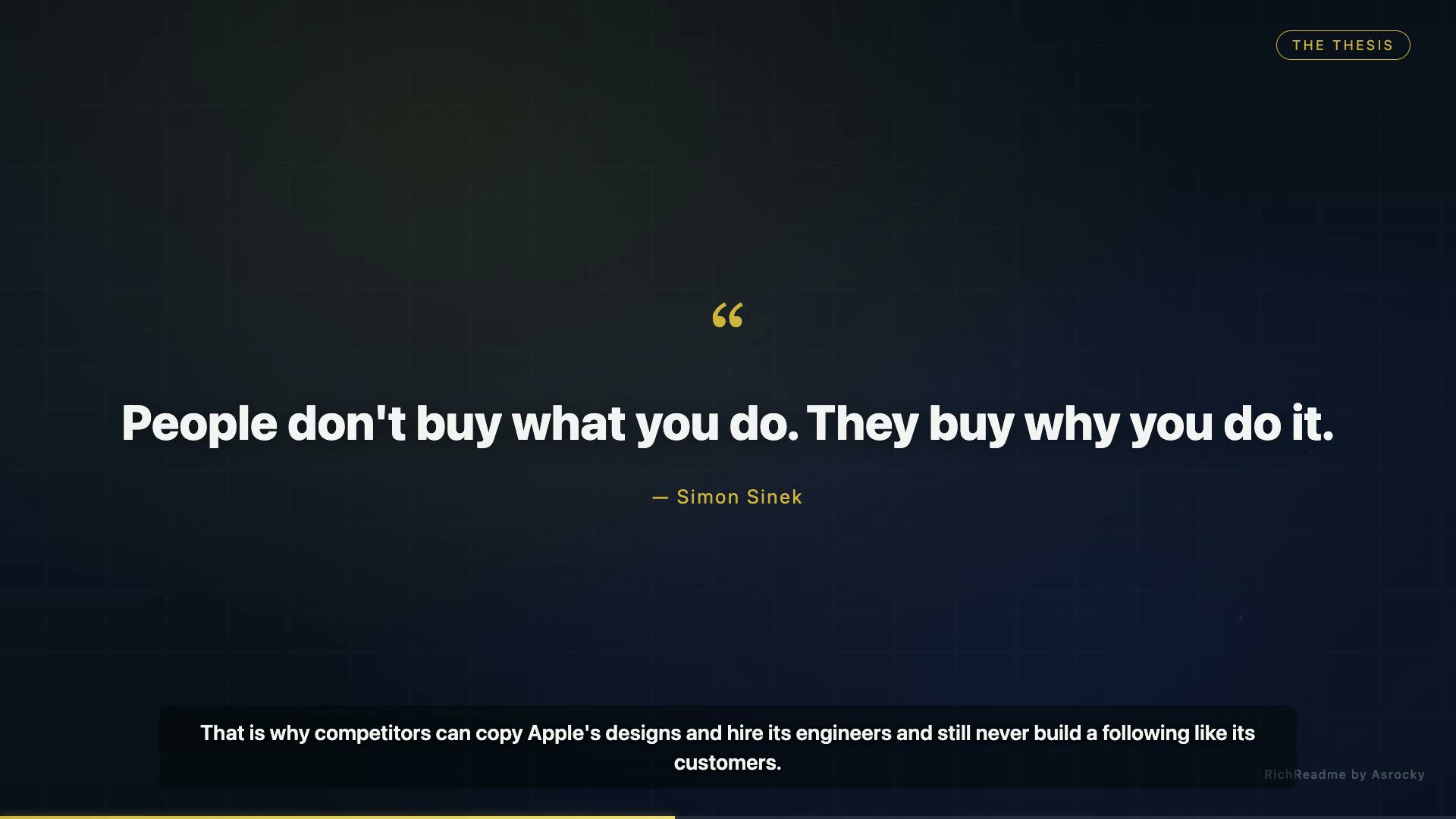
The line deserves repeating. People do not buy what you do. They buy why you do it.
What you sell is only the evidence that you mean what you believe. That is why competitors can copy Apple's designs and hire its engineers and still never build a following like its customers. They copied the What and the How, but they never found the Why.
Hearts Before Minds
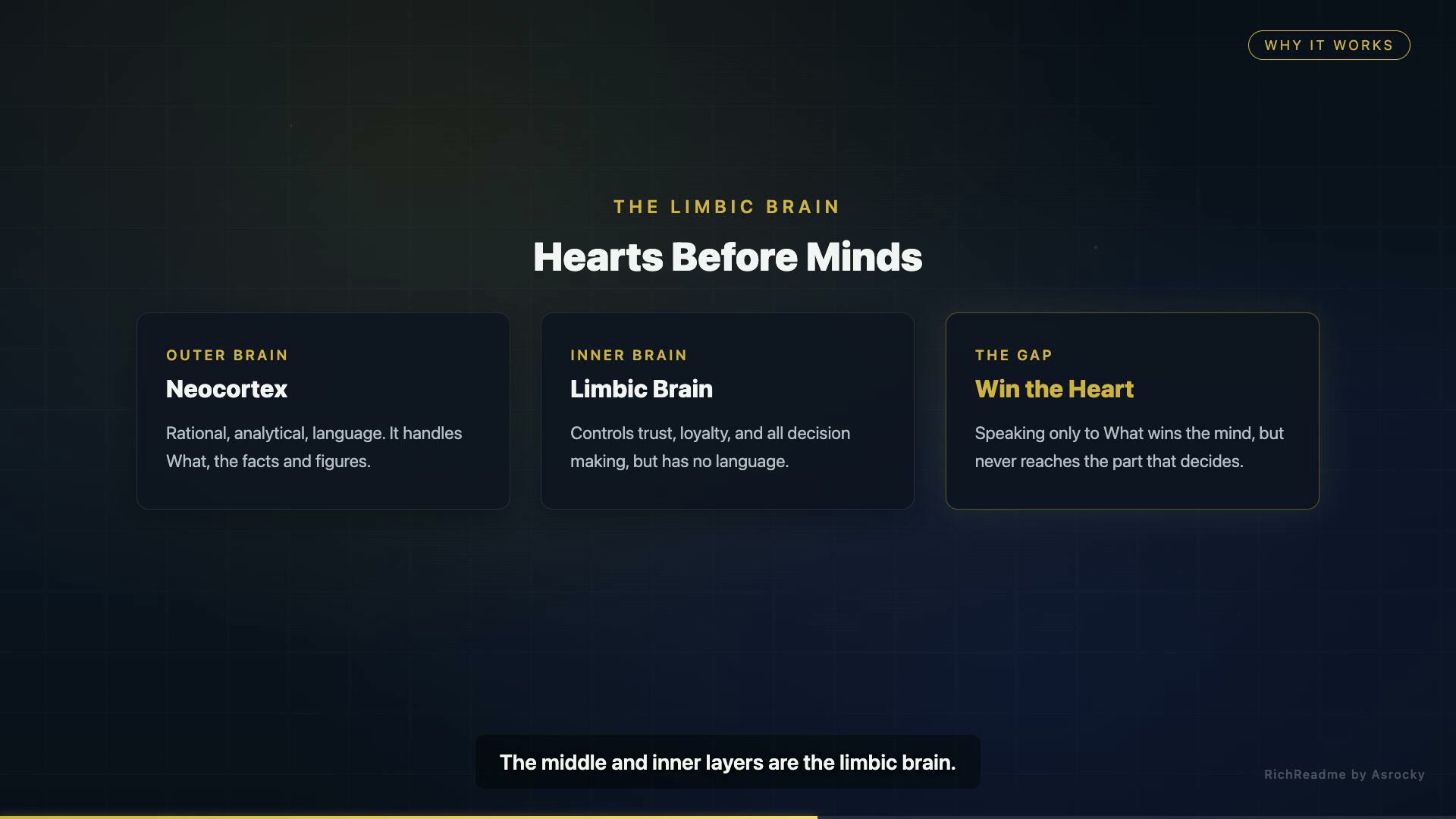
The reason this works is biology, not opinion. The human brain is built in three layers that line up with the Golden Circle. The outer layer, the neocortex, is the rational and analytical brain. It handles language and What. The middle and inner layers are the limbic brain.
The limbic brain controls feelings like trust and loyalty, and it drives almost all decision making. But it has no capacity for language at all. This is why gut decisions feel right even when you cannot explain them. When a company speaks only to What, it wins the customer's mind but never reaches the part of the brain that actually decides to buy.
Manipulations Work, Once
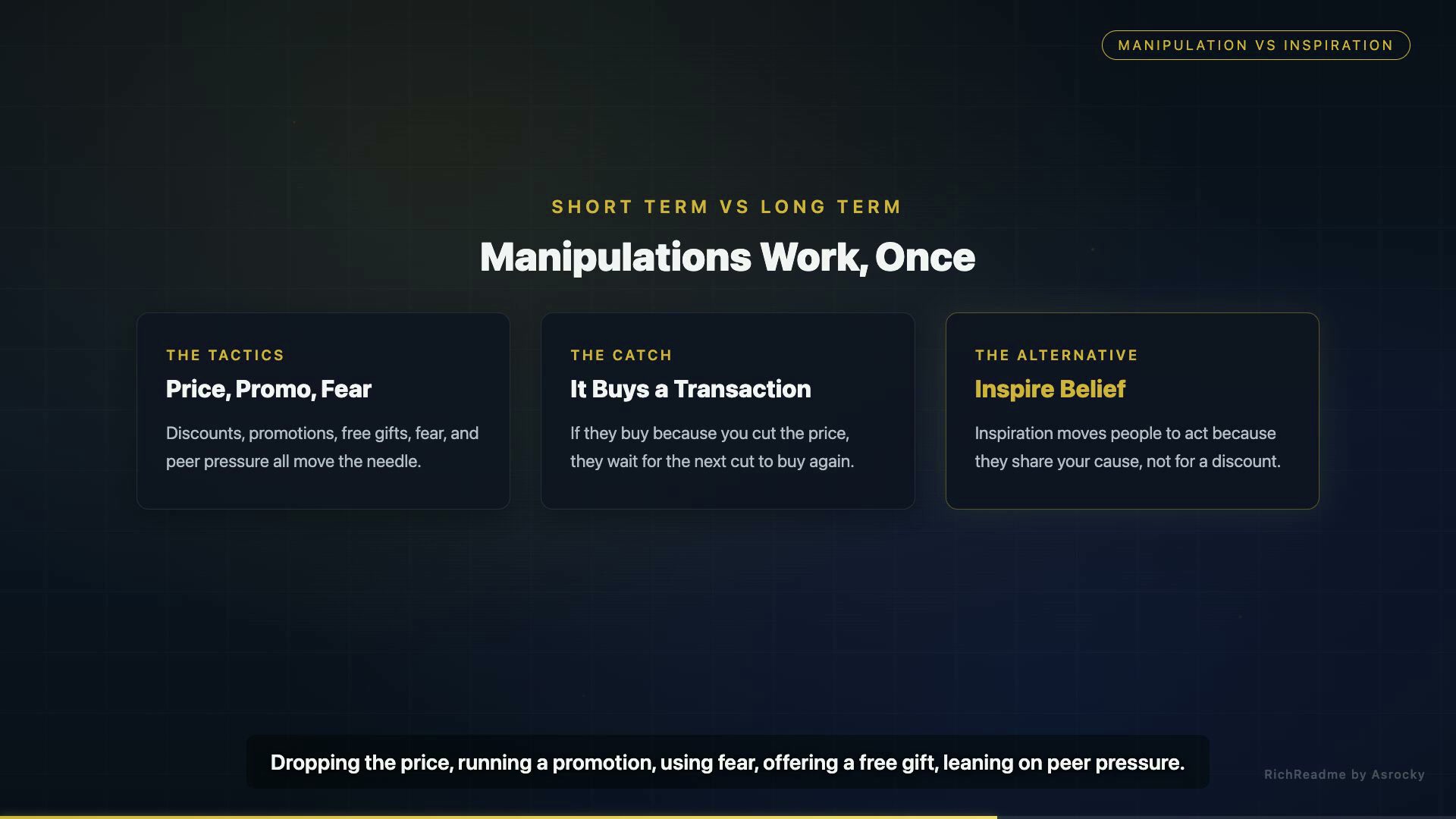
This is the gap between manipulation and inspiration. Sinek says there are only two ways to influence human behavior. You can manipulate people, or you can inspire them. Manipulations work.
Dropping the price, running a promotion, using fear, offering a free gift, leaning on peer pressure. Every one of them moves the needle in the short term. The problem is that they only produce a transaction. If you buy from me because I cut the price, then next time you buy, you are just waiting for me to cut it again.
Trust Is the Moat
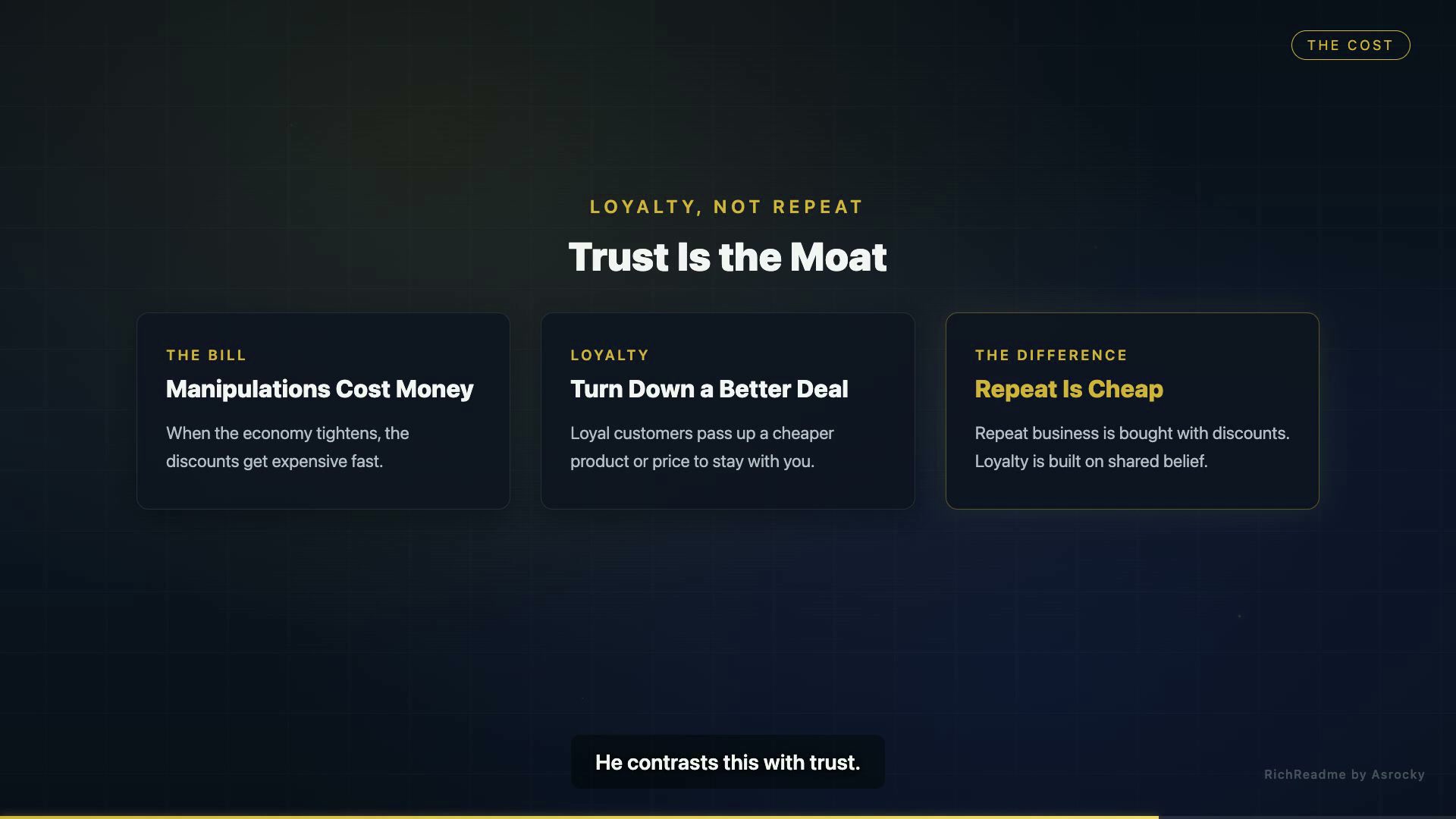
Sinek is blunt about the cost. Manipulations work, but they cost money. Lots of money. When the economy turns and the discounts become too expensive, the companies without loyal customers get crushed. He contrasts this with trust.
Loyalty is when a customer turns down a better product or a better price to keep doing business with you. Loyal customers do not even shop around. Repeat business is easy to buy with another discount. Real loyalty is built when people feel that what you believe is what they believe.
Start Everywhere With Why
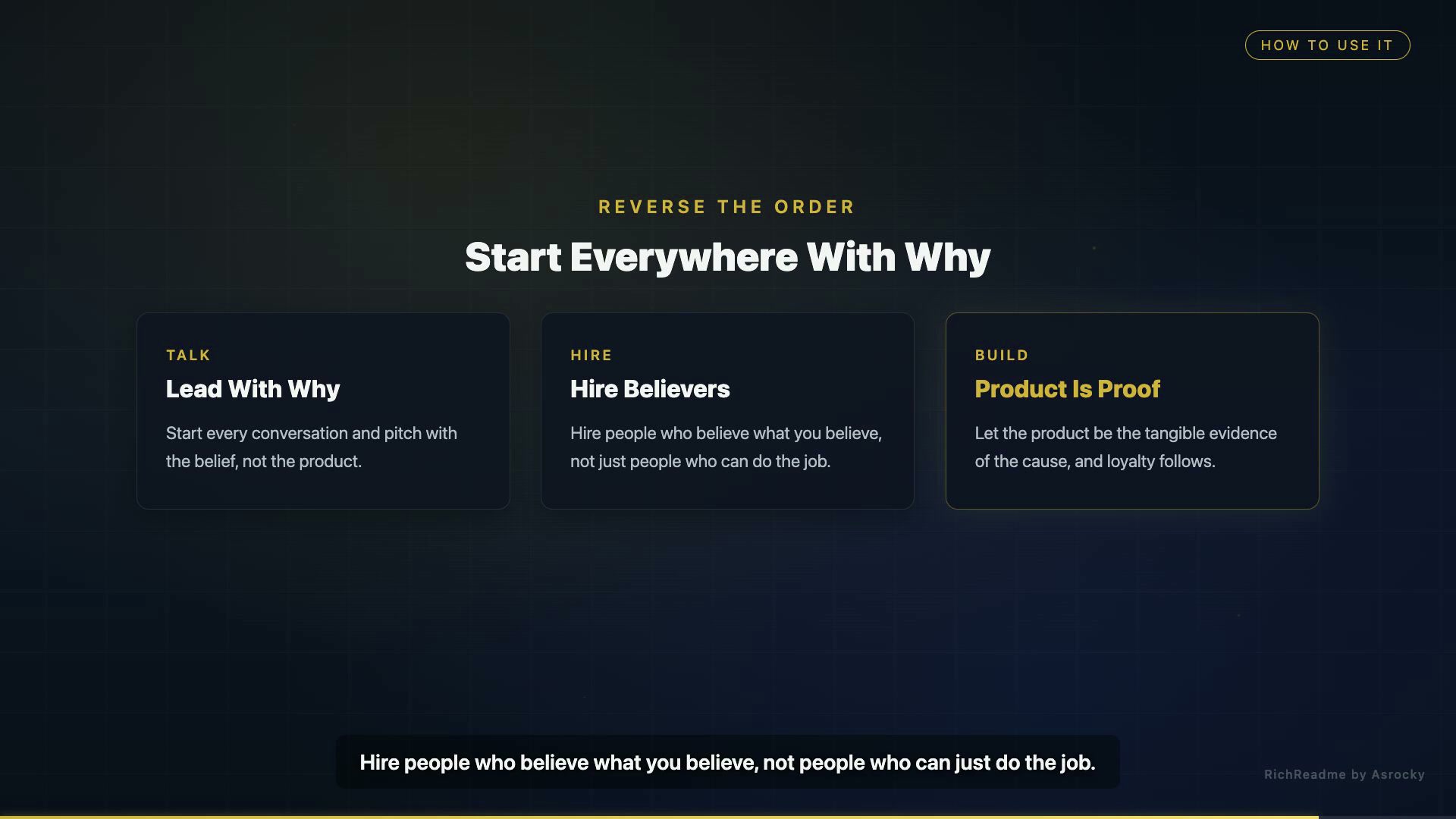
The practical takeaway is not to bolt a mission statement onto your website. It is to reverse the order of everything. Start every conversation, every hire, every product decision, with the Why first.
Hire people who believe what you believe, not people who can just do the job. Sell the cause first, and let the product be the proof. The companies that do this are the ones people tattoo on their bodies, the ones that survive when the market turns, the ones that move people to act instead of begging them to.