Everyone thought Phil Knight was crazy. With fifty dollars, he built Nike. Here is how.
This is Shoe Dog by Phil Knight, the memoir of how a middle-class accountant built the most iconic sports brand on earth. It starts in 1962, when Knight, fresh out of business school, decided to import cheap, high-quality running shoes from Japan. His bank said no.
His family thought he was wasting his life. He did it anyway, with fifty dollars and a handshake.
From $50 to a First Order
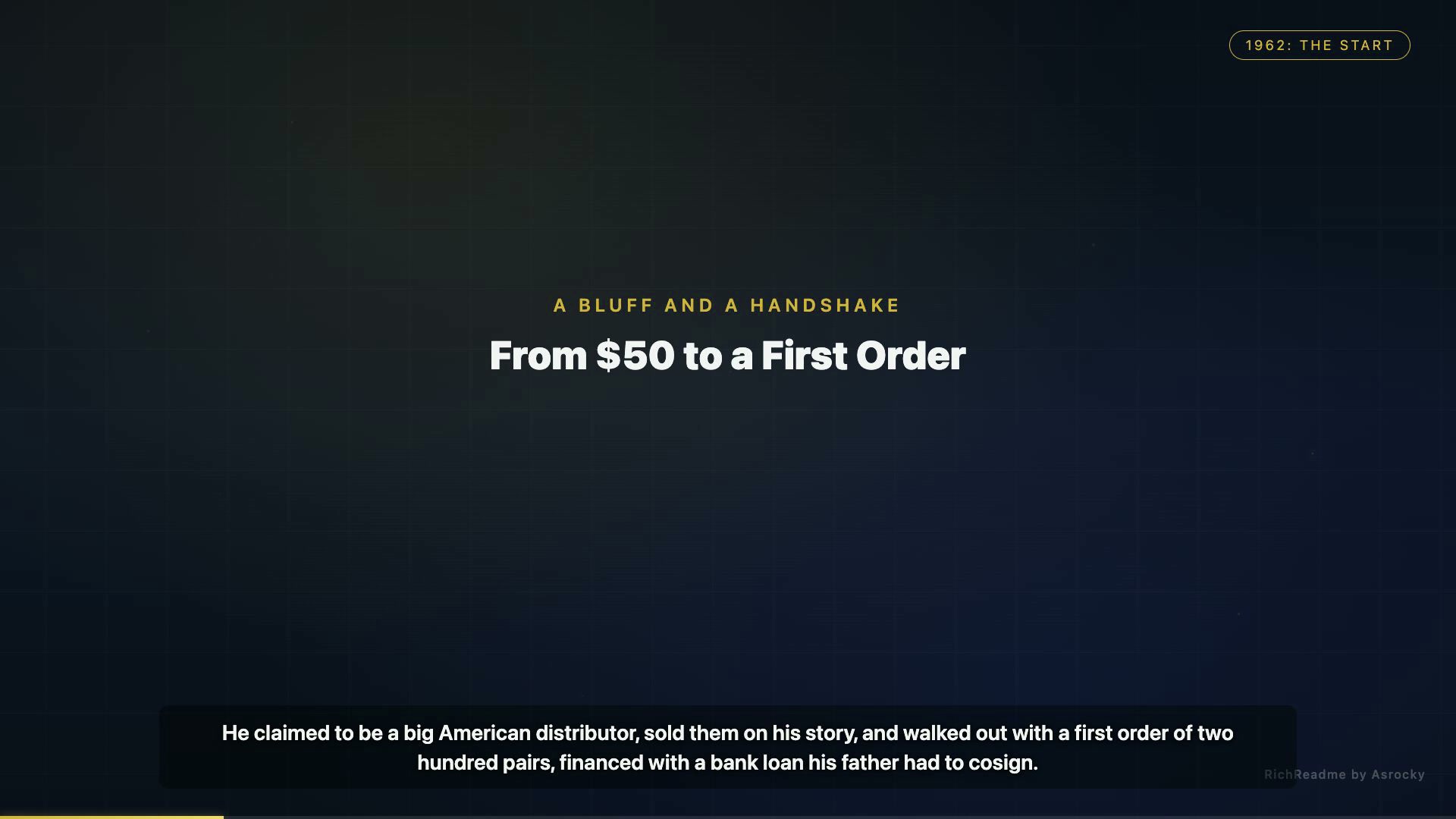
The company was Blue Ribbon Sports. Knight flew to Japan and talked his way into a meeting with Onitsuka Tiger, the maker of the Tiger shoe. He claimed to be a big American distributor, sold them on his story, and walked out with a first order of two hundred pairs, financed with a bank loan his father had to cosign.
Every step was a bluff. That is how it started.
The Grind

Then came the grind that nobody sees. Knight sold shoes from the trunk of his car at track meets. He hired runners, like his first employee, a coach named Jeff Johnson, who sold shoes and wrote letters to every customer by hand.
The money barely moved. Knight lived in his parents' house, worked as an accountant during the day, and ran the business at night. For years, survival was the only plan.
Cash Is Oxygen
The real education was money. Blue Ribbon kept running out of it, so Knight found a Japanese trading company, Nissho Iwai, to fund the inventory. In exchange, they got control of the credit. When the money came through, Knight felt relief, then dread, because now he owed them everything.
His banker at the Bank of California, a man named Harry, became his lifeline, and the lesson stuck: never let the money run out again. The turning point came when Onitsuka tried to cut him out and buy a controlling stake in his company. Knight and his partners realized the Japanese brand would always treat them as a distribution channel, not a partner. So in 1971, they bet everything on their own brand: Nike, named after the Greek goddess of victory, with a logo designed by a student for thirty-five dollars.
Surviving the Dark Years
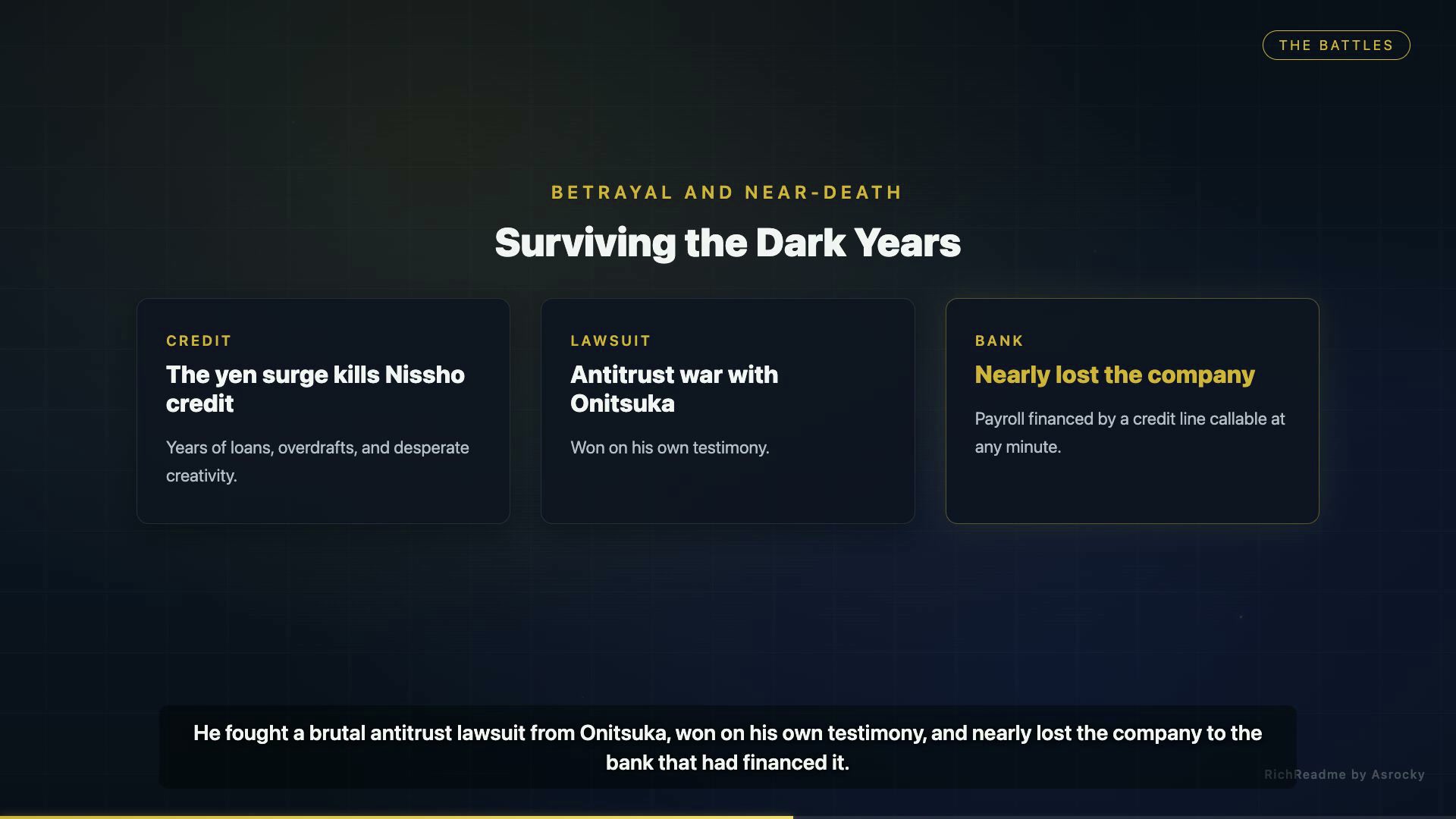
Then the betrayals and battles began. The Nissho credit dried up when the yen surged, and for years Knight survived on loans, overdrafts, and desperate creativity. He fought a brutal antitrust lawsuit from Onitsuka, won on his own testimony, and nearly lost the company to the bank that had financed it. At the lowest point, he was financing payroll with a line of credit that could be called at any minute.
The Breakthrough
The breakthrough was the waffle shoe. Nike's co-founder Bill Bowerman, obsessed with making shoes lighter, poured rubber into his wife's waffle iron and created the Waffle Trainer. It was the first hit that made Nike a real brand, not a distributor. From there, the company compounded: the Cortez, the Tailwind, and the moment that changed everything, signing a young runner named Steve Prefontaine, who made Nike the rebel's shoe.
Build a Team That Believes
Knight's philosophy was built through the chaos. He never had a grand plan, he just kept the company alive one day at a time, and he hired people he liked and trusted, even when their resumes said nothing. He calls it being a co-conspirator: build a team of people who want the same crazy thing, and then give them freedom.
The culture was not in a mission statement. It was in the people.
The Journey, Not the Destination

In 1980, Nike went public, and Knight became a billionaire on paper, but the book ends on a quieter note. He runs every morning, he still thinks like the guy selling shoes from a car trunk, and he credits the journey, not the destination. Crazy ideas, he writes, are not enough. You need a team of people who believe in them, and you need to survive long enough to prove them right.
The Lesson

The lesson of Shoe Dog is not about shoes. It is about endurance. Start small, bluff your way in, survive the cash crunches, keep the people who believe, and let the obsession pull you through the years when nothing works. That is how a fifty-dollar idea becomes a global brand.