What do the world's greatest investors know that you do not? It is not a secret formula. It is a way of thinking, and it leaks into every part of their lives.
This is Richer, Wiser, Happier by William Green, twenty-five years of interviews with the best investors alive, distilled into one book. It is not just about money. It is about how to think, how to avoid ruin, and how to live.
Clone the Greats
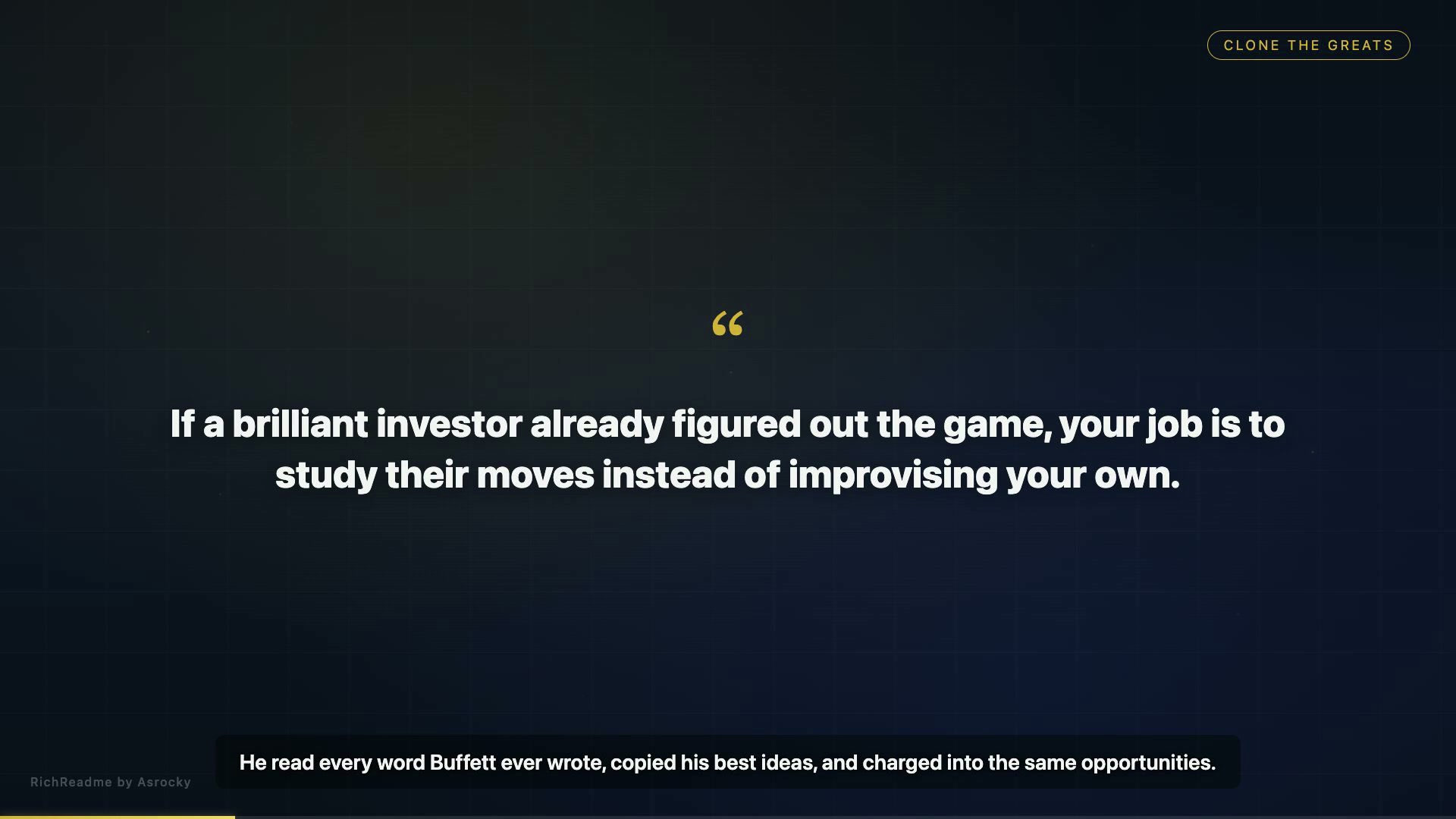
The first lesson is that you do not have to invent anything. Mohnish Pabrai made a fortune by cloning Warren Buffett. He read every word Buffett ever wrote, copied his best ideas, and charged into the same opportunities.
Imitation is not flattery here, it is strategy. If a brilliant investor already figured out the game, your job is to study their moves instead of improvising your own.
The Willingness to Be Lonely
The second lesson is the willingness to be lonely. The best investors are happy to look wrong for long stretches. Nick Sleep sat on a concentrated portfolio for years while critics called him crazy, and it made him a fortune.
The crowd is usually wrong at exactly the moments that matter. You cannot win by checking the ticker every hour and agreeing with everyone.
Assume You Can Be Wrong
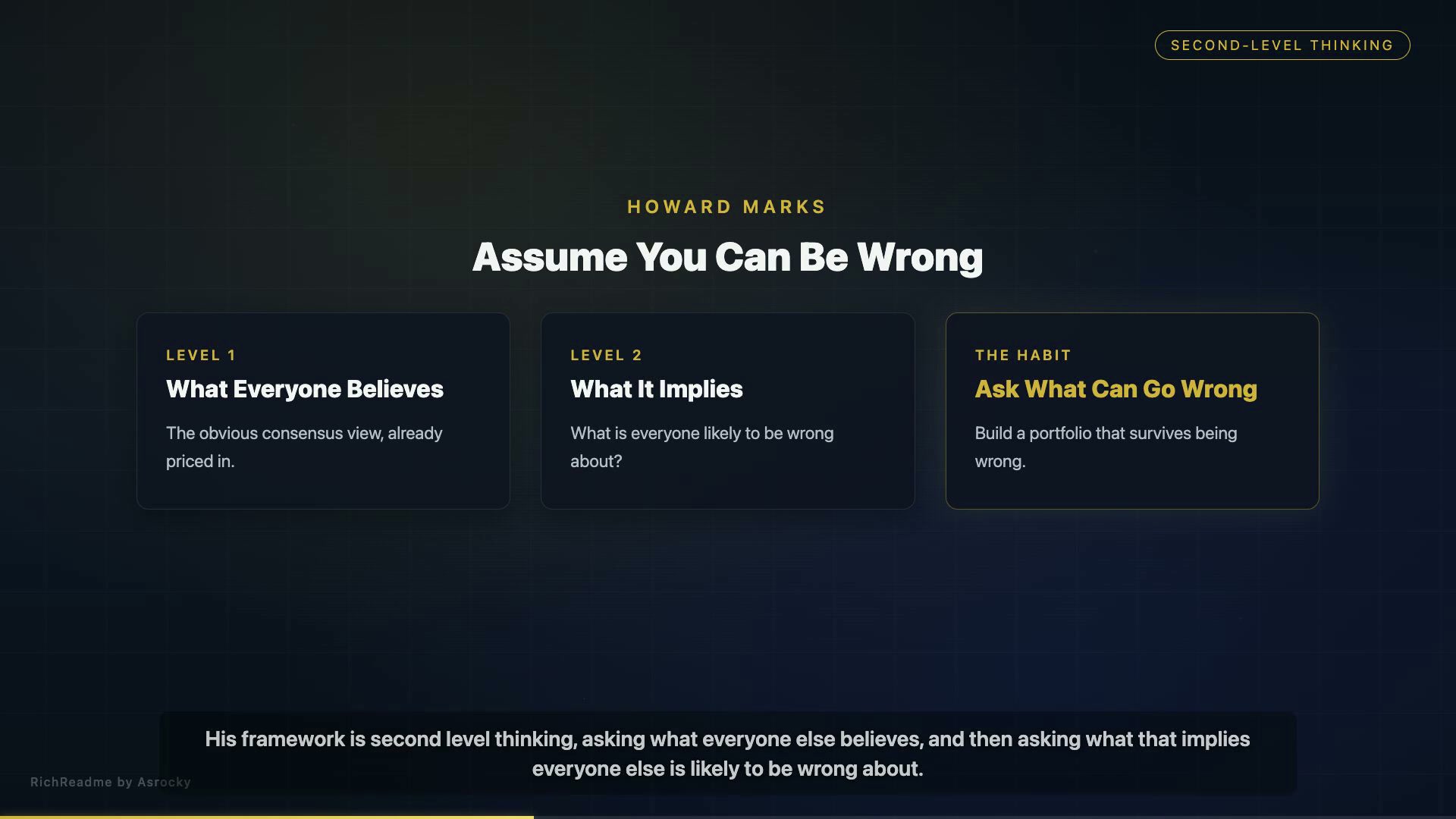
Then there is humility in the face of uncertainty. Howard Marks says the key is to accept that you cannot predict the future, so you build a portfolio that survives being wrong. His framework is second level thinking, asking what everyone else believes, and then asking what that implies everyone else is likely to be wrong about. And his favorite habit is simple: always ask what can go wrong.
Simplicity
The fourth lesson is that simplicity beats cleverness. Greenblatt and others found that a handful of cheap, high quality businesses beat complex strategies. The more moving parts, the more ways to break. The greatest investors describe the same practice: invest in what you understand, hold for decades, and do very little.
Lifelong Habits
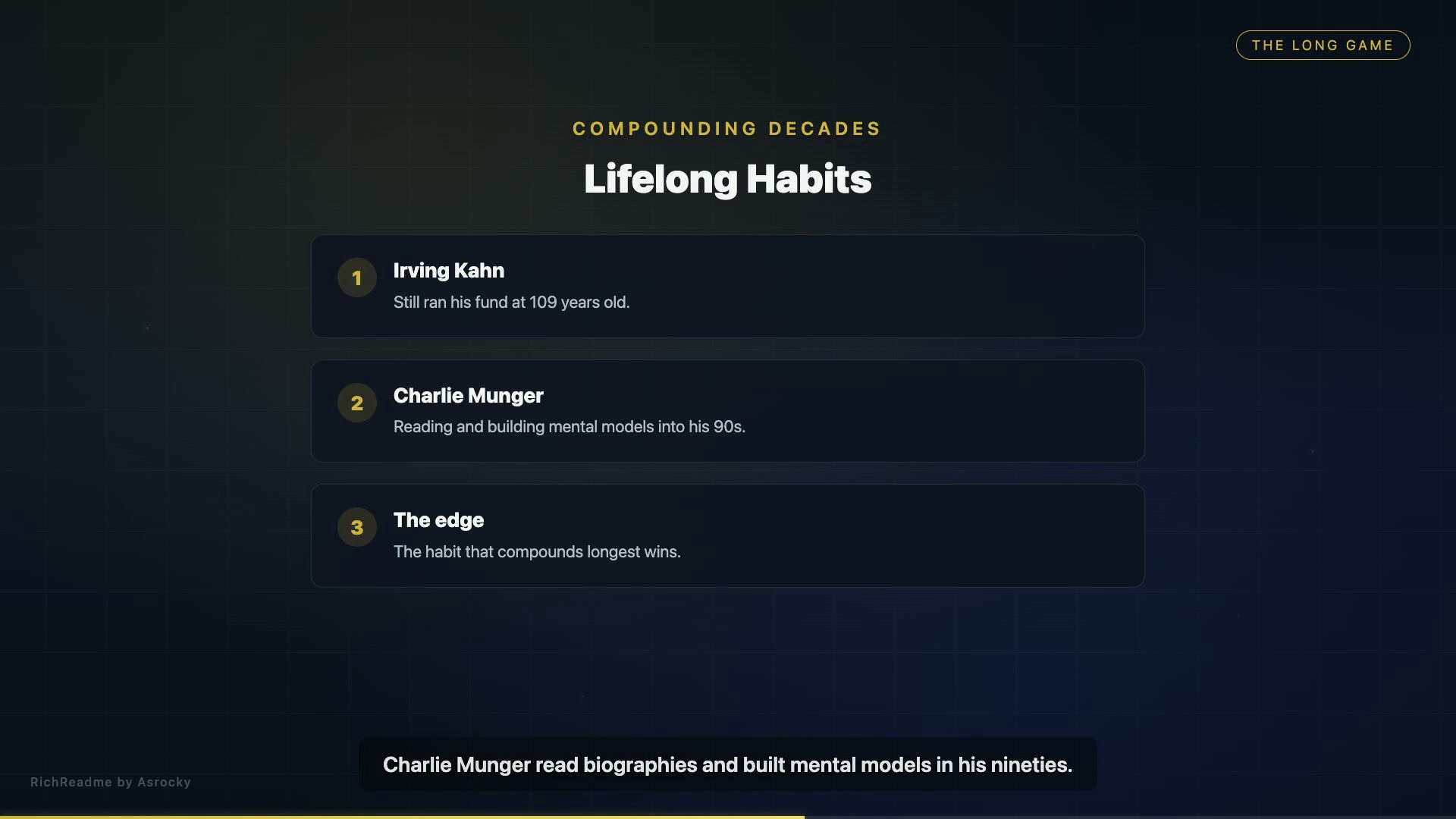
And they treat investing like a lifelong sport, not a sprint. Irving Kahn was still running his fund at one hundred and nine years old. Charlie Munger read biographies and built mental models in his nineties. The habit that compounds longest wins, and that habit is reading, thinking, and staying calm.
Ways the Brilliant Self-Destruct
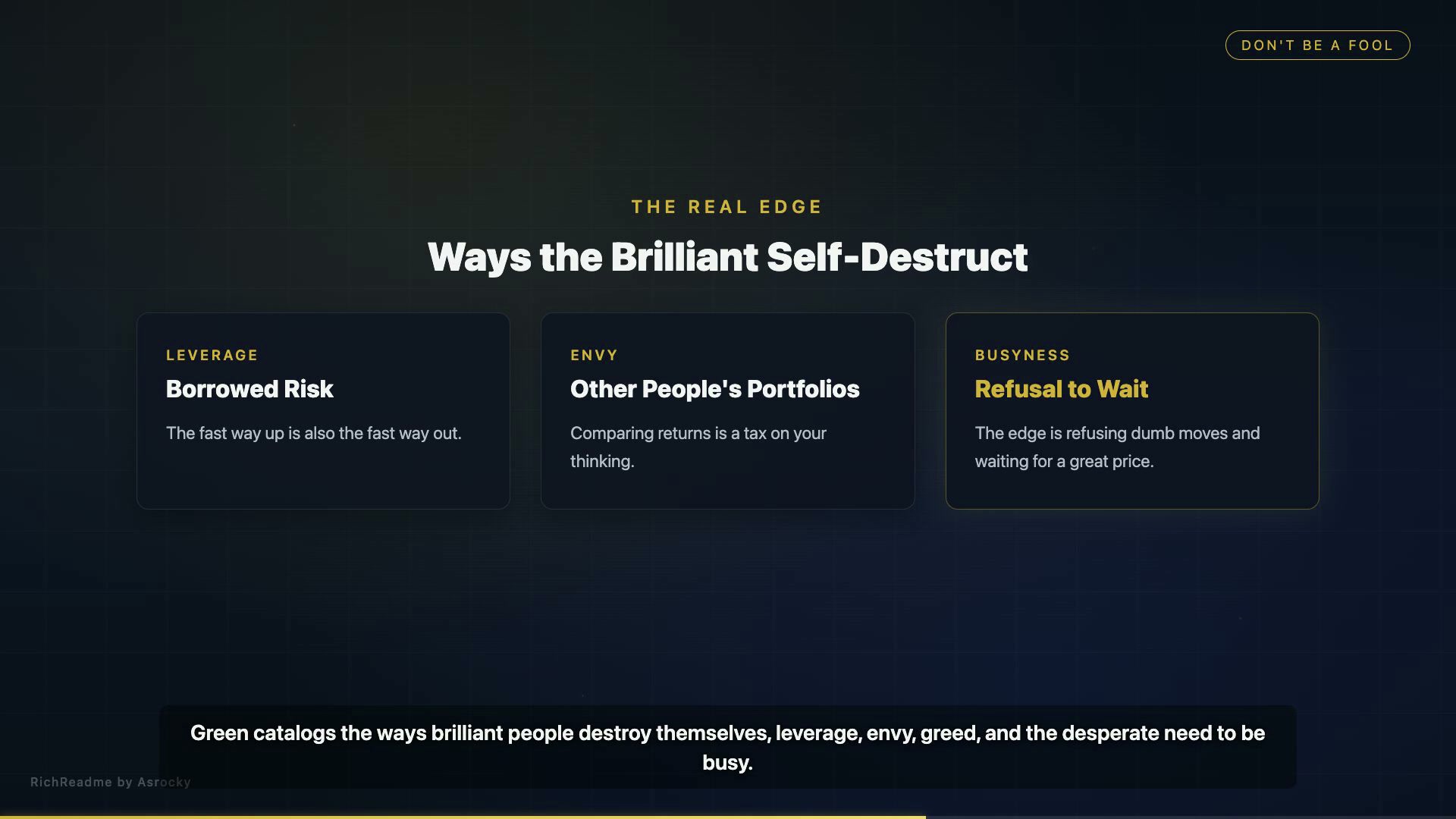
The book also warns you in the bluntest way: do not be a fool. Green catalogs the ways brilliant people destroy themselves, leverage, envy, greed, and the desperate need to be busy. The investor's real edge is often just the refusal to do dumb things, and the patience to wait for a great price.
Beyond Money
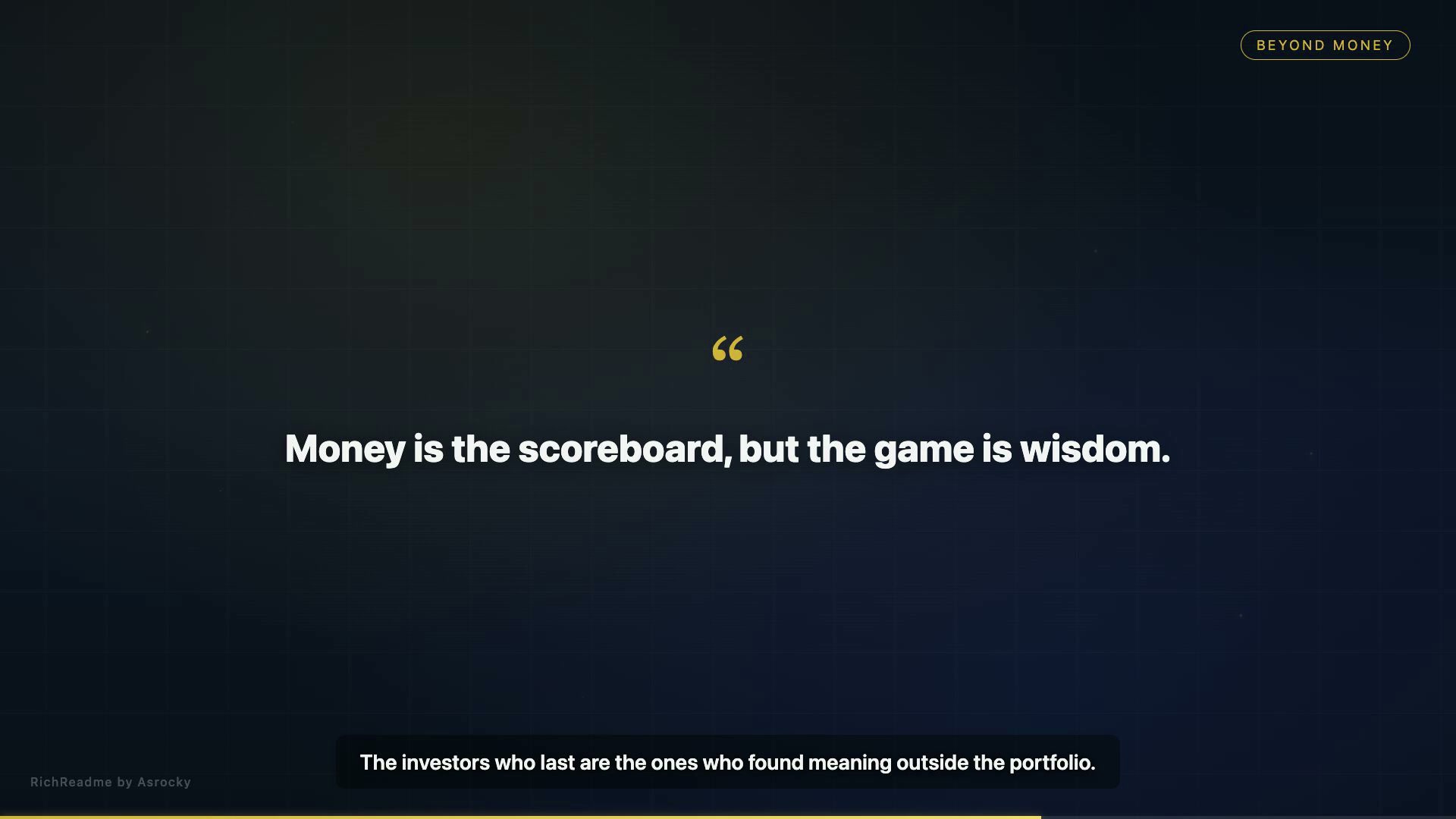
Underneath all the finance is a quieter message. The investors who last are the ones who found meaning outside the portfolio. The happiest of them treat generosity, family, and character as assets worth more than returns. Money is the scoreboard, but the game is wisdom.
The Investor's Code
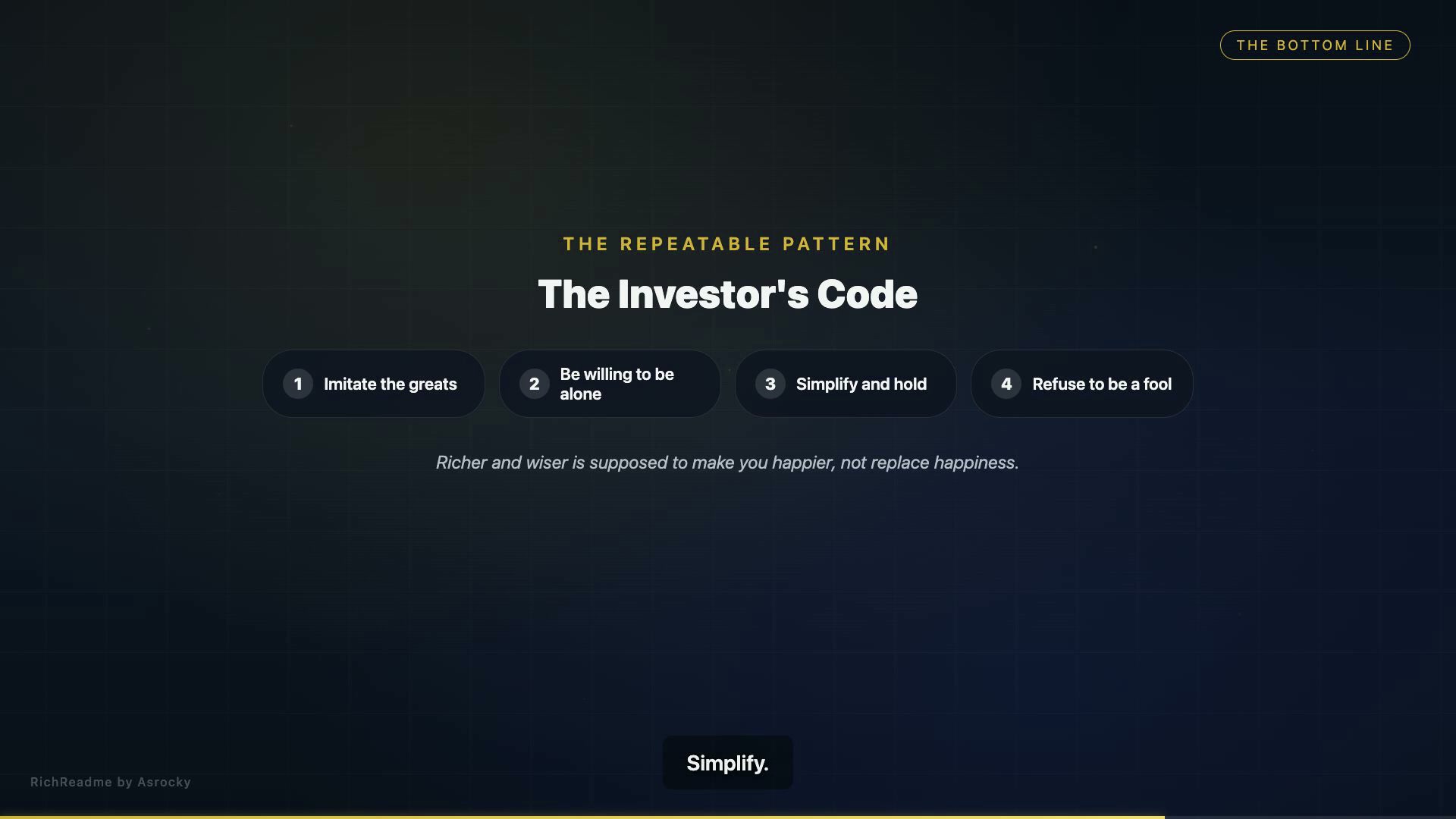
So the pattern repeats across every chapter. Imitate the greats. Be willing to be alone. Assume you can be wrong.
Simplify. Keep learning for decades. Refuse to be a fool. And remember that becoming richer and wiser is supposed to make you happier, not replace happiness.