Your business could be a million dollars in sales and still go broke. Cash flow does not equal profit. The math is lying to you.
This is Profit First by Mike Michalowicz, the book that flips the most basic accounting formula on its head. It has helped hundreds of thousands of small businesses become profitable without raising prices or cutting costs. Michalowicz built and sold two companies before discovering this system, after watching his own business blow up despite big revenue numbers.
Why There's Never Anything Left
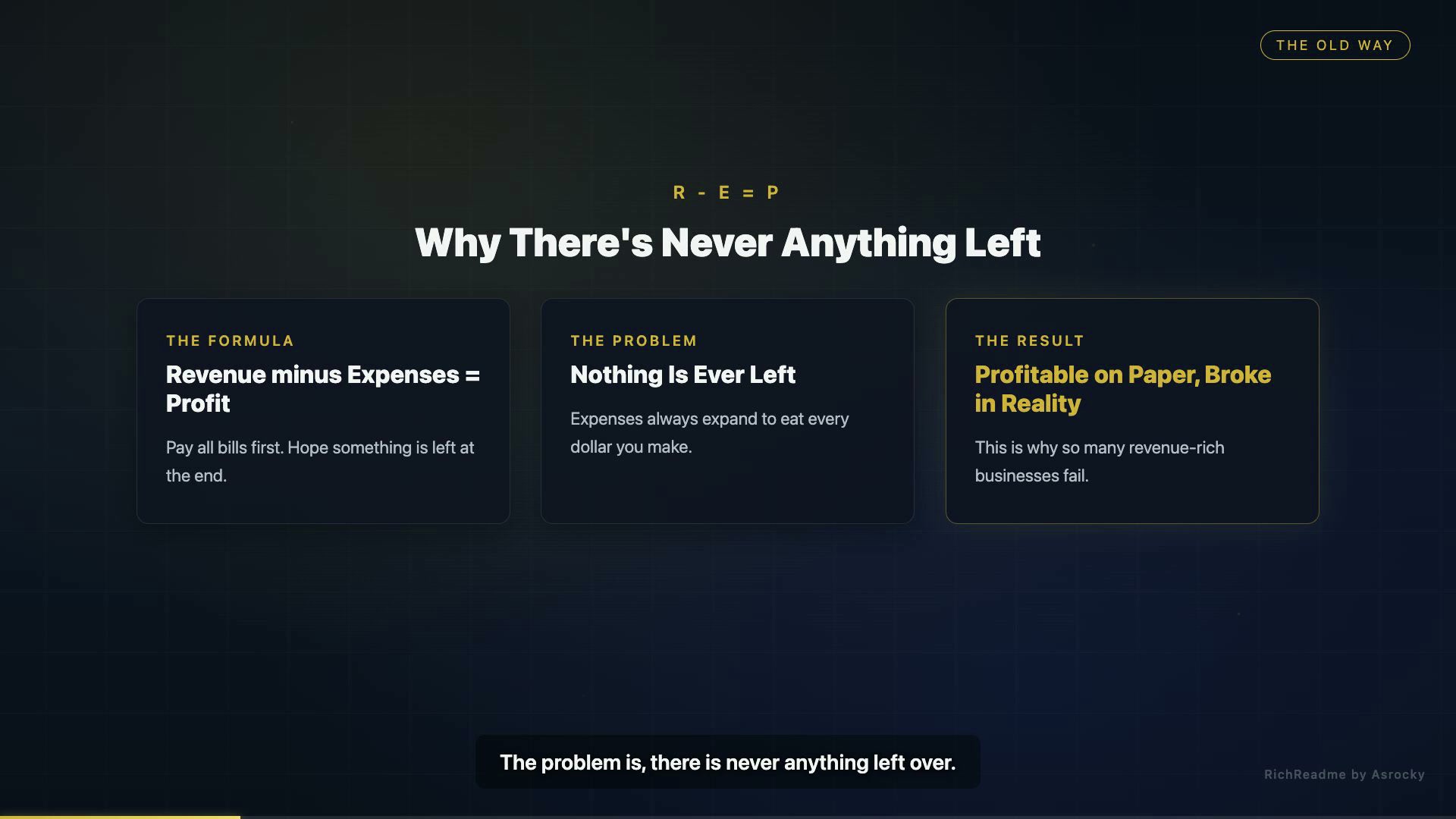
The traditional formula says sales minus expenses equals profit. So you take in revenue, pay all your bills, and whatever is left over is profit. The problem is, there is never anything left over.
Expenses always expand to eat every dollar you make. You work harder, sell more, and still wonder where the money went. This is why so many profitable-looking businesses fail.
Take Profit First, Then Pay Bills
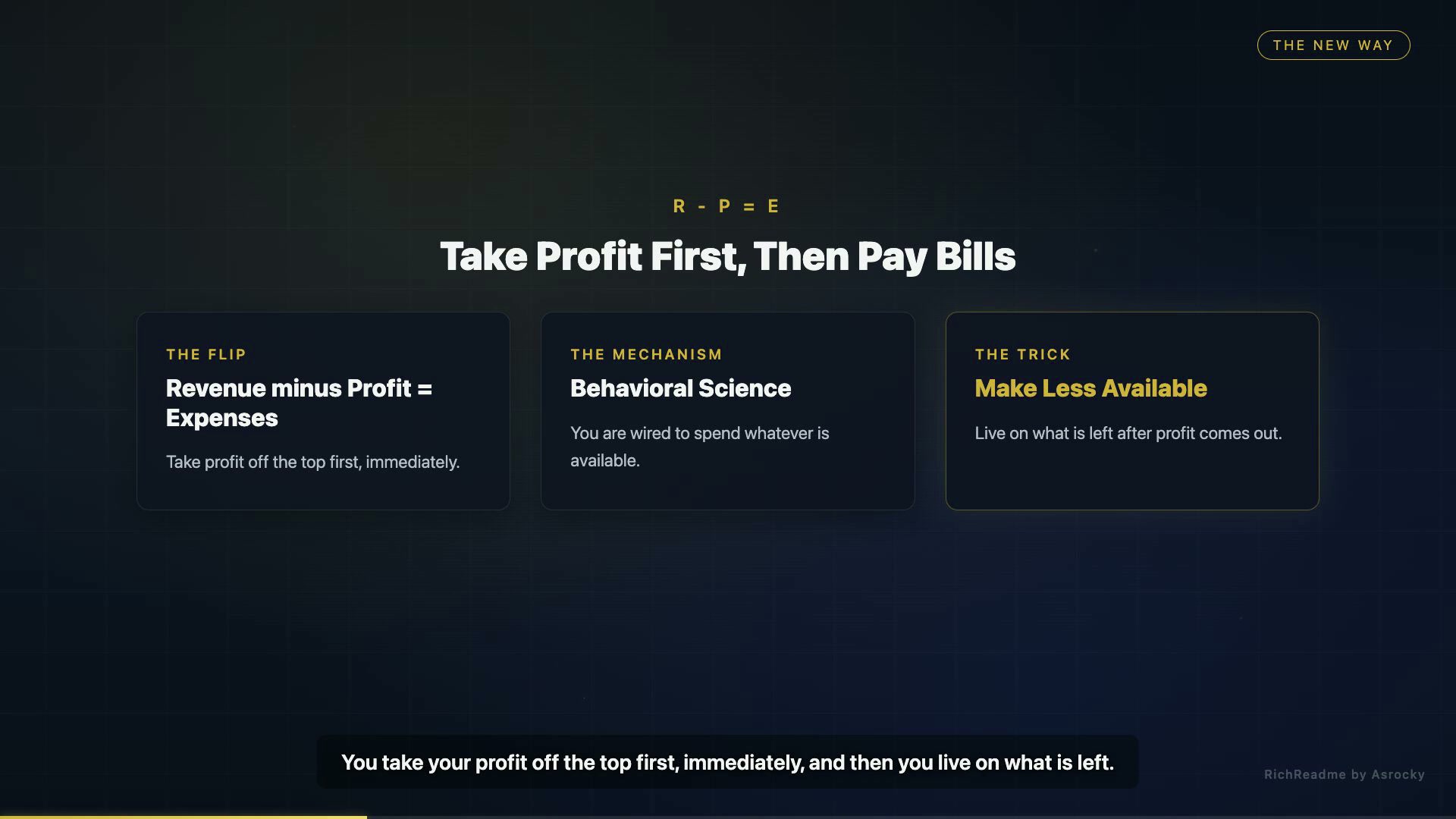
Profit First flips the formula. Sales minus profit equals expenses. You take your profit off the top first, immediately, and then you live on what is left.
This sounds impossible, but it works because of behavioral science, not accounting. You are wired to spend whatever is available. So you make less available.
Expenses Fill the Budget

The reason is Parkinson's Law. Work expands to fill the time available. Same with money. Expenses expand to fill the revenue available.
If you have one hundred thousand dollars coming in, you will find a way to spend one hundred thousand dollars. If you only have eighty thousand dollars available, you will find a way to get by on eighty. The business adapts to whatever budget you give it, without you even noticing the new subscriptions, tools, and software that crept in.
Split Every Dollar Instantly
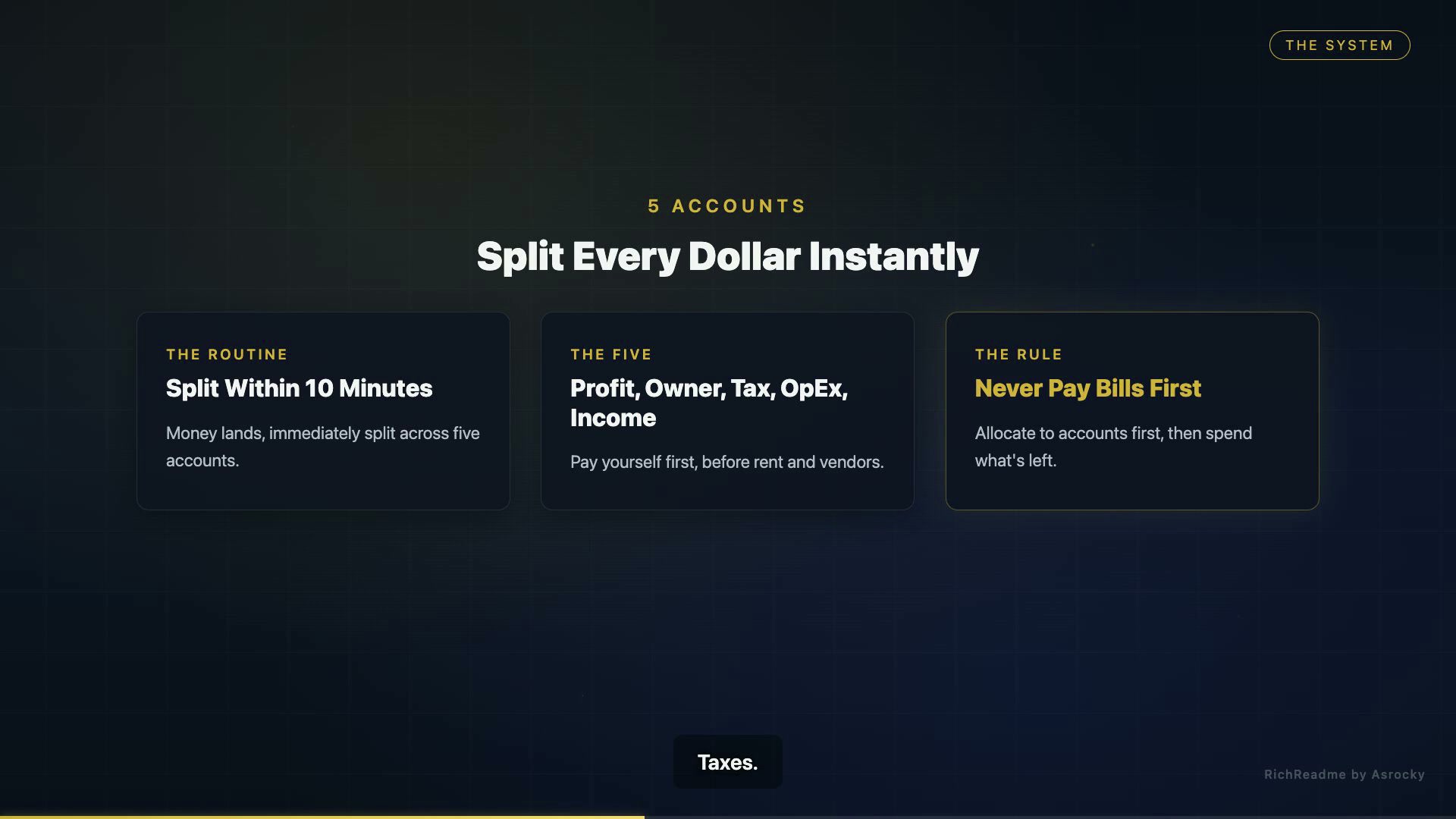
So the system uses five bank accounts. When money comes in, you immediately split it across five accounts. Profit. Owner's pay. Taxes.
Operating expenses. And income. You pay yourself first before you pay anyone else, before you pay rent, before you pay vendors. The split happens within ten minutes of the money landing.
Hide the Money From Yourself

The key move is to move the profit and tax money to a separate bank you cannot easily access. Out of sight, out of mind. If the money is sitting in your main checking account, you will spend it.
If it is at a different bank across town, you will not. The friction of transferring the money is the whole point. You should have to work a little to touch that cash.
Bump It Up Quarterly
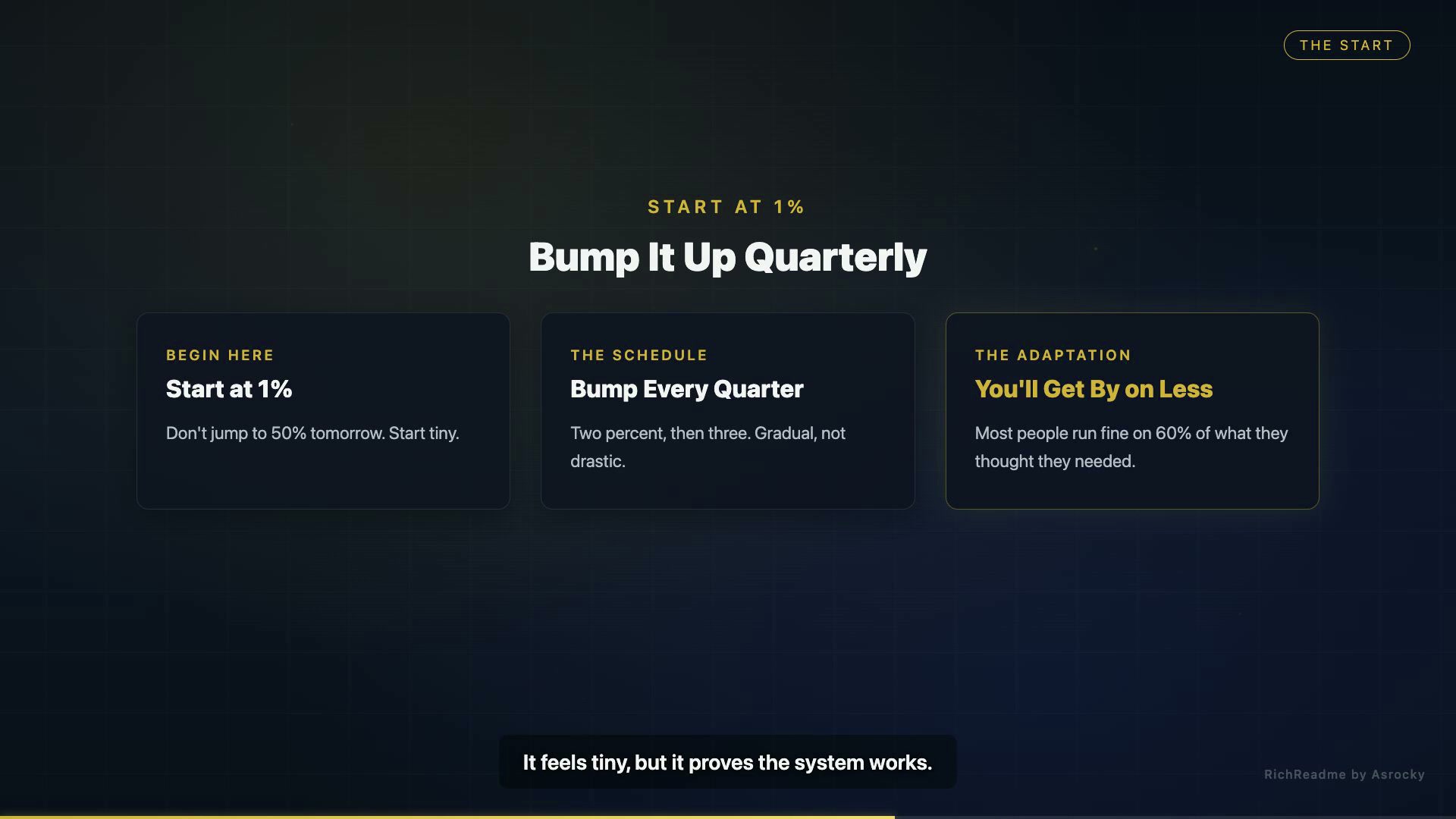
Start small. You do not need to jump to a fifty percent profit margin tomorrow. Start with one percent. Pay yourself one percent off the top. It feels tiny, but it proves the system works.
Then every quarter, bump it up a little. Two percent, then three. Your expenses will shrink to match, and you will not even miss it. Most people can run a business on sixty percent of what they thought they needed.
Constrain the Budget
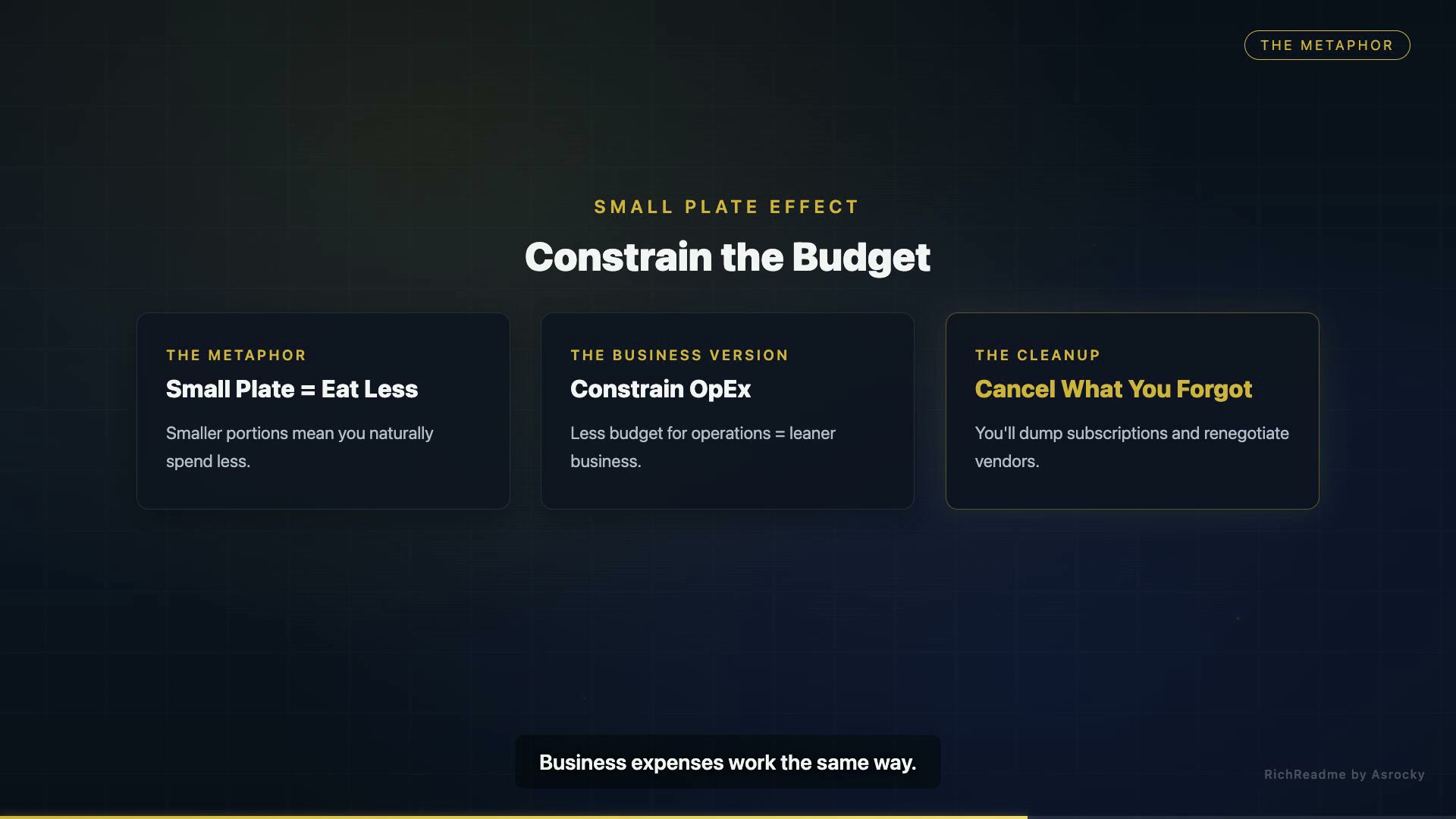
Michalowicz calls this the small plate effect. If you serve food on a small plate, you eat less. If you serve on a big plate, you eat more.
Business expenses work the same way. Constrain the money available for operations, and the business gets leaner automatically. You will cancel subscriptions you forgot about and renegotiate vendors you never questioned.
You Build It to Live From It

Pay yourself a real owner's salary. Most entrepreneurs starve themselves while their business has all the cash. That is backwards.
You built the business to support your life, not the other way around. If you are not getting paid, you do not have a business. You have a job that pays you nothing, and you work there 24/7.
Pay Yourself a Profit Bonus
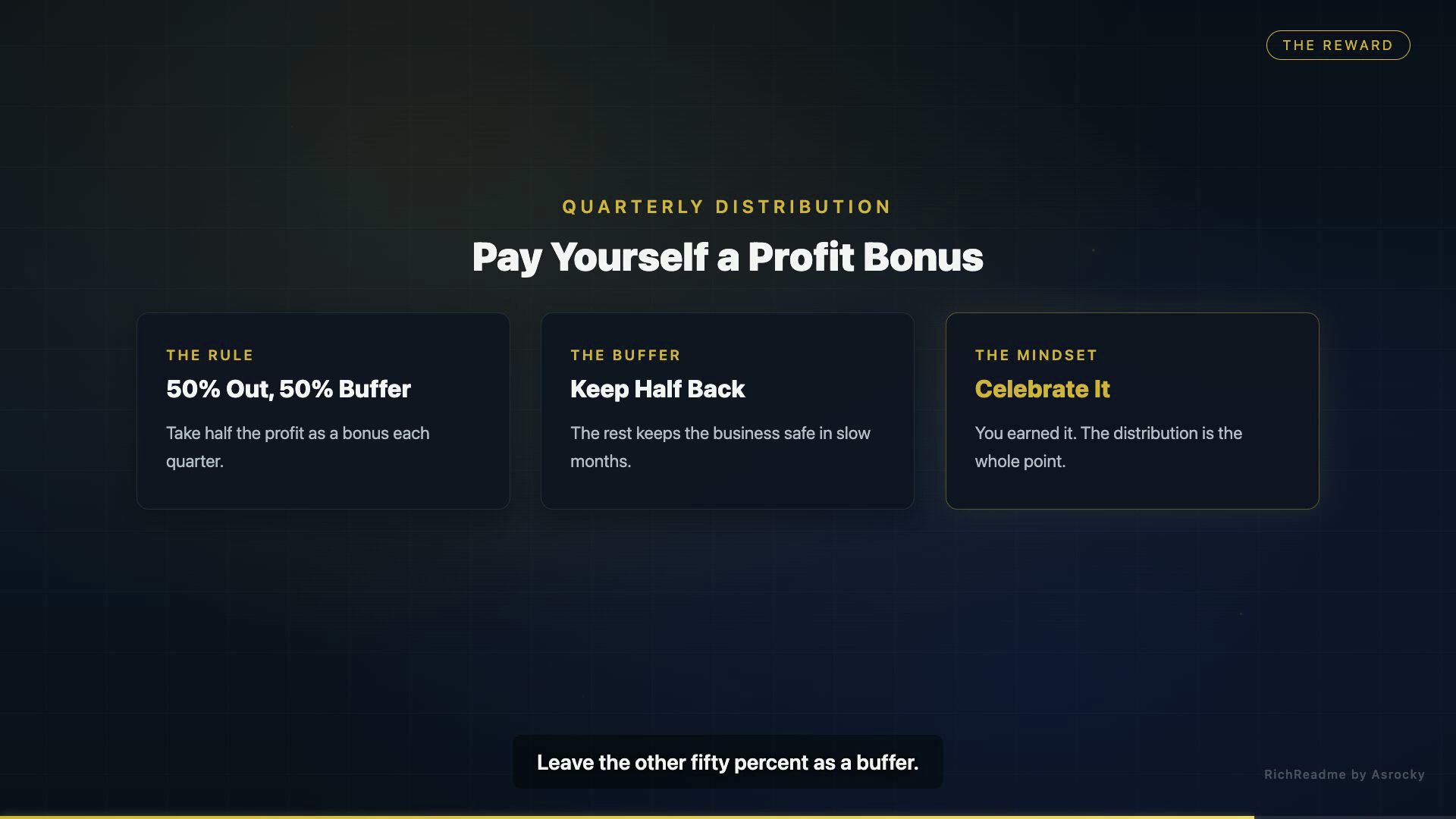
Every quarter, take fifty percent of the profit account and distribute it to yourself as a bonus. Leave the other fifty percent as a buffer. This is how you get paid for the risk you took.
The other fifty percent keeps the business safe during slow months. Celebrate the distribution. You earned it.
The Bottom Line
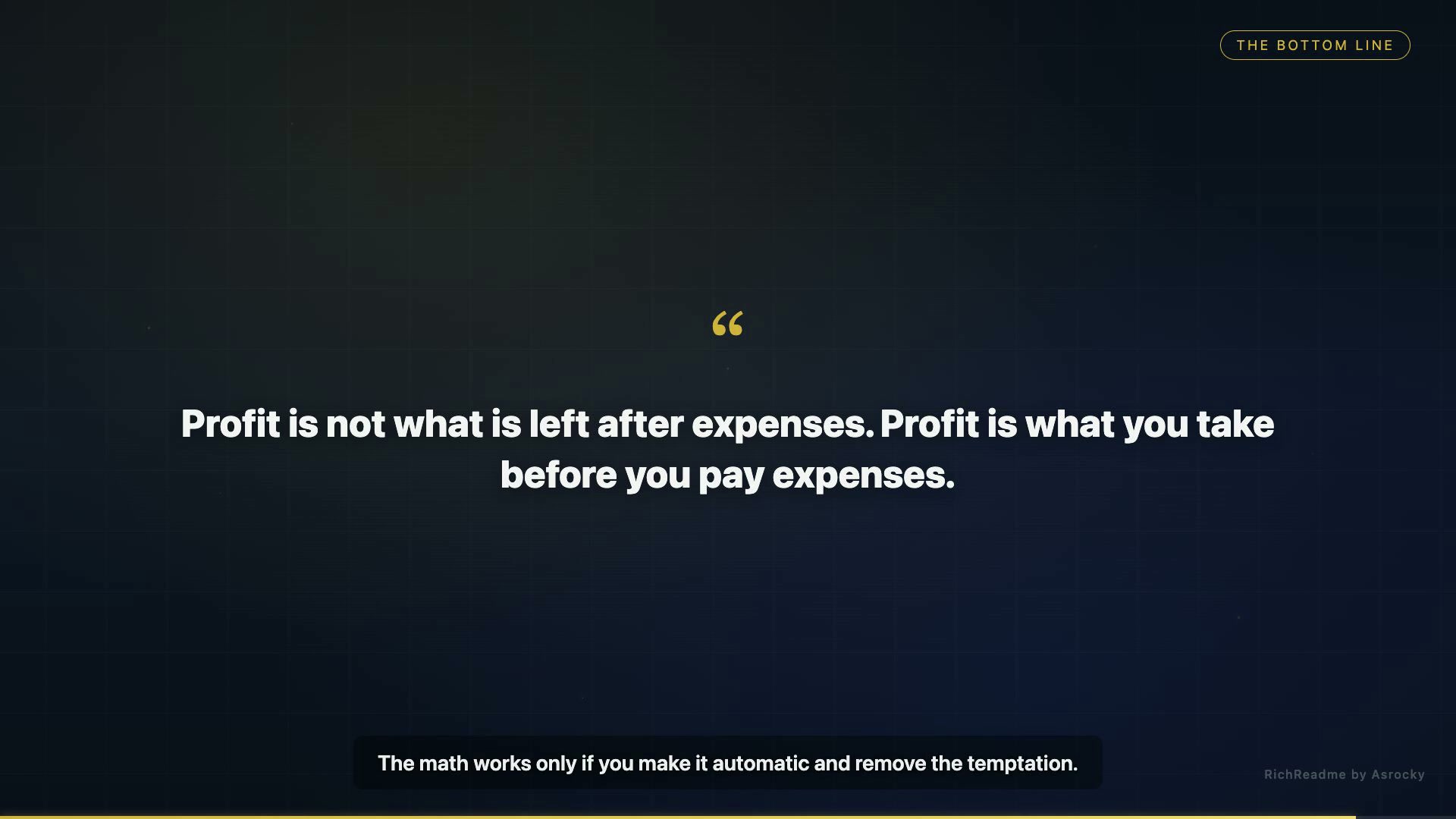
The bottom line is this. Profit is not what is left after you pay expenses. Profit is what you take before you pay expenses.
The math works only if you make it automatic and remove the temptation. Most business failures are not from bad products. They are from bad cash flow habits.