People don't say yes to your argument. They say yes because of the split second before you made it.
This is Pre-Suasion, by Robert Cialdini, the psychologist who wrote Influence. His claim is simple and unsettling: the words that win someone over are not the ones you say when you ask. They are the ones you said, or the images you staged, or the question you asked, in the moments right before. Master that opening frame, and people prepare themselves to agree before you ever make your case.
The Privileged Moment
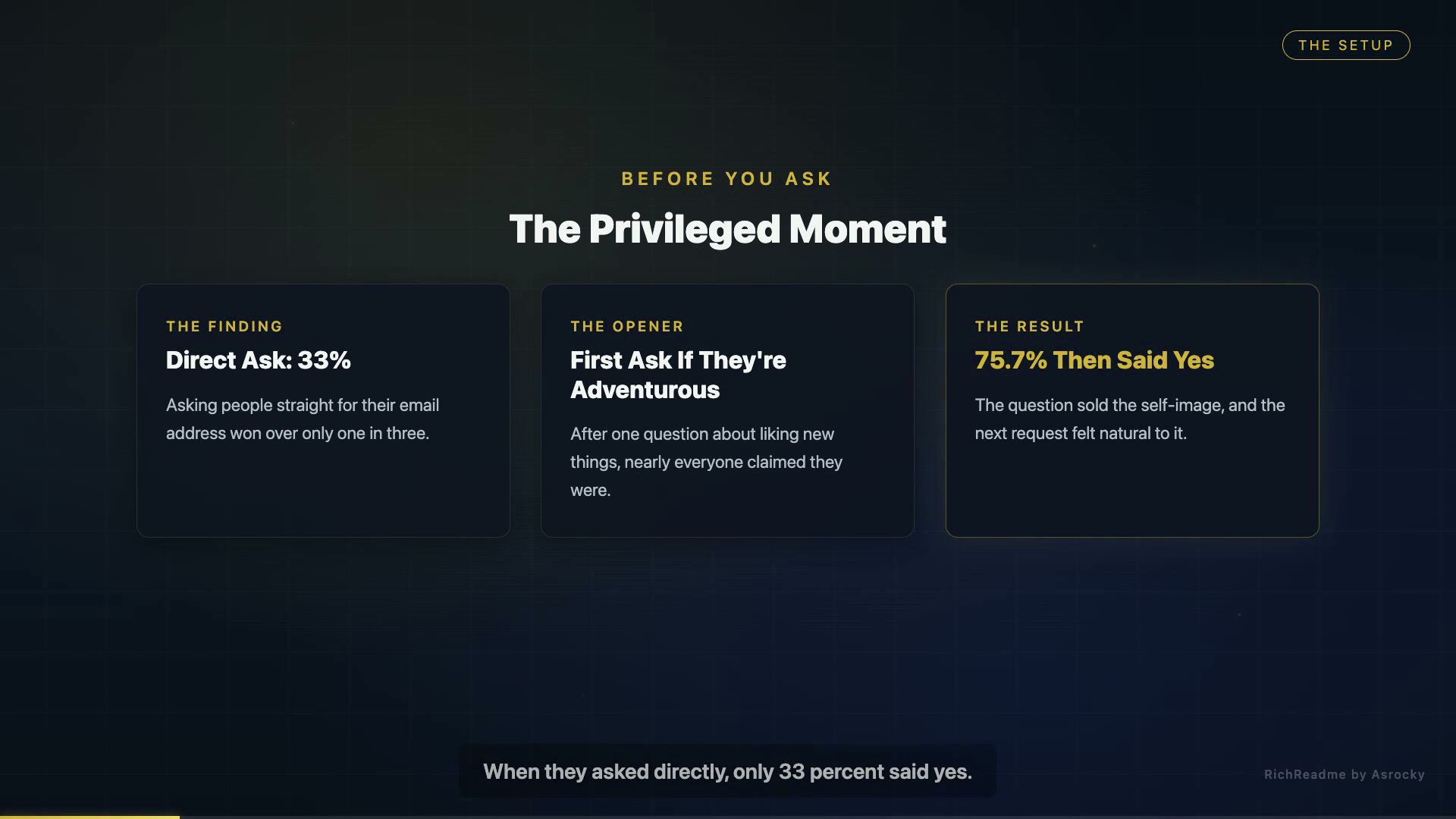
Cialdini calls these privileged moments. The idea is that whatever you place in front of someone's attention first does not merely get noticed. It gets treated as the reason. In one study, a soft-drink company asked people for their email address to send a free sample.
When they asked directly, only 33 percent said yes. But when they first asked, "Do you consider yourself someone who likes to try new things?" nearly everyone agreed, and then 75.7 percent handed over their address. The question did not sell the drink. It sold the self-image that made the next request feel natural.
What's Focal Is Causal
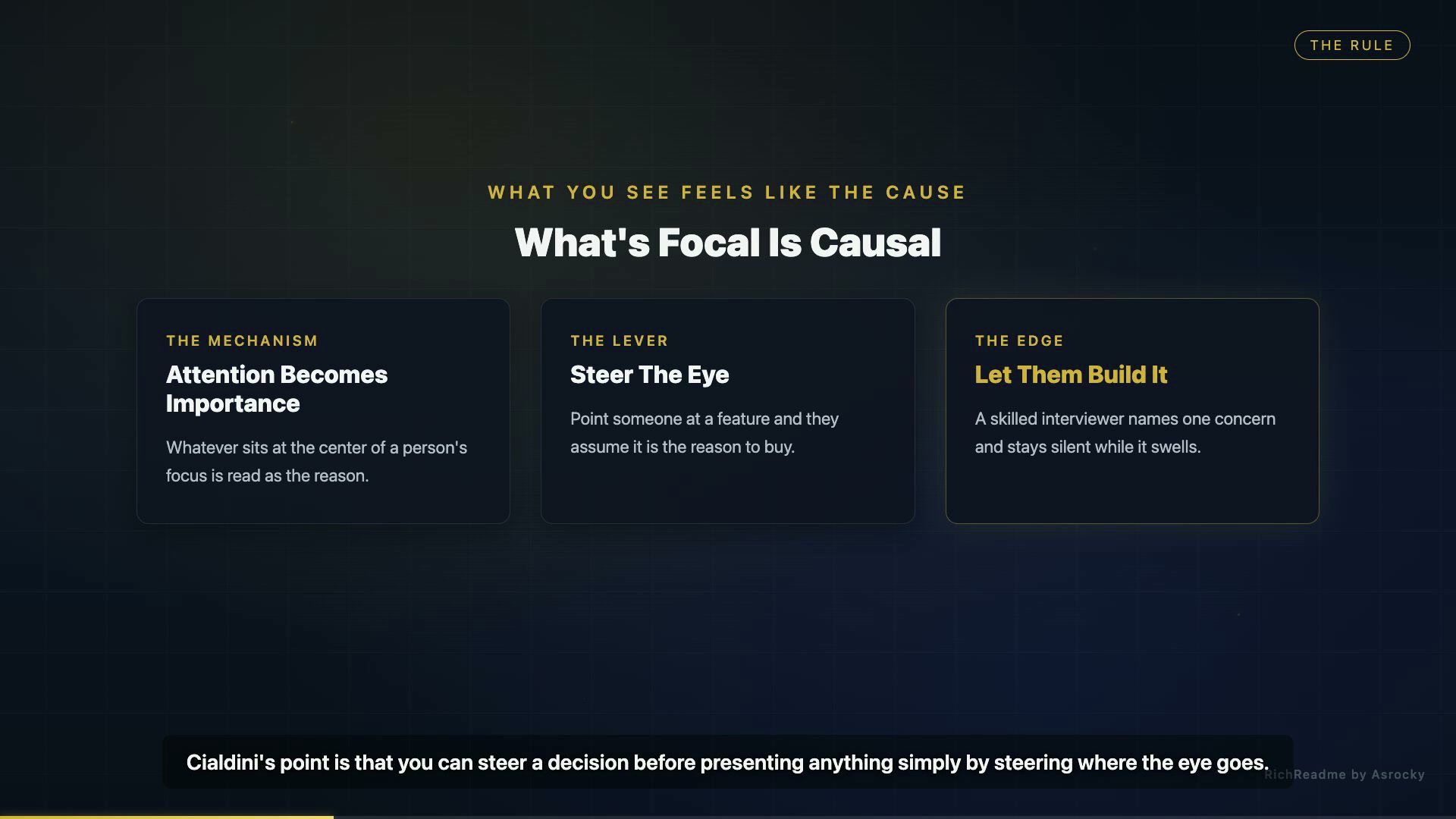
That is the hidden rule underneath it all, what's focal is causal. Whatever sits at the center of a person's attention is automatically read as important, even as the cause of what happens next. Point someone at a problem and they assume it is the cause. Point them at a feature and they assume it is the reason to buy. Cialdini's point is that you can steer a decision before presenting anything simply by steering where the eye goes.
The viewer confuses what they are looking at with what matters. This is why a skilled interviewer will ask about a single concern and then stay silent, letting that concern swell until it feels like the whole problem. The salience does the persuading. You never have to make the case, because the target already built it themselves.
The Attractors
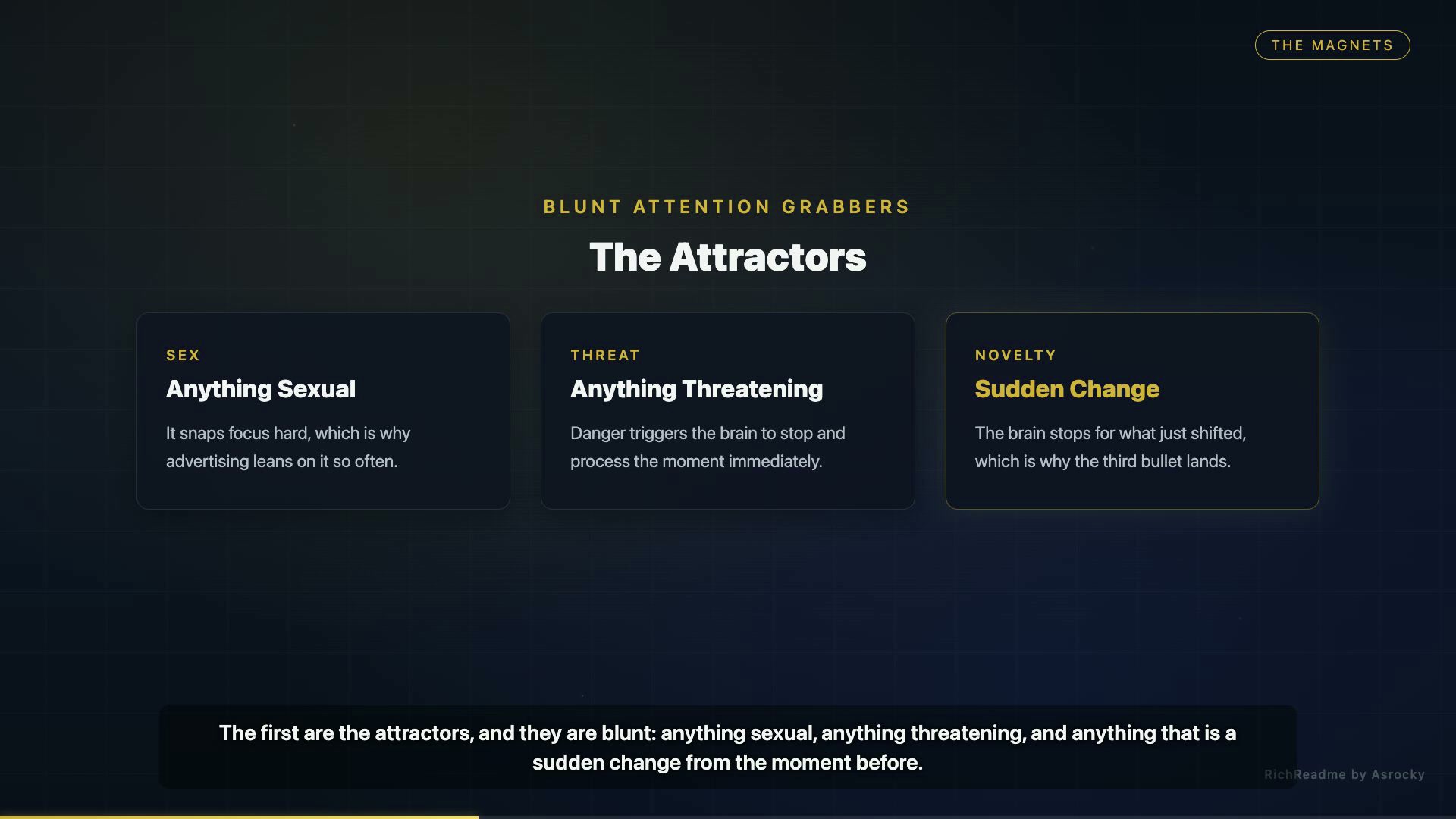
So what grabs attention in the first place? Cialdini sorts attention magnets into two piles. The first are the attractors, and they are blunt: anything sexual, anything threatening, and anything that is a sudden change from the moment before.
A flash of novelty breaks through because the brain is built to stop and notice what just shifted. This is why interruptions work, why a surprising opening line lands, and why the third bullet in a list often outperforms the first two.
The Subtle Magnetizers
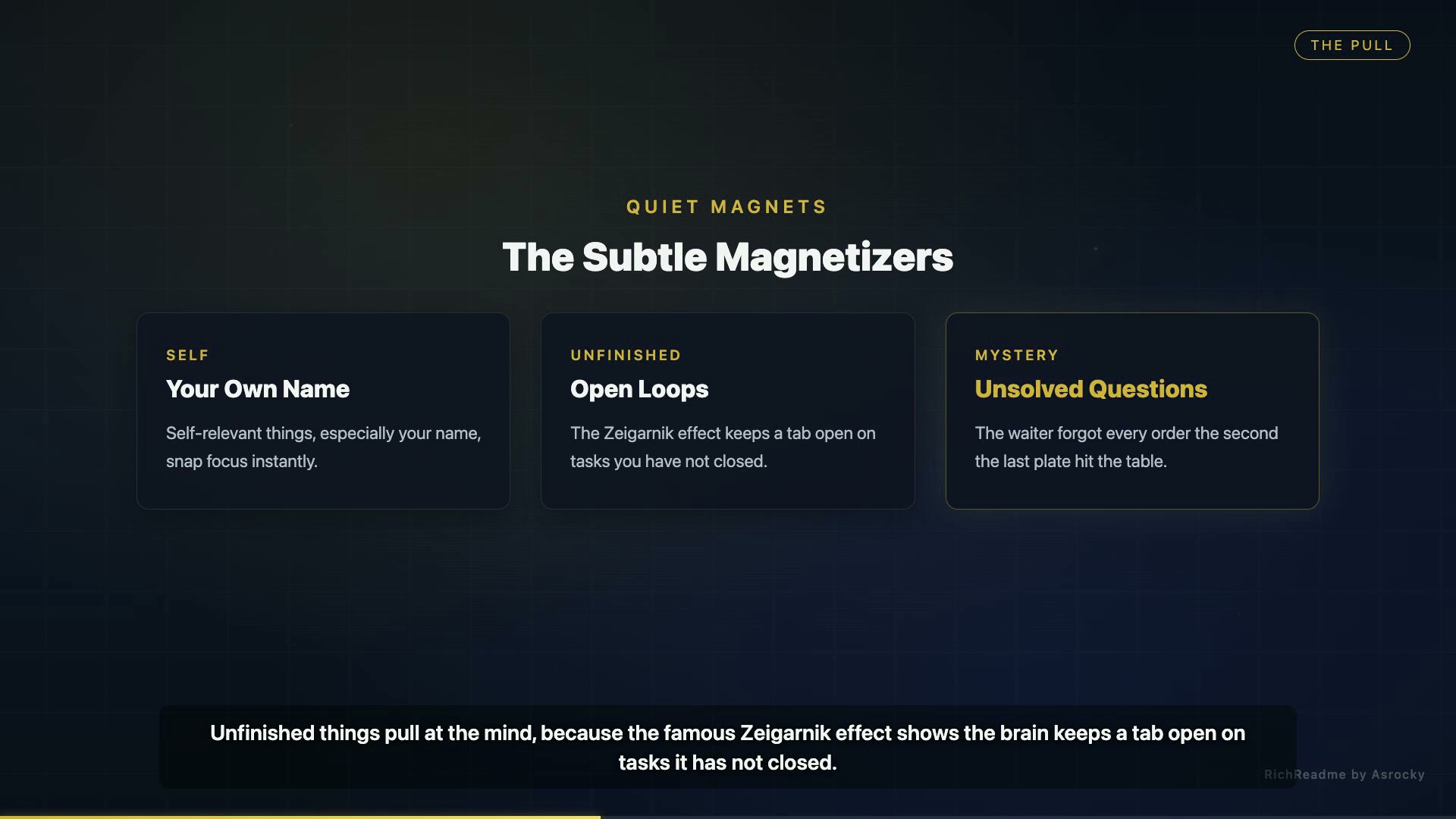
The second pile is subtler. The magnetizers pull attention without drama. Self-relevant things, especially your own name or anything that touches you personally, snap focus instantly.
Unfinished things pull at the mind, because the famous Zeigarnik effect shows the brain keeps a tab open on tasks it has not closed. And mysteries do the same, because an open loop demands to be shut. A waiter who remembered every order until the moment he delivered the last plate forgot everything right after, because the task moved from unfinished to done.
Prime The Association
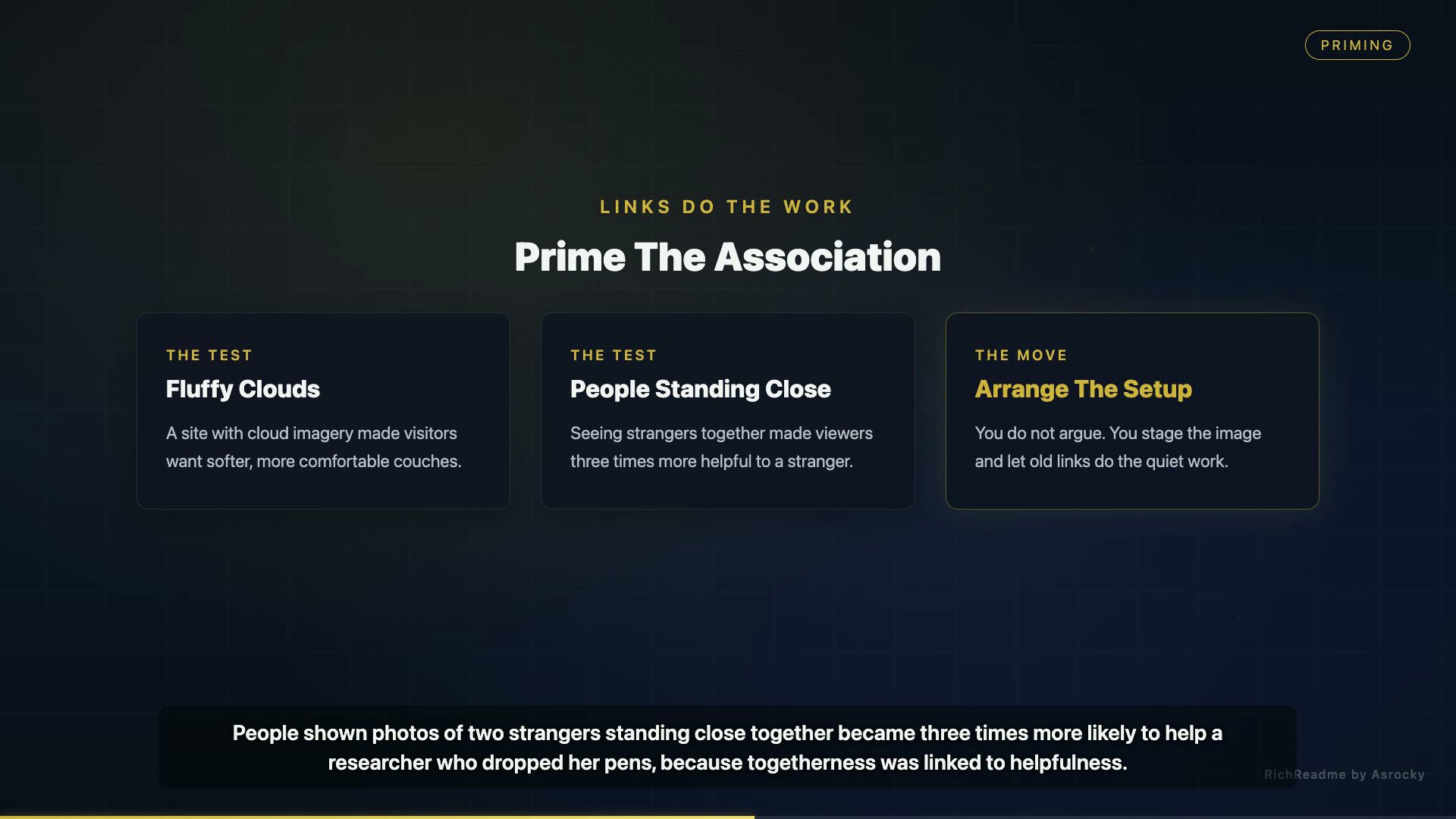
Once attention is captured, associations do the rest. Cialdini shows that pairing an idea with the right image quietly primes the next response. A furniture website shown with fluffy clouds in its background led visitors to want comfortable couches, because comfort was already linked to softness in their minds. People shown photos of two strangers standing close together became three times more likely to help a researcher who dropped her pens, because togetherness was linked to helpfulness.
Even a single picture of a runner crossing a finish line, flashed for moments before a work task, lifted how hard people pushed themselves on it. You do not argue with a setup like this. You arrange the setup, and let the links the person already carries do the quiet work.
Six Roads, Better Prepared

He also restates his famous six shortcuts, but through the pre-suasion lens. Reciprocation, liking, social proof, authority, scarcity, and consistency all work better when the person is first readied for them. Consistency is especially powerful once someone has committed to a small public step. The person who says out loud that they care about health does not need much persuading to then take a health action, because the request now has to fit the identity they just claimed.
Shared Identity Beats Persuasion
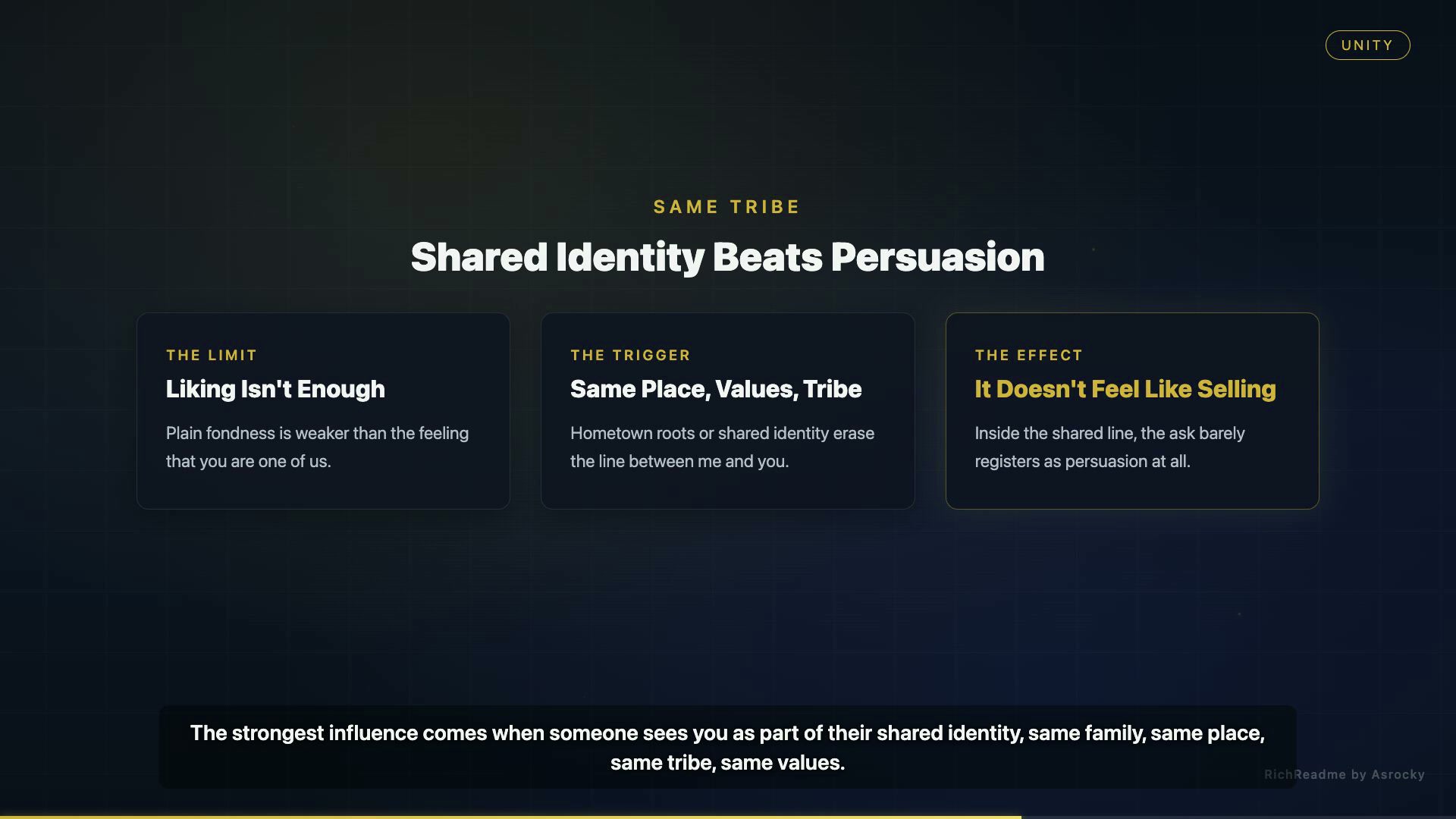
Then there is unity, the principle he adds in this book. Plain liking is not enough. The strongest influence comes when someone sees you as part of their shared identity, same family, same place, same tribe, same values.
A salesperson who says they are from your hometown, or who frames a purchase as what people like you do, is not adding information. They are erasing the line between me and you, and on the inside of that line, persuasion barely feels like persuasion at all.
Pre-Suade Yourself First
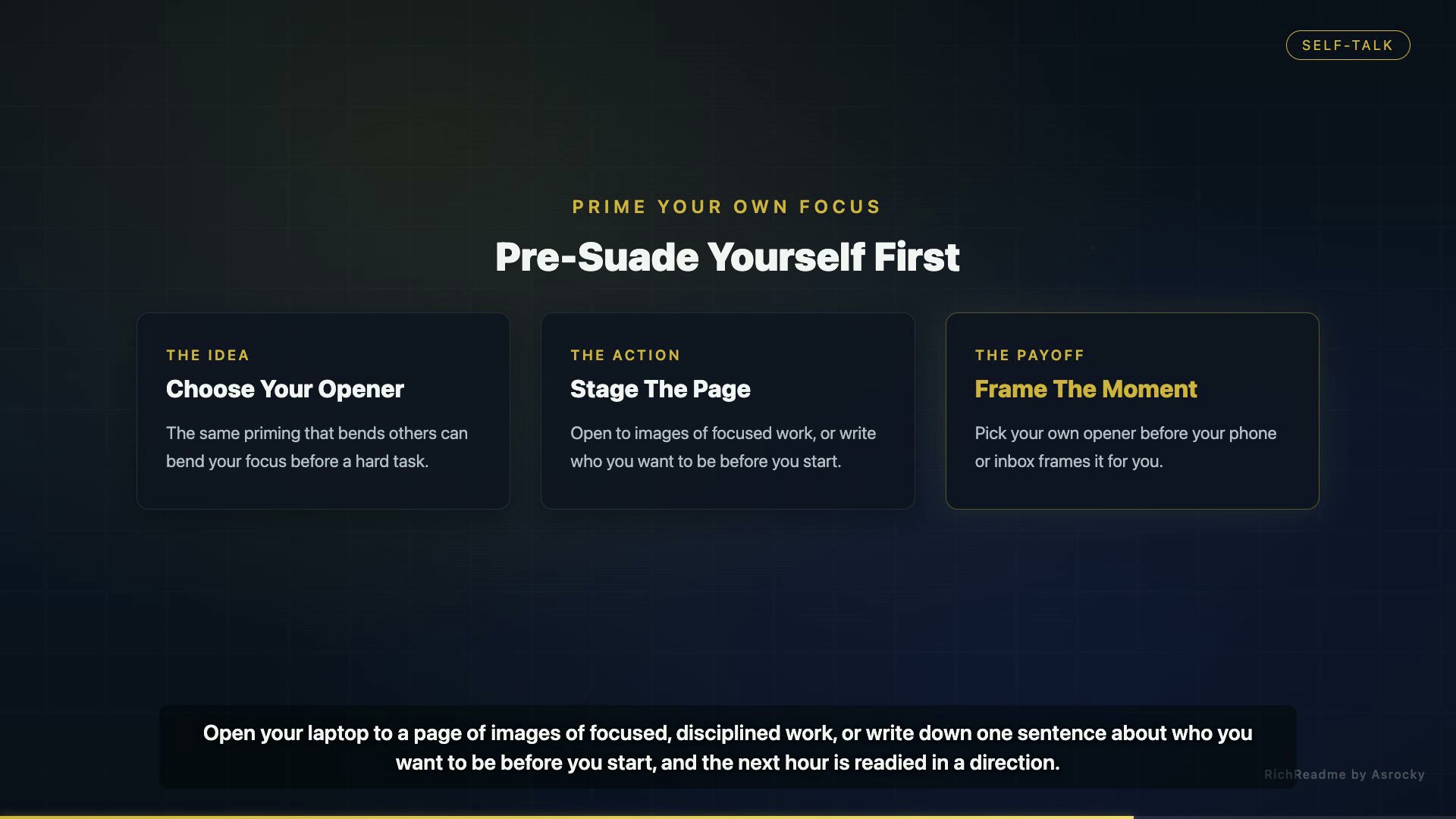
You can also turn the tools on yourself. Cialdini points out that the same priming that bends others can bend your own focus before a hard task. Open your laptop to a page of images of focused, disciplined work, or write down one sentence about who you want to be before you start, and the next hour is readied in a direction.
This is not magic. It is choosing your own opener before someone else chooses it for you, before your phone or your inbox gets to frame the moment.
Commitment Makes It Stick
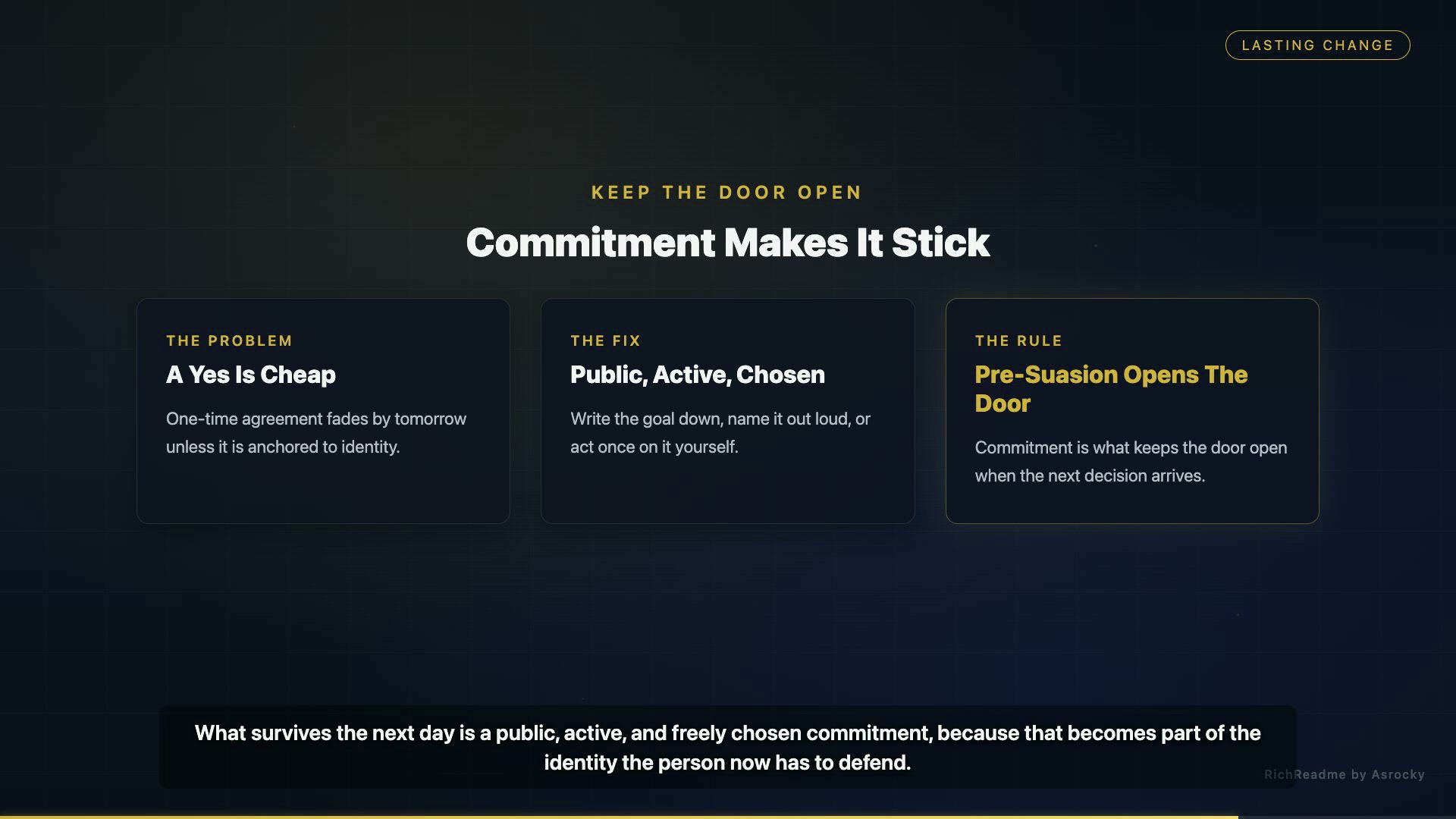
The final move is making the change last. Cialdini argues that a one-time yes is cheap. What survives the next day is a public, active, and freely chosen commitment, because that becomes part of the identity the person now has to defend.
Once someone writes down a goal, names it out loud, or acts on it once, their later choices have to line up with it. Pre-suasion opens the door. Commitment is what keeps it open.
Defend Against It
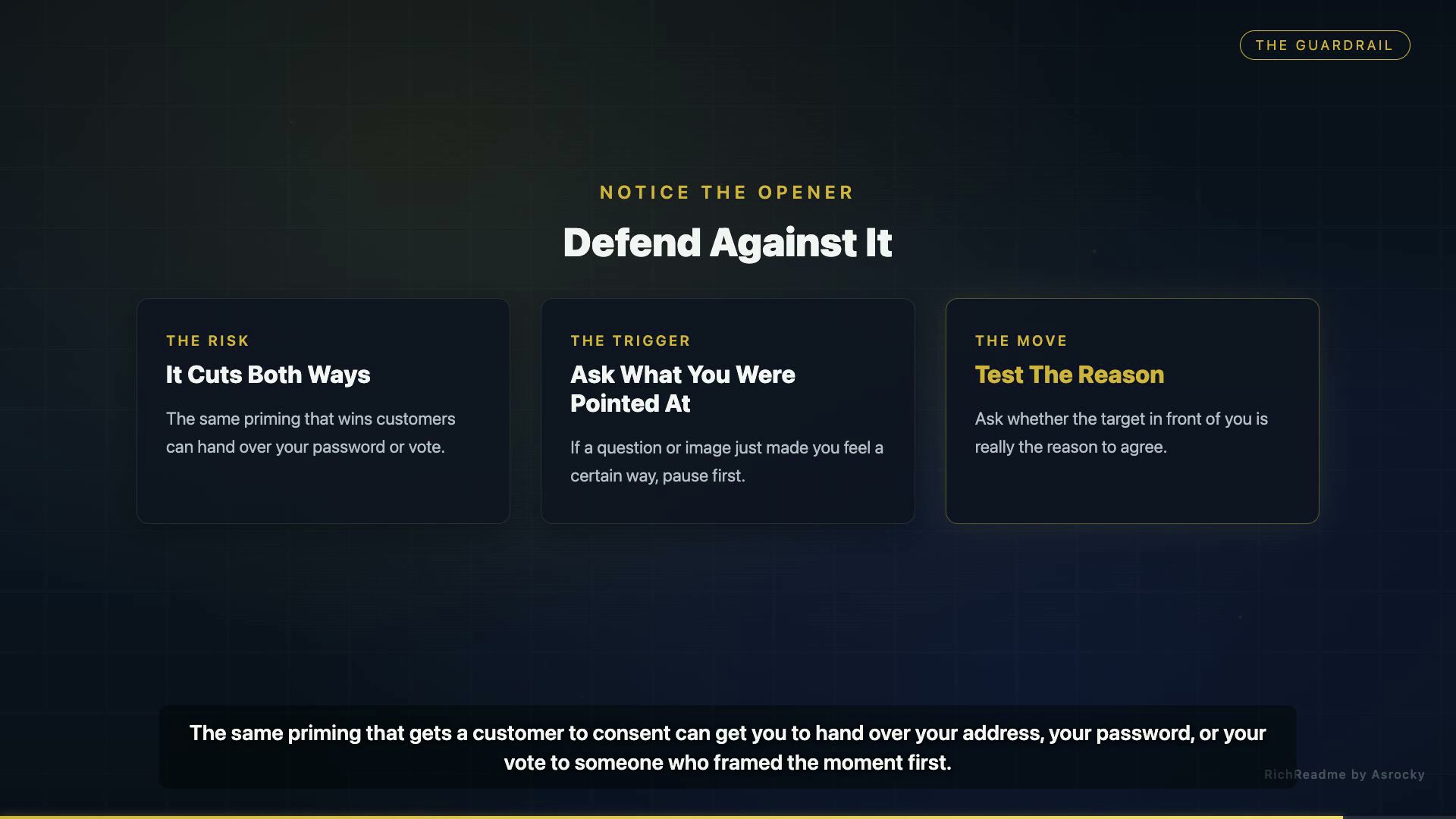
The danger, Cialdini is careful to note, is that this cuts both ways. The same priming that gets a customer to consent can get you to hand over your address, your password, or your vote to someone who framed the moment first. The defense is to notice the opener.
If a question, an image, or a pause has just made you feel a certain way about yourself, pause before the next request lands. Ask what you were just pointed at, and whether that target is really the reason.