Why do most people stay in their jobs their whole lives? It is not loyalty. It is the power of the default option.
This is Nudge by Richard Thaler and Cass Sunstein, the book that launched behavioral economics into the mainstream. It explains how small, subtle design choices shape nearly every decision we make, from retirement savings to organ donation. Thaler won a Nobel Prize for this work.
Design the Menu, Don't Force the Order
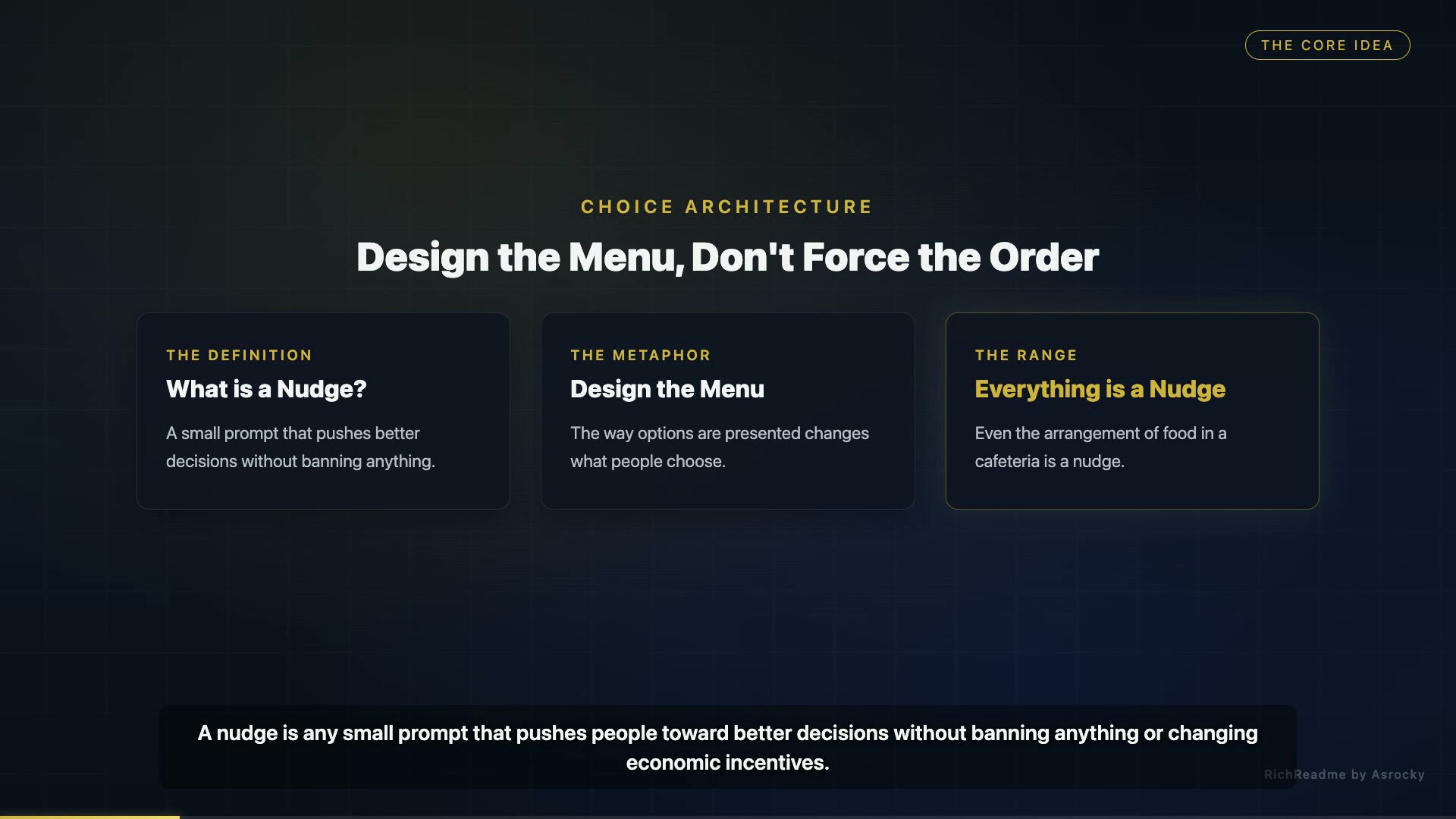
The core idea is choice architecture. The way options are presented changes what people choose. A nudge is any small prompt that pushes people toward better decisions without banning anything or changing economic incentives.
Think of it as designing the menu, not forcing the order. Even the arrangement of food in a cafeteria is a nudge.
Free to Choose, Gently Guided
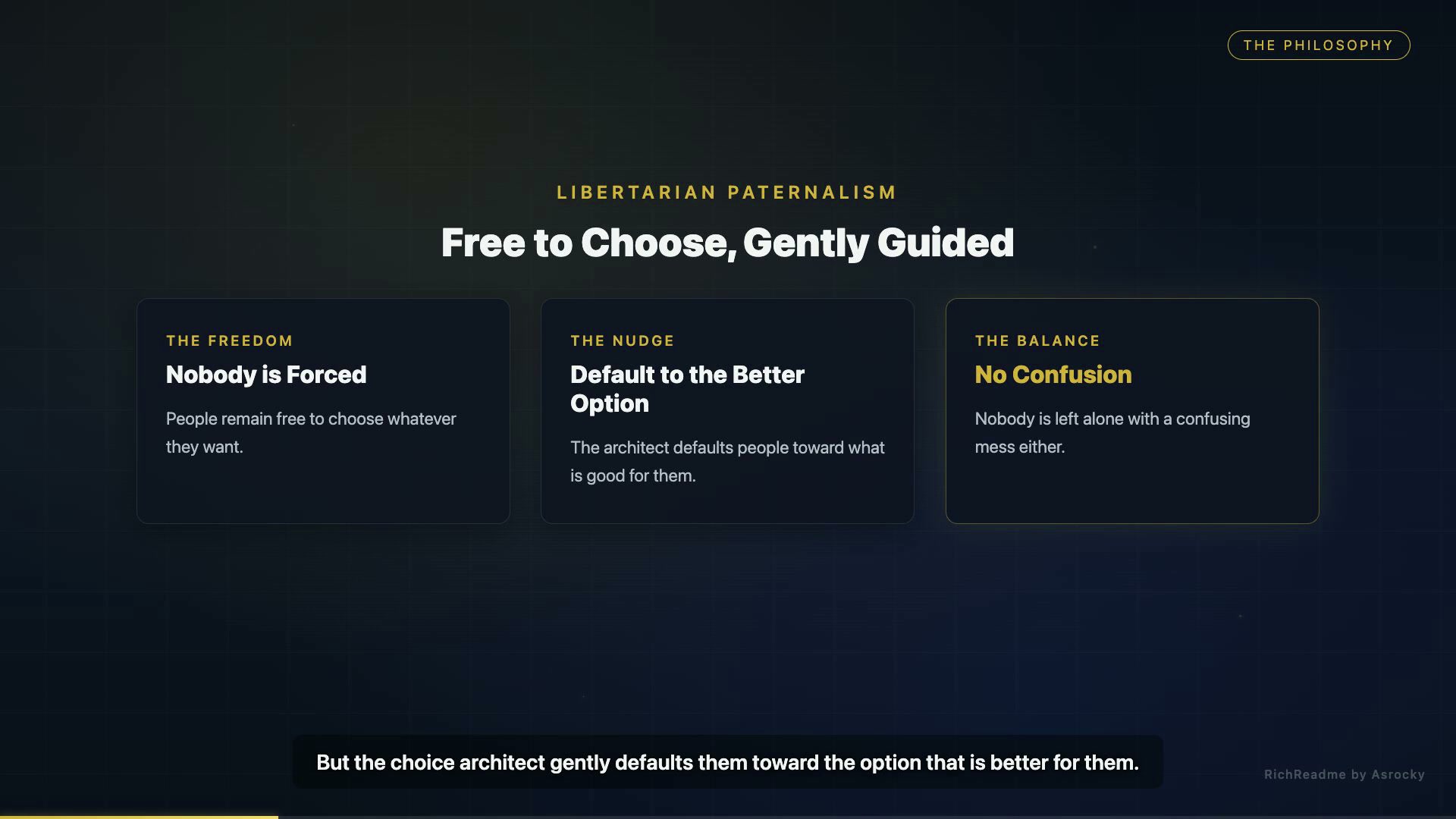
Thaler and Sunstein call this libertarian paternalism. People are free to choose whatever they want. But the choice architect gently defaults them toward the option that is better for them.
Nobody is forced. But nobody is left alone with a confusing mess either.
Inertia is Superpower
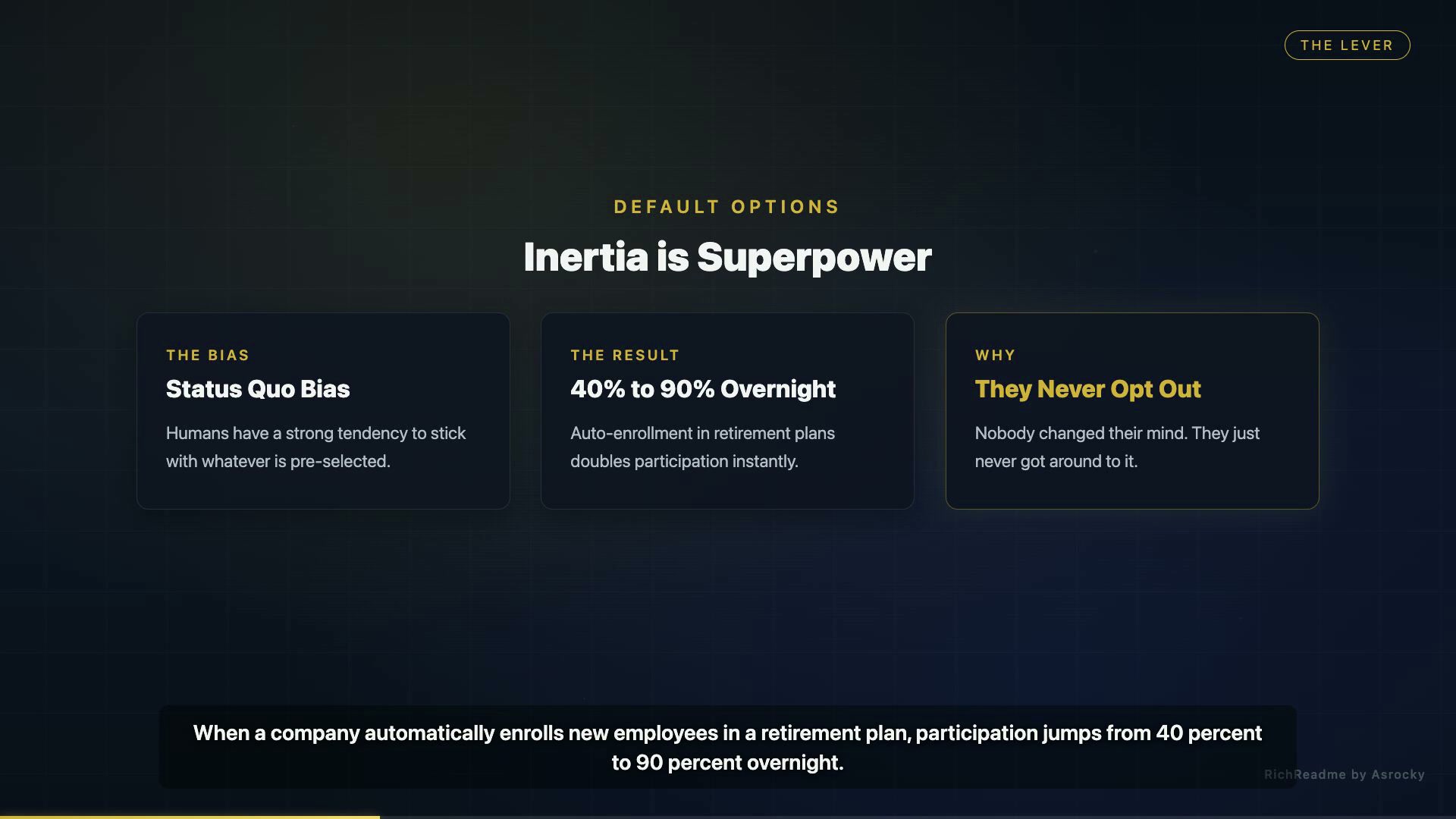
The biggest lever is the default option. Humans have a strong status quo bias, which is just inertia. When a company automatically enrolls new employees in a retirement plan, participation jumps from 40 percent to 90 percent overnight.
Nobody changed their mind. They just never got around to opting out. This is the cheapest, most effective policy intervention ever discovered.
Save Raises, Not Paychecks
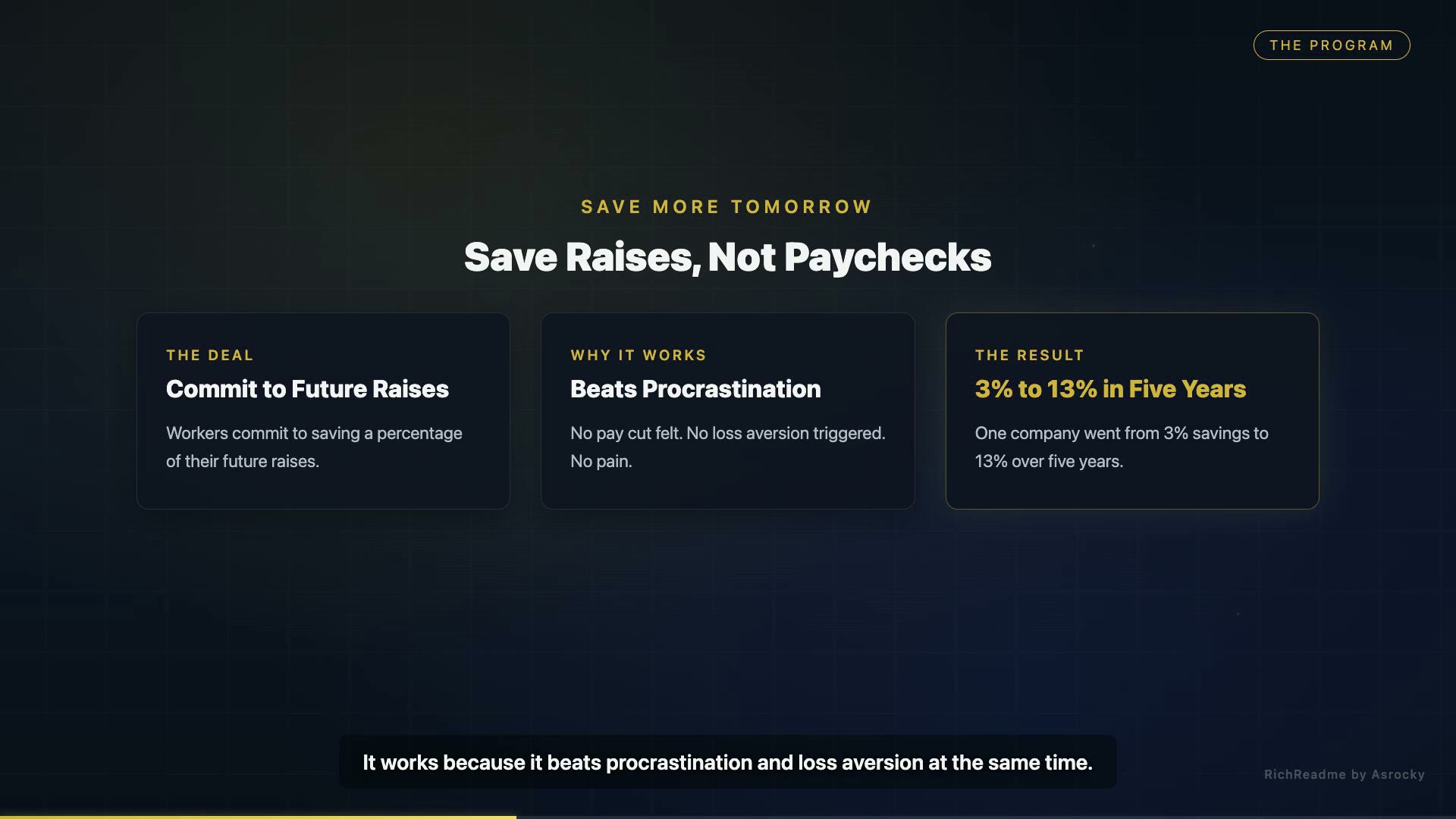
This is the Save More Tomorrow idea. Employees commit in advance to saving a percentage of their future raises. Over time, their savings rate climbs without them ever feeling a pay cut.
It works because it beats procrastination and loss aversion at the same time. People hate losing what they have, so we tie saving to future gains they never see in their paycheck. One company that tried this went from a 3 percent savings rate to 13 percent over five years.
Humans Are Not Rational
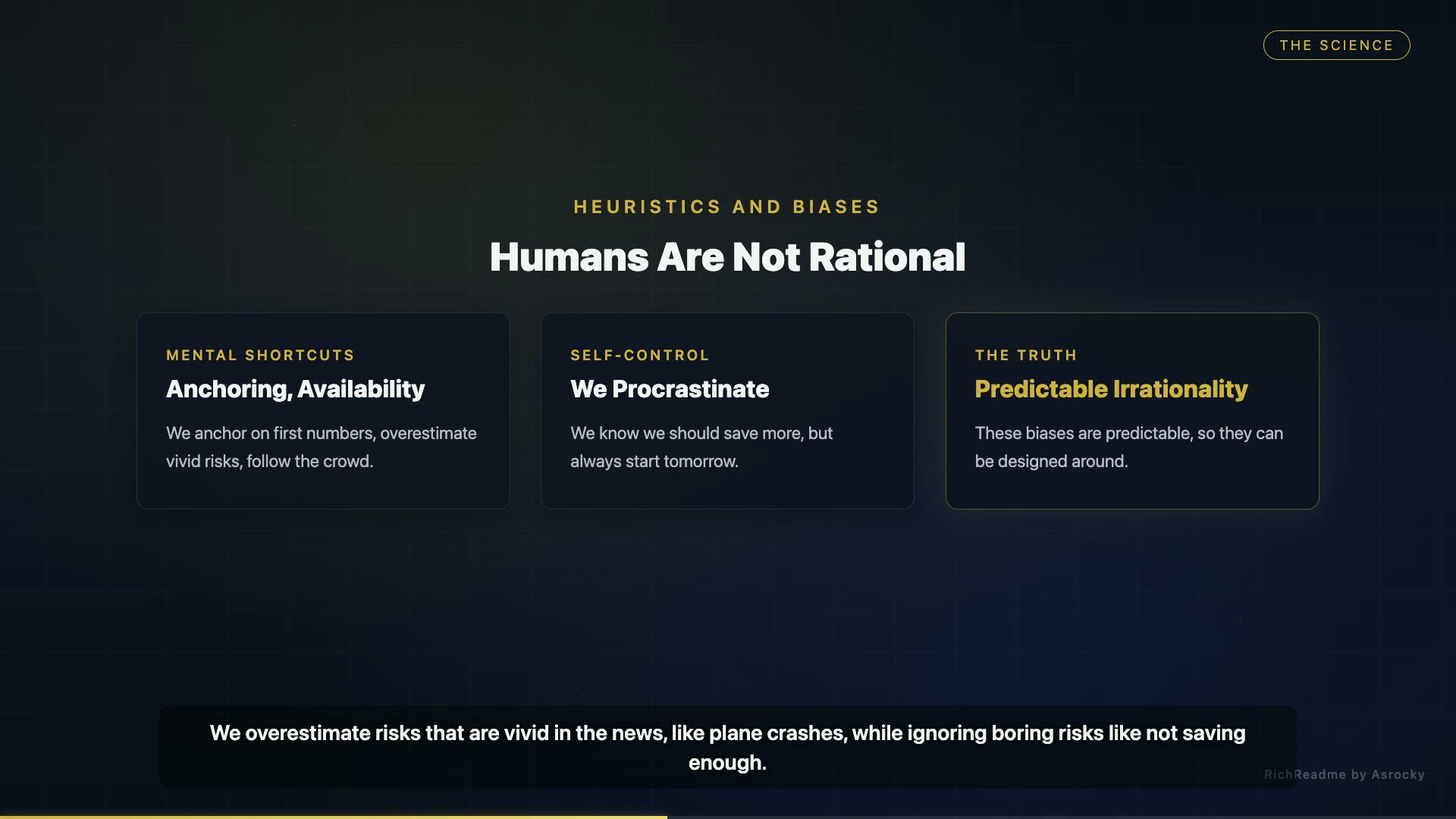
Why do nudges work so well? Because humans are not the rational economists we pretend to be. We use mental shortcuts, called heuristics. We anchor on the first number we see, even if it is random.
We overestimate risks that are vivid in the news, like plane crashes, while ignoring boring risks like not saving enough. We follow what everyone else is doing. We also procrastinate. We know we should save more, eat better, and exercise, but we always start tomorrow.
Don't Fight Human Nature
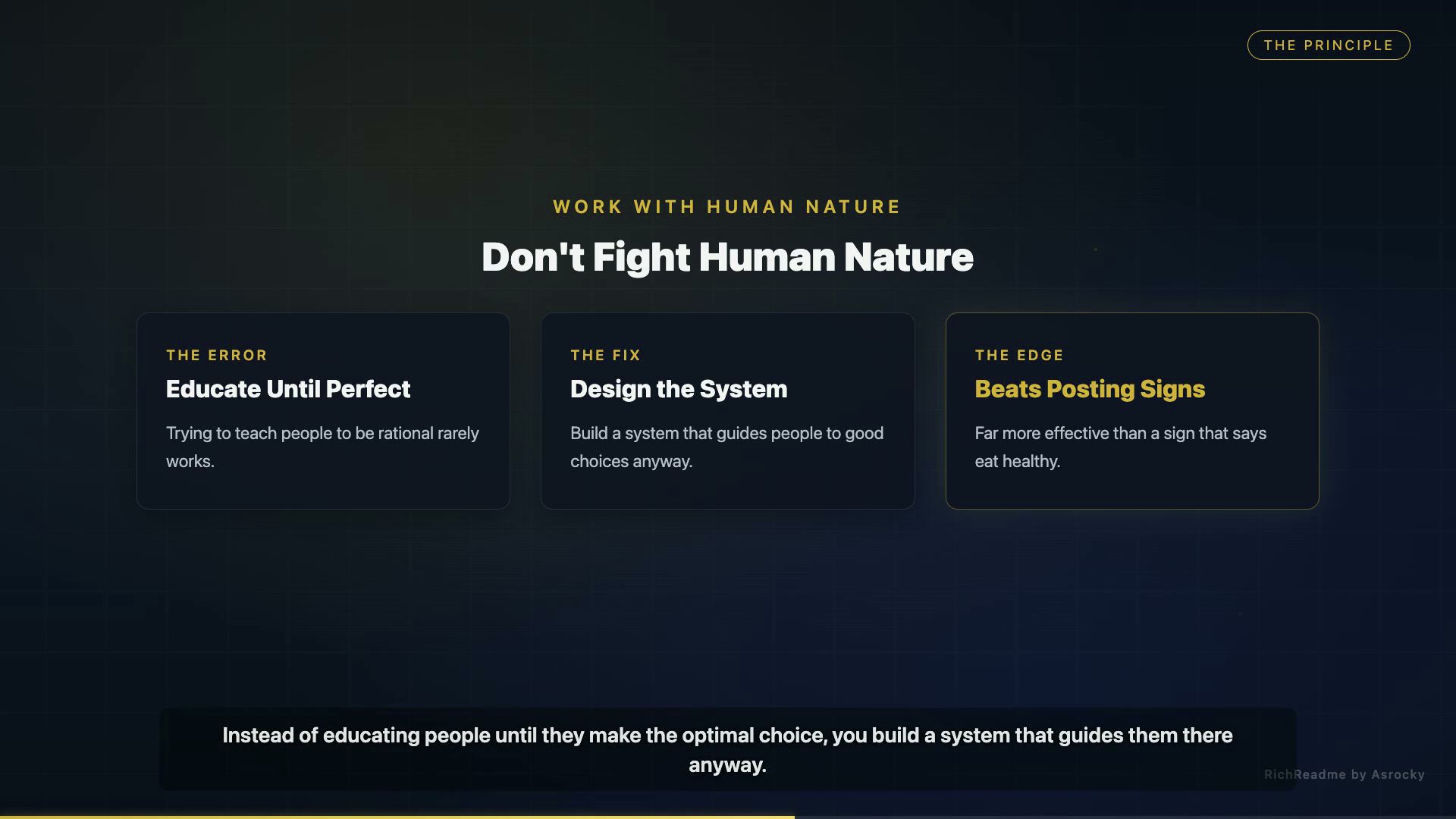
These biases are predictable. That means they can be designed around. Good choice architecture does not fight human nature.
It works with it. Instead of educating people until they make the optimal choice, you build a system that guides them there anyway. This is far more effective than posting a sign that says eat healthy.
Defaults, Errors, Feedback
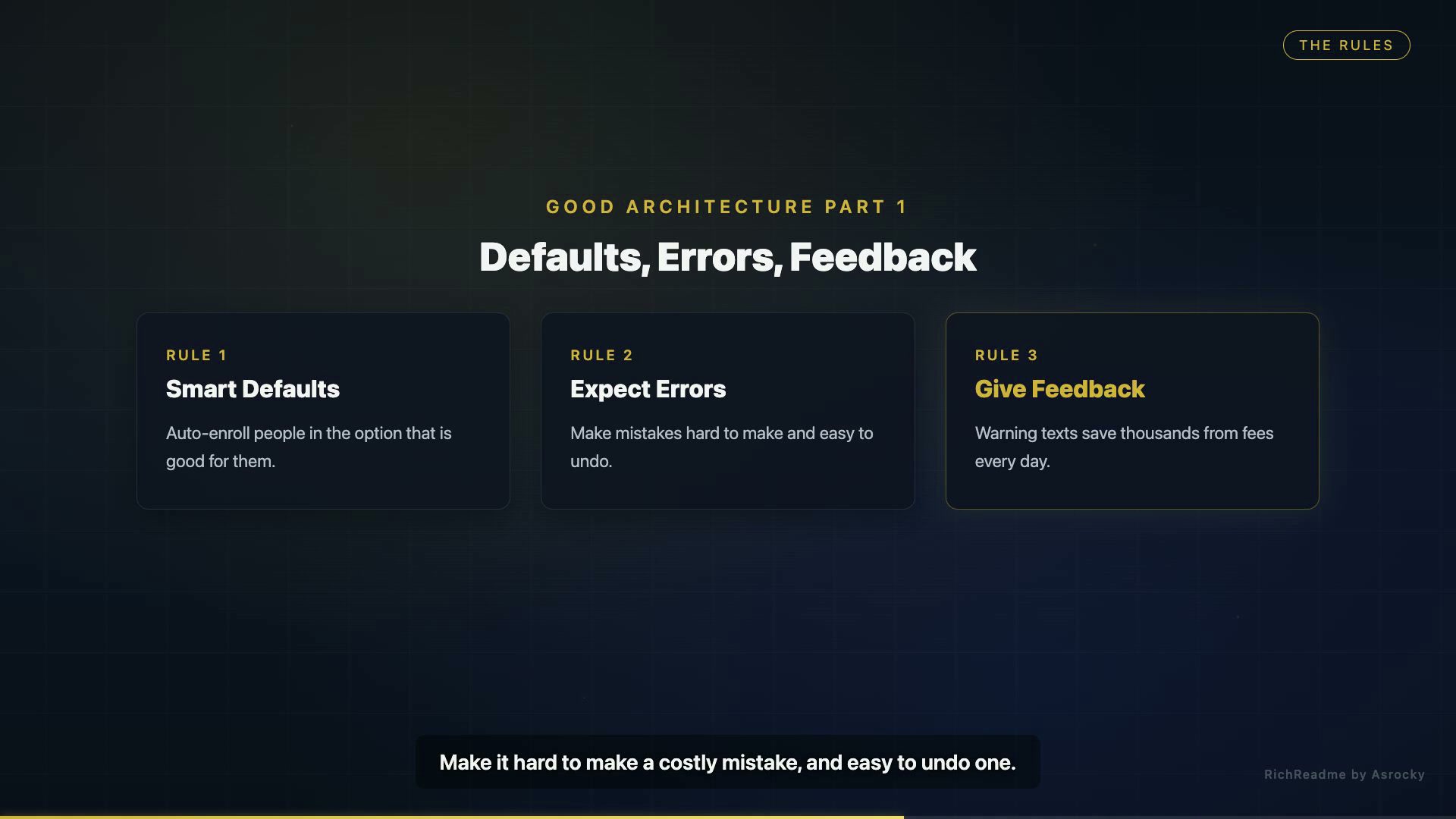
The rules of good choice architecture are simple. First, set smart defaults. If you want people to save more, auto-enroll them. Second, expect errors.
Make it hard to make a costly mistake, and easy to undo one. Third, give feedback. Show people when they are about to overdraw their account. A simple warning text saves thousands of people from fees every day.
Structure Choices, Map Meaning
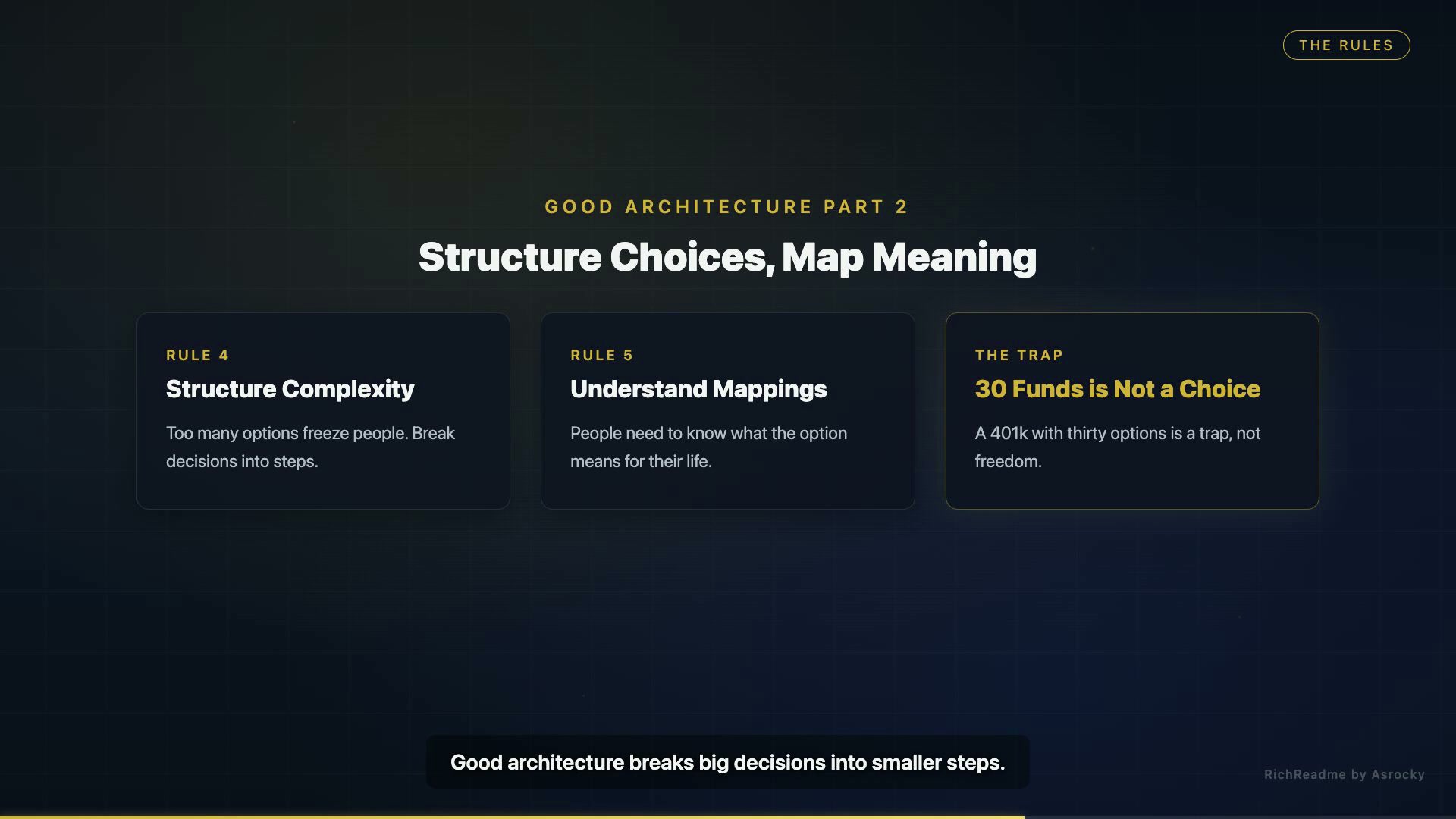
Fourth, structure complex choices. When people face too many options, they freeze and pick nothing. Good architecture breaks big decisions into smaller steps.
Fifth, understand mappings. People should understand what the option actually means for their life, not just what the brochure says. A 401k with thirty funds is a trap, not a choice.
The Checkbox That Saves Lives
Nudges work everywhere. In organ donation, countries that ask people to opt in have a 15 percent consent rate. Countries that default everyone in have over 90 percent. Same choice, opposite default, wildly different outcomes.
The difference is not values. It is the box people check by default. Thousands of lives are saved every year just by flipping a checkbox.
Who Does the Nudge Benefit?
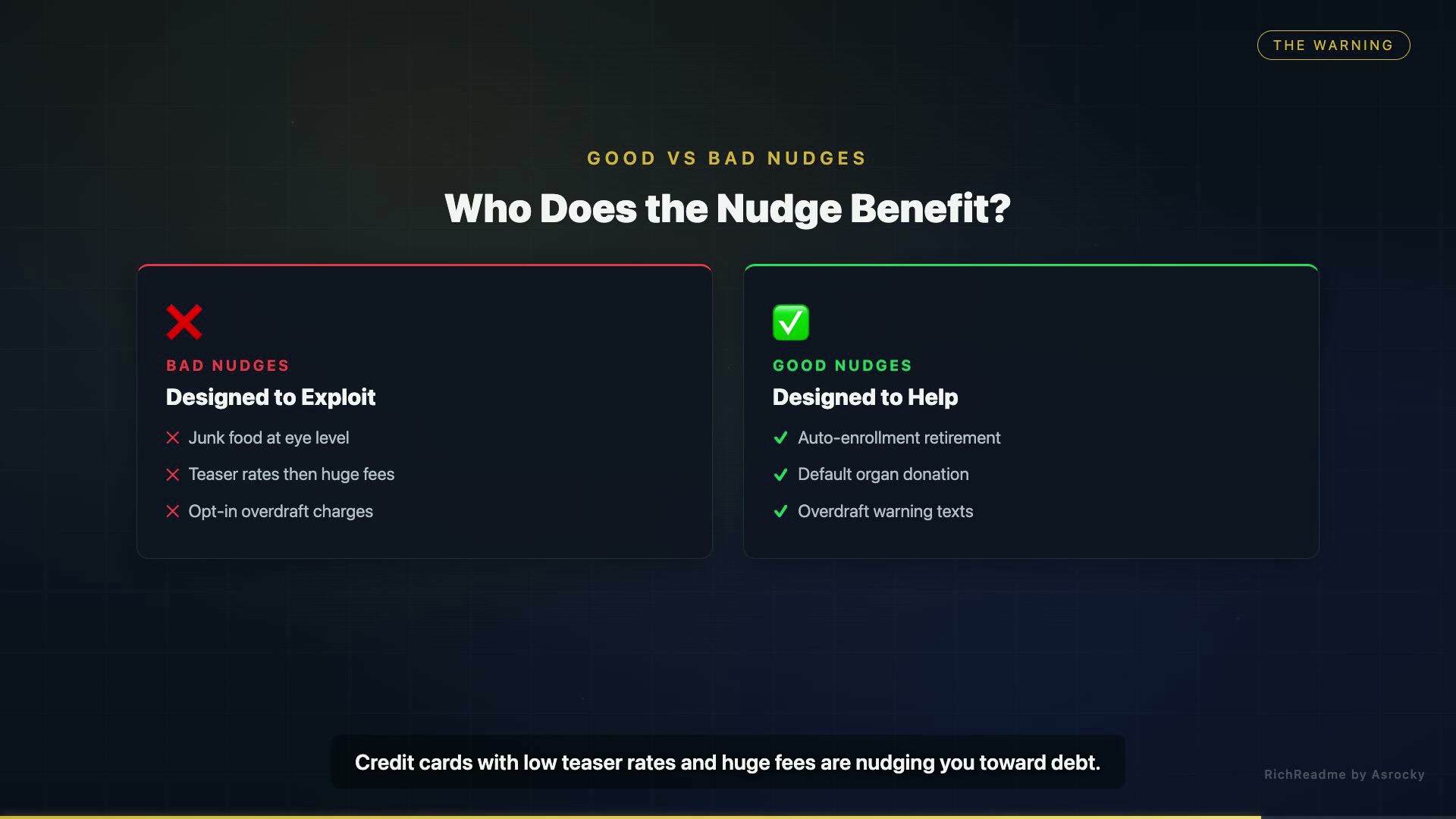
The book also warns against bad nudges. Junk food placed at eye level at the grocery store is a nudge too. Credit cards with low teaser rates and huge fees are nudging you toward debt.
Defaulting people into expensive overdraft protection is not helping them. Nudges are neutral tools. The question is always who they benefit.
The Bottom Line
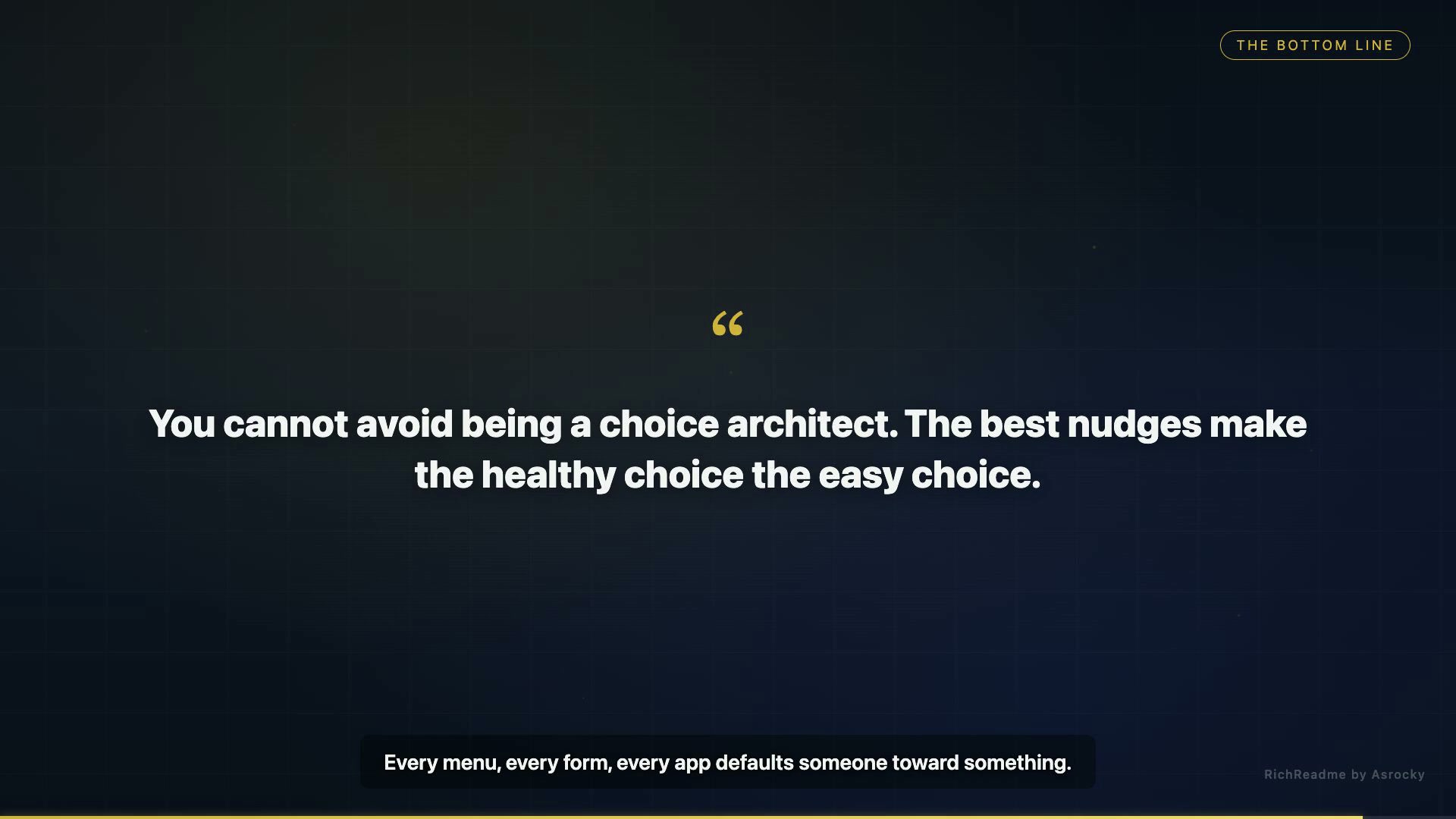
The bottom line is this. You cannot avoid being a choice architect. Every menu, every form, every app defaults someone toward something.
The choice is whether you design it to help them, or just to help yourself. The best nudges make the healthy choice the easy choice, and the right default the default.