Why do smart people lose negotiations? Because they treat it like a logic puzzle. It is not. It is an emotion puzzle.
This is Never Split the Difference by Chris Voss, the FBI hostage negotiator who turned twenty years of life-and-death talks into a playbook anyone can use.
The Core Claim
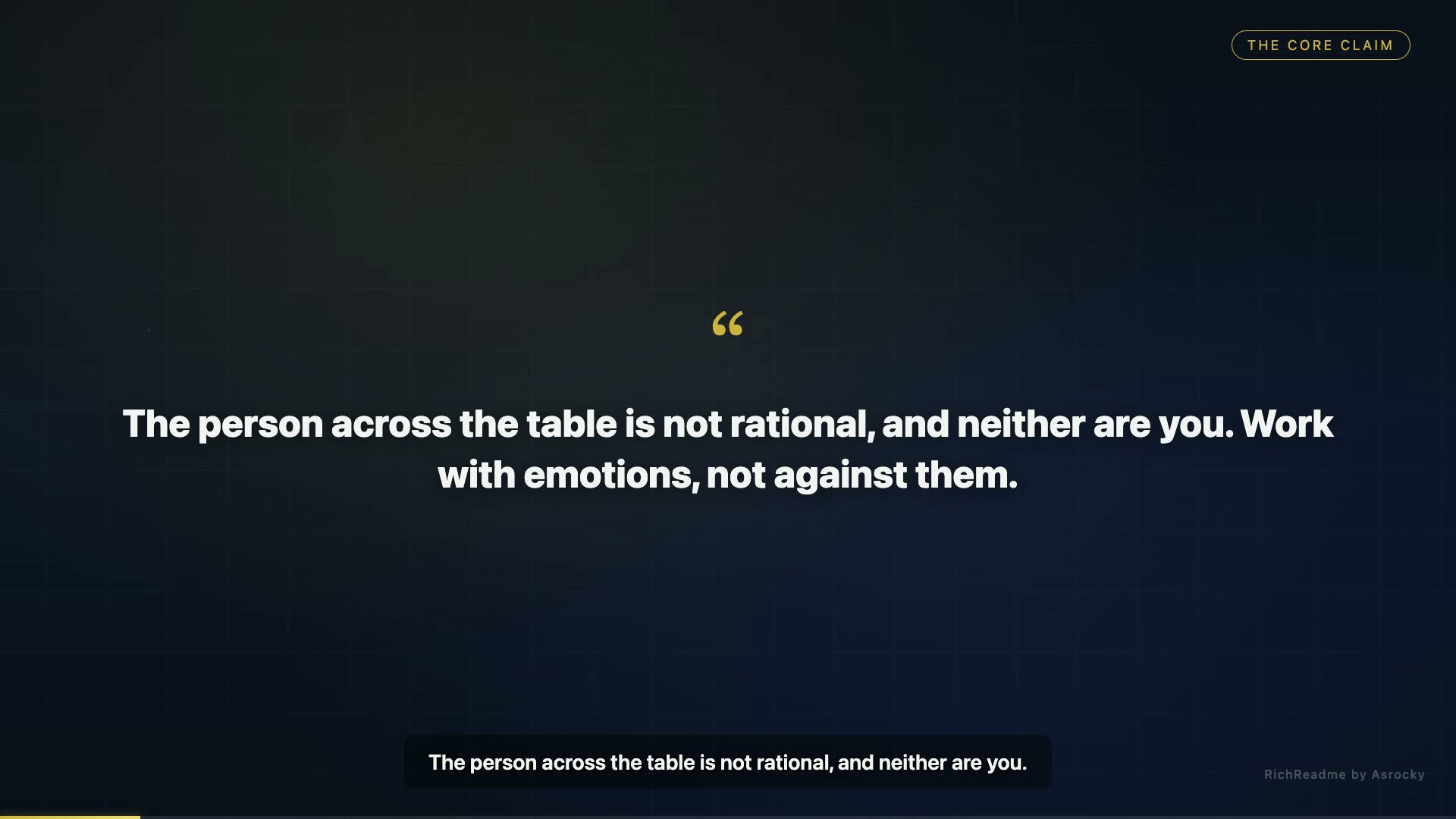
Voss's core claim is simple. The person across the table is not rational, and neither are you. The fastest way to the deal is to work with emotions, not against them.
Calm People Give Better Deals
The first tool is tactical empathy. That is not agreeing with the other side, it is understanding how they feel and showing them you do. When people feel understood, their brain calms down, and calm people give better deals. The cheapest way to build that trust is the mirror.
Repeat the last two or three words of what they just said, with a slow, curious tone. Try it. They will keep talking, and every word they say is free information.
Tool 2: Labeling
Next comes labeling. Do not feel their pain, name it. It sounds like you are worried about the timeline.
A label starts with it sounds like, it seems like, or it looks like, and it names the emotion without judging it. Labels create connection and often pull the real objection to the surface, because people confirm what they feel is being heard.
Split the Difference? Both Lose.
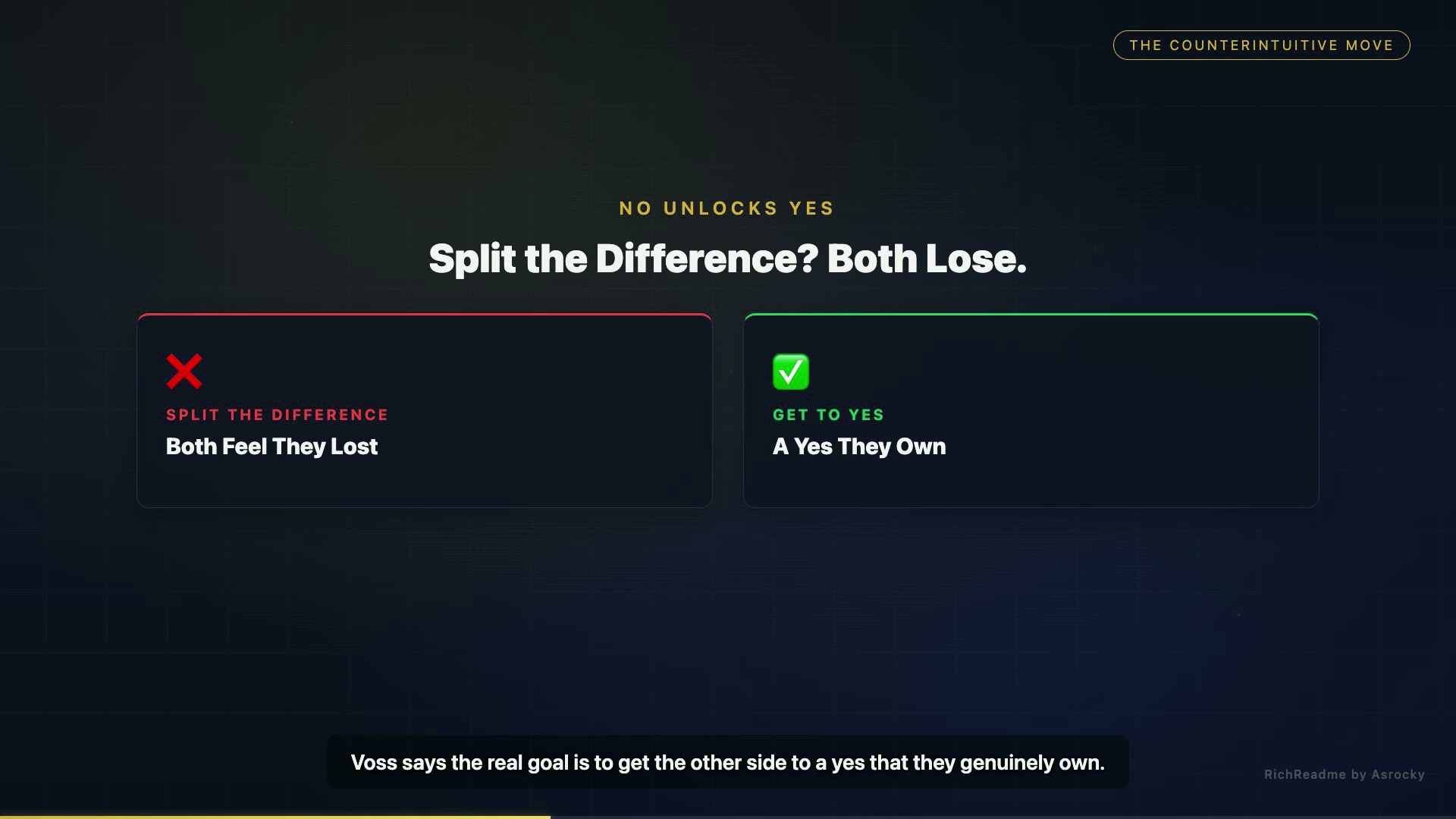
Here is the counterintuitive move. Never split the difference. If two sides split the difference, both feel they lost. Voss says the real goal is to get the other side to a yes that they genuinely own.
And the word that unlocks it is no. No is not rejection, it is the start of the negotiation. When people can say no, they feel safe, and safe people tell you the truth. Ask questions that make no the answer, like is now a bad time to talk?
Your Problem Becomes Theirs
Then you reach for two words that transform any negotiation: how am I supposed to do that? It sounds weak, but it forces the other side to solve your problem. The magic question makes your constraints their problem, and they start proposing solutions that work for you.
Steer With Questions
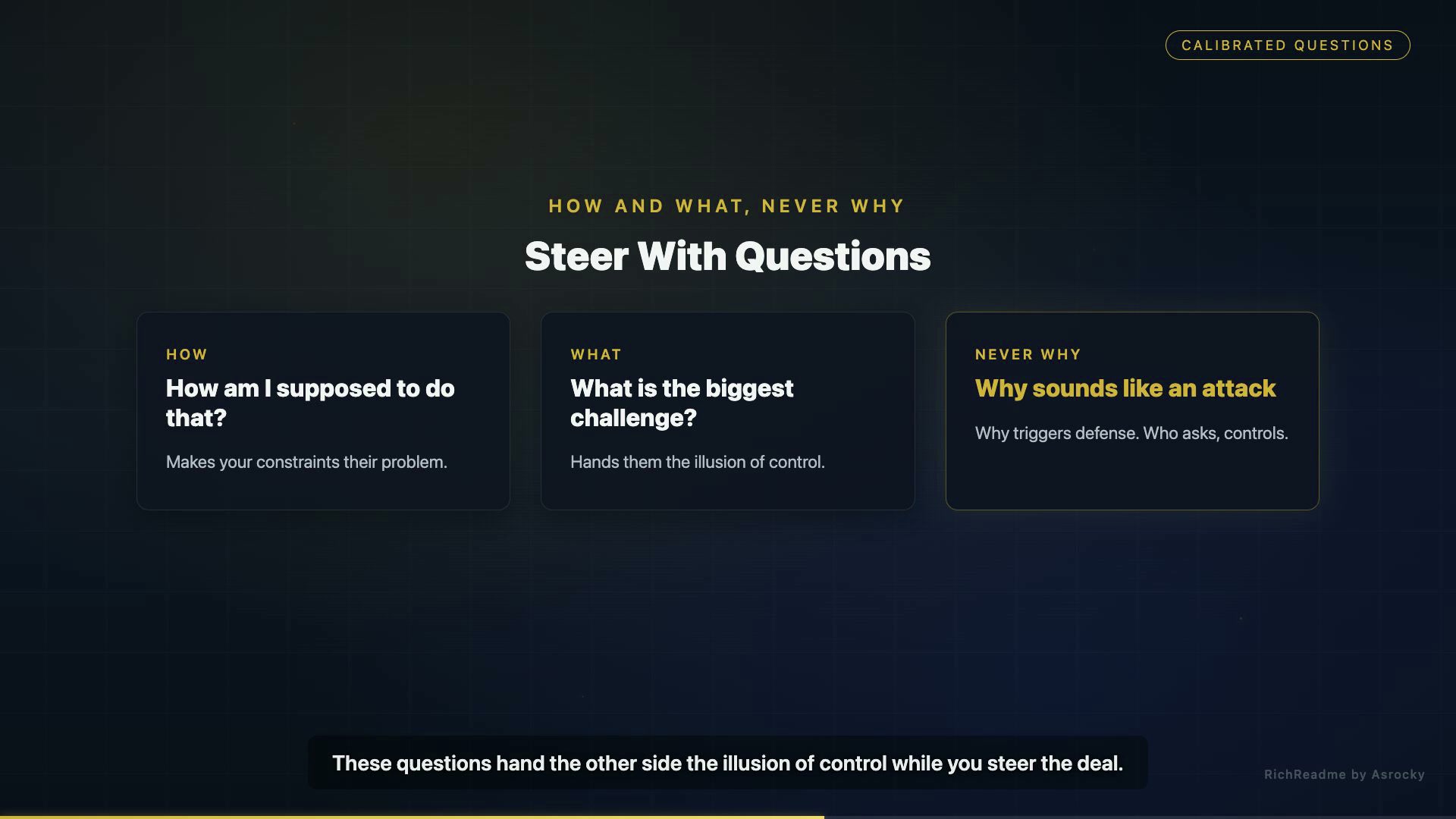
Now anchor with calibrated questions. A calibrated question starts with how or what, not why, because why sounds like an attack. What is the biggest challenge you face? How am I supposed to do that?
These questions hand the other side the illusion of control while you steer the deal. The person who asks the questions controls the conversation. Voss also warns about the biggest mistake: negotiating over price without knowing their deadline and their alternatives.
Precise Numbers Win
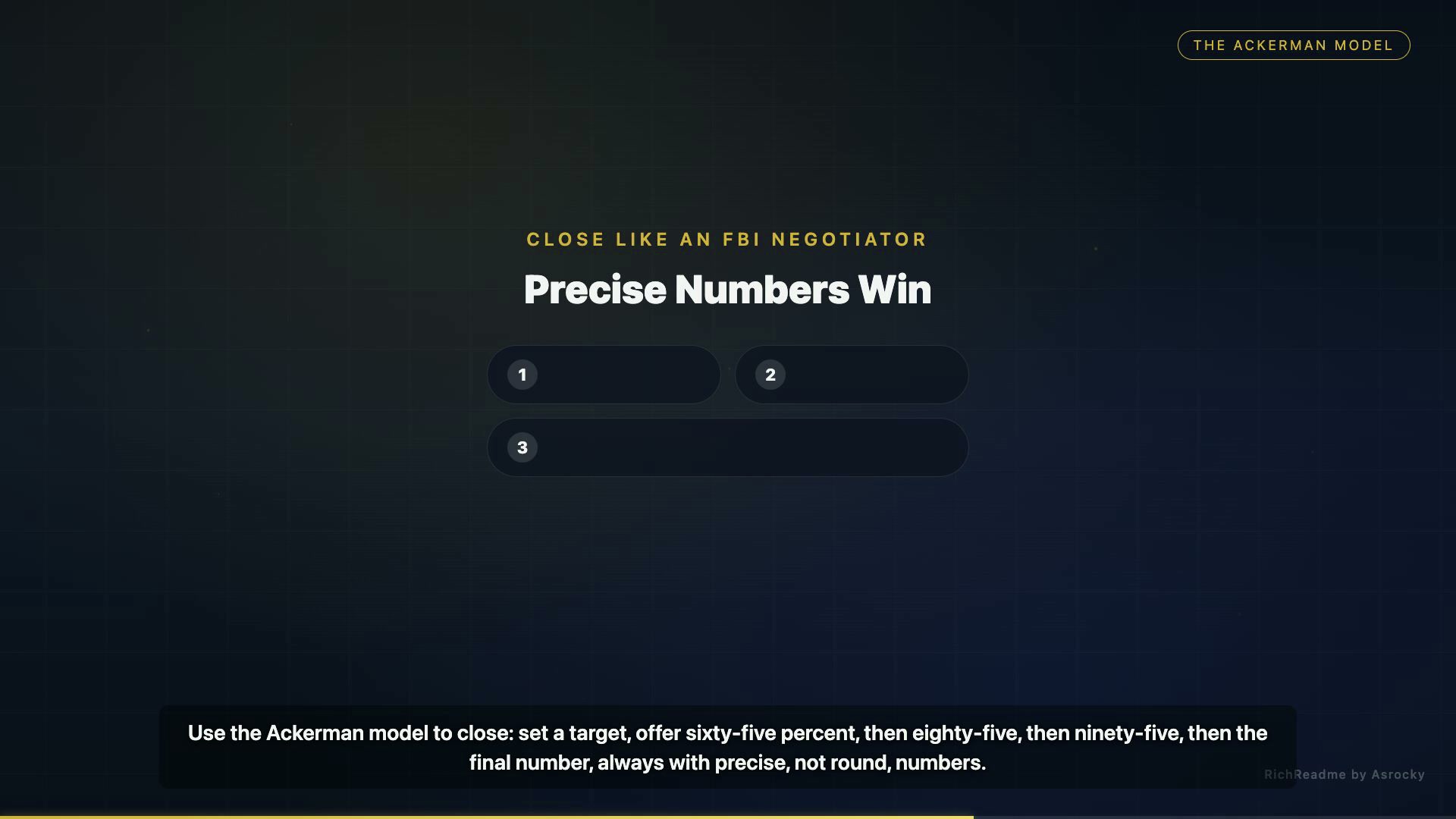
Use the Ackerman model to close: set a target, offer sixty-five percent, then eighty-five, then ninety-five, then the final number, always with precise, not round, numbers. Precise numbers feel researched and real. Round numbers feel like guesses you can push on.
Defend & Audit
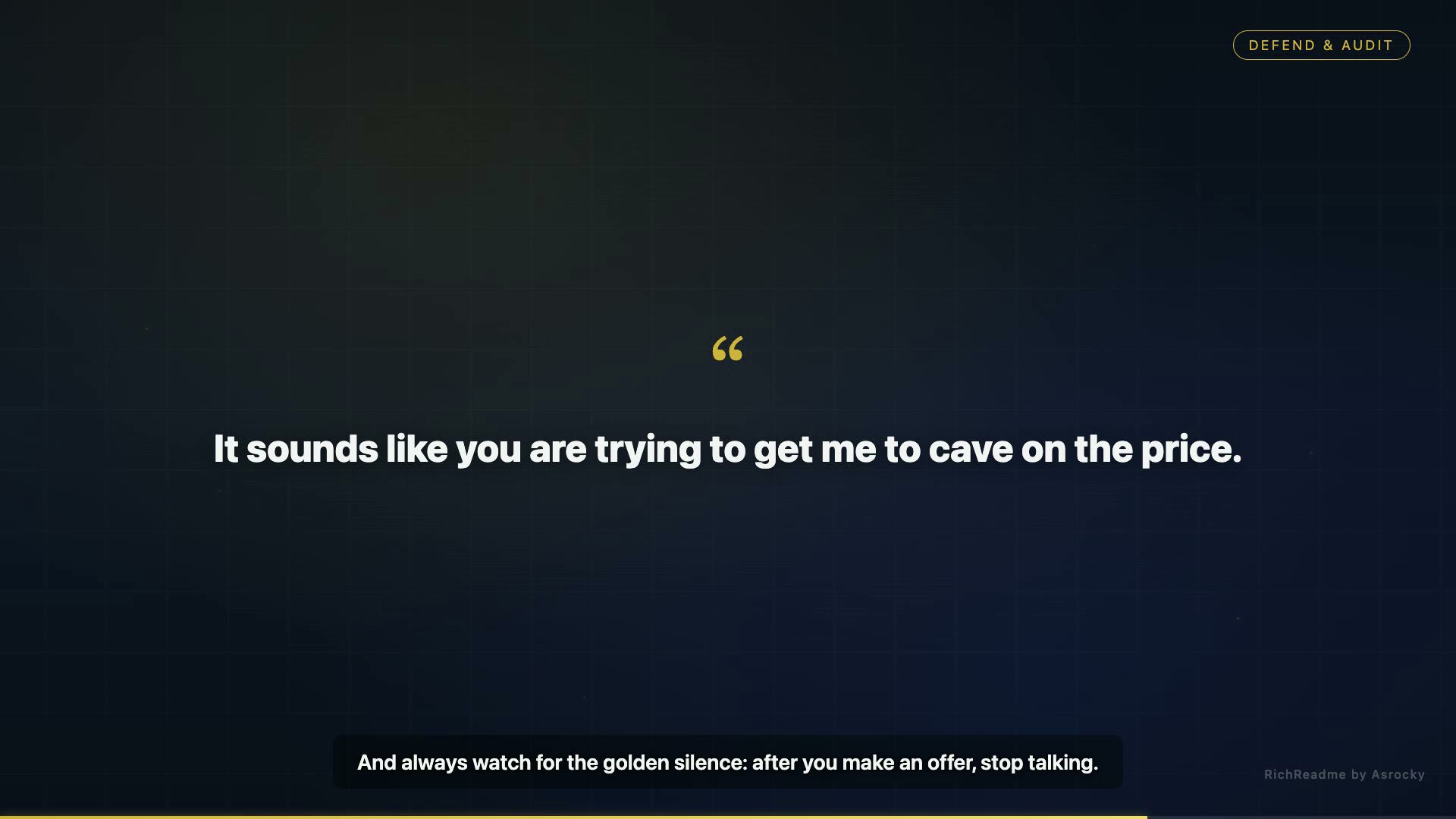
Before you close, defend yourself with the label of last resort. If the other side pushes hard, say it sounds like you are trying to get me to cave on the price. It forces them to prove they are fair, or to reveal they are not. And always watch for the golden silence: after you make an offer, stop talking. The first person to speak loses.
The final layer is the accusation audit. Before a tough conversation, list every terrible thing the other side could say about you, and say it first. This is exactly why it feels like you are trying to push this through quickly. Preempting the attack drains the venom, and the negotiation starts on clean ground.
The Pattern
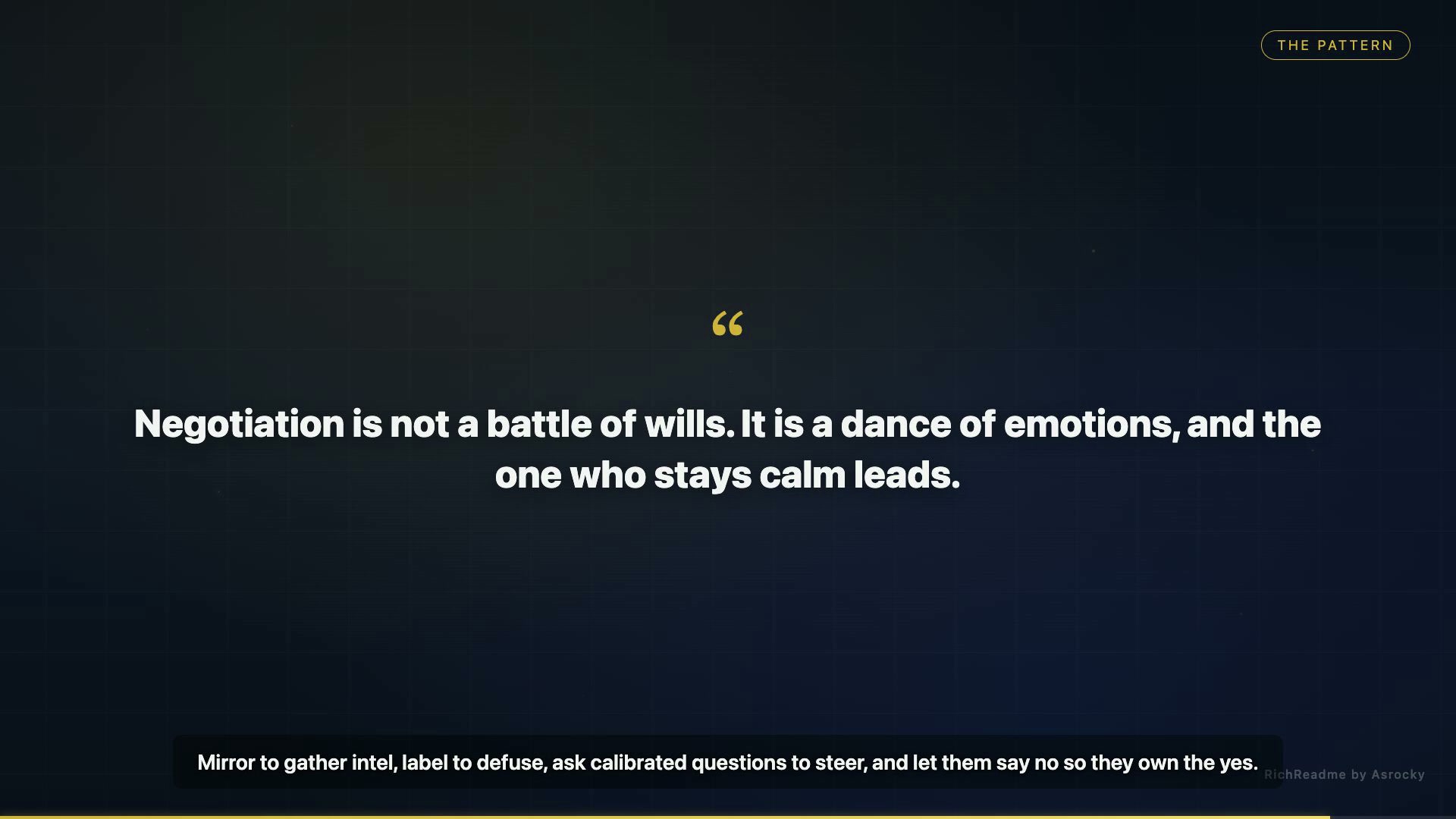
So the pattern is simple. Mirror to gather intel, label to defuse, ask calibrated questions to steer, and let them say no so they own the yes. Negotiation is not a battle of wills. It is a dance of emotions, and the one who stays calm leads.