One team spent the least in baseball. A richer team spent three times as much. They won the same number of games.
This is Moneyball by Michael Lewis, the story of how Billy Beane and the Oakland Athletics rewrote the rules of a sport that had not changed in a century. Lewis is famous for finding the hidden logic inside institutions, and here he follows a small-market ball club that could not outspend its rivals. So it found a way to outthink them. The idea spread far beyond baseball, into how every business prices talent.
Baseball Had Not Changed in a Century
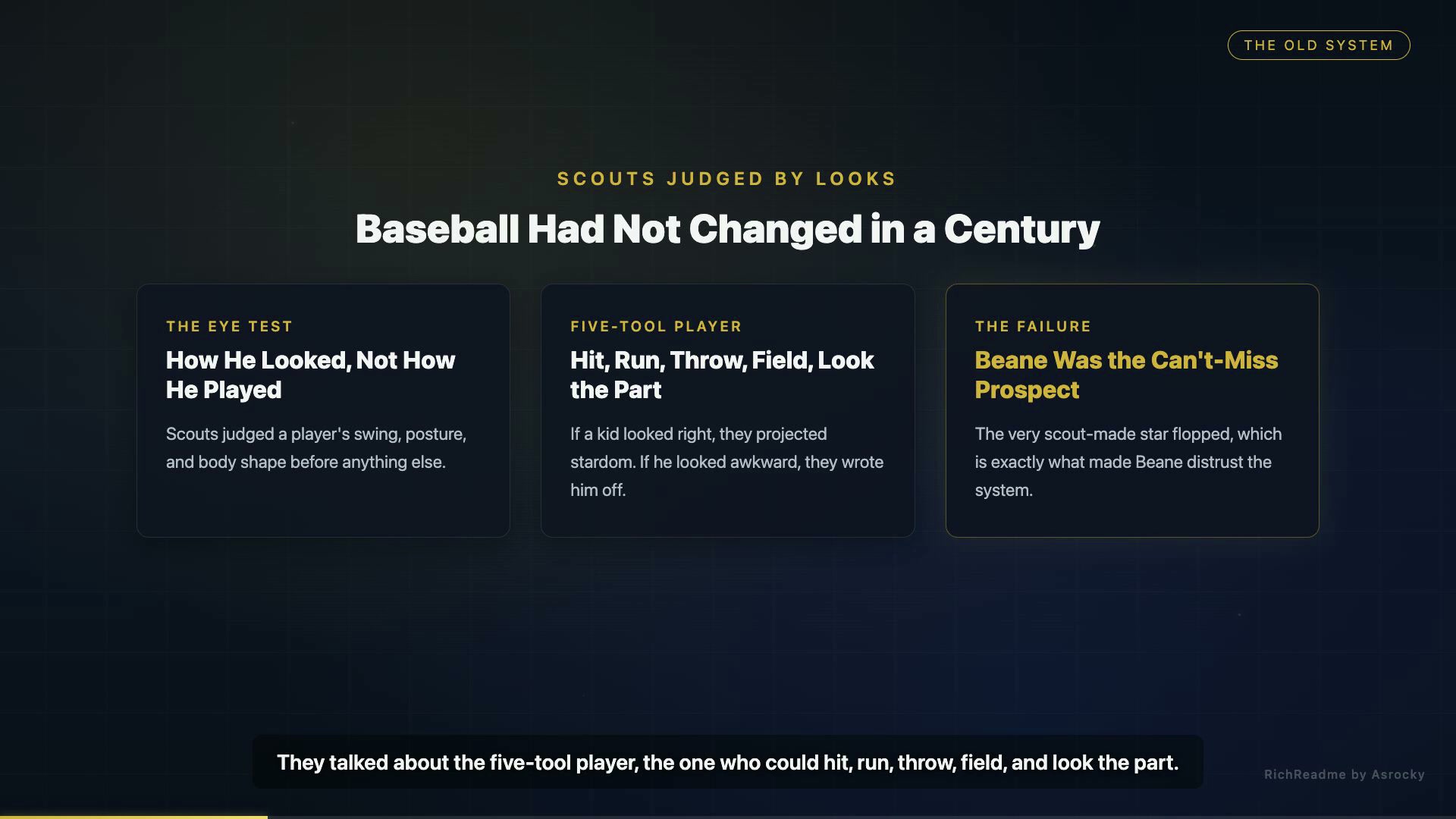
The old way was gut feeling. Baseball scouts would walk into a clubhouse and judge a player by how he looked. They watched his swing, his posture, even the shape of his body. They talked about the five-tool player, the one who could hit, run, throw, field, and look the part.
If a kid looked right, they projected him as a star. If he looked awkward, they wrote him off. Beane had once been that very kind of can't-miss prospect, and he flopped, which is what made him distrust the whole system.
A Run Is a Run, No Matter How
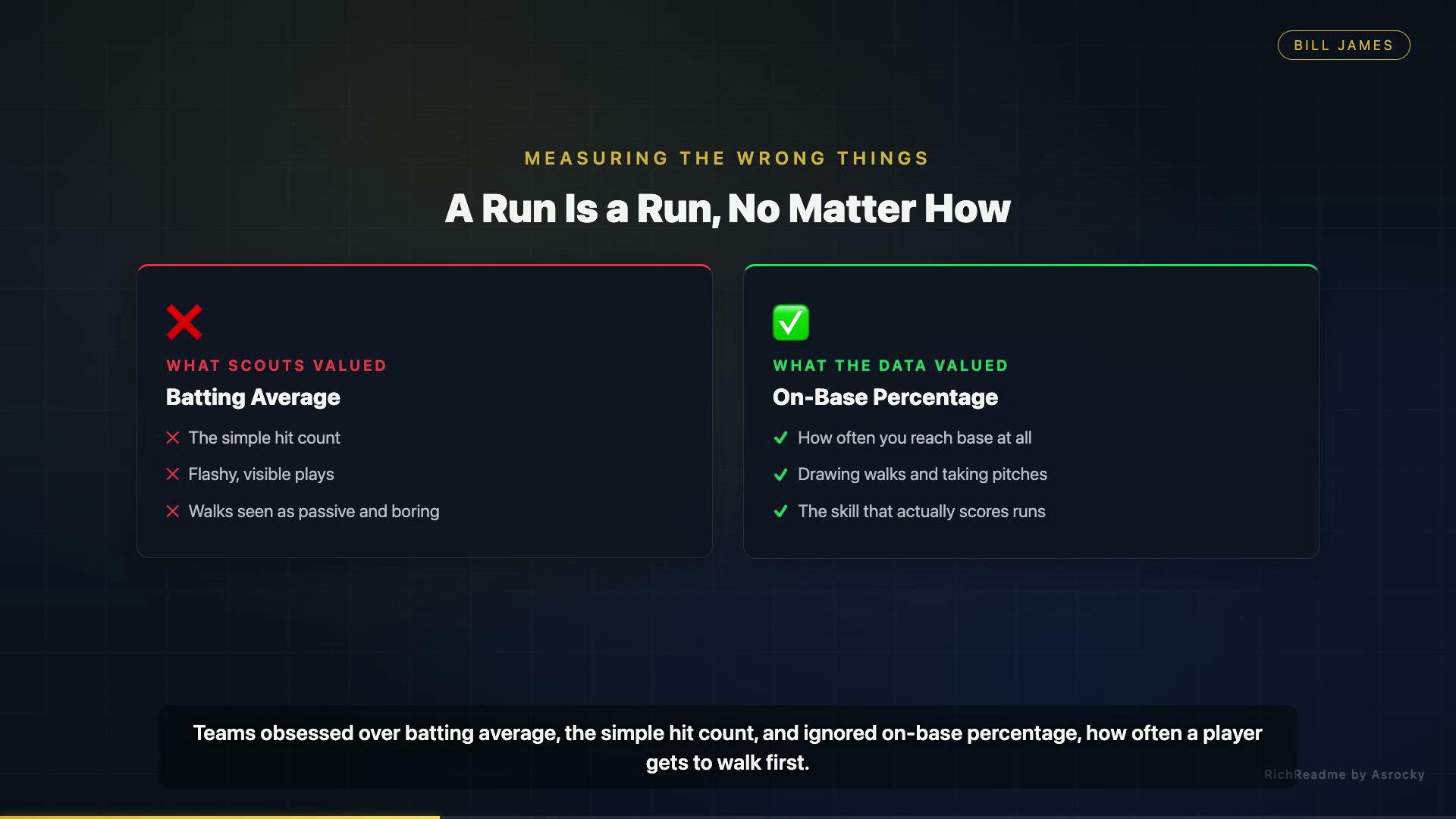
The data told a different story. A statistician named Bill James had spent years arguing that baseball was measuring the wrong things. Teams obsessed over batting average, the simple hit count, and ignored on-base percentage, how often a player gets to walk first.
Yet getting on base, any way you can, is what actually scores runs. Scouts thought walks were passive and boring. The numbers said walks were gold, because a run is a run no matter how you reached base.
Everyone Priced the Wrong Skills
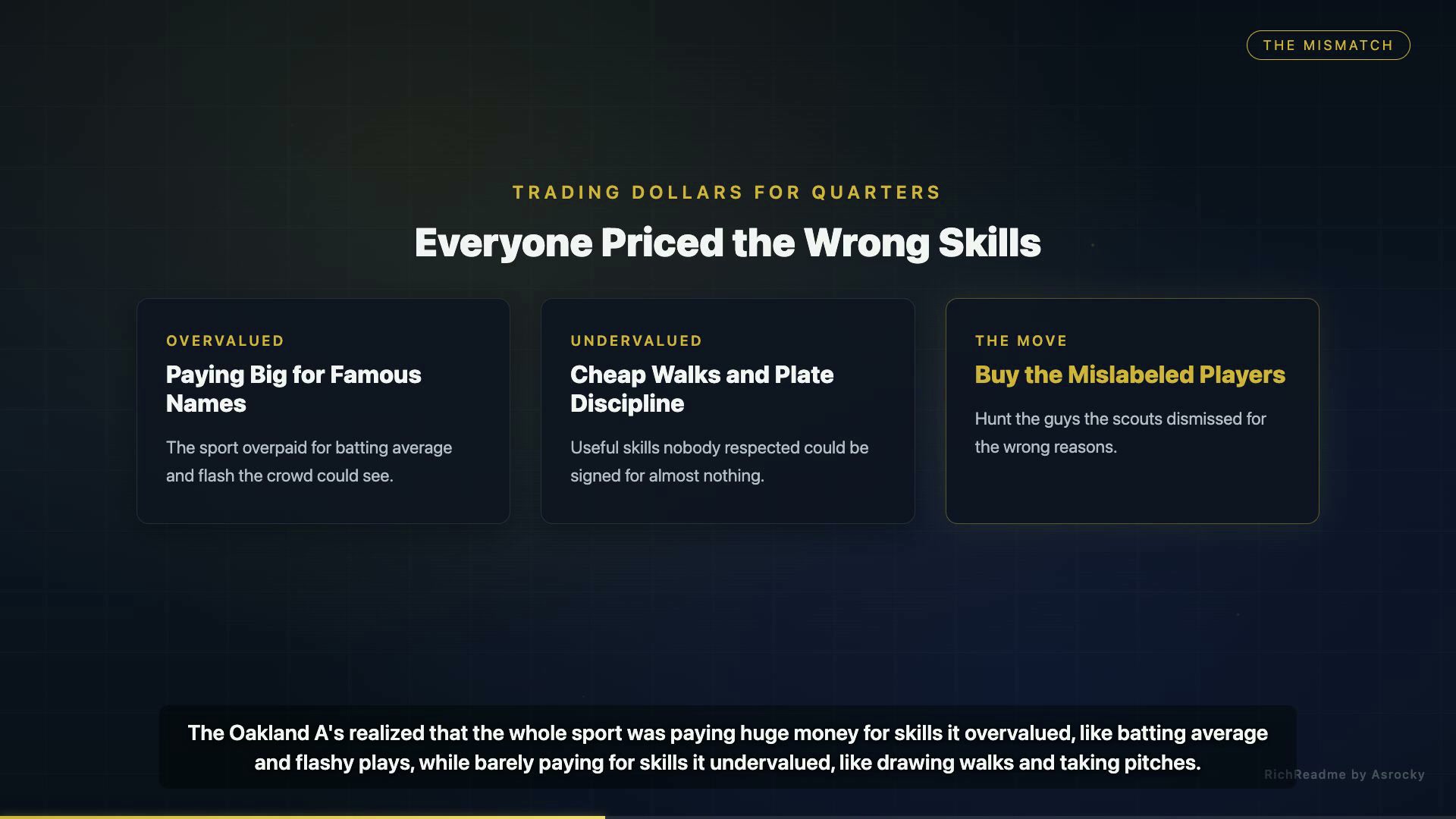
This created a giant market mismatch. The Oakland A's realized that the whole sport was paying huge money for skills it overvalued, like batting average and flashy plays, while barely paying for skills it undervalued, like drawing walks and taking pitches. It was like trading dollar bills for quarters. Beane and his analyst Paul DePodesta went hunting for the players everyone else had mislabeled as flawed, the guys the scouts dismissed for the wrong reasons.
Budget War
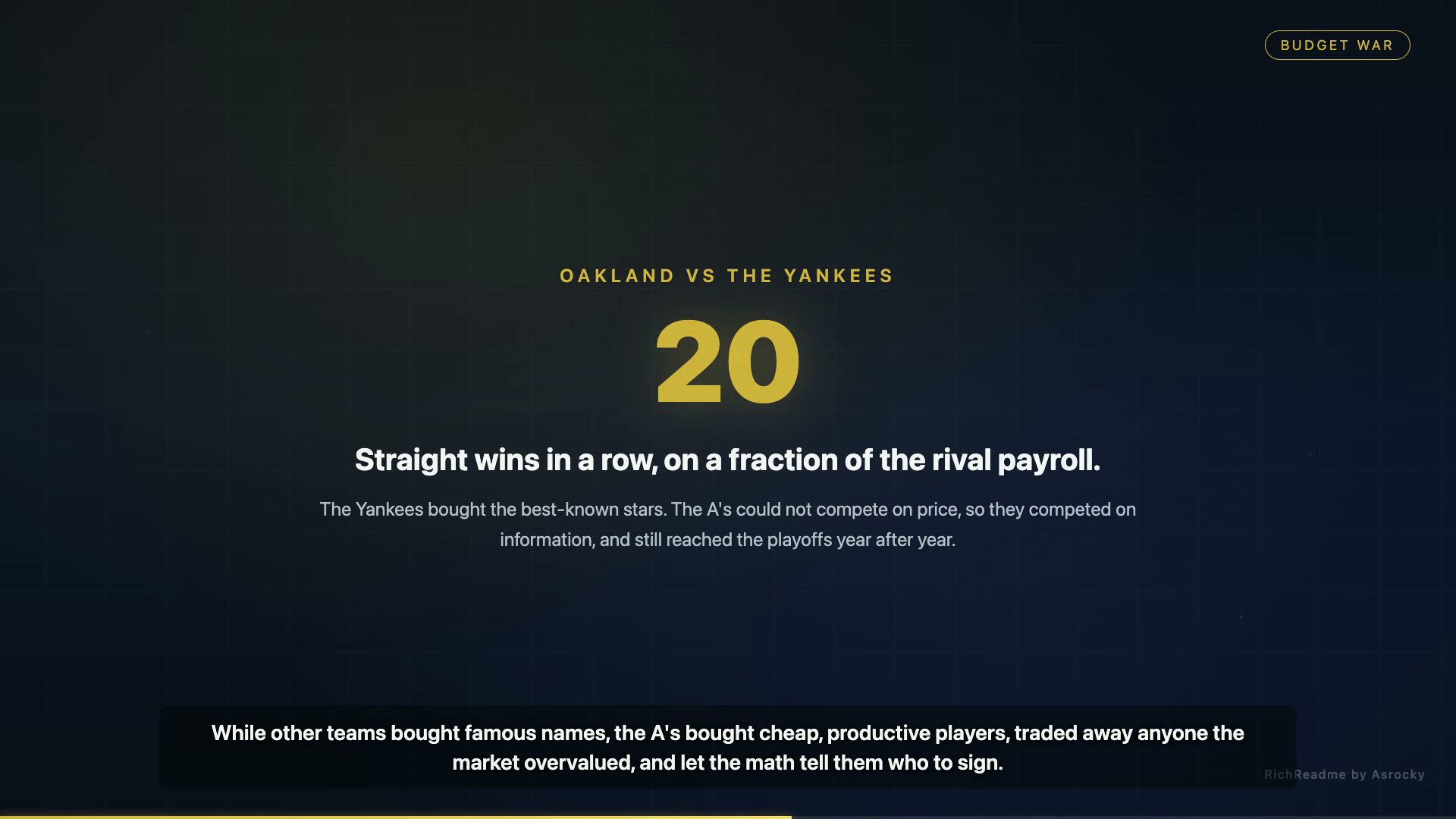
The budget war made this essential. The Yankees could spend whatever it took to buy the best-known stars. The A's had a payroll that barely covered one Yankee player. They simply could not compete on price. So they competed on information.
While other teams bought famous names, the A's bought cheap, productive players, traded away anyone the market overvalued, and let the math tell them who to sign. It was a loophole built on patience, not luck. In 2002 they won twenty straight games and reached the playoffs year after year on a fraction of the budget. The rich teams were shocked, because they had mistaken popularity for performance.
The Real Lesson
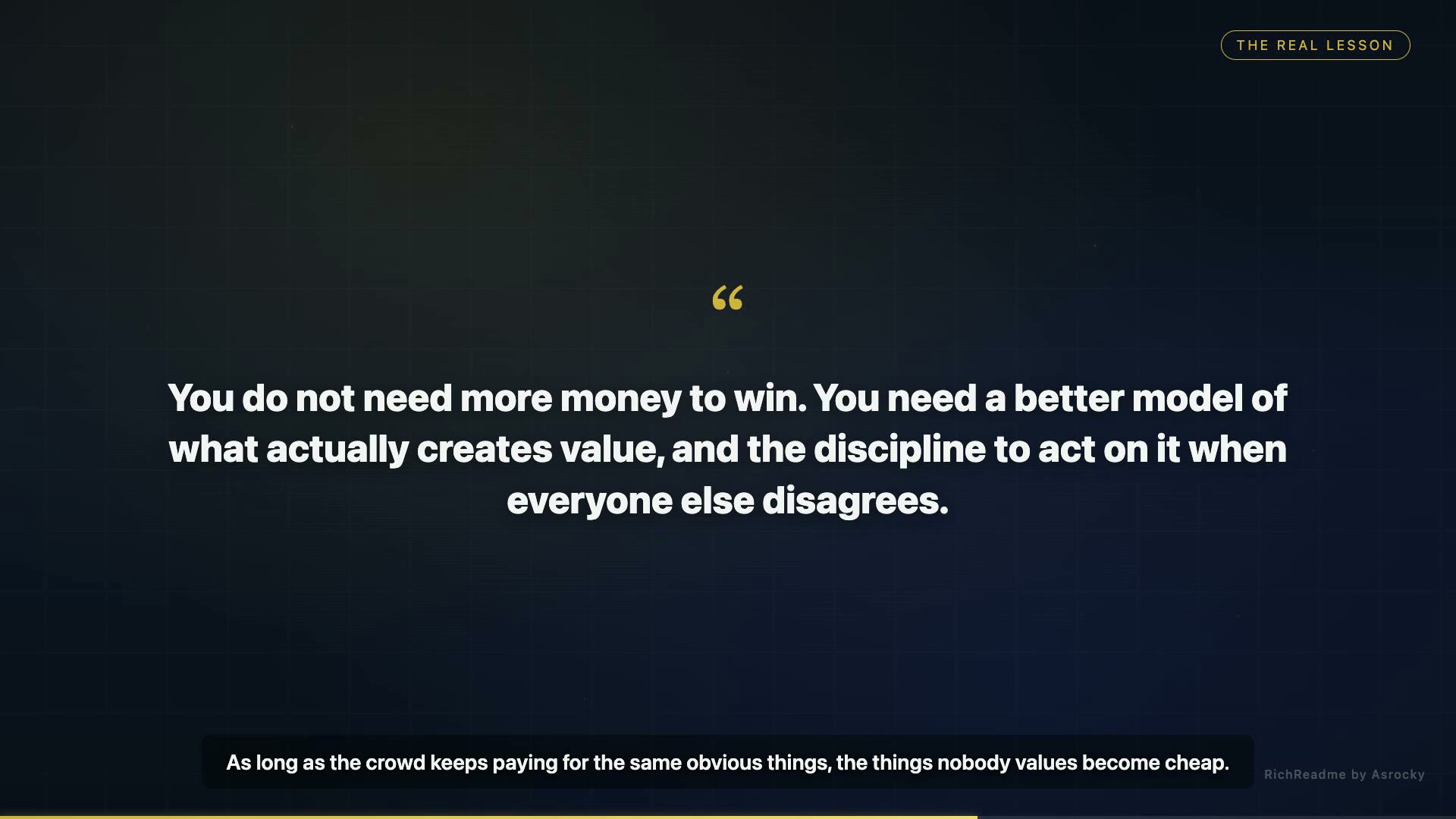
The lesson is about inefficient markets. Moneyball is not really about baseball. It is about what happens when everyone in a field agrees on the wrong metrics.
As long as the crowd keeps paying for the same obvious things, the things nobody values become cheap. You do not need more money to win. You need a better model of what actually creates value, and the discipline to act on it when everyone else disagrees.
Everyone Loved to Hate It
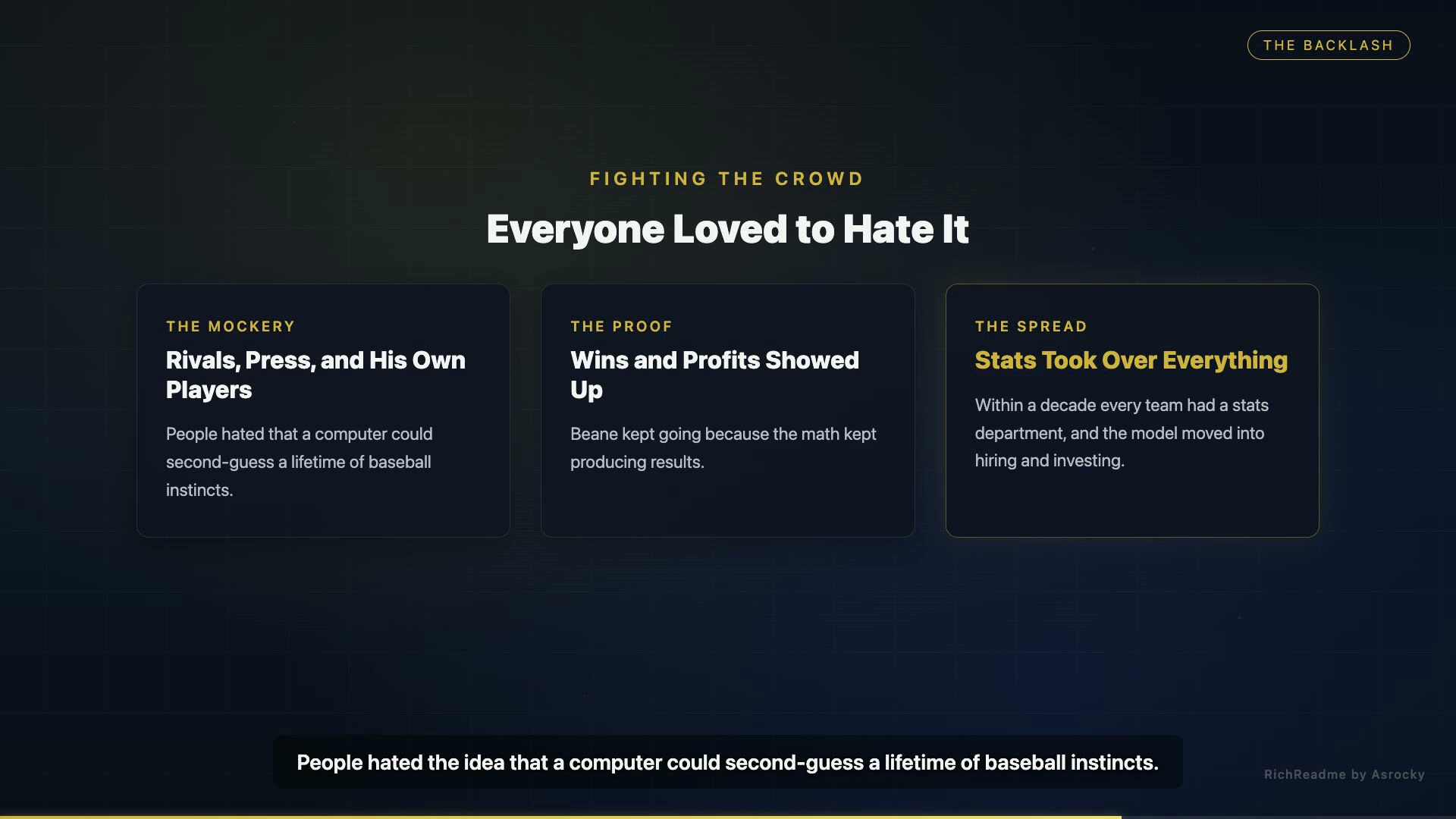
That last part is hard. The A's front office was openly mocked by rival managers, the press, and even their own players. People hated the idea that a computer could second-guess a lifetime of baseball instincts.
Beane kept going anyway, because the wins, and the profits, kept showing up. Within a decade every team in baseball had a stats department, and the same approach moved into hiring, investing, and management.
Re-think the Metrics

So what is the takeaway for you? First, identify the metrics everyone around you uses without question, then ask whether they actually predict the result you care about. Second, look for what the market undervalues because it is unglamorous.
Third, trust your data over your gut, especially when your gut has been trained by the same crowd you are trying to beat. Most people never do this, because it feels lonely and expensive to be wrong in public. That discomfort is exactly what keeps the opportunity alive for whoever can stomach it.