The man who trained billionaires sat down with fifty of them and stole their playbook.
This is MONEY Master the Game, by Tony Robbins. He spent four years interviewing Warren Buffett, Ray Dalio, Carl Icahn, and more than fifty other financial legends, and distilled everything into seven simple steps that anyone can use, no matter how much you have in the bank right now. The goal is not to get lucky. The goal is to build an income for life.
Pay Yourself First

Step one is the decision itself. Most people never invest because they never decide to. They earn money, pay the bills, and whatever is left they hope will grow. Robbins says you need to flip that. Decide a fixed percentage of every dollar you earn goes straight into your Freedom Fund before you spend a cent.
Then automate it. Set it up so the money leaves your account the day you get paid, and you will never miss it. Starting small is fine. The point is to become an investor, not just a consumer.
Fees Are Stealing Your Retirement

Step two is learning the rules before you play the game. Robbins breaks down nine myths Wall Street uses to separate you from your money. The biggest one is fees. The average mutual fund charges about three percent a year, while a low-cost index fund that owns the entire market costs around one-tenth of one percent.
That seems tiny, but it quietly destroys your retirement. And here is the kicker, over any ten year period, about ninety-six percent of those high fee funds fail to beat the market anyway. You are paying up to thirty times more for worse results.
Fees Cut Your Nest Egg in Half
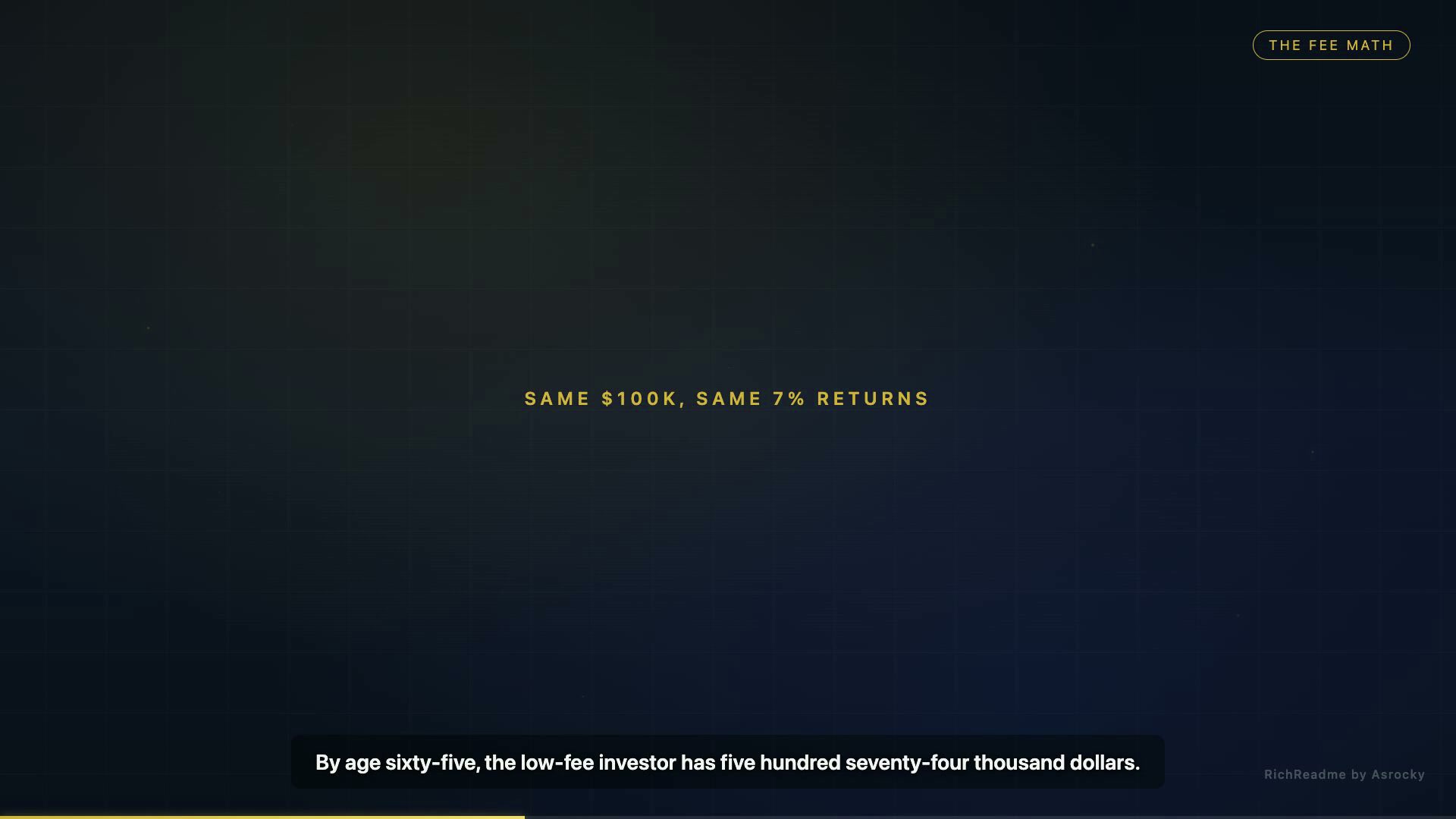
The math on fees is brutal. Three friends each invest one hundred thousand dollars at age thirty-five. They all earn seven percent a year before fees. One pays one percent, another pays two percent, the third pays three percent. By age sixty-five, the low-fee investor has five hundred seventy-four thousand dollars. The high-fee investor has three hundred twenty-four thousand.
Same returns. Same time. The fees ate almost half the money. Robbins says you should think of fees as a jockey on your back. A one hundred pound jockey beats a three hundred pound jockey every time.
Make the Game Winnable
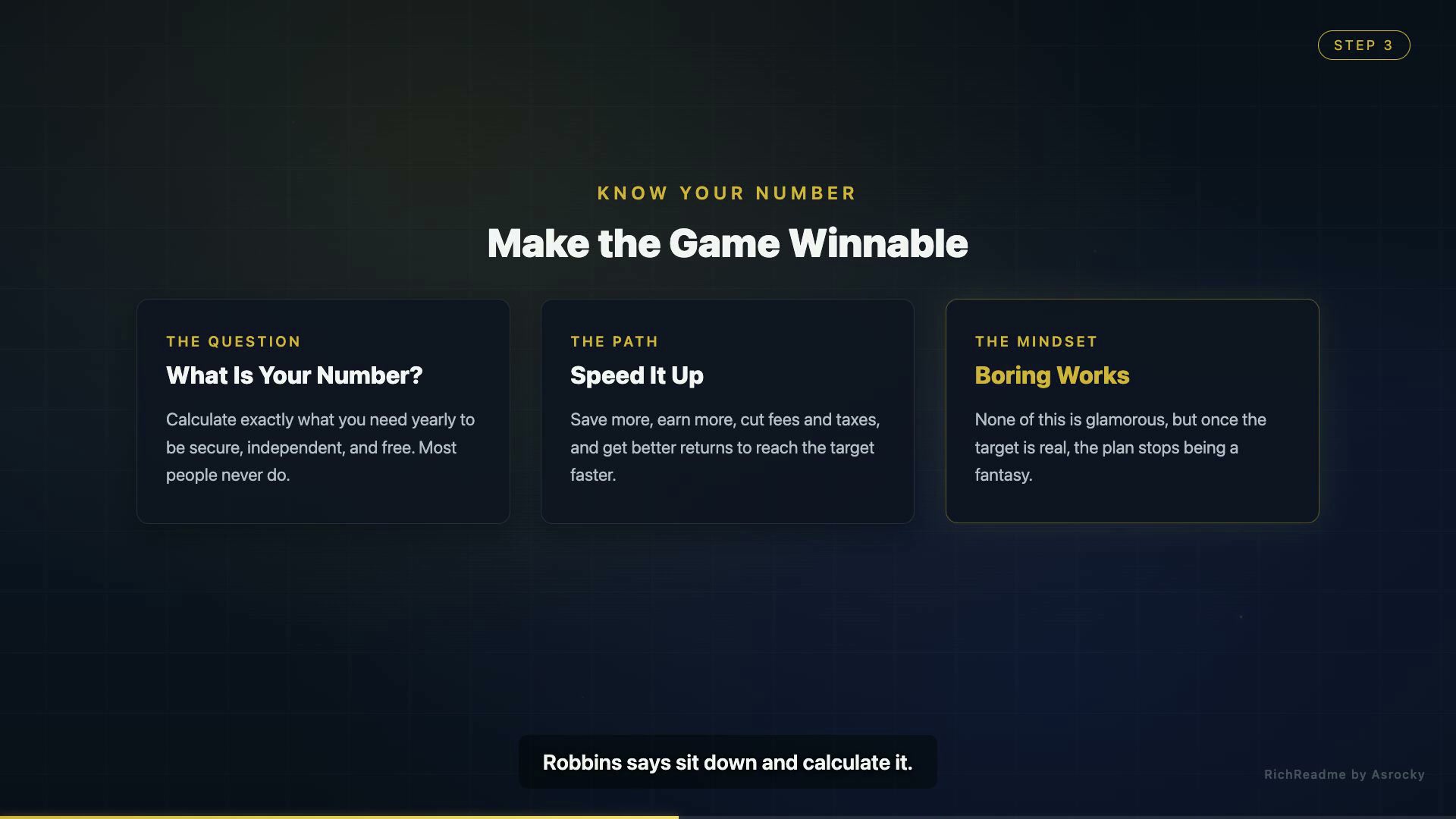
Step three is making the game winnable. You need to know the actual number. How much do you need each year to be secure, to be independent, to be free? Most people guess.
Robbins says sit down and calculate it. Once you know the target, the path becomes real. You can speed things up by saving more, earning more, cutting fees and taxes, and getting better returns. None of this is exciting, but it works.
The Three Buckets
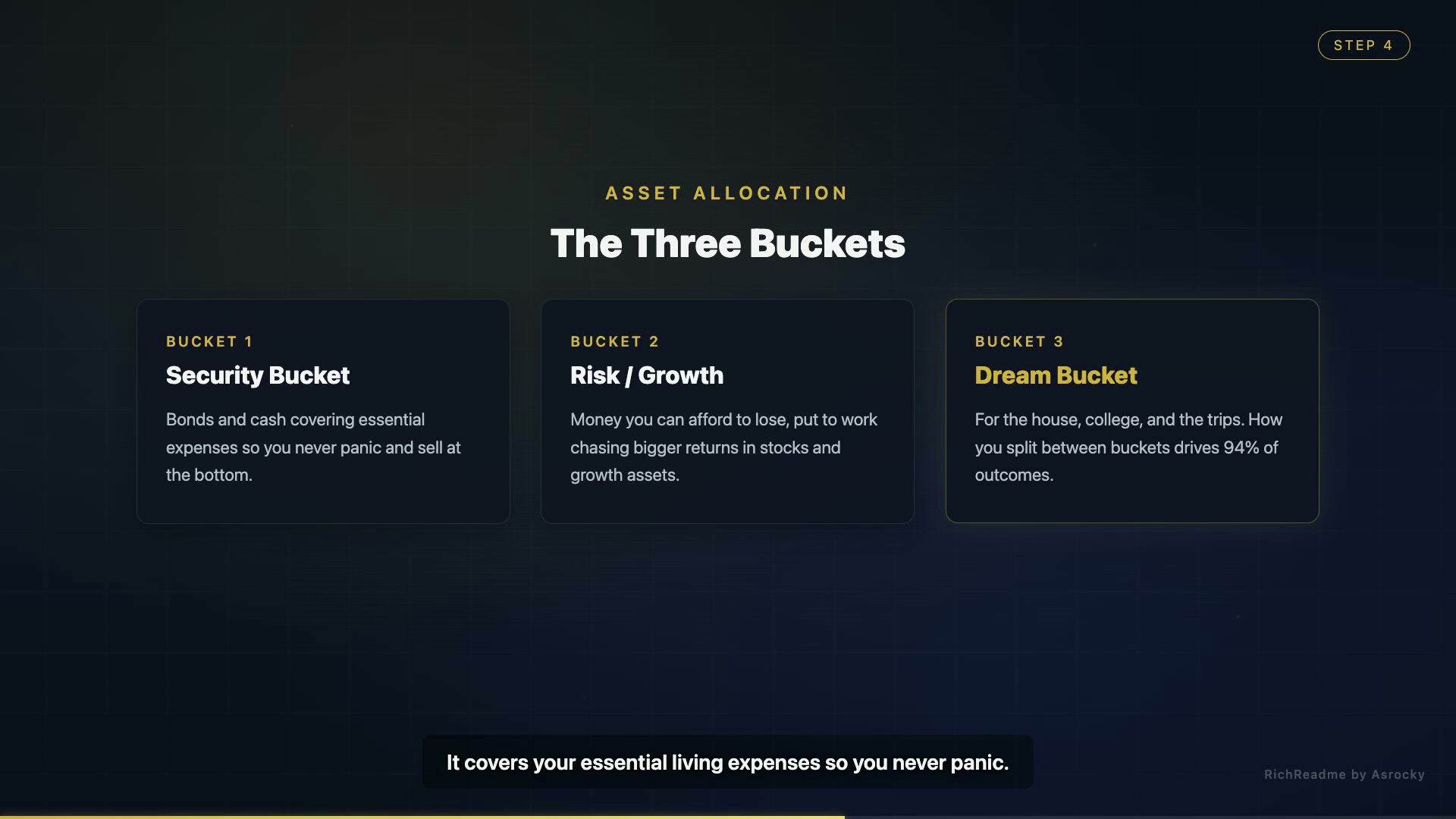
Step four is the most important decision you will ever make: asset allocation. Picking the right stocks matters far less than deciding how you split your money. Robbins describes three buckets. The Security bucket holds money you cannot afford to lose, in bonds and cash. It covers your essential living expenses so you never panic.
The Risk and Growth bucket is where you chase bigger returns with money you can afford to lose. The Dream bucket is for the things you want in life, like a house or college or a trip around the world. How you split your money between these buckets drives your results more than any single stock you pick. Dalio told Robbins this one decision determines about ninety-four percent of your long term outcomes.
Win in Every Economy
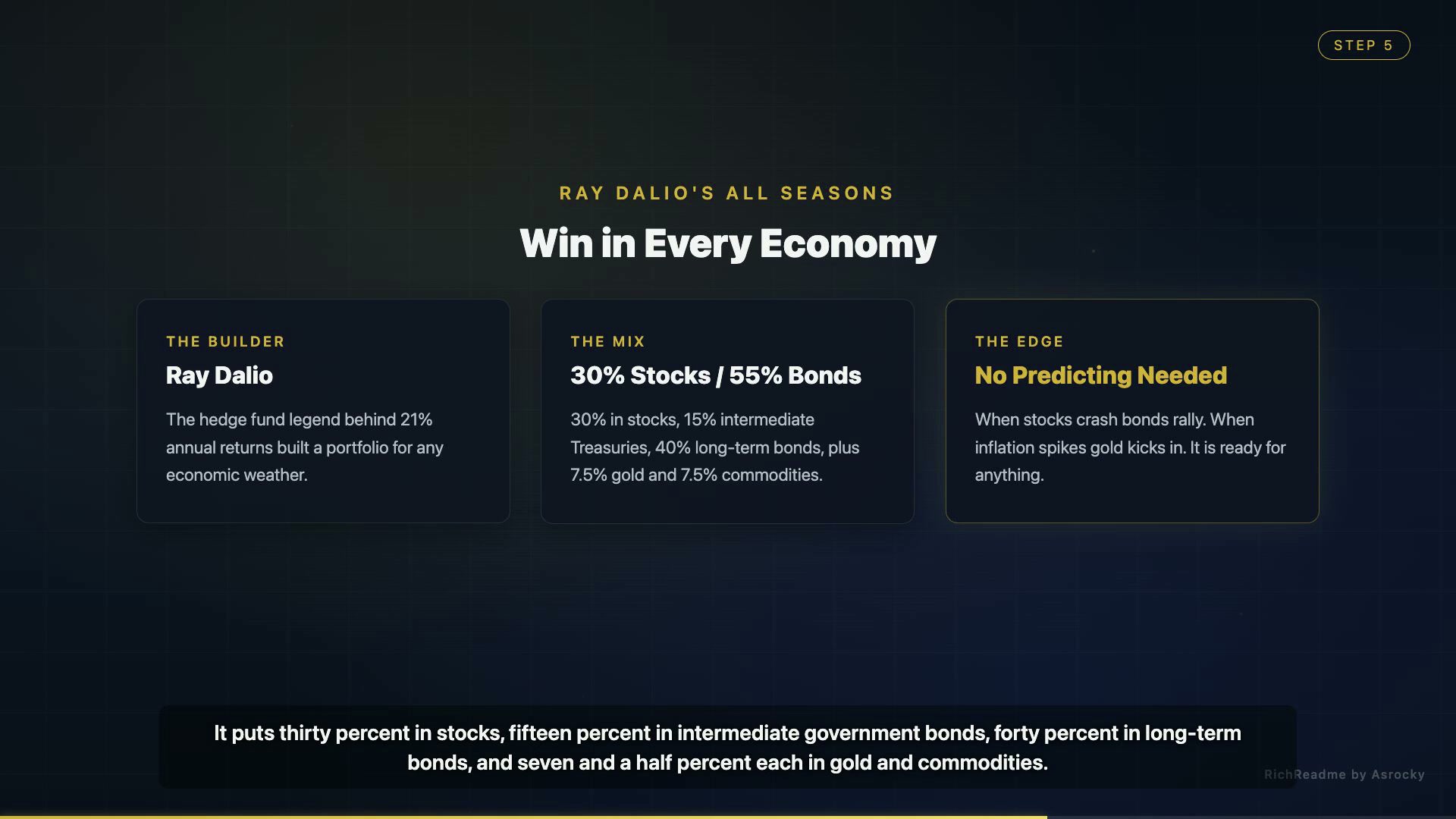
Step five is protecting yourself from every kind of weather. Robbins sits down with Ray Dalio, the hedge fund legend who has run twenty-one percent annual returns for decades. Dalio built a portfolio designed to do well no matter what the economy does. It puts thirty percent in stocks, fifteen percent in intermediate government bonds, forty percent in long-term bonds, and seven and a half percent each in gold and commodities.
When stocks crash, the bonds rally. When inflation spikes, gold and commodities kick in. You do not need to predict the future. The portfolio is ready for whatever shows up.
A Paycheck You Cannot Outlive
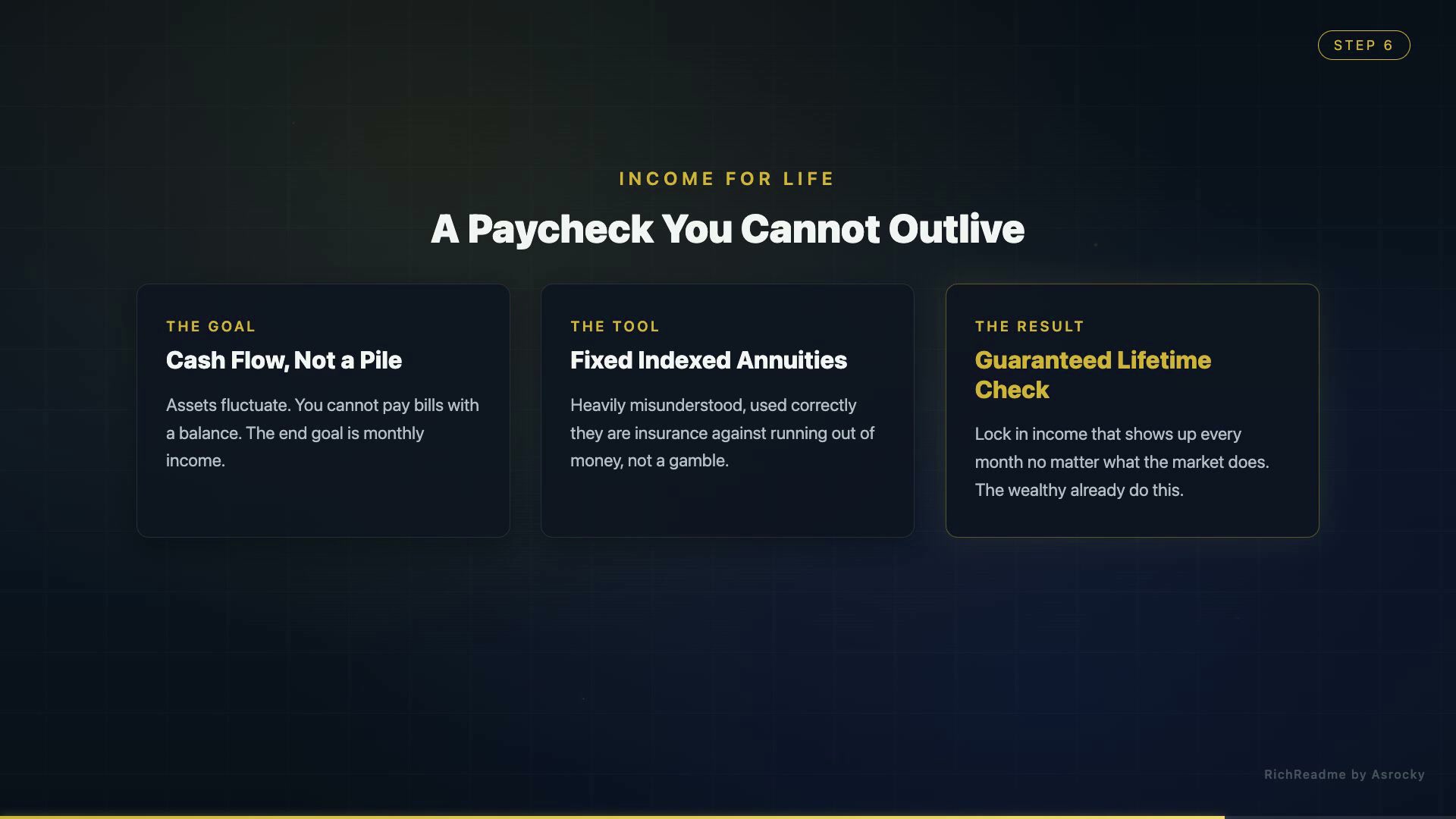
Step six is creating an income you cannot outlive. Robbins argues that the end goal of investing is not a pile of assets. It is a paycheck for life. Assets go up and down, but you cannot pay your bills with a balance. You need cash flow.
This is where fixed indexed annuities come in, heavily misunderstood. Used correctly, they are insurance against running out of money, not a way to hit home runs. The wealthy have used them for decades. The idea is to lock in a guaranteed income stream that shows up every month, no matter what the market does.
Wealth Is a Tool
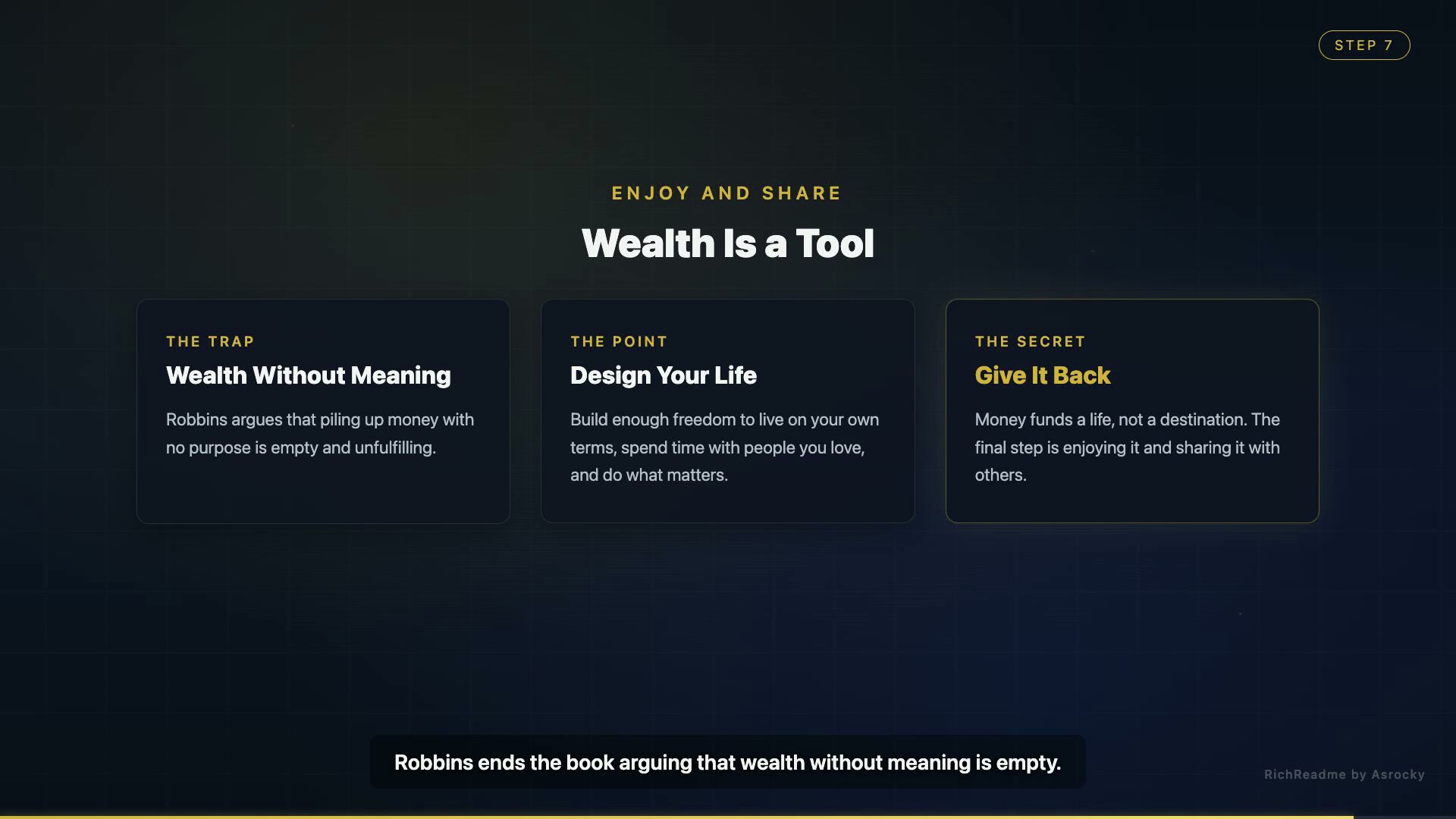
Step seven is the easiest to overlook: enjoy it and share it. Robbins ends the book arguing that wealth without meaning is empty. The point of building all this is to live a life you design, and then to give something back. Money is a tool, not the destination.