What if the one belief you hold about your own intelligence is quietly limiting your entire life?
This is Mindset by Carol Dweck, the Stanford psychologist who spent thirty years studying one question: why do some people thrive on challenge while equally talented people crumble?
Her answer is simple and profound.
Fixed vs. Growth
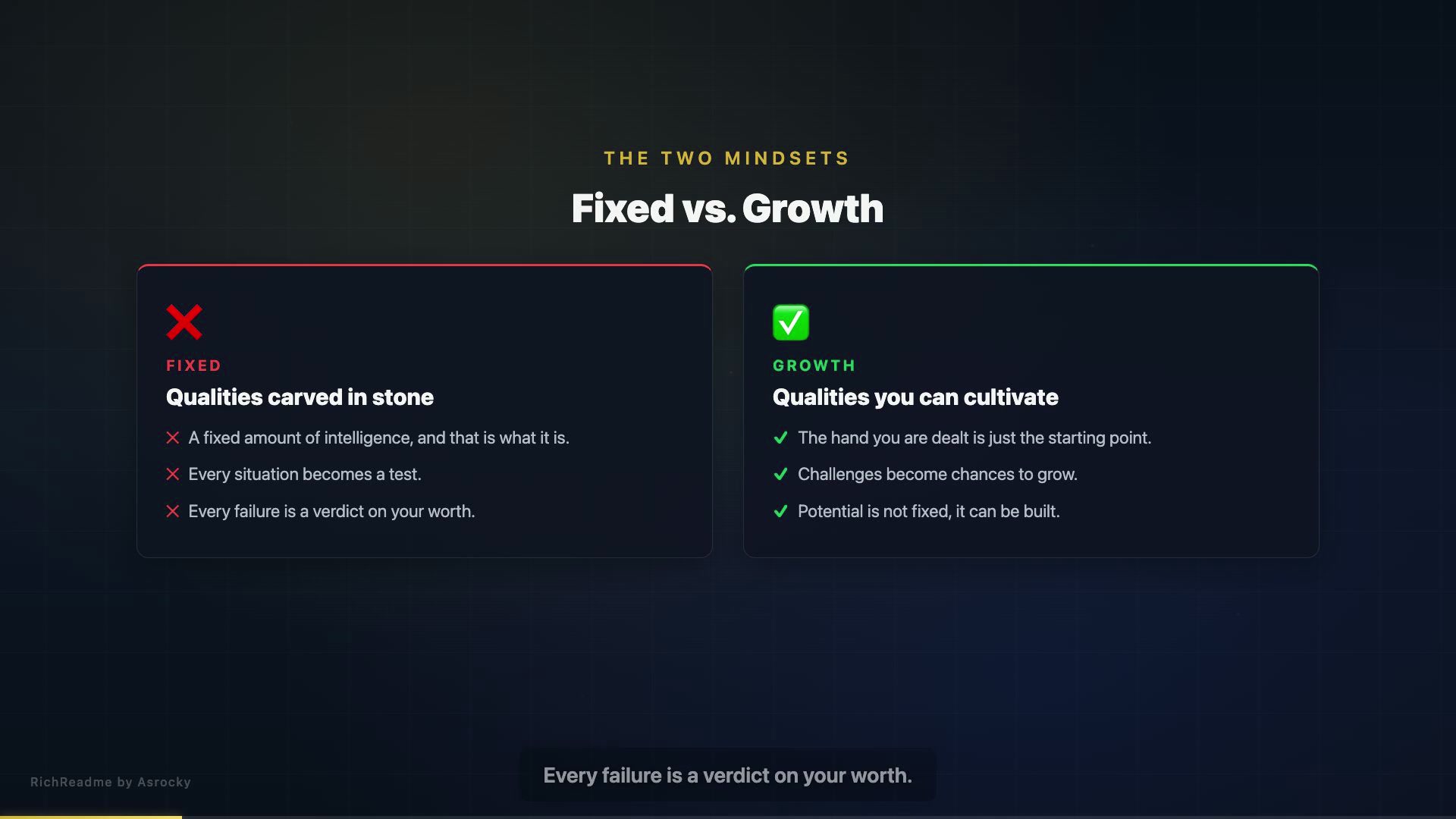
There are two mindsets. In the fixed mindset, you believe your qualities are carved in stone. You have a certain amount of intelligence, and that is what it is. Every situation becomes a test. Will you look smart or dumb? Win or lose?
Every failure is a verdict on your worth. In the growth mindset, the hand you are dealt is just the starting point. Your basic qualities are things you can cultivate through effort, strategy, and help from others. Potential is not fixed. It is unknown and unknowable, because no one can foresee what years of passion and training can build.
The Famous Experiment
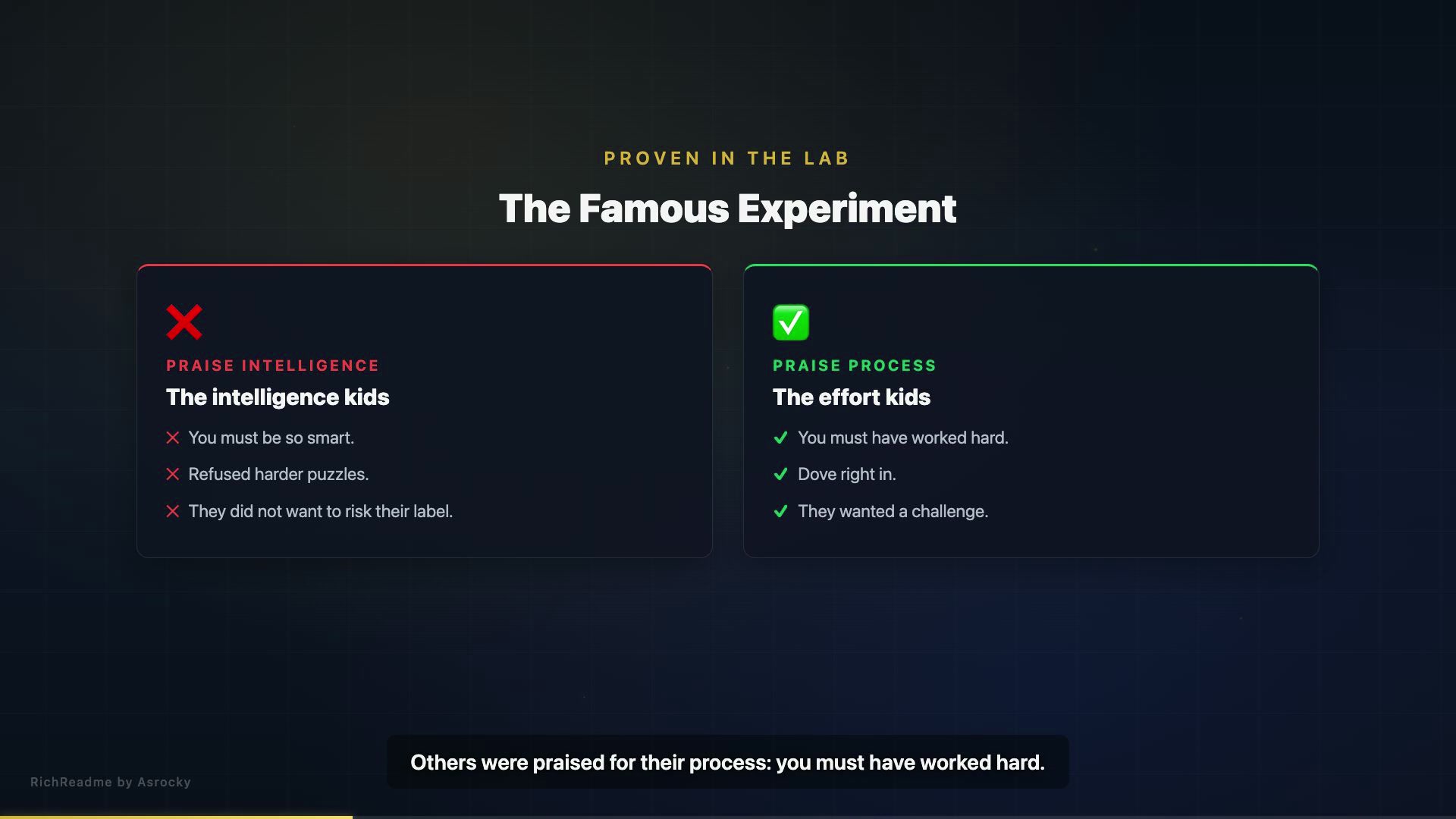
Dweck proved it with a famous experiment. Children were given a puzzle. Some were praised for their intelligence: you must be so smart. Others were praised for their process: you must have worked hard. The intelligence kids refused harder puzzles.
They did not want to risk their label. The effort kids dove in. They wanted a challenge. One sentence changed their relationship with difficulty.
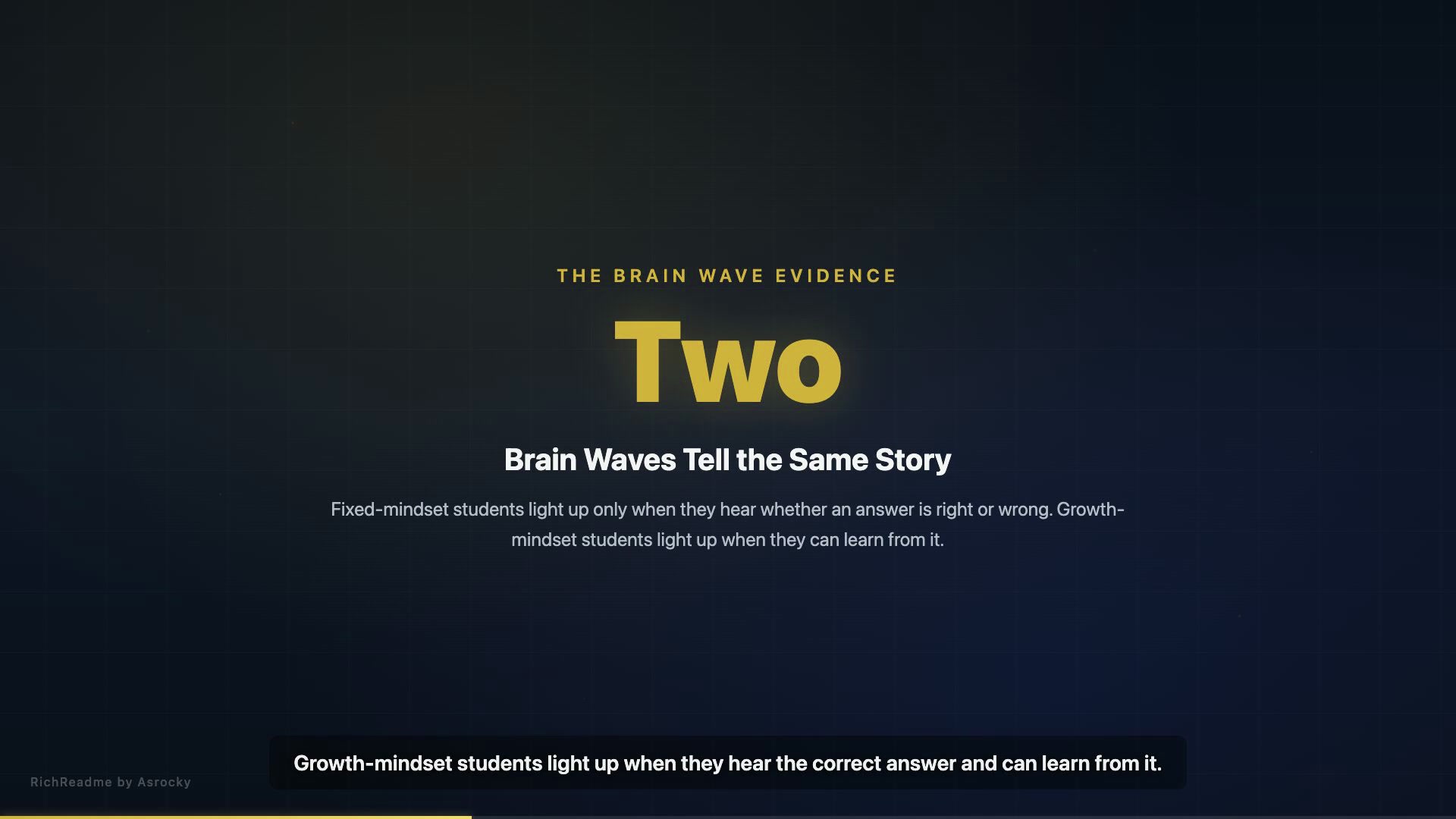
Brain waves tell the same story. Fixed-mindset students show intense activity only when they hear whether an answer is right or wrong. Growth-mindset students light up when they hear the correct answer and can learn from it.
One mindset runs from information that could expose weakness. The other welcomes it.

Michael Jordan was not a natural. He was cut from his high school varsity team.
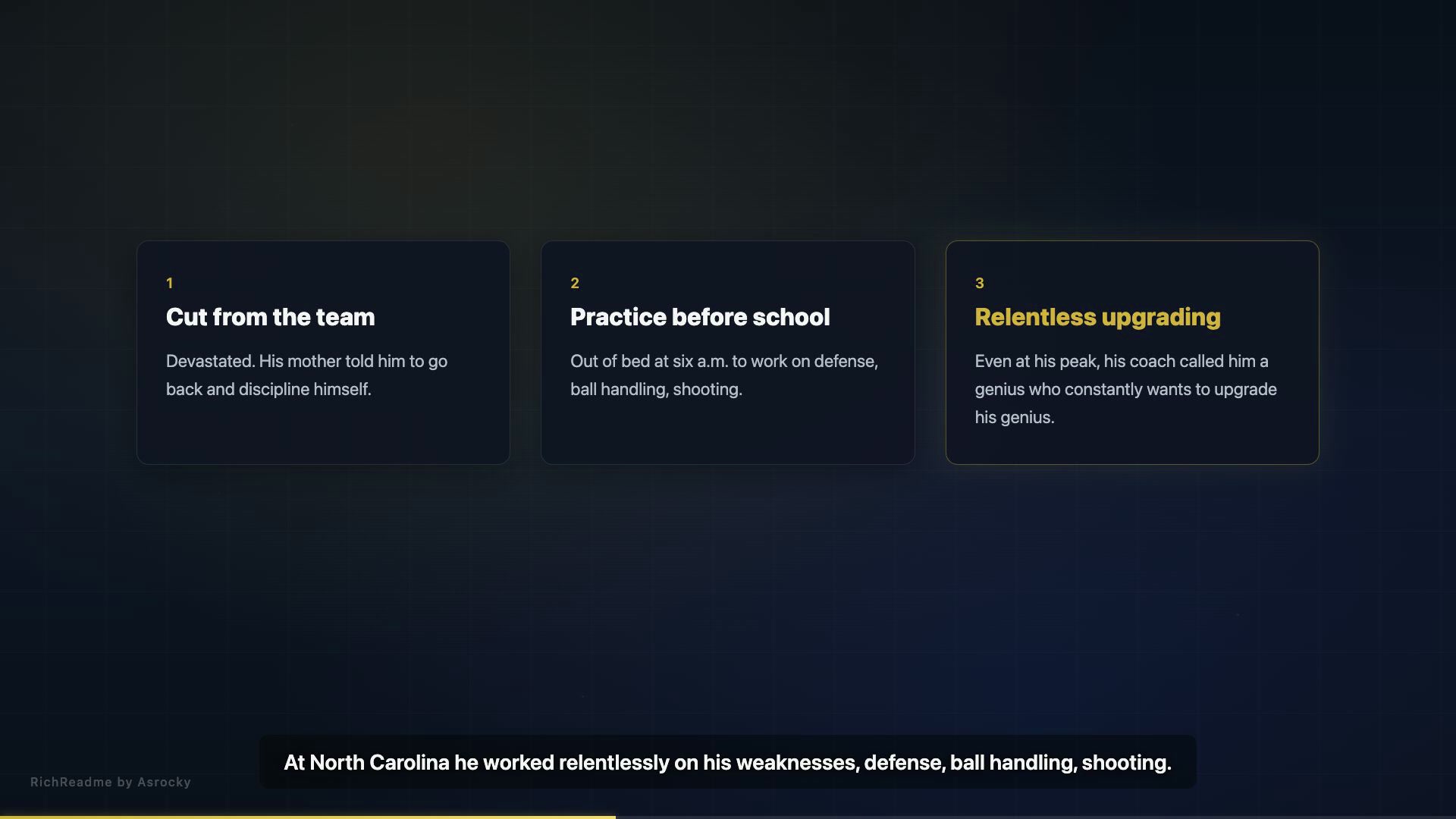
He was devastated. His mother told him to go back and discipline himself. He left the house at six in the morning to practice before school.
At North Carolina he worked relentlessly on his weaknesses, defense, ball handling, shooting. Even at the peak of his fame, his coach called him a genius who constantly wants to upgrade his genius. For Jordan, mental toughness beat physical advantage, every time.
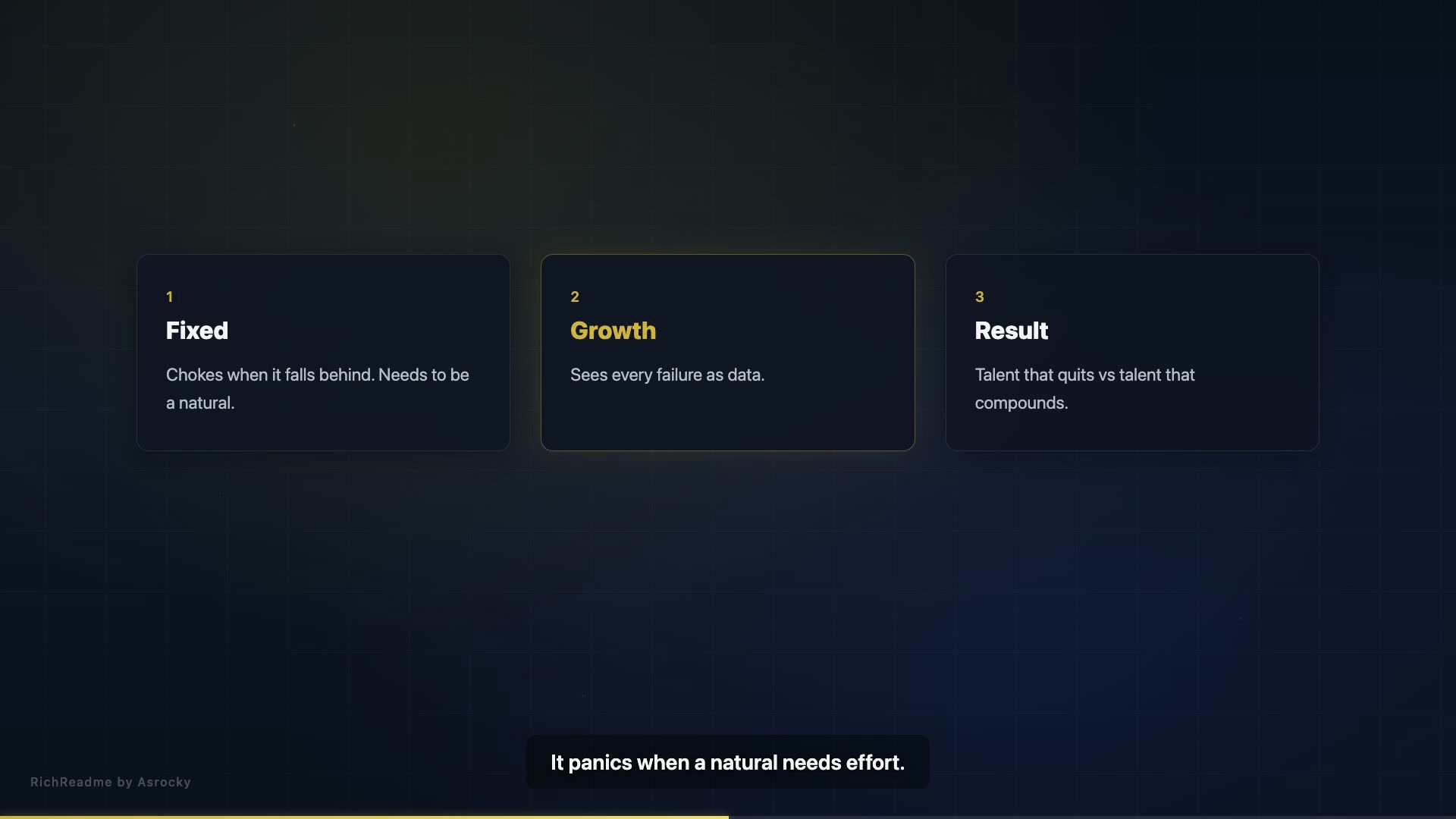
In sports, the fixed mindset chokes when it falls behind. It needs to be a natural. It panics when a natural needs effort.
The growth mindset sees every failure as data. It is the difference between talent that quits and talent that compounds.
The Same Pattern Decides Companies
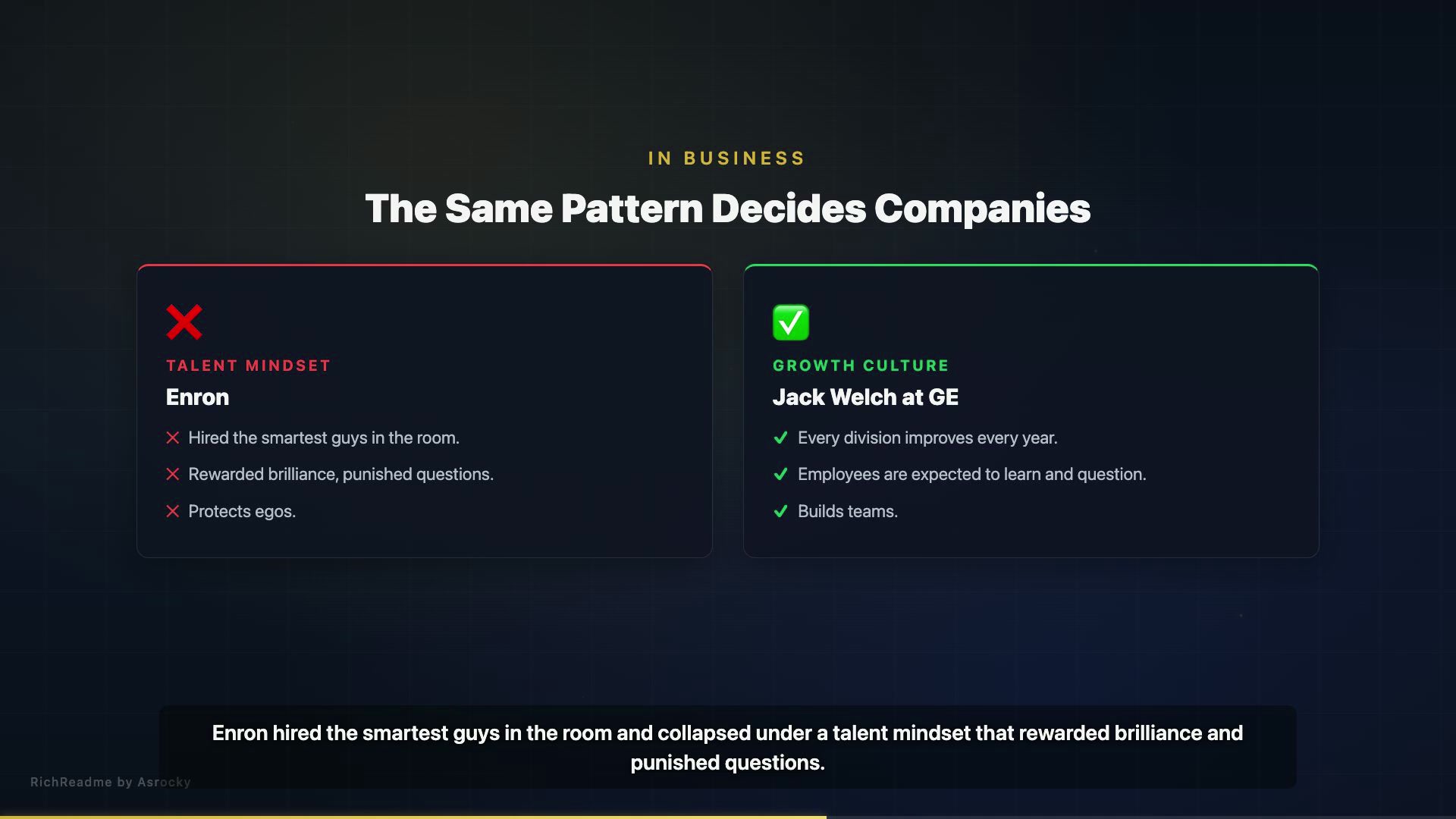
In business, the same pattern decides companies. Enron hired the smartest guys in the room and collapsed under a talent mindset that rewarded brilliance and punished questions. Jack Welch built a growth culture where every employee, every division, was expected to improve every year.
One mindset protects egos. The other builds teams.
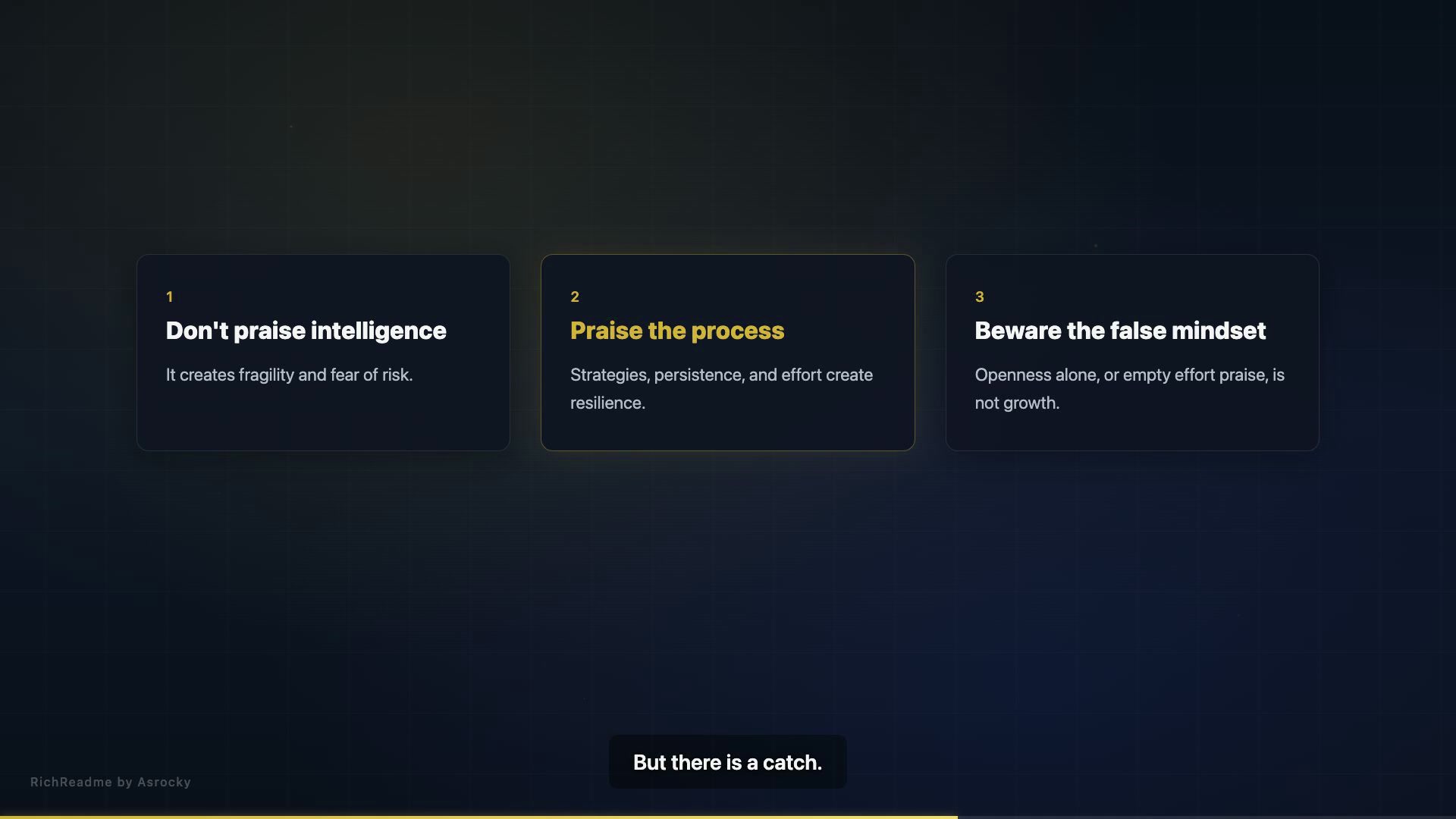
In parenting and teaching, it changes everything. Praising a child's intelligence creates fragility. Praising their process, their strategies, their persistence, creates resilience. But there is a catch.
Dweck warns against the false growth mindset. It is not just being open-minded. It is not just praising effort, especially effort that is not there. And it is never telling a child you can do anything, while offering no path to actually get there.
Four Steps to a Growth Mindset
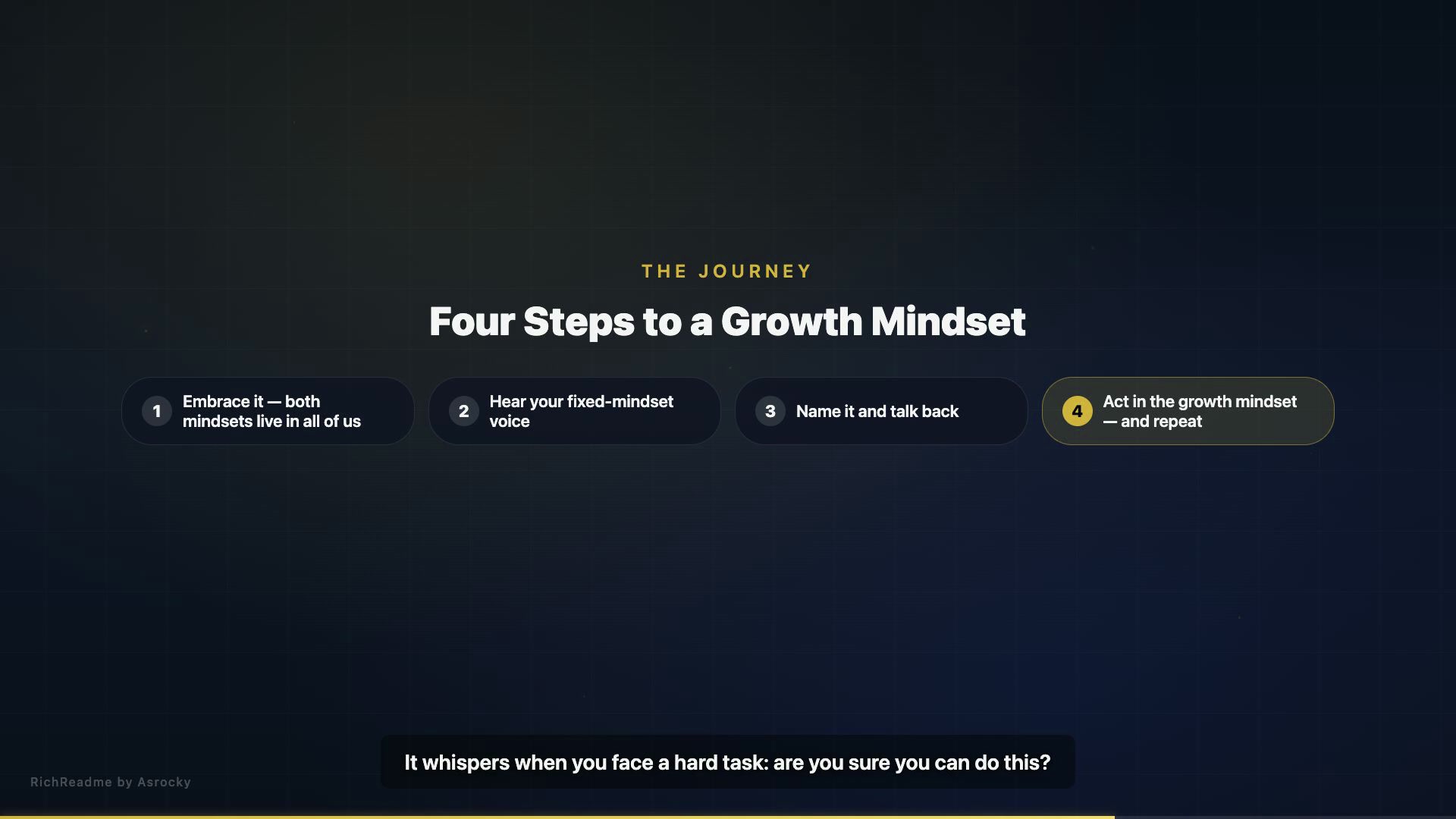
The growth mindset is a journey, not a switch. Step one, embrace it. Fixed and growth mindsets live in all of us. Step two, learn to hear your fixed mindset voice. It whispers when you face a hard task: are you sure you can do this?
Maybe you do not have talent. Step three, name it and talk back to it. Yes I can learn this, and here is how I will try. Step four, act in the growth mindset, and repeat, every single time.
Beliefs are the key to happiness and to misery. The belief that your worth is being tested creates anxiety and hiding. The belief that you can grow turns every setback into a lesson and every effort into progress. The same brain, the same talent, the same starting line, one belief changes everything.
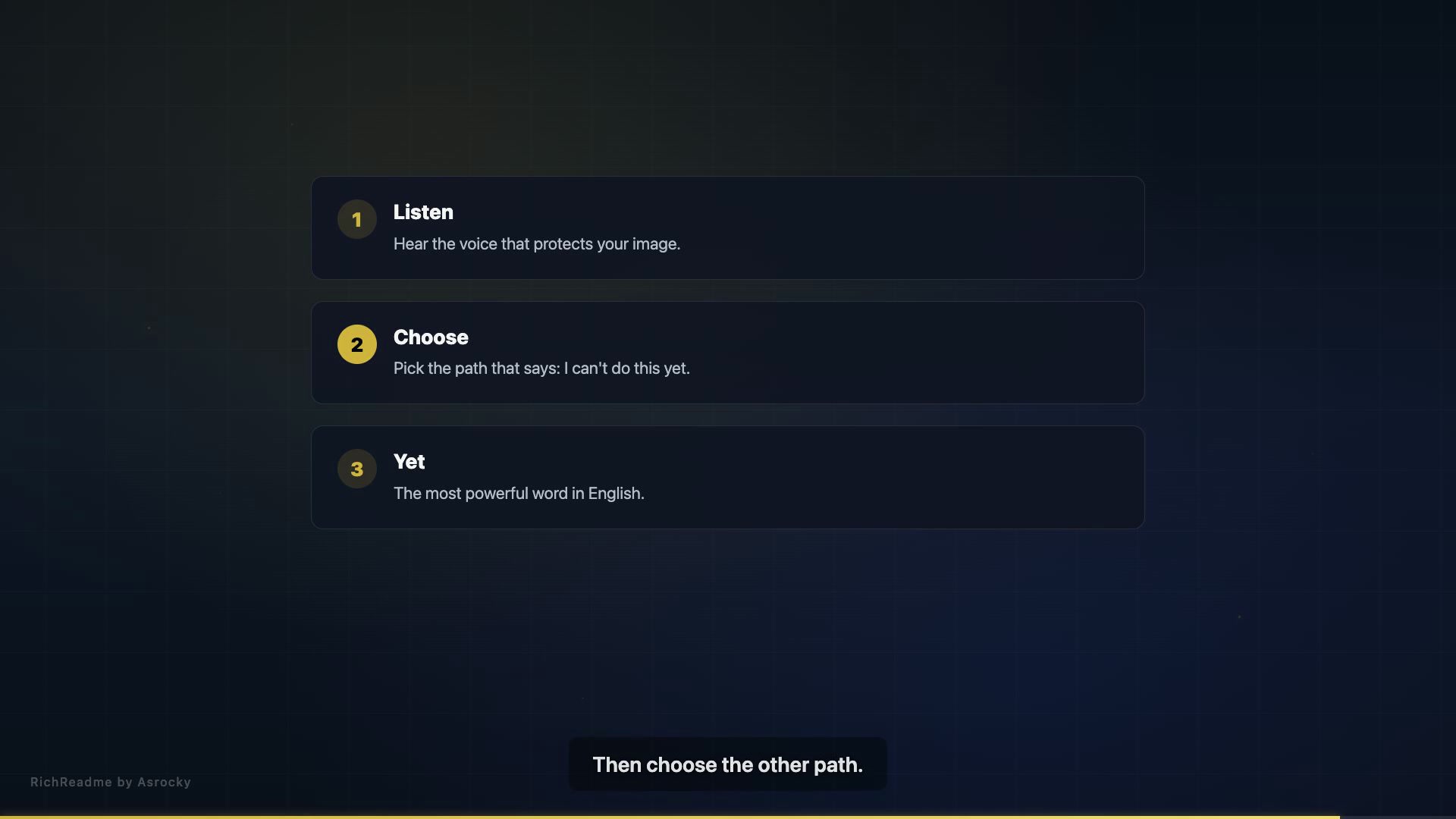
So check yourself this week. The next time you face something hard, listen for the voice that wants to protect your image. Then choose the other path.
Choose the mindset that says: I can't do this yet. Because yet is the most powerful word in the English language.