Why do some people reach the top of any field? Talent is rarely the answer. It is a path anyone can walk.
This is Mastery by Robert Greene, published in 2012. Greene spent years studying people at the very peak of every kind of craft, from science to art to war. He found that genius is almost never born fully formed. It is earned through a long, repeatable process, and that process is what the book teaches.
Prodigy Is Not the Answer
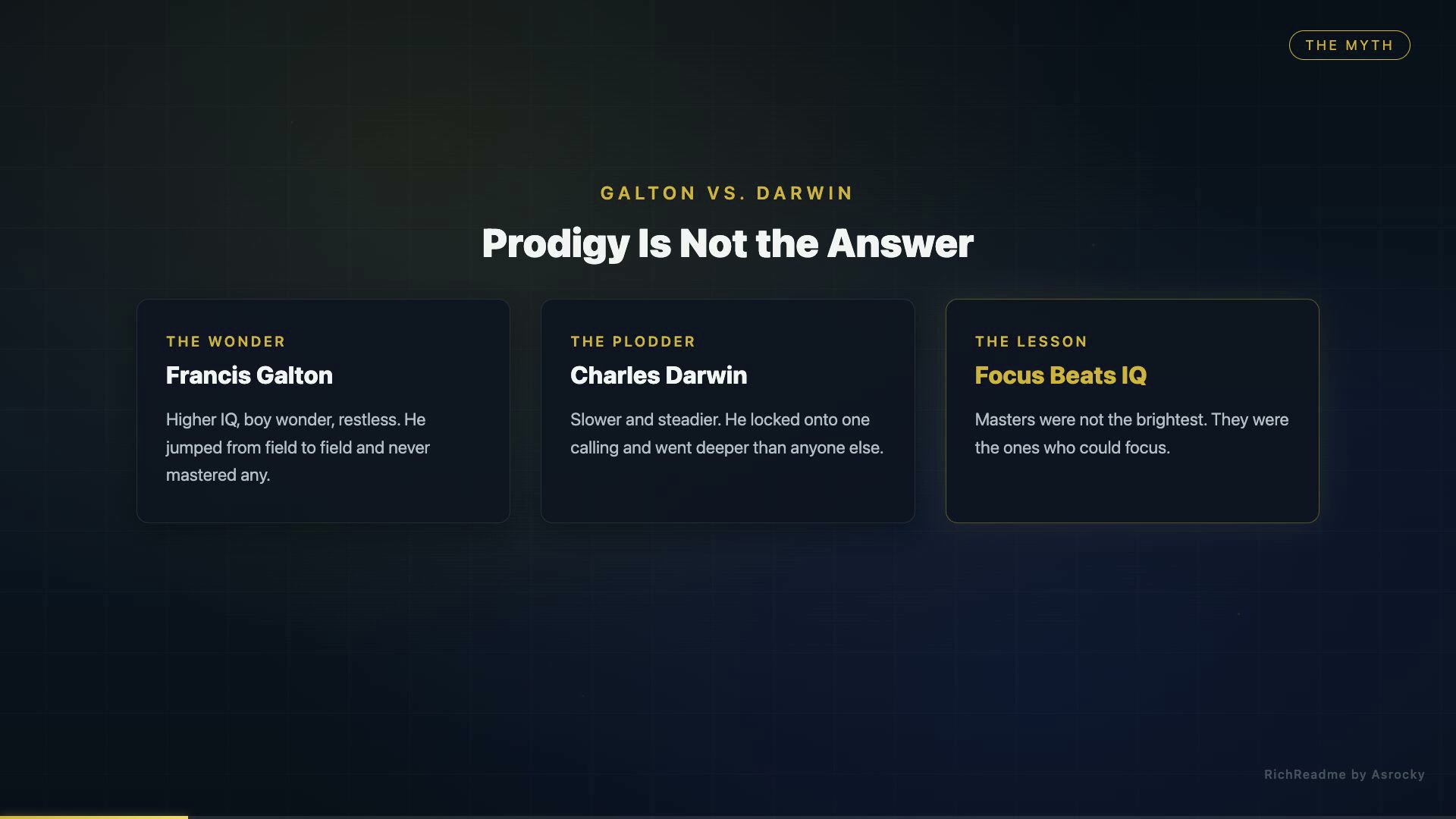
The first thing Greene destroys is the myth of the child prodigy. He compares two cousins, Francis Galton and Charles Darwin. Galton had the higher IQ and was the boy wonder. But he jumped from field to field and never mastered any of them.
Darwin, slower and steadier, locked onto one calling and went deeper than anyone else. The masters were not the brightest. They were the ones who could focus.
Find the Pull Inside You

Greene calls your calling your Life's Task. Deep inside you, shaped by your childhood and your temperament, is a unique inclination toward something. You feel it as a pull, a curiosity that will not leave you.
Most people ignore it. They pick a career for money or status and spend their years resentful. The masters listen to that inner voice and steer every decision toward it.
Trade Time for Skill

After school comes the most critical phase, the Apprenticeship. This is not a job. It is a second, practical education. Your goal is not to impress anyone. You mute your colors, observe the rules, and learn how power really flows in the room. You absorb the unspoken, tacit knowledge that no textbook can teach.
You are trading time for skill. Greene warns that people who chase money and status too early short-circuit this phase. They never build the deep foundation everything else rests on. Embrace the boredom. Tedium is where the hand and eye learn what thought cannot.
Accelerated Returns

The engine of the apprenticeship is the cycle of accelerated returns. Every hour you practice wires your brain a little more deeply. At first progress feels slow and even painful. Then it compounds.
What took you a month takes you a week. Greene points to the famous rough measure of ten thousand hours before someone reaches the top. The point is not the number. The point is that deep, focused practice rewires the brain itself.
Learn, Then Surpass

But you do not do this alone. The next step is the Mentor. Life is too short to learn everything from scratch. A good mentor has already walked the path and can compress years of learning into months.
You gaze deeply at them, absorb their way of seeing, internalize their standards. But you must never stay in their shadow. The goal is to surpass them, because your independence is the whole point.
Skill Alone Is Not Enough

Then comes the trap that stops most people. Greene calls it the lack of social intelligence. You can be the most skilled person in the room, but if you misread people, if you provoke envy or ignore politics, you drain your energy in conflict and never get the runway you need.
Social intelligence is not manipulation. It is seeing people realistically, controlling your own emotions, and moving through the world without needless friction.
Creation
After years of absorption, you enter the Creative-Active phase. Now you are not just copying the master. You start to experiment, to push against the limits of what you were taught.
Greene borrows a term from Keats, negative capability. Great creators can hold uncertainty, sit with a problem, and not rush to a comfortable answer. They question assumptions everyone else takes for granted.
Work With the Moment
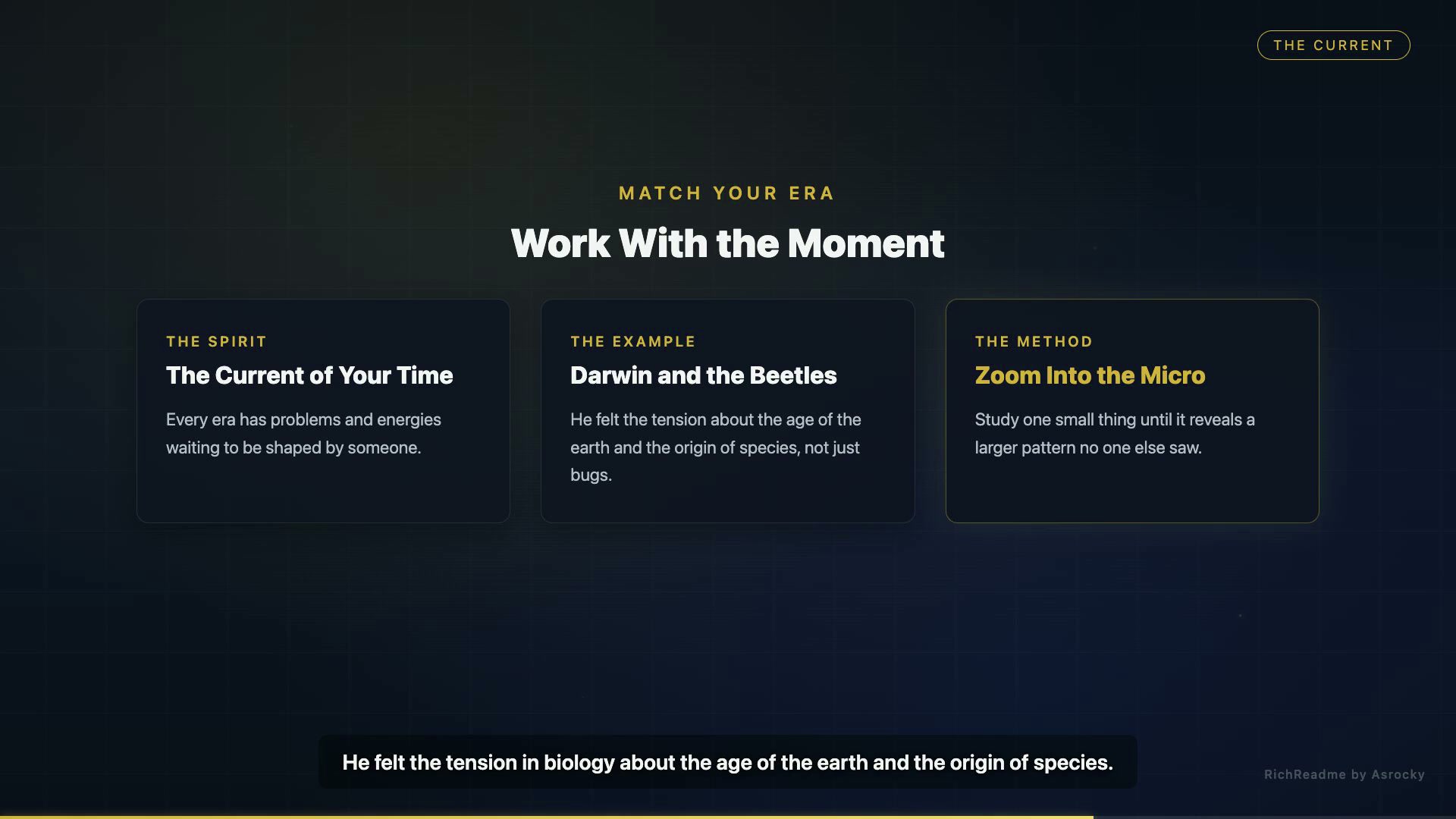
They also tune into the Current. Every era has a spirit, a set of problems and energies that are waiting to be shaped. Darwin did not just collect beetles.
He felt the tension in biology about the age of the earth and the origin of species. The master aligns their own work with what the moment needs. They move from the big picture to the micro detail, studying one small thing until it reveals a larger pattern.
Mastery
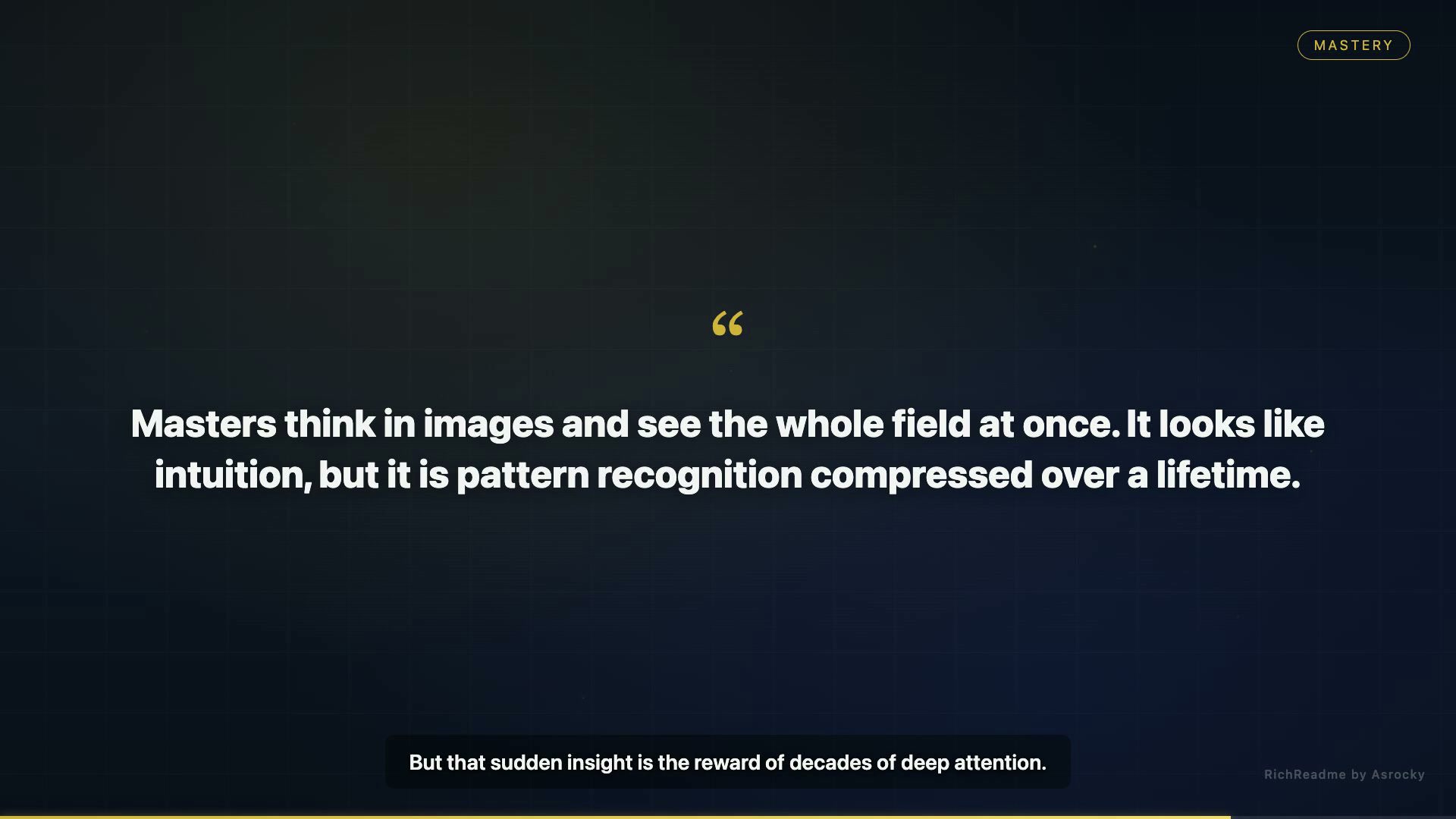
In the end, mastery feels almost magical. Masters think in images, not just words. They let go, let the unconscious work, and arrive at insights that seem sudden. But that sudden insight is the reward of decades of deep attention.
They do not reason step by step like a beginner. They see the whole field at once, in more dimensions than ordinary people perceive. Greene calls this the dimensional mind. It looks like intuition, but it is really pattern recognition compressed over a lifetime.
Walk the Path
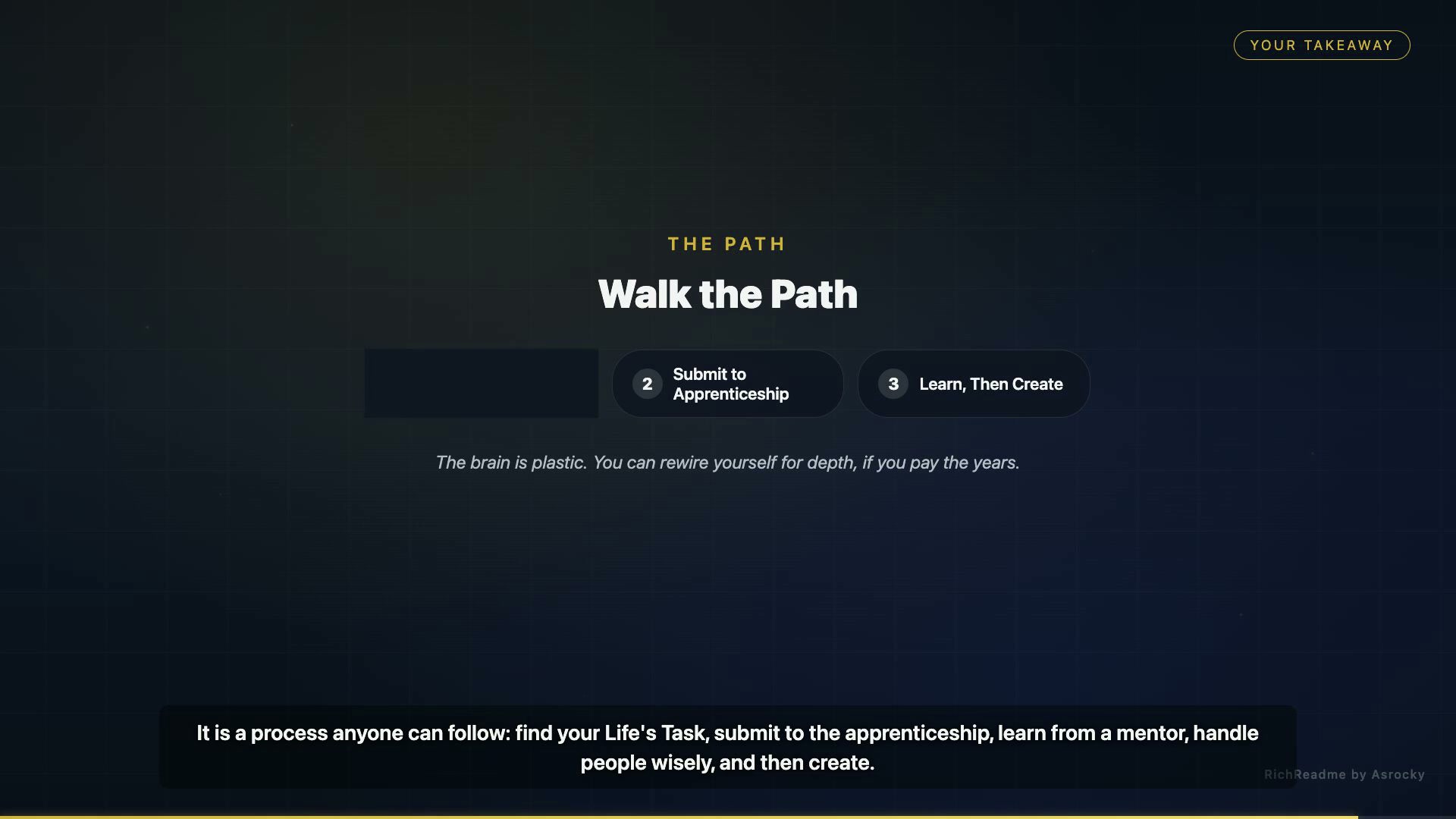
That is the hidden power of the book. Mastery is not reserved for the gifted. It is a process anyone can follow: find your Life's Task, submit to the apprenticeship, learn from a mentor, handle people wisely, and then create.
The brain is plastic. You can rewire yourself for depth, if you are willing to pay the years.