Most investors chase returns. The best investor alive today got rich by refusing to lose money.
This is Margin of Safety by Seth Klarman, the 1991 classic that now trades for hundreds of dollars in the used market. Klarman runs the Baupost Group, one of the most successful hedge funds in history, and he almost never speaks to the press. The whole book comes down to one habit: protect the downside, and the upside takes care of itself.
Margin of Safety
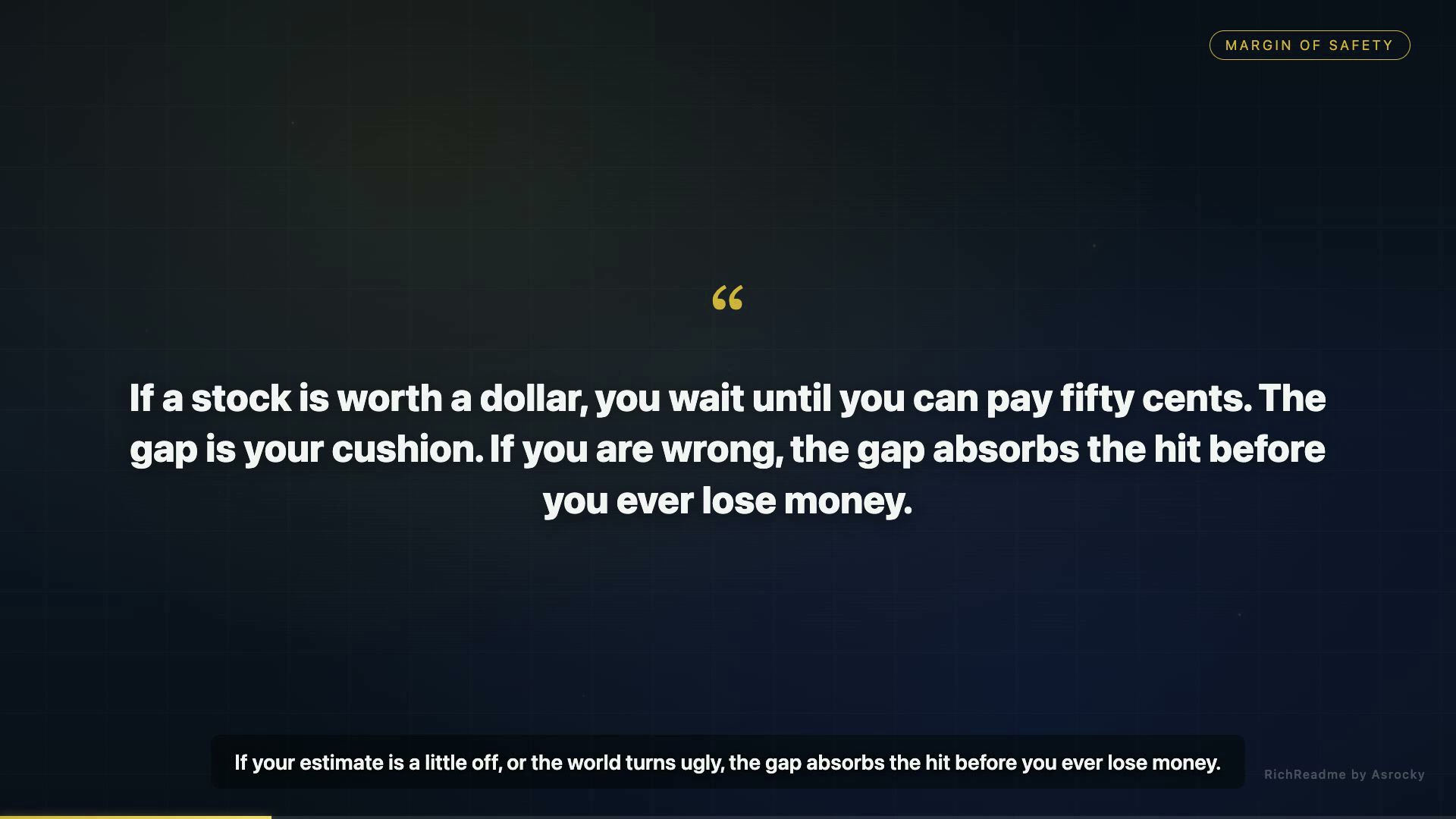
The core idea is right in the title. A margin of safety means you never buy a business at its fair value. You buy it only when the price is well below what it is actually worth. If a stock is worth a dollar, you wait until you can pay fifty cents. That gap is your cushion.
If your estimate is a little off, or the world turns ugly, the gap absorbs the hit before you ever lose money. Klarman argues this is the only reliable edge in investing. You cannot predict the economy, interest rates, or next quarter's earnings. But you can control the price you pay, and buying with a built-in discount protects you from being wrong.
Overpaying Is the Risky Move
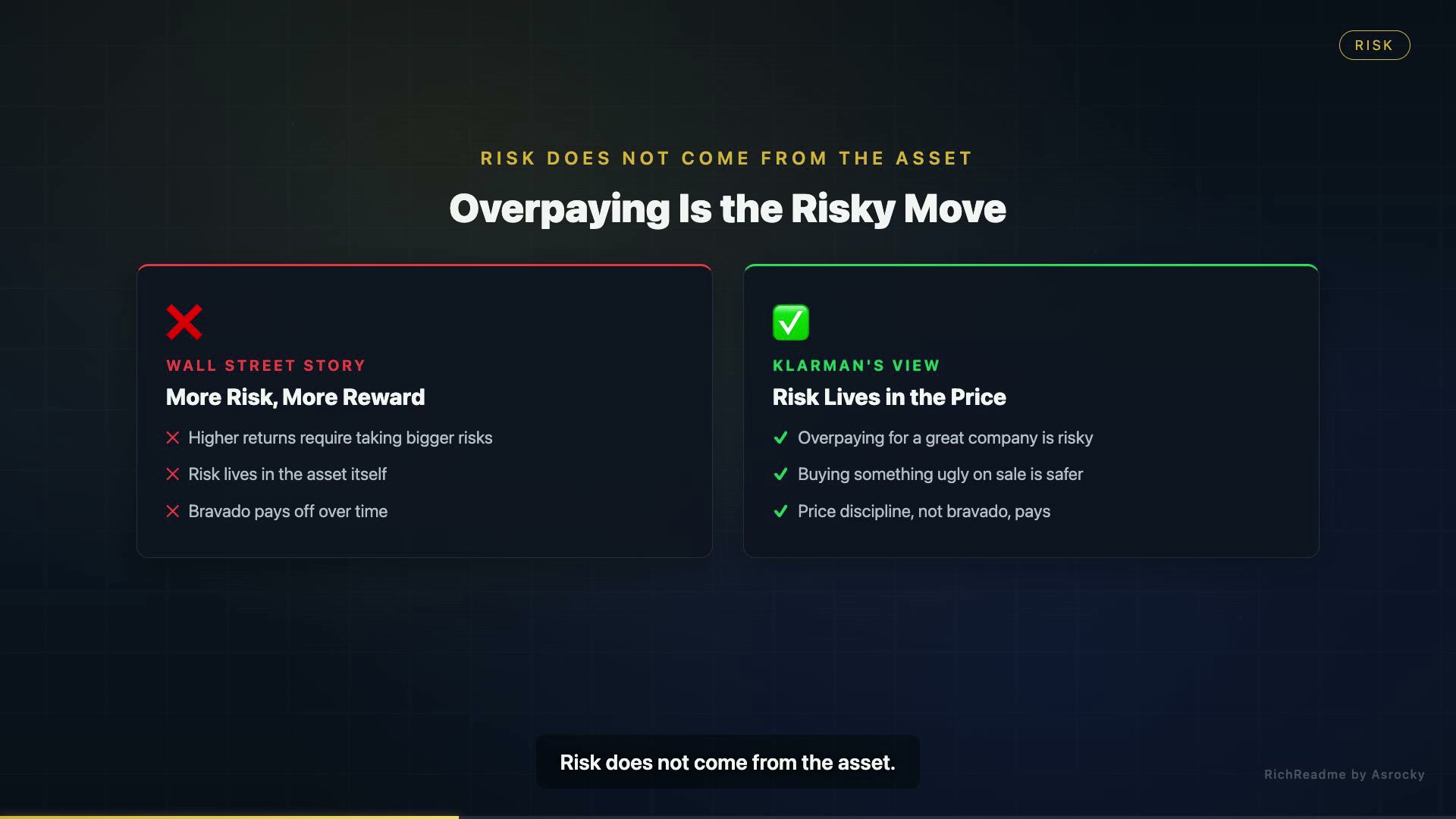
Klarman flips everything Wall Street taught you about risk. The standard story is that you have to take more risk to earn more return. He says that is backwards. Risk does not come from the asset.
It comes from the price you pay. Overpaying for a great company is the risky move. Buying something ugly on sale is often the safer bet. The market rewards price discipline, not bravado.
Most Investors Only Look at One
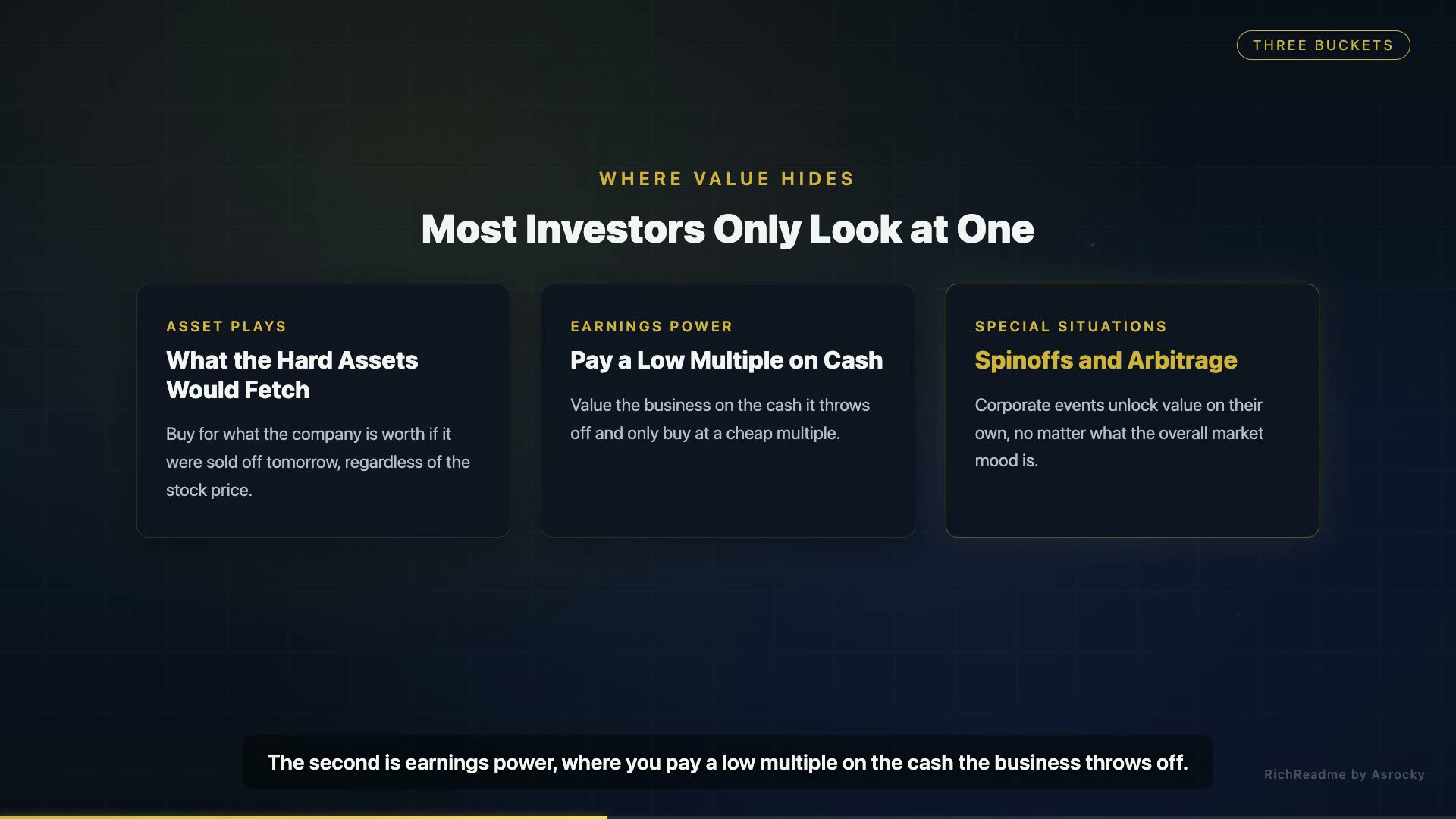
He groups opportunities into three buckets. The first is asset plays, where you buy a company for what its hard assets would fetch if it were sold tomorrow. The second is earnings power, where you pay a low multiple on the cash the business throws off.
The third is special situations, like spinoffs and arbitrage, where a corporate event unlocks value regardless of the market mood. Most investors only look at the middle bucket. Klarman hunts all three.
Mr. Market
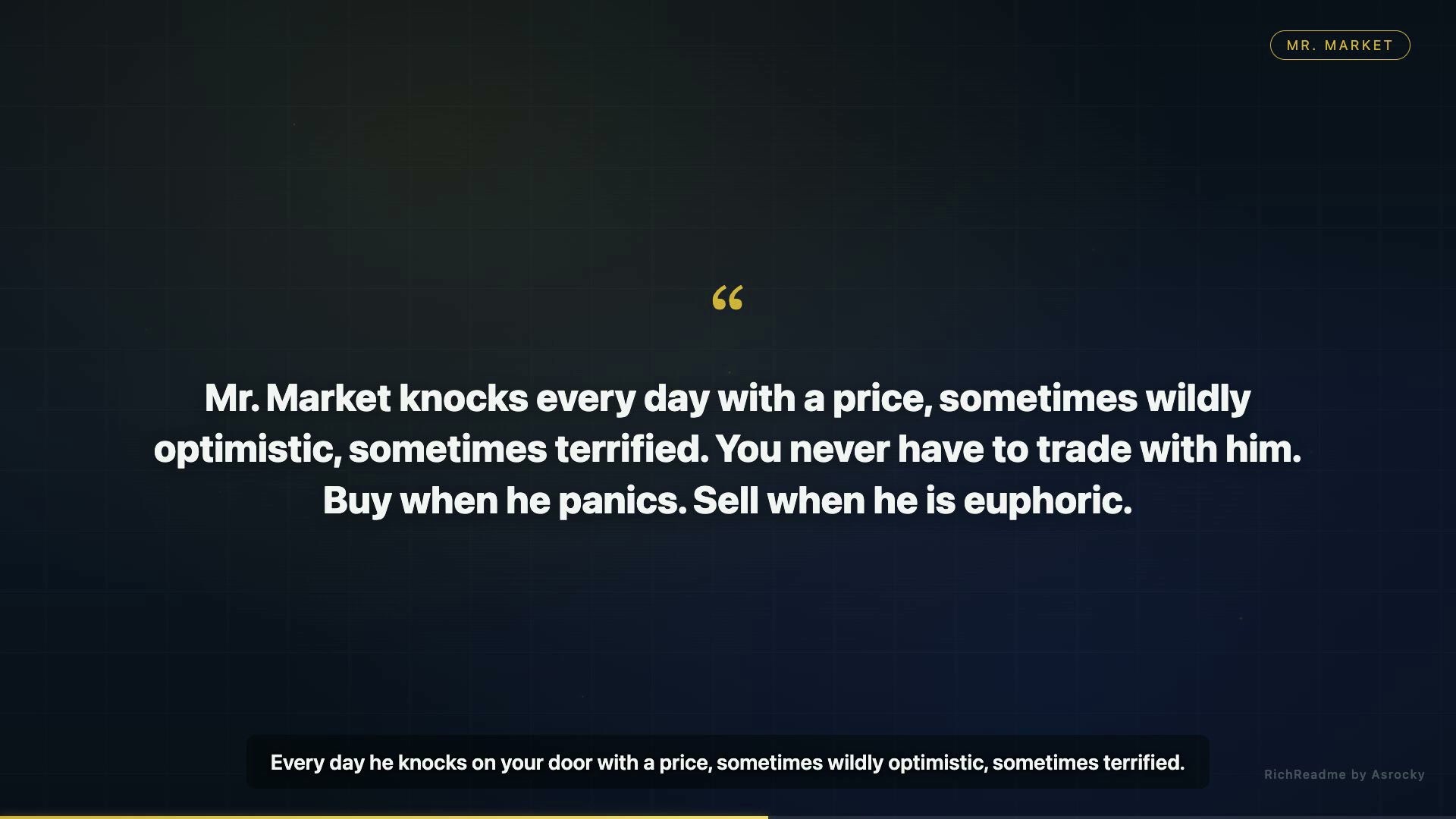
Then there is the emotional side. Klarman treats the market as a manic partner named Mr. Market. Every day he knocks on your door with a price, sometimes wildly optimistic, sometimes terrified. You do not have to trade with him at all.
The winning move is to use his moods, not catch them. When he is panicked and dumping good assets cheap, you buy. When he is euphoric and paying crazy prices, you sell or step aside.
Patience
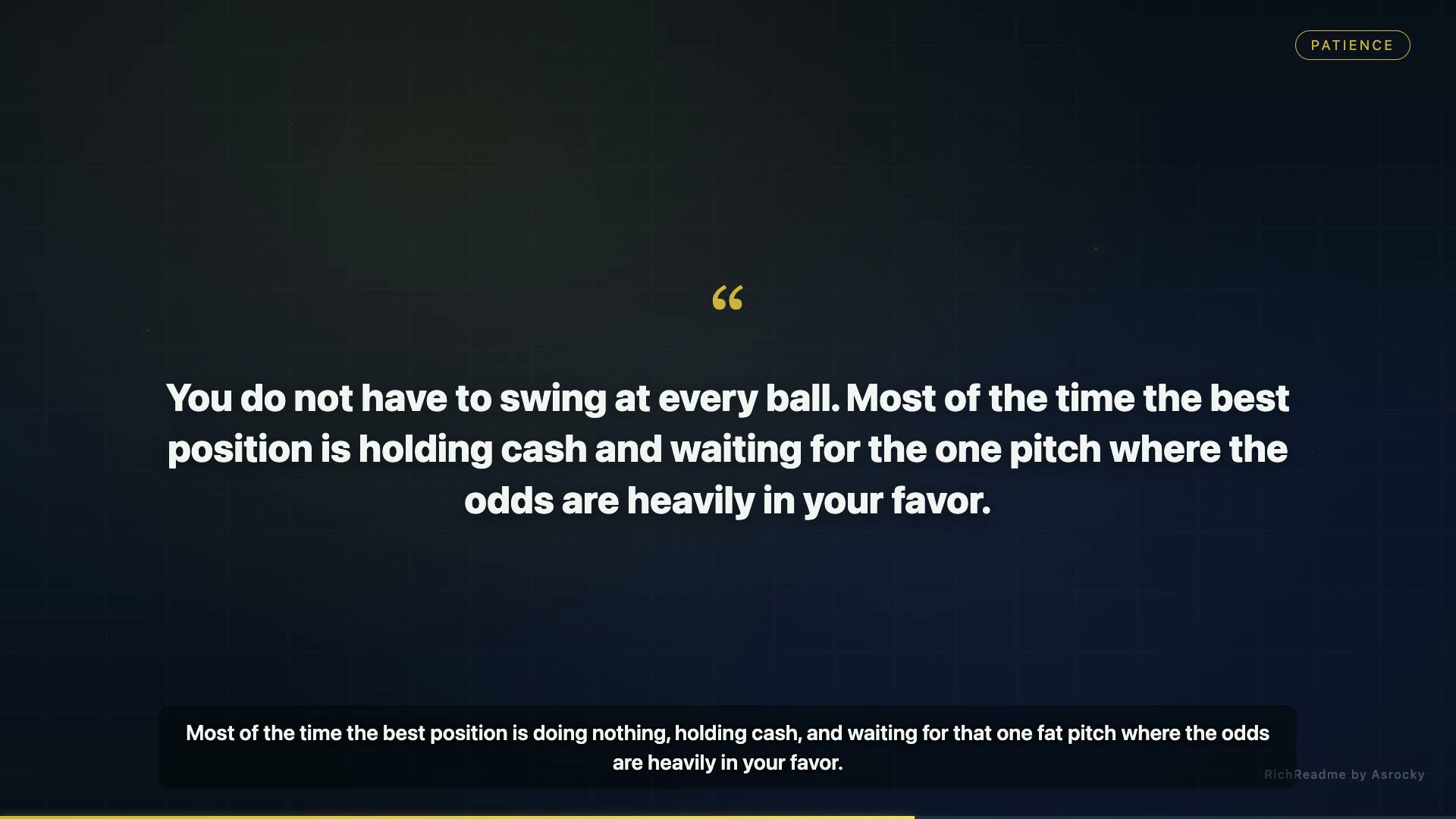
That is why patience is a strategy. Klarman compares it to a great hitter waiting for the perfect pitch. You do not have to swing at every ball.
Most of the time the best position is doing nothing, holding cash, and waiting for that one fat pitch where the odds are heavily in your favor. Underinvested cash feels boring, but it is what lets you pounce when everyone else is forced to sell.
What Quietly Eats Your Returns

He also warns you about the enemies on your own side. Wall Street profits from activity, not from results, so it pushes you to trade, to chase hot sectors, and to borrow to amplify wins. Each trade pays fees. Every year the government takes a slice. Momentum and fads pull you into bubbles at the exact moment you should be cautious.
Compounding works quietly for decades, and then one big mistake or one leveraged bet can wipe it all out. This is why Klarman almost never uses leverage. Borrowing turns a temporary paper loss into a permanent one, because someone can force you to sell at the bottom. For him, avoiding that outcome matters more than maximizing the upside.
Protect, Then Profit
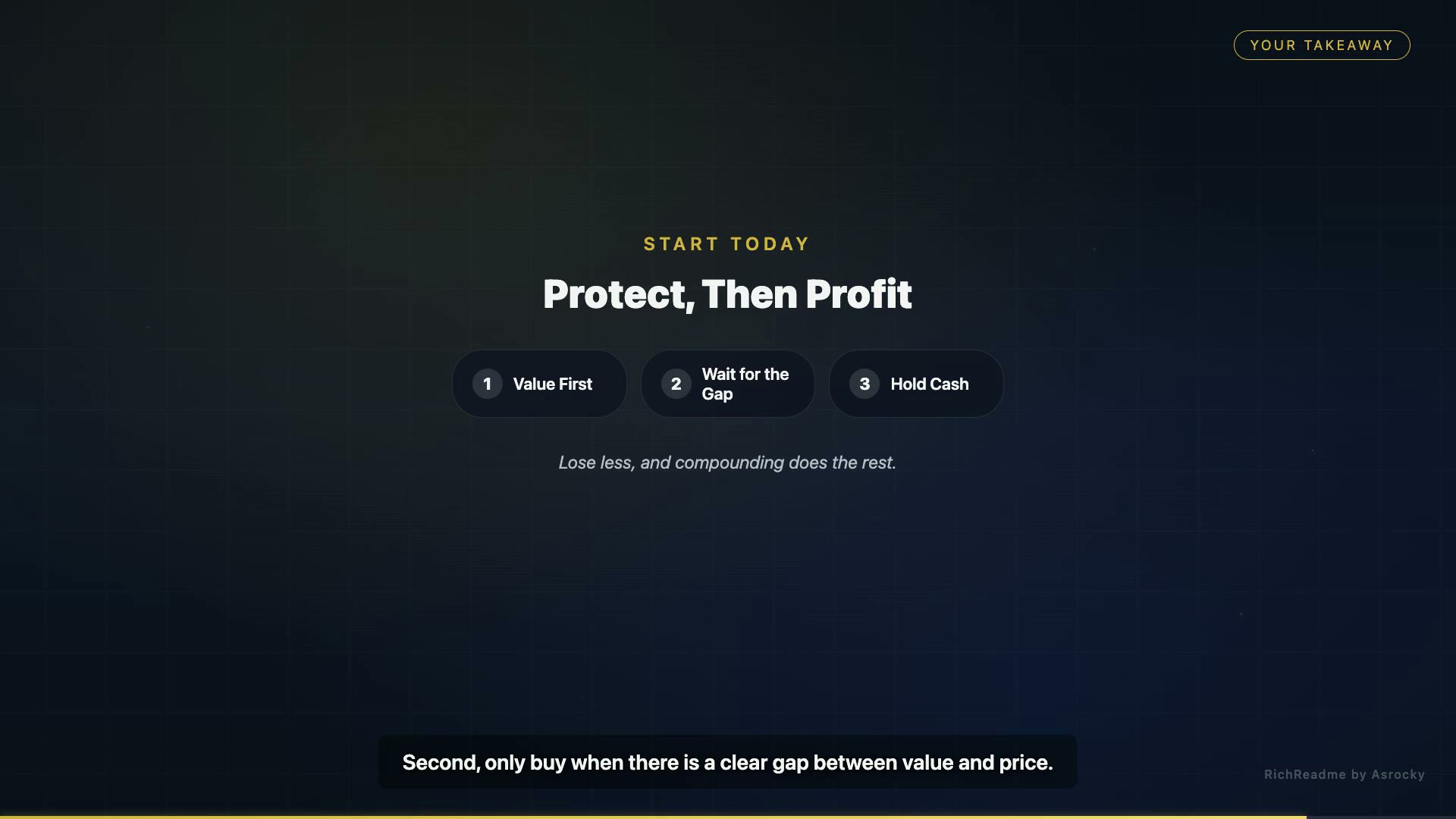
So what can you actually take away? First, always ask what the asset is truly worth before you look at the ticker price. Second, only buy when there is a clear gap between value and price.
Third, treat volatility as your friend, because it is the only source of real bargains. And fourth, be willing to hold cash and wait, even when everyone around you is making money fast.