Fresh out of college, twenty-four-year-olds made half a million a year on Wall Street. One of them wrote it all down.
This is Liar's Poker, by Michael Lewis. He was one of those kids. He joined Salomon Brothers in the nineteen eighties, right when the bond market exploded into the biggest gold rush Wall Street had ever seen.
He planned to stay a few years. Instead he walked away with the inside story of how the whole game worked.
The King of Bonds
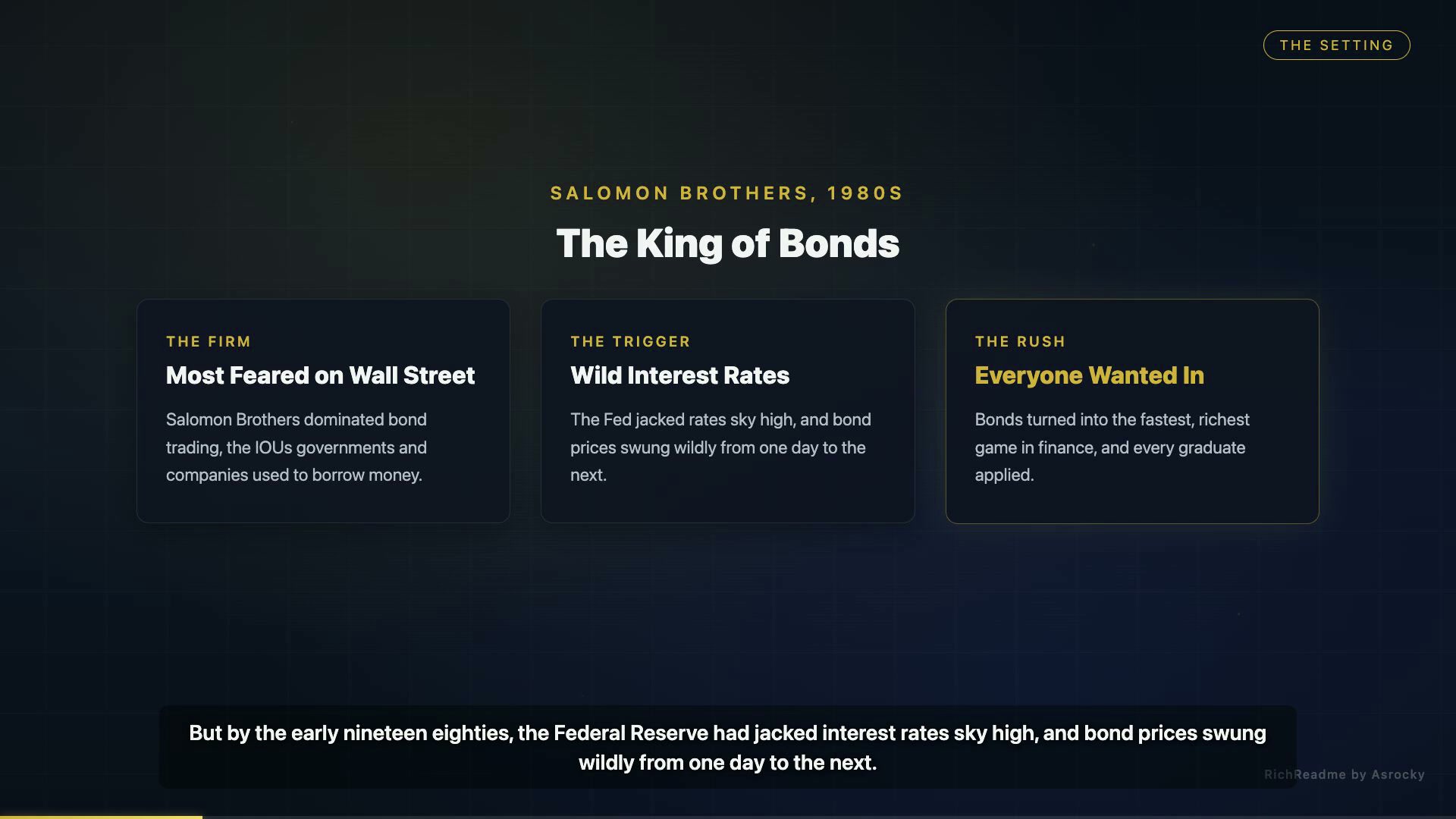
Lewis arrived at a bizarre moment. Salomon Brothers was the most feared trading firm on earth. It did not sell stocks. It sold bonds, the boring IOUs that governments and companies issued to borrow money.
But by the early nineteen eighties, the Federal Reserve had jacked interest rates sky high, and bond prices swung wildly from one day to the next. Suddenly bonds had become the fastest, richest game in finance. Salomon was the king of the bond traders, and every ambitious graduate in America wanted in.
Trainees Traded Like Cattle

The training program was a joke. New hires were flown to a classroom and lectured by people who had never held a real job. The smartest part was watching the managers trade the trainees like cattle.
One day you were praised, the next day you were assigned to a worse desk. It was designed to break your confidence, and it worked. Lewis realized he was being trained to sell things he did not understand to people who knew even less.
Ego Rules the Floor

The traders ran on ego. The stars were called Big Swinging Dicks. After a good trade, a managing director would call across the floor, hey, you Big Swinging Dick, way to be. The title was meant to be impressive, but it summed up the whole culture.
The bigger the trade, the bigger the man. Humility was a sign of weakness. Money flowed, and it flowed to the loudest, most aggressive men on the desk.
Fear and Mathematics

The whole thing revolved around one man. John Gutfreund was the chairman of Salomon. He walked the trading floor silently, surprising traders in the middle of a crisis. He smoked cigars.
He let people sweat. His power came not from being brilliant, but from making everyone fear him. The other legend was John Meriwether, quiet, mathematical, and far more interesting than the loudmouths around him.
Betting for Status

The book is named after a strange game. Liar's Poker is a betting game based on the random numbers on dollar bills. Gutfreund once challenged Meriwether to play for a million dollars a hand. Meriwether refused.
Later he challenged Gutfreund back for ten million, and the chairman went silent. The whole scene was a metaphor for the market. Rich men betting huge sums for status, with no real skill involved.
Mortgage Bond Machine

The real money came from mortgage bonds. A trader named Lewie Ranieri built a market where home mortgages were chopped up, repackaged, and sold as bonds. Salomon made more money from mortgage bonds than from almost anything else.
The products were so complex that even the traders barely understood them. But customers bought them because they paid a little more than boring Treasury bonds, and Salomon paid its salesmen huge bonuses to push them. Lewis later watched this exact invention blow up the world economy in 2008, and he was not surprised.
Selling to the Desperate

The customers were treated like marks. Lewis describes calling on small European banks and American pension funds. He would explain options and futures in jargon he barely understood. The customers, desperate to keep up and afraid of looking stupid, bought whatever Salomon pushed.
The traders made their money on the spread between what they paid and what they charged the client. The client was not a partner. The client was the patsy, and everyone on the floor knew it.
The Easy Money Dries Up

By nineteen eighty six, the party was ending. Salomon had grown too fast, the bond market turned, and the easy money dried up. Lewis looked around and saw men in their thirties who were already burnt out, trading their lives for bonuses.
He realized the firm was a giant machine that rewarded arrogance and punished doubt. He had a clean reputation and a chance to leave, so he quit and wrote this book.
Skill vs. Luck

The lasting point is that finance can become a status game. Lewis was not a protester. He admits he loved the money and the show. His point is that markets can turn crazy when the people paid the most know the least.
When young, unqualified kids make fortunes trading products no one understands, the game is not rewarding skill. It is a temporary glitch, and glitches do not last. The market eventually sorts itself out, and the kids who were paid like geniuses discover they were just along for the ride.