People gave three times more to charity after a stranger handed them a cheap flower. The flower was never the point.
This is Influence, by Robert Cialdini, who spent three years embedded in sales departments, fundraisers, and telemarketing shops to find out what actually makes people say yes. His answer is that human beings run on autopilot most of the time, and a handful of reliable triggers can press that button. Once you know the triggers, you can use them and defend against them.
We Run on Shortcuts
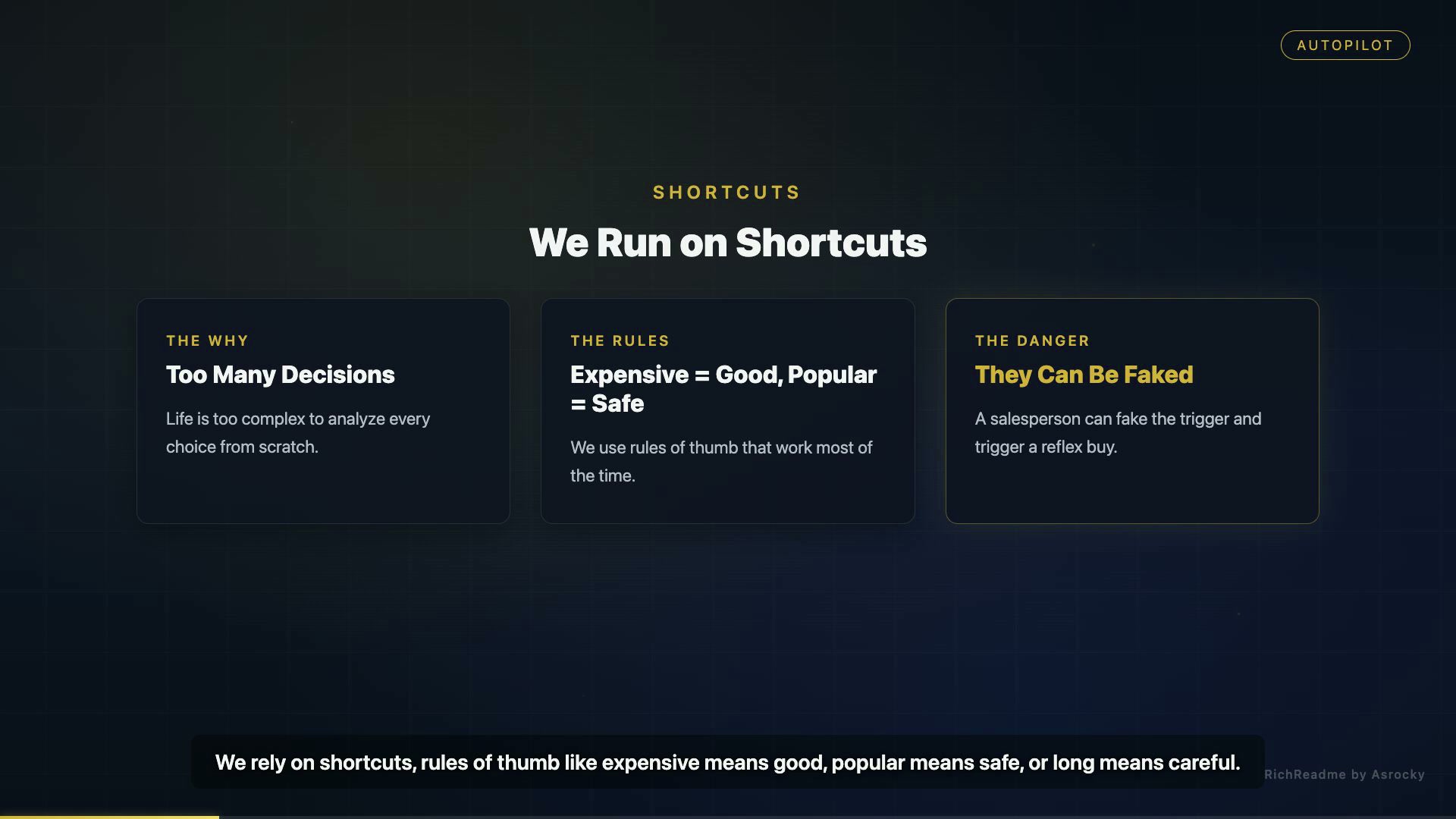
Cialdini calls these triggers weapons of influence. They work because modern life is too complex to analyze every decision from scratch. We rely on shortcuts, rules of thumb like expensive means good, popular means safe, or long means careful.
Those shortcuts are usually right, which is why they survived in our brains, but a clever salesperson can fake the trigger and make us say yes when we should not. The good news is that once you can name the trigger, you can step out of autopilot for a second.
The Free Sample Trap
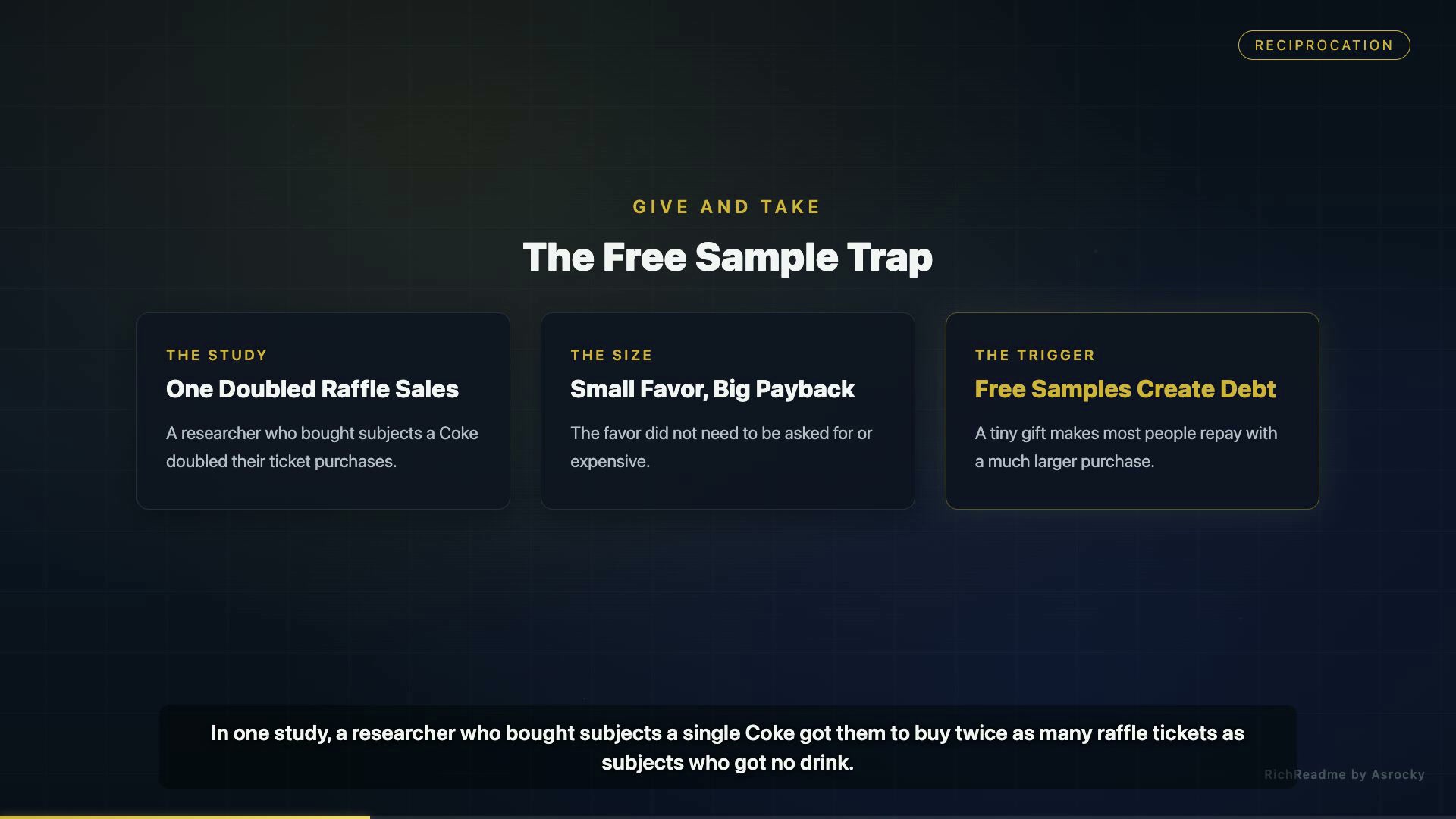
The first trigger is reciprocation. We feel a deep obligation to pay back what we have received. In one study, a researcher who bought subjects a single Coke got them to buy twice as many raffle tickets as subjects who got no drink.
The favor did not have to be asked for, and it did not have to be expensive. A free sample, a small gift, or an unsolicited concession creates a debt that most people will repay with a much larger purchase.
Small Yesses Lead to Big Ones
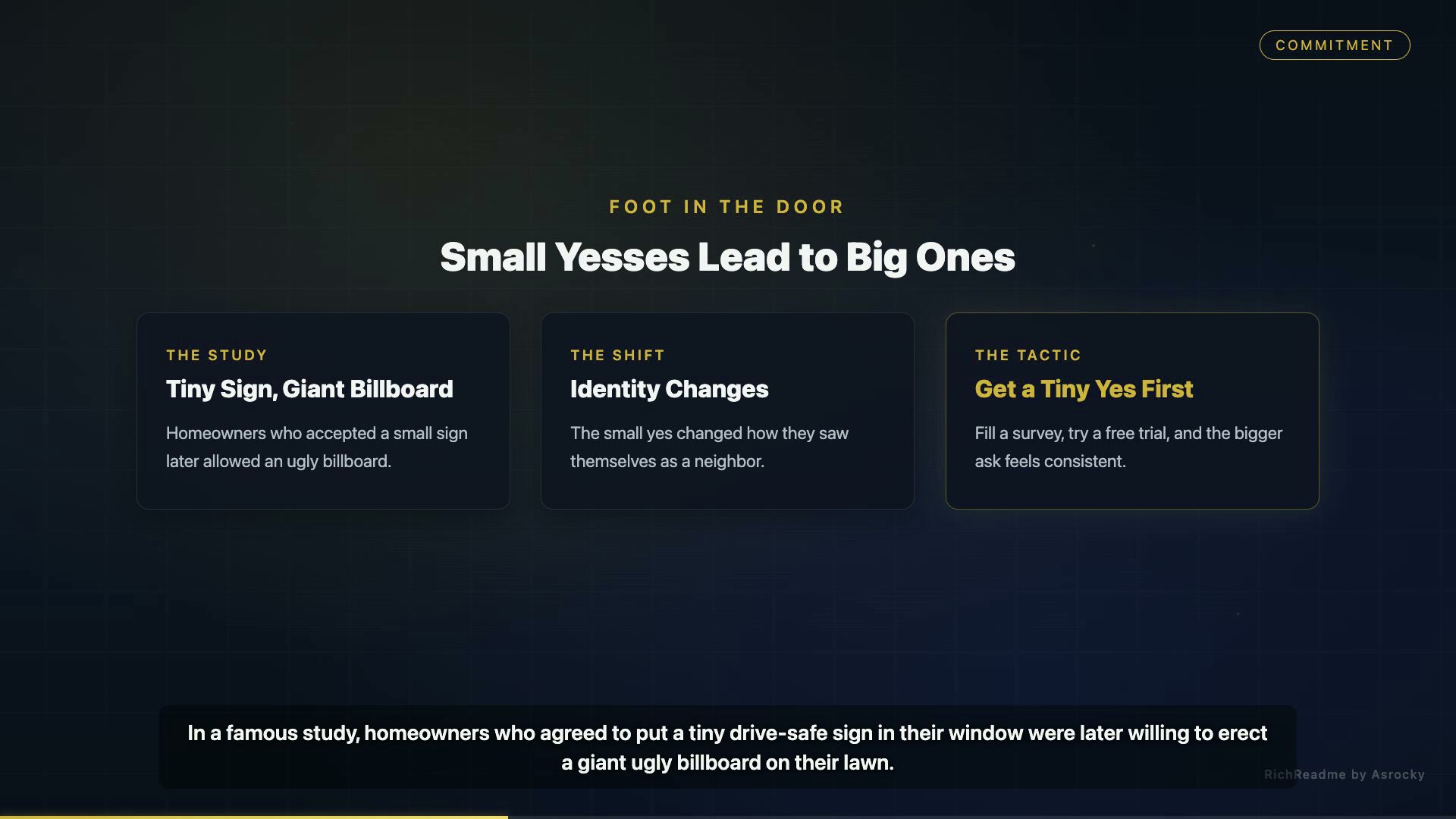
The second trigger is commitment and consistency. Once we take a small stand, we feel pressure to act in line with it. In a famous study, homeowners who agreed to put a tiny drive-safe sign in their window were later willing to erect a giant ugly billboard on their lawn.
The tiny yes changed how they saw themselves, and the big ask felt consistent. Salespeople use this when they get you to fill out a short survey, then present the offer.
We Look to the Crowd
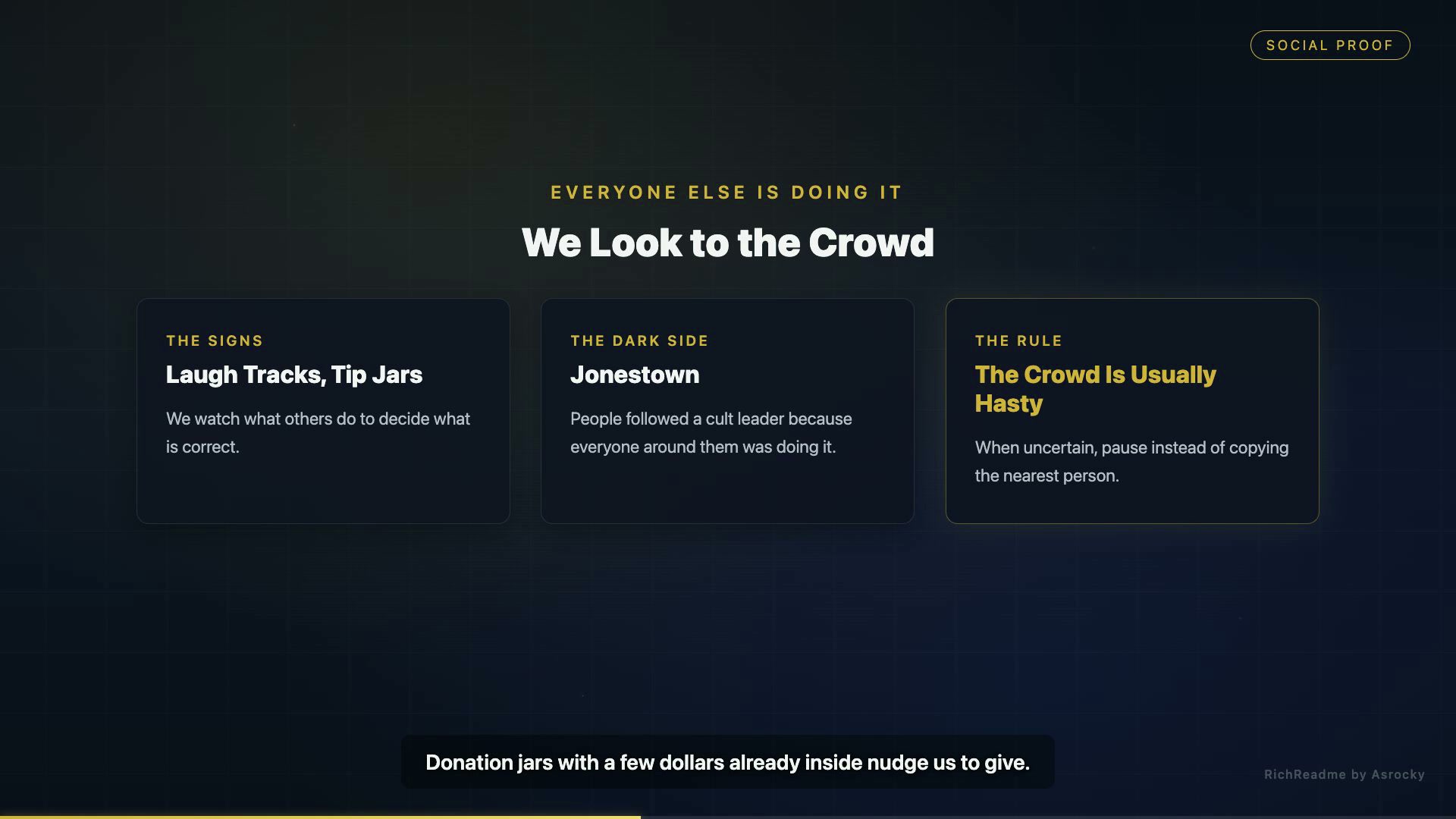
The third trigger is social proof. When uncertain, we look around to see what everyone else is doing. Laugh tracks on bad sitcoms work because they tell us when to laugh.
Donation jars with a few dollars already inside nudge us to give. Cialdini points to Jonestown, where people followed Jim Jones into mass suicide partly because everyone around them was doing it. The crowd is rarely right when it is in a hurry.
We Buy From People We Like
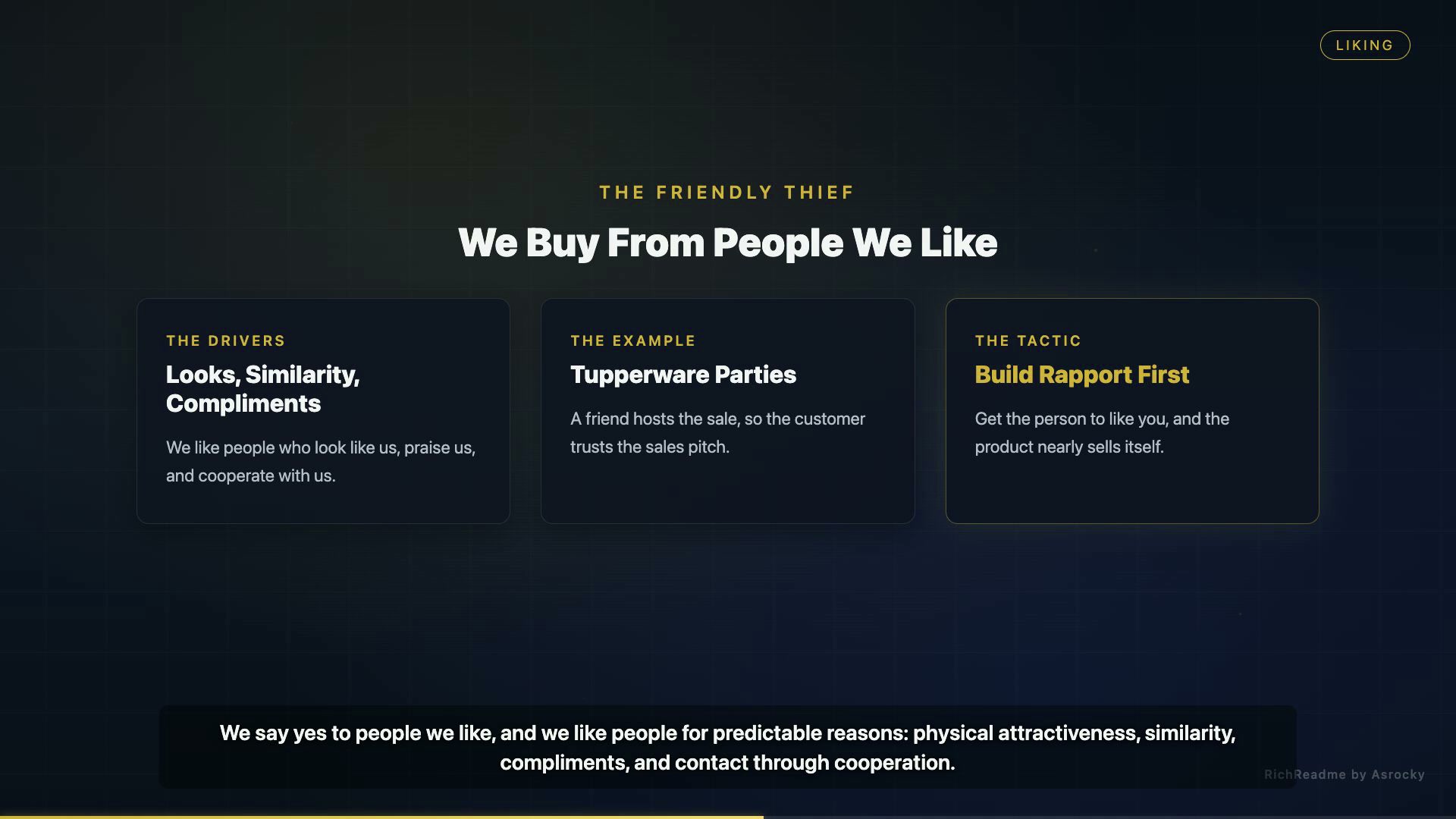
The fourth trigger is liking. We say yes to people we like, and we like people for predictable reasons: physical attractiveness, similarity, compliments, and contact through cooperation. Tupperware parties work because the host is a friend, not a salesperson. The sales tactic is simple: get the customer to like you first, and the product hardly matters.
We Obey Without Asking
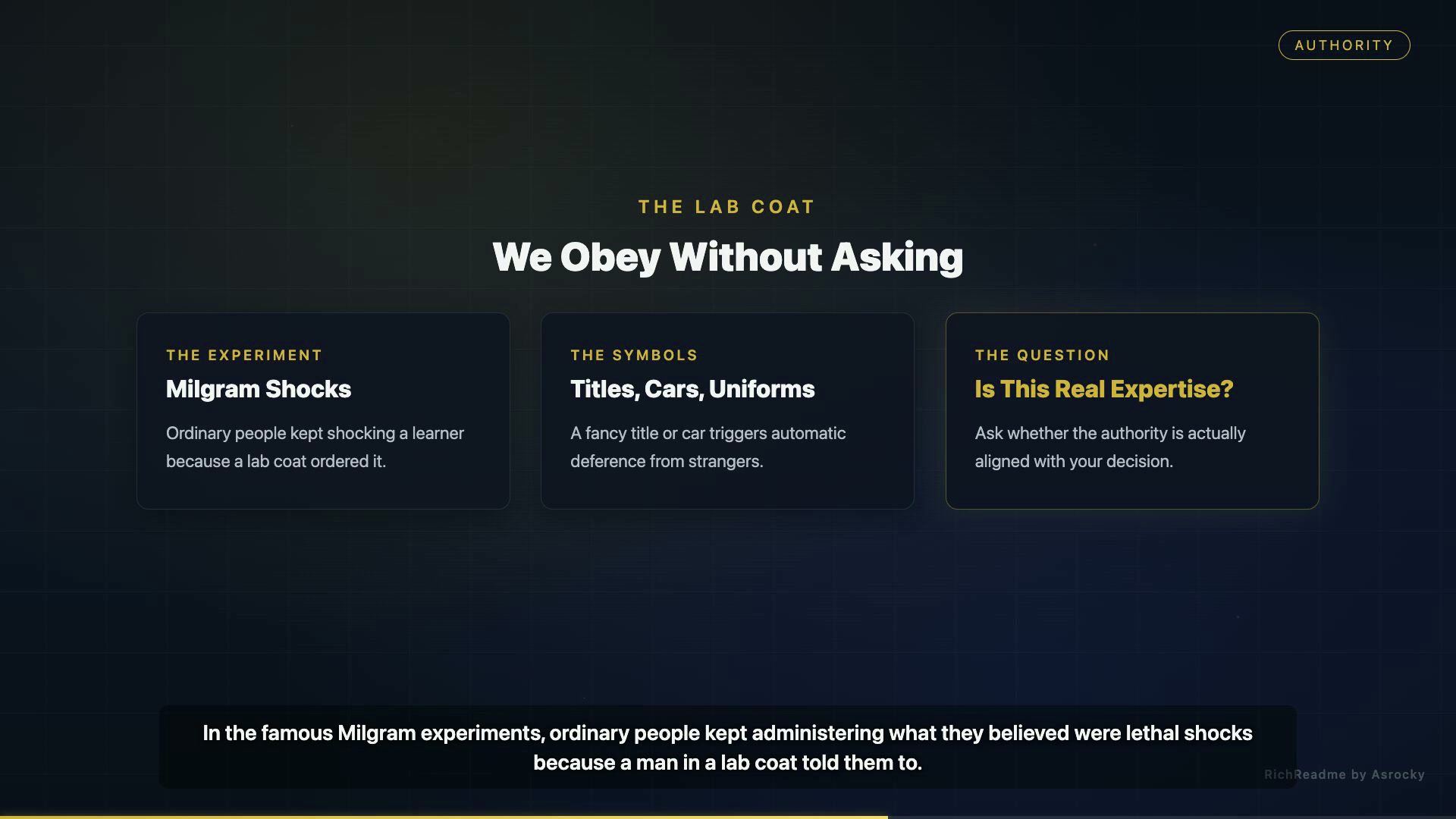
The fifth trigger is authority. We obey authority figures even when the orders feel wrong. In the famous Milgram experiments, ordinary people kept administering what they believed were lethal shocks because a man in a lab coat told them to.
A title, a fancy car, or a uniform can trigger automatic deference. Cialdini warns that most of us never ask whether the authority has real expertise aligned with the decision at hand.
Less Seems More Valuable
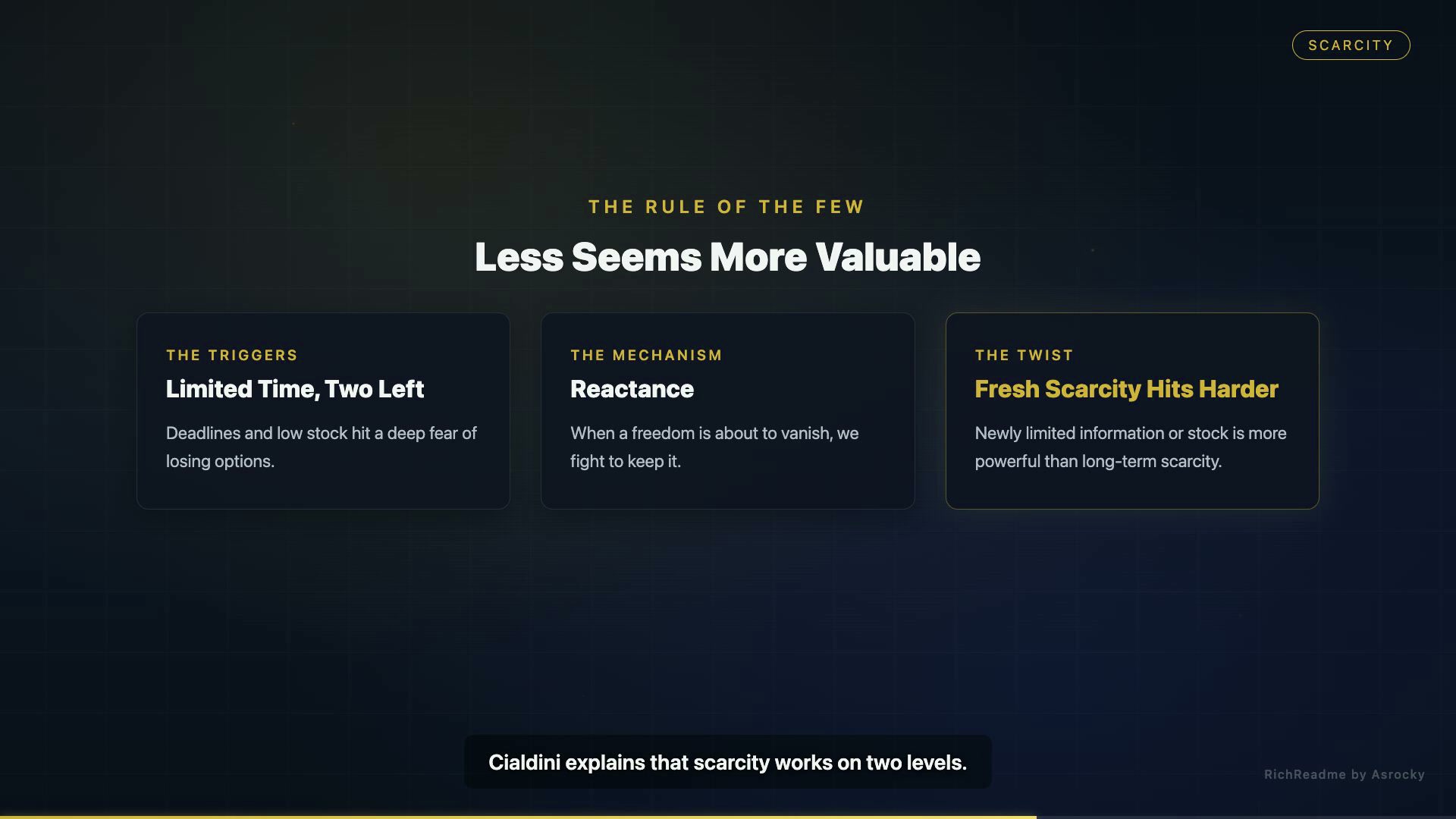
The sixth trigger is scarcity. Things seem more useful when they become less available. Limited-time offers, only two left signs, and missed opportunities all hit a deep fear of losing options.
Cialdini explains that scarcity works on two levels. It makes the item seem more useful, and it triggers psychological reactance, the urge to protect a freedom that is about to be taken away. Fresh scarcity, like newly discovered information, is even more powerful than long-term scarcity.
Defend Yourself, Use Honestly
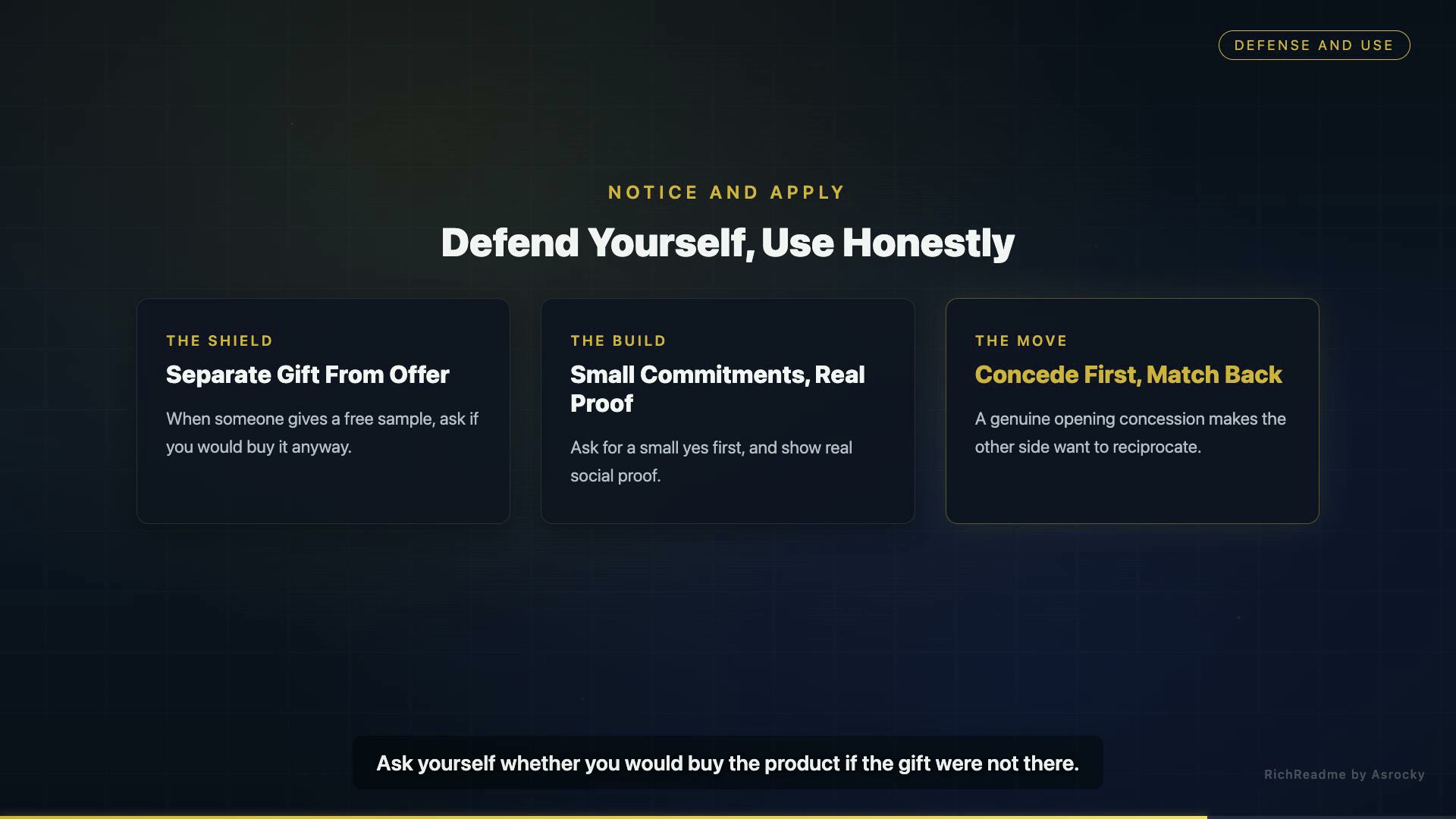
Knowing these triggers gives you two jobs. First, stop people from pressing your buttons by noticing the moment a salesperson tries to trigger reciprocation, consistency, or scarcity. When someone gives you a free gift, separate the gift from the offer. Ask yourself whether you would buy the product if the gift were not there.
Second, use the triggers If you are asking for a raise, start with a small commitment from your boss. If you are selling something, show real social proof rather than fake reviews. If you are negotiating, make a genuine concession first and the other side will want to match it.
Pause Before You Say Yes
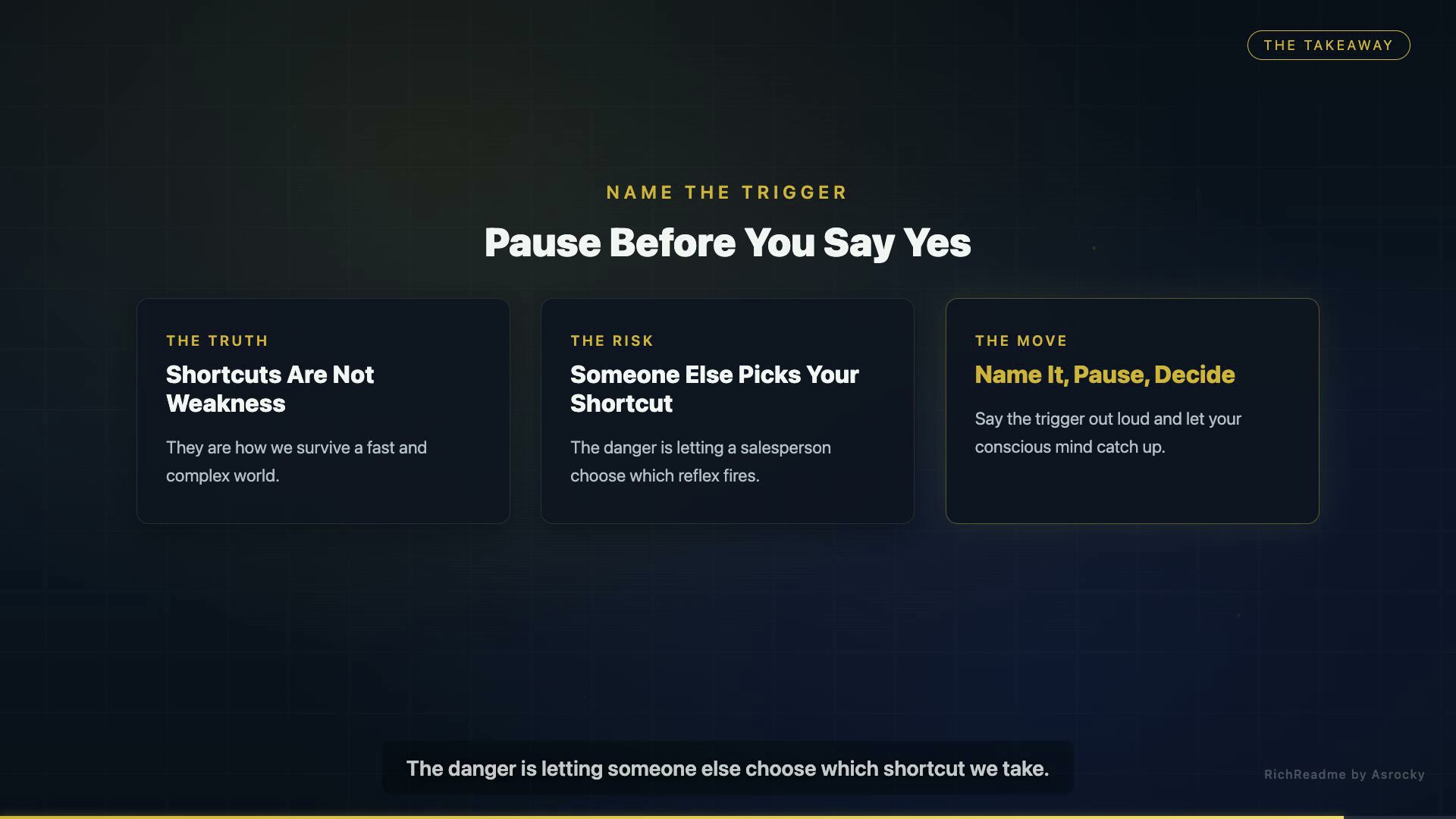
The core lesson is that being persuaded is not a sign of weakness. Shortcuts are how we survive a fast world. The danger is letting someone else choose which shortcut we take. Name the trigger, pause, and decide with your conscious mind instead of your reflex.