Why do some people go viral for all the wrong reasons? Real influence was never about loudness. It is about how you make people feel.
This is How to Win Friends and Influence People the updated guide from Dale Carnegie and Associates. The original book has sold over fifty million copies worldwide. This version applies those same timeless rules to tweets, emails, LinkedIn posts, and every screen between you and another person.
Every Message Matters
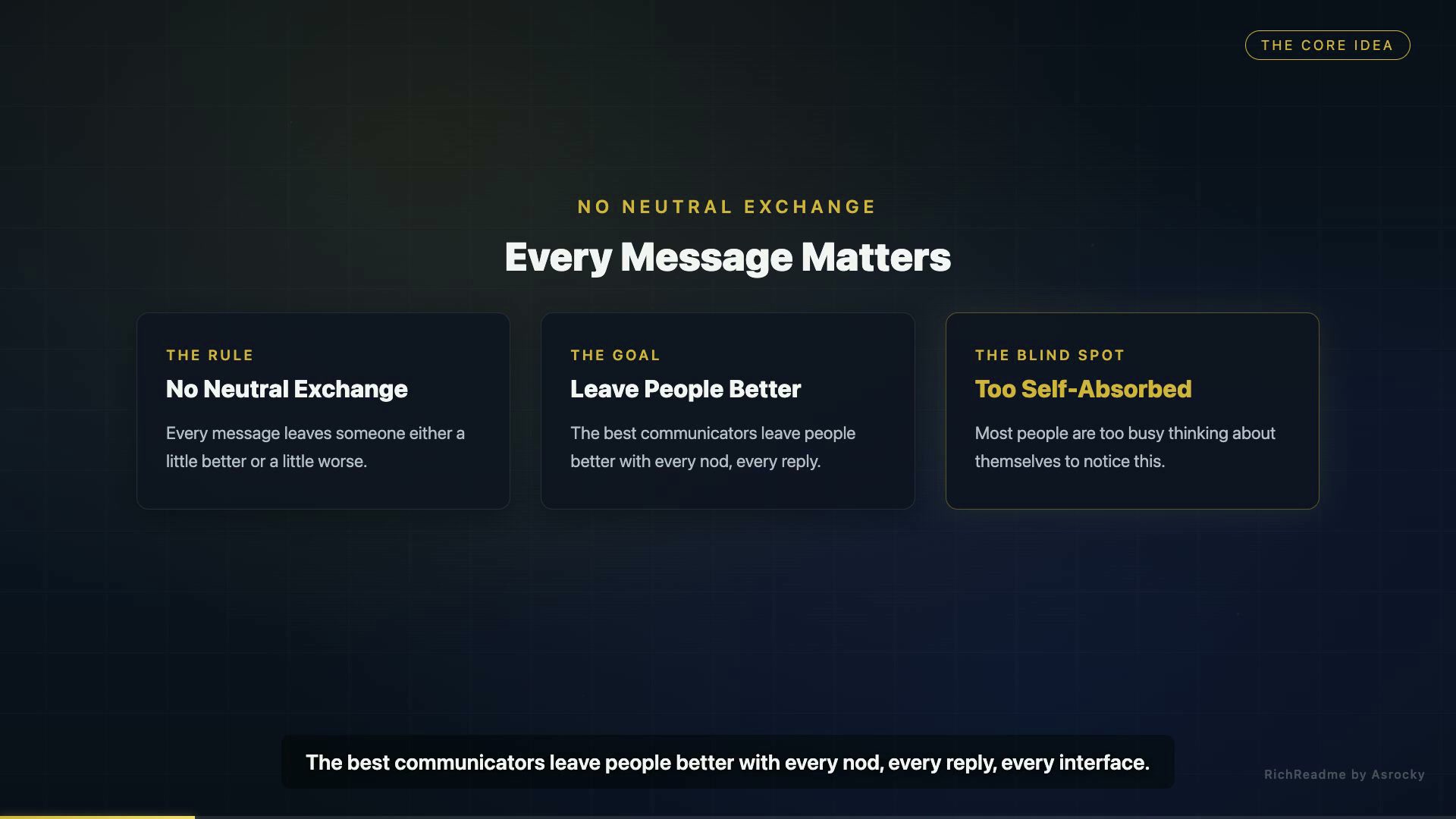
The core idea is simple. There is no such thing as a neutral exchange. Every message you send leaves someone either a little better or a little worse.
The best communicators leave people better with every nod, every reply, every interface. That is the whole game right there. Most people are too busy thinking about themselves to notice this.
Avoid Boomerangs, Affirm Good
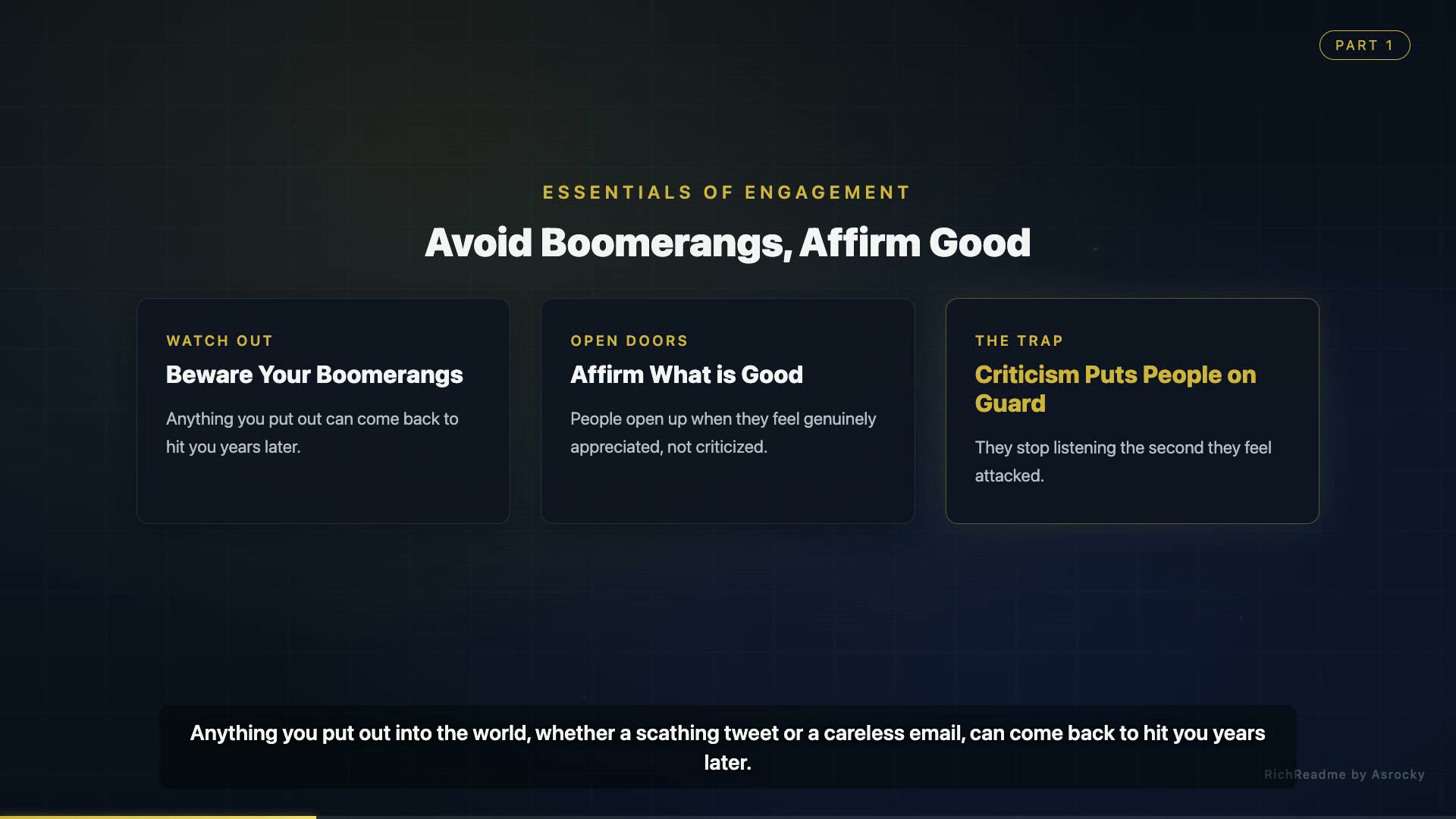
Part one starts with what Carnegie calls the essentials of engagement. First, beware your boomerangs. Anything you put out into the world, whether a scathing tweet or a careless email, can come back to hit you years later.
Second, affirm what is good. People open up when they feel genuinely appreciated, not criticized. Criticism only puts people on guard, and they stop listening the second they feel attacked.
Lead With Understanding, Not Promotion
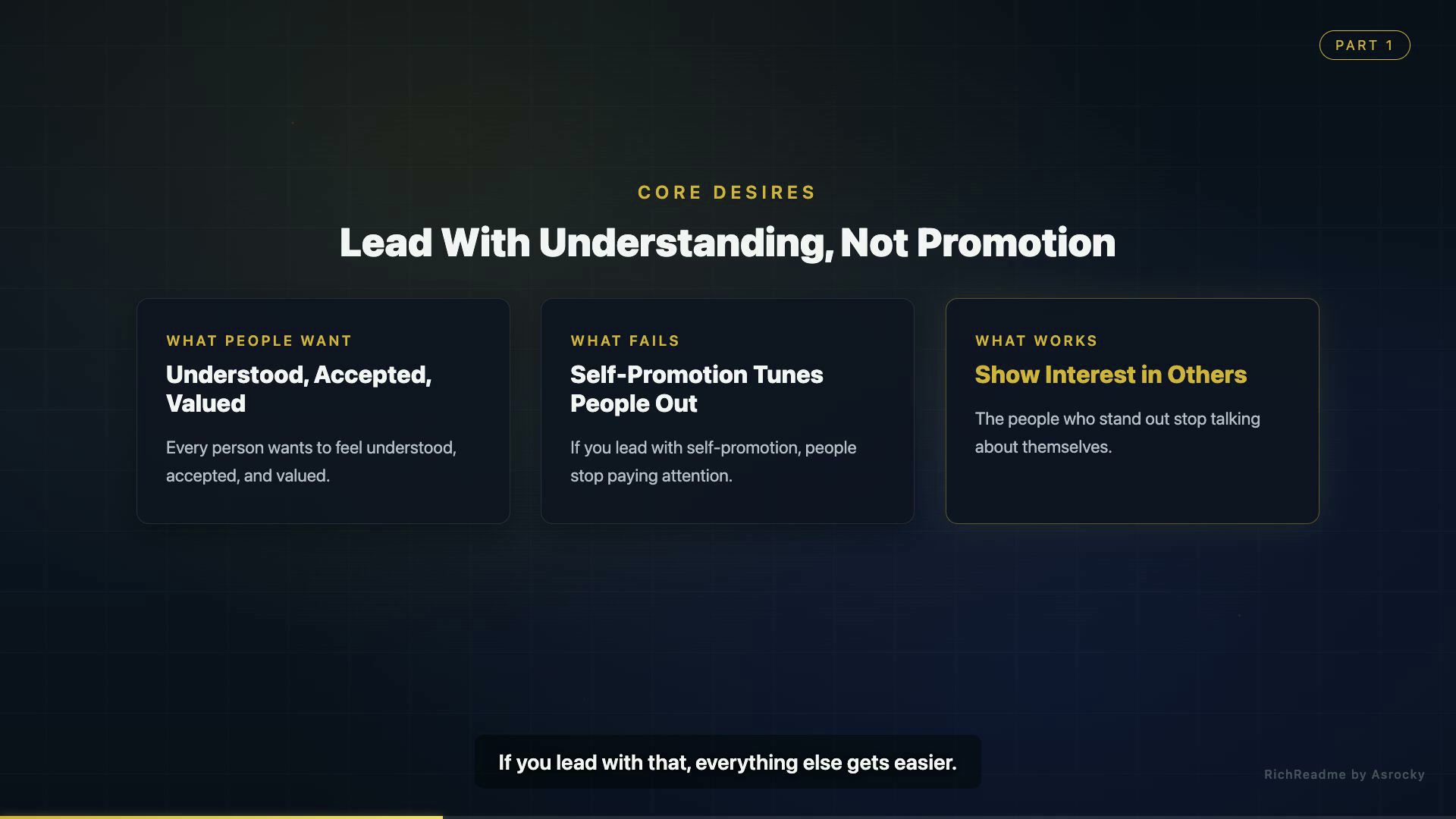
Third, connect with core desires. Every person wants to feel understood, accepted, and valued. If you lead with that, everything else gets easier.
If you lead with self-promotion, people tune out. We live in an age of self-promotion, and the people who stand out are the ones who stop talking about themselves and start showing interest in others.
Take Interest in Others
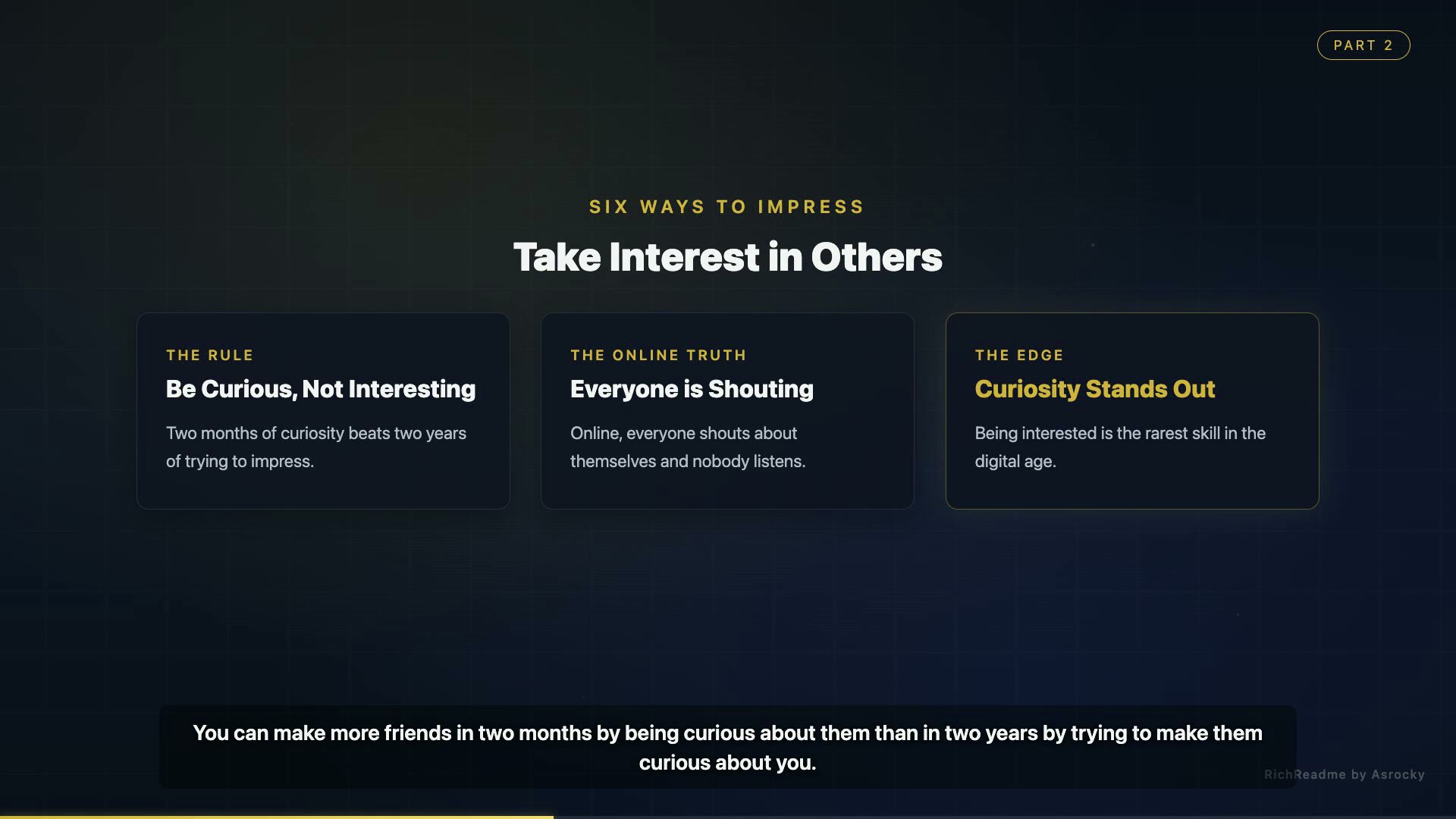
Part two covers six ways to make a lasting impression. Start by taking interest in others interests. You can make more friends in two months by being curious about them than in two years by trying to make them curious about you. This is especially true online, where everyone is shouting about themselves and nobody is actually listening.
Smile and Use Names
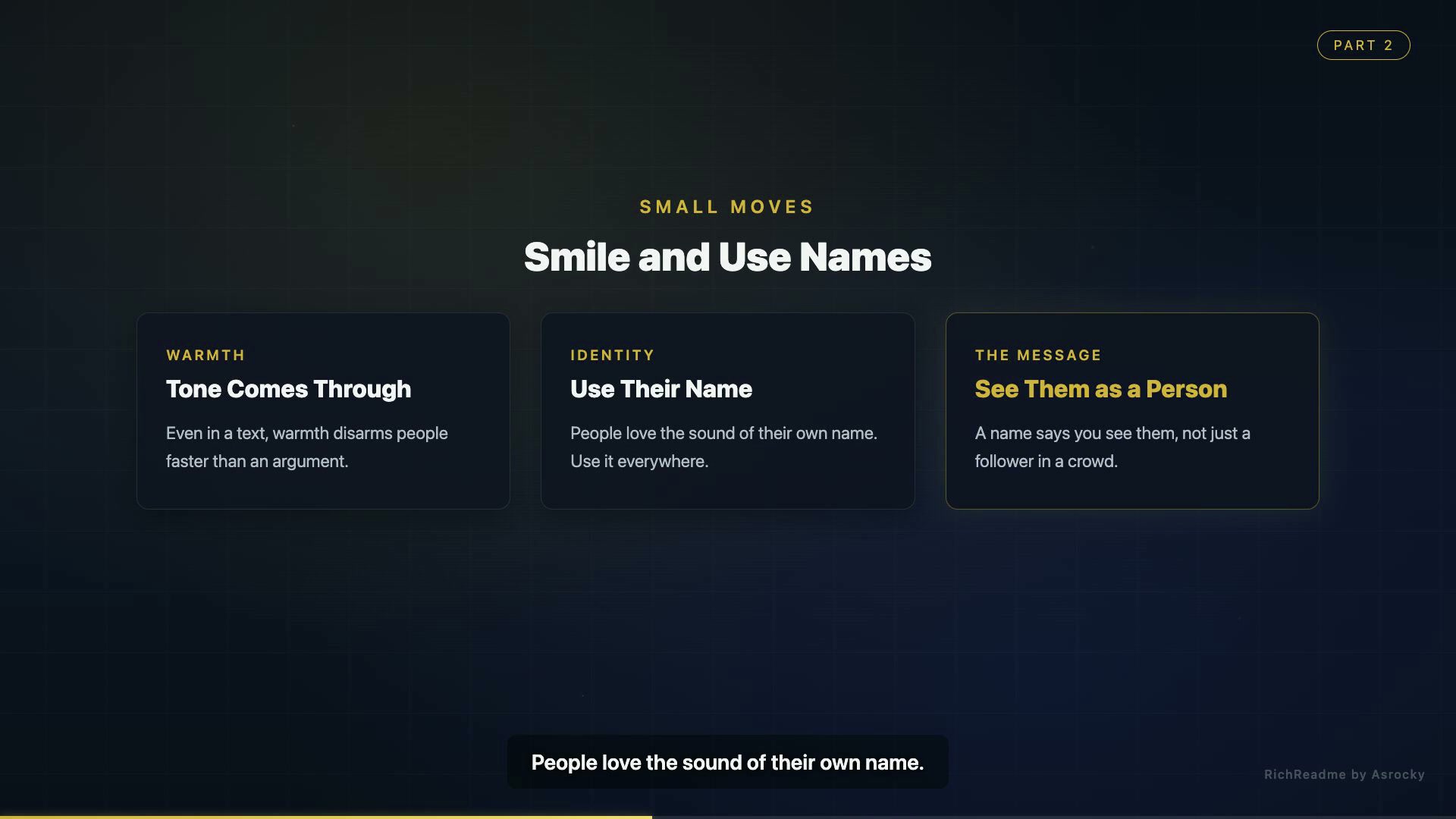
Then smile and reign with names. Even in a text or email, warmth comes through. People love the sound of their own name.
Use it in emails, in comments, in handwritten notes. It tells someone you see them as a person, not a follower in a crowd of thousands.
Listen and Talk Their Language
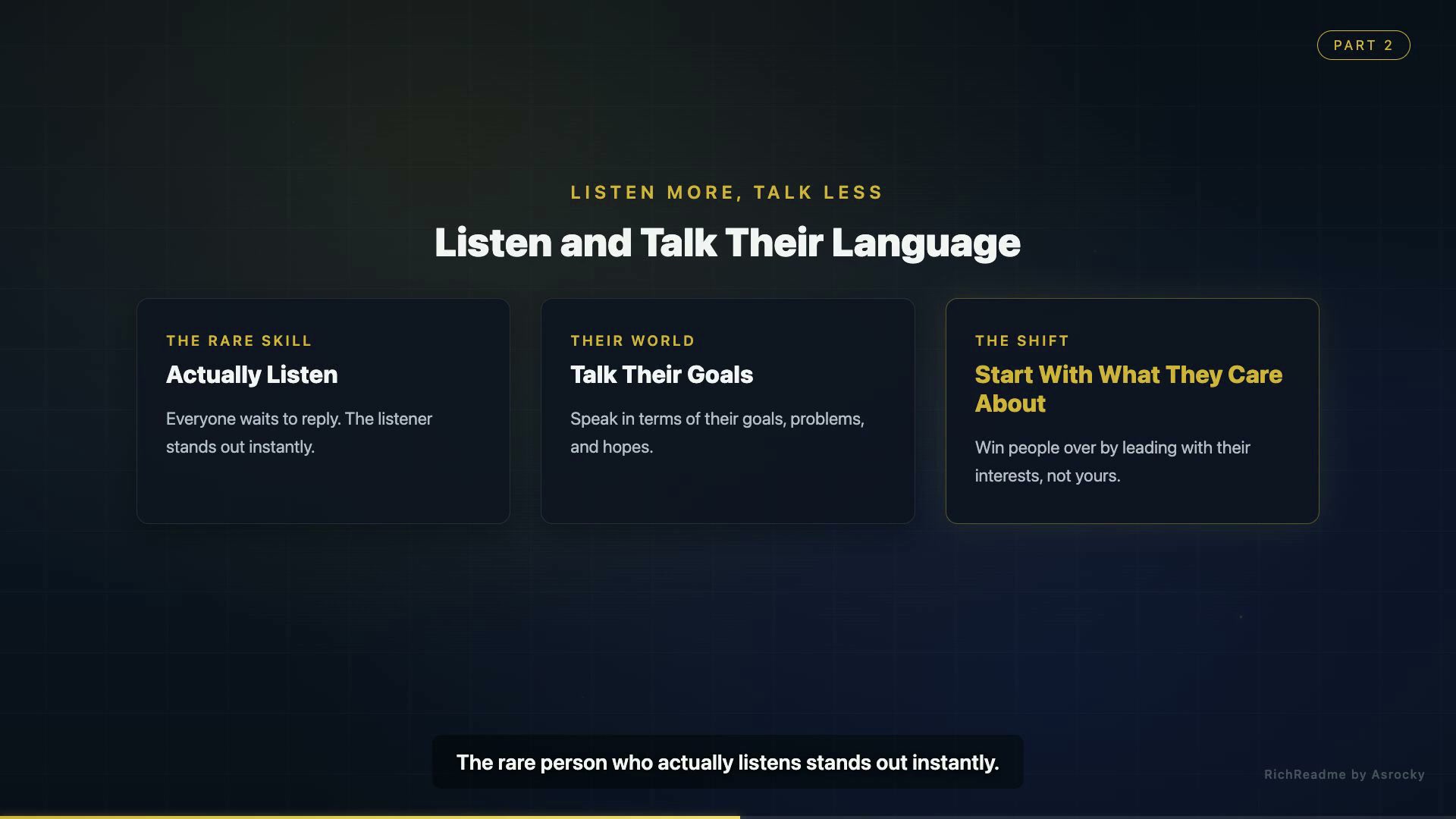
Listen longer and discuss what matters to them. everyone is waiting to reply. The rare person who actually listens stands out instantly.
Talk in terms of their goals, their problems, their hopes. If you want to win someone over, start with what they care about, not what you care about.
Leave People Better
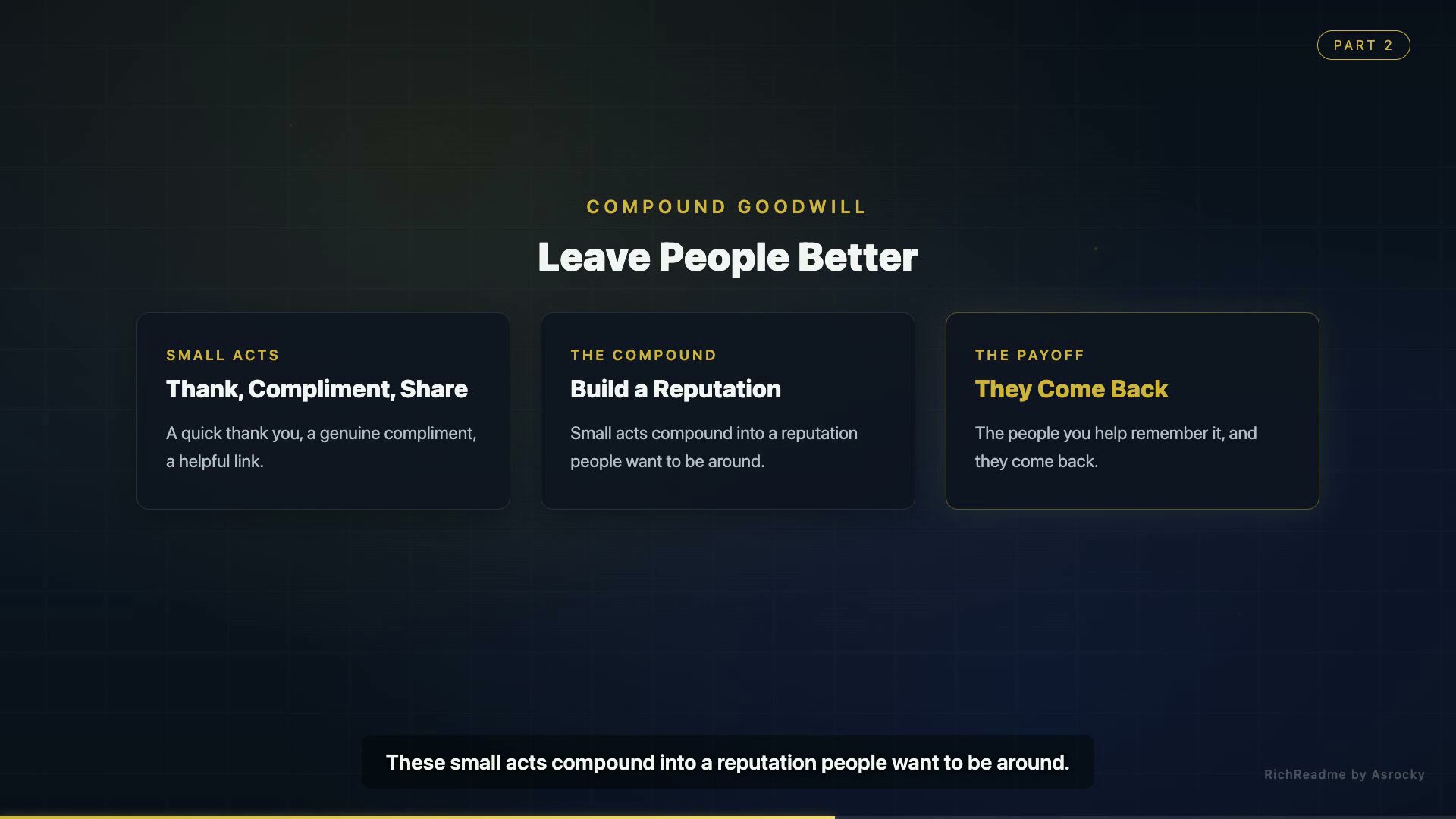
And leave others a little better after every interaction. A quick thank you, a genuine compliment, a helpful link. These small acts compound into a reputation people want to be around.
This is how you build real influence, not borrowed attention from viral stunts. The people you help remember it, and they come back.
Never Argue to Win
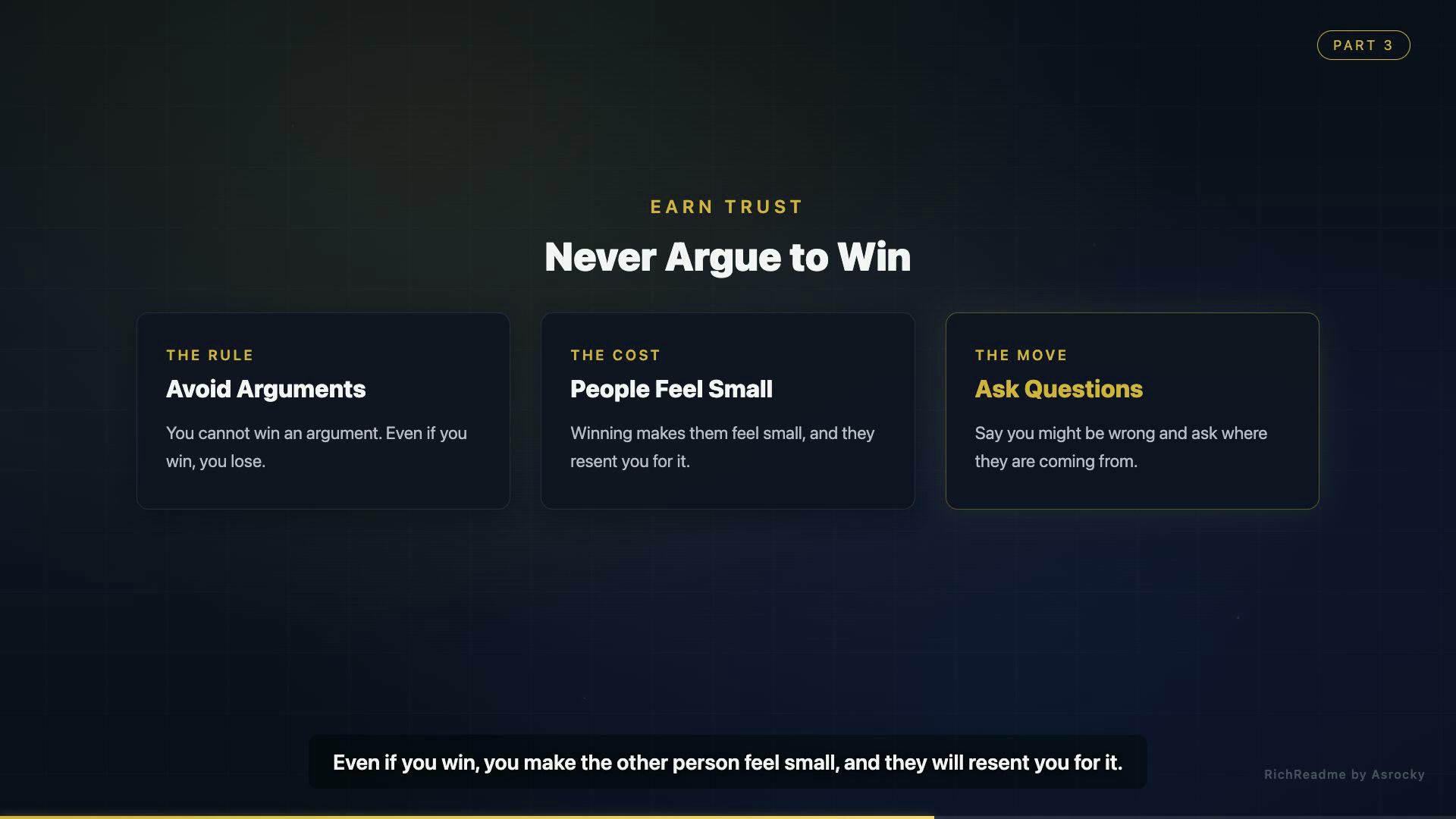
Part three is about earning and keeping trust. The biggest rule is to avoid arguments. You cannot win an argument.
Even if you win, you make the other person feel small, and they will resent you for it. Instead, say you might be wrong and ask questions to understand where they are coming from.
Admit Faults, Show Empathy
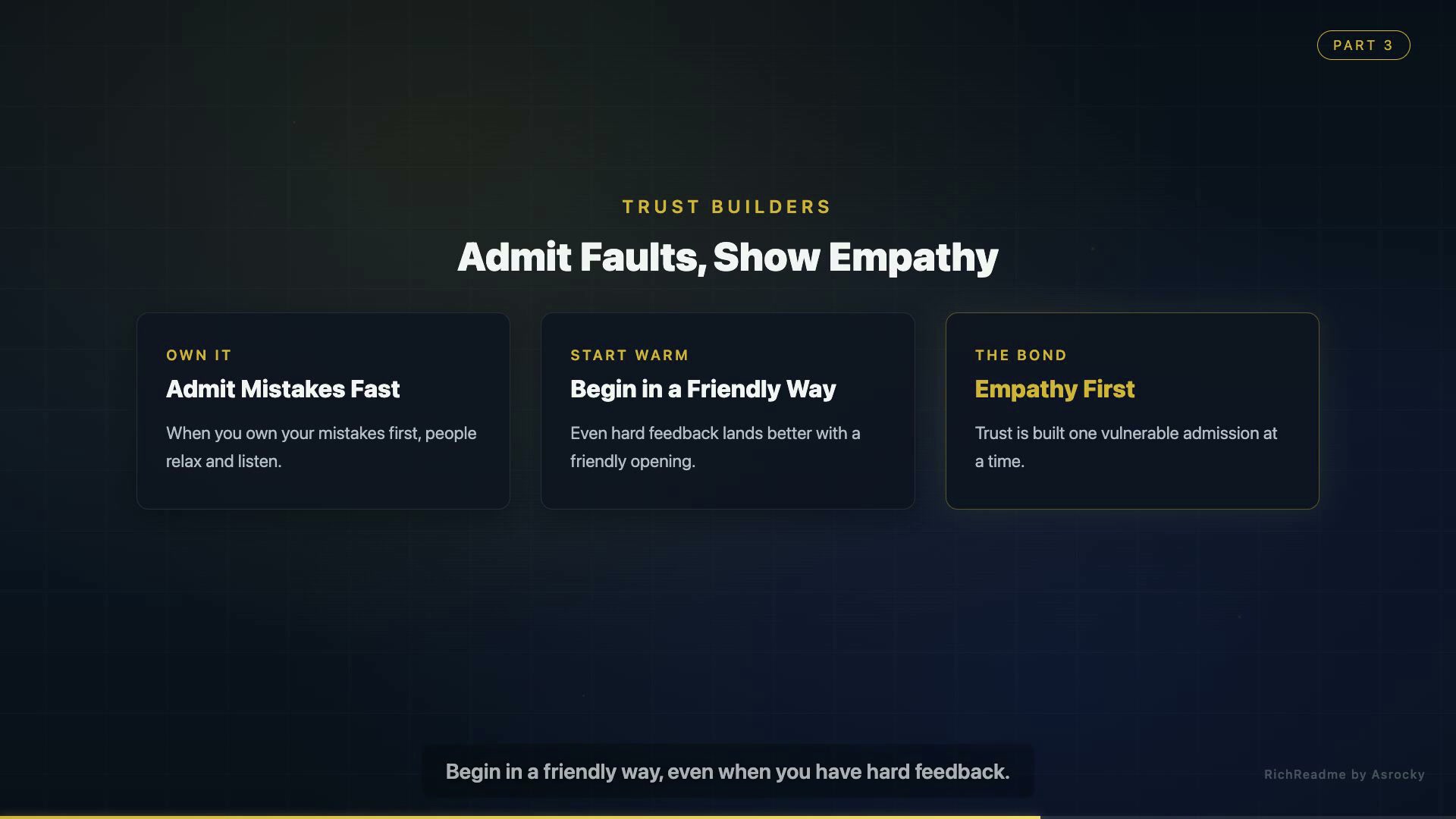
Never say someone is wrong. Admit your own faults quickly and openly. When you own your mistakes first, people relax and become far more willing to listen. Begin in a friendly way, even when you have hard feedback.
Surrender the credit to others. Engage with empathy before you push your own point. This is how trust is built, one vulnerable admission at a time.
Ask, Don't Order
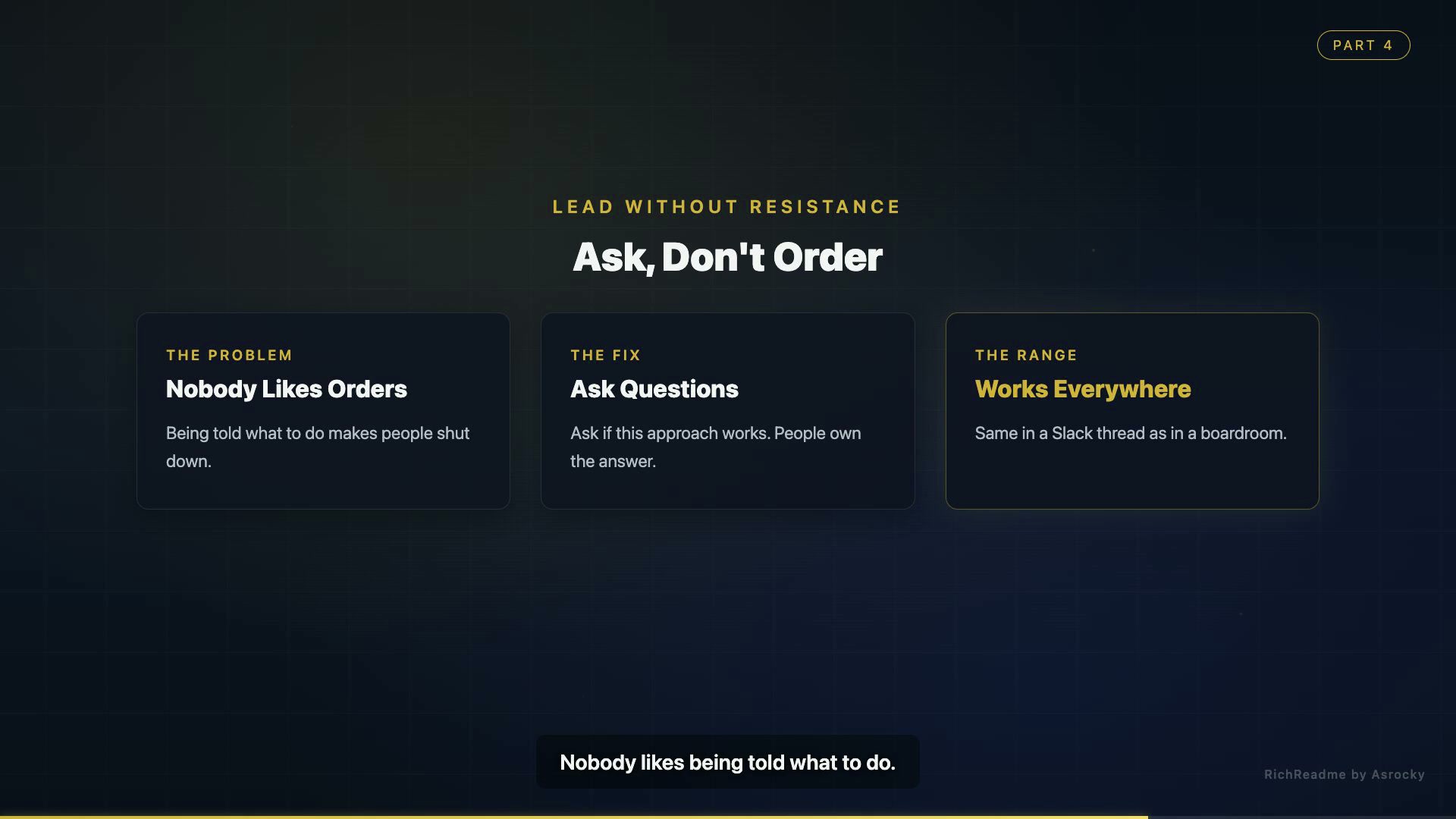
Part four is leading change without resistance. Ask questions instead of giving direct orders. Nobody likes being told what to do.
But if you ask whether this approach works for you, people arrive at the answer themselves and own it. This works just as well in a Slack thread as it does in a boardroom.
Praise Progress, Hide Errors
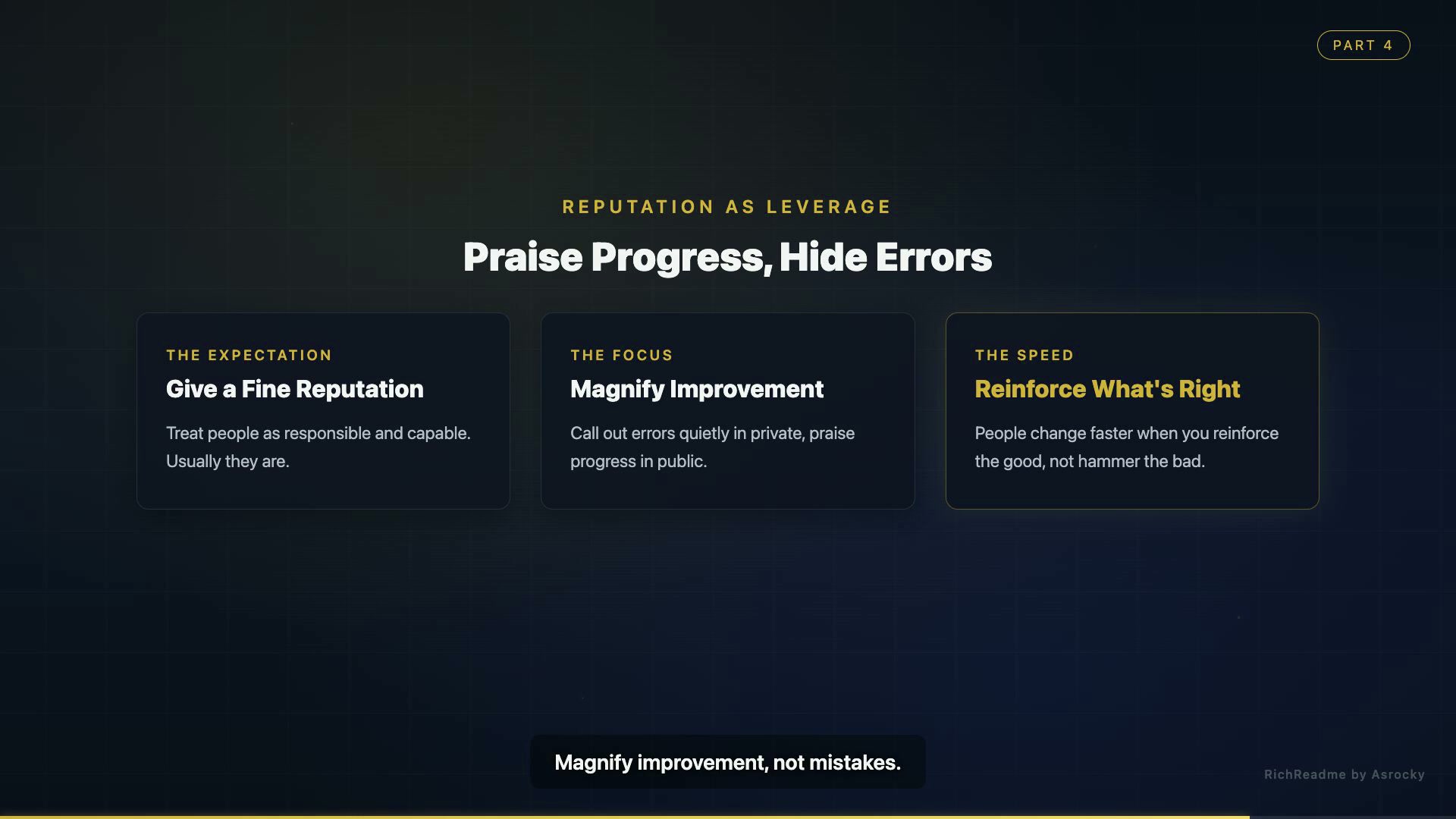
Give others a fine reputation to live up to. If you treat someone like they are responsible and capable, they usually will be. Magnify improvement, not mistakes.
Call out errors quietly in private, and praise progress in public. People change far faster when you reinforce what they are doing right, rather than hammering what they are doing wrong.
The Bottom Line
The bottom line is this. The medium has changed. People have not. Likes and followers are borrowed influence.
The kind of influence that lasts is earned one honest, respectful interaction at a time. Soft skills are not soft. They are the hard skills that make every other skill actually work in the real world.