What if talent was not the secret to success? The winners of the National Spelling Bee are not the smartest kids, and the cadets who survive West Point are not the strongest. They are the ones who refuse to quit.
This is Grit by Angela Duckworth, the psychologist who spent years at West Point, in classrooms, and at the National Spelling Bee, trying to answer one question: what makes high achievers different?
The Definition
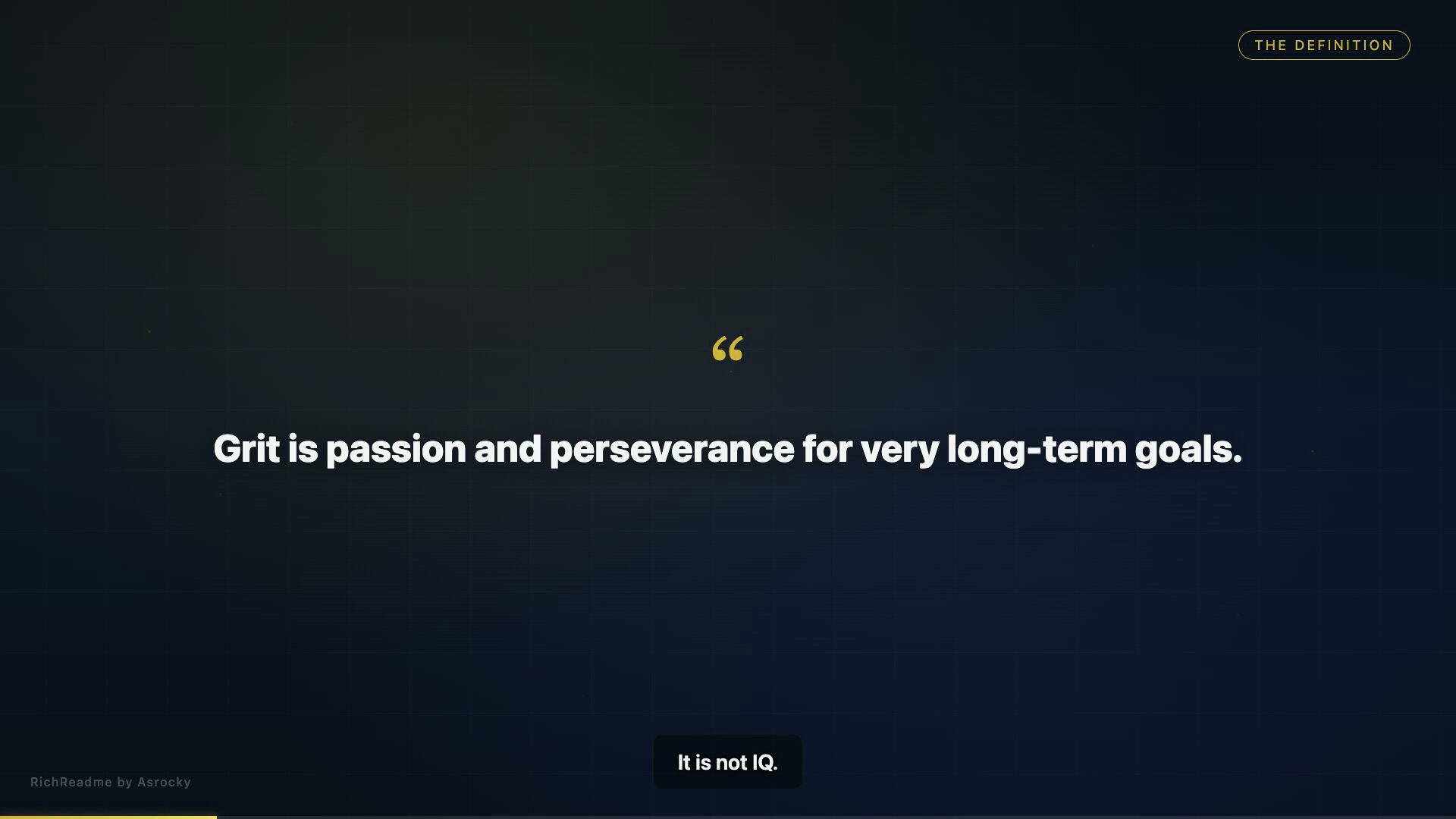
Her answer is simple and backed by data. Grit is passion and perseverance for very long-term goals. It is not talent.
It is not IQ. It is the stamina to stay loyal to one thing, for years, through failure and boredom and setbacks. She calls it living life like a marathon, not a sprint.
Talent vs. Grit
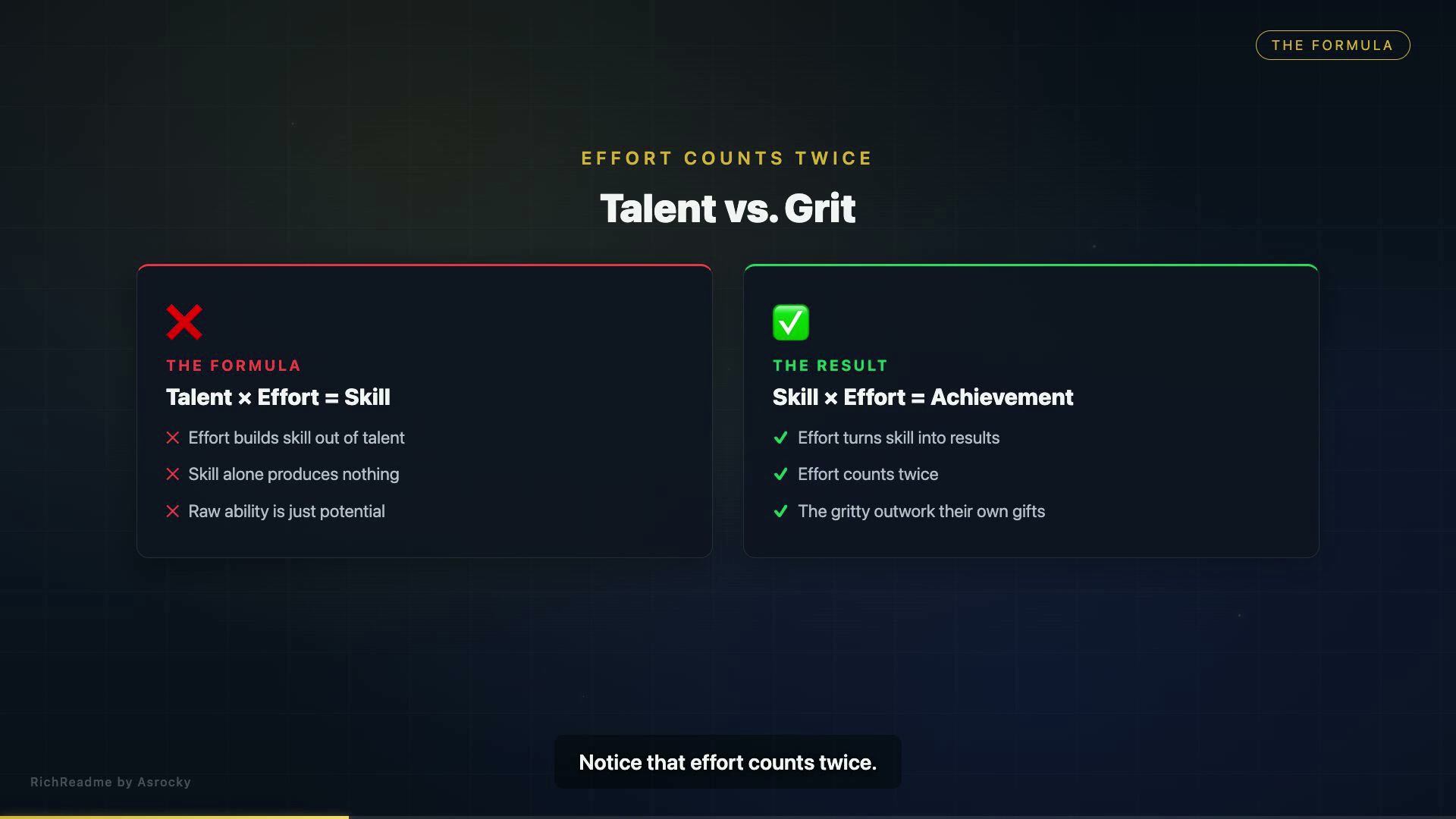
The math is brutal and liberating. Talent times effort equals skill. Skill times effort equals achievement.
Notice that effort counts twice. Talent matters, but effort builds skill and then turns skill into real results. The highest achievers are not always the most talented, they are almost always the grittier.
The Evidence
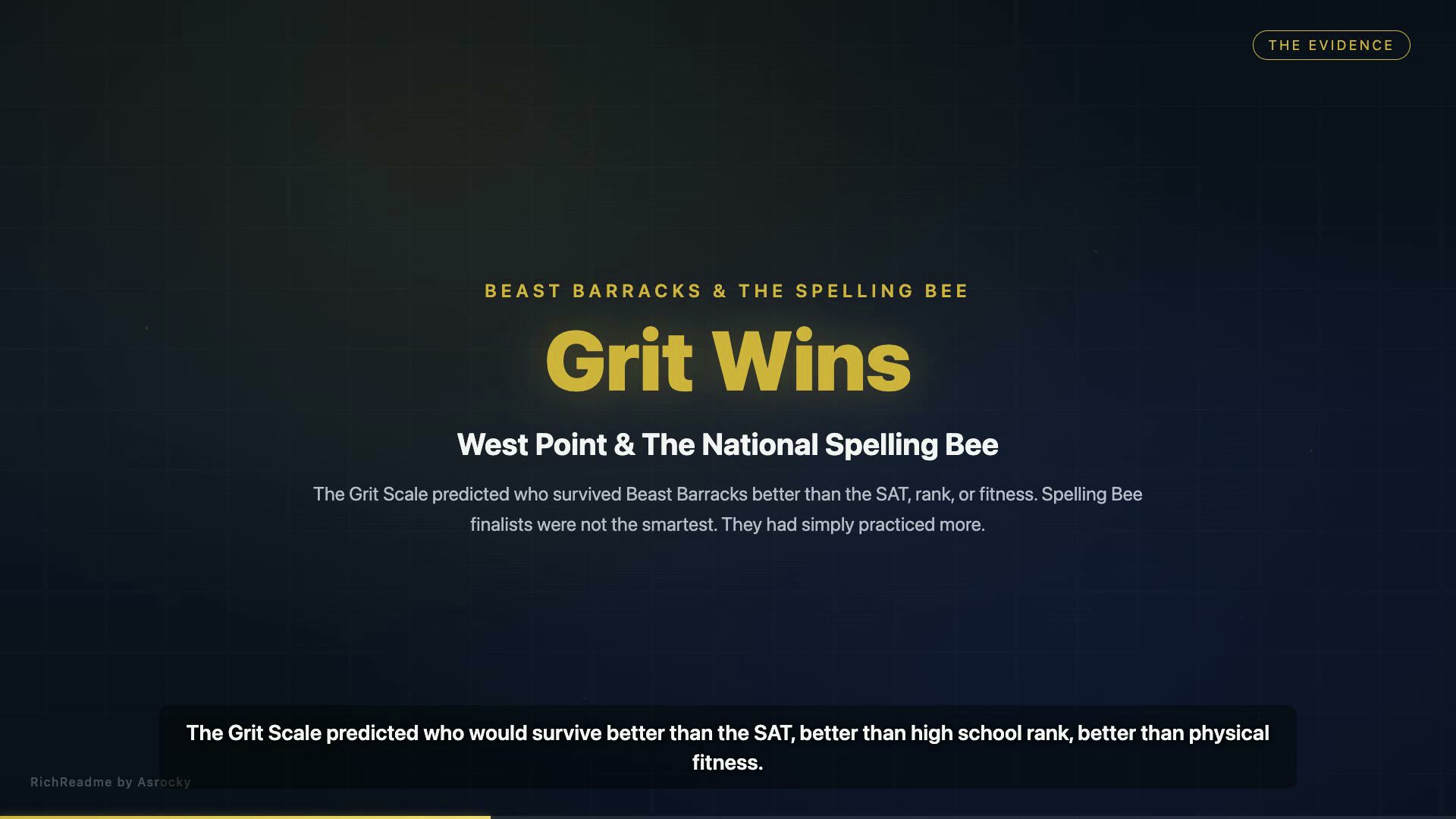
At West Point, she tested cadets in the hardest summer program in America, Beast Barracks. The Grit Scale predicted who would survive better than the SAT, better than high school rank, better than physical fitness. At the Spelling Bee, the finalists did not have higher IQs, they had simply practiced more, and practiced more deliberately. Grit predicted who made the final round.
The Hard Thing Rule
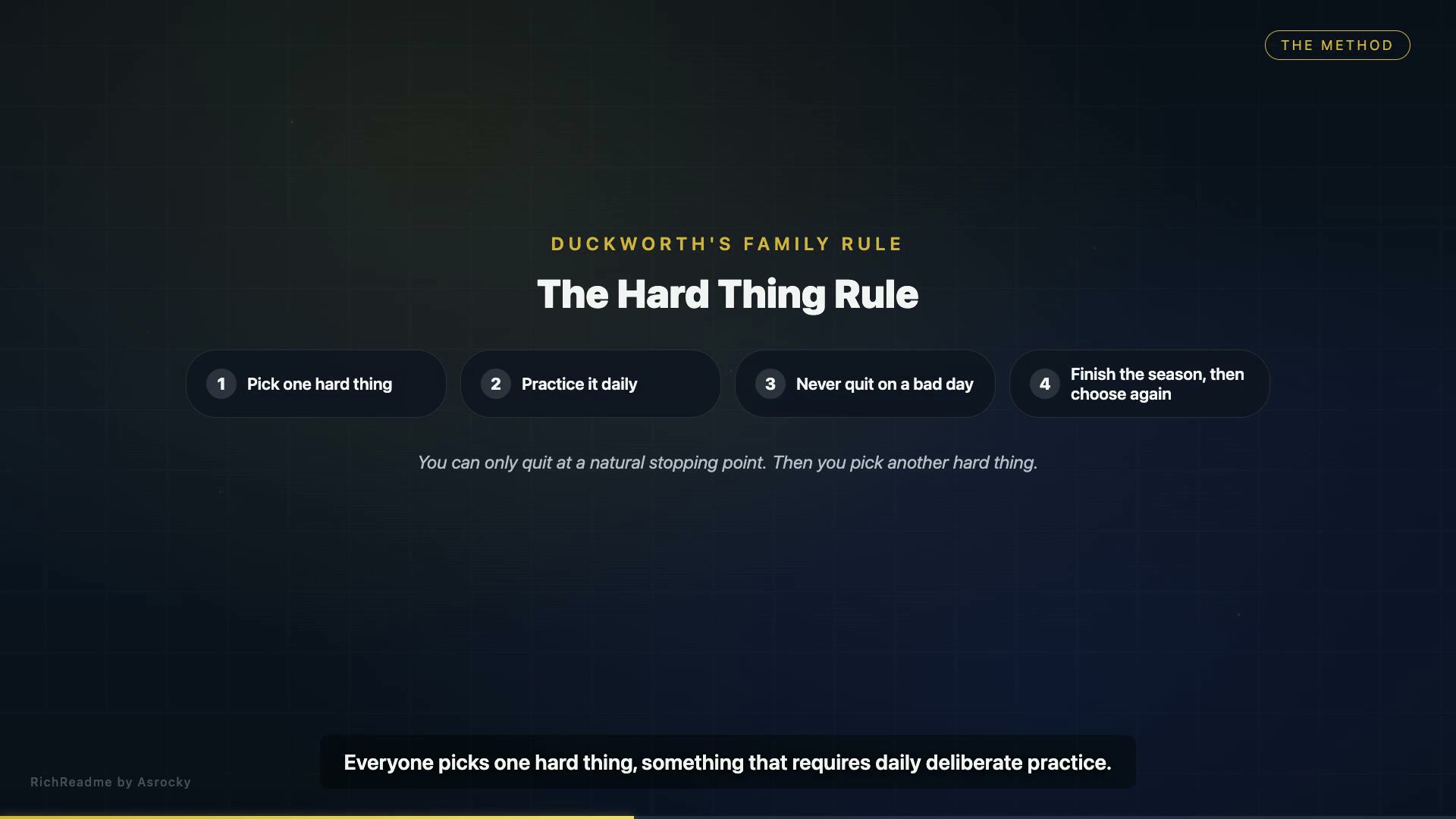
So how do you get it? Duckworth's family rule is called the Hard Thing Rule. Everyone picks one hard thing, something that requires daily deliberate practice.
You cannot quit mid-season, mid-semester, or on a bad day. You can only quit at a natural stopping point, like the end of a season, and then you must pick another hard thing.
Interest · Practice · Purpose · Hope
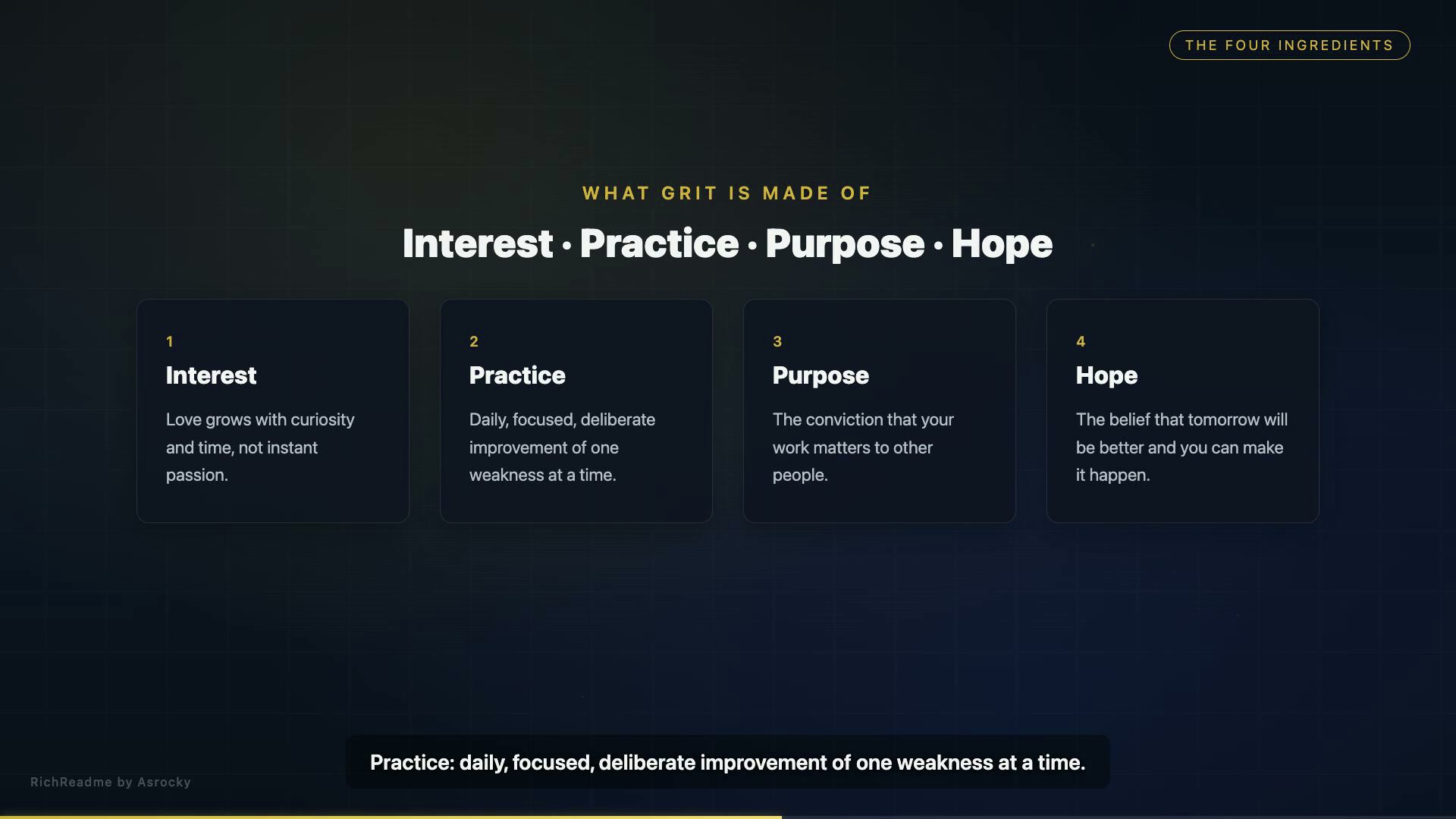
Underneath grit sit four ingredients. Interest: you must love what you do, and love develops with time and curiosity, not instant passion. Practice: daily, focused, deliberate improvement of one weakness at a time.
Purpose: the conviction that your work matters to other people, that it is part of something bigger than you. And hope: the belief that tomorrow will be better and that you can make it happen.
The Insight
Here is the part that changes everything. Effort counts twice. It turns talent into skill, and it turns skill into achievement.
That is why the gritty win. They outwork their own gifts, and then they convert that work into results the talented never reach.
Deliberate Practice

Deliberate practice is not just repetition. It is defining a stretch goal just beyond your current ability, focusing with full attention, seeking feedback, and refining, again and again. Grit grows when practice is hard and specific, not when it feels easy.
The Engine
Hope is the engine. Duckworth found that gritty people expect tomorrow to be a little better. They do not wait for luck. They believe their own efforts will move the needle, and that belief keeps them going when talent alone would quit.
Four Moves

So build grit on purpose. Find work you love, or learn to love the work you do. Practice deliberately every day.
Connect it to a purpose bigger than yourself. And hold onto hope, because hope is what makes effort feel worthwhile.
The Practice
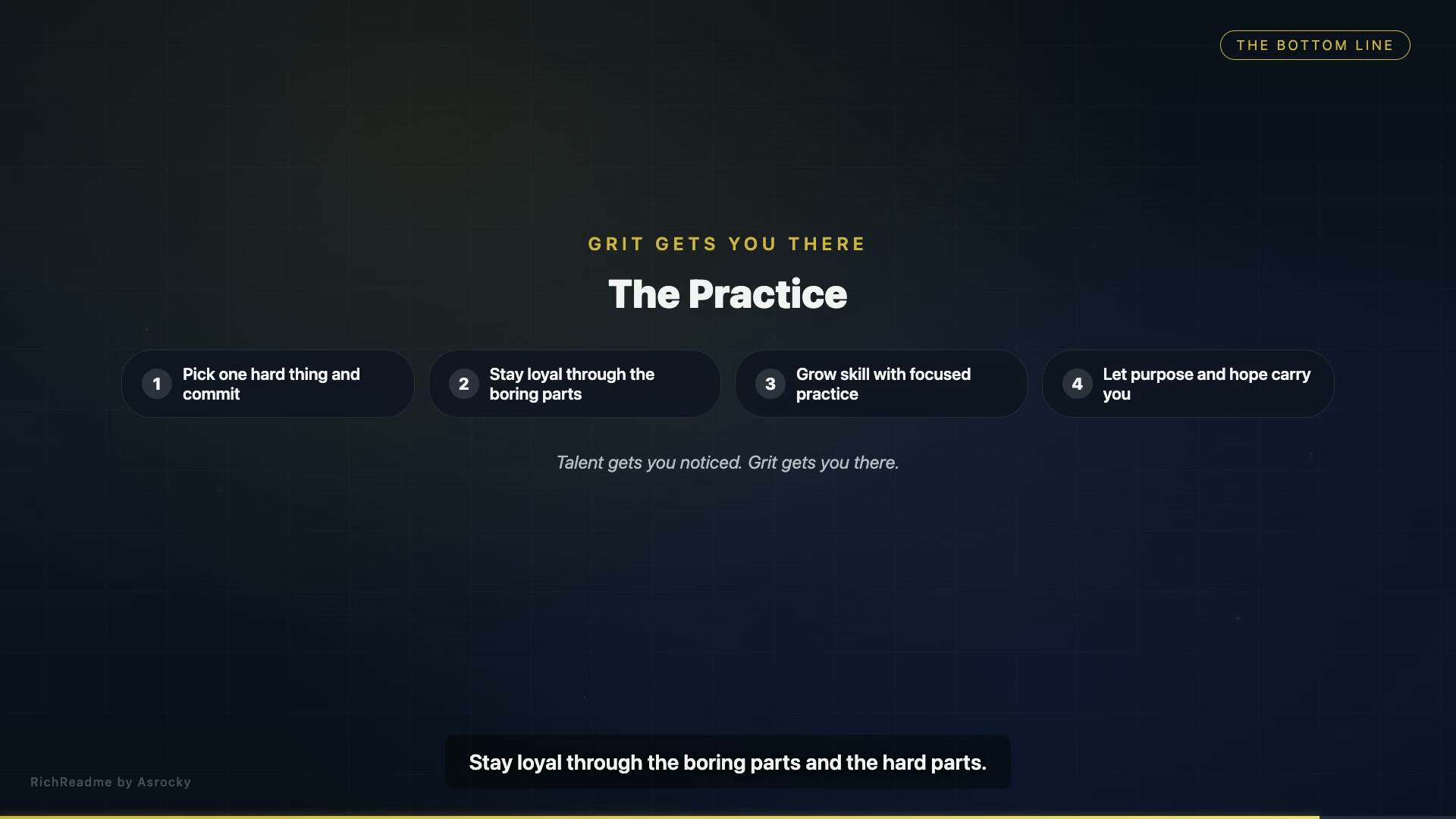
The pattern is simple. Pick one hard thing and commit. Stay loyal through the boring parts and the hard parts.
Grow your skills with focused practice, and let purpose and hope carry you. Talent gets you noticed. Grit gets you there.