A study of fourteen hundred companies found eleven that became great. The leaders behind them were not glamorous. They were almost invisible.
This is Good to Great, by Jim Collins. His research team spent five years hunting for companies that went from merely good to truly great and kept it going for at least fifteen years. What they found overturned everything people thought they knew about business heroes.
The Invisible CEOs
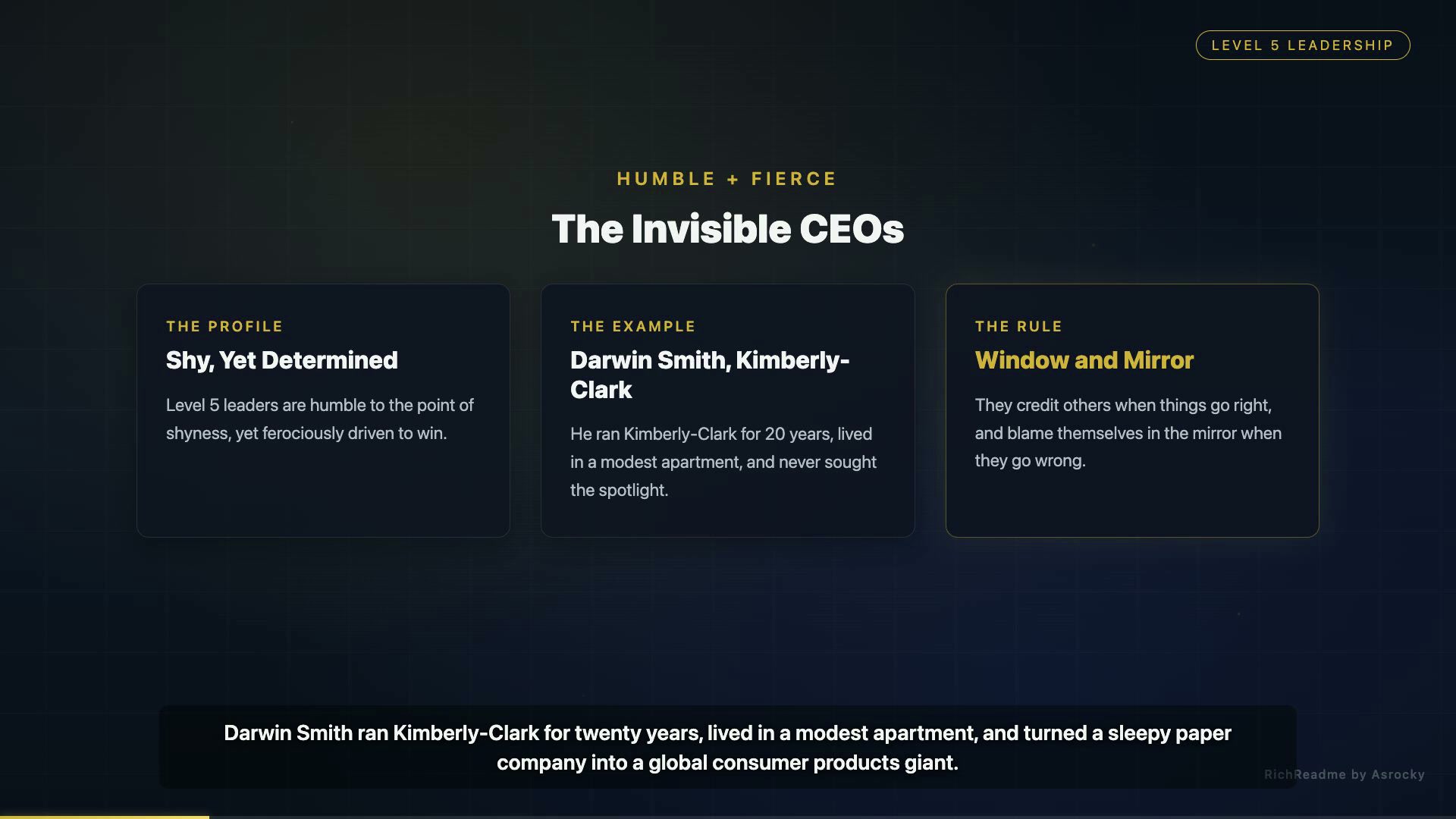
The first surprise was the leaders themselves. Collins called them Level 5 leaders. They were humble to the point of shyness, yet ferociously determined. Darwin Smith ran Kimberly-Clark for twenty years, lived in a modest apartment, and turned a sleepy paper company into a global consumer products giant.
He never wrote a memoir or sought the spotlight. These leaders credited other people and luck when things went right, and looked in the mirror to blame themselves when things went wrong. Celebrity chief executives, by contrast, tended to wreck their companies. Greatness, it turned out, was built by people who did not want to be on the cover of Fortune.
People Before Strategy
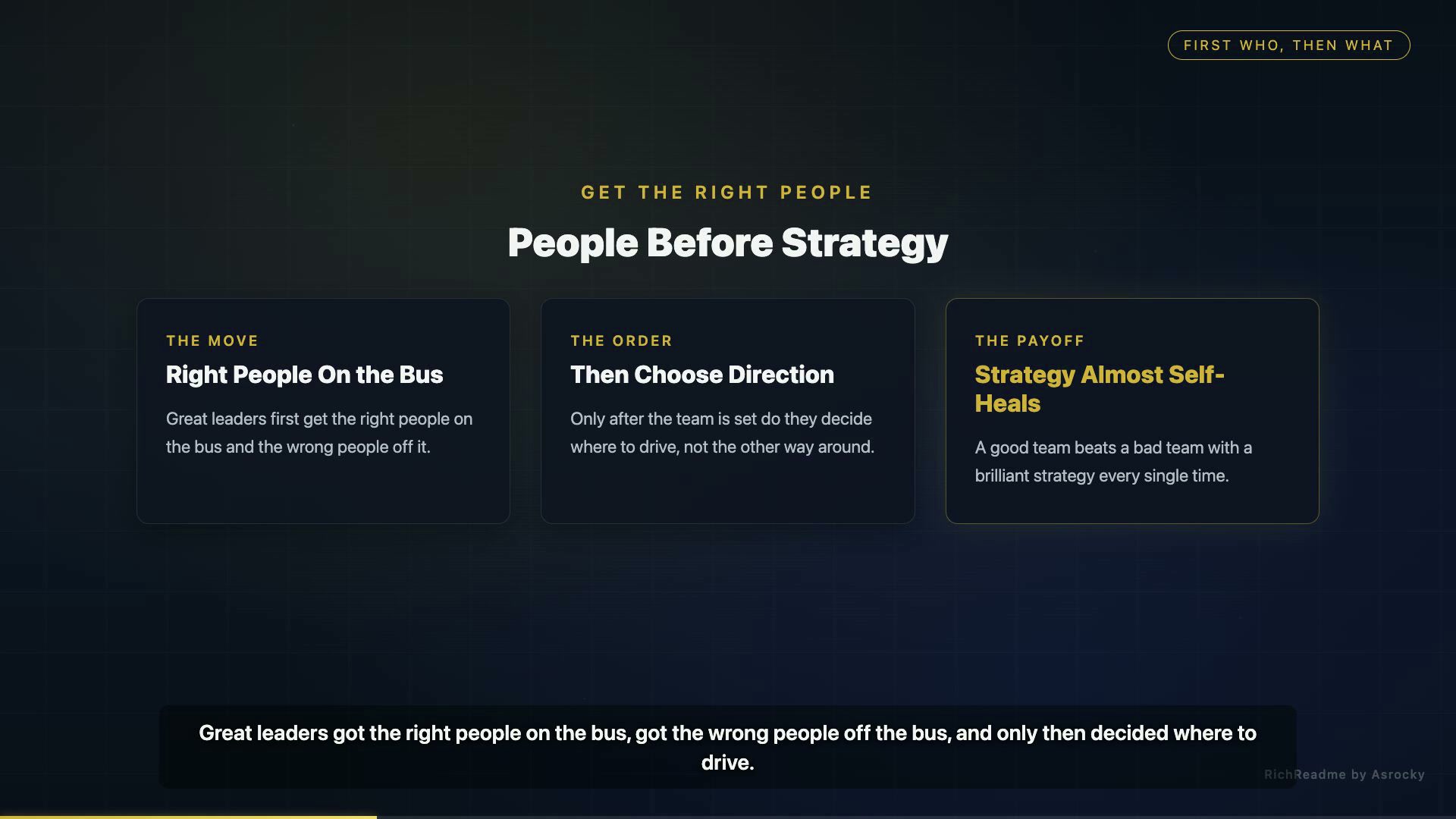
Before strategy came the people. Collins's second rule was first who, then what. Great leaders got the right people on the bus, got the wrong people off the bus, and only then decided where to drive. You do not start with a grand vision.
You start with a team. If you have the right people, the strategy almost takes care of itself. A bad team with a great strategy loses to a good team with a fine strategy every time.
Faith + Brutal Honesty

Once the team was right, they faced reality. Collins called it the Stockdale Paradox. You must hold unwavering faith that you will prevail in the end, while at the same time brutally confronting the facts of your current situation. No more delusions.
A company that admits its brutal facts can fix them. A company that lives in hope will keep losing. Faith without honesty is fantasy, and honesty without faith is despair.
One Big Thing
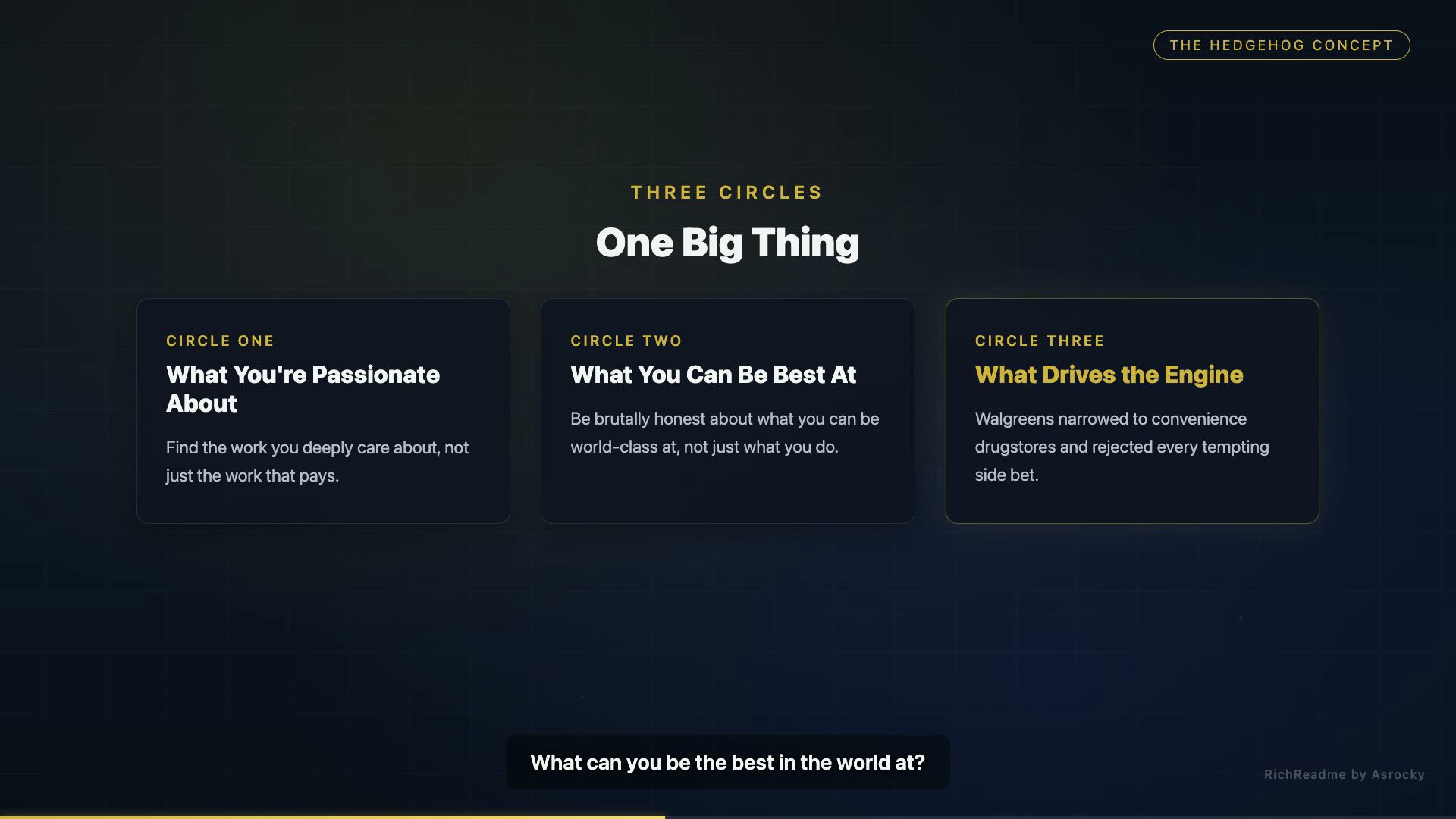
Then they found their hedgehog concept. The hedgehog knows one big thing, while the fox knows many clever tricks. Great companies narrowed their whole strategy down to one simple idea at the overlap of three circles. What are you deeply passionate about?
What can you be the best in the world at? And what drives your economic engine? Walgreens asked this question and concluded it could be the most convenient drugstore chain in America, so it bought prime corner lots, drove out smaller competitors, and ignored every tempting side bet. Anything outside those three circles was rejected, even if it looked like easy money.
Disciplined People
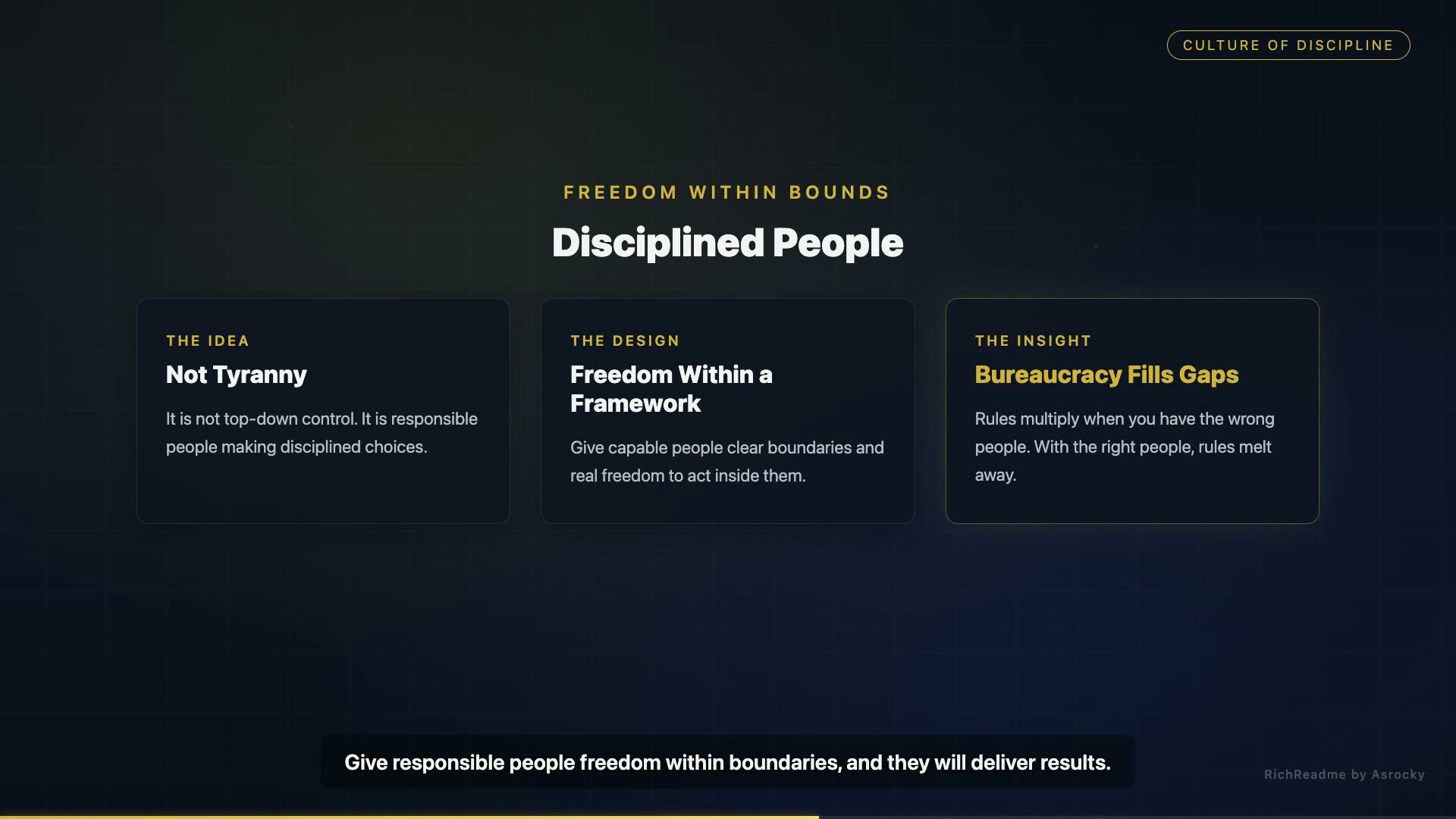
The next piece was a culture of discipline. This is not tyranny from the top. It is disciplined people who exercise disciplined choice inside a clear framework.
Give responsible people freedom within boundaries, and they will deliver results. Bureaucracy exists to compensate for the wrong people. When you have the right people on the bus, you do not need layers of rules watching them.
Technology Is a Tool
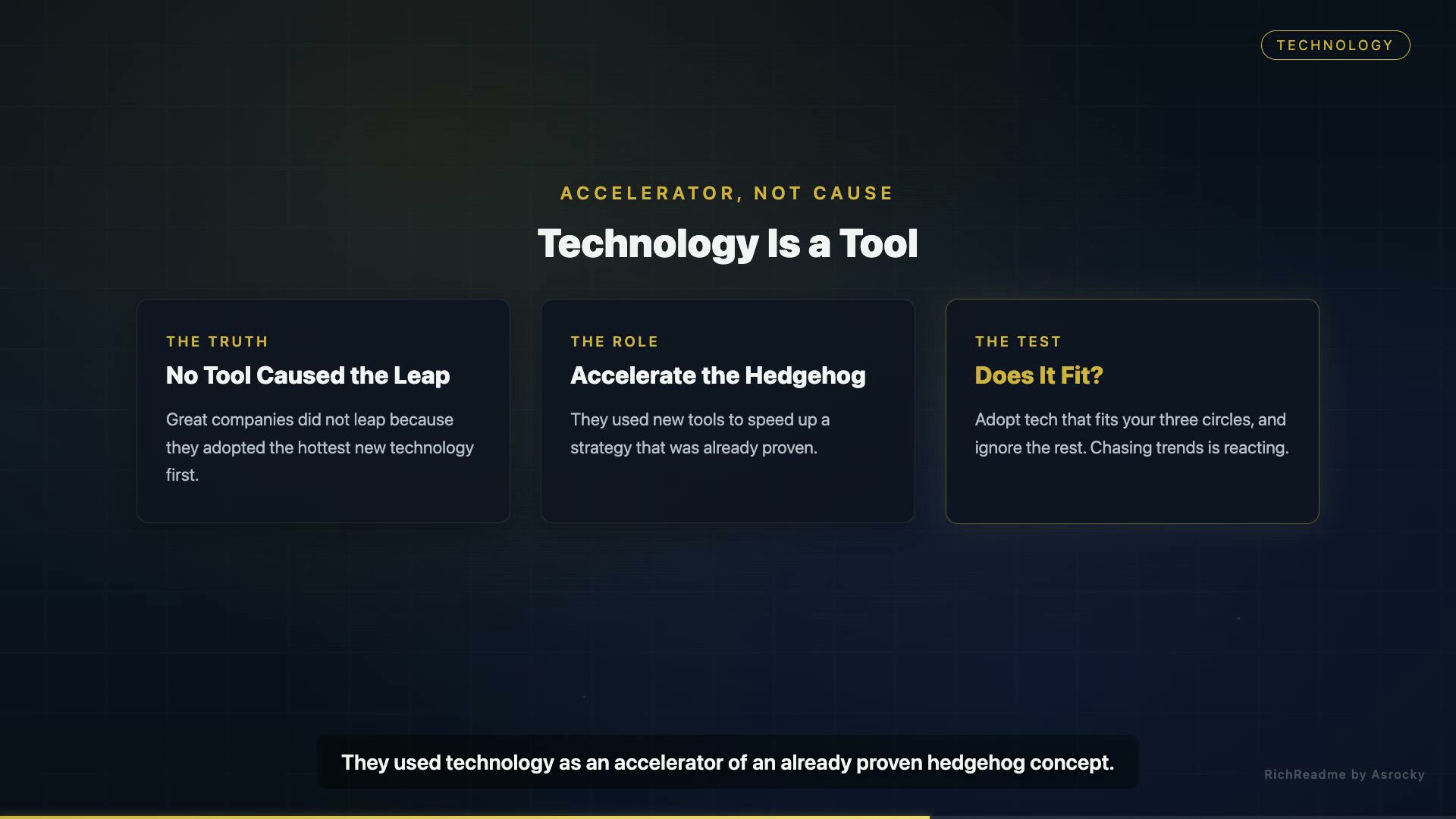
Technology was never the magic. Great companies did not leap forward because they adopted some trendy new tool first. They used technology as an accelerator of an already proven hedgehog concept.
Jump on new tools that fit your three circles, and ignore the rest. Companies that chase every technology trend are reacting to the market, not leading it.
Cumulative Momentum
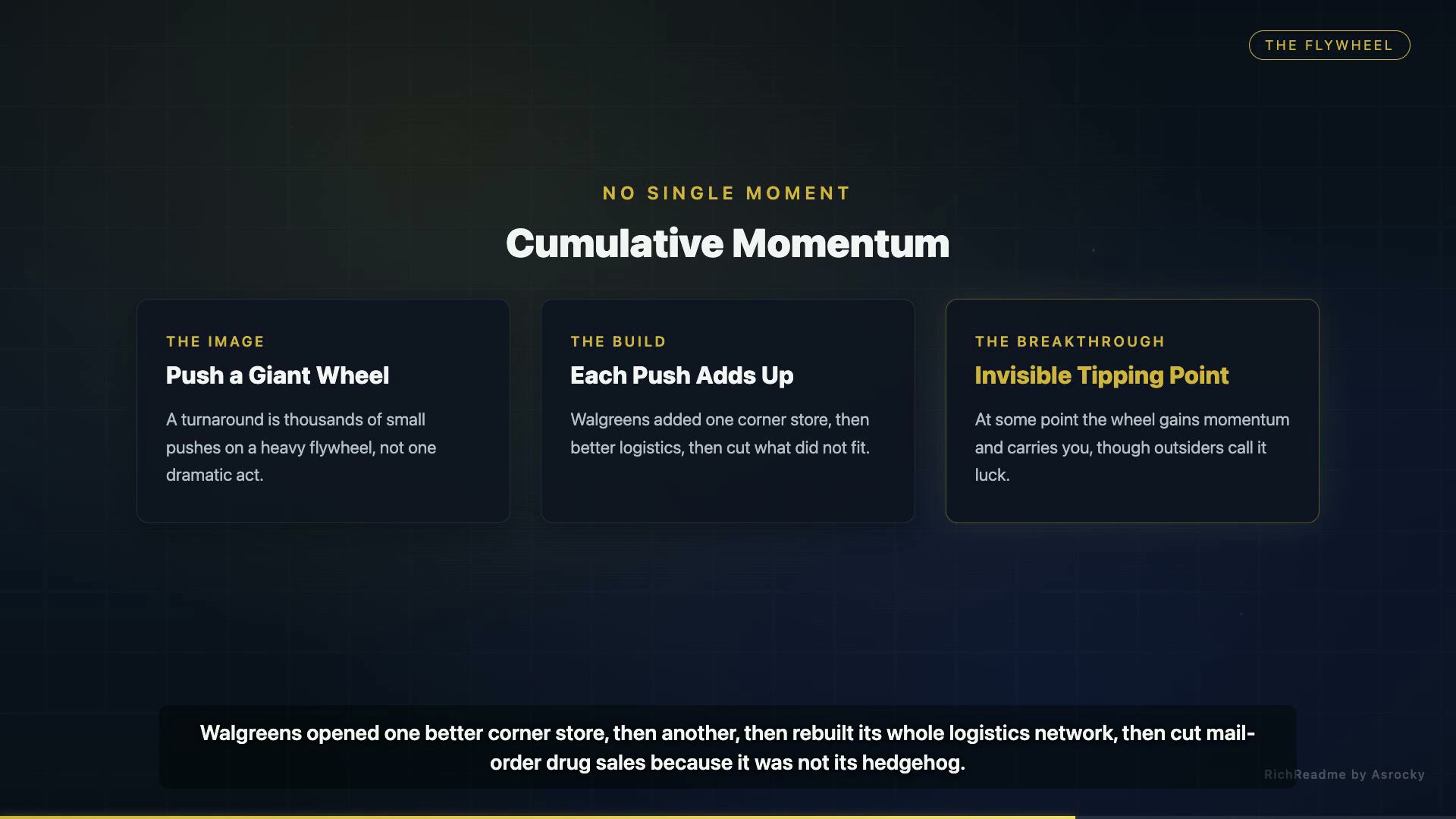
The hardest idea to grasp was the flywheel. There is no single decisive moment. A great turnaround looks, from the outside, like one big breakthrough, but from the inside it is thousands of small pushes on a giant heavy wheel. Each push adds a little momentum.
Walgreens opened one better corner store, then another, then rebuilt its whole logistics network, then cut mail-order drug sales because it was not its hedgehog. Then, at some invisible point, the wheel broke through and the spinning carried the whole company forward. People call it a sudden revolution, but it was years of quiet, consistent effort.
Spinning Backwards
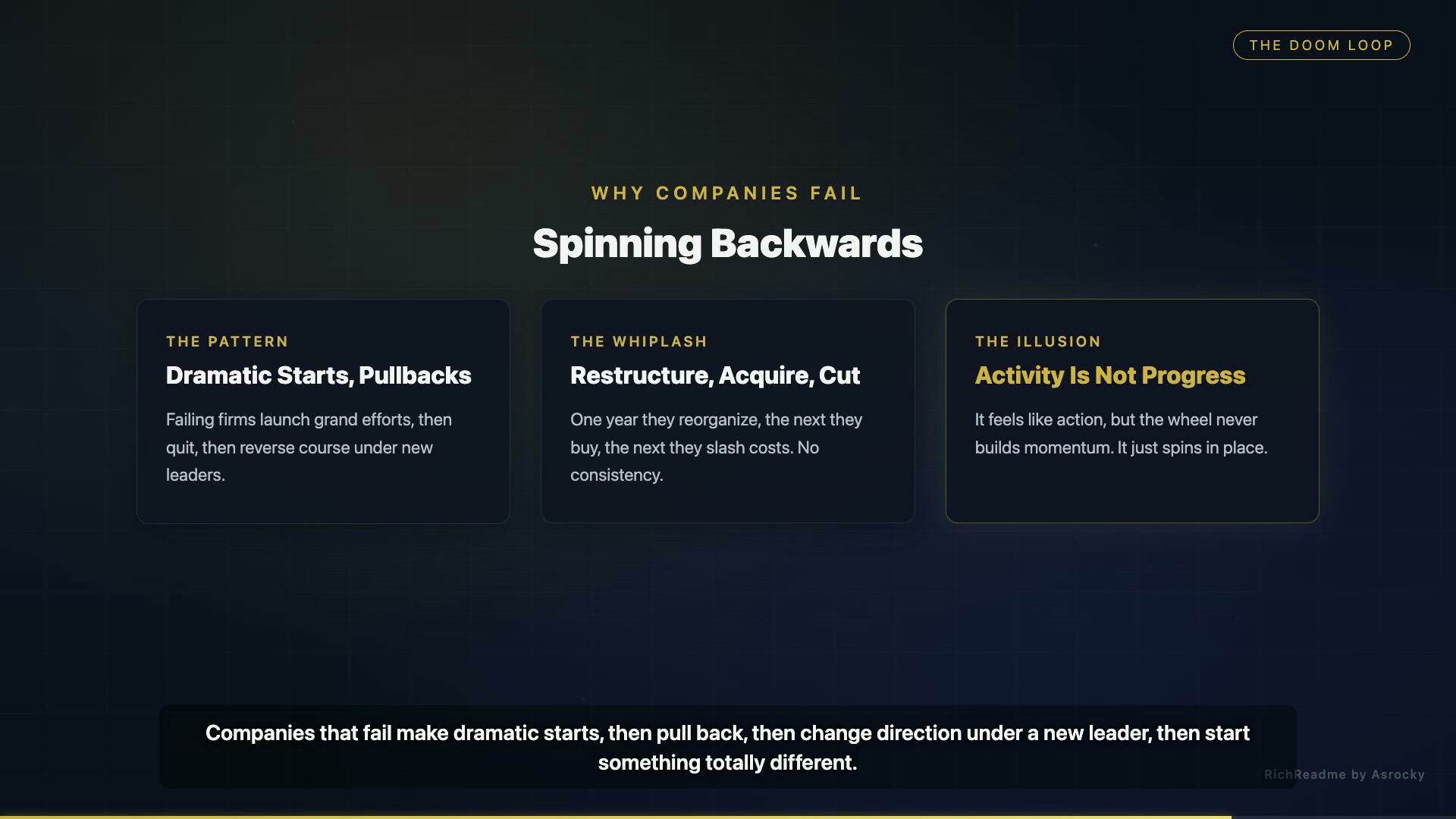
The opposite of the flywheel is the doom loop. Companies that fail make dramatic starts, then pull back, then change direction under a new leader, then start something totally different. They never build accumulated momentum.
One year they restructure, the next they acquire, the next they cut costs. It feels like action, but it is just spinning the wheel backward and forward.
A Thousand Small Choices
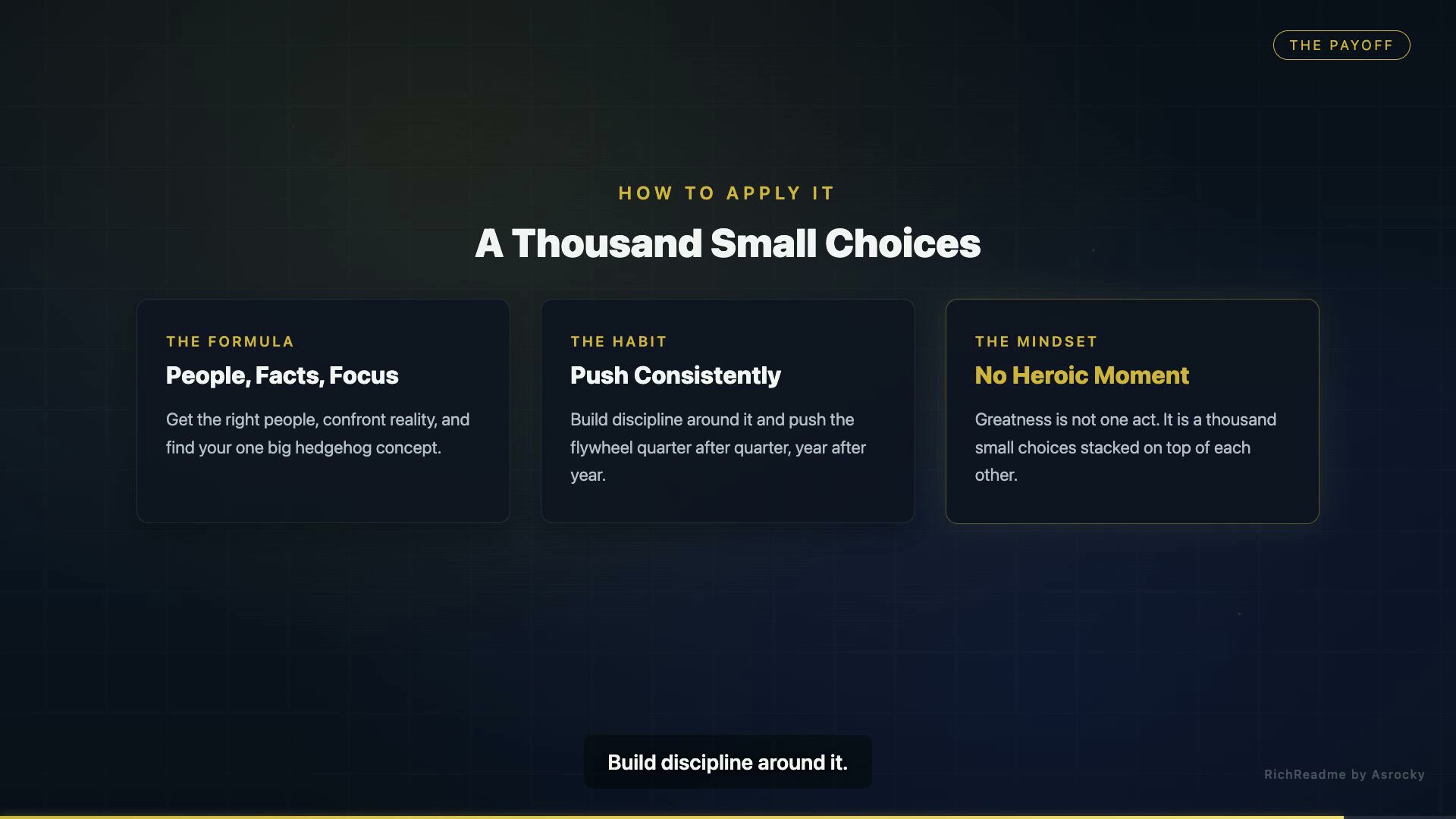
The practical takeaway is quiet and unglamorous. Get the right people on the bus. Confront what is really happening. Find your one big thing. Build discipline around it.
Push the flywheel consistently, quarter after quarter, year after year. Do not wait for a heroic moment. Greatness is not a single act. It is a thousand small choices stacked on top of each other.