What if the winners you admire are mostly lucky? Nassim Taleb says we keep mistaking randomness for skill, and it is costing us.
This is Fooled by Randomness by Nassim Nicholas Taleb. It is about the hidden role of luck in markets and in everyday life.
Why Traders Feel Like Geniuses
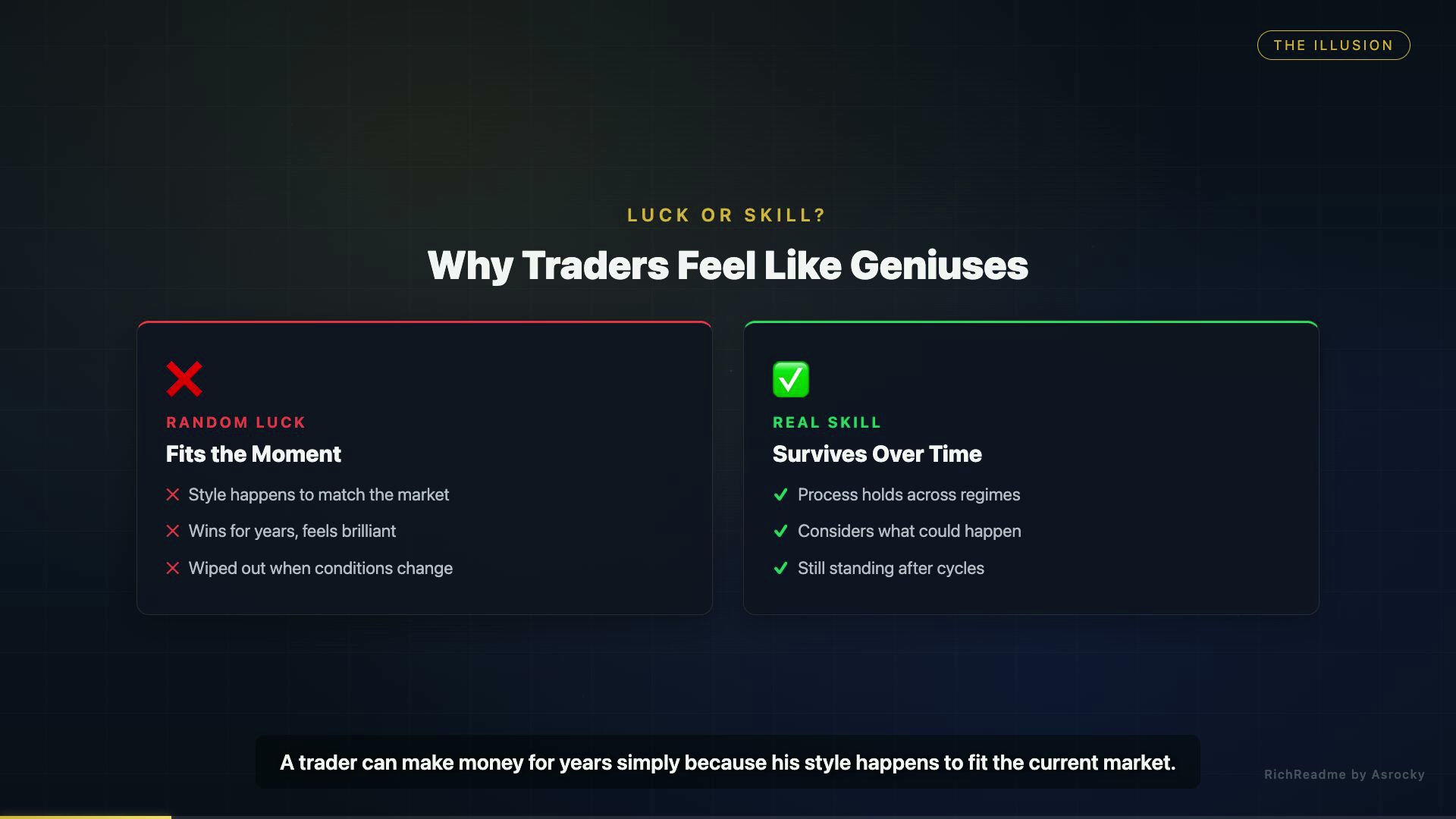
Taleb began his career as a trader, and he noticed something uncomfortable. A trader can make money for years simply because his style happens to fit the current market. He feels like a genius, and the whole world agrees.
Then the market changes and he is wiped out. Those profits were luck, but everyone, including him, mistook them for skill.
Ask What Could Have Happened
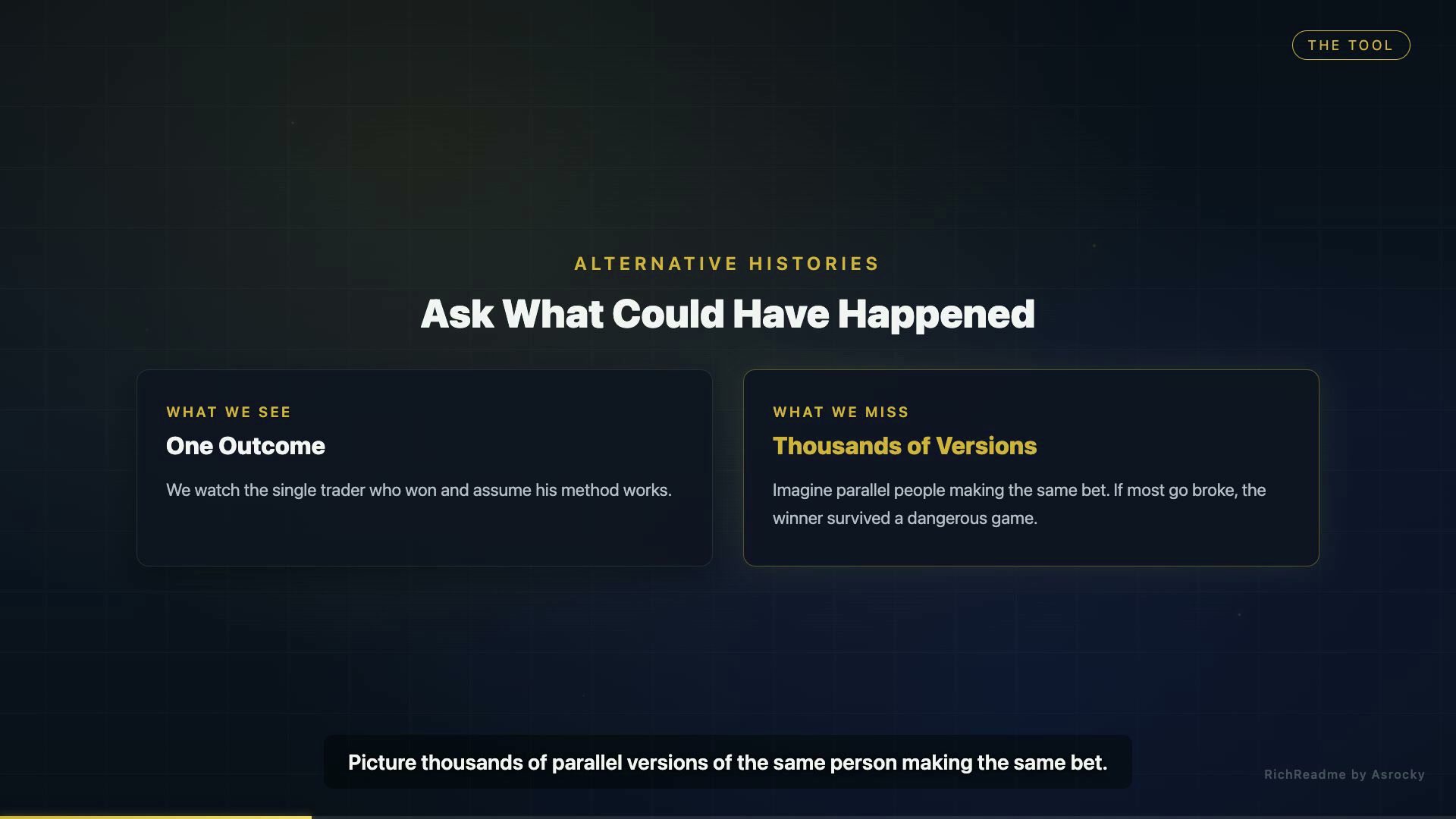
To see clearly, he imagines alternative histories. When a trader wins, he asks not just what happened, but what could have happened. Picture thousands of parallel versions of the same person making the same bet.
If most of those versions end up broke, the single winner in front of you is not skilled. He is simply the one survivor of a dangerous game.
The Bias
This is the problem of silent evidence. We study the winners and copy their habits, but we never see the thousands who did the exact same things and failed. Their stories stay silent.
A famous story about dropping out of college ignores the millions of dropouts who never made it. The visible winners quietly distort every lesson we learn.
We Invent Clean Stories
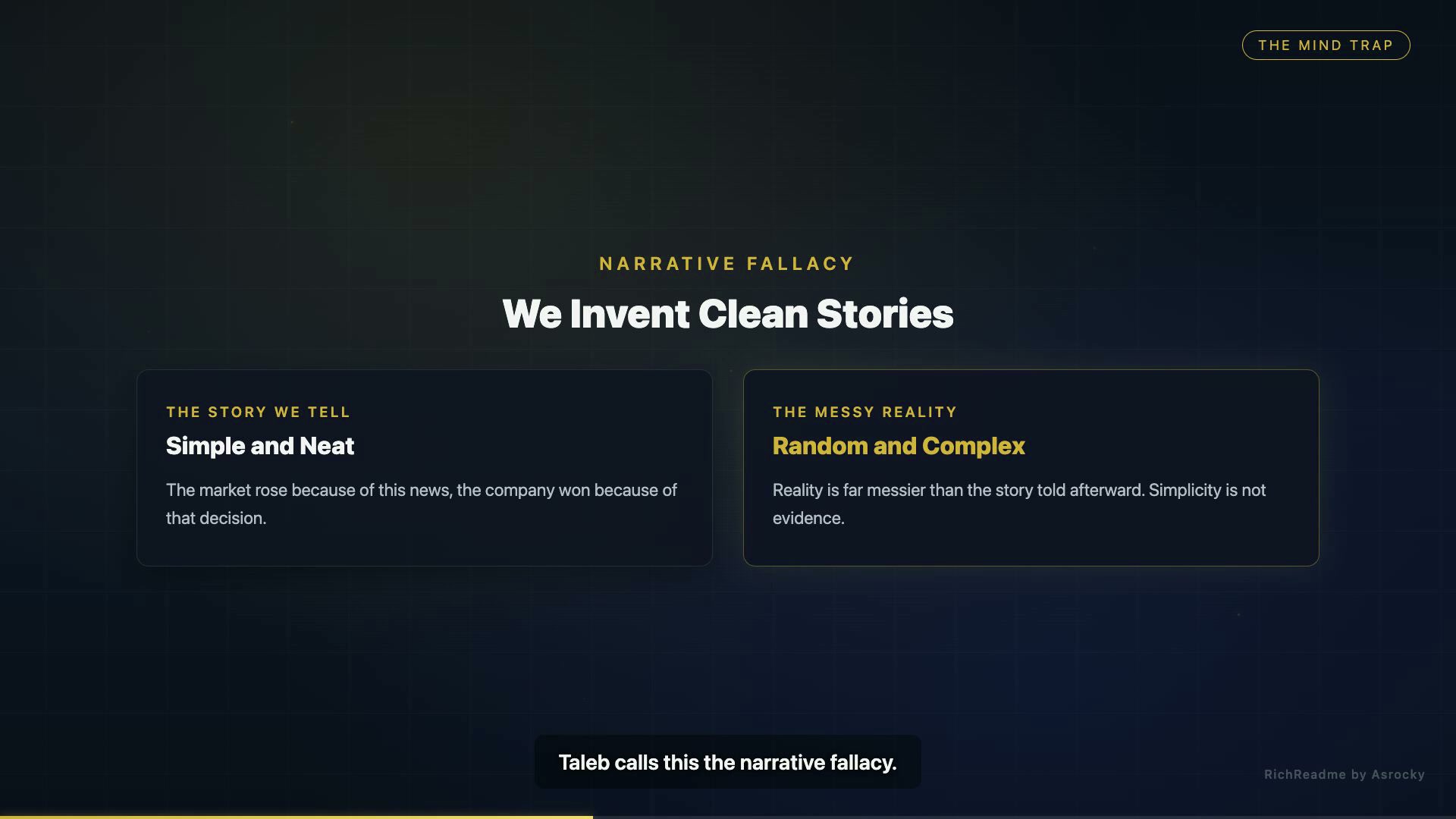
After the fact, the human mind builds a clean story. The market rose because of this news, the company won because of that decision. Taleb calls this the narrative fallacy.
Reality is far messier and far more random than the neat story we tell afterward. The story feels true because it is simple, but simplicity is not evidence.
Before vs. After the Event
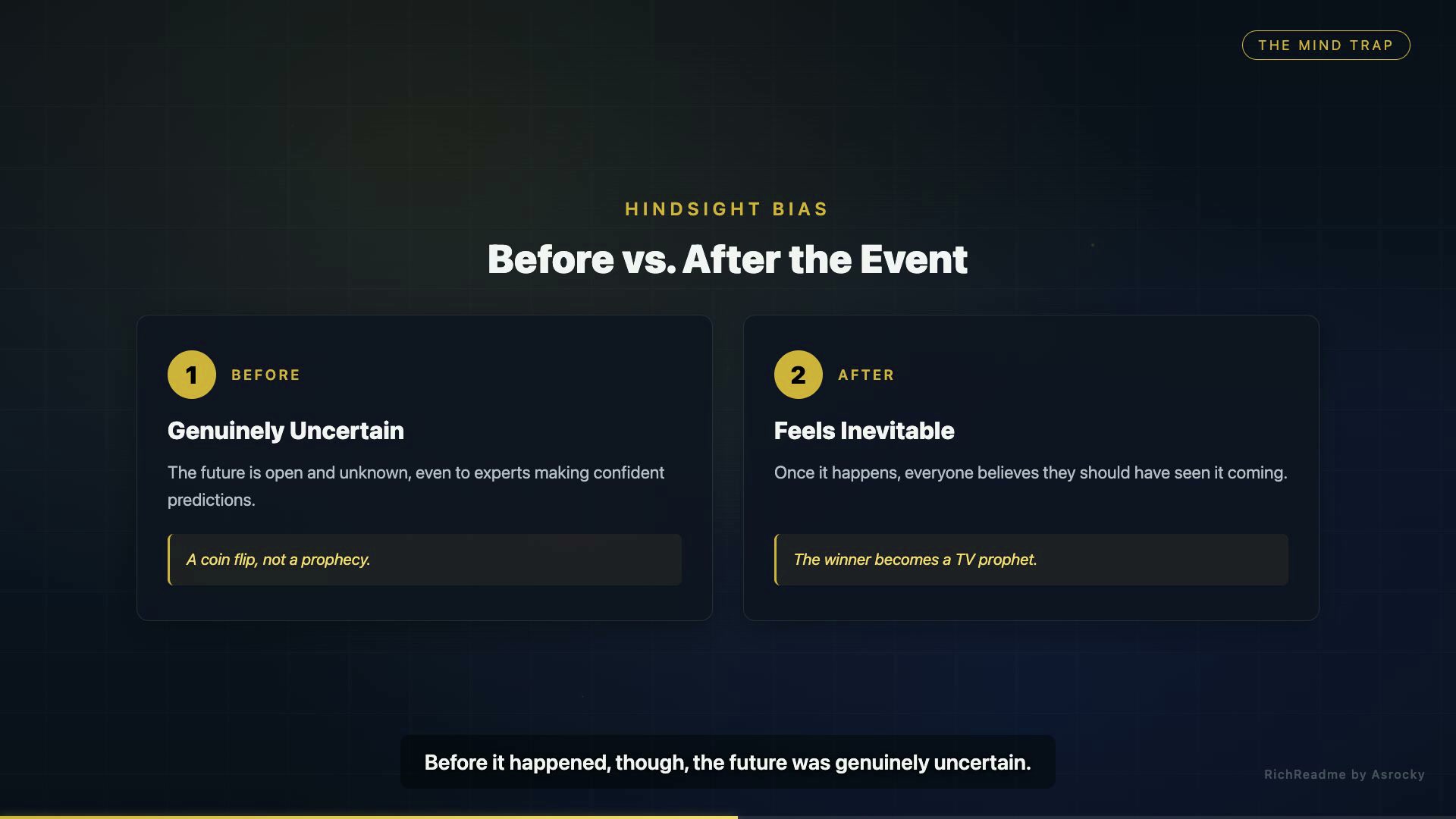
The hindsight bias makes it worse. Once an event happens, it feels inevitable, as if everyone should have seen it coming. Before it happened, though, the future was genuinely uncertain.
Traders who are right once become prophets on television, even when their prediction was little more than a coin flip. Even a long winning streak can still be pure chance.
Ruin Is Forever
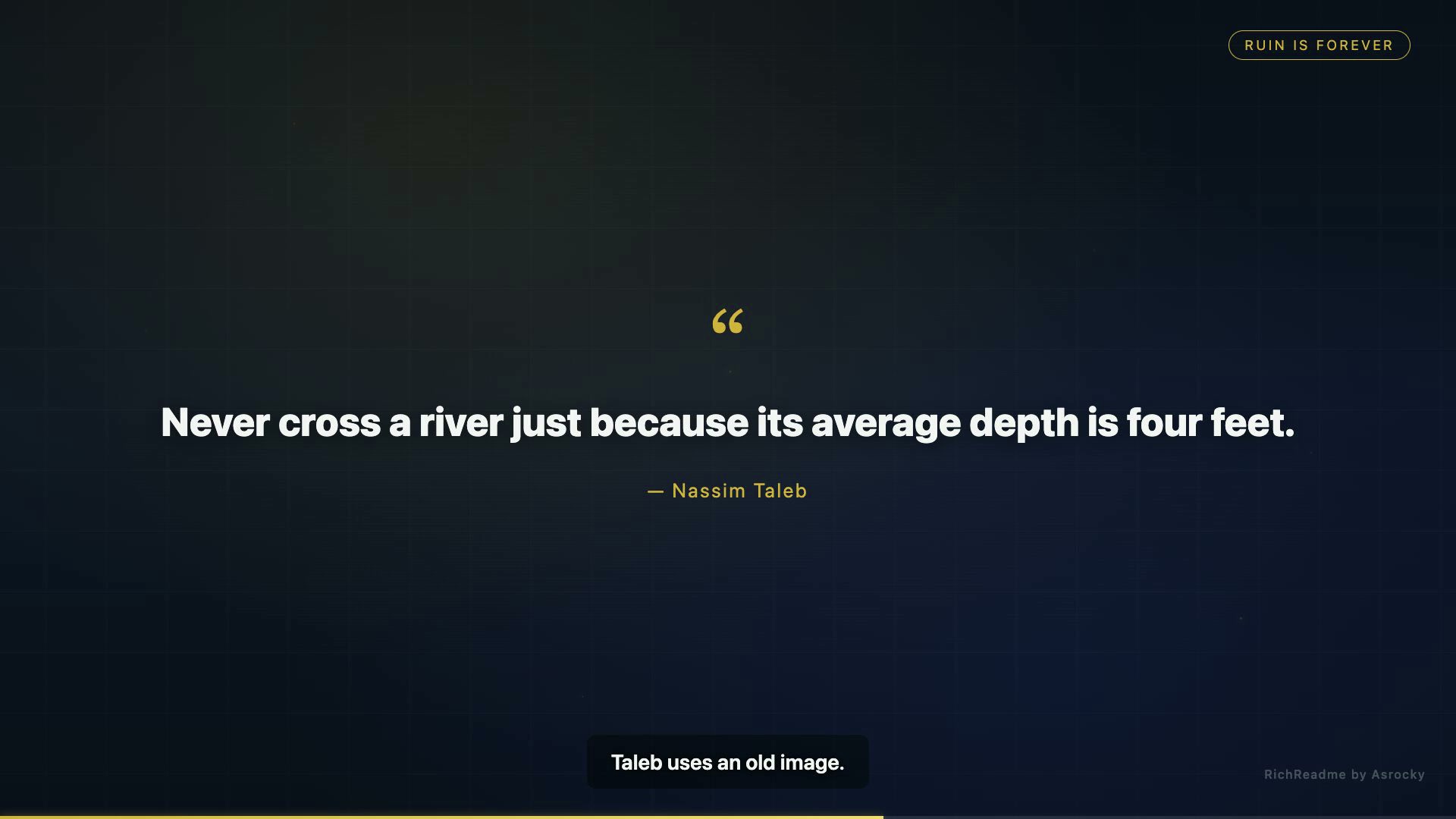
Some risks are different in kind, not just in degree. If a single bet can wipe you out completely, it does not matter how high its average return is. Taleb uses an old image.
Never cross a river just because its average depth is four feet. You can be right for many years and then be destroyed a single time. Survival always comes before everything else.
Check Less, Feel More Signal
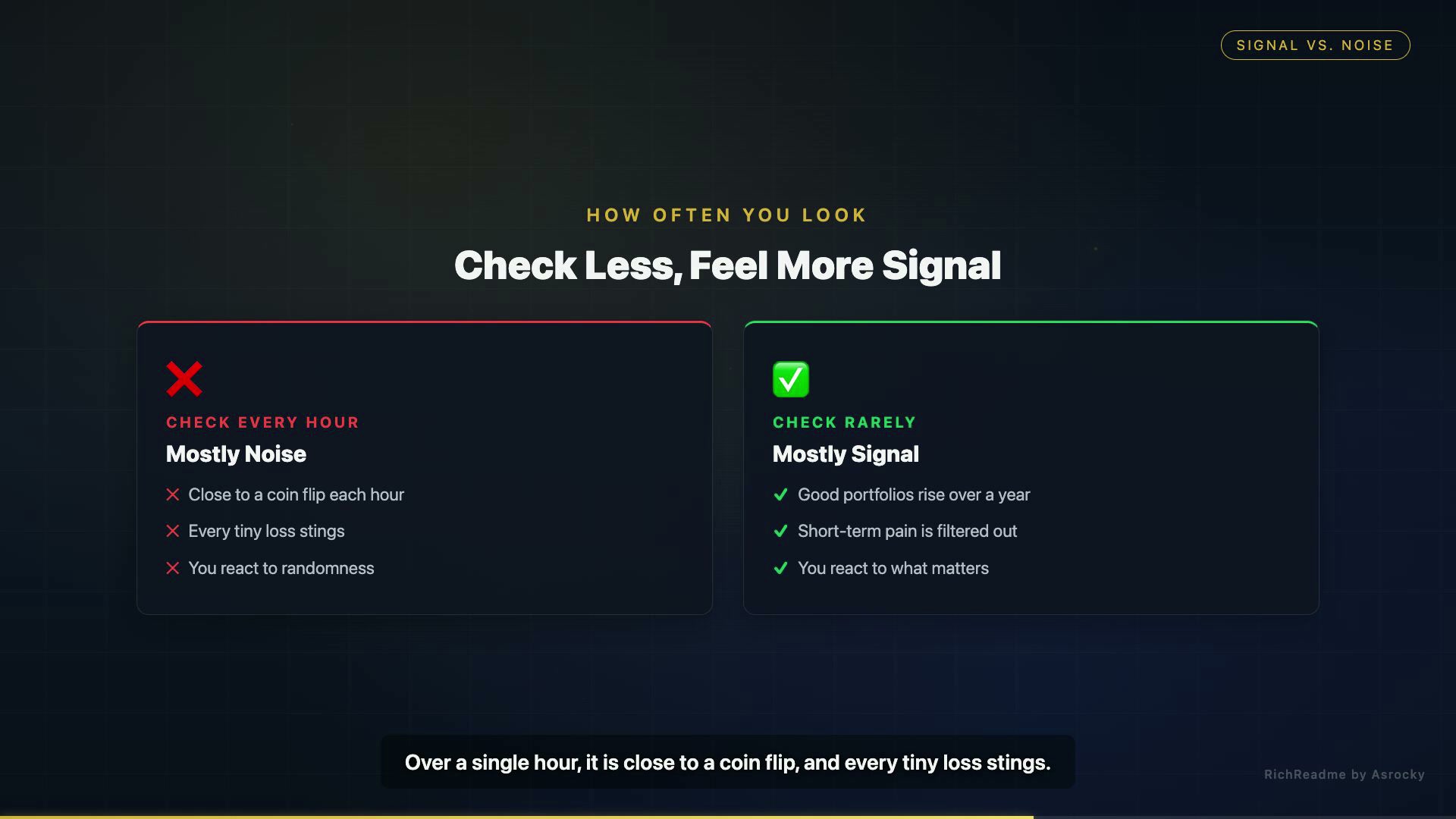
The way you check your results changes how much pain you feel. Over a full year, a good portfolio rises most of the time. Over a single hour, it is close to a coin flip, and every tiny loss stings.
The more often you look, the more random pain you absorb. Taleb suggests checking far less often, so that you react to real signal instead of meaningless noise.
Three Rules for a Random World
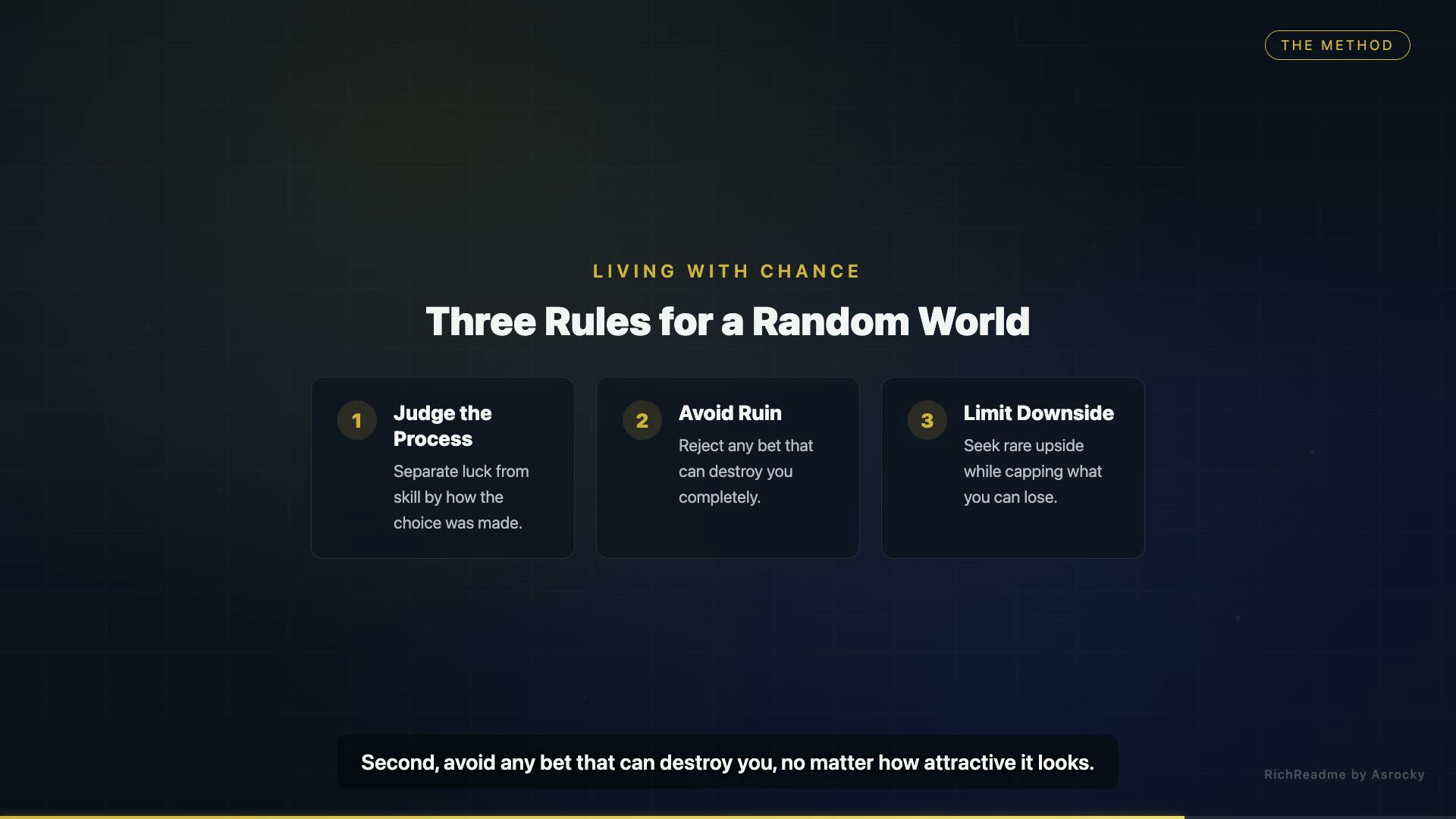
So how do you live with randomness? First, separate luck from skill by judging the process, not just the outcome. Second, avoid any bet that can destroy you, no matter how attractive it looks.
Third, position yourself to capture rare upside while firmly limiting your downside. You cannot predict randomness, but you can choose how exposed you are to it.
Judge the Decision, Not the Result
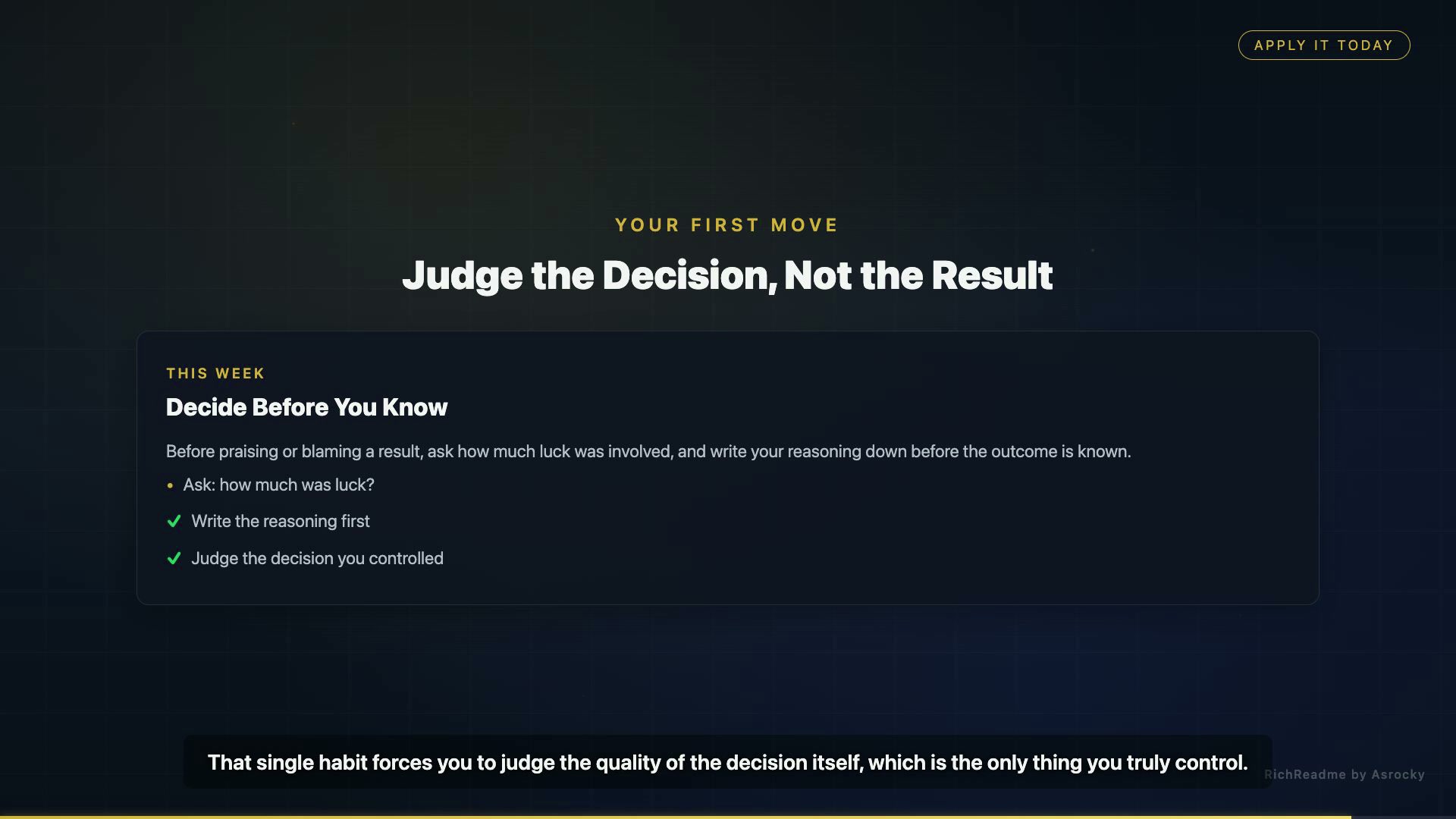
Apply this to your own decisions this week. Before you praise or blame yourself for a result, ask how much luck was involved. Write down the reasoning behind an important choice before you know how it turns out. That single habit forces you to judge the quality of the decision itself, which is the only thing you truly control.
If this changed how you see success and luck, hit like and subscribe. The full book is linked below. Congratulations on finishing this book!
📖 Want the full book?
Get Fooled by Randomness on AmazonDisclosure: This post contains affiliate links. If you buy through them, I earn a small commission at no extra cost to you.