You earn good money. So why are you always broke? The math says you should be rich. What are millions of people missing?
This is Financial Peace Revisited by Dave Ramsey, the bestselling plan that has pulled millions of families out of debt and onto a path to real wealth.
The Banks Take the Umbrella Back

Ramsey learned the hard way. In his twenties, he had bought up real estate and looked like a millionaire. Then the banks changed the rules overnight, called his loans, and at twenty-eight he was bankrupt.
He learned the cold truth that banks do not love you back. They lend you an umbrella when the sun shines and demand it back the moment it rains.
Live Now, Pay Later = Forever Working
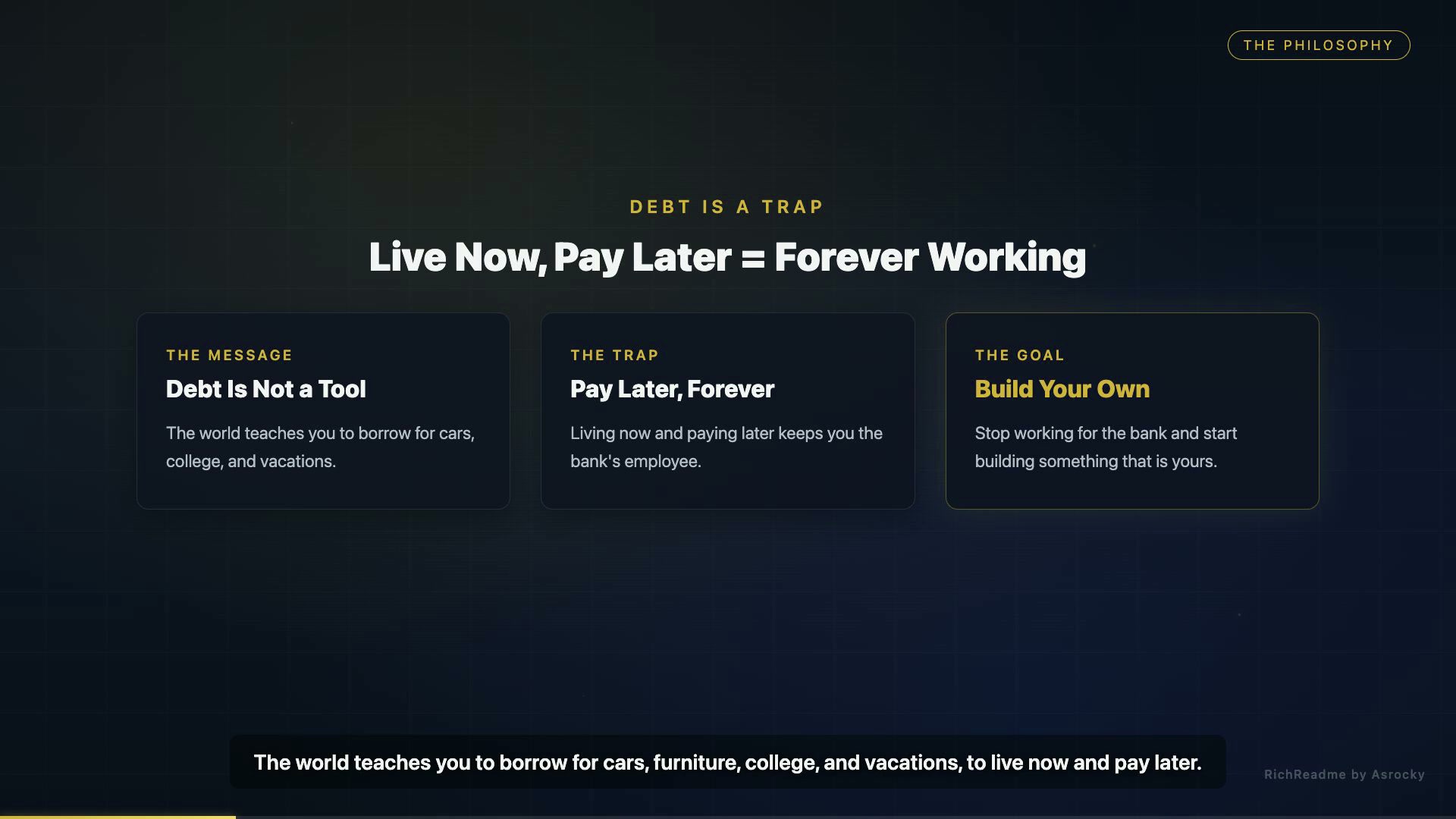
That crash became his mission. His message is simple and almost old fashioned. Debt is not a tool.
It is a trap. The world teaches you to borrow for cars, furniture, college, and vacations, to live now and pay later. Ramsey says that way of living keeps you working for the bank, never building anything of your own.
The Car and the Card

He attacks the idea of good debt. A car loan, he says, is not normal. A new car loses thousands the moment you drive it home, and you pay interest on top of the loss.
Credit cards are worse. The minimum payment is designed so you pay forever. Every month you owe someone else, a little more of your future paycheck is already spoken for.
Interest Is a Leak

The numbers make the pain obvious. Carry a credit card balance at twenty percent interest and the interest alone can cost more than the thing you bought. Buy a twenty thousand dollar car on a loan and by the time it is paid off, you have handed the bank far more than the car was ever worth. Debt turns things you wanted into things that own you.
Give Every Dollar a Job
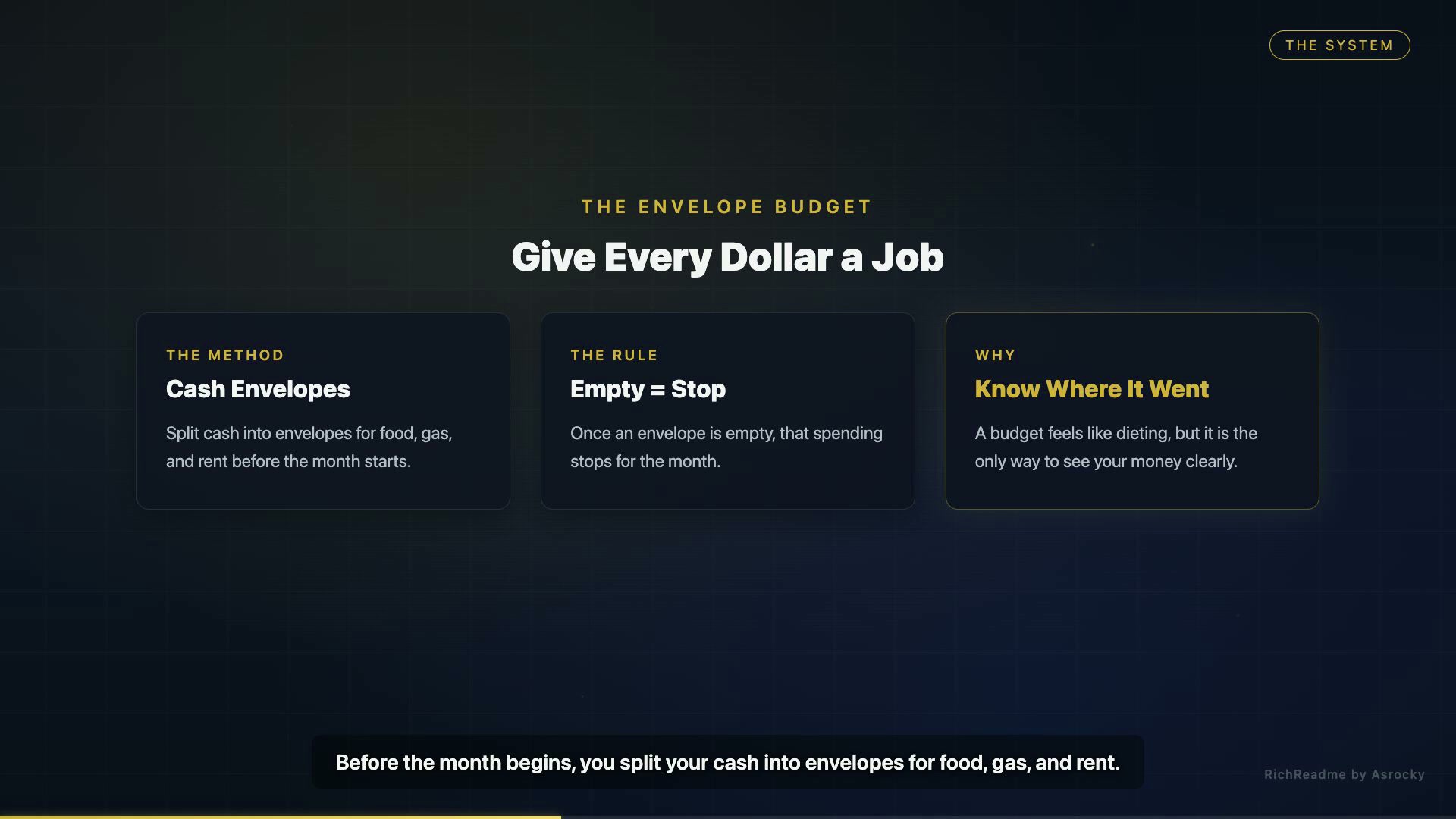
So the first habit is a budget. Ramsey teaches the envelope system. Before the month begins, you split your cash into envelopes for food, gas, and rent. Once an envelope is empty, spending stops.
Every dollar gets a job on paper before it ever reaches your pocket. No budget feels like dieting. It is the only way to know where the money actually went.
The Snowball
Then comes getting out of debt, and here Ramsey breaks with the math professors. Most experts say pay off the loan with the highest interest first. Ramsey says pay off the smallest balance first.
He calls it the debt snowball. He knows the interest math, but he argues that money behavior is emotional, not logical. A tiny win, a debt completely gone, gives people the hope and momentum to keep going.
Survive, Then Build, Then Give
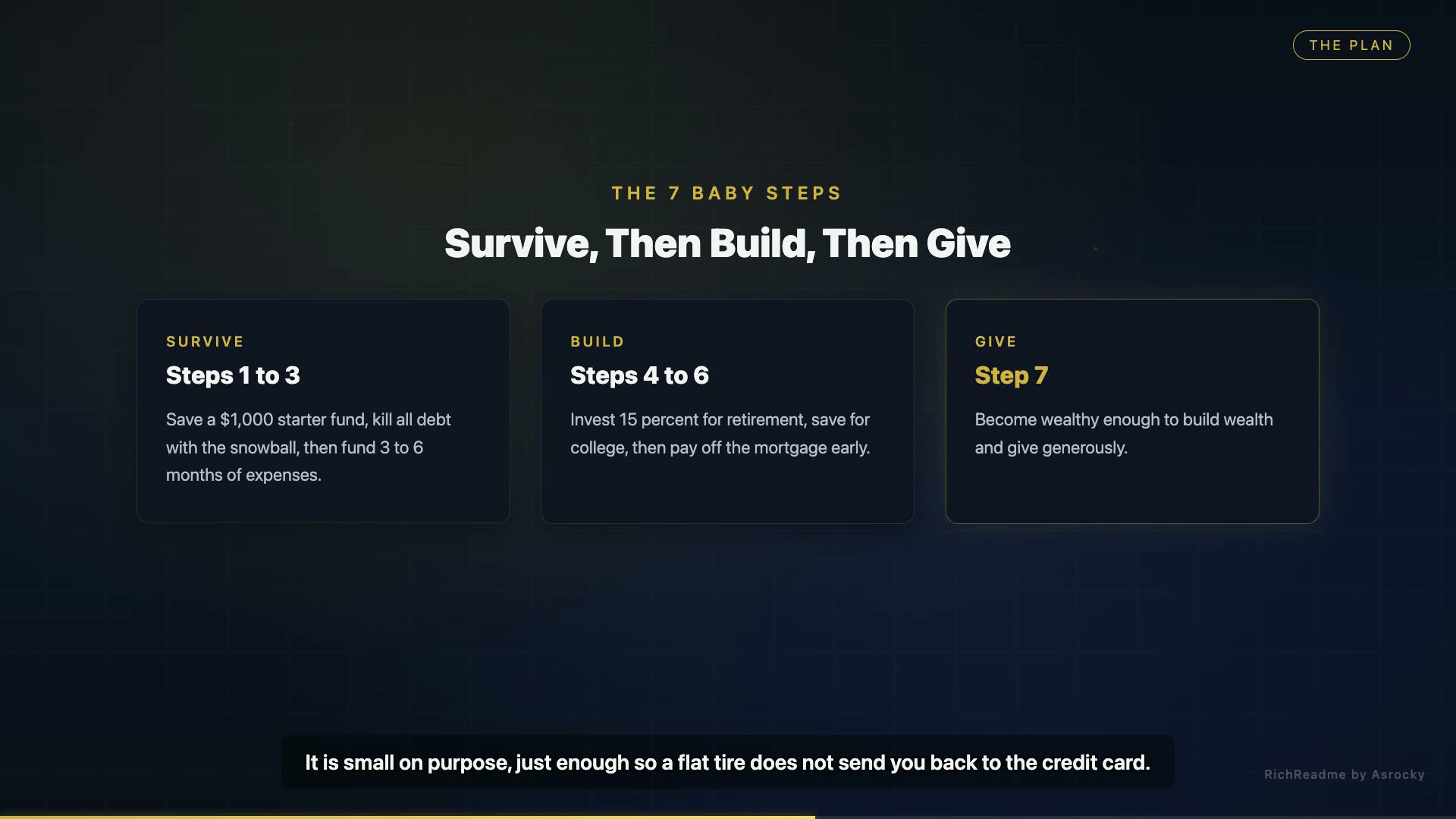
That momentum follows seven ordered baby steps. Step one is saving a starter emergency fund of one thousand dollars. It is small on purpose, just enough so a flat tire does not send you back to the credit card.
Step two is paying off every debt except the house, using the snowball. Step three is building a real emergency fund of three to six months of expenses.
Ordinary Workers Become Millionaires

After that, the money flips from survival to building. Step four is investing fifteen percent of your household income in retirement. Step five is saving for your children's college. Step six is paying off your mortgage early, the biggest debt of all. And step seven is the goal, becoming wealthy enough to build and give generously.
Ramsey is not anti-wealth. He is anti working yourself to death for someone else. Once the debt is gone and the emergency fund is full, he pushes people to invest steadily in diversified mutual funds, not to gamble on hot tips. Slow, boring, consistent investing is how ordinary workers quietly become millionaires.
The Mindset
The line that runs through the whole book is this. Live like no one else is willing to live now, so that later you can live like no one else can. Most people want to look rich today, buying clothes and cars they cannot afford.
Ramsey says delay that reward. Sacrifice on purpose for a few years, and you escape the lifelong treadmill of payments.
Money Stress Is Family Stress
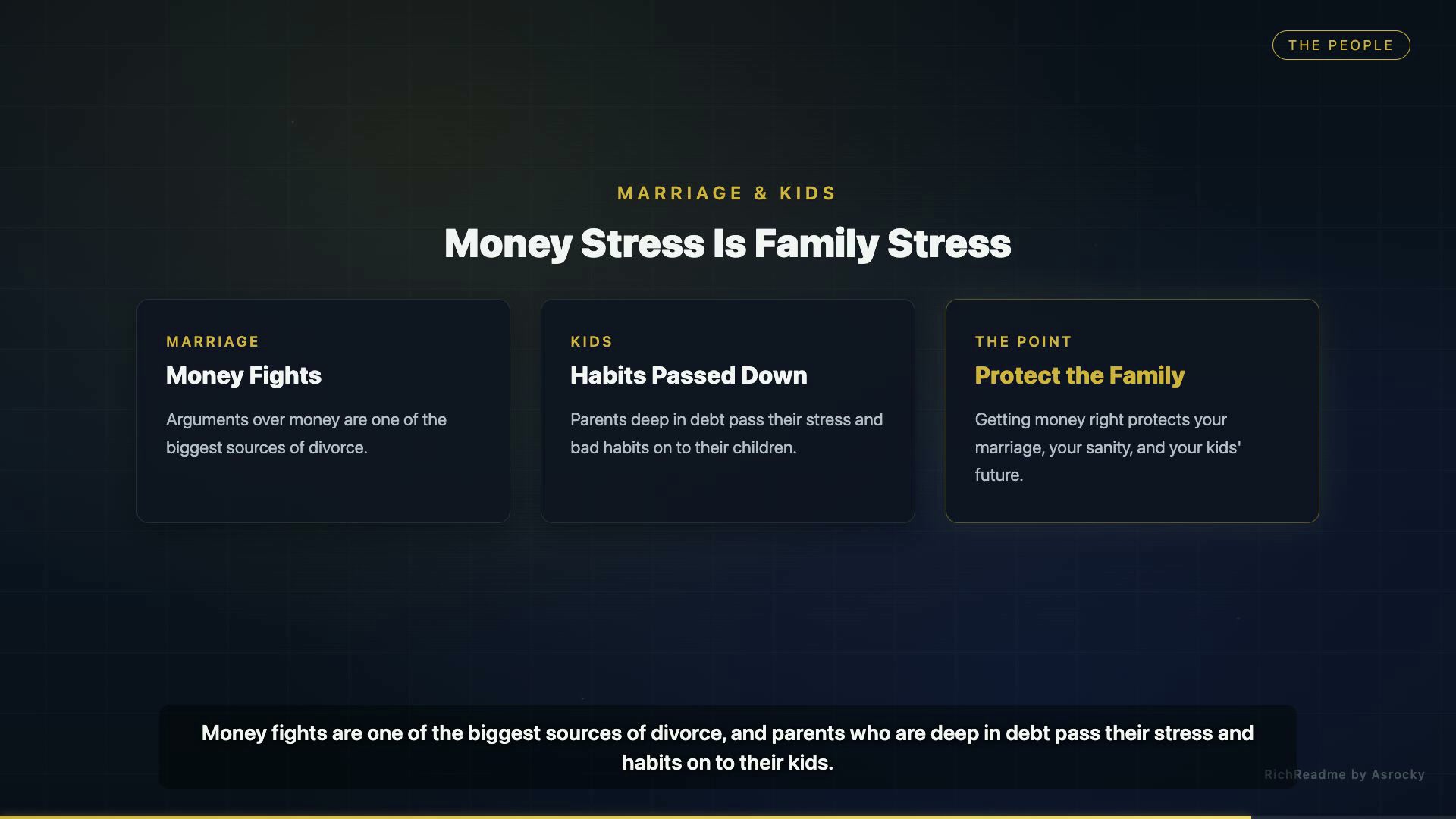
He also stresses the human side. Money fights are one of the biggest sources of divorce, and parents who are deep in debt pass their stress and habits on to their kids. Getting your money straight is not just about numbers. It is about protecting your marriage, your sanity, and your family's future.
Do What Others Won't, for a While

The core takeaway is within reach of almost anyone. Stop borrowing, tell your money where to go, attack your smallest debt first, and protect your emergency fund. Wealth is not about a huge salary. It is about doing what most people won't, for a little while, so you can do what most people can't, for the rest of your life.