At twenty-four he had two dollars and twenty-six cents. By thirty, he was a millionaire. It was not a hot stock.
This is Financial Freedom, by Grant Sabatier, who rebuilt his net worth from nothing to over one million dollars in five years. His argument is that the traditional retirement plan, work for forty years, save ten percent, and hope, is slow and fragile. You can compress that timeline by leaning harder on income, savings rate, and smart investing.
Wealth Buys Choice
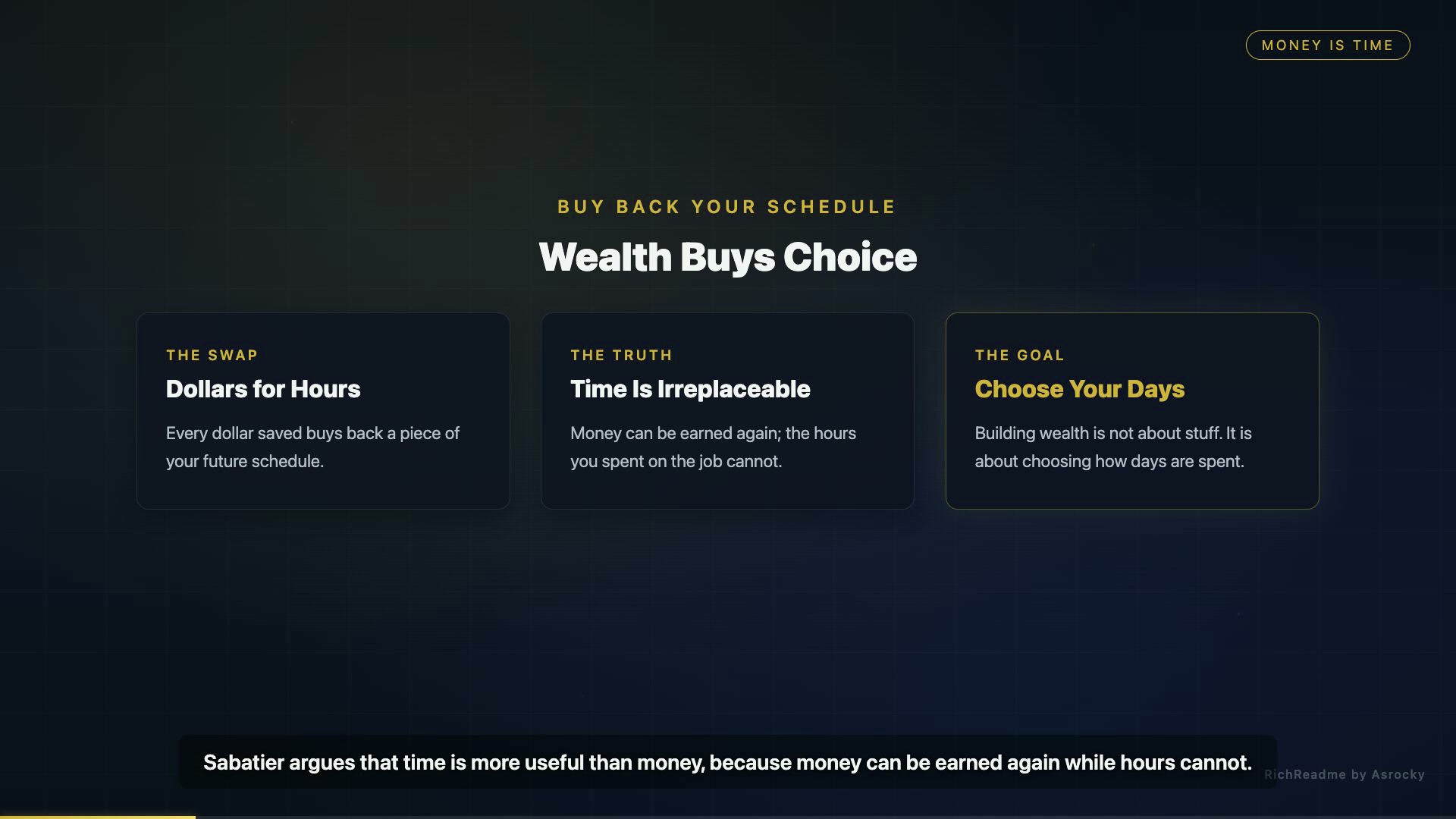
The first idea is that money is freedom, and freedom is measured in time. Every dollar you save is a dollar that buys you back a piece of your future schedule. Sabatier argues that time is more useful than money, because money can be earned again while hours cannot.
The whole point of building wealth is not to buy things. It is to buy the ability to choose how your days are spent.
Know What You Need

Before anything else, you have to calculate your number. Your FI number is roughly your annual spending multiplied by twenty-five, the nest egg that lets you withdraw four percent a year without running out. If you spend forty thousand a year, you need about a million.
If you spend sixty thousand, you need one and a half million. Most people assume the number is enormous. Sabatier shows that once you know exactly what you spend, and cut the stuff you do not care about, the number is usually far lower than the fantasy version in your head.
Climb the Staircase
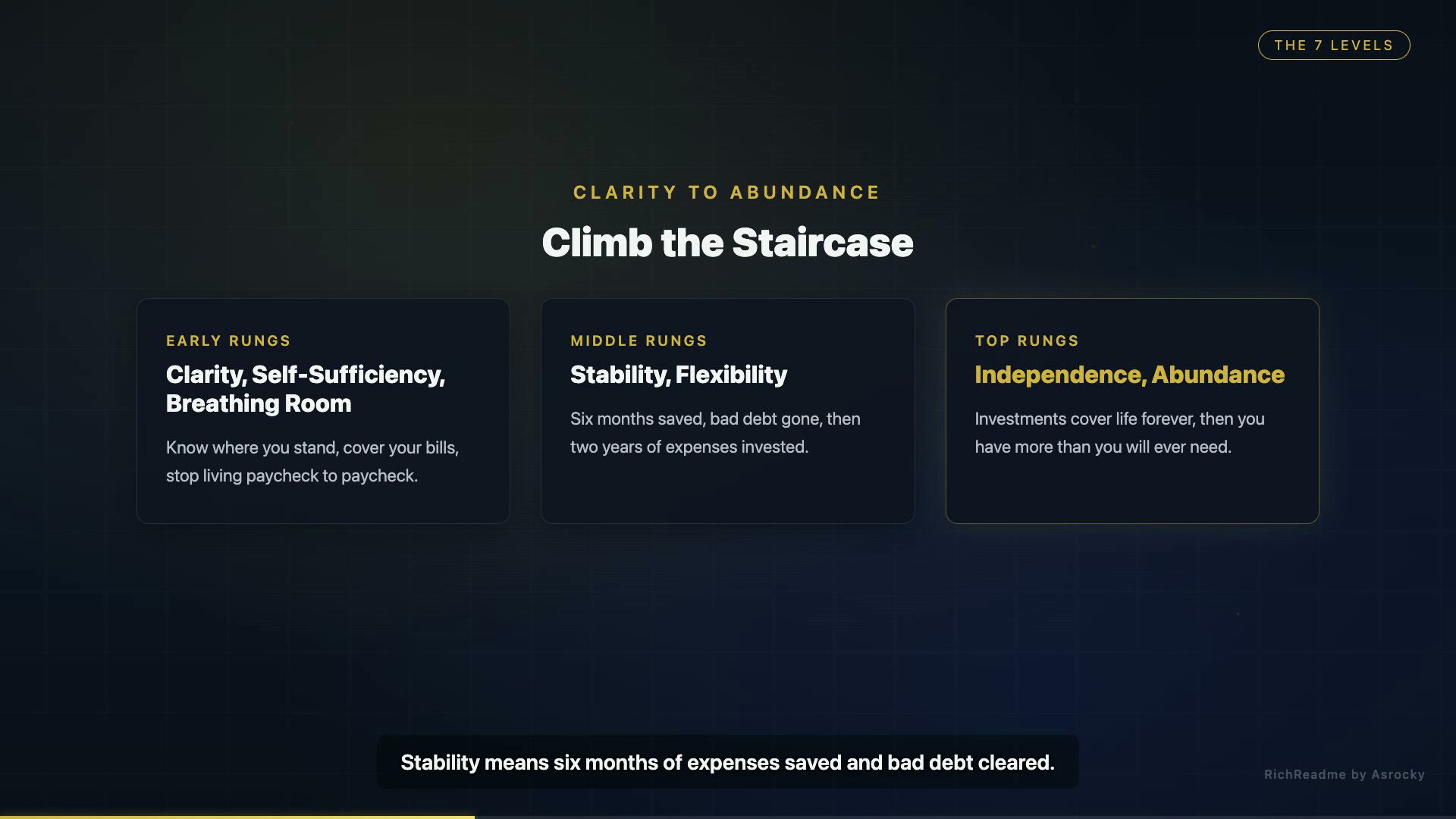
He then breaks financial freedom into seven levels. Clarity is knowing where you stand. Self-sufficiency means covering your own bills. Breathing room means you are no longer paycheck to paycheck.
Stability means six months of expenses saved and bad debt cleared. Flexibility means two years of expenses invested. Financial independence means your investments cover life forever. Abundant wealth means you have more than you will ever need.
Save More, Retire Earlier
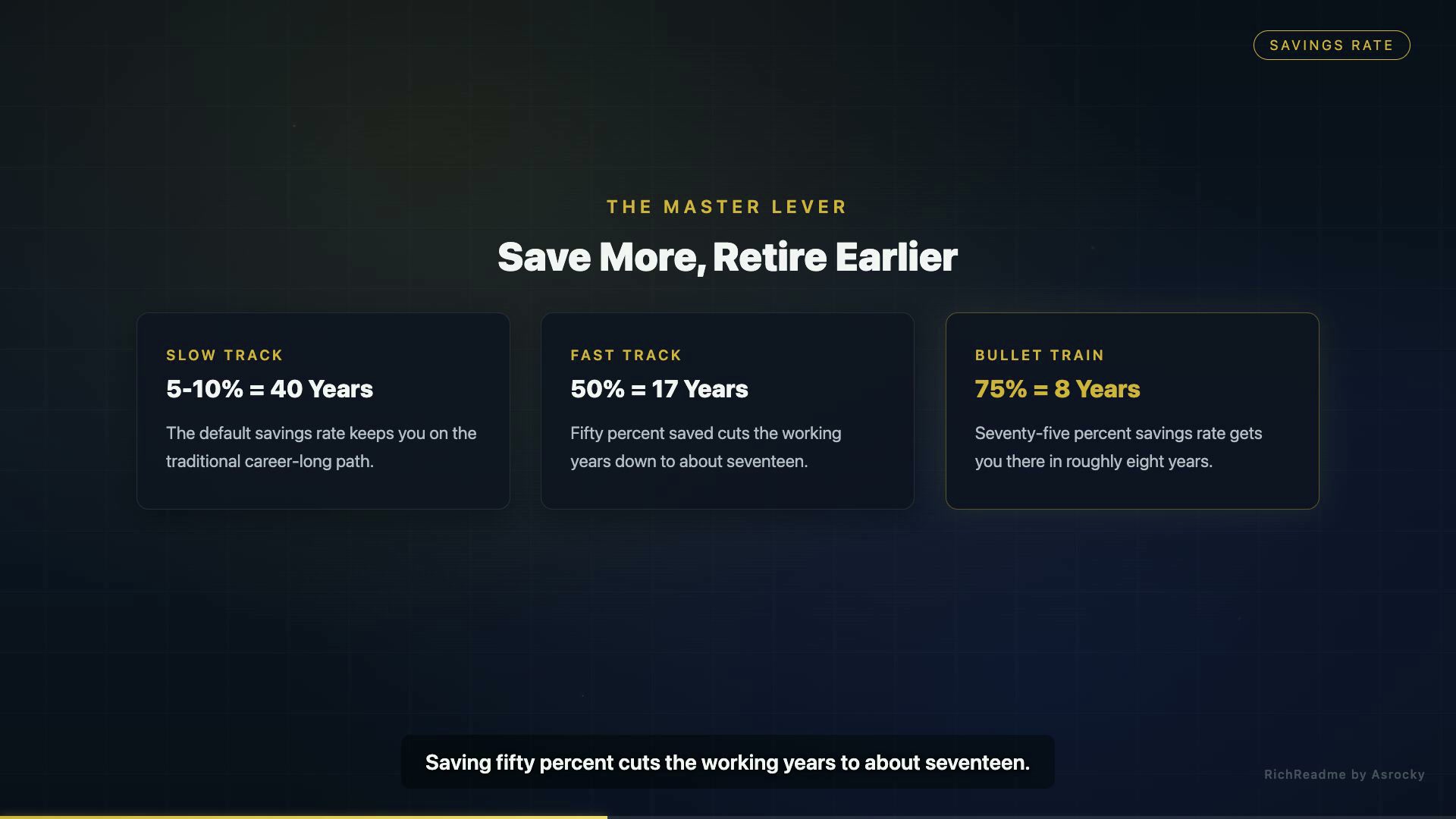
The lever that changes everything is the savings rate. Sabatier says saving five or ten percent keeps you on the traditional forty-year track. Saving fifty percent cuts the working years to about seventeen.
Saving seventy-five percent gets you there in roughly eight years. Every extra point you save shaves years off your career, which is why he pushes savings rate harder than frugality tips or fancy returns.
Stop Skipping Lattes
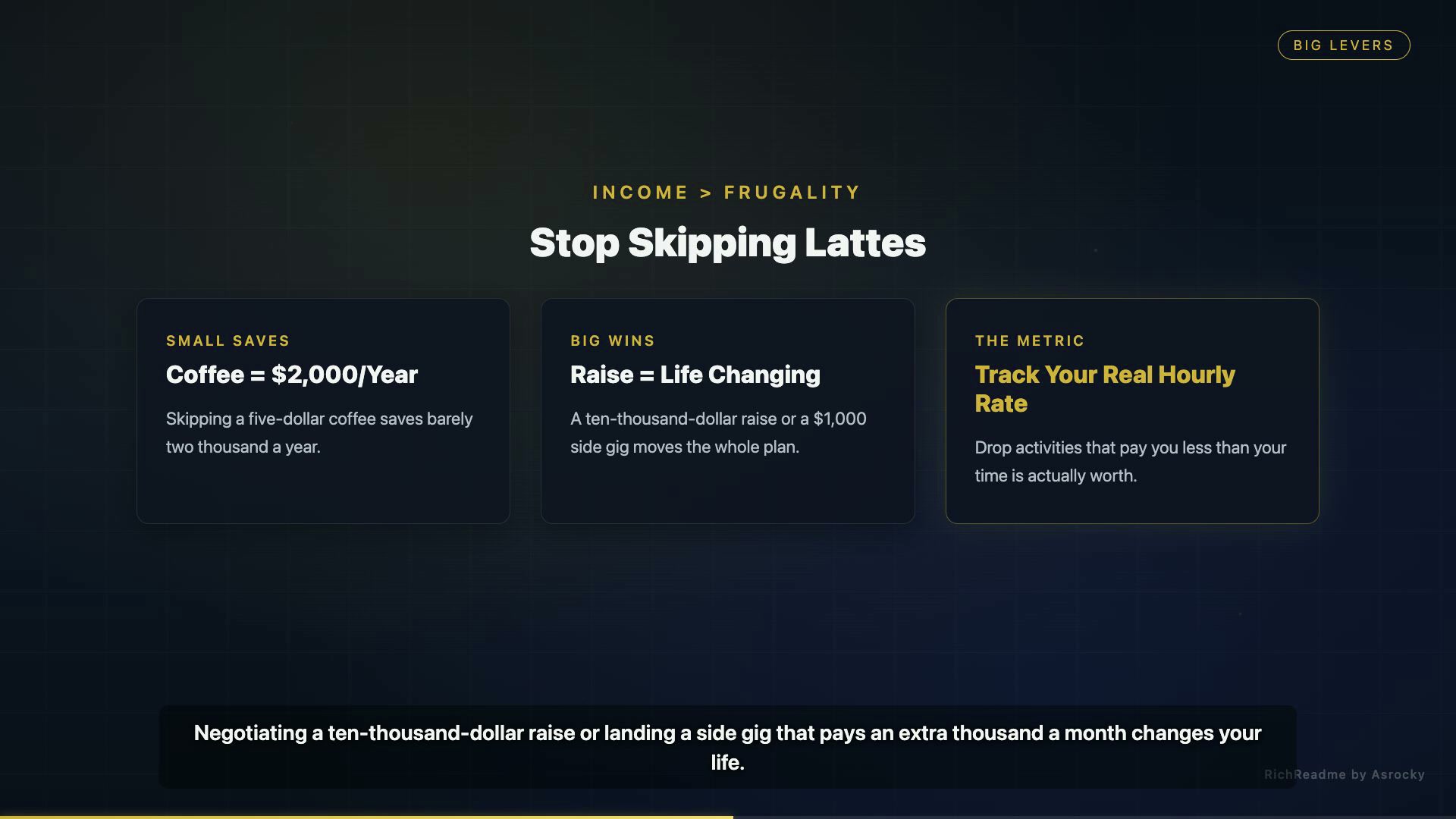
To raise that rate, he tells you to stop obsessing over small budgets. Skipping a five-dollar coffee saves you maybe two thousand a year. Negotiating a ten-thousand-dollar raise or landing a side gig that pays an extra thousand a month changes your life.
The biggest use is on the income side, not the shopping-cart side. Track your real hourly rate across every activity, and drop the ones that pay you less than your time is worth.
Treat Work As a Launchpad

Your nine-to-five is a launchpad, not a prison. Sabatier says to treat your job as a salary plus benefits plus training ground. Negotiate for remote days, learn skills your company pays for, network internally, and leave the moment your market value stops growing.
Many people wait until they hate their job to look. The right time to job hunt is while you are already employed and calm.
Build Income That Scales

Next, build a side hustle that scales. Driving for Uber pays by the hour and caps your income, because the moment you stop driving, the money stops. Building a website, flipping domain names, freelancing a skill, or selling a digital product can make money while you sleep.
The best side hustles sit where demand is high and competition is low, and they grow into passive income streams over time. One stream is a bonus. Several streams are what give you the courage to quit, because no single employer can take your options away.
Tax-Efficient and Low-Cost

When you invest, keep it boring and tax-efficient. Sabatier's seven-step plan starts by separating short-term and long-term money, then maxes out tax-advantaged accounts like your 401(k) and IRA before touching a taxable account. Fees matter more than you think.
A fund charging one percent a year can eat away a quarter of your final nest egg over decades, so low-cost index funds win by default. He does not recommend timing the market or picking hot stocks. He recommends setting up automatic contributions, raising them every time you get a raise, and leaving the account alone.
Years of Intensity, Decades of Choice
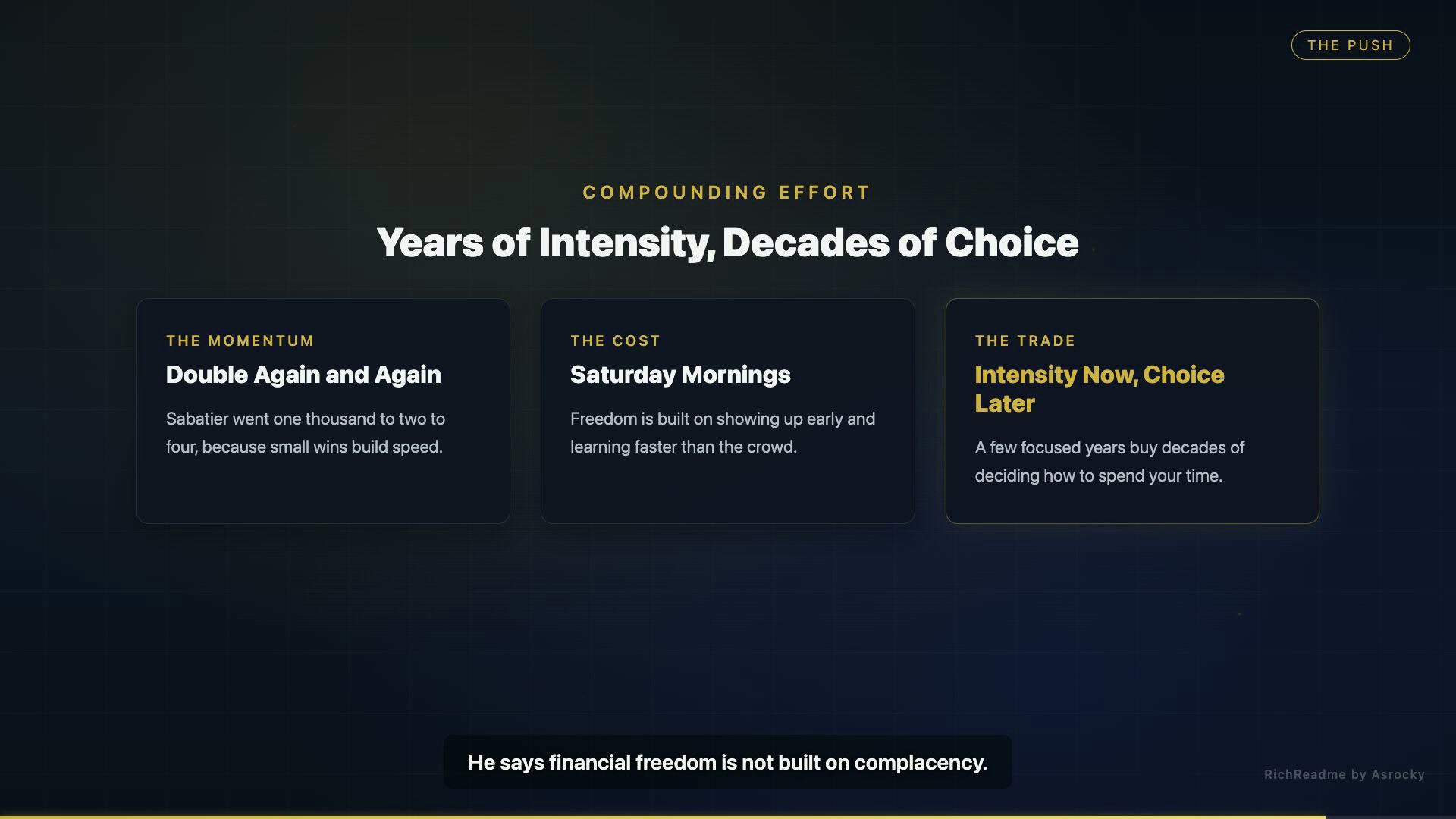
The final principle is to push without burning out. Sabatier doubled his money again and again, from one thousand to two thousand to four, because small wins build momentum. He says financial freedom is not built on complacency.
It is built on showing up on Saturday mornings, learning faster, and taking calculated risks. The tradeoff is years of intensity now, in exchange for decades of choice later.