Are you busy all day, but moving nowhere? The answer is not working harder. It is doing less, on purpose.
This is Essentialism by Greg McKeown, the disciplined pursuit of less but better. McKeown watched people drown in opportunities, obligations, and open tabs, then wrote the playbook for cutting through.
The Core Claim
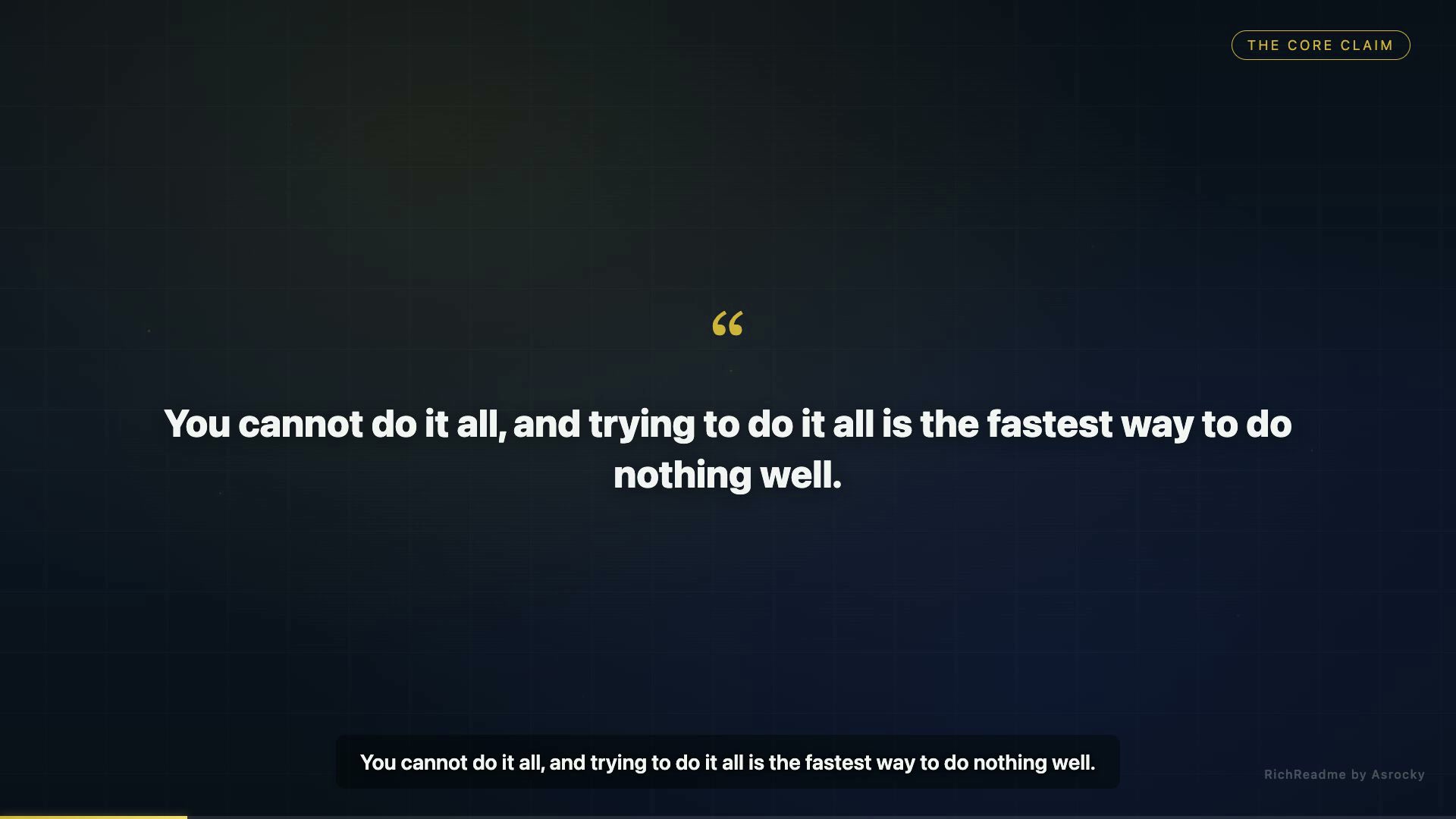
His core claim is simple. You cannot do it all, and trying to do it all is the fastest way to do nothing well. Nonessentialism says everything is important. Essentialism says almost everything is noise.
Have vs Choose
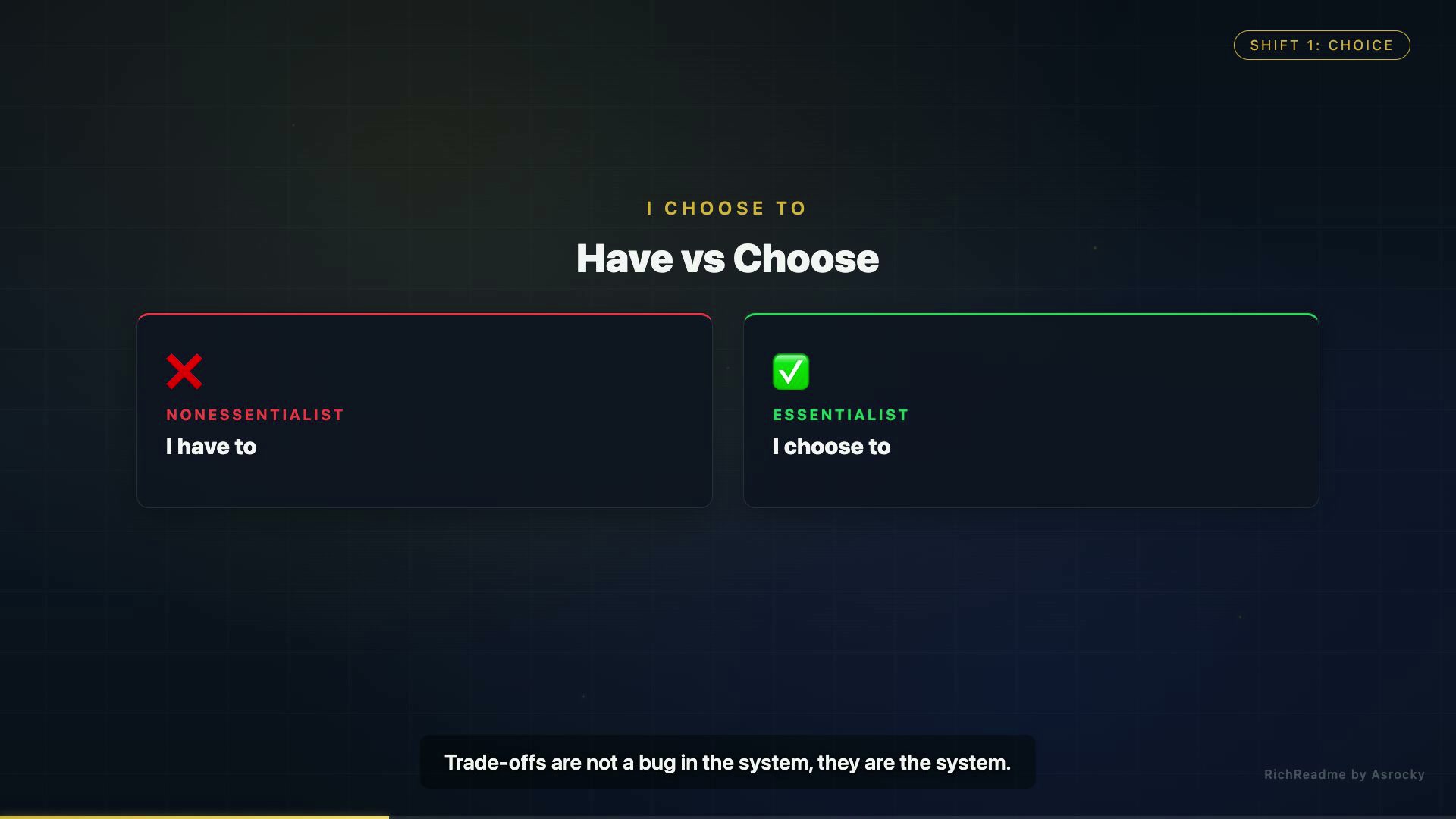
The first shift is a choice. Nonessentialists say I have to. Essentialists say I choose to. The word have strips your power, because you cannot fight for what you never chose. Every time you say yes to something, you are saying no to something else, whether you see it or not. The essentialist reclaims that trade-off and makes it consciously. Trade-offs are not a bug in the system, they are the system.
The second shift is exploration. Before you commit, give yourself space to think. McKeown recommends one word: no. No meetings in the morning, no constant notifications, no reflexive yes. Protect at least one hour a day, and ideally a few hours a week, for deep focus and real reflection. Great decisions need the mental room to breathe.
Below 90? Say No
Then comes the killer question, the 90 percent rule. When you evaluate an opportunity, score it from zero to one hundred. If the score is below ninety, the answer is automatically no.
Why? Because a fifty is a mediocre yes, and a mediocre yes eats the time that could have built a ninety-five. One spectacular option beats three average options every time.
Brutal and Liberating
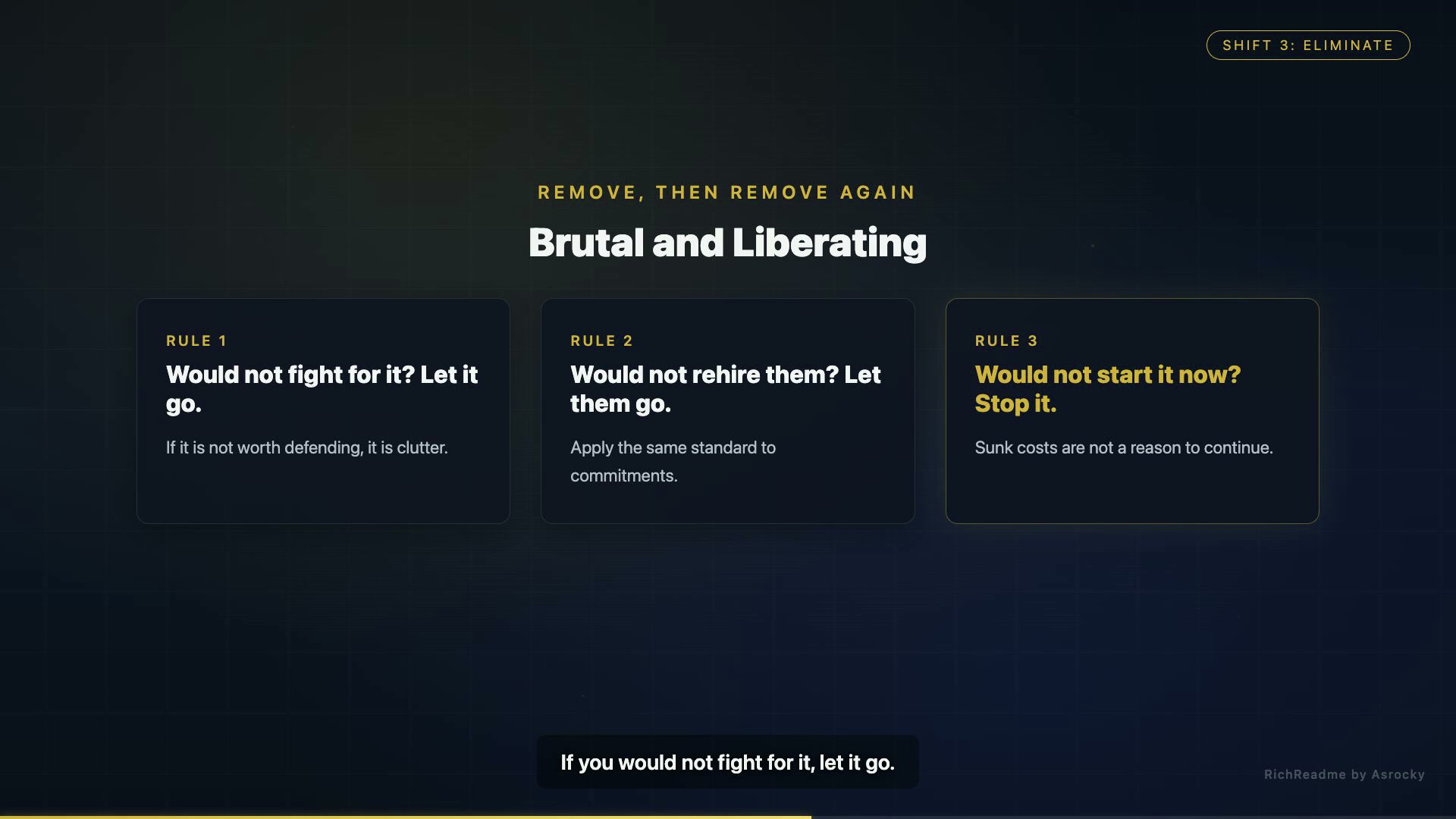
The third shift is elimination. Removing is not a one-time purge, it is a habit. McKeown's advice is brutal and liberating. If you would not fight for it, let it go.
If you would not rehire someone today, fire them. If you would not choose to start it now, stop it. Clear the clutter once, and then build a system that keeps it clear, because clutter always comes back.
The Price of Calm
The fourth shift is execution. Essentialists do not just plan, they build buffers. Add fifty percent more time than you think a task needs, because everything takes longer than you expect and unexpected things happen.
The buffer is not waste, it is the price of calm. They also write down what matters, keep a journal, and review it, because the discipline of writing beats the fog of memory.
Shift 5: Essential Intent
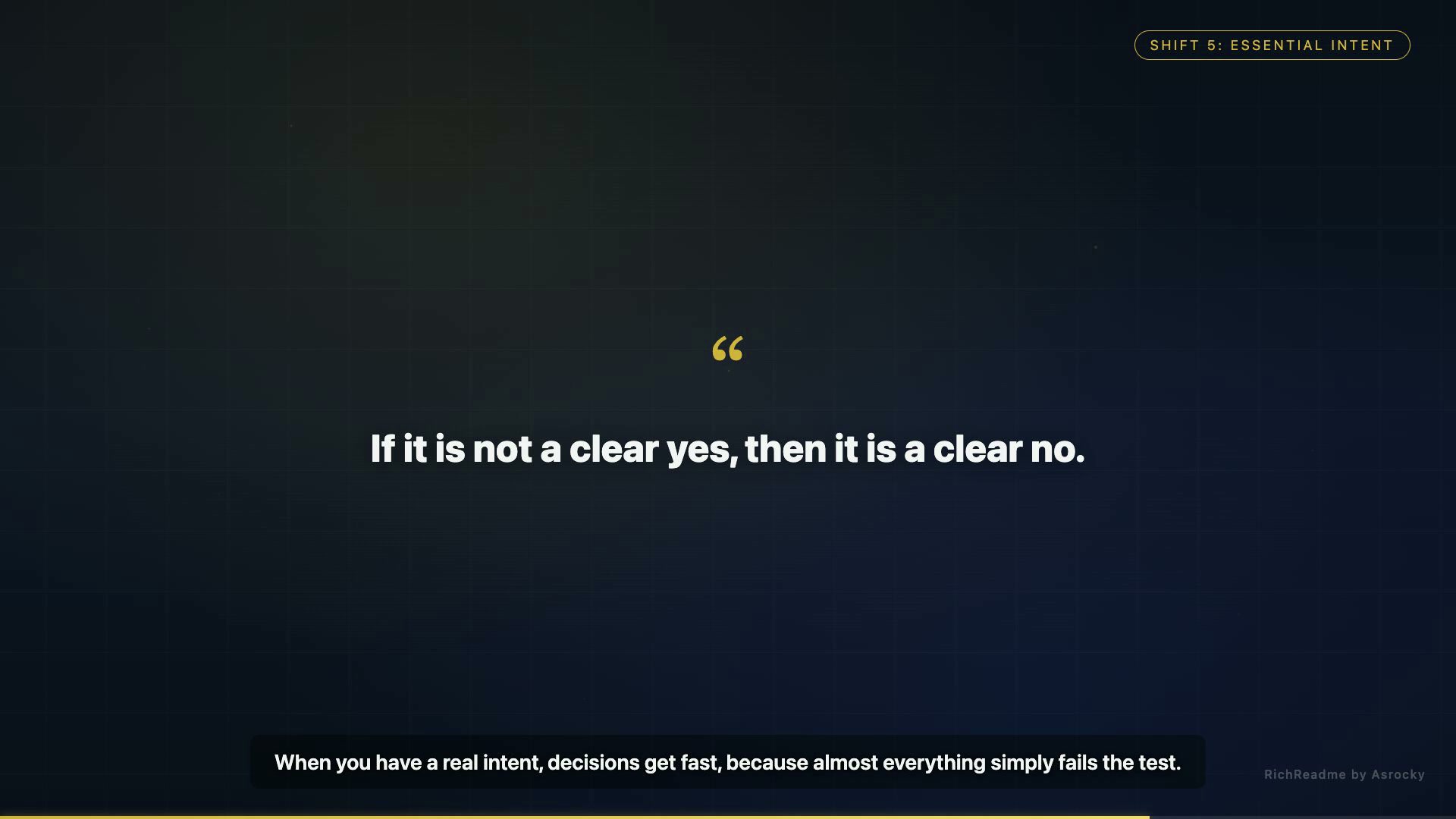
The fifth shift is the essential intent. One sentence that captures what you want to make happen, and what you are willing to say no to in order to do it. When you have a real intent, decisions get fast, because almost everything simply fails the test.
The nonessentialist tries to be everywhere. The essentialist shows up where it counts and is impossible to ignore there.
The Pattern

The pattern is the same in every domain. Do less but better. Choose the vital few over the trivial many.
Build slack into your schedule, celebrate small progress, and protect your focus like a lifeline. McKeown sums it up in a line worth framing: if it is not a clear yes, then it is a clear no.