An anonymous computer genius. A currency no government controls. It started as a geeky experiment and became worth billions. How?
This is Digital Gold by Nathaniel Popper, the inside story of Bitcoin, from a secret online mailing list to a global phenomenon worth tens of billions of dollars.
Money Beyond Banks
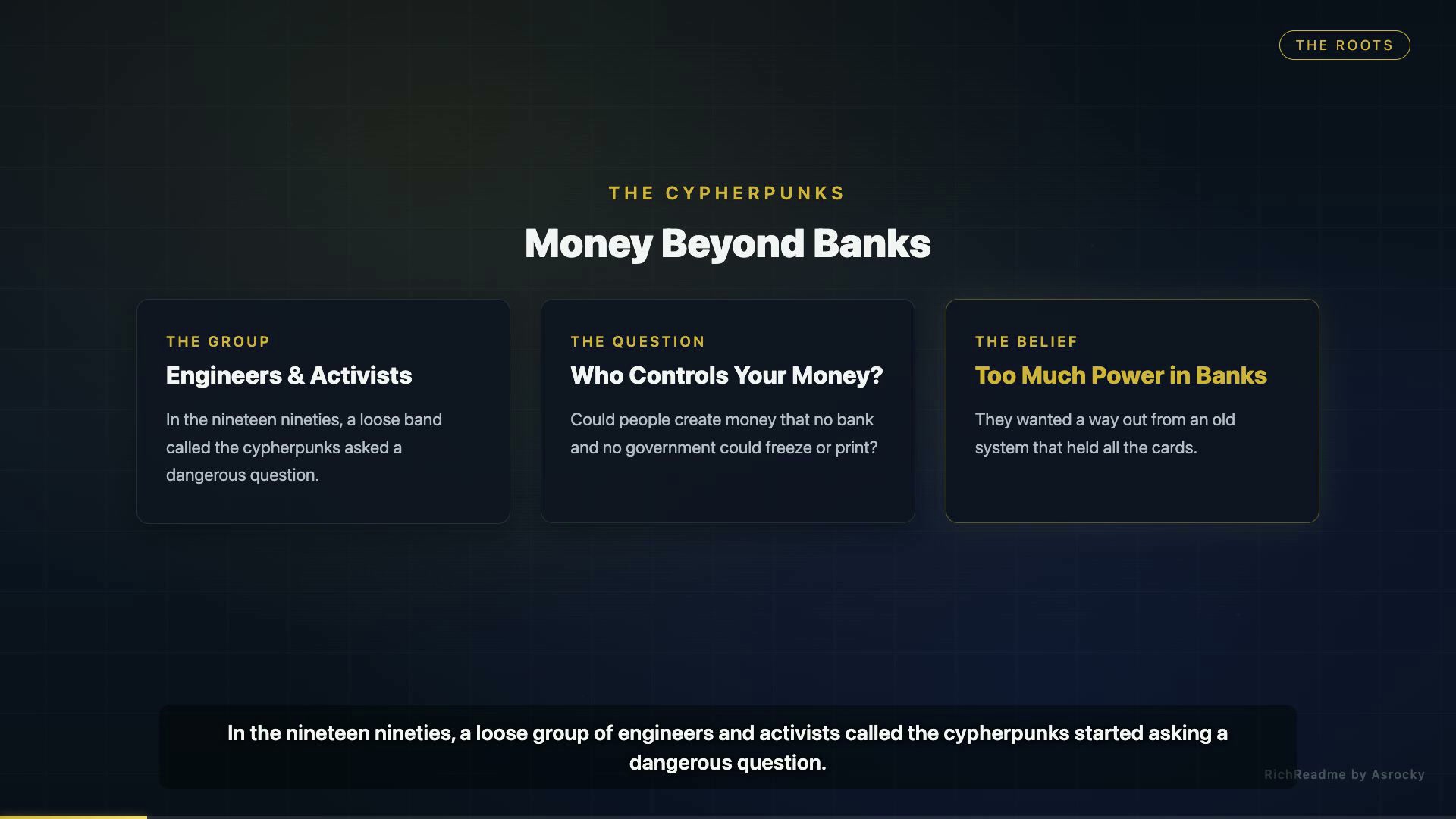
The story begins long before anyone heard the word Bitcoin. In the nineteen nineties, a loose group of engineers and activists called the cypherpunks started asking a dangerous question. In a digital world, could people create money that no bank and no government controlled? They believed banks had too much power over ordinary people's money, and they wanted a way out.
The Whitepaper
Then came the financial crisis of two thousand eight. When big banks seemed to get bailed out while ordinary families lost their homes, trust in the whole system snapped. That same year, a person or group using the name Satoshi Nakamoto published a short paper. It proposed a digital currency that used cryptography and a public ledger to let people send money directly to each other, with no bank in the middle.
Trust Became Math
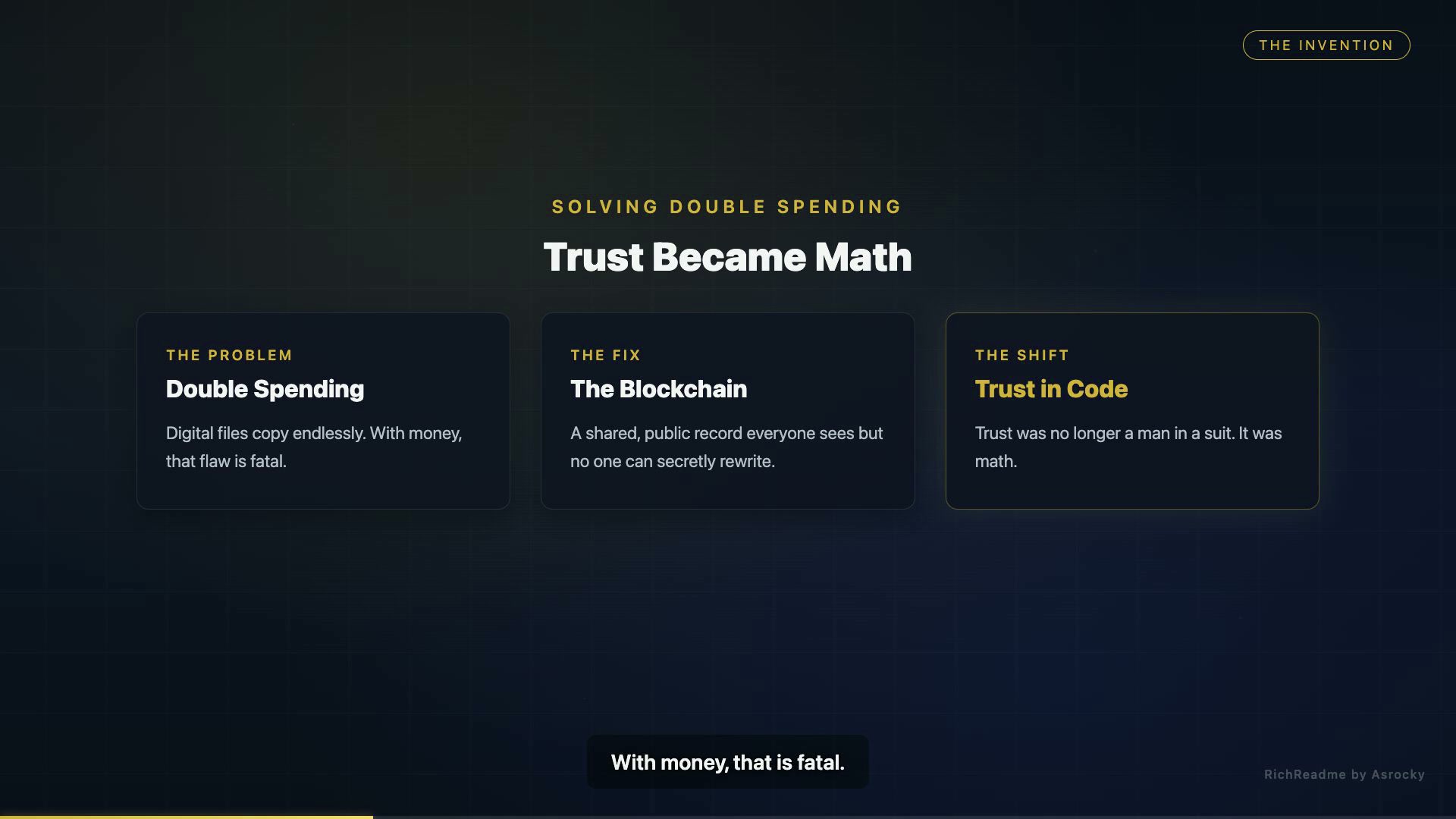
The hard problem Satoshi solved was something called double spending. With ordinary digital files, you can copy them endlessly. With money, that is fatal.
Satoshi used a clever system called the blockchain, a shared record that everyone could see but no one could secretly rewrite. It made trust math, not a man in a suit.
The Mystery
Nobody knows who Satoshi really is. The name is a pseudonym. He published the code, handed control to other developers, and then vanished, leaving behind a fortune in coins he never touched. To this day, his true identity is one of the great mysteries of the internet.
Two Legendary Pizzas
At first almost nobody cared. The earliest users were a handful of geeks on an email list. The very first real transaction became legend.
A programmer paid ten thousand bitcoins for two pizzas. At the time, the coins were worth almost nothing. Years later, those same pizzas would be worth hundreds of millions of dollars.
A Strange Coalition of Believers
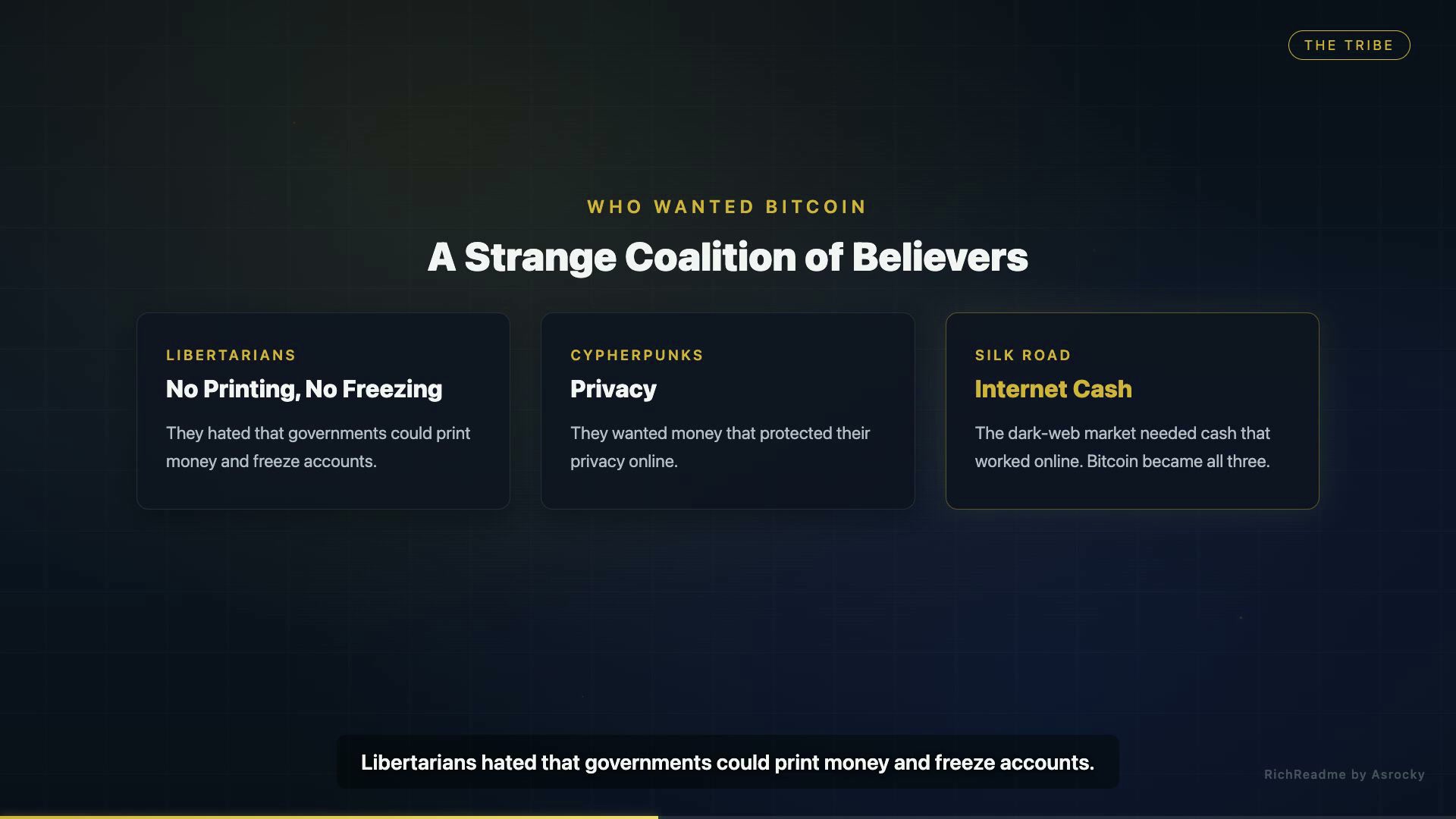
As the idea spread, it drew a strange tribe of true believers. Libertarians hated that governments could print money and freeze accounts. Cypherpunks wanted privacy.
And the online drug market called Silk Road needed a currency that worked like cash on the internet. Bitcoin became all three at once.
From Pennies to Hundreds
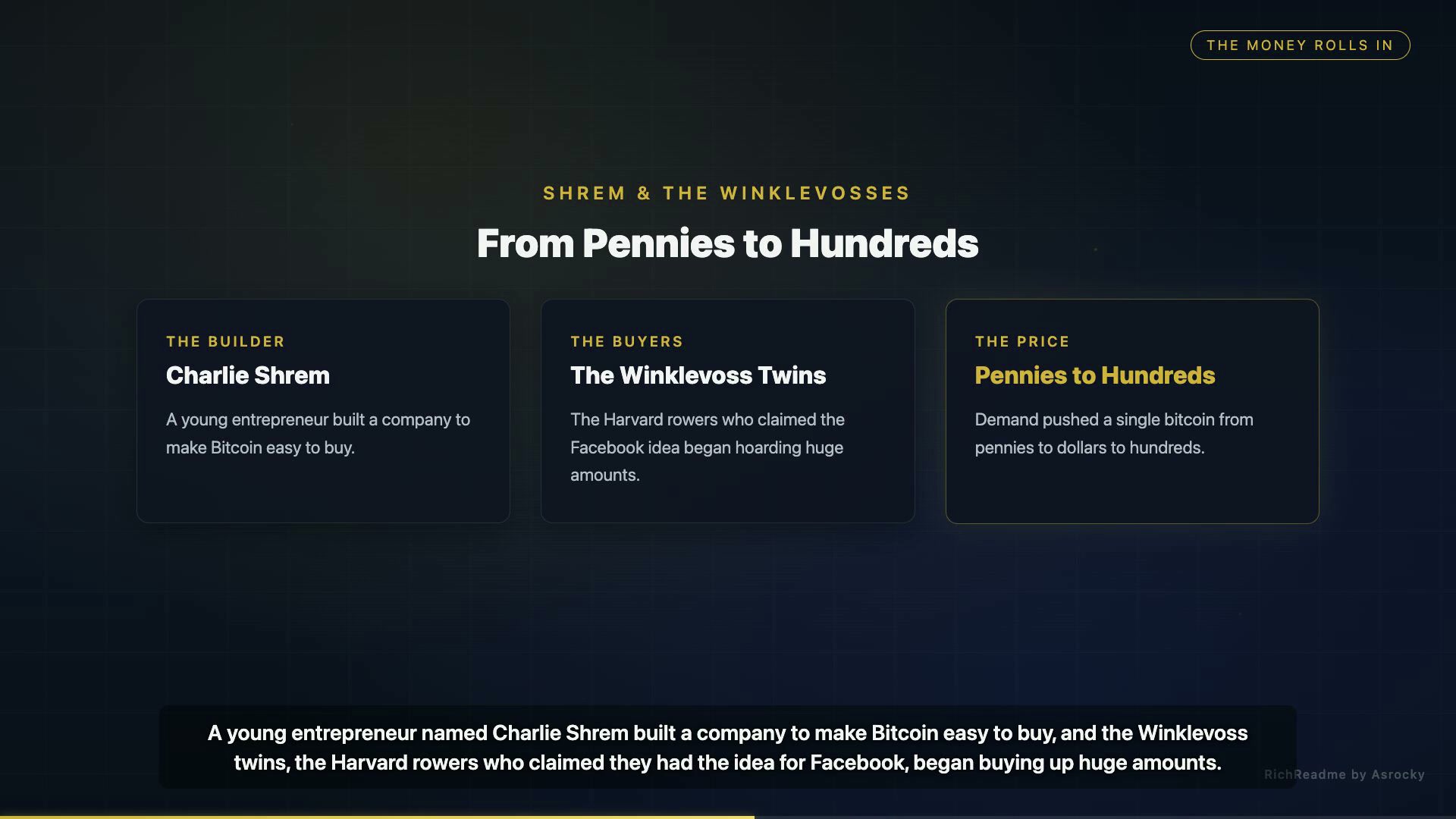
Soon real money started flowing in. A young entrepreneur named Charlie Shrem built a company to make Bitcoin easy to buy, and the Winklevoss twins, the Harvard rowers who claimed they had the idea for Facebook, began buying up huge amounts. As demand grew, the price of a single bitcoin climbed from pennies to dollars to hundreds.
Every Crash Declared the End
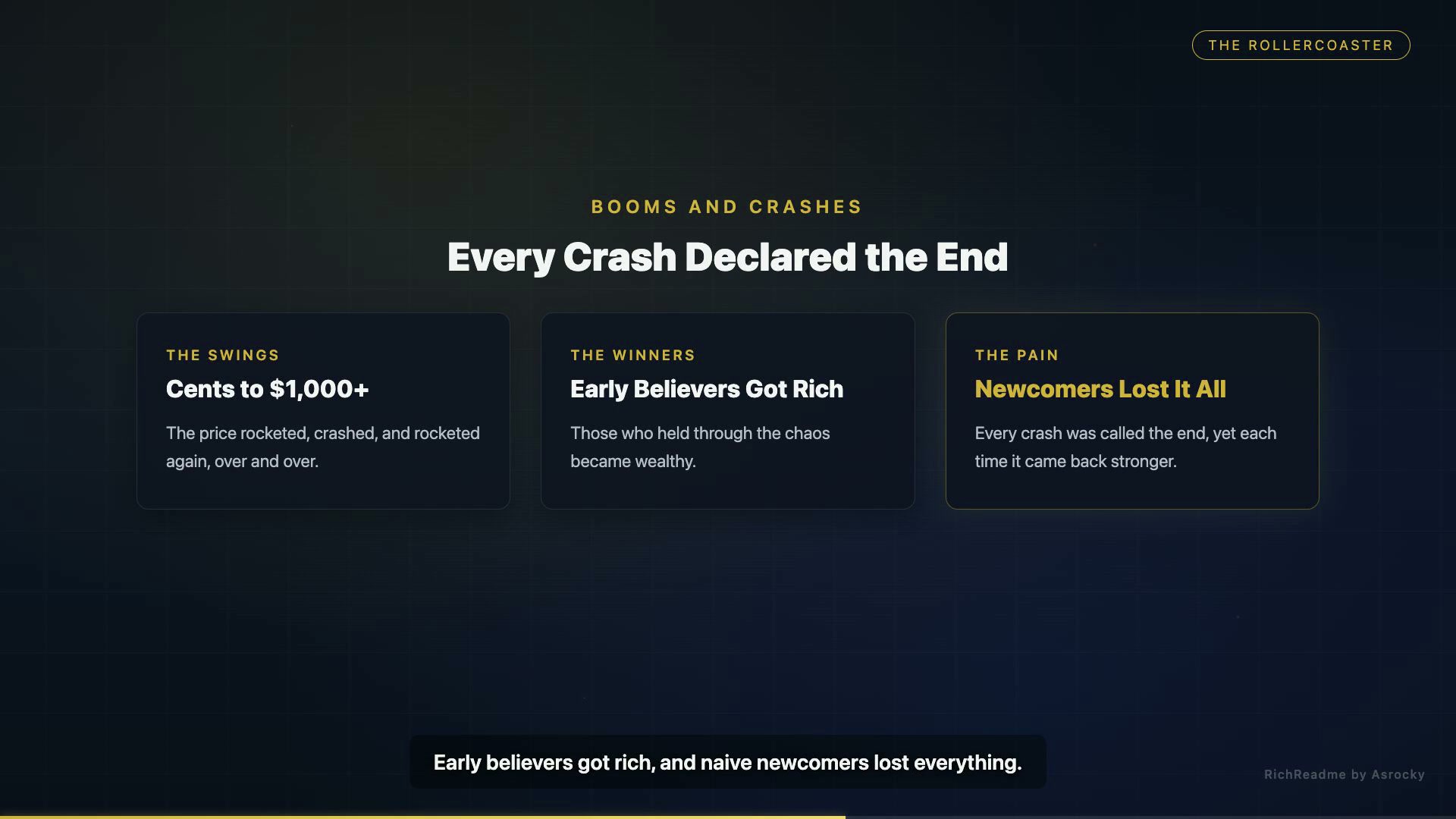
The ride was wild. The price swung from a few cents to over a thousand dollars, then crashed, then climbed again. Early believers got rich, and naive newcomers lost everything. Every crash was declared the end of Bitcoin, and every time it came back stronger.
The Exchange That Vanished
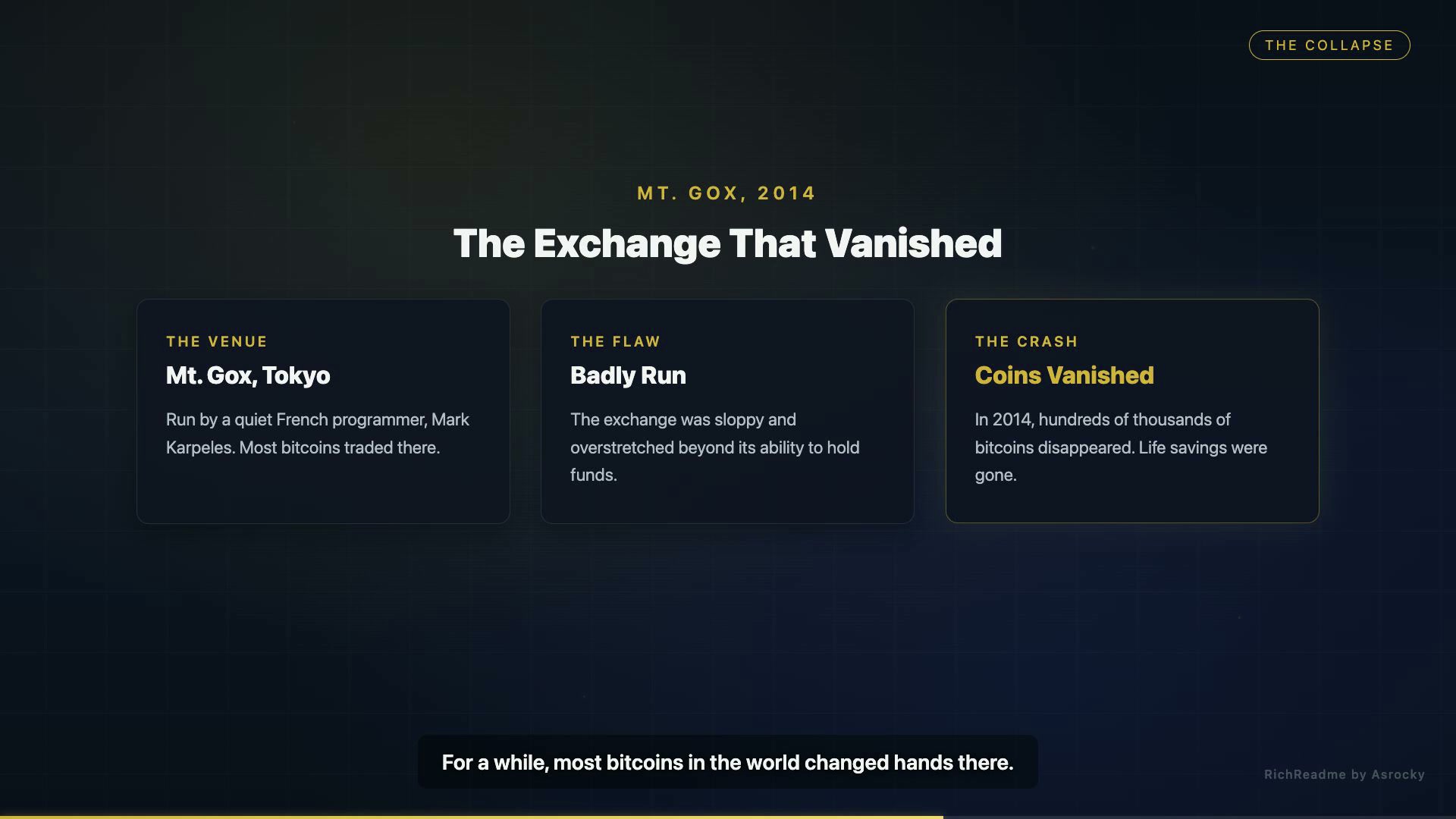
The boom needed a place to trade, and that place was Mt. Gox, a Tokyo exchange run by a quiet French programmer named Mark Karpeles. For a while, most bitcoins in the world changed hands there. But the exchange was badly run.
In two thousand fourteen, Mt. Gox announced that hundreds of thousands of bitcoins had vanished. People's life savings disappeared into thin air.
Government Finally Notices
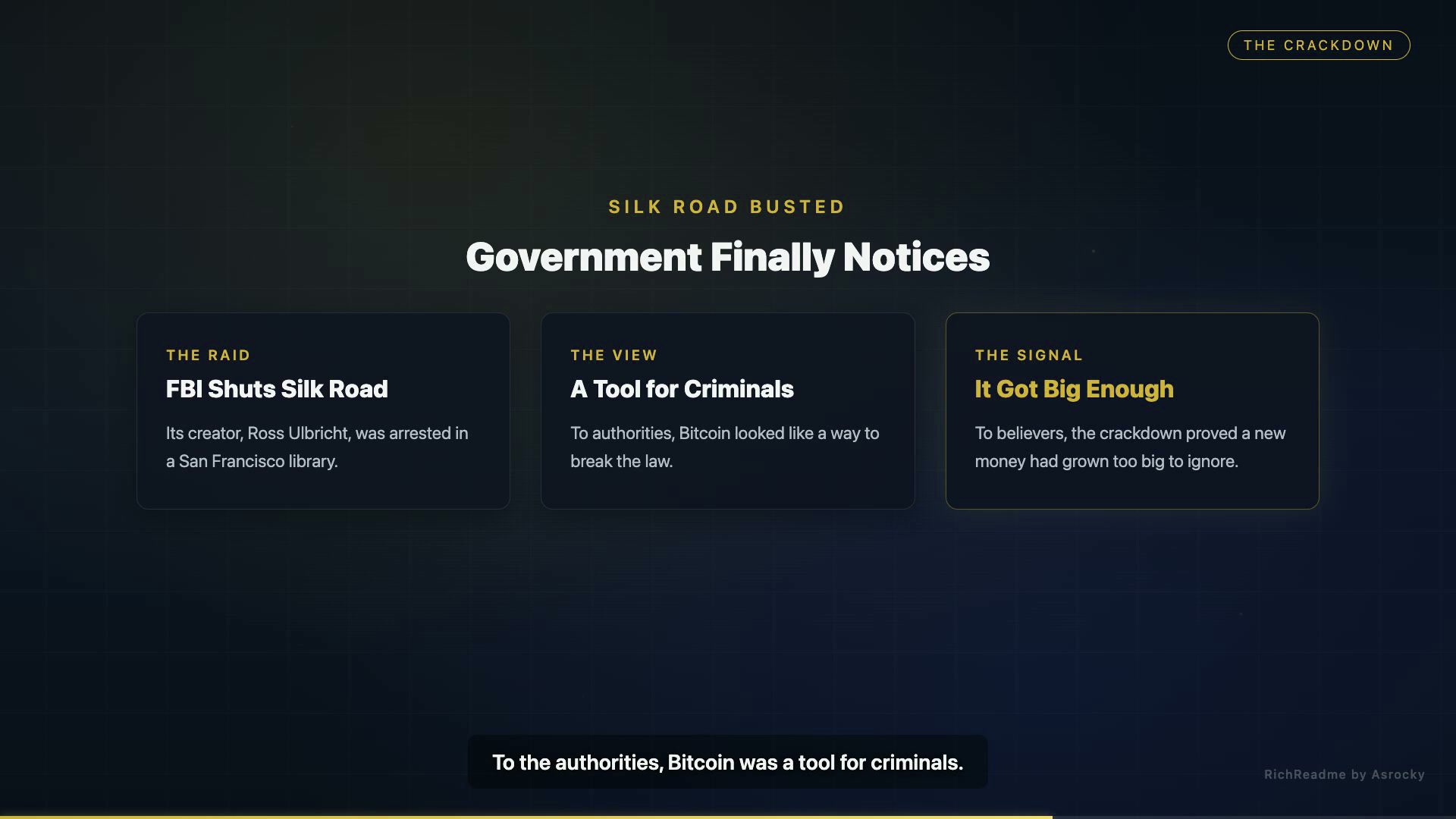
Around the same time, the FBI shut down Silk Road. Its creator, Ross Ulbricht, was arrested in a San Francisco library. To the authorities, Bitcoin was a tool for criminals.
To its believers, the crackdown proved the opposite. It showed that a new kind of money had grown big enough that governments had to notice.
The Paradox
This was the paradox at the heart of Bitcoin. The same openness that let anyone join also let anyone break the law. The technology did not care if you were saving or smuggling. It simply moved value from one person to another, beyond any gatekeeper.
The Big Idea
The deeper promise of the book is not about get rich quick stories. It is about what money actually is. For thousands of years, money was something governments and banks issued and controlled.
Bitcoin proposed that money could instead be an open network, owned by no one, trusted by code. Whether it succeeds or fails, that idea was never going away.
Toys Today, Institutions Tomorrow
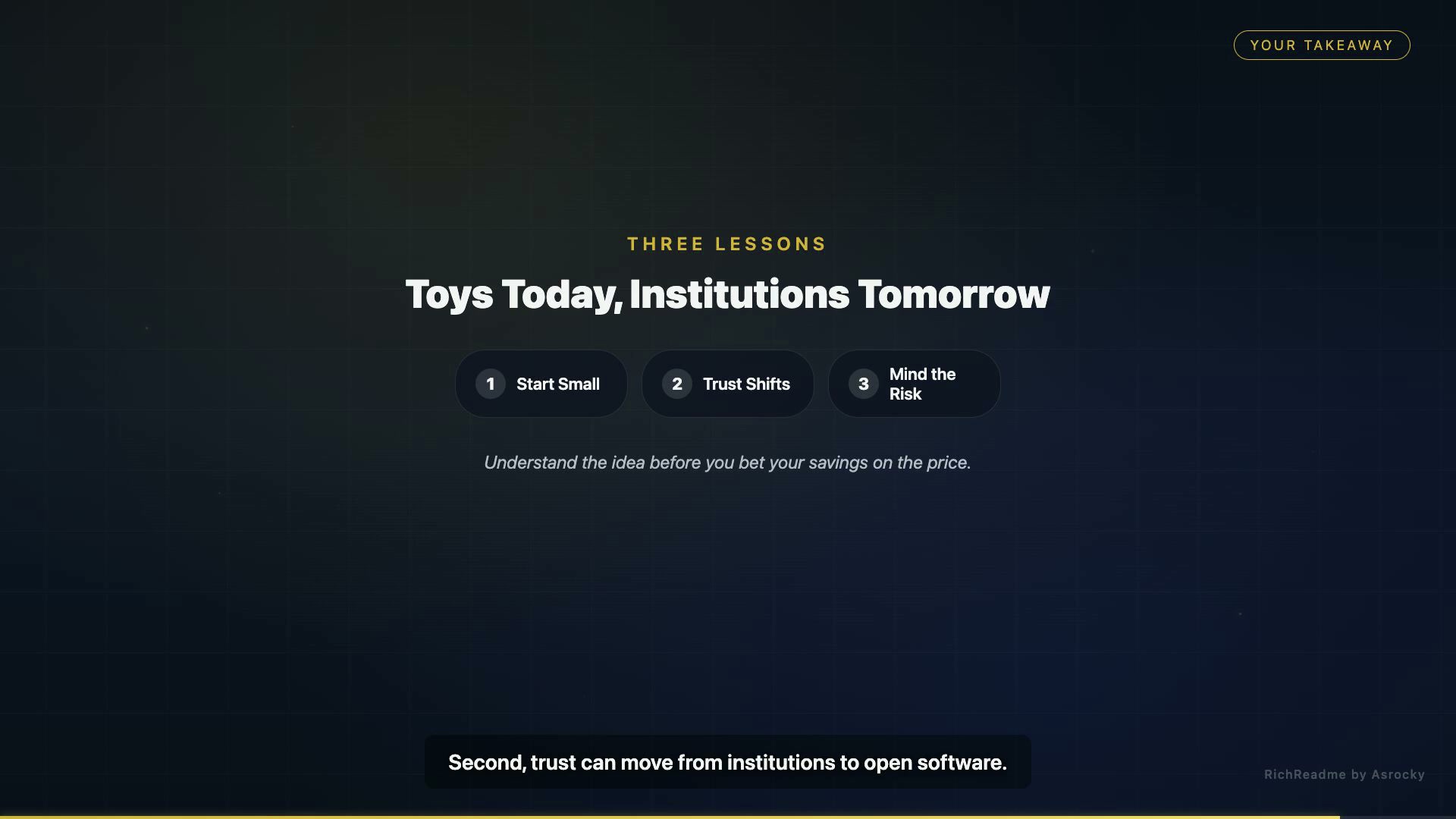
What should you take away? First, the most important inventions often look like toys at the start. Second, trust can move from institutions to open software. And third, any new asset this volatile is as risky as it is exciting.
Understand what you are buying before you buy it. The technology is real. The price is a gamble.