Ever walked out of a conversation and thought, what just happened? The problem is never the topic. It is the silence.
This is Crucial Conversations by Kerry Patterson and his co-authors, the research-backed toolkit that has helped millions of people talk about what matters most when stakes are high and emotions run hot. A crucial conversation is any discussion with three ingredients: opposing opinions, high stakes, and strong emotions. Think a tough review, a fight about money, or asking for a raise.
Most of us either attack or avoid. Both fail.
The Core Idea

The core idea is the shared pool of meaning. Every conversation has a pool of facts, opinions, and feelings that everyone knows but rarely says. The best communicators work to fill that pool honestly, so the best ideas win, not the loudest voice.
When the pool is full, decisions are smarter and relationships get stronger. When it stays half empty, people leave thinking, that meeting was a waste.
Fix Safety Before the Message
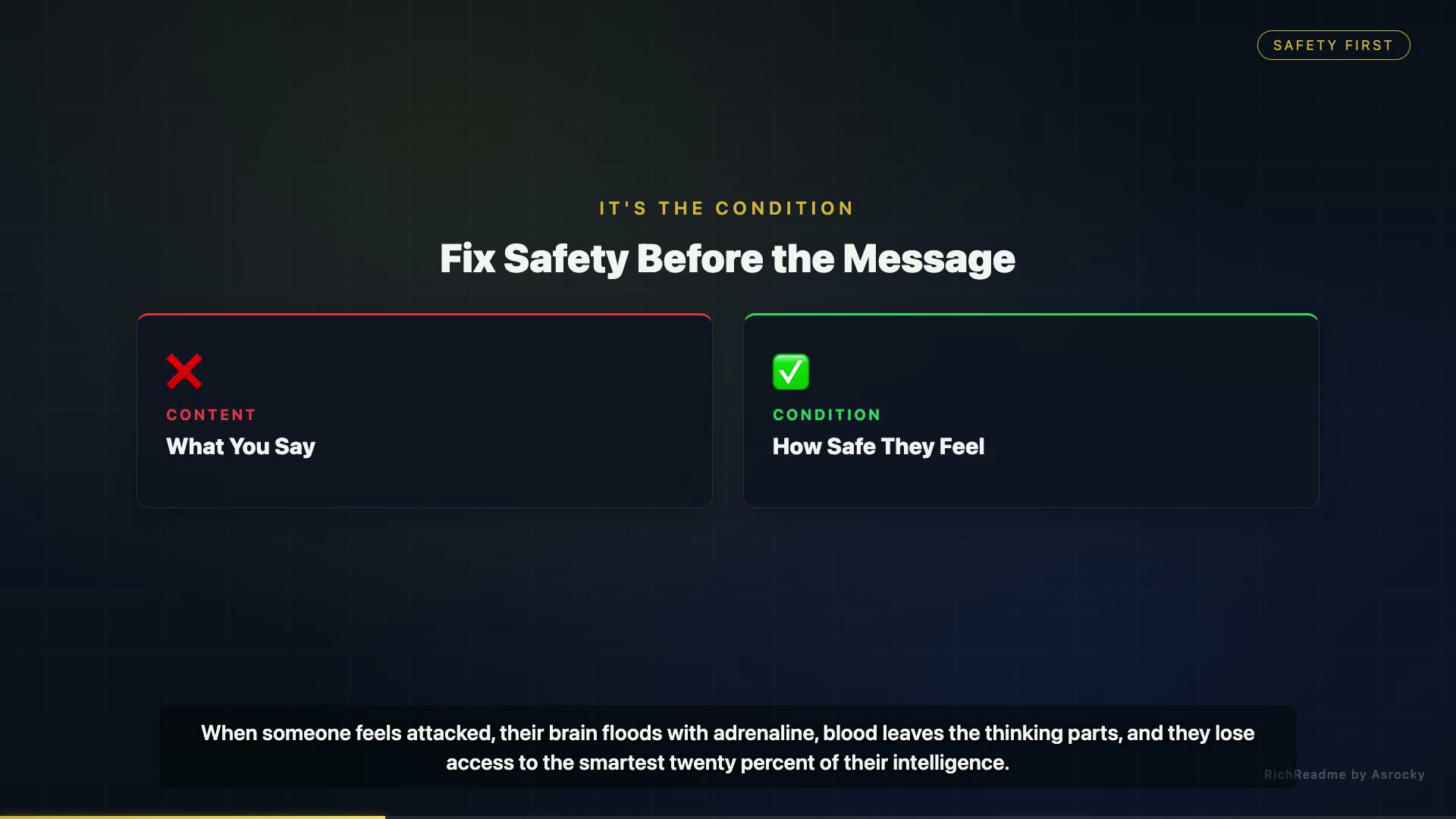
Here is the surprise. The problem is not the content of the conversation. It is the condition.
When someone feels attacked, their brain floods with adrenaline, blood leaves the thinking parts, and they lose access to the smartest twenty percent of their intelligence. You cannot talk someone into anything while they feel unsafe. So before you fix the message, you fix the safety.
Silence or Violence
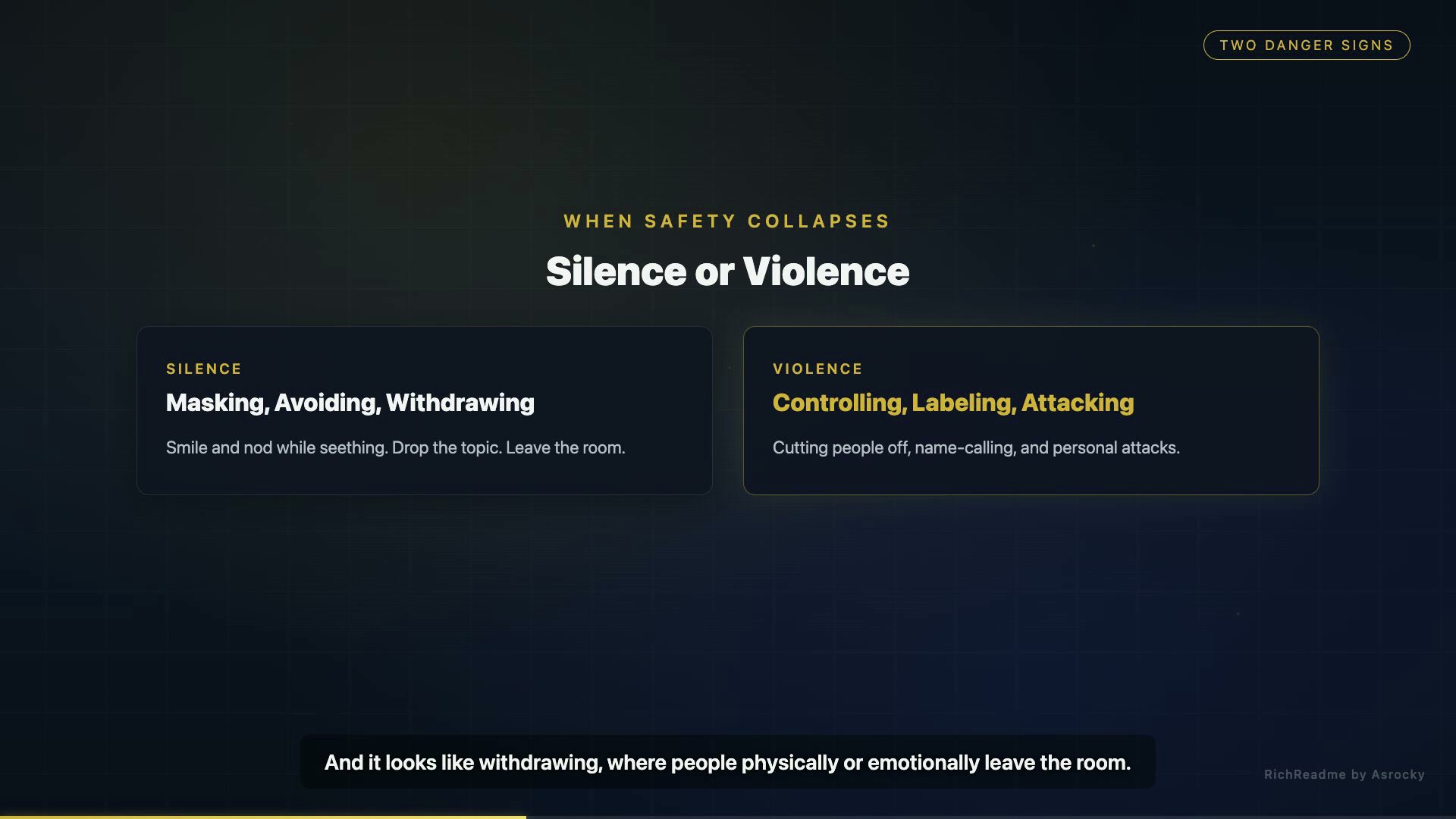
There are two signs that safety has collapsed: silence and violence. Silence looks like masking, where people smile and nod while seething inside. It looks like avoiding, where the hard topic gets quietly dropped.
And it looks like withdrawing, where people physically or emotionally leave the room. Violence is the opposite, and it is also a sign of fear: controlling, cutting others off, labeling people with names, and attacking them personally. Both silence and violence mean the pool is shrinking.
Two Tools That Work

So how do you restore safety? Start with your own heart. Ask yourself what you really want for yourself, for the other person, and for the relationship. The moment your goal becomes winning or punishing, you are lost. Then use two tools.
First, apologize when your own behavior has contributed to the problem, and do it genuinely. Second, use contrasting to clarify intent. Contrasting is not apologizing for the content, it is clarifying what you do not mean: I am not saying this project is a failure. I am saying the last two weeks had too much rework, and I want to fix that.
Master Your Stories
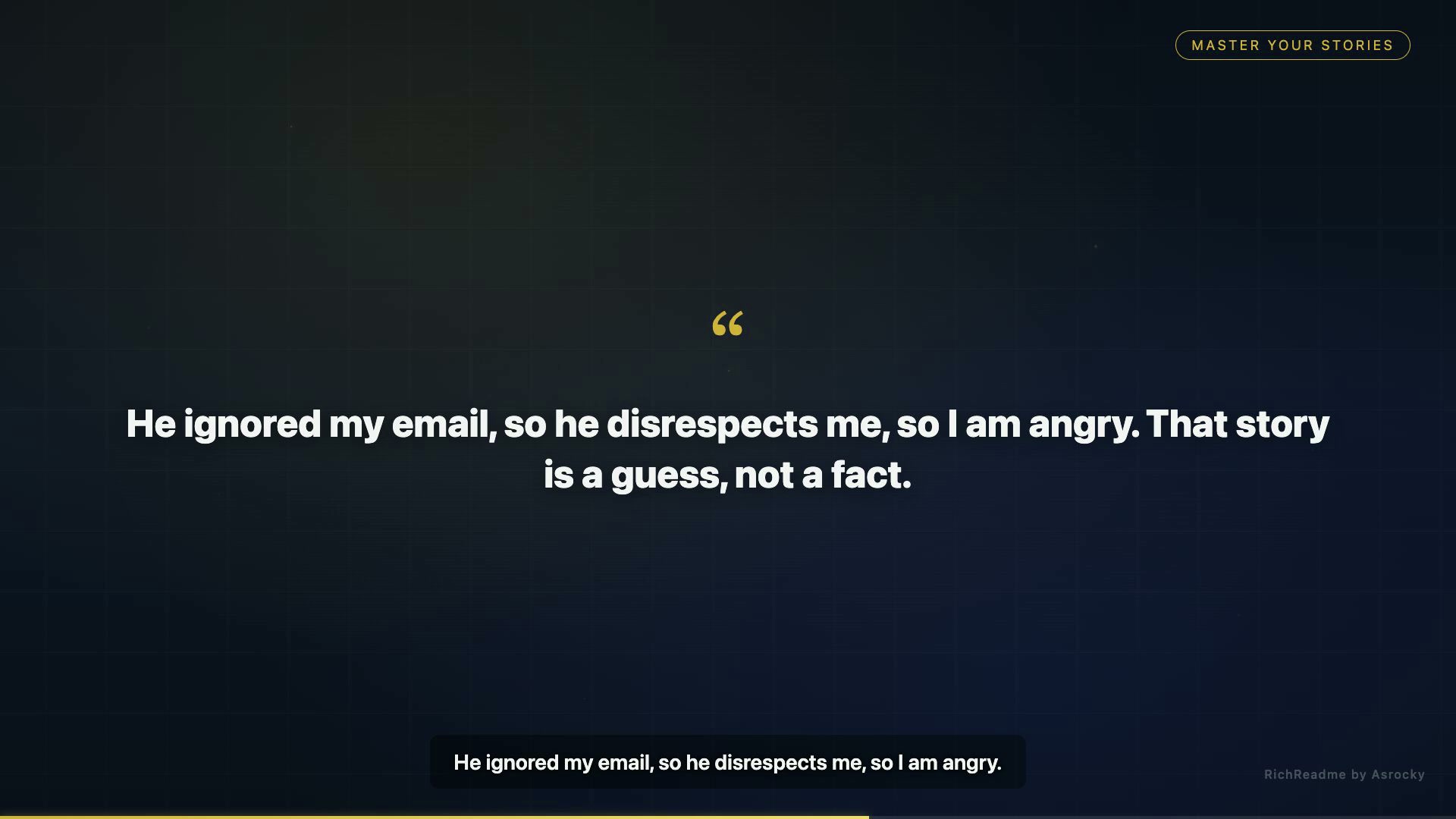
The next layer is mastering your own stories. Between what someone does and how you react, there is a story you tell yourself. He ignored my email, so he disrespects me, so I am angry.
That story is a guess, not a fact. Separate facts from story, challenge your conclusion, and ask what a reasonable person would want in this situation. You will usually find a kinder and more accurate version of events.
Get the Truth on the Table
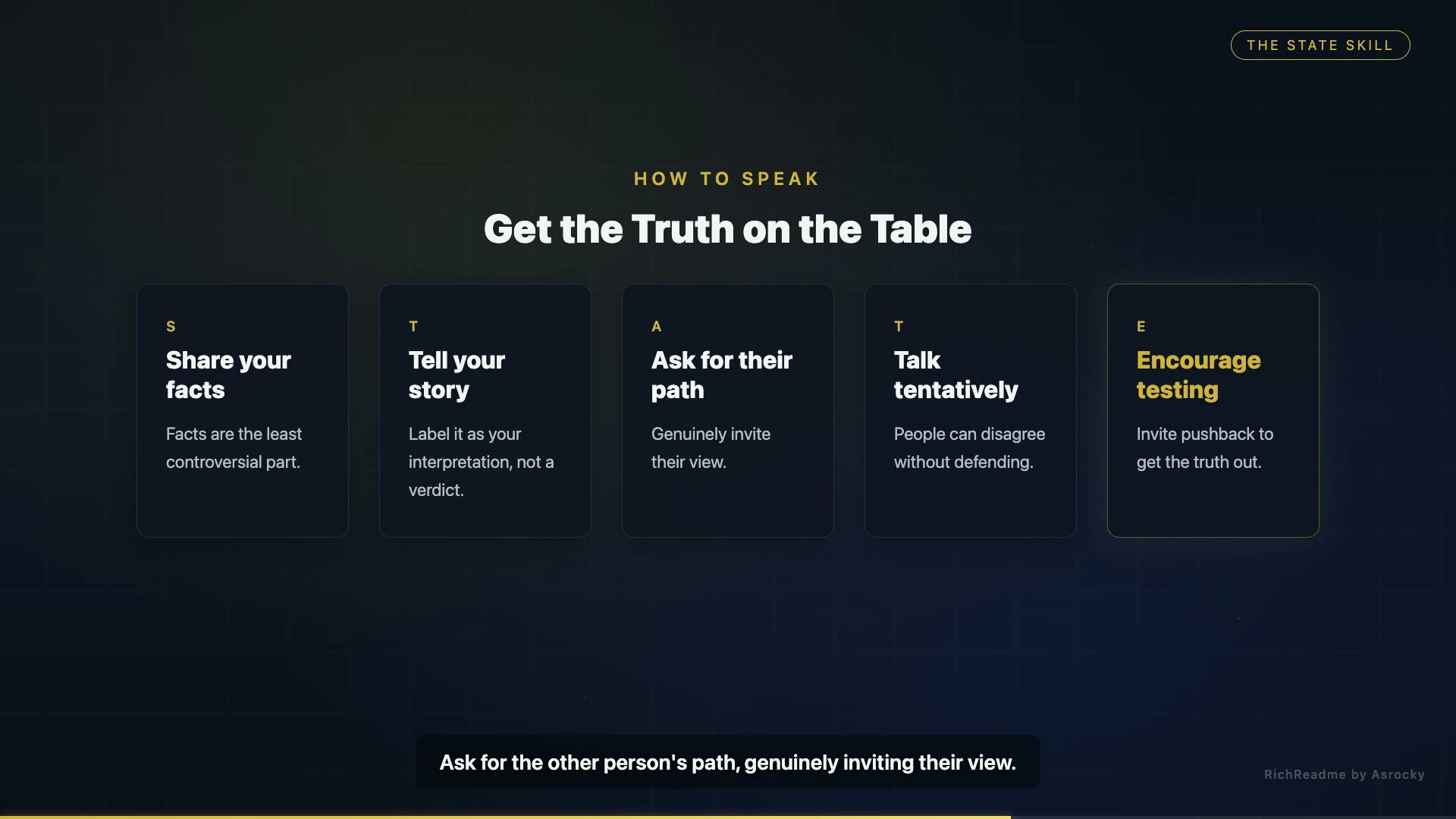
When you do speak, use the STATE skill. Share your facts first, because facts are the least controversial part. Tell your story as a story, not a verdict, and label it as your interpretation. Ask for the other person's path, genuinely inviting their view.
Talk tentatively, so people can disagree without defending themselves. And encourage testing, explicitly inviting pushback. The goal is not to win the argument, it is to get the truth on the table.
Make Them Feel Heard
Then explore their path with the AMP formula. Ask, to invite their perspective. Mirror, to acknowledge their emotion.
Paraphrase, to show you understand their content. And prime, when they are still holding back, to offer a guess at what they are not saying. People open up when they feel heard, not when they feel cornered.
Make It Stick
Finally, turn talk into action. End every crucial conversation with a clear plan: who does what, by when, and how you will follow up. Assign each task to a single owner, because tasks with no owner are tasks that never happen. And schedule a check-in so the decision actually sticks.
The Pattern
The pattern is simple but hard: start with heart, make it safe, master your story, state your case, explore theirs, and move to action. Do it once and the conversation gets easier. Do it often and it changes how people see you, because safety is the one thing everyone is starving for.