Most investors study brokerage reports. Philip Fisher did the opposite: he gossiped with customers, rivals, and ex-employees.
This is Common Stocks and Uncommon Profits by Philip Fisher, first published in nineteen fifty eight and still one of the most influential investing books ever written. Warren Buffett famously said he is mostly Graham with a strong slice of Fisher. If Graham taught how to buy a stock cheap, Fisher taught how to find the wonderful company that compounds for decades.
The Philosophy
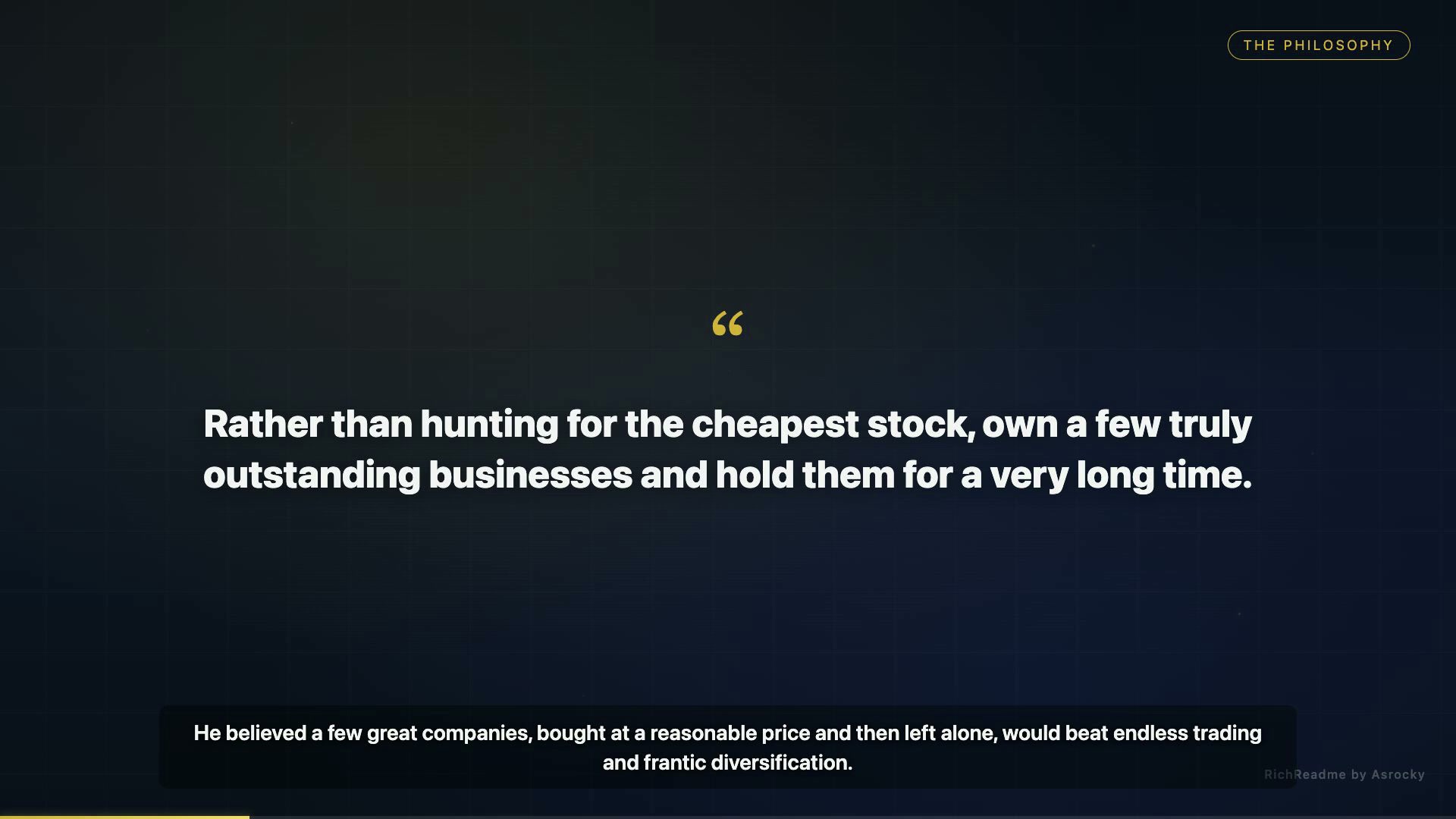
Fisher's core idea is simple. Rather than hunting for the cheapest stock, he wanted to own a small number of truly outstanding businesses and hold them for a very long time. He believed a few great companies, bought at a reasonable price and then left alone, would beat endless trading and frantic diversification.
The market, he warned, mostly transfers money from the impatient to the patient. So his whole method was built around one question: how do I actually tell a great business from a mediocre one?
Talk to the People Who Know

The answer is his famous scuttlebutt method. Instead of trusting glossy annual reports and Wall Street tips, you go out and talk to the people who actually know the company. You talk to its customers. You talk to its competitors.
You talk to its suppliers and ex-employees. If rivals genuinely fear the company, if customers rave, and if suppliers respect it, you are on to something real. Fisher pointed out that scandal stocks like Enron would never survive these honest conversations.
Qualities to Screen For

From this research, Fisher built his fifteen points. Does the company have a product or market big enough to grow for years? Does it have the drive and the research to keep inventing new products? Does it run an above average sales organization?
Are its profit margins healthy and well controlled? How does it treat its people? Most importantly, is management honest, far-sighted, and willing to give up short-term profit for long-term strength? You are hunting for a durable edge that competitors cannot easily copy.
The Honey Jar
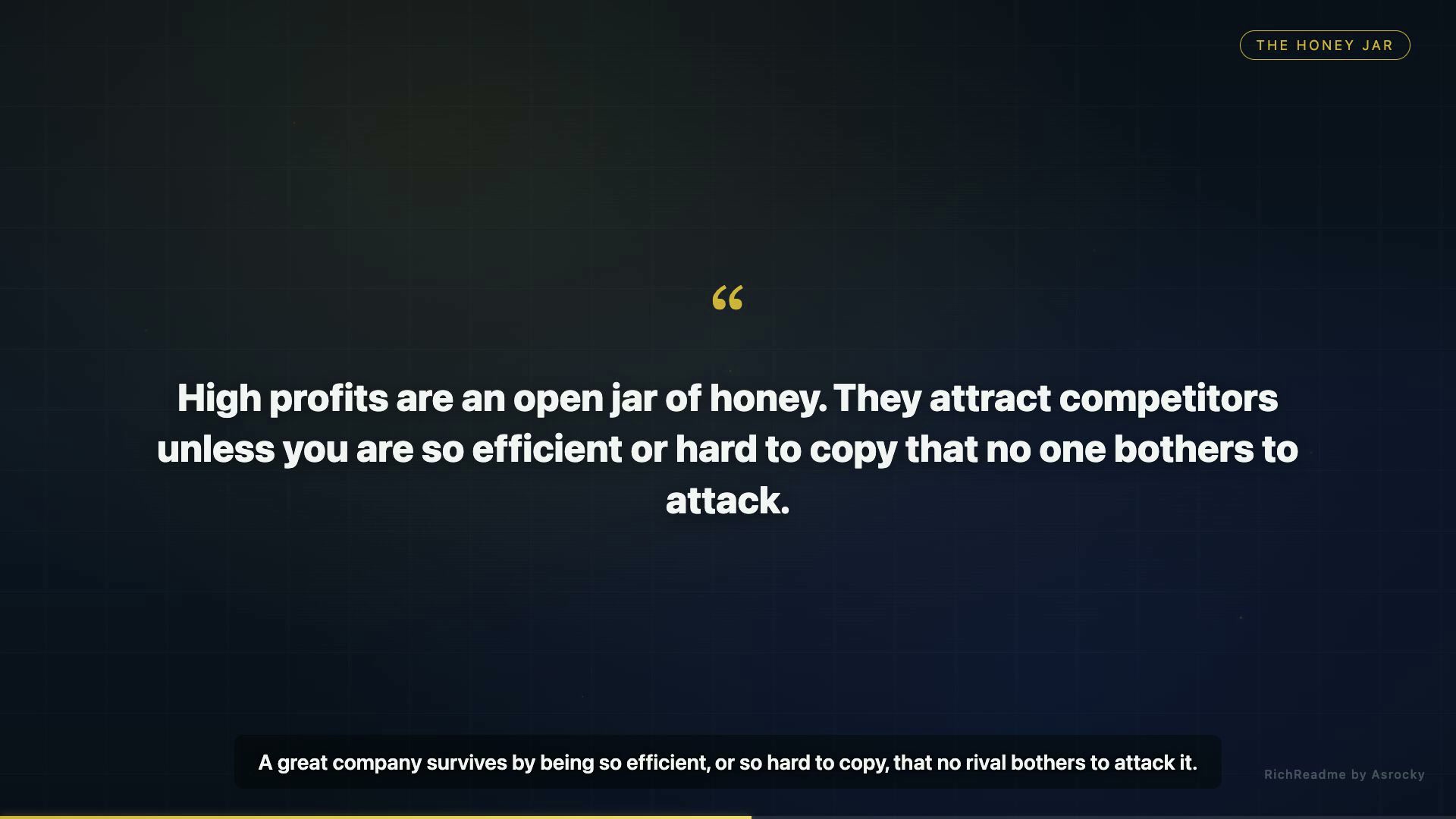
He used a vivid image for that edge. High profits are like an open jar of honey, and they attract swarms of competitors ready to devour them. A great company survives by being so efficient, or so hard to copy, that no rival bothers to attack it.
Think economies of scale, a trusted brand, deep know-how, and loyal customers. Over the years these advantages compound, and the leader usually stays the leader while the pretenders fall away.
Buy What Wall Street Overlooks

Timing, Fisher said, comes down to one gap: what Wall Street believes versus what is actually true. A stock moves because the financial community changes its opinion of the company, not because reality changed overnight. Sometimes a wonderful business falls out of favor, and the market prices it like an average one. That mismatch, patient research lets you spot, and that is your buying opportunity.
Sell for Fundamentals, Not Price
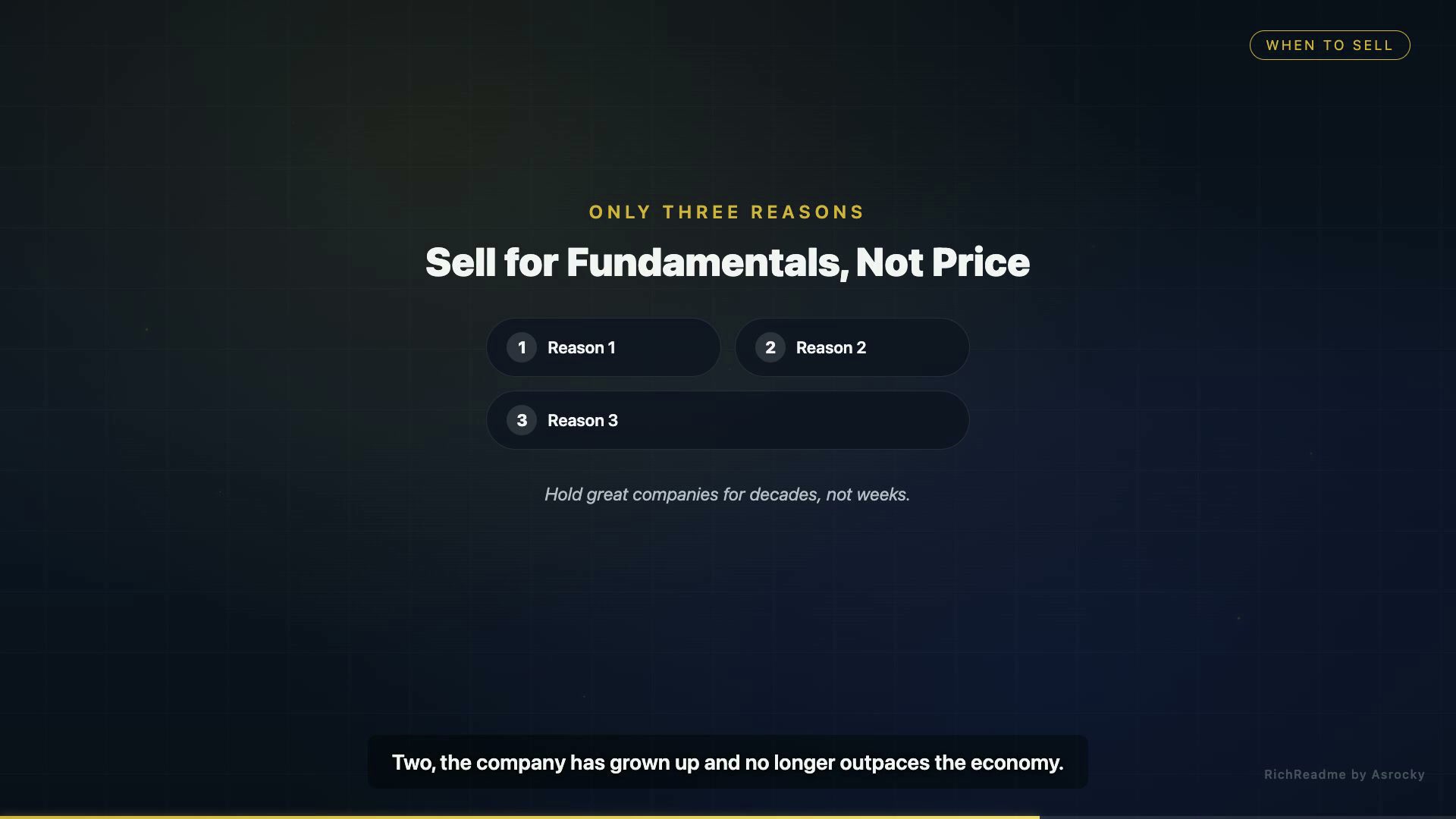
Then comes the part almost no investor masters: knowing when to sell. Fisher said there are only three good reasons. One, you were wrong and the company's quality has faded. Two, the company has grown up and no longer outpaces the economy.
Three, management has deteriorated. That is the whole list. You do not sell because the price jumped, or because a recession may come, or just because the crowd is selling.
Concentrate, Don't Follow the Crowd

Which is why he warned against two common mistakes. First, do not over-diversify. Owning dozens of stocks means owning things you barely researched. Better to hold a handful of companies you understand deeply.
Second, do not follow the crowd. The market swings between panic and hype, but a great business keeps earning through both. Trying to dodge every downturn usually means selling low and buying back even higher.
Compounding
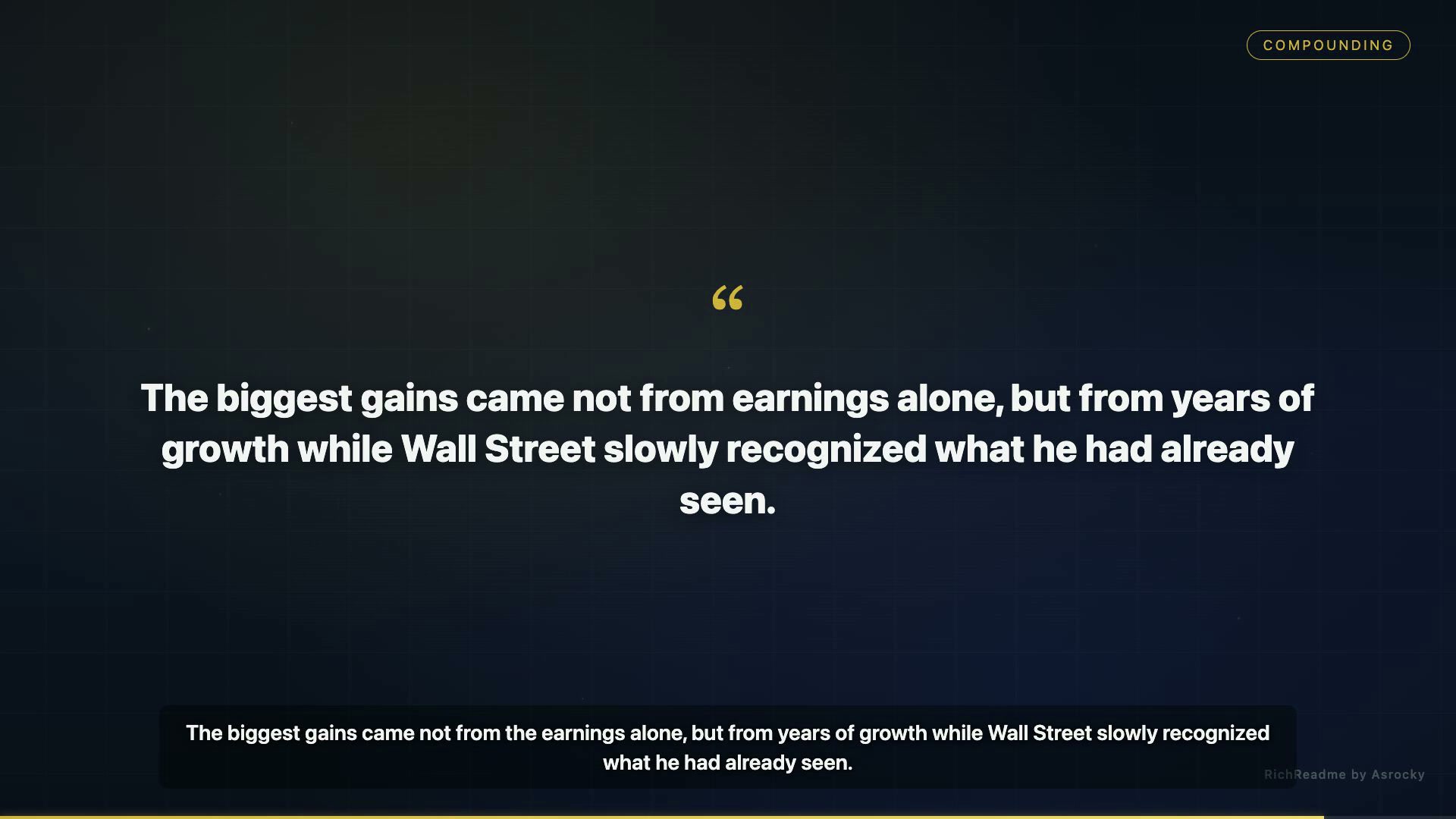
The payoff is compounding over decades. Fisher held his best picks for years, even through sharp market drops, because he trusted the business more than the forecast. The biggest gains came not from the earnings alone, but from years of growth while Wall Street slowly recognized what he had already seen. Time, not timing, is what turns a good company into uncommon profits.