The average worker saves five percent and works forty years. Financial independence takes a decade instead, if you save half.
This is Choose FI by Chris Mamula, Brad Barrett, and Jonathan Mendonsa, the book that turns the financial independence movement into a step-by-step plan. The three hosts interviewed hundreds of people who walked away from traditional careers years, even decades, early. Their big message is that you do not need a million-dollar salary. You need a system and the discipline to run it.
The FI Number
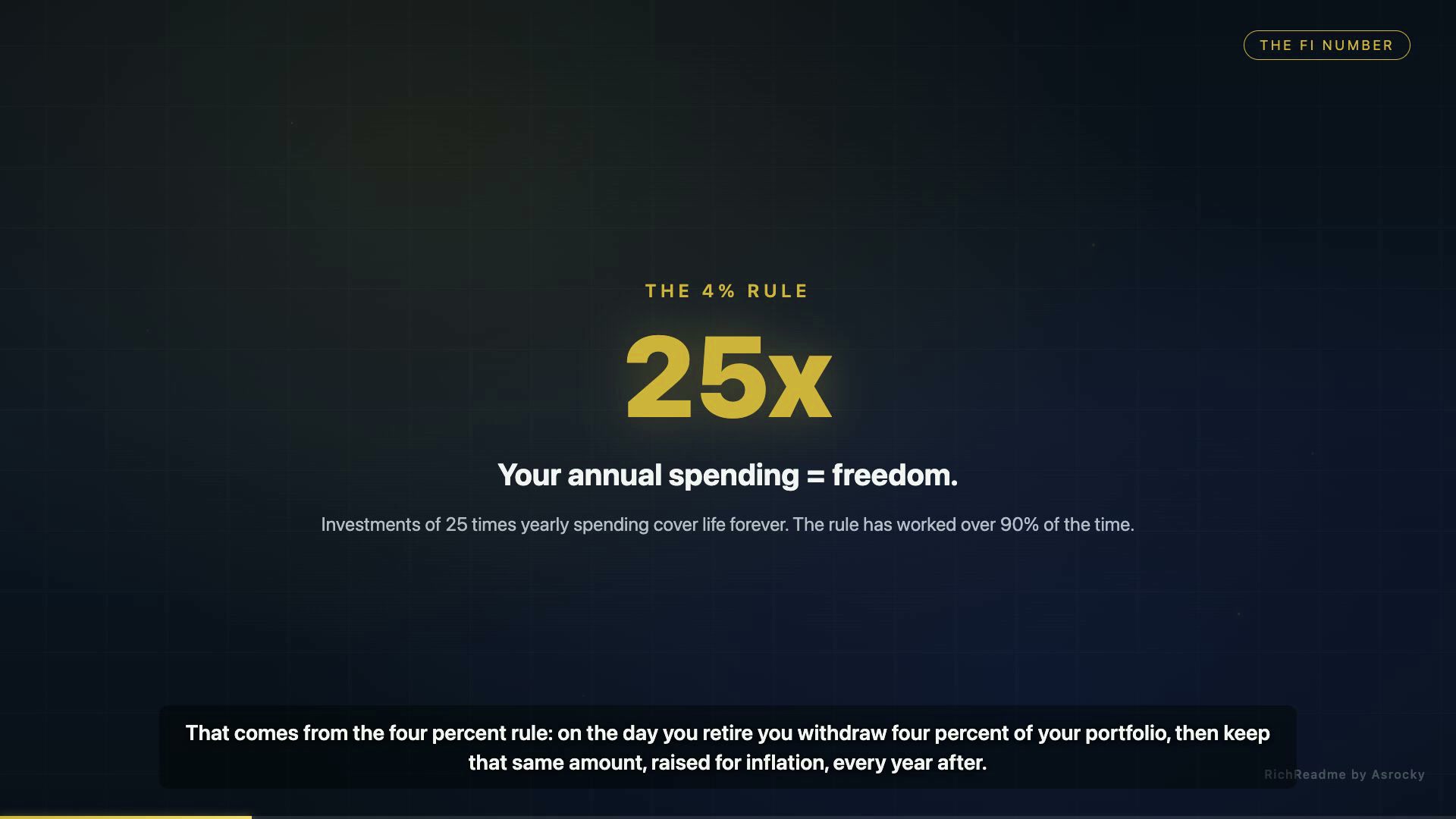
Here is the core idea. You reach financial independence when your investments equal twenty-five times your yearly spending. That comes from the four percent rule: on the day you retire you withdraw four percent of your portfolio, then keep that same amount, raised for inflation, every year after. History shows it works more than ninety percent of the time.
Notice what it depends on. It is not what you earn. It is what you spend.
Every Dollar Counts Twice
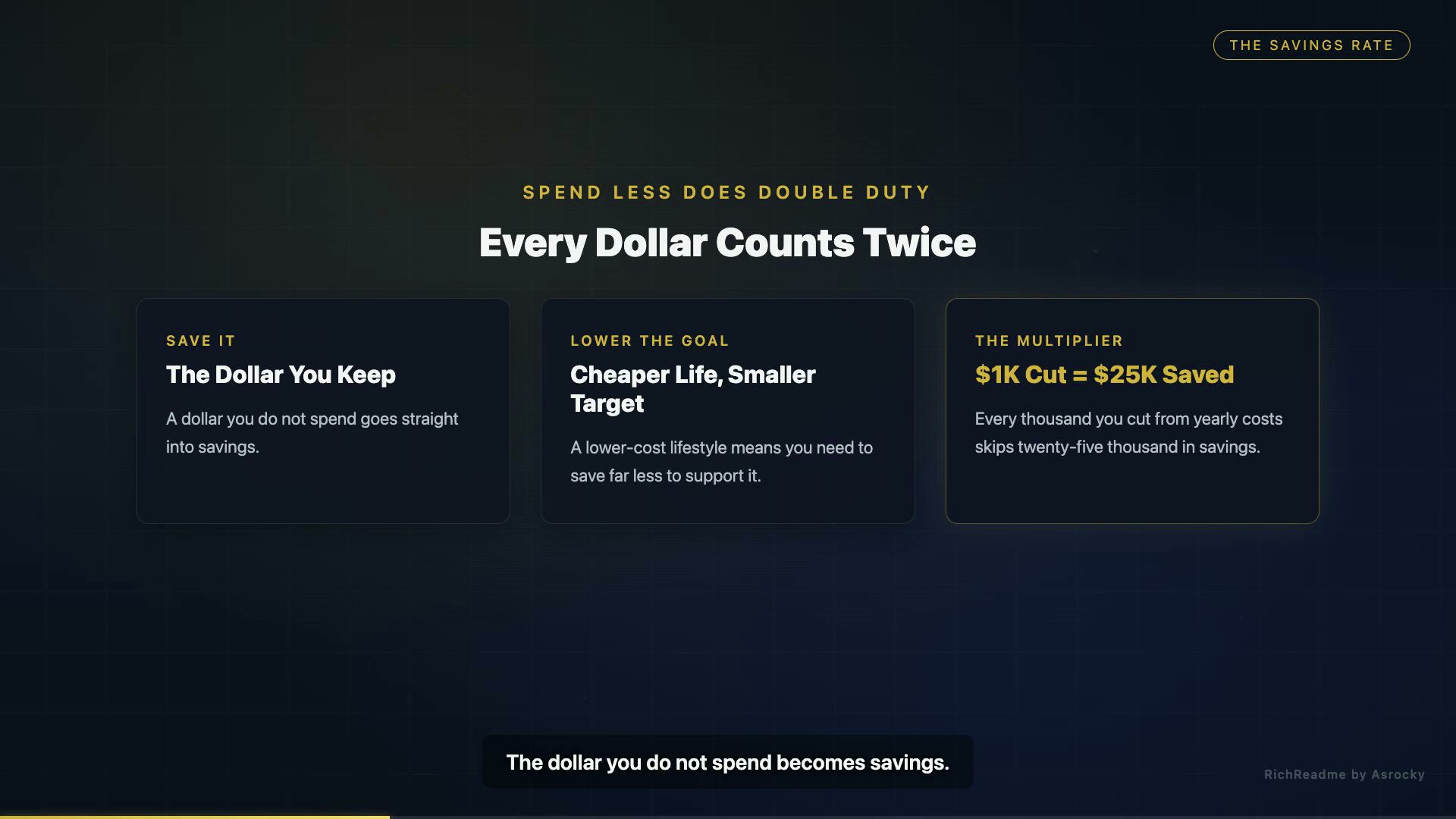
The math rewards you far more than most people think. Your savings rate is what you saved divided by what you earned. Spending less does double duty.
The dollar you do not spend becomes savings. At the same time, a cheaper lifestyle means you need to save less to support it. For every thousand dollars you cut from your yearly costs, you get to skip saving twenty-five thousand dollars.
Earn More, Spend Less, Invest Well
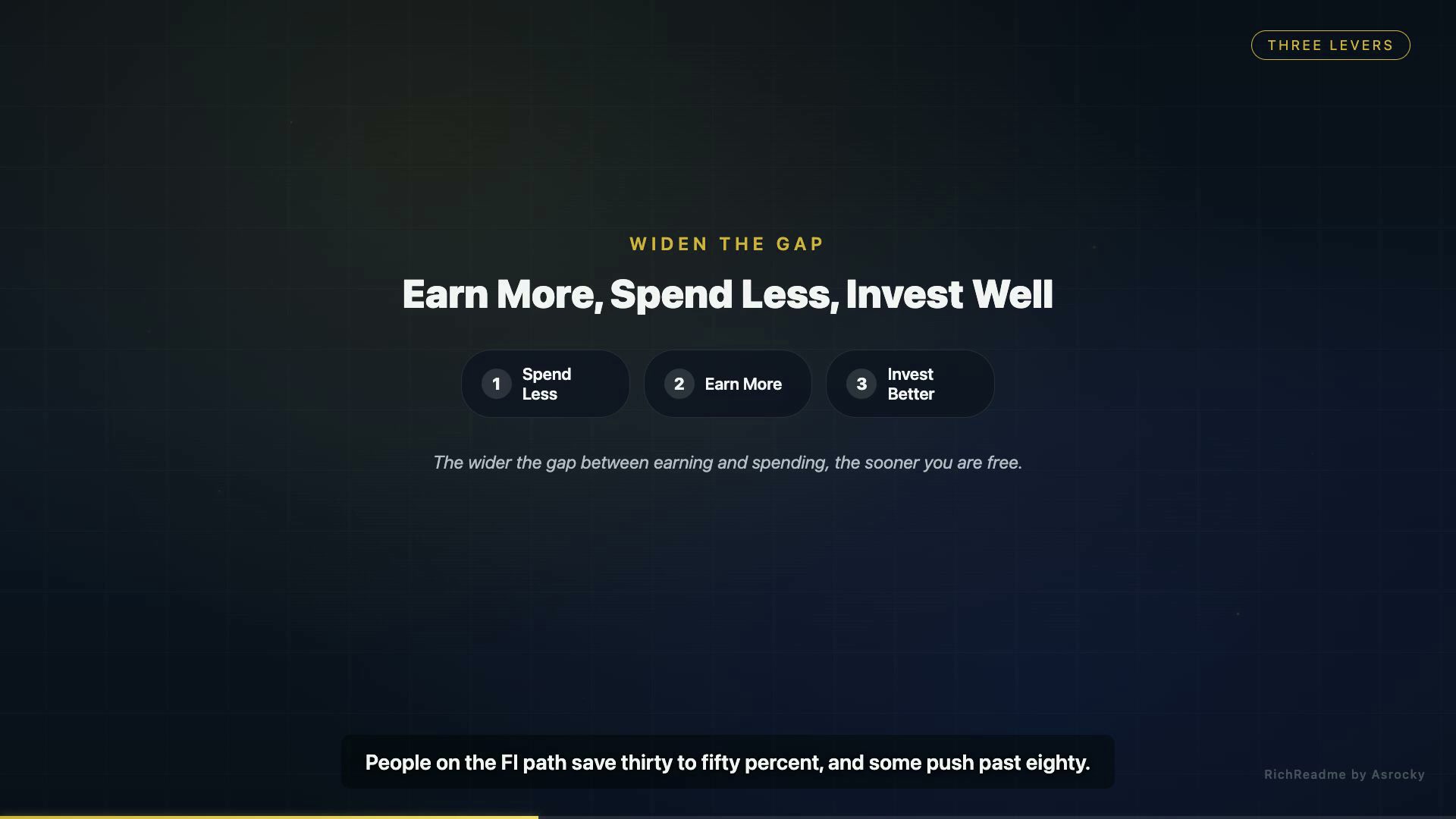
This is why your savings rate decides how long you have to work. Conventional advice says save ten to twenty percent, which locks you into a forty or fifty year career. People on the FI path save thirty to fifty percent, and some push past eighty.
The wider the gap between what you earn and what you spend, the sooner you are free. You have three levers: spend less, earn more, and invest better. Start with spending less, because you can change it today and it even lowers your taxes.
Become a Valuist

Spending less is not the same as being cheap. The book calls the smart way to do it becoming a valuist. A valuist spends their time and money on what they truly care about, and freely skimps on the rest. Brad wears flip-flops and free t-shirts, but takes his whole family to Disney World.
Chris drove his grandfather's old car for ten years, while spending freely on travel and adventure. The point is not deprivation. It is choosing exactly where your dollars go.
Each Step Buys Freedom
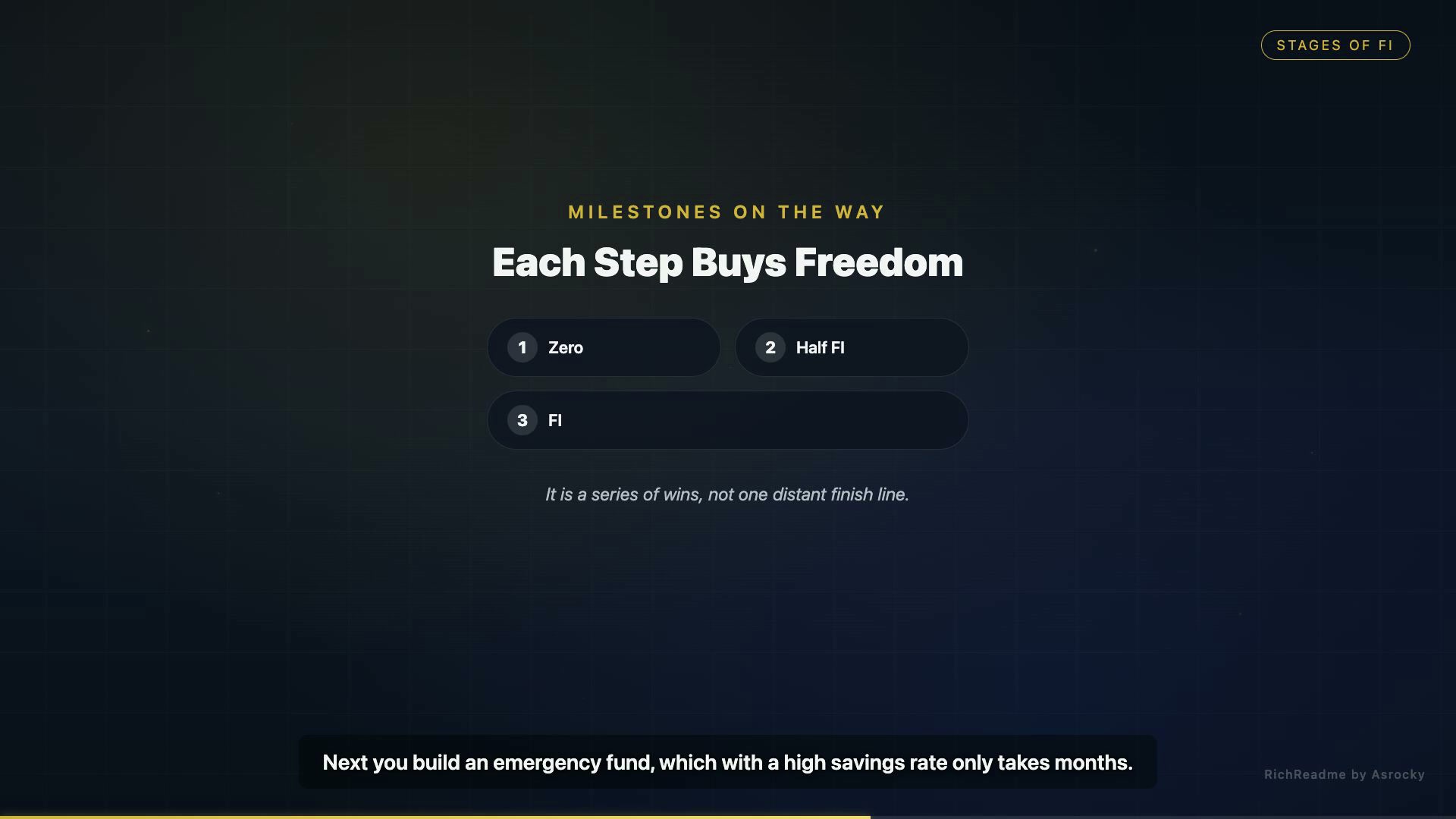
The path also has clear milestones, not just one distant finish line. You start by getting to zero net worth, wiping out consumer debt. Next you build an emergency fund, which with a high savings rate only takes months.
Then you reach a six-figure portfolio, where compounding starts doing the heavy lifting. Half FI comes next, when your investments beat your paycheck in a good year. Finally, at twenty-five times your spending, you are done.
Low-Cost Index Funds Win
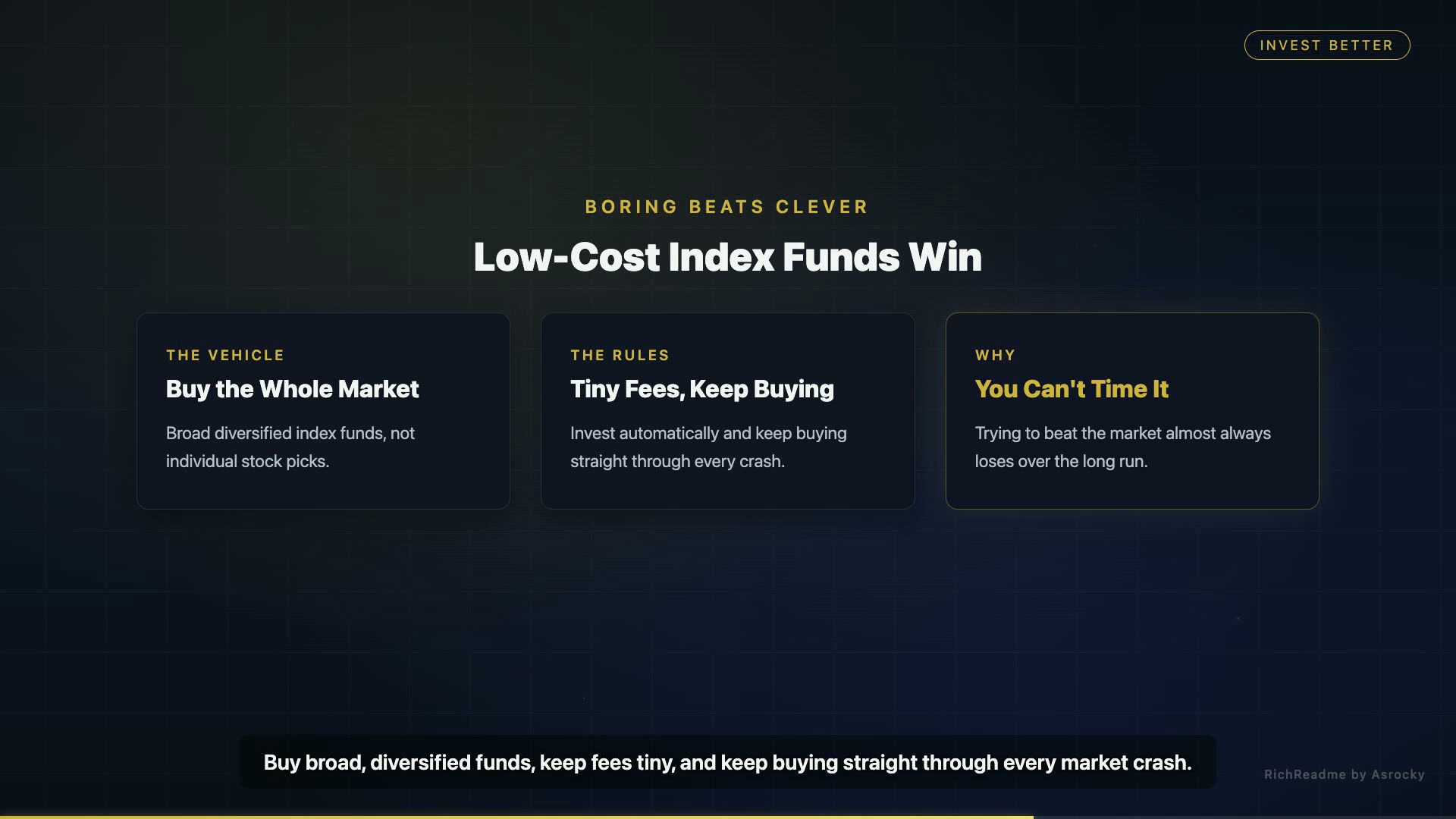
Once you are saving well, where does the money actually go? The answer is boring, and that is the point. They recommend low-cost index funds.
Buy broad, diversified funds, keep fees tiny, and keep buying straight through every market crash. Trying to beat the market with stock picking or market timing almost always loses to simply holding the whole market for decades. You first fill tax-advantaged accounts, then keep investing on autopilot.
Grow Your Income
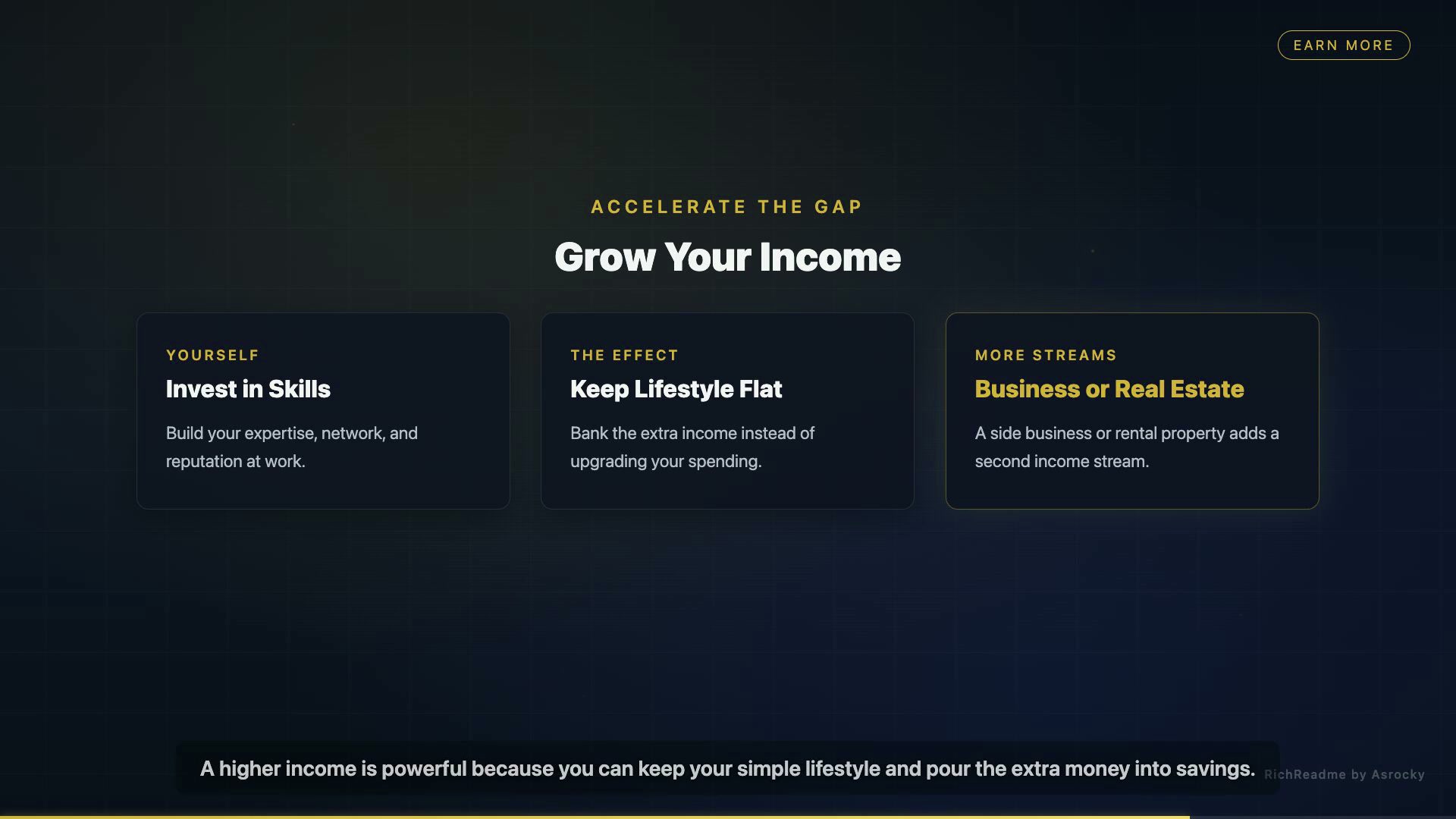
The second lever is earning more, and it can move the numbers faster than almost anything. Do not just wait for a raise. Invest in your skills, your network, and your reputation at work.
A higher income is powerful because you can keep your simple lifestyle and pour the extra money into savings. Some people also build a side business or buy rental real estate to add a second income stream. Widening that gap is the whole game.
Start With Why
Above all, the book says to start with why. Financial independence is not about lying on a beach forever. It is the power to choose how you spend your days.
Many people keep working because they love it, but now they do it on their own terms. The freedom is to say no to the wrong things and yes to the people and experiences that actually matter to you.