He turned seven thousand dollars into three hundred thousand. No stocks, no lottery. Just one paid-off house and a tenant.
This is Building Wealth One House at a Time by John W. Schaub, the real estate guide that has helped ordinary people become millionaires one humble home at a time. Schaub bought his first house decades ago and never really stopped. His method is not flashy, and that is the entire point.
Bought Retail, Kept Forever

His very first house was nothing special. He paid full retail and put twenty percent down, about seven thousand dollars. He rented it out for just enough to cover the expenses and the loan. A finance professor would have laughed at the deal.
It had little borrowing, tight cash flow, and a return that looked ordinary on paper. But Schaub did something the professor never would. He kept it. He rented it to a young family still saving to buy their own place, and they treated the house almost like they already owned it.
The Payoff
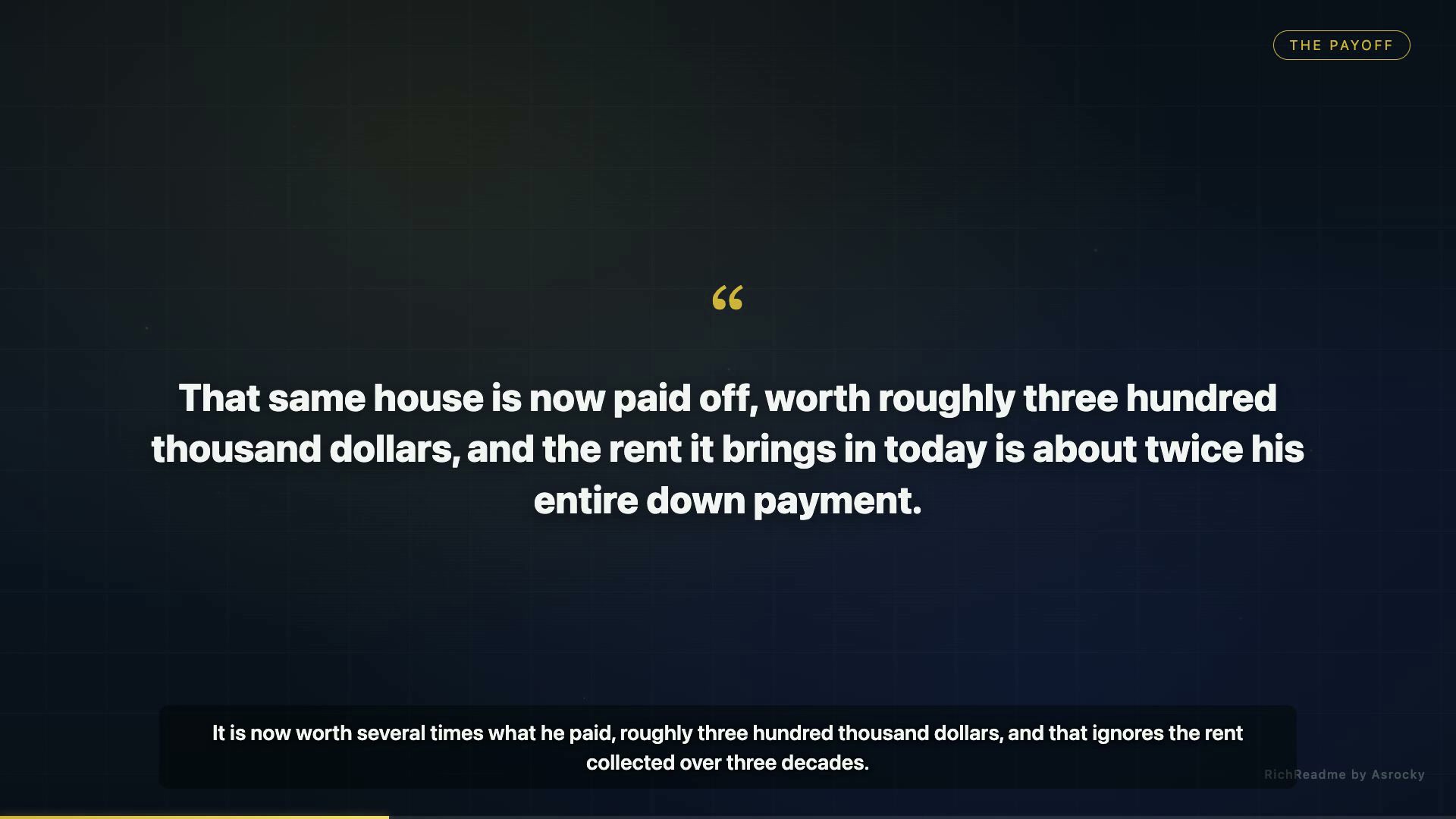
Thirty years later, that same house is paid off. The tenants have covered every mortgage payment along the way. It is now worth several times what he paid, roughly three hundred thousand dollars, and that ignores the rent collected over three decades.
The rent he takes in today alone is about twice his original down payment. The boring little house quietly became his best investment.
Houses Work Like No Other Asset
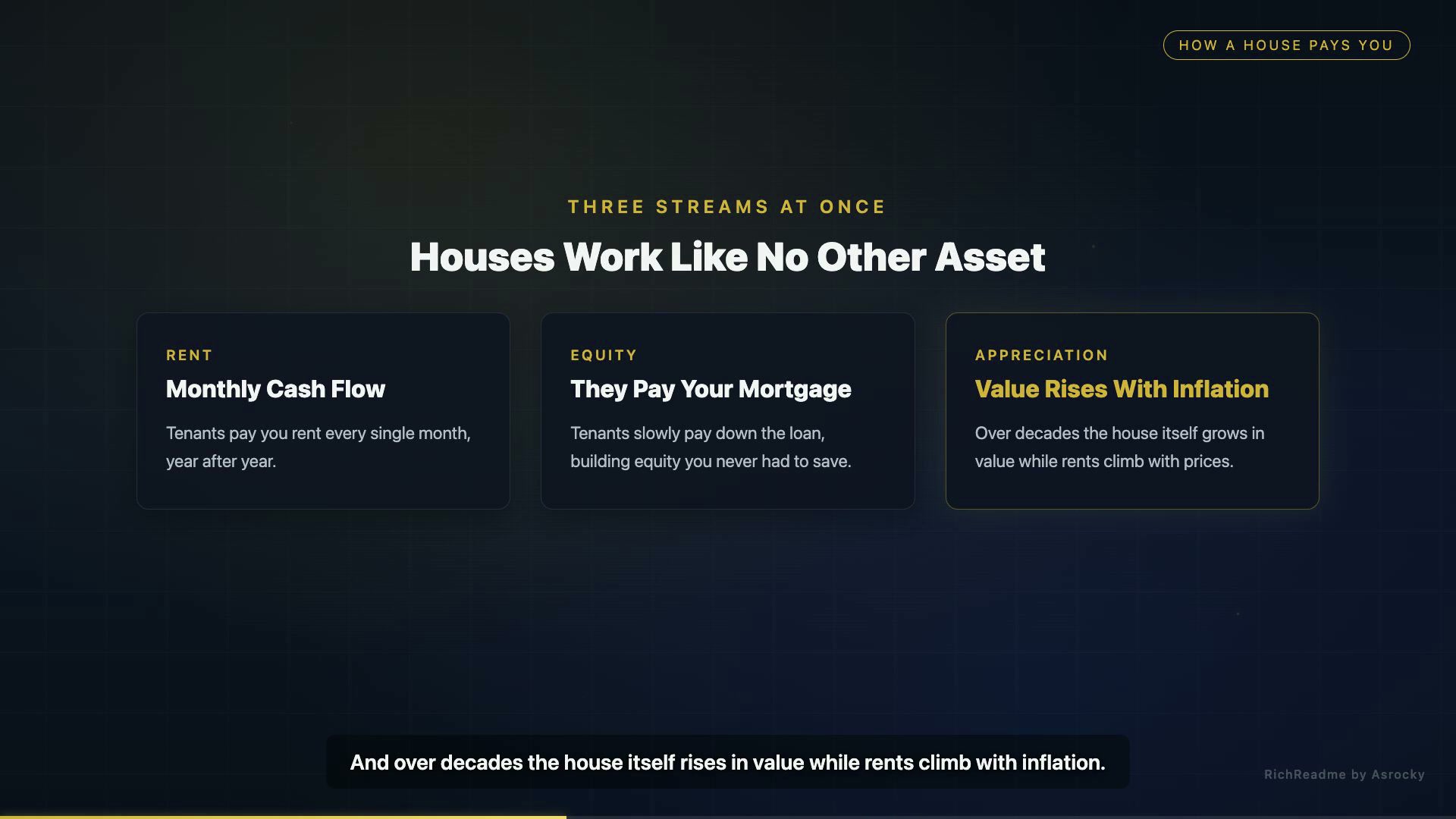
Schaub's whole argument is that houses work like no other investment. They pay you rent every single month. Your tenants slowly pay down the mortgage for you, building equity you never had to save out of your paycheck. And over decades the house itself rises in value while rents climb with inflation.
On top of that, the tax code lets you depreciate a building that is quietly appreciating, paper losses that shield your real rent from taxes. Most people chase only one of these benefits. He collects all of them at once. A worker saving every month could rarely match what a tenant and a rising market hand you without lifting a finger.
Leave a Property Behind Each Move
His method is simple to describe and hard to repeat. Buy a house you can actually live in. Live in it for a few years while you learn and fix it up. Then, instead of selling when you move up, keep it as a rental.
Buy the next home, live in that one, and hold it too. Over decades he did this again and again, until he owned a whole stack of homes he had once lived in. Every move leaves another paid-for property behind, carried by a tenant.
Why Not Apartments or Offices
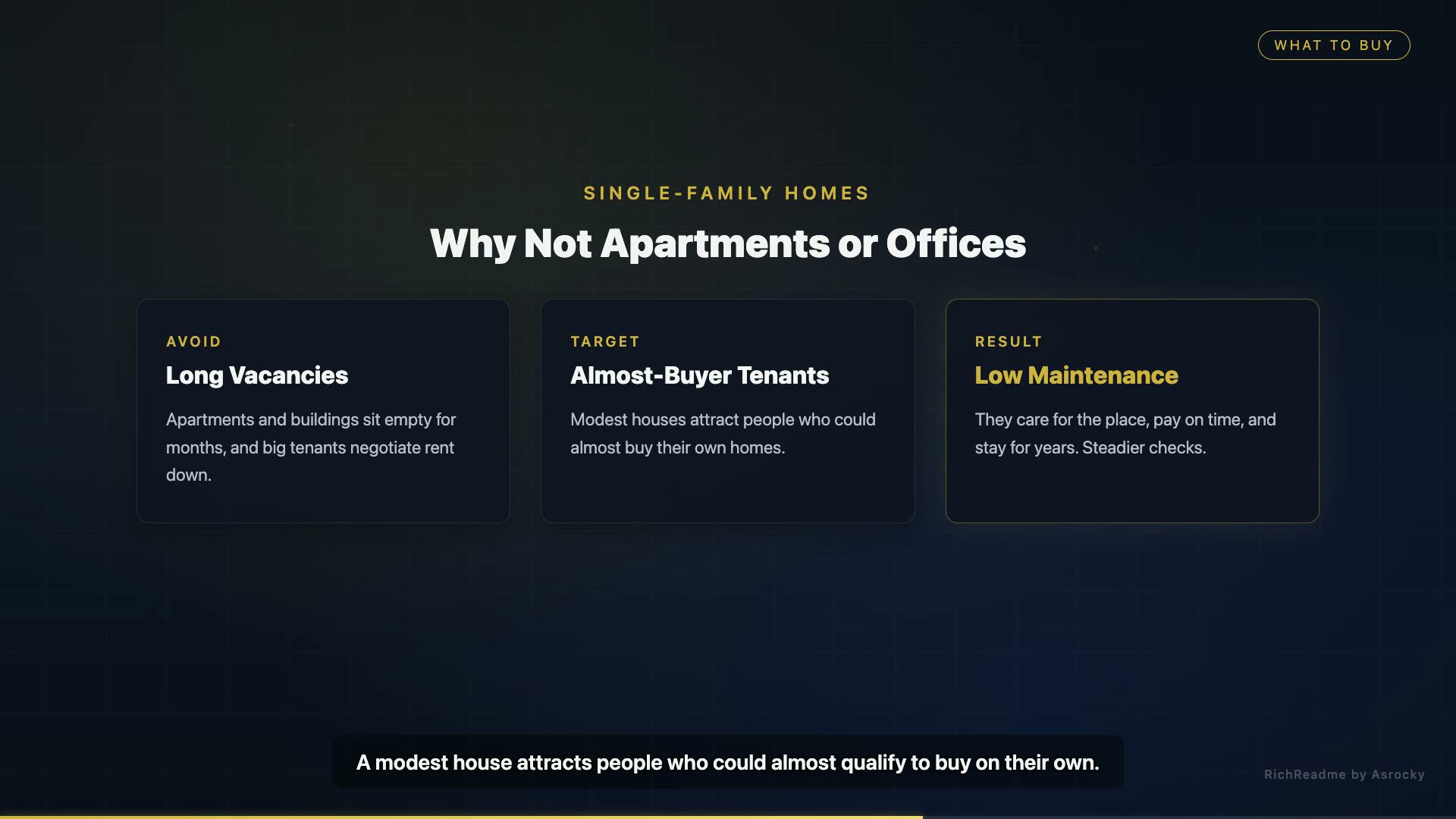
He sticks to ordinary single-family homes on purpose. Apartments and buildings come with long vacancies, lawyers, and big tenants who grind your rent down. A modest house attracts people who could almost qualify to buy on their own. They care for the place, pay on time, and stay for years.
Treat them fairly, and they refer friends and call you when the sink leaks, instead of vanishing. That reputation is a quiet advantage no textbook measures. Less drama, steadier checks.
The Real Blocker
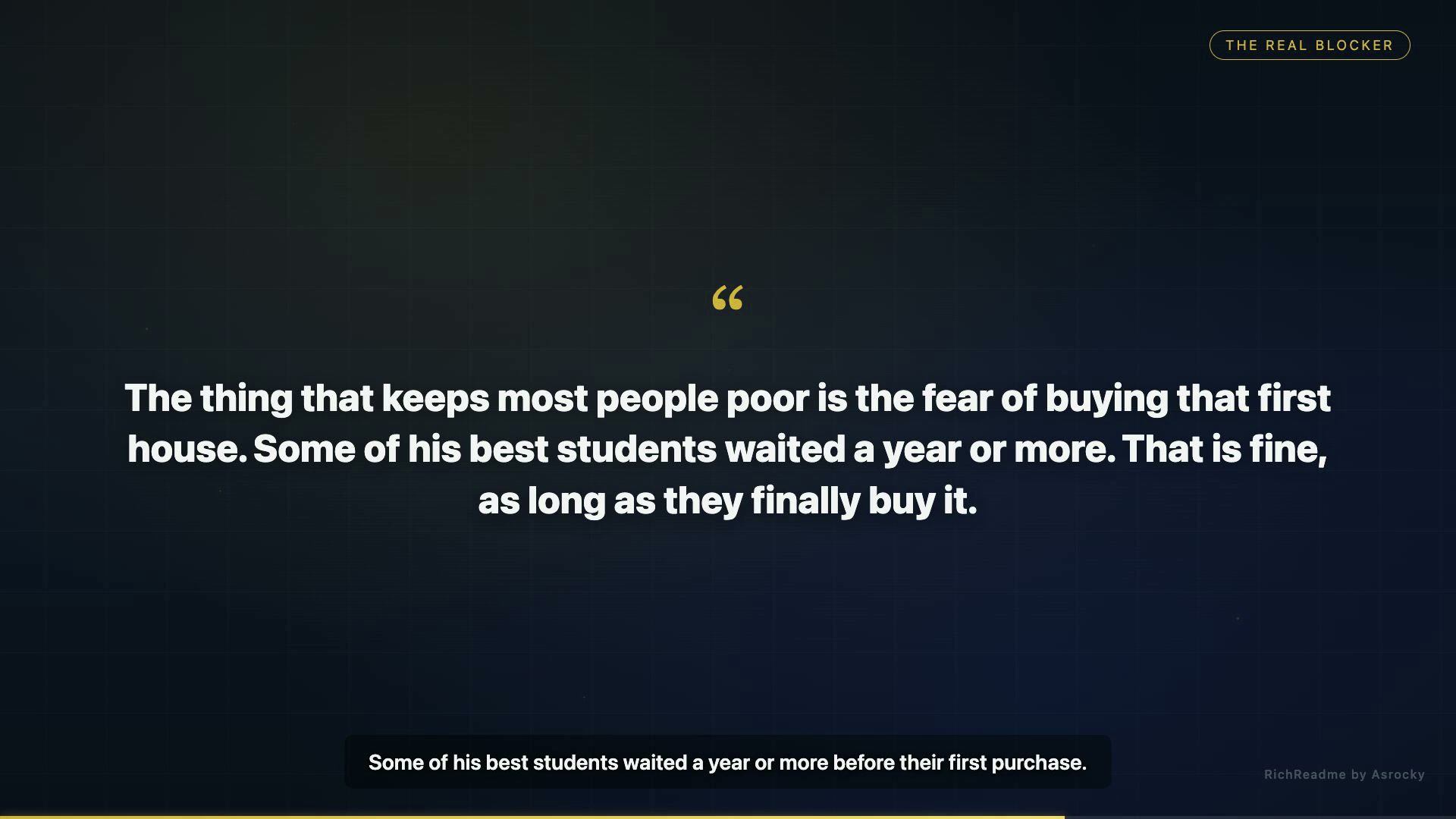
The one thing that keeps most people poor, he says, is the fear of buying that first house. Some of his best students waited a year or more before their first purchase. That is fine, as long as they finally buy it.
The second house gets easier. The hard part is starting, not scaling up.
Stop Chasing the Perfect Deal

He also warns against overthinking. Too much education turns into analysis paralysis. Resist the urge to chase a perfect return, to refinance on every uptick, or to flip for a fast gain.
Those moves feel active and smart, but they quietly tax your wealth with fees, taxes, and missed years of compounding. Slow and boring beats fast and clever.
Build It One House at a Time
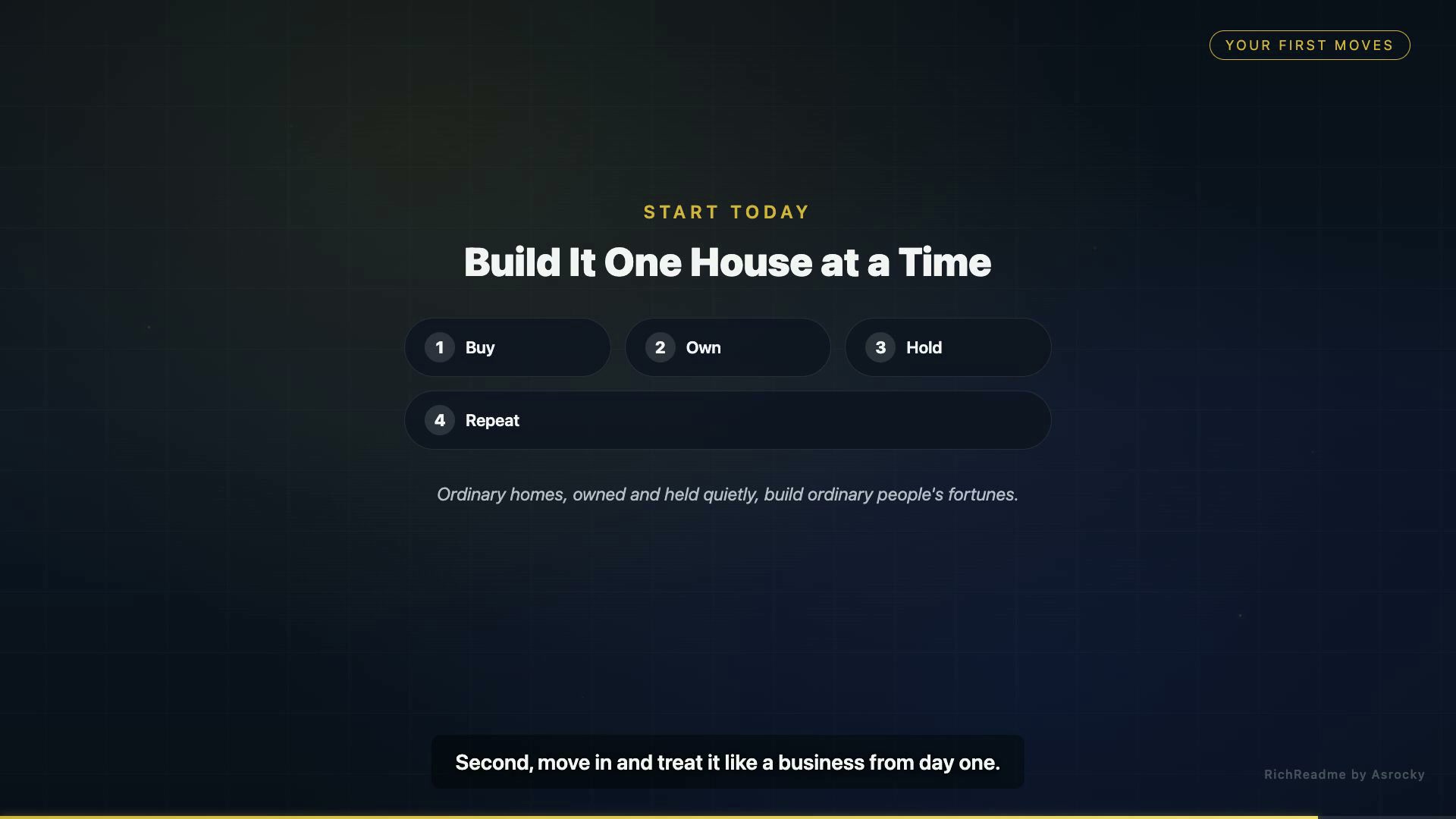
So how do you actually start? First, buy a small affordable house, even if it is not a perfect deal. Second, move in and treat it like a business from day one.
Third, when you outgrow it, rent it out rather than sell. And fourth, repeat the whole thing. Let tenants pay down your loans while time and inflation quietly do the rest.