One investor turned a hundred thousand into billions by waiting. Everyone else kept trading. The edge was not genius. It was patience.
This is Buffett: The Making of an American Capitalist by Roger Lowenstein, the biography that traces how a quiet boy from Omaha became one of the richest people in the world. Lowenstein spent years inside Buffett's circle, and the book is no fairy tale. It shows a Midwestern kid who delivered newspapers and slowly built a fortune using rules almost anyone could understand.
The First Trade
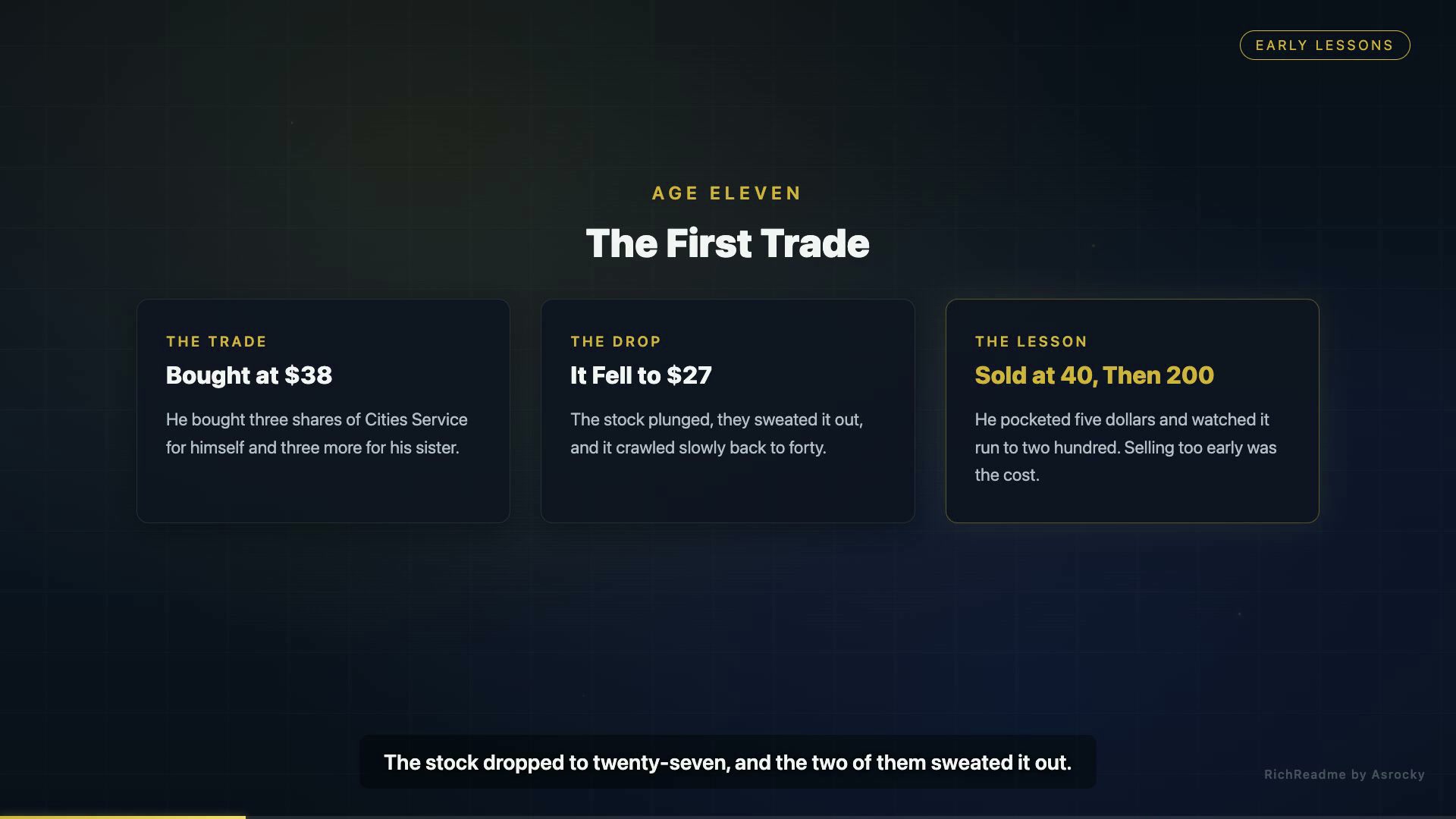
Buffett learned his first lesson in the market at age eleven. He bought three shares of Cities Service preferred at thirty-eight dollars, and three more for his sister. The stock dropped to twenty-seven, and the two of them sweated it out.
It crawled back to forty, so he sold and pocketed about five dollars. Right after he sold, the stock ran up to two hundred. That trade taught him the cost of selling too early, and the value of holding through a dip.
Graham's Teaching
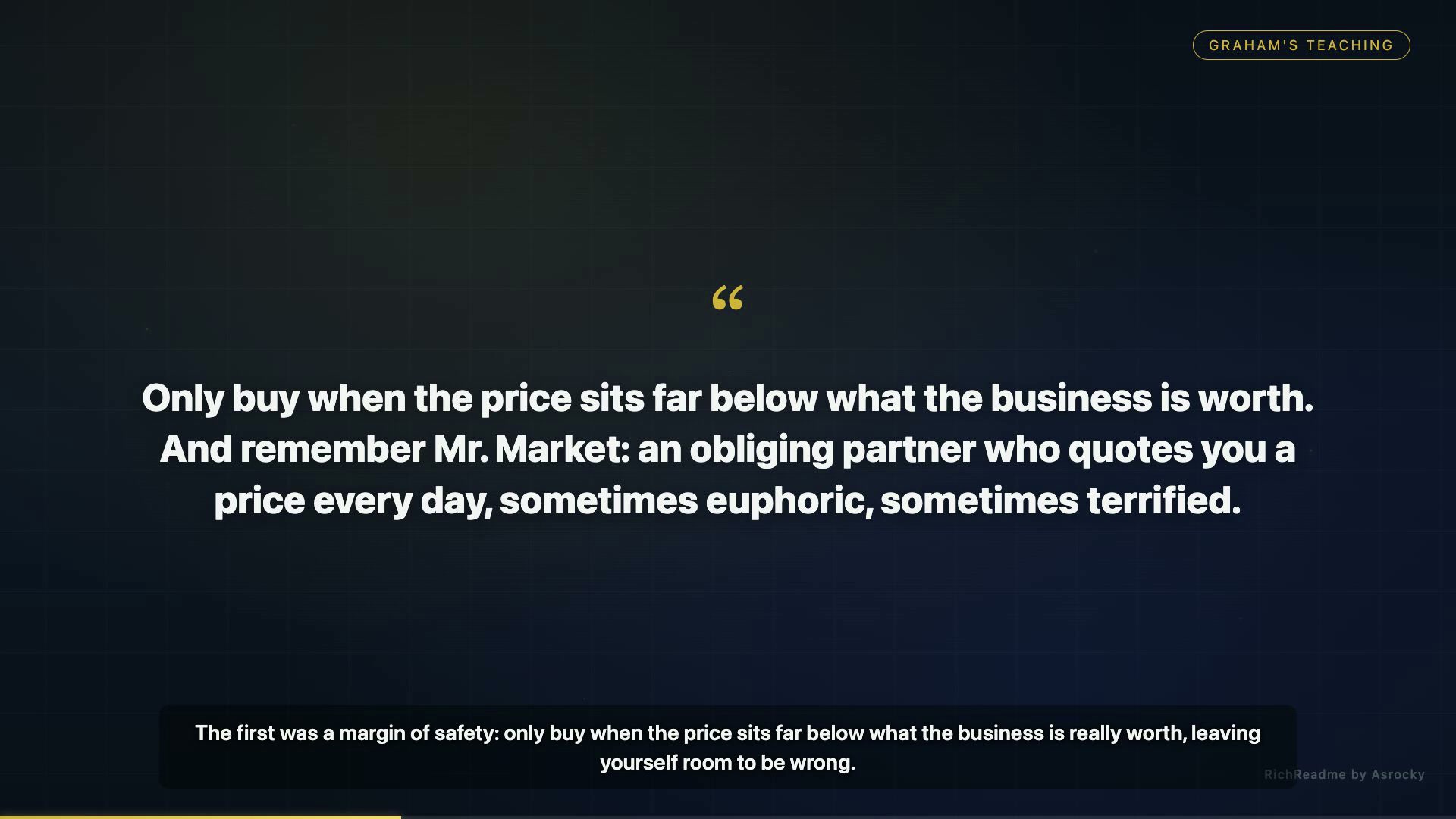
At Columbia he studied under Benjamin Graham, who gave him the ideas behind everything that followed. The first was a margin of safety: only buy when the price sits far below what the business is really worth, leaving yourself room to be wrong. The second was Mr. Market, an obliging partner who quotes you a price every single day.
Some days he is euphoric and offers a crazy high price. Other days he is terrified and offers a fire sale. Your edge is simply that you can walk away and ignore him.
No Hot Tips, Just Patience
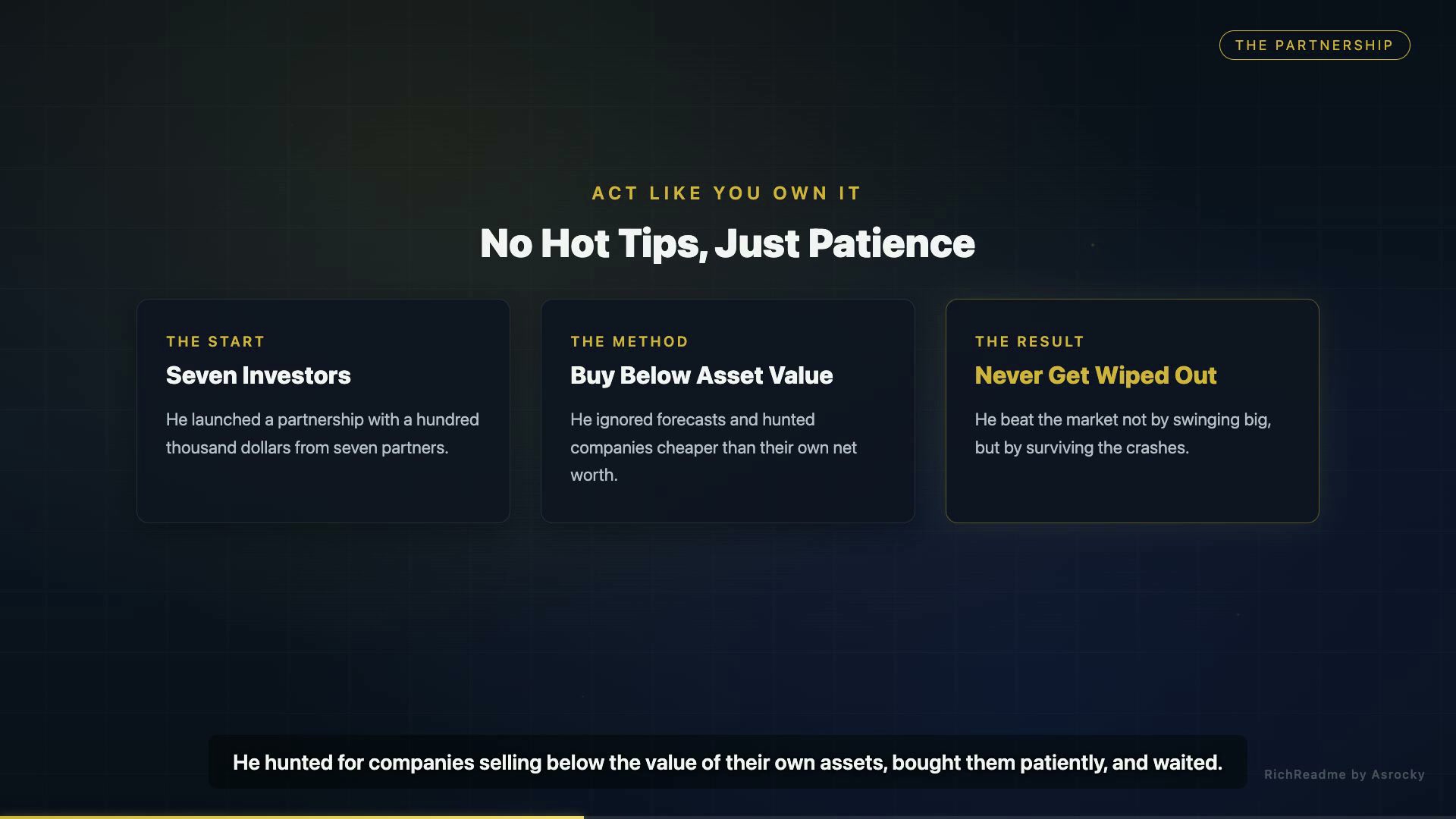
In 1956, Buffett started his own partnership with a hundred thousand dollars from seven investors. His rule was simple. He would act like he owned the whole business, not like a spectator staring at a ticker. He ignored hot tips and forecasts.
He hunted for companies selling below the value of their own assets, bought them patiently, and waited. Over the years the partnership beat the market not by swinging for the fences, but by never getting wiped out when everyone else did. He kept his own fees tied to beating a fixed bar, not to raw gains, so his money was on the same side as his partners.
Money That Invests Itself

The vehicle he used was Berkshire Hathaway, a struggling New England textile mill. Buffett took it over and quietly turned it into something else. Textiles swallowed cash, year after year. Insurance, he realized, printed it.
When you sell a policy, you collect the premium up front and pay claims years later. In between, you hold and invest that money. The trade calls it the float. Buffett saw it as rocket fuel: other people's cash he could invest for free, and keep the profits.
Buy and Hold
With that float he bought wonderful businesses and refused to sell. When the Washington Post crashed in the nineteen seventies, the kid who had once delivered those very newspapers bought a huge stake at a bargain price. While panicked investors sold, he held on for decades.
His lesson was that a great business, held patiently, beats any clever trade. Time, not timing, is what compounded his money.
What Everyone Gets Wrong

His rules sound simple, and they are deeply counterintuitive. Concentrate, don't diversify: spreading yourself across dozens of companies just averages you to mediocrity. Ignore the stock price: if the business is fine, a falling quote is an opportunity, not a warning.
Buy fear. When everyone is greedy, he gets cautious. When everyone is terrified, he leans in.
The Real Edge
The hard part was never the math. It was the temperament. Buffett sat on his hands while the market crashed, while his peers speculated, while pundits predicted chaos. Most people cannot do that. They need to act, to trade, to feel busy.
Buffett treated waiting as a position. The book makes clear that his advantage was psychological, not intellectual. Plenty of people understood the math. Almost none could sit still long enough to let it work.
Ordinary Math, Discipline
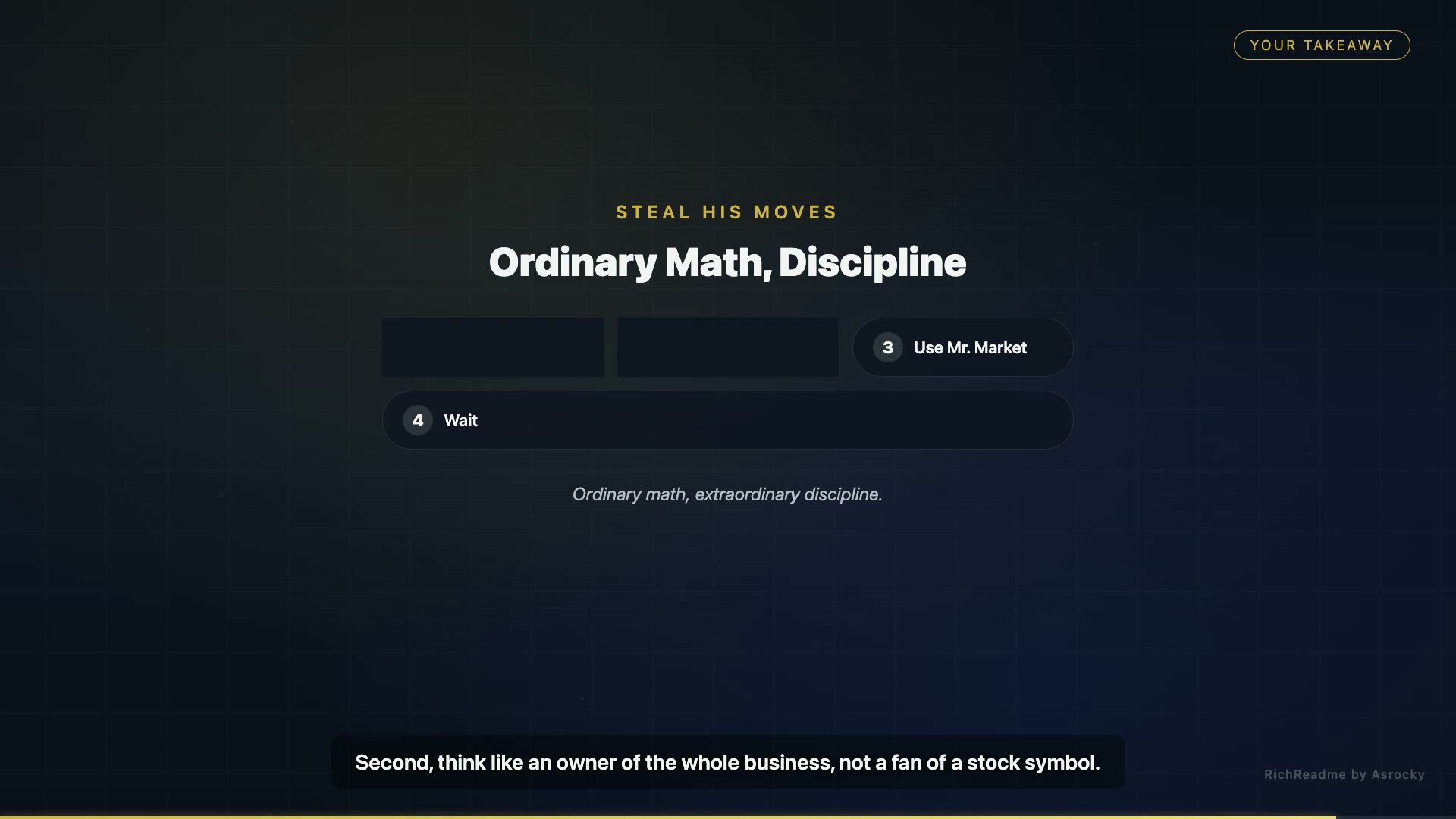
So what can you actually take from him? First, only buy when treal gap between price and value. Second, think like an owner of the whole business, not a fan of a stock symbol.
Third, stop listening to Mr. Market's mood swings and use them instead. And fourth, be patient. The compounding that built Berkshire took decades, not quarters.